“When Hesitation Knocks” (by Karen Harrington)

Karen Harrington’s first adult novel, Janeology, came out in 2008. She has since won awards and praise for three novels from Little, Brown Books for Young Readers. The latest of them, 2016’s Mayday, received starred reviews from both PW and Kirkus Reviews. A short-story writer too, she makes her EQMM debut in the issue that went on sale this week, January/February 2021. You won’t want to miss it: see “Boo Radley College Prep.” This post from the Texas author contains a good piece of writing advice. —Janet Hutchings

My mother was a belly dancer. Not a professional—that might have been cool. No, adding to my schoolgirl angst, she was an agoraphobic who decided to take belly dancing lessons. Sure, I’m a writer, but I’m not making this up. The house went from quiet afternoons to loud Egyptian music and the chime of finger cymbals. She’d usher us out the door, push back the furniture and dance.

Neighbor kids would ask, “What’s that weird music?”

“What? I don’t hear anything?”

“It’s coming from your house?”

“Nah, I think it’s the apartments over there.”

I still marvel at this. Every single time I’ve thought about spinning this particular life detail into a fictional yarn, I hesitate. It’s strange. It’s revealing. It’s a risk.

In other words, it’s the good stuff.

It took years for me to have faith in this truth. In fact, I still hesitate, marinate in doubt and overthink all the reasons not to write about certain subjects. What life has taught me, however, is to just get my overthinking done faster. How? I recall a touchstone experience that has informed my writing life ever since it happened.

The event took place several years ago. I was invited to be on an author panel at the Pulpwood Queen’s Book Club annual winter event in East Texas. I suspect this event is one of the hidden gems in the book world. Over the years, I was lucky enough to meet authors like John Berendt, Fannie Flagg, Jeannette Walls, and one of my literary heroes, Pat Conroy.

One of the great blessings of my life will always be the unexpected friendship I struck up with Pat. On the night before the author panels began, the host of the event invited all the book club attendees to a dinner. All of the attending authors served dinner to the guests. We dined earlier, family-style, in the kitchen space of the Excelsior Hotel in Jefferson, Texas. Pat entered the room and sat next to me. The fangirl inside me shouted, Oh my gosh, that’s Pat Conroy. Pat Conroy is sitting next to me. At our table.

I locked eyes with author Kathryn Casey, who was seated directly across from me.

“Hello all,” he said to our table. “Just want to say one thing. It never gets easier.”

We were in awe. Pat talked casually about writing and food, two of his great passions. When the evening was over, he inquired about buying our books. We all said, “No, no, have them as a gift.”

“Madame,” he said to me, grinning. “When someone offers to buy your book, you say Thank you.” He was as genuinely charming as you hope your literary hero will be.

Later, he said to call him anytime I wanted or needed a blurb. I learned that he extended this kindness to every single author at the event. When his first book was published, he couldn’t get anyone to blurb it. So, he vowed to be supportive of emerging writers. And he was.

Over the next year, he followed up on how I was doing. (I admit to photographing the Caller ID of his name on my phone in case I woke up the next day and thought I’d dreamed it all.) He critiqued one of my manuscripts. He even called with a suggestion for a story he thought I should write. Then, I got a contract for a new book. It came time to gather blurbs. I hesitated.

The previous manuscript I’d sent him was adult fiction about a preacher’s son. But this new work? It was a coming-of-age story about a young girl who writes letters to Atticus Finch. While I suspected Pat might enjoy the larger story about the influence of To Kill a Mockingbird, I shuddered to think about him reading the scenes in which the character got her period.

Quelle horreur!

My mental ping-pong match went on for days. To send or not to send.

Pat Conroy was a real “mean what you say, say what you mean” human being. If he made a generous offer to read a work, he meant it. I sent in the galley and waited.

And I waited.

One day, the phone rang.

“Karen, Pat Conroy. It’s blurb time!” His familiar South Carolinian accent made me smile and sit up straight.

“Hi, Pat.”

“But first I want to tell you about something in the book.”

From past experience, I prepared to hear a gentle critique.

“I want you to know that the book was special to me because it reminded me of a special day one summer with my young daughters. One of them said, Dad, I got my period.”

I took a deep breath as I reveled in the unexpected.

He went on to say they all went down to the local store, all deciding what to buy, what not to buy, for the occasion. He said they all still remembered that day, that summer. And my story had conjured those memories of a sweet time in his life. He thanked me.

The thing I’d feared most was the thing that resonated with Pat, briefly transporting him back in time.

That’s what we want fiction to do. We want it to invite the reader in and bring their own experiences to the story. Author Jacqueline Woodson says, “The more specific we are, the more universal something can become. Life is in the details. If you generalize, it doesn’t resonate. The specificity of it is what resonates.”

I’m grateful to the late, great Pat Conroy for myriad reasons. Not the least of which is how he shined as model of how to treat others in this formidable industry. To think I almost didn’t send the book for a blurb. What a missed opportunity that would have been!

I try to transfer that lesson to my writing choices, too. I try to be fearless. If I’m on the fence about putting a character in a situation, that’s a pretty good indication that I should do it.

After all, the great mystery of what’s on the other side of the door in your story—or someone’s response to the tale—may only be revealed by its opening. Don’t let fear cause you to miss out on the unexpected. Let the characters walk up the frightening path. Let them risk it all. For me, I find that’s where the good stuff happens in life, and on the page.

So, about that agoraphobic belly dancer . . .

Posted in Adventure, Books, Fiction, Genre, Publishing, Writers, Writing | Tagged , , , , , , , | 2 Comments

“Crime Fiction and Twenty-First Century Policing” (by Jeff Soloway)

Jeff Soloway makes his EQMM debut with a story in the issue that goes on sale next Tuesday, January/February 2021. The story’s title is “The Interpreter and the Killer” and it stars a central character with a job we’re surprised we have not seen featured in crime stories submitted to EQMM before: a court translator. Jeff Soloway was the 2014 winner of the Robert L. Fish Award for best short story by a new American author, and he has since had stories published in AHMM, in two MWA anthologies, and elsewhere. He’s also the author of three novels in a series featuring travel writer Jacob Smalls. They are: The Travel Writer, The Last Descent, and The Ex-President. In this post Jeff takes up a subject that should interest every writer of crime stories—and readers of the genre too!—Janet Hutchings

My wife writes up cops for a living. For more than eighteen years, she’s worked for the Civilian Complaint Review Board (CCRB), New York City’s independent agency in charge of investigating citizen complaints of police misconduct. She began as a junior investigator and now manages a team of investigators, but the basics of her job remain the same. She and her team field complaints from New Yorkers, gather evidence from cops and witnesses, and report their findings. When she was hired in 2002, cell-phone videos were all but unknown, Rudy Giuliani had just finished up his run as mayor, and the city was still traumatized by the crime wave that had crested in the early 1990s. Since then, policing in the city has changed, in some ways dramatically, and so has my wife’s work. She’s now one of the longest-tenured investigators in the agency. Few people know more about the evolution of New York City policing in the new millennium. 

Like many devotees of crime fiction, I often find myself asking, after I’ve read (or written) a policing scene, how realistic it is. Unlike most, I can often get the answer from my spouse. Good police-procedural writers, and crime writers in general, tend to feel more of an obligation to reflect reality than other fiction writers. But reality is a moving target.

Richard Price’s excellent 2008 novel Lush Life begins with an unforgettable description of four plainclothes NYPD cops in an unmarked car, cruising the streets of the Lower East Side: “their mantra: Dope, guns, overtime; their motto: Everyone’s got something to lose.” They pull over cars for minor violations, but they’re really looking for an excuse to conduct a search and uncover drugs or, much better, illegal guns. In the novel, the team is called the Quality of Life Task Force, but in the real-life NYPD these roving plainclothes units were called, bluntly, anti-crime. 

These anti-crime units always generated civilian complaints. When my wife began her job, many anti-crime complaints came from encounters with pedestrians or street corner hangers-around. In later years, anti-crime units shifted tactics and those complaints dropped off. The predominant source of anti-crime complaints became the ever-popular car stop, as described in Price’s novel—an illegal left turn that leads to a full vehicular search and so on. But about four or five years ago, anti-crime tactics began to change yet again. A new kind of stop was generating complaints. When asked in CCRB interviews to justify a stop, officers might explain that the driver who had, say, failed to signal his lane change, was not simply a random young man who happened to be cruising through the neighborhood but was instead a man the police knew and were watching, someone who, for example, might recently been the victim of a stabbing and could well be out for revenge. The anti-crime teams had begun targeting specific people for pretextual stops rather than simply the general neighborhood population (though they continued to do that too). Today, any writer who cares about realism would have to avoid NYPD anti-crime entirely. This June, under pressure from activists and reformist politicians, the anti-crime units were disbanded completely. The opening of Lush Life was perfectly accurate when Price wrote it, but it was a snapshot in time, now no longer true to life. 

Narcotics units were another major driver of complaints in my wife’s early days. For many years, NYPD narcotics units depended on the buy-and-bust technique, in which plainclothes officers buy drugs from unsuspecting street sellers. In crime fiction and television shows, experienced locals can often smell undercover cops a mile away, but in real life, they’re not always so savvy, which is why buy and bust was so popular and also so dangerous. Surprise arrests of unsuspecting young men naturally lead to chaos, which leads to beatdowns. Complainants at the CCRB, many of whom were obviously drug dealers, would often tell some version of the same story: The complainant/dealer (almost always a man) would hand his goods over to some ordinary-looking buyer, who would then stroll away; some time later a different man, a plainclothes cop, would arrive and announce the dealer was under arrest. The dealer would have no idea he had just sold to undercover and often no idea why he was being arrested. He would think the arrest was a mistake, or an injustice, or was really for something other (maybe worse) than the obvious reason; and then he would run, forcing the cops to pursue. With adrenaline flowing on all sides, the dealer would get chased down and beat up, sometimes seriously—all for the crime of selling one small packet of drugs. Because these kinds of arrests are dangerous and exciting, they’ve been a staple of crime writing for years. But today my wife rarely gets these complaints. Buy and bust, in New York City at least, has been going the way of the phone book. Drug laws are changing, and the NYPD has evidently decided the arrests are not worth the violence.

But what has affected my wife’s job most dramatically is not tactics but technology, specifically, the rise of digital video—cell phone videos, security videos outside stores and apartment lobbies, and most recently, video from police body-worn cameras. All the encounters that my wife once had to recreate from testimony and imagination are now broadcast to her second by second, sometimes from multiple perspectives. 

It took the NYPD years to get used to widespread video. Initially, cops were often caught on cellphone videos insulting or cursing out civilians—minor but obvious violations of the rules—or manhandling them unnecessarily. Body-worn camera video caused even more embarrassment. When officers first started to wear cameras, they often forgot about them or forgot how they worked. NYPD body-worn cameras are always operating but are only officially recording when officers turn them on; however, when turned on they capture not only succeeding events but also 30 seconds of video from before activation. Many an officer behaving perfectly correctly after pressing the camera button was not quite so restrained in the prior half-minute. 

But today my wife fields fewer of those caught-on-camera discourtesies. Officers now understand they’re always potentially being recorded. In fact, they often behave with a politeness that would have been weird or even suspicious back in 2002. My wife has watched video of officers putting up with civilians shouting the foulest insults at them. Eighteen years ago, they might well have taken revenge.

This general change in attitude is what, in my opinion, has the profoundest implication for crime fiction. Crime writers often portray cops as citizens of their own nation, answerable only to their comrades on the force and their personal code of justice. But today cops know they can’t escape society’s judgment. Any interaction could become a viral video. Just as important, any interaction could later be thrown back in their faces. In my wife’s years on the job, only a handful of times has she seen officers break down and cry in the interview room, but those have almost always been just after they’ve been shown a video of their actions. Imagine being forced to watch the worst moment of your career or even your life on a screen and then having to explain it. To submit yourself to the judgment not just of a civilian oversight board (which, let’s face it, often has little real power to punish) but of the wider world, and yourself. Wouldn’t it change how you think about your job? 

I’m not sure crime fiction has yet reckoned with this change in policing. But it will have to.

Posted in Guest, Police Procedurals | Tagged , , , , | 6 Comments

“Dorothy L. Sayers Reviews the Early Ellery Queen” (by Joe R. Christopher)

Dr. Joe R. Christopher is an Emeritus Professor in the English Department of Tarleton State University in Texas. He’s written scholarly books (including C. S. Lewis: A Biography), essays, reviews, and short stories (in both the mystery and science-fiction genres). In this post he discusses the reviews Golden Age mystery writer Dorothy L. Sayers wrote of the books of one of her contemporaries: Ellery Queen. These should be of interest to Ellery Queen fans, and to those looking for some good reads over the holidays. Nearly all of the Ellery Queen novels are available in e-editions from Mysterious Press/Open Road.—Janet Hutchings

Dorothy L. Sayers reviewed mysteries on a weekly basis for The Sunday Times from 25 June 1933 through 18 August 1935. Although there was some variation, she normally wrote about four novels in each column. Her reviews were not just of “you will enjoy” sort; she was concerned with the authors’ writing skills. It is not known specifically why she started or stopped her reviews, but a few biographical details are suggestive.

At the end of 1929, she had enough money coming in from her mysteries that she gave up her full-time job in an advertising agency. This gave her more freedom in time to focus on her novels—and related activities. She was greatly involved in the development of The Detection Club (a dining club of authors who wrote puzzle-based mysteries); they collaborated on books to support the Club—the first was Behind the Screen, with Sayers one of the authors, broadcast in June and July 1930, and published as a book soon after. In these years, Sayers edited her three-volume anthology of short mysteries—Great Short Stories of Detection, Mystery and Horror (called The Omnibus of Crime in America), 1928, 1931, and 1934. And she was publishing some of her best Lord Peter mysteries during these same years that she was reviewing: Murder Must Advertise, (1933), The NineTailors (1934), and Gaudy Night (1935). But her next Lord Peter mystery appeared first as a drama, Busman’s Honeymoon, in collaboration with Muriel St. Clare Byrne (1937). And soon Sayers was off to writing dramas and essays and eventually to translating Dante. She started another Lord Peter novel, but never finished it.

In Sayers’ second column, 2 July 1933, she starts with The American Gun Mystery with her subtitle of “An American Nut Worth Cracking.” She spends her first paragraph quoting seven excesses of Queen’s style. Her first sentence: “Mr. Ellery Queen is determined to be literary or die.” One of her examples: “he was in a chair, his incredible bulk quiescent as poured steel.” “Nevertheless,” she continues, the book has “a rattling good yarn with a well-constructed mystery.” She mentions the setting (the rodeo on Broadway) and some other details. (The cousins invented the Colosseum sports arena of the novel.) Sayers comments about the plot: “As to the mystery, I frankly confess that I only guessed about half of it, and on due and sour consideration I am reluctantly compelled to admit that the author was quite honourable and that the stupidity was mine.” (She mentions the five earlier mysteries by Queen in passing, at least three of which she indicates she had solved before the dénouements.)

On 3 December 1933, she reviewed Barnaby Ross’s Drury Lane’s Last Case, the last of the four mysteries by Queen about a different detective under a different authorial name. It is a mixed review. The “crime is all mixed up with Shakespeare and bibliophily; and this is the weakest part of the book. … Mr. Ross does not seem to me to quite know his Shakespeare.” (Francis M. Nevins, in Ellery Queen: The Art of Detection [2013], says that the climax of the novel depends on Shakespearean ‘facts’ that Fred Dannay and Manny Lee made up out of whole cloth.” Perhaps that was what bothered Sayers.) To continue with her review: “His central mystification has been used too often before. . . .” But she ends up with some praise for the “mysterious events [which] have a real atmosphere of oddity” and “ingenious detective work.”

Seven days later, Sayers reviewed Queen’s The Siamese Twin Mystery. “Mr. Queen is fantastic, involute, supersubtle, concerned with abnormal psychology and physiology, exaggerative, baroque, [with] a uniformity of tone which tends to monotony.” After several examples of style and content, she switches directions: “What saves Mr. Queen is the basis of really acute and ingenious detective work on which he founds his plot, so that one forgives his extravagance for the sake of his fundamental brain-work.” And she ends with a statement that must have meant much to the cousins if they saw their British reviews: “If only he [Queen] would master the ‘art of sinking’ in prose, he would take the rank to which his intellect entitles him, as one of the supreme masters of the detective story.”

On 7 January of the next year, Sayers has The Ellery Queen Omnibus as her fourth title. (She starts off with Agatha Christie’s Murder on the Orient Express.) The Omnibus contains The French Powder Mystery, The Dutch Shoe Mystery, and The Greek Coffin Mystery. Sayers calls these “three of their author’s best-known novels,” but does not discuss them further. She does present a short history of the development of the meaning of omnibus and lightly praises the quality of the paper used in the book. One suspects that Sayers was hurried, and she picked a book that she didn’t need to freshly read for her fourth spot.

About a half year later, on 1 July 1934, The Chinese Orange Mystery leads the three books being discussed. She titles her column “Criminals Who Are Too Ingenious” and says of the killer in Queen’s novel, “for perverted ingenuity this murderer takes the absolute bun. . . . A little careless simplicity would have served his turn better.” She turns to the basic plot in terms of three questions: “Who killed him [the man waiting for a business interview]? How was the room entered and left again after the murder? And why was everything put back to front. . . . Well—I was completely led up the garden by problem No. 3, but I guessed the other two. . . .” And she added this about the writing: “. . . Mr. Queen, the author, shows distinct improvement in the direction of simplicity: he has toned down the elaboration of his literary style.”

On 3 March 1935, Sayers titles her review “The Adventures of a Highbrow Detective” and she reviews first The Adventures of Ellery Queen—the first collection of Queen’s short stories. “I am not sure that I do not like him better when thus short-circuited [that is, in short fiction, not novels]; for the mechanical limitations of the medium force him to control his besetting sin of over-writing. . . . His characters take after him in [being very intelligent], and one sometimes feels that they are fortunate beyond all reasonable expectations in finding a detective clever enough to interpret the ingenious and picturesque false clues and dying messages they leave behind them.” And again, “All these strange fantasies of bearded ladies and glass-domed clocks would be wasted on a mere forthright police constable, who would neither interpret nor misinterpret, but probably merely ignore them.” She doesn’t offer any close discussion of specific short stories.

Her final review of a Queen novel is of The Spanish Cape Mystery, on 7 April 1935. Unfortunately, it is brief—only five sentences. (What upset the balance in the review was that Sayers began with G. K. Chesterton’s The Scandal of Father Brown, and she wrote a celebration not of the specific book but of his Father Brown stories and their serious treatment of religion in mysteries.) About Queen’s novel, she says, “Mr. Ellery Queen seems to me to be sobering down a little. Fantastic he still is . . . but he is far less extravagant in language and behaviour than in, for example, ‘The Siamese Twins’ or ‘The American Gun.’” It is clearer in the review than in this selection that Sayers knowingly moves from Queen as author to Queen the character. She goes on: Queen “is suaver and less hysterical, and he has the right way with servants (always a test of breeding). In fact, I am beginning to like the man.” On that friendly note, her discussions of Ellery Queen, as author and character, can conclude.

If any reader wants to see all of Sayers’ reviews—of Agatha Christie, John Dickson Carr, Erle Stanley Gardner, Margery Allingham (the latter with only one review), of some authors that were well-known at the time, and of a large number that are not familiar at all—the complete reviews have been published by the Dorothy L. Sayers Society: Taking Detective Stories Seriously: The Collected Reviews of Dorothy L. Sayers, Foreword by Simon Brett, edited, with an Introduction and a Commentary, by Martin Edwards (Pereth, Scotland: Tippermuir Books Ltd., 2017).

Posted in Books, Ellery Queen, Fiction, Genre, Guest, History, reviews | Tagged , , , , , , | Leave a comment

“A Love Poem to Japan” (by Francis M. Nevins)

Francis M. Nevins is one of the leading scholars of mystery fiction, having written the highly acclaimed Royal Bloodline: Ellery Queen, Author and Detective and Cornell Woolrich: First You Dream, Then You Die. He is also the author of six mystery novels and several dozen mystery short stories, and had the privilege of knowing Frederic Dannay (half of the Ellery Queen writing team) personally. Recently Mr. Nevins (whom we know as Mike!) was contacted by his Japanese publisher regarding a piece of correspondence between Fred Dannay and famous Japanese mystery writer Shizuko Natsuke.  He explains the background to it in this post.—Janet Hutchings

Today, almost a century after he was created as both character and byline by the first cousins Frederic Dannay and Manfred B. Lee, Ellery Queen remains a household name in one country above all others: Japan. He was so popular there that in 1977, a few years after Manny Lee’s death, Fred Dannay and his wife Rose were invited by Queen’s Japanese publisher to come to Tokyo for what amounted to a spectacular media event. Rose lovingly described that trip in the fifth chapter of her memoir My Life with Ellery Queen: A Love Story (2015), from which we learn that the most important mystery writer she and Fred met while overseas was Shizuko Natsuke (1938-2016), who was often called the Agatha Christie of Japan.

Recently my own translator, Masatoshi Saito, informed me that a letter Fred wrote Natsuki on his return home had been released by her estate and published in a Japanese newspaper, and kindly emailed me a copy of the original letter. Here it is.

Oct. 12, 1977

Dear Mrs. Natsuki:

Rose has already written to you, and by this time
you will have received her letter, and she will write to 
you again in answer to your handwritten letter. But in
the meantime I hasten to make clear one of the state-
ments you attribute to me. I did not mean that “sur-
prising start” is more important than “surprising end-
ing.”

What I meant was, particularly for the American
reader, that a surprising start is more desirable to catch
and hold the reader’s interest. A surprising ending is 
always good—when the ending is not only a surprise
but also wholly believable. The ideal opening and clos-
ing would be both a surprising start and a surprising
ending.

The concept of a detective story set against the
background of the problems of Japanese education
sounds like an important theme. It probably will be
difficult, as you say, but I am sure you can do it.
Rose and I talk of you and Kozo [Queen’s Japan-
ese publisher] often, between ourselves and to our
friends, and always with the most affectionate mem-
ories. Our trip to Japan was truly a poem for both of
us, a marvelous experience that we will never forget—
but I will let Rose tell you of our feelings. This letter
is only for the purpose of correcting one of the
detective-story impressions I gave you. And if my
correction is still confusing, please write and I will
try to explain further.

Whether Natsuki ever wrote that mystery with a Japanese educational background remains unknown. But we know from Rose’s memoir that in a speech he gave at one of the many banquets honoring him Fred referred to his visit as a poem. And on his return he actually wrote a haiku in memory of his visit.

Two Americans
Dropped from the sky to Japan
And their love blossomed.

In Japan “Thank you” is “Arigato gozai-masu” (with a silent u) or “Domo arigato.” Fred and Rose probably learned the phrases but they also said thank you in many other ways. Including these. And another “Domo arigato” goes to Masatoshi Saito, who made it possible for me to share Fred’s words with EQ’s many readers.

Posted in Ellery Queen, Guest, History, International | Tagged , , , , , , , | 1 Comment

“City Sagas” (by Kevin Mims)

Essayist and short-story writer Kevin Mims is a frequent contributor to this site. A popular-fiction aficionado—especially when it comes to paperbacks of the late twentieth century—he often provides insight into the intersection and development of genres. That’s certainly true of his post here: The books he references do appear to form their own genre—and it’s one that crosses frequently with the mystery.—Janet Hutchings

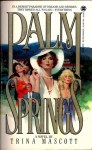
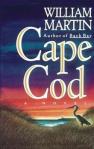
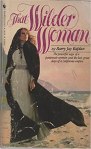
During the last three decades of the twentieth century, a pop-fiction genre arose that has never been given a proper appraisal, or even a name. I’m talking about books, most of them written by women, that chronicled the rise of an American city, usually as seen through the eyes of a single family or, in some cases, a single (long-lived) individual. Examples of the genre include Charleston and On Leaving Charleston by Alexandra Ripley (one of the genre’s grandes dames), New Orleans Legacy, also by Ripley, Seattle by Charlotte Paul, Palm Springs by Trina Mascott, Crescent City (one of New Orleans’s many aliases) by Belva Plain, Hers the Kingdom (which dramatized the early years of Malibu, CA) by Shirley Streshinsky, That Wilder Woman (also about Malibu) by Bruce Jay Kaplan, Biscayne (about Miami, FL) also by Kaplan, Days of Valor (which dramatized the rise of Knights Ferry, once the hub of Stanislaus County, CA) by Willo Davis Roberts, Paloverde (which chronicled the rise of L.A.’s mercantile, oil, and filmmaking sectors through the eyes of three generations of the fictional Van Vliet family) by Jacqueline Briskin, Vintage (about Napa, CA) by Anita Clay Kornfeld, Natchez by Pamela Jekel, Savannah (and its three sequels) by Eugenia Price, Maria (a novel about St. Augustine, FL, which spawned two sequels) also by Eugenia Price, Galveston by Suzanne Morris, The Immigrants (a novel about San Francisco, which spawned five sequels) by Howard Fast (fun fact: his brother Julius was the first ever recipient of the Edgar Award from MWA), Mendocino by Judith Greber, and Cape Cod (rather than a city, it covers all of Barnstable County, MA, but still in the ballpark) by William Martin. All of these books were published between the mid 1970s and the mid 1990s.

This genre—which, for the sake of convenience, I’ll call the American city saga—probably owes much of its viability to the success of James Michener’s massive historical sagas of place, the first of which, Hawaii, appeared in 1959. But whereas Michener’s tomes generally cover a vast subject—Texas, Alaska, the Caribbean, Poland, space, etc.—and often stretch thousands, or even millions of years into the past, city sagas tend to be much more tightly focused and compact. Sometimes these sagas cover just one important epoch in the history of a city. Belva Plain’s Crescent City, for instance, covers the years just before, during, and just after the Civil War. Palm Springs, on the other hand, begins in 1912, twenty-six years before the city was incorporated, and ends in 1987, a span of years that saw the area grow from a destination mainly for TB sufferers seeking dry desert air to its current status as a playground for the rich and famous. 

In the late 1980s, Signet books brought out a series of novels called Fortunes West, each of which chronicled the rise of a city in the American west: San Francisco, Salt Lake City, Cheyenne, and Tucson. The books were all credited to A.R. Riefe, an author I can find no information about and suspect was a publishing house pseudonym. The books are generally dull and lacking in style, suggesting they were written by a committee of researchers. The series seems to have been modeled after the more successful Wagons West series, published in the 1970s and 1980s to capitalize on the renewed interest in American history which the country’s bicentennial celebration inspired. Credited to Dana Ross Fuller (a pseudonym for James Reasoner and Noel B. Gerson), most of these books featured the name of an American state followed by an exclamation mark (Oregon!, Utah!, Nebraska!, etc.). I find the novels in series such as Wagons West and Fortunes West, which were clearly dreamed up in some publishing company’s marketing department, far less interesting than those standalone novels that are clearly works of passion by authors with a personal connection to the places they are chronicling. Trina Mascott is a longtime resident of Palm Springs, and her attachment to the city comes through in her novel about the city. Alexandra Ripley was born in Charleston, South Carolina, and her love for the city can be found not only in her novel Charleston, but even in Scarlett, the sequel to Gone With the Wind that she was hired to write by the heirs of Margaret Mitchell. Galveston by Suzanne Morris is clearly a passion project written by a Texas native with a deep interest in the history of the Lone Star State. 

City sagas generally have enough going on in their multifarious narratives that fans of just about any literary genre—romance, history, adventure, war, Westerns, etc.—can find something to enjoy in the genre’s best examples. While not all city sagas contain elements of the mystery novel or the crime novel within their pages, there are a number of notable examples that do.

***

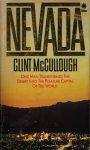
NEVADA by Clint McCullough

Don’t be fooled by the title of this 1986 novel. This isn’t a vast historical epic that covers the entire history of America’s thirty-sixth state, from the era when it was populated mostly by its native Paiute, Washoe, and Shoshone tribes, through the years when it was a part of the Viceroyalty of Spain, and then on to its role in the Mexican-American War and its years as a part of the Utah Territory. A better title for this novel might have been A Tale of Two Cities, because the book mainly focuses on the rise of the gaming industry in both Reno and Las Vegas between the years 1920 and 1986. It doesn’t take much knowledge of history to realize that a story about the rise of the Nevada gaming industry is also going to be a story about organized crime. This novel is chock full of mobsters, hit men, protection rackets, and shady business deals. Had it been published in 1969, it might have rivaled The Godfather as the most popular mob novel of the year. Bugsy Siegel, Meyer Lansky, and plenty of other real-life crooks rub elbows with McCullough’s fictional creations. The main character is Meade Slaughter, a fictional casino magnate who appears to have been at least partially based on real-life casino magnate Bill Harrah. Harrah (1911-1978) was an honest man who managed to thrive in a largely corrupt industry. He was instrumental in the founding of Nevada’s Gaming Control Board in the 1950s, which eventually helped eradicate much of the industry’s corruption and its ties to organized crime. Fortunately for the reader, Meade Slaughter (as his last name suggests) isn’t nearly as squeaky clean as Bill Harrah.

PALM SPRINGS by Trina Mascott

Las Vegas, Nevada, and Palm Springs, California, have a lot in common. Located about 280 miles apart, each is a high-desert community situated in a valley ringed by tall mountain ranges. Neither city is very old. Palm Springs wasn’t incorporated until 1938. (Las Vegas was incorporated in 1911 but remained pretty much a whistle-stop for the Union Pacific Railroad until the state of Nevada legalized gambling in the 1930s.) Both cities draw plenty of celebrity visitors from the film and music industries of Southern California. In fact, so many celebrities have made their homes in these cities that Wikipedia keeps separate pages listing each city’s “notable residents.” Both cities are noted for their mid-century modern architecture. Although not as notorious for its mob links as Las Vegas, Palm Springs has been home to plenty of crime figures. 

Trina Mascott’s 1990 novel Palm Springs mostly avoids mentioning the city’s mob connections. But that doesn’t mean it eschews the topic of crime entirely. Though not as crime-ridden as NevadaPalm Springs has enough misbehavior in it to satisfy most fans of the crime novel. Ginger McKinntock, born in 1900, comes to Palm Springs from San Francisco in 1912. Her mother has just died and her fathert, largely broke, moves to the Coachella Valley because his late wife had inherited some acreage there. Ginger quickly falls in love with Palm Springs. Alas, her father quickly falls in love with a divorcee on the prowl and, after marrying her, moves with her to Pasadena. Unlike her two siblings—sister Ella and brother Neil—Ginger loathes Pasadena and longs to return to the desert. Eventually she will return to Palm Springs. Her family cuts her off financially, but she doesn’t care. She goes to work at the Desert Inn (an actual Palm Springs resort that operated between 1909 and 1967) and gets an education in the hospitality business from the Inn’s owner Nellie N. Coffman, a real-life historical figure. As the years go by, Ginger will become a prominent hotelier in Palm Springs. Her sister Ella will become a famous film star as well as a promiscuous husband-stealer. Brother Neil will become a filthy rich but extremely sleazy businessman. Lots of cocaine and other drugs will be bought, sold, and abused. Lots of kinky (with the emphasis on “kin”) sex will be detailed. The part of the book that crime fans will find most intriguing comes in the second half of the novel when one of the characters decides to have the wealthy girlfriend he lives with kidnapped by associates of his. He is a kept man but is rarely given much money to spend. His associates will grab his girlfriend and hold her in a remote cabin in the Coachella Valley. They will send the mastermind of this plot a ransom note but, with no money of his own, he’ll turn to his girlfriend’s wealthy family for the ransom money, assuring them that she will reimburse them after her safe return. Once he has the money, he and his two associates will divvy it up. The girlfriend will be released and reimburse her family. The mastermind will now have a large nest egg of his own, and nobody will be any the wiser. As you might expect, the plan goes dangerously awry. But even when the characters in Palm Springs aren’t hatching kidnap plans, the story twists and turns like a thriller. 

GALVESTON by Suzanne Morris

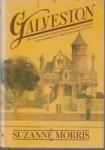
This city saga begins on March 1, 1877, and ends on December 26, 1920. Its nearly 500 pages are broken into three sections, each one narrated by a different female character. All three narrators are related by blood to each other, although their kinship is somewhat tangled and mysterious. The final section is narrated by Willa Frazier, the adopted daughter of Houston millionaire Bernard Frazier and his wife, Edwynna. On the eve of her wedding to up-and-coming Houston realtor Rodney Younger, Willa discovers a clue to the identity of her birth mother and then abandons her wedding plans to go off in search of the mother she never knew. This section plays out like a true mystery, with an amateur sleuth who uncovers clues, follows them, and then investigates various players in the mystery surrounding her conception, birth, and adoption. Near the end we get a scene very reminiscent of the conclusions of Agatha Christie novels featuring Hercule Poirot or Miss Marple. It’s the drawing-room scene where the detective explains how the murder was committed. In Galveston, the explanation runs for more than fifteen pages and contains decades worth of lurid incidents, including murder, suicide, extramarital affairs, unwanted pregnancies, secret adoptions, arson, a missing diary, and even the poisoning of a beloved dog. And even after all of that, the mystery isn’t completely solved. Willa and her informant must travel back to Galveston before they can tie up all the loose ends and find out what really happened to Willa’s birth mother. And through it all we learn of various fascinating episodes in the history of Galveston, including the fire that destroyed a beloved beach resort and the mega-hurricane of 1900, which killed more than 6,000 Galveston residents and remains the deadliest weather event in the history of the United States.

CAPE COD by William Martin

This may be the most ambitious of all the books under discussion here. The story begins in 1000 AD and concludes in the 1980s. The front pages of the novel contain maps and several helpful family trees. One thread of Martin’s story concerns itself with what may be the very first murder in American history, the death of Dorothy Bradford, twenty-three, a real-life pilgrim who came to America aboard the Mayflower in 1620 and died mysteriously in November of that year, possibly as the result of foul play (or suicide, or a tragic accident). Her husband, William Bradford, who eventually became governor of the Plymouth Colony, never mentioned her death in the journal he kept, which strikes some historians as suspicious. At any rate, poor Dorothy Bradford’s death is only one of the mysteries set forth in this massive novel. The main focus of the book is the ongoing, centuries-old feud between the Bigelow and Hilyard clans, two Cape Cod families that can trace their lineage directly back to the Mayflower. Another important plot thread concerns the search for the long-lost log of the Mayflower’s master, Captain Christopher Jones.

THAT WILDER WOMAN by Barry Jay Kaplan

Barry Jay Kaplan is a good writer. His novels Black Orchid (cowritten with Nicholas Meyer) and Biscayne are both highly entertaining, but That Wilder Woman (1985) is my favorite of his books. It is a fictionalized account of how Frederick Rindge and his wife, May, acquired the land now known as Malibu, CA, in the late 1800s and fought for decades to see that it remained largely an unspoiled wilderness area. Most of that fight was waged by May alone, for Frederick died young in 1905. In Kaplan’s novel the Rindges are called Emmett and Ada Newcomb.

Ada is the star of this story. She grows up in tiny Desideer, MI, a dreary farming community. Her father abandoned the family when Ada and her younger brother, Obadiah (Obie), were young. Her mother became mentally unstable after that and died a few years later. It was up to Ada to raise her brother and run the household. When Ada’s own schooling ended, she took over the running of the town’s one-room schoolhouse. But she wanted nothing more than to escape dreary Desideer and lead a more adventurous life. Alas, she lacks the wherewithal to pursue this dream. Fortunately, her hometown boasts one genuine celebrity, a female photographer whose work is famous nationwide. A photograph of Ada taken by this photographer somehow manages to appear in a Boston newspaper, where it catches the eye of young Emmett Newcomb, scion of a wealthy family. For health reasons (bad lungs), his doctors have recommended that he move to Southern California, preferably somewhere along the coast. Inspired by Ada’s photo, he decides to take a short detour on the way to California and stop in Desideer, where he asks Ada to marry him and join him on his great adventure. So anxious is Ada to escape that she doesn’t bother playing hard to get for very long. After a courtship of only a few days, Ada agrees to marry Emmett on one condition: after they are settled in California, Emmett must allow her to send for Obie to join them out west. Emmett has no objection to this condition, so off they go.

Alas, young Obie sees Ada’s marriage and departure as the worst of the three abandonments that have defined his life (his father ran off and his mother died young). Angry, he decides not to wait for Ada to send for him. He steals a gun and a horse and heads west. He plans to work his way west by hiring himself out as a cowboy along the way. But his psyche has become warped by all the hardship he has seen, and soon he becomes a murderous psychopath, killing primarily prostitutes (upon whom he is no doubt taking out the anger he feels towards Ada, on whom he has a dangerous and incestuous fixation). His trek west is interrupted by various crime sprees and long stretches in jail. The famous photographer from Desideer writes to Ada and lets her know that Obie left town a wanted man. After that, Ada loses track of him for years.

In California, Emmett finds his Shangri-La, a 13,500-acre ranch located upon the Pacific Ocean just west of Los Angeles. He uses his $200,000 inheritance to buy the place and then he and Ada set about establishing a working cattle ranch, The Malibu, on part of the land. The rest he hopes to leave relatively undisturbed. Sadly, various southern California business interests find it inconvenient having a large track of undeveloped land lying so close to Los Angeles. The Southern Pacific Railroad wants to run a rail line through the property. The state highway commission wants to run a highway through it. Various L.A. merchants want to establish a large shipping port along the coast of The Malibu. And the owners of smaller ranches adjacent to The Malibu want easements over the property so they can water their stock and move them to market. The Newcombs (like the real-life Rindges) find themselves besieged by eminent-domain lawsuits, class-action lawsuits, angry neighbors, opportunistic politicians, and even cattle rustlers. On top of all that are the wildfires that (to this day) plague the area.

So here you have all the elements of a great two-pronged saga. While Ada fights off various legal and natural threats to The Malibu, she is unaware of what is potentially the biggest threat of all—the psychopathic brother she’s lost track of and who, like an avenging angel, is slowly but inexorably moving west, determined to have his revenge against the sister whom he believes is the source of all his troubles in life.

***

Although the heyday of the American city saga has passed, good ones still get published now and then. Honolulu, a 2010 novel by Alan Brennert, is an excellent, fairly recent example of the genre. While not every city saga is filled with criminal activity, most contain at least a soupcon of it. History and mystery are two literary genres that play well together. So why not make your next staycation a trip to Palm Springs or Galveston or Nevada or Cape Cod. You’ll find plenty of rot beneath those beautiful facades.

Posted in Adventure, Books, Business, Characters, Fiction, Genre, Guest, Historicals, History, Pop Culture, Setting, Western, Writers, Writing | Tagged , , , , , , , , , | 4 Comments

“The Two Pittsburghs; or, the Birth of a Crime Writer” by Travis Kennedy

Maine writer Travis Kennedy‘s work has been recognized by Best American Mystery Stories and featured in McSweeney’sLevel Best Books’ Best New England Crime Stories anthologies, and Suspense Magazine (forthcoming). He is the author of the novel Booty, and his gritty tale “Duel of the Aces” appears in our current issue‘s Black Mask department. Here he discusses what got him into crime-writing: a societal duality that can be seen clearly in that story.—Janet Hutchings

Underworld: c. 1600, “the lower world, Hades, place of departed souls,” also “the earth, the world below the skies,” as distinguished from heaven. Similar formation in German unterwelt, Dutch onderwereld, Danish underverden. Meaning “lower level of society” is first recorded 1890; “criminals and organized crime collectively” is attested from 1900. (etymonline.com)

About fifteen years ago, I was in Pittsburgh for a friend’s wedding.

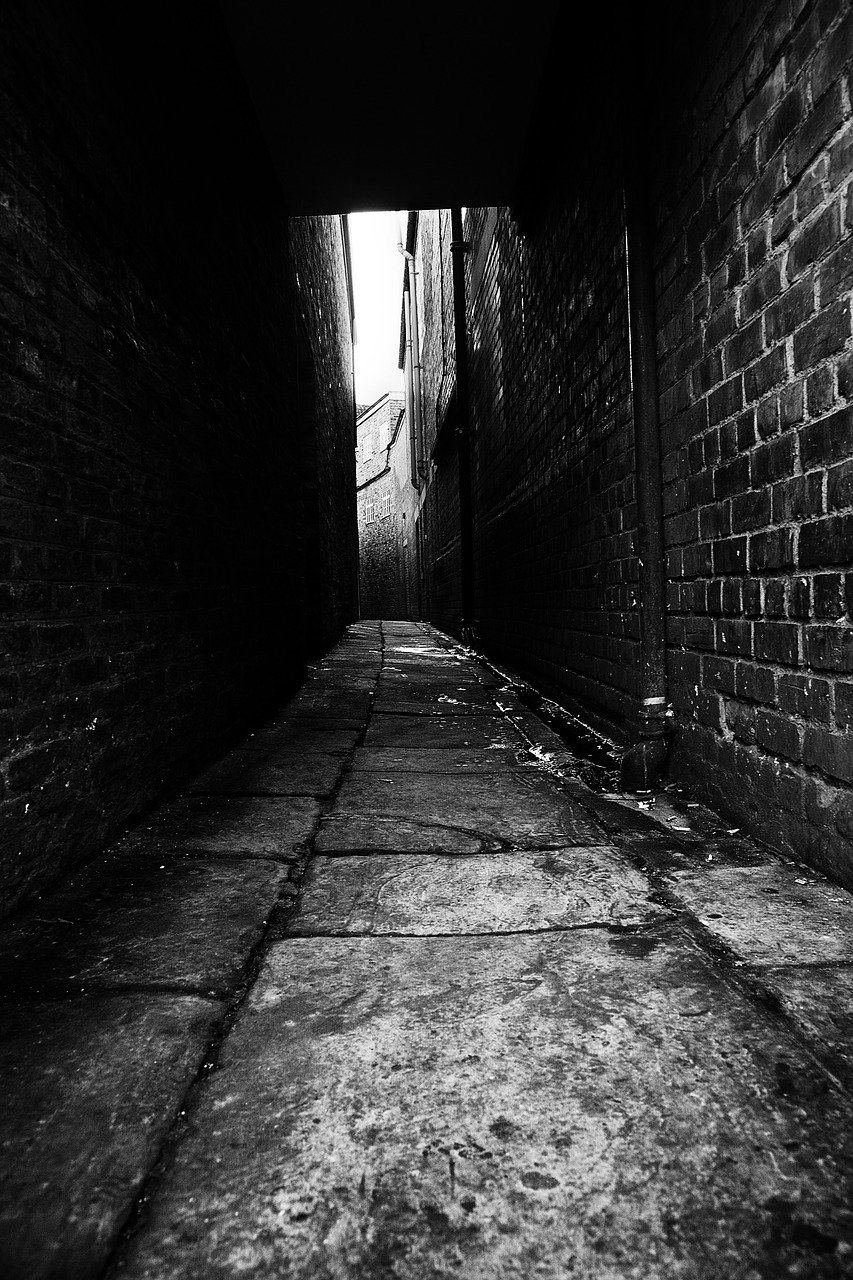
The day before the ceremony, a group of us were walking through the city, looking for a place to grab lunch. We were on a quiet road that ran alongside a row of tall, dilapidated warehouses. A steel door swung open with a loud bang down an alley and a guy came strolling out, wearing a crooked Steelers hat and sunglasses. He was around my age and height, and he even kind of looked like me. He popped a cigarette in his mouth and grinned like the whole game was rigged in his favor, and he strode off triumphantly in some other direction.

It only took me those three seconds to decide, with complete certainty, that he was UP TO SOMETHING. But I was also pretty confident that I’d never find out what it was. Whatever kind of extralegal shenanigans were in store for that young Pittsburgher, they would play out completely separate from me—even though we were both hanging out on the same city block.

This was a seemingly pointless instance. We didn’t interact. I don’t know if anyone else in my group even saw him. It was the kind of thing that could happen ten times in a single day on a busy city street. But as strange as it may sound, I think that was the very moment that I became a crime writer. Or at least, it was the moment when my philosophy for writing crime fiction clicked into focus.

Maybe it was the way the guy was grinning, like some master plan was about to go into motion. Maybe it was his confident swagger, like he was the king of this strange little part of the city that was completely foreign to me. Maybe it was because we were kind of bizarro mirror-images of each other, and I was seeing a version of myself from another dimension, our paths crossing by accident for a mere few seconds like the two Doc Browns in Back to the Future. Whatever it was, he was clearly deep in the middle of his own adventure—and I only got a glimpse of it for the briefest moment.

And since I like to believe that I have a rich and complex backstory that’s populated with fully realized characters and diverse settings, then this dude must have one, too. There were two separate worlds in that neighborhood—a rule-follower looking for lunch, and a Steelers fan looking for criminal mischief—that were running directly alongside each other, but rarely intersecting. So I started to wonder, what is that other world like? The one that I don’t see?

And a crime writer was born.

It’s that idea of an “underworld” that motivates my crime writing—a parallel world that has its own factions and societies and rules and dialect and leaders and followers, and has no interest in whatever the rest of us are up to. We’re sharing the same physical space with these scoundrels—but for the most part we agree to leave each other alone, with each side only occasionally noticing that the other one is there, and reacting with a mutual sense of mild disgust.

Since that day in Pittsburgh, I’ve been captivated by the idea that a complex underworld could be churning away right under our noses, and it’s populated by fascinating people that we don’t typically notice. That deals are made and broken and capers are planned and enemies are plotting against each other, maybe even scheming their misdeeds on the same park bench that I sat on an hour earlier on my lunch break. Or they’re planning a dangerous caper in that empty storefront that my wife and I walked past on our way to dinner.

We don’t notice them. They don’t care about us. And since we’ve agreed to stay out of each other’s way, telling their stories can be fun instead of tragic. Because when they exist on a whole different plane, we can feel a little less guilty about enjoying their antics. Or getting a sense of thrill from walking in their shoes. Or rooting for them, and even liking them quite a bit.

In the real world, of course, there are innocent victims. But by establishing a self-contained underworld, we don’t have to think about them too much. It’s why we grin through the adventures of Jack Foley or Mac and McCorkle. Why we root for that wily outlaw Omar on the Wire, who lives by a code that only allows him to steal from other criminals. It’s why John Wick’s insane body count is thrilling instead of horrifying. And why Travis McGee and Jack Reacher can break as many limbs as they want, with our cheering approval.

More often than not in an underworld, the victims have invited themselves into the Devil’s orbit. Someone has taken a loan from Tony Soprano, and then gambled it away. Someone has asked Don Corleone for a favor. If they had stayed on their own side of the line, they would have been just fine—but they chose to cross into that other world, and they paid for it. Greed and revenge serve as the portal between our space and theirs. But cross it at your own risk; because once you open that door, you might never be able to close it.

Whenever I’m out walking around in public, I l find myself daydreaming about the underworld that operates on a different frequency all around me—whether it’s an underground casino in an old warehouse, a bootlegging operation in the woods of rural Maine, or a dark alley in Pittsburgh. The stories just pour in, and we can all revel in spending some time there . . . through the pages of a book, from our side of the line.

Posted in Characters, Writers, Writing | Tagged , , , , , | 2 Comments

“The Scents of an Ending” (by Jehane Sharah)

Australian writer Jehane Sharah has worked as a journalist, a public-affairs officer, a copywriter, a speechwriter, and, since her move to the United States, as a graduate teaching assistant, first at the University of Maryland and currently at the University of Wisconsin-Milwaukee, where she is pursuing a PhD in English. Her fiction debut was in our November/December 2018 issue’s Department of First Stories. Her publications since then include the story “Words Don’t Kill,” featured in the EQMM issue now on sale, November/December 2020.  In this post she takes up the important—and difficult—topic of endings.—Janet Hutchings

There is a strange odor in the Art-Deco apartment I recently moved into. It hits me every time I walk through the door. It smells almost like vanilla, but is far too pungent to be considered pleasant. It’s as if something, somewhere is fermenting, although the scent also has an astringent quality to it, which makes me sure that it is derived from something chemical, man-made, although I can’t pinpoint its source. The trouble is, once I’m inside I become accustomed to it. I occasionally catch a trace of it as I’m going about my day, but then I lose it again. I have to step outside, then in again to fully sense the odor.

At first, I thought it might be related to the gas leak in the kitchen I discovered the first week I moved in. But even after airing the place out, the smell remained—the two air purifiers I bought didn’t make a difference either. I threw things out in the hope that one of them might be the culprit: an air mattress. A bottle of hand sanitizer that smelled like cheap tequila. Some cardboard boxes left over from the move. I kept the windows open for all of August. Placed bowls of vinegar and baking soda in every room. Bought candles and little bags of charcoal. But nothing seemed to work.

Then, over the Labor Day long weekend, the smell suddenly vanished. It was as if a miracle had occurred. How wonderful it was, to open the door and not be greeted by that strange, overwhelming scent–to smell clean, unblemished air instead.

This reprieve was fleeting though. The odor returned on Tuesday morning and has stuck around ever since, a mystery that continues to confound me.

I search online for answers. Mold? Formaldehyde in the paint? Rodents in the walls? The fact that the smell disappears from time to time, albeit fleetingly, makes me wonder if it is coming from a neighboring apartment. Has someone turned their living room into an artist’s studio? Is it an accumulation of cigarette smoke and incense that someone downstairs seems to burn around the clock? Or could there be a drug lab somewhere in the vicinity? Someone in a Zoom meeting suggests that maybe it’s a ghost.

My building manager—a kind and helpful man who is always responsive to my requests (and even gives me book recommendations from time to time, knowing of my love of literature)—drops by to check the odor out. But he can’t detect anything, politely adding that he has a terrible sense of smell.

I begin to wonder if I’m delusional, suffering from some kind of olfactory hallucination. And so I reach out to one of the previous tenants, whose name I see from time to time on the junk mail in my letterbox. I send them a message on social media, almost certain that they will ignore me. But they do reply, confirming that there was “a weird smell” when they lived here (a neighbor’s activities, in their opinion). It doesn’t solve the mystery, but I feel vindicated nonetheless, knowing that I’m not imagining it.

My friends tell me that I should write about the saga. The problem is, while I very much hope to get to the bottom of the mystery in real life, I can’t think of an ending that would satisfy a fictional retelling of it. Most of the possibilities seem mundane and anticlimactic. Others are too awful (I refuse to write about rodents in walls) or fantastic (do ghosts really smell and if so, do they take vacations on long weekends?).

I’m always curious to know how great writers approach endings. Toni Morrison once famously said, “I always know the ending; that’s where I start.” In contrast, apparently the only time Dennis Lehane knew the outcome of one of his stories in advance was with the brilliantly plotted Shutter Island.

I don’t necessarily have to know the outcome of a story before I begin, but if I can’t think of at least a few satisfying possibilities, then I find it difficult to embark on a project.

There is, of course an alternative to my dilemma: the ambiguous ending. But these require mastery.

When I taught creative writing at the University of Maryland, College Park, my undergraduate students would often end their stories ambiguously. When I asked them why they made that choice, they would usually say something along the lines of: “I couldn’t decide how to wrap things up, so I just decided to make it ambiguous.”

But when an ambiguous ending comes from a place of indecision, it tends to disappoint. When done well, it is haunting, unnerving. Some of my favorite stories leave me with a counterintuitive feeling of satisfaction, even when there is none. Perhaps there is something cathartic about an ambiguous ending—after all, our emotional highs and lows are often linked to not knowing, trying to find answers where there are none. Not knowing why someone has died, not knowing if the person we’re falling in love with feels the same way, not knowing if someone who disappeared from our lives will ever return. . . .

I first read Joan Lindsay’s Australian gothic classic Picnic at Hanging Rock as a schoolgirl and remember being enamored with the enduring mystery of what happened to Miranda, Marion, and Miss McCraw on the fateful day of the picnic. Later, when our teacher got us copies of the sequel, in which the author explained the disappearance in a definitive way, our class was disappointed (angry, even). We much preferred not knowing.

In Amparo Dávila’s brilliant short story “Moses and Gaspar,” not knowing is central to the story. The protagonist has been asked to care for his deceased brother’s pets, the increasingly disturbing Moses and Gaspar. But what exactly are they? Dávila demonstrates how frightening ambiguity can be when done deliberately and with precision.

Ambiguity is also a key part of the structure of Tim O’Brien’s novel In the Lake of the Woods. The narrator in the story’s footnotes describes it as “a love story,” but it reads like a mystery: a missing wife, a husband with PTSD. O’Brien presents a number of hypotheticals as the story progresses, building up to an even more uncertain ending. But it feels like the only choice–how can such devastating circumstances be explained in any concrete way?

Of course, some people see ambiguity where others don’t. I was genuinely surprised to learn that some people interpret Rosemary’s Baby as possibly being about mental illness, when I have always taken the supernatural elements of the story literally. I was delighted to discover this tidbit in Ira Levin’s notes that his family have published online, in which the author revealed his true intentions. Levin wrote:

I’ve gotten letters from psychiatrists and from doctors who say, This is such a wonderful picture of postpartum depression and postpartum psychosis. I’d say, no, no, she was absolutely right! They really were witches!

The Latin word ambiguus means doubtful, fickle and treacherous. And that’s how much of 2020 has felt–there has been too much uncertainty. Not knowing when the pandemic will end is a case in point–it has been excruciatingly difficult for everyone. Like most people, I have been spending more time at home than I would normally care to, and perhaps this is why I have been so caught up with the mystery scent.

I recently emailed the property management company about the matter. They sent a maintenance man to take a look around.

“I think it smells nice,” he said.

“But what is it?” I replied.

He put his hands in his pocket and shrugged.

Perhaps one day I will discover the ending–either in real life or my imagination. Until then, I will be left in this strange space of not knowing.

Posted in Guest, mystery fiction, Writers, Writing | Tagged , , , , , , , | 1 Comment

“Memory and ‘What If . . . ?'” (by Edwin Hill)

Since his January/February 2018 debut in our Department of First Stories, Edwin Hill has had three critically acclaimed crime novels published—Little Comfort, The Missing Ones, and Watch Her—earning several award nominations. Mystery Scene has named him one of “Six Crime Writers to Watch.” Sometimes, when a scene in an author’s work is particularly vivid, I wonder whether its creator had a similar experience in real life. I found this post interesting in that regard. You may too if you have read, or plan to read, Edwin’s latest novel. —Janet Hutchings

My whole life, I’ve been blessed with really good recall. Or cursed, depending on the day. Sometimes, after all, it’s best to let a memory fade away.

Good recall can be freaky, too. Sometimes I’ll see someone I met years earlier and will know to stop myself before asking about their dog Cleopatra’s fondness for salmon. Don’t you remember, I might say. You told me about it over that dinner in San Antonio, the one on August 12, 2014, the one where the waiter spilled wine across the table, and even as the words fall from my mouth I’ll see that the person not only doesn’t remember the evening, they don’t remember me. The nerve of some people.

But memory plays tricks, too.

There was that time I attended a work conference in Montreal and jogged on the treadmill right next to Sylvester Stallone. The only problem with that memory is that it didn’t happen to me. It happened to my friend Tricia. I didn’t even attend that conference in Montreal, though I feel like I did because Tricia is a good storyteller, one who knows how to focus on the right details, and somehow I’ve heard the story enough times that it’s become mine. Oops.

My earliest memory, or at least I think it’s my earliest memory, is when I nearly drowned during a neighbor’s backyard barbecue. My mother claims it was the summer of my third birthday, but that seems like a stretch. Who remembers being two going on three? Maybe it was the summer of my fourth birthday, instead, the year Nixon resigned, which I also remember.

Of course the story’s been told a million times—my dad’s leap across a picnic table plays a prominent role in the retelling—but there are details about the event that I keep to myself, small, telling ones. I remember that the pool seemed enormous. I remember wading in the shallow end and watching as my mother taught the crawl to my six-year-old sister. Or maybe she was seven.

I remember the inciting incident.

A group of teenagers frolicked in the deep end. They seemed impossibly old and sophisticated. One of them was my babysitter, Kim, and I wanted more than anything to hang out with her and her friends, so I started walking toward her as the floor of the pool sloped down. I remember the muffled sounds of the others at the party after I slipped under the water and not quite understanding what had happened to everyone, why the world had disappeared. After my father’s heroic rescue—I hope he was drinking a can of Schlitz that tumbled to the ground in slow motion, it was the seventies, after all—I remember going inside the neighbor’s house with one of the teenage girls who lived there—one of Kim’s friends—who wrapped me in a green sweatshirt that was way too big.

Here’s the part that can only be mine.

I have no idea who that teenager was—that family moved away soon after this event, and I’ve never spoken to any of them since. The only member of the family whose name I remember is their fox terrier, Scruffy—but I do know that the teenager carried me into the kitchen, and we stood in front of their freezer and she asked if I wanted a popsicle or a fudgesicle. We were the only ones there. It was our moment, and ours alone. I chose a fudgesicle. I can still taste it to this day. In the end, it’s a good memory.

Here’s another one.

My very first piece of published fiction appeared in Ellery Queen’s Mystery Magazine’s Department of First Stories in the January/February 2018 issue. (Aside: doesn’t 2018 seem like a distant memory?) It’s a story called “White Tights and Mary Janes” and it’s about a friendship between two women and a long-held (and very dark) secret. The story evolved out of a subplot in my first novel that I wound up cutting, and I enjoyed spinning those cut pages into a finished story, which you can read about in my first post to this blog.

When it came time to write my third novel, Watch Her, I kept returning to the story and its characters, and ultimately decided to spin the story back up into a novel. I retained some of the plots, but as I expanded it, I saw a theme of memory emerging, the parts that you lay bare, the parts that you manipulate, and the parts that you hold close and keep for yourself. The bad and the good. I returned to my own experience as a three- or four-year-old, wondering how many of those memories of a near-death experience were real and how many were planted. I wondered how much of that day had been manipulated for me—had it really been as apocryphal as my family’s shared truth had become, or had my father’s guilt and his fear of the “what if” fueled an otherwise mundane event. I wondered if that teenage girl, the one who took me inside for a fudgesicle, had a single memory of that day. I wondered where she’d gone and what her name might be. I bought a box of fudgesicles to see if they tasted the way I remembered. They did.

I also wondered what would have happened if that shared truth had other parts to it, darker parts, ones that had been told to me. How would those details have changed the memory of that day? I started to manipulate the memory myself by adding in details that never actually occurred.

  • What if my parents had gotten into a fight before the party?
  • What if my father had been on his fifth can of Schlitz?
  • What if my mother had an affair?
  • What if someone had seen my head go under the water and chosen not to say anything?
  • What if Kim, my babysitter, had a secret, one she knew three-year-old me might reveal?
  • What if those mysterious neighbors had been Soviet spies?
  • What if Scruffy had rescued me instead of my father?
  • What if I’d chosen a popsicle instead of a fudgesicle?

And the list went on.

I took childhood memories, manipulating them, shaping them, using them as tools, turning them into weapons. And out of that list, and out of my own memory, a novel emerged.

There’s a clue to the ending to Watch Her in that list above. I won’t say much more, but I will tell you that if I’d opted for a popsicle, I’d have chosen grape.

Posted in Books, Guest, Writers, Writing | Tagged , , , , , | 2 Comments

“Questions Asked of Writers” (by LaToya Jovena)

A wife and mother, LaToya Jovena lives in the suburbs of Washington, D.C. Her fiction has previously appeared in Litbreak magazine, but her first paid professional fiction publication is “The Winner,”  a story that will appear in the Department of First Stories of EQMM‘s November/December 2020 issue (don’t miss it!). The author describes herself as being obsessed with art, and you’ll see that in the way she answers the question so often put to writers: Where do you get your ideas? —Janet Hutchings

As a fairly new writer I am often asked questions about my career. 

How did I get started?

I had always liked reading, so one day I started writing and realized I liked it as well. 

How do I find the time to write? 

During my kids’ nap times, after their bedtimes, or my personal favorite, the few moments a day when they are clean, fed, and playing quietly to themselves. Also, they have a father.

But the question I am asked the most is: How do I come up with ideas to write about? This question is always the hardest for me to answer, because all I can think about is all the story ideas that present themselves to me on a daily basis. There are more story ideas to write about than time to write them.

The first thing to remember when presented with a story idea is, truth is stranger than fiction. You may often find yourself having to water the real story down in order to make it more believable to your readers. 

The people closest to us are living lives we know the most about. Those people are our families. Do you have a cousin who ran off on her fiancé because she found him to be too stable and boring, even though they had a child together? Readers may have trouble believing this, but what if you wrote about a woman lured away from her steady fiancé by a flaky artist, or a deadly cartel boss.

Is there a running joke about a sibling being a clone of one of your parents because they’re so much alike? What if they were clones? What if government officials mysteriously showed up and took them away in a dark van? There’s an entire mystery to be explored. What happened at their birth? What will happen next?

Next there are the people we don’t know so well, or sometimes the people we don’t know at all. I was once at a department store when I heard two employees discussing job opportunities.

“I could work at the hospital. My mom wants me to work at the hospital, but I said no.” The conversation continued as the employee named a series of job opportunities, and the people who offered them. Each time the employee stated they had declined the position. The person on the other end of this asked why for each refused job option, without ever being given a clear answer. 

This completely benign conversation lived in my head for days. Why were all of these jobs refused by someone who wasn’t happy with their current job? I mean, if they’re talking about other jobs at work, how happy could they be? Was the employee trying to escape an abusive situation and therefore cutting ties with everyone they knew? Was the employee some sort of mole for the company, tasked with finding out how dedicated other employees were? Was the employee simply lying, and if so, why? There’s a story behind every question just begging to be written.

We overhear hundreds of conversations in our lifetimes, how many of them could be the spark for a great story? Even a silent waiting room can hide a story idea. Did something on their phone catch your eye? Is something they’re wearing a bit out of the ordinary? The stories are there.

The workplace is also full of stories. Did you ever have two coworkers who hated each other? The reason behind this could be petty jealousy, but you can make up a better one to write about. Perhaps there’s a blood feud that started decades before either of them were born. Or maybe one is blaming the other for something that was actually done by a third party. Did the third party do it on purpose? If so, why? Coming up with a reason to explain their animosity could make a great plot.

Another place to look for story ideas is our own fears. I personally hate the dentist. Not a specific dentist, but the field of dentistry as whole. I can’t see what they’re doing with their weird little tools, and I hate the feeling of them poking around in my mouth. But what if my fear wasn’t so mundane? What if all dentists belonged to a secret society, where they get into all sorts of mischief? What if I went to dental school to expose them? 

What are your phobias? Could they make good plots?

Finally, it’s time to reveal the most abundant source of story ideas, true crime. Please beware these are the stories you will definitely have to water down. 

For example, we were all fascinated by the Fyre Festival documentaries. One of the reasons for this is it was clear from the very beginning that it was going to be a disaster. Yet with all the evidence staring them in the face, the event producers plunged forward. This is the sort of thing your editor would send back to you so full of red ink you’d suspect a murder occurred. (Side note: Another great story idea, murderous editors.)

But since we already know the Fyre Festival story is true, we can write a hypothetical story about what happens next. Perhaps revenge. Billy McFarland, Fyre Festival fraudster, made a lot of enemies, what if they all conspired to get back at him? How would they do it?

What if it wasn’t money stolen? What if it was priceless art? For example, decades ago a museum in Boston was robbed of 300 million dollars worth of art. The thieves were two men pretending to be police officers, who claimed they were responding to a call. How did they plan it? How did they get away with it? Better yet, where are they now? What would happen if an unsuspecting art-history major went to someone’s apartment and saw one of the masterpieces hanging on the wall? Would they plan to steal it? Or would they try to figure out how it got there, and get something better than money or priceless art, the notoriety of solving a thirty-year-old crime?  

If these examples are too exotic, then we can always fall back on one of the oldest crimes known to man, women murdered by their domestic partners. You can pick one to write a story about. Or you can write about one that’s unsolved, and the crooked detectives who helped to cover it up. Better still, you can write a story about the families of violent crime coming together to work through their grief, when the group takes a turn and decides to take justice into their own hands.

Stories are everywhere for a mystery writer. The world is full of people trying to hide things from others; sometimes they’re even trying to hide things from themselves. Sitting down to write the story is the hard part, but it’s worth it. Never mind that writing is the safest place for you to be. I mean, do you really want to take your chances, being out and about, where someone can just stumble along and write a story about you?

Posted in Business, Characters, Fiction, Guest, Writers, Writing | Tagged , , , , , , , | Leave a comment

EIGHTY YEARS OF PERSEVERENCE

This week, the first issue of 2021—EQMM’s eightieth anniversary year!—will be released to the printer. It looks as if the beginning of 2021 will find the world still under the cloud of the COVID-19 pandemic. Today’s perilous conditions have parallels to the world into which EQMM was born—when many countries across the globe were already at war, with the US soon to enter the conflict. 

I’ve been reflecting upon what EQMM editor Frederic Dannay must have felt after Pearl Harbor (in addition, of course, to sorrow over the appalling loss of life): whether he worried that his new publication would sink consequent to the attack, like the many ships lost that day, or whether he felt confident that there would be a demand for EQMM’s kind of entertainment even as people addressed pressing life-and-death concerns.

Such questions were unavoidable for us last spring when the COVID-19 pandemic ravaged the country and shutdowns made it uncertain, at first, whether we would be able to get our magazines printed and distributed. We were incredibly fortunate on that score, suffering no significant disruptions to our production or distribution processes—thanks, in part, to the stalwartness of our warehouse staff, who persevered through the many difficulties of socially distanced split shifts. The question whether people would still want to read EQMM, however, was another matter. At the beginning of the pandemic, fiction sales in general were down, but since most of our sales come through subscriptions (which typically run for periods of a year of more), we did not expect to see a big impact right away, and we didn’t.

A couple of months into the pandemic, the situation began to change. In a July 26 article in the Observer, Paul Bogaards, executive vice president of the Knopf Doubleday Publishing Group, was quoted as saying that “As we got deeper into the pandemic, people started coming back to fiction. . . . But they were coming back to fiction they were familiar with. . . . In terms of hardcover fiction, familiar brands like John Grisham, James Patterson, Nicholas Sparks and Steven King . . . proved popular.” The article goes on to say that “Readers also favored backlist books (those titles published 12 months ago and more) rather than opting for newer releases. “Backlist books accounted for a higher percentage of sales than previous years, while new releases (front list titles) sales were roughly 1 percent to 20 percent lower than backlist sales,” Priya Doraswamy, a literary agent at Lotus Lane Lit, tells the Observer.”

It’s too early to know for sure how EQMM and the other Dell Magazines fiction publications will come through the pandemic. We’ll have a better idea by the end of the year. But I will go so far as to speculate that if at this moment in our history readers are interested in names they can trust and in a familiar type of content for fiction (as the Observerarticle suggests), we have a good chance of making it to the other end of this crisis intact. For while EQMM seeks always to remain on the cutting edge of developments in our genre, we are also anchored firmly in the best of crime-fiction tradition. Each of our issues, as regular readers will be aware, is a melding of the established with the new.

The first issue of our eightieth year is the perfect example of this, containing half a dozen authors entirely new to our pages alongside some remarkable selections linked to crime-fiction history. The most extraordinary entry from the latter category is a never-before-published story by Cornell Woolrich, discovered just a few months ago in the Woolrich archive at Columbia University by Woolrich biographer Francis M. Nevins. Originally intended for the novel-in-stories Hotel Room, which was published in 1958, it somehow escaped notice after it got cut from that book. Mike (Francis) Nevins tells EQMM that one other eliminated story subsequently appeared in our magazine, but this one seems to have lain entirely forgotten amongst Woolrich’s papers until now. Neither story was cut for lack of quality but, rather, due to not fitting the book’s theme. (For more on this you’ll have to wait to read Mike Nevins’s afterword to the story in the January/February issue!)

This “new” Woolrich story—which we’ve given the title “The Dark Oblivion” (the title on the typescript read “The Fiancée Without a Future”)—is far from being of interest only as a lost work by one of the most important crime writers of the twentieth century. On the contrary, it is, for me, a haunting tale that adds something of real interest to the Woolrich oeuvre. Thank you, Mike Nevins, for bringing your discovery to EQMM!

Another “new” work—new at least in being a first translation into English—that should interest crime-fiction classicists is January/February’s Marcel Aymé story “The Touffard Affair.” Aymé’s character O’Dubois, who appears in this story, was, some say, the French Sherlock Holmes. Aymé died in 1968, and the fact that this story has never before appeared in English was the discovery of translator Anne Bru. 

As our eightieth year progresses there will be other such discoveries (and rediscoveries). March/April, for instance, will see the first appearance ever of Mickey Spillane’s iconic character Mike Hammer in the pages of EQMM. Again, it’s a “new” work—turned by Max Allan Collins from a relatively obscure Mickey Spillane script for a film that never aired into a short story. As for the rest of the 2021 celebration, I’ll update you as we go along. 

I don’t mean to jump the gun here, as we have two more issues for 2020 to go (our current issue, September/October 2020, and our holiday issue, November/December 2020). I’m very pleased with both—and think you will be too! But I wanted to give you a heads-up as well about what’s ahead in 2021, and to say that I hope you’ll stay with us for the journey. In its nearly eighty years of publication, our magazine has navigated many difficult straits. The pandemic is not the first, and with your help, it won’t be the last.  —Janet Hutchings

Posted in Ellery Queen, History, Magazine | Tagged , , , , , | 8 Comments