Tag, You’re It (by Chris Muessig)

Chris Muessig debuted in EQMM’s Department of First Stories in July of 2009 with a tale entitled “Bias.” The story was subsequently selected for that year’s volume of Best American Mystery Stories—one of very few first published works to find its way into that series. Next, the North Carolina State University editor and English teacher penned several stories for our sister publication, AHMM. His return to EQMM, in March/April 2013, was in collaboration with his friend Steve Seder, but I’ll let Chris explain how that came about. Chris and Steve are, of course, following a long tradition of successful collaboration in the mystery genre—Ellery Queen being the most notable example.—Janet Hutchings

Janet makes me an offer I can’t refuse—insidiously forestalling lame excuses by dropping a theme right into my lap like a severed head, or two. Thinking of “Death Match,” the story Steve Seder and I cowrote for EQMM (and one of her choices for the latest Crooked Road anthology), she wonders whether I might consider writing about the process of collaboration.

So what engendered our particular writing partnership? For starters, friendship between my family and The Stomper’s (“Stompin’ Steve” was a handle Mr. Seder used during his wrestling career, another being the evocative “Huck Fleming”) goes back four decades. Our children are like cousins to each other, and sharing vacations with a passel of kids in need of constant amusement (Steve’s a great face painter) was certainly conducive to collaborative habits.

I did specifically tap him as technical advisor years ago for an ill-fated science fiction story in which an alien centauroid divides itself into a decidedly uncoordinated wrestling tag team (one partner brainy, one an ass) in order to infiltrate human society. Though the story never saw print—that wasn’t Steve’s fault—I still hoped one day to co-opt his ring experience and the Felliniesque characters that comprised the troupe he had once led and masterminded (think 8 1/2 or Juliet of the Spirits in the Boston Garden).

After the world’s longest writing apprenticeship ended with several mystery magazine sales, I decided to give it another go. By this time, Steve had worked up some credentials too, graduating from lively improvisations to the more formal role of writer of “The Book,” the running soap-opera that invests wrestling associations, both large and small, with cliff-hanging situations and virulent rivalries that ensure the fans’ arrival at a venue with ripe and festering attitudes—just the kind of audience feedback The Stomper reveled in. As professional storytellers, one of us dwelt in prose, the other in dramatic action: perfect.

My desire to oblige Janet, however, was immediately complicated by the fact that neither Steve nor I could clearly recall the give-and-take involved in the writing of the story (or what we had for lunch yesterday, for that matter). Consequently, I’ve resorted to digging down through layers of archived e-mails, feeling like Brewer, our plainclothesman, faced with shoe boxes full of handwritten receipts stained by who knows what.

Four years ago, Steve had kindly volunteered to ferry me back and forth to rehab (nothing sensational, just post-knee surgery). At the bottom of the PT timetable I e-mailed him, I added: “Remind me Friday to talk about a story idea.”

Apparently, I was about to make a strong pitch to get him on board as cowriter. His reply: “I’ll be there with bells on. Well, maybe not with bells on; that would look stupid and make a lot of noise”—promised an interesting experiment (1) to determine if we two could actually get from the start to the finish and (2) whether it would be a story I would not or could not write alone.

Steve had once told me about some promoters who had been known to enlist thuggish wrestlers to make fractious individuals toe the line. He envisioned a scenario in which this practice goes horribly wrong; moreover, the victim’s bloody demise takes place in the ring, before live TV cameras and an auditorium full of witnesses.

I wanted to use that premise. The protagonist I proposed was a private investigator hired by the victim’s grieving parent when the police investigation finds for accidental death. Our hero is selected not for his skills as a detective but because of a collegiate wrestling background.

We liked the early 1960s for the tale, an era before the wrestling game (and many other aspects of American life) had become a hybrid extravaganza—and before technology had become a character in and of itself. It was to have a black-and-white feel, so to speak (eventually leaning so much toward the noir, I guess, that it earned a Black Mask logo from Janet). The working title was “Death of a Babyface.”

After a couple days of car-talk, the story structure began to fall into place; I thought we were ready for a first draft. The process, I predicted, would take “a few weeks,” which was only partially accurate.

The first of those weeks ticked by slowly as Steve worked up the opening scene, but it was worth the wait. What he presented me with was the key to all that followed, a clever play-by-play description of the fatal match wherein, over the course of six minutes and sixteen seconds, “BF” (the as-yet unchristened babyface) is dealt a horrific and very public beating, every detail articulated vividly by the energetic ring announcer before he cuts adroitly to a commercial. Though still in need of deeper plotting and balance between pedantry and the magical words of the wrestling lexicon (e.g., “flying mare,” “short arm scissors”), we were off and running.

The rest of January involved a search for suitable names for victim and villain and for motives and traits that would trigger the murder—character trumping plot from the get-go. We decided to use a nonspecific geographic locale and to head each scene with a day of the week and hour of the day in a relentless march to the climax.

Steve schooled me in the lingo and culture of the old wrestling groups. We began to research vulnerable anterior arteries in the scalp (with help from my brother the nurse); but most important, I believe, was inserting the presence of the victim’s father into the opening scene. Now the reader watched through the old man’s eyes as the match literally rolled out on an aged, 17-inch, black-and-white Admiral: the doorway to ambiguity.

By this time, my digest-sized mentality figured we were on the way to a nine- or ten-thousand word story; but Steve, assessing a better return on the effort already expended and the rising tide of plot elements and characters, was thinking we should consider a novel, if not a screenplay, if not a long-running cable series. I said I didn’t have those kinds of connections, so he began to be very conscious about word counts.

February was a blizzard of activity beginning with an abrupt change: our P.I. was gone, replaced by a nondescript plainclothesman named Al Brewer, a war-buddy of the victim’s father. I forget how, but Steve had dissuaded me from using the undercover wrestler; and we replaced him with a rather nonaggressive cop, whose lack of success becomes a great enabler of the raw justice meted out by the father.

Scene after scene, almost one per day, appeared over the next three weeks. We worked tag-team fashion; each scene handed off to the other for appropriate revising (Steve learned to his dismay what a revisionist I am), critiquing, and bridging to the next. The investigation definitely worked better as collaboration between the emotionally involved insider and the professionally distanced outsider, and we thought the layered points-of-view caught the play of uncertainty vs. raw conviction that we were going for. The last major fix was Steve’s: he was pretty adamant about renaming the story “Death Match.”

The finished manuscript went out sometime in March; the rejection slip came back in early September—complimentary, but couched in terms that made it clear we needed to find another market. Steve was speechless in that moment; and I took advantage of the uncharacteristic pause and told him that, heck, we’d try Ellery Queen next (adding in an undertone that we’d probably have to trim the story even more for Janet Hutchings). He heard that remark, and it restored his power of speech.

I spent the next month tailoring the story in a way that I thought would work for Janet—adding a new scene as well as relocating what was formerly our opening segment and turning it into a secondhand account that added to the air of unreliability. Then I trimmed the new manuscript by 500 words to get it under 10k.

Steve looked it over and had some further ideas about making the jargon more accessible, reordering scenes, and verifying some technical details. I did another rewrite based on his observations, and the manuscript went out in December.

Three months later we heard from our third collaborator, who had been mulling over “Death Match” for several weeks. Janet liked it, but there was a section in the middle that was somehow off for her. She thought the announcer’s play-by-play accompanying the videotape seemed unnatural, more a commentary for an audience that couldn’t see what was going on, like radio listeners rather than TV viewers. If we could rework that section, however, she would buy the story.

The Stomper took some exception to our editor’s observations, but capitulated with, “Obviously we gotta do what we gotta do,” which was two weeks of retooling the cited scene and the similar broadcast that closes the story. Off it went; and after the Edgar Awards/Malice Convention hiatus, we at last learned we had made a sale.

P.S. Over a year later, as Janet was prepping the edition the story appeared in, she came back with one more question having to do with our use of a certain inside term. I deferred to Steve, of course; and we cleared the issue up with some firm assurances and some final word crafting. Our author’s copies showed up almost two years to the day since the collaboration had officially begun. Janet has expressed interest in another Brewer story, but it’s one I don’t think I can write alone. Are you reading this, Stomper?


Posted in Characters, Editing, Fiction, Guest, Story, Writers, Writing | Tagged , , , , , , | Leave a comment

VALENTINE’S DAY DIGITAL-EDITION SALE

EQMM Magzter V-Day AdTreat yourself or someone you love this Valentine’s Day with 40% off a one-year digital subscription, from now through February 15th from Magzter.

Posted in Books, Digital, Ellery Queen, Magazine | Tagged , , , , , , , | 2 Comments

“The Kids Are All Right” (by Steve Hockensmith)

For the past dozen years, readers of EQMM have been treated, at fairly regular intervals, to the witty tales of Steve Hockensmith, whose subjects have ranged from the Old West to Christmas satire to darker urban crime. Steve is the author of six books set in the Old West, starring Big Red and Old Red Amlingmeyer, his answer to Sherlock Holmes and Dr. Watson.  He also penned the New York Times bestselling prequel and sequel to Pride and Prejudice and Zombies. More recently, he’s entered the field of children’s mysteries. In fact, he has a new book out today. Titled Nick and Tesla’s Robot Army Rampage: A Mystery With Hoverbots, Bristle Bots, and Other Robots You Can Build Yourself (Quirk Books), it’s described by Kirkus Reviews as “Another fast-paced mystery and treat for technophiles.” Like all effective humorists, Steve has his hand on the pulse of our culture—especially Internet culture!—Janet Hutchings

Thanks to the Internet, it’s never been easier to be bummed.

Want to convince yourself that the end is nigh? Just Google “climate change,” “doomsday clock,” or “extinction event”—take your pick! A mere .045 seconds later, you’ll have all the reason you need to abandon all hope.

Want to think the end of the human race might not necessarily be such a bad thing? Choose an online news story at random and start reading the comments. Around the 1,000th exchange of the phrases “libtard” and “Repugnican,” you’ll be praying for an asteroid to smash into the planet.

Want to smother that last little shred of faith in humanity that’s still hiding in your heart? Just click here and try not to throw yourself off a bridge 104 minutes later.

Oh, I know what’ll cheer me up, I hear you say, loyal Ellery Queen reader. A good mystery! You knowa story about someone’s violent death. That’ll chase the blues away!

Well, the Internet’s got a bummer for you, too.

You’re a dinosaur.

Here are some more Google searches for you. “Decline in literacy.” “Americans buying fewer books.” “Children reading less.”

In fact, forget the Googling. Just wait a bit, and the bad news will come to you. Because it seems like someone releases the results of a new, depressing survey of contemporary reading habits about once a week.

Here’s the latest. The gist: According to a Pew Research Center poll, the number of American adults who hadn’t read a single, solitary book in the preceding 12 months was at an all-time high. Twenty-three percent of respondents hadn’t picked up so much as a My Little Pony graphic novel in a whole year!

Now you might say, “The Pew Research Center? I bet their research stinks! HA!”

If you do say this, your comedic talents might best be put to use writing My Little Pony graphic novels. Plus, all I have to do to refute you is trot out recent stats from a source with an unfunny name. Like the Organization for Economic Cooperation and Development, say. Try to work that one into a pun, wisenheimer.

According to the Organization for Economic Yawn Yada Yada, it’s not just our interest in reading that’s declining. It’s our ability. Reading proficiency is falling for most Americans.

Diagnosis: When it comes to reading, we’re getting both lazier and dumber.

Prognosis: DOOOOOOOOOOMMMMMM!!!!

Or not.

There’s a place we can go for insights that’s not the Internet. You might have heard of it. It’s called The Real World.

No, I’m not talking about the MTV show. The only insight to be found there is “Geez—reality TV has always been horrible, hasn’t it?”

I’m talking about the real Real World. The one writers like me only enter when it’s time to take a break from our computers and get something for lunch.

Or promote a book. That’s what I was doing last month when I went to my daughter’s school to do a talk about Nick and Tesla’s High-Voltage Danger Lab, the new middle-grade mystery I co-wrote with educator and TV personality Science Bob Pflugfelder. (“Science Bob” isn’t his given name, of course. That’s just a nickname. His real name is Astrophysics Robert Pflugfelder.)

Our publisher, Quirk Books, had given me a box of copies, and originally I just meant to drop by and hand them out to the kids in my daughter’s fifth-grade class. But then the teacher asked if I’d do a presentation for the whole grade, and I said, “You bet!” (Because saying “Screw that!” to your daughter’s teacher is never a good idea.)

So there I was standing in front of 100 or so ten-year-olds who were super-jazzed to be getting a break from the daily routine. And here’s the thing. When they found out I was there to talk about a book, they stayed jazzed. Then I started my talk with this question:

“How many of you like mysteries?”

Every hand but one went up.

“How many of you like science?”

Every hand but one went up.

“How many of you like building things?”

Every hand but one went up.

“How many of you like fun?”

Every hand but one went up.

(Yes, there was a girl who didn’t like mysteries or science or building things or fun.)

“Great!” I said. “Because the book I’m here to talk about is a mystery with lots of science and building things and fun.”

And I launched into my spiel about how the book’s young heroes use their gizmo-building skills to catch crooks, and blueprints and directions are included so readers can make the gadgets themselves, and being a detective is a lot like using the scientific method to prove or disprove a hypothesis. (I was doing a sales pitch on school property, remember, so I needed to make it sound educational somehow.)

And you know what? They didn’t get bored. They didn’t get antsy. They didn’t start whispering and passing notes and picking their noses. They were into it.

We did a Q&A when my little speech was done, and those kids could have fired questions at me all day. And not just the questions you’d expect, like “Where do you get your ideas?” and “How did you become a writer?” They wanted to know about the projects and the characters and the upcoming sequels. One little guy even asked me what percentage I get of each sale, and when I told him he said, “That’s not very good.” I’m guessing in about 25 years he’ll have his own literary agency.

Of course, one of the questions was, “Where can I get the book?”

“Oh, Books Inc. [our local bookstore], online, wherever they sell books,” I said.

Because I only had enough copies for my daughter’s class, you see. And when we went back to her classroom after my talk and I opened up that box and started pulling out freebies . . . pandemonium! It was a feeding frenzy frantic enough for Shark Week.

Now you might say freebies are freebies. The kids would’ve gone nuts if I’d been handing out Geritol and moist toilettes. But I don’t think so, because I’d seen their eyes light up as I talked about the book. I’d seen their enthusiasm as they threw their hands in the air with a “Pick me! Pick me!” zeal worthy of Arnold Horshack. I’d heard their gasps and seen their grins when I said that the next Nick and Tesla book was about robots . . . and, yes, there’d be directions for building your own. And the next day—the very next day!—my daughter brought home two notes from classmates that said the same thing.

Thank you for the book. I loved it.

Is all this a testament to my awesome powers of persuasion and magnetic, cult-ready personality? Nope. It’s a testament to our kids.

Make science and reading fun—with a double dose of mystery and humor, say—and they will put down their iPads and pick up a book. Which bodes well for the future of our nation, I think. There are still going to be readers here, because there are still going to be smart, curious people.

So, books? Not going away.

The mystery genre? Not going away.

Mystery short stories? Well . . .

I might still be a little worried about that one. Here’s hoping whoever writes the next column convinces me that the future’s so bright we’ll have to wear shades (and not because the ozone layer’s gone).

Hey—I can’t be the only one with something optimistic to say on the Internet.

Posted in Adventure, Books, Business, Characters, Fiction, Guest, Publishing, Readers, Story | Tagged , , , , , , | 6 Comments

“Inspired to Travel!” (by Joan Richter)

Not many mystery writers can claim to have had Ellery Queen as their writing instructor, but Joan Richter was not only a student but a star pupil of Frederic Dannay (half the Ellery Queen team). He liked her work so much that he published two of her stories in a single issue for her EQMM debut. Joan’s stories in subsequent years often took place in foreign settings, and it’s easy to see why as she recounts her travel experiences here. In 2011, a collection of seventeen of her short stories, set in Asia, Africa, Europe, and the U.S., appeared under the title The Gambling Master of Shanghai and Other Tales of Suspense. Her latest story for EQMM will appear in our September/October 2014 double issue. —Janet Hutchings

With the recent anniversary of JFK’s death I was reminded of that fateful November 1963, the month that my family moved to Washington, D.C., from New York City where we had lived all our lives. My husband, Dick, who had been with CBS News as a writer for Walter Cronkite and other anchors, resigned to join the Peace Corps. He was to be an evaluator of their overseas programs. His first trip was to Somalia, a country not so well known then. He flew from Dulles airport to Nairobi with plans to continue to Mogadishu the following day. At midnight there was a knock on his door. Another American staying at the New Stanley Hotel had come to tell him that our president had been assassinated.

There were no cell phones in those days, so it was only after my husband’s return that we were able to talk about the tragedy that had affected so many. He stayed with the Peace Corps as an evaluator for two years, visiting eight other countries, among them Afghanistan and Kenya. During that time I took my first overseas trip and met him in Dakar, Senegal, flying from D.C. to London, Paris, Venice, and Rome and from there to Dakar. It was a heady, informative trip.

At the end of his two years, what we wanted most was to be together as a family. Since we were still captivated by the idea of the Peace Corps, we set out for Kenya where Dick was deputy director of the program for the next two years, 1965-67. Up until then my only publishing credits were two short stories I had written in a creative writing class in a New York City suburb, given by EQMM’s first editor, Frederic Dannay. They appeared in 1962 in the section of EQMM called the Department of First Stories.

During our time in Kenya, I wrote a novel, Dawn in Dakar, which never made it into print, but I gathered ideas for short stories, which I later wrote. Life was pleasant in Kenya. It was a safe and secure period, with the Mau Mau uprising a thing of the past, and the country eager to establish itself. We had a modest house in a suburb of Nairobi, with a large garden, abundant with flowers that were exotic to me then. There were bottle brush trees and jacarandas and bougainvillea of all colors cascading over stone walls. There was an avocado tree outside our kitchen door.

We had two servants. Stephan had worked for Europeans before, spoke English fairly well, also Swahili, and knew how to cook and take care of a house. Mosoto was of the same tribe as Stephan and worked in the garden. I had learned some Swahili and so with a little bit of patience we were able to communicate. I published two stories that were sparked by our time in that house.

We enrolled our boys in Hospital Hill School, a short drive from our house. It was formerly British, but when Kenya gained its independence from Britain in l963 it switched from admitting only Europeans to including African and Asian students. Our boys had friends of all nationalities and colors. Picking them up at the end of the school day, I often stopped at Westlands, a small shopping center that had a bakery that sold oatmeal cookies, samosas, and sausage rolls. There was also a barbershop where our boys got their haircuts. Long after we were gone, this tiny shopping area became a high-end mall, and in 2013 was the brutal target of Al Shabaab. Times have changed, in ways we could not have imagined.

We learned to drive on the left-hand side of the road and traveled throughout East Africa, which embraced Kenya, Tanzania, and Uganda. At that time the three countries shared the same currency, the same postal system, and the same airline. On weekends we went to a game park close to Nairobi, where herds of zebra roamed free, along with wildebeest, a variety of gazelles, giraffe, lion, and leopard. Longer journeys took us up-country to visit volunteers and to larger game parks where we found elephants and herds of Cape buffalo.

We had been in Kenya less than a month when a Peace Corps Volunteer was reported missing. He had come to Nairobi from his post far up country to have four wisdom teeth extracted. After recuperating for a few days he was to meet my husband at the airport and they were to fly to where the volunteer was stationed. The volunteer never showed up. A manhunt was organized. I was assigned to go with a volunteer who knew the area we were to search and we set out in a Land Rover, north towards Lake Nakuru, where thousands of pink flamingoes rimmed the shore. We followed a route the missing volunteer often frequented, checking likely stops along the way. We were gone most of the day, but returned with no news, as was the case with others involved in the search. Then two days later a scientist interested in the rock hyrax, a small animal the size of a guinea pig and related in some odd way to the elephant, had been searching a rocky wooded area and came upon torn pieces of clothing, a book by Ian Fleming, and the lower jaw of a human being. Because of the recent dentist visit, the remains were identified. The cause of his death remained a mystery, but the supposition was that he might have taken too many pain pills, passed out, and became the victim of jackals and hyenas.

Having had one experience with a volunteer’s death, it seemed unlikely that there would be another. Then out of the blue, the Peace Corps director of a neighboring country cabled a request for a coffin and the recommendation of a pathologist. What followed was a complicated trial, charging one volunteer with the murder of another. After many months of testimony and deliberation the verdict of not guilty was issued.

At the end of our two-year term, we returned home to suburban New York City, Dick to continue with his television career, our boys to reenter American schools. I began working as a writer, and in 1967 Intruder in the Maize, a short story set in Africa was published in EQMM. I became a stringer for the New York Times Metropolitan section, and wrote an occasional feature article, which led to a job at The Trib, a start-up newspaper in Manhattan, where I became the assistant Travel Editor. I was sent on a trip to Tunisia, where I met Jack Connors, the president of American Express Publishing and publisher of Travel & Leisure. He asked me why I had taken a job with a paper that was doomed to failure. My answer was that my sons were now in their teens and I was eager to go back to work. “Smart move,” he said and gave me his card, telling me to call him when The Trib folded, which turned out to be less than a month away.

I was with American Express for ten years. During that time I was Director of Public Affairs. One of my assignments was to work with the Africa Travel Association, which took me to Gabon, Gambia, Senegal, Togo, and Zambia. Gambia was the source for an op ed piece I wrote for the New York Times and a short story, The River’s Child, which appeared in EQMM in 1999. I represented the company at the United Nations World Tourism Organization and attended conferences in Manila, New Delhi, Spain, Bulgaria, Paris, London, and China. A special assignment sent me on a five-week trip through Asia, beginning with Australia, then on to Bali, Thailand, and Taiwan.

There is no question that our time with the Peace Corps had a major influence on our family. The years we spent in Africa opened the world to us, spurred us to travel further, and begin to think of ourselves as internationalists. Our older son, Dave, is fluent in Mandarin, lived in China for ten years, and continues to use his knowledge of Asia in his business. Our younger son, Rob, works in the creative arts field, travels to international festivals to find artists and arrange for them to come to the U. S. to perform.

In 1996 my husband was appointed president of Radio Free Asia, created by the U. S. Congress and charged with broadcasting to those countries in Asia which had no freedom of expression and no access to objective news about their own countries – Burma, Cambodia, China, Tibet, Laos, Vietnam, and North Korea. RFA opened up another part of the world to us and we traveled extensively throughout the region during the ten years he held that job.

In 2009 we left the East Coast and moved to a retirement community in Issaquah, a suburb of Seattle. We can see the snowcapped Cascade Mountains from our living room windows and at night often hear the high-pitched howls and yelps of coyotes. I hear this as a prompt for me to set a story in the wild Northwest.

Posted in Adventure, Books, Ellery Queen, Fiction, Guest, History, International, Setting, Writers, Writing | Tagged , , , , , | 1 Comment

WHAT’S IN A WORD?

This is my first post since the Martin Luther King, Jr. holiday, and that day always seems to bring to mind for me some of the ways that words, both in literature and ordinary life, can impact social change. In the 1990s, MWA, through the vote of its membership, compiled a list of the “Top 100 Mystery Novels of All Time.” Number sixty on the list was Harper Lee’s To Kill a Mockingbird, a novel that belongs, of course, to the mainstream of American literature as well as to crime fiction. Although it proved to be one of the bestselling novels of all time, that book was banned from many schools and libraries as soon as it began to enter curriculums in the mid 1960s. Objections to the book ranged from its depiction of an interracial attraction to its racial slurs. And it certainly isn’t the only classic of American literature tugged at by such opposing forces for censorship. In 2010, Huckleberry Finn was reissued in an edition expurgating offensive racial terms, but when it was first published, it was its use of words perceived inappropriate to polite society, like “sweat,” that kept it off shelves.

Partly as a result of the Civil Rights Movement, over the past fifty years most Americans have become more sensitive about the use of words that could insult or offend. Speaking of her childhood reading of Huckleberry Finn and her encounter with its use of what is almost universally referred to now as the ‘N word,’ author Toni Morrison has said: “Embarrassing as it had been to hear the dread word spoken, and therefore sanctioned, in class, my experience of Jim’s epithet had little to do with my initial nervousness the book had caused.” She describes being at times “embarrassed, bored, and annoyed” by the word’s use, but never fazed by it. Children sometimes seem to grasp better than adults that the power of a word lies in its context and intention, and it seems to me that this is one of many arguments that could be put forth for leaving a masterpiece of children’s literature like Twain’s as written—especially since that particular book aimed to expose not sanction the racism of its day. We can understand, though, why adults would want to protect children from the impact of words with a long history of intent to wound, and for that reason I doubt this issue with regard to literature will ever be laid to rest. The fact that it has become entirely unacceptable throughout most of our society to use words that involve racial or ethnic slurs not only in business and government but in private discourse has probably helped to make our country more tolerant. But what do we say about a work of literature that seeks to represent society as it is, that aims to capture the way that people really speak? How does one balance the desire to deprive corrupting and offensive speech from having continued currency with the need to portray what is—or in the case of an historical work was—really there?

A number of years ago, I received a cancellation letter from a subscriber who was the mother of a deaf child. We had just published Florence Mayberry’s “The Secret,” a tale told from the point of view of a young girl. Speaking of neighbors for whom she clearly has affection, the child narrator says, “ . . . you had to look right at them and move your lips slow, or use deaf-and-dumb talk with your hands like Miss Abbie did.” Our subscriber wrote that she was reduced to tears on reading that expression “deaf-and-dumb talk” and others like it in the story. For fear that her daughter might pick up the issue and read it, she destroyed it and informed us she could no longer trust what we might send to their home.

It’s easy to forget how different the use of language pertaining to all sorts of minorities, not only racial and ethnic ones, was prior to the Civil Rights Movement—to forget that other groups, based on gender, disability, and sexual orientation, were inspired by the struggle for racial equality to demand not only changes in laws but in language. The word “dumb” (in the sense of “mute”) had so thoroughly disappeared from accepted usage by the 1990s, when this story was published, that I felt it necessary to point out, in my reply letter to our subscriber, that the story had a historical setting that dated back to a time when this was the widely accepted way of referring to someone without oral speech—and that it had not been intended, in most contexts, to insult. Certainly not in the way that racial epithets are intended to insult.

This was to me a clear-cut case of potentially hurtful language being necessary for the story—and it was a story I thought deserved to be published—to be believable. But that didn’t mean I didn’t sympathize with the reader or that I failed to take the implied point that there is a relationship of trust that must exist between the editor of a subscription-based magazine and his or her readership. Had Florence Mayberry’s story been published in a book rather than a magazine, the reader, if disturbed, could simply have taken the decision never to buy a book containing work by the offending author again. Readers of a subscription magazine, however, are not making their own buying decisions. They don’t know what’s going to be coming up in the next issue; they have to trust the buyer of the fiction that’s being delivered to their door—and that, of course, is the editor. I had violated this reader’s trust, and it was something that bothered me even though I thought I’d made the right decision in publishing the story. It’s possible that at the more “literary” end of the fiction spectrum, this sort of problem of balancing readers’ sensitivities and the artistic demands of the fiction itself occurs less frequently. With a broad-based popular-fiction magazine like EQMM, it comes up often, and it causes me to think that we may have become over-sensitized to the potential derogatory connotations of expressions that most often are actually used in a purely descriptive way.

Curiously, that hypersensitivity about the use of language in some areas of our culture coexists with what I find to be some very reckless and harmful uses of language in the current political realm. Think of the way the word “evil” has reemerged in the past couple of decades. Politicians have come to savor this word, using it in reference to one foreign regime after another, and to denounce those on the other side of all sorts of important issues (“evil Obamacare” and “evil cuts to unemployment benefits” are two instances I’ve seen recently). But it’s not just politicians and cable news commentators with whom that word is becoming more popular. It may seem odd for a mystery editor to object to careless use of that particular word. After all, crime fiction often turns on an uncompromising division of the world into good and evil. An article in the New Yorker a couple of years ago about Swedish crime writer Stieg Larsson speculated that one of the reasons for the phenomenal popularity of his books is precisely that, morally speaking, he acknowledges no shades of gray: “the truly innocent at the mercy of the truly evil . . . the absolutist morals of Larsson’s books . . . may be a powerful selling point,” the article’s author, Joan Acocella, remarked. But why, I wonder, is that kind of moral absolutism proving so popular in fiction now? Could it be that the kind of language that prevails in a culture solidifies a type of thinking? The belief that it does was, after all, the reason people fought so hard to change the way minorities were referred to.

I find moral absolutism, and therefore the kind of language that entrenches it, disturbing. Moral perspectives that admit no shades of gray take us further from King’s dream of transforming “the jangling discords of our nation into a beautiful symphony of brotherhood,” since absolutists obviously do not all agree on what is black and what is white. Words matter. Had Dr. King been less eloquent, less attuned to the many shades of meaning words carry, he might not have been able to transform our nation the way he did. If only more of our current public figures remembered that.—Janet Hutchings

Posted in Books, Business, Editing, Fiction, History, Magazine, Politics, Writers, Writing | 6 Comments

MAGZTER FLASH SALE ON E-EDITIONS

Magzter FLASH SaleStart your weekend off right with the Magzter FLASH Sale! Get 50% off a one-year subscription from now through January 20th.

Posted in Digital | Tagged , , | Leave a comment

“The Writer Cop” (by O’Neil De Noux)

O’Neil De Noux has been a regular contributor to EQMM for more than twenty years. He’s written both historical mysteries and contemporary police procedurals for us, and his wider work includes science fiction and mainstream historicals. His superb sense of place is often noted by critics. An example of it can be found in his December 2012 story for EQMM, “Misprision of Felony,” which was selected for that year’s volume of Best American Mystery Stories. In the course of his career, the Louisiana author has also won a Shamus Award for best short story and a Derringer Award for best novelette. He is the author of sixteen novels, many of them featuring the characters who appear in his short stories. This long list of literary accomplishments goes side by side with a full-time career as a police detective, and in this post, O’Neil discusses how his two careers come together. —Janet Hutchings

There are advantages and disadvantages to being a cop-turned-writer.

Advantages? We know the life. We know how a cop thinks, how a cop talks, what a cop will do, and we write from there. We are eyewitnesses who must learn how to write good fiction to get the stories out there. So we start a little ahead, but until we learn how to write all we have are anecdotes.

Disadvantages? It’s hard for us to cut corners, just like in real life. We have to solve the crimes as real cops do and sometimes it isn’t that interesting. That’s why learning to be a good fiction writer is paramount. We have to know how to add excitement to mundane procedures. The dean of our field, Joseph Wambaugh, taught us this lesson we should never forget.

Another disadvantage is publishing’s perception of police officers in fiction. Some agents and editors think television cops are real, that cops beat up prisoners all the time, violate people’s rights, shoot everyone they can. Real cops like that end up in the penitentiary. Then again, a good story outranks reality. We are writing fiction, so when I read about a cop who’s over the top, well that’s fiction. It’s just a little harder for us to write. We need to learn how to do this effectively. My recurring character John Raven Beau is larger than life and has shot far too many people in my fiction. It took awhile, but I learned.

The reaction of the first agent I approached when I finished my first novel Grim Reaper surprised me. The agent told me if I was going to write police novels, I needed to brush up on police procedures. I thought grammar was my problem. After all, I’d been a police officer for over a dozen years, including three hard years as a homicide detective next door to the murder capital of America at the time—New Orleans.

I wrote back and the agent told me there were no chalk marks around the bodies in my book, no descriptions of super-forensic techniques that lead the police to catch the criminal. My detectives did not even use deductive reasoning.

That’s because real police detectives do not draw chalk marks around bodies, dig bullets from walls with pen knives, or alter a crime scene at all. Super-forensic techniques are TV and movie magic and a homicide detective who uses deductive reasoning isn’t going to solve many murders. We use inductive reasoning, conclusions from observations of facts to arrive at a solution that fits all of the evidence. Amateurs, including many fictional detectives, use deductive reasoning, arriving at a specific conclusion from a general assumption. In other words, inductive reasoning involves relying on facts and only facts until only one conclusion is possible.

Now this does not mean a writer cannot have a detective use deductive reasoning or draw a chalk mark around a body. Fiction outranks reality in a short story or novel. It’s hard for writers like me to do this because, frankly, we know better. I’ve yet to find an emergency room doctor who liked ER, or a homicide detective who likes CSI.

A distinct advantage of being a cop-turned-writer is how we have witnessed human cruelty first hand. We’ve smelled gunpowder at crime scenes, along with the coppery scent of fresh blood. We’ve seen unspeakable carnage. We’ve felt that bruising of the spirit, the deadening of emotions necessary to be able to do the job. There’s no psychiatric term for the cumulative effect on those of us who work the long blue line. My buddies call it “the purple side of blue.” I wrote a story with that title once, then realized I’ve been writing about the purple side of blue in most of my novels as well. This insight is something unique we bring to the story.

We cop writers must remember the basics:

A Good Plot Is the Backbone of the Police Story. A well-plotted scenario will allow the writer to create memorable characters, unforgettable scenes, uniquely described settings—so long as the writer does not forget to follow normal police procedures. Deviation from the norm removes credibility from your story. Strive for believability.

Keep it Action Oriented. Although real police investigations include long, sometimes grueling days of unending canvasses, surveillances, and dead-end leads, you should be selective in order to keep your story moving forward. Short scenes featuring crisp dialogue can streamline the most mundane parts of an investigation. Leave out the boring parts.

Create Well-rounded Characters. As in all fiction, character is the heart of the story. Although the hero of the police procedural is usually a police officer, they are real people existing in a familiar world. What happens to them is extraordinary.

Create a Distinctive Setting. The setting is the skeleton your story is built around. It is more than just the description of a place or time period. It is the feeling of that place and time. Give the reader a distinct, well-rounded setting stressing sensory details: the sharp smell of gunpowder, the salty taste of blood, the tacky feeling of rubber grips on a .357 magnum when the hero’s hand sweats.

Accurate Language Adds Credibility. Through dialogue, you have an excellent opportunity to create emotion, from scintillating nails-on-the-blackboard passages uttered by creepy serial killers, to hard-nosed talk between overworked detectives.

Be Realistic. Make sure of your facts. Revolvers do not have safeties, nor can a silencer be used on one. Detectives take notes. How many times have you seen a movie or read a book showing a detective taking notes? I’ve been a detective for sixteen years. I never shot anyone, but I certainly killed a lot of pens. A pen is the detective’s most useful tool and mightiest weapon. Every killer on death row began his or her long trek through the criminal justice system with a homicide detective taking notes at a crime scene.

A Definite Resolution Helps. Don’t cheat the reader out of an ending to your story. Police cases end, usually with an arrest and trial, sometimes with a shootout. This is a natural climatic event. Even cases that are suspended or closed without a solution have a climatic moment, when the investigators come face to face with the nightmare of someone getting away with murder. In your resolution, you should remember that something is usually affirmed. Good triumphs over evil, or at least goes the distance.

Posted in Characters, Editing, Fiction, Genre, Guest, Police Procedurals, Setting, Story, Writing | Tagged , , , , , , , , , | 2 Comments

“What Happens Next Is F-Sharp” (by Stephen Ross)

Stephen Ross made his fiction debut in EQMM’s Department of First Stories in June 2006. Since then, he’s gone on to write many fine stories in the mystery and science fiction genres, including one for AHMM in 2010 (“Monsieur Alice Is Absent”) that earned a nomination for the Edgar Allan Poe Award. His latest short story for EQMM will appear in our September/October 2014 double issue. The New Zealand author is currently working on a short film, which he describes as a “sci-fi/psychological thriller.” He is not only writing and directing the movie, he is composing its music. But as you’ll see, music and writing are both central to Stephen’s life.—Janet Hutchings

When I was thirteen, every Tuesday afternoon after school I had piano lessons. My piano teacher lived about two miles away, and to get to his house, I had to ride my bicycle down an alleyway that connected streets. The alleyway was a long, narrow strip of concrete lined with overgrown grass and the high wooden fences of suburban backyards.

One day, during the summer, I noticed a dead man in that overgrown, sun-baked grass. I came to a stop, one foot on the pavement, one foot on a pedal, and stared at the body.

“Hey, Mister,” I shouted.

This was Henderson, in the west of Auckland, New Zealand, in the summer, in my childhood. Dead bodies were not a typical occurrence.

After what seemed like forever, the dead man rolled over and regarded me with drunken contempt. He told me, with a hearty gust of fricative enunciation, to go forth from that place.

The other significant event of that day was that I learnt to play Gounod’s Funeral March of a Marionette. As I picked out the melody, my piano teacher explained that it was most recognizable as Alfred Hitchcock’s signature tune.

I didn’t readily know the piece, but I certainly knew Hitchcock. For at least two years (and since my father’s acquisition of a Super-8 movie camera), I had wanted to be a film director. Hitchcock was my God.

Stephen Ross with movie camera, age fifteen.

Stephen Ross with movie camera, age fifteen.

I immediately seized upon the incident in the alley as an idea for a movie. I even thumped out some themes on the piano for my intended musical score.

Thumping out film music had long been a hobby of mine. I used to play along to TV shows (mystery shows, mostly, like the Jim Hutton series of Ellery Queen), improvising an accompaniment like a silent movie pianist. My record collection at that point consisted primarily of soundtrack records, and I’m 99% certain I was doing the menacing semitone repetition at the bottom end of the keyboard at least a year before John Williams used it for Jaws.

So, I had an idea for my directorial debut and a few keyboard riffs for the music. But then I hit a bump in the road. What happened next? A kid on the bicycle discovers a dead man in an alley . . . and then what?

What I had was merely a setup. Nothing more.

I had the startling realization that a plot was:

  1. Something happens
  2. Something else happens after that

What I had discovered for myself was the tip of an iceberg—the storytelling iceberg. The biggest iceberg in the ocean, on whose icy walls many a story had been dashed and many a writer marooned.

And before the iceberg analogy melts, may I add that every story we ever begin sets sail with the name Titanic bolted to it. Until we learn to alter course somewhere in its journey. And let me tell you, I have enough chunks of ice on my desk to supply every bar in Manhattan at New Year, and that my stock of cubes shows no sign of diminishing.

The infinite possibilities of what could happen next made my thirteen-year-old head spin. Anything at all could happen.

  • The kid could find the dead body in the alley and realize that it’s his father, or his brother, or his math teacher, or Richard Nixon, or the Pope.
  • The murderer might have dropped his wallet at the scene of the crime and, returning to retrieve it, come face-to-face with the kid.
  • The kid might wake up and realize it was just a dream, but then while riding his bicycle to his music lesson that day . . .
  • The dead man could really be alive, and it was just a trap to lure the kid.
  • The dead man could spring to his knees and belt out Al Jolson’s “I’m sitting On Top of the World,” while a row of alley cats line-dance behind him in top hats and tails.

I had nightmares. I walked for days like a zombie. Deep inside my kid brain I was searching for what should happen. Curiously, I found the answer on the piano keyboard. What happened next was F-sharp (F#).

I had been whacking the piano keyboard for years, picking out tunes, practicing, and improvising. I had acquired an instinctive feel for the logical structure of music. I had a feel for what sounded right and what sounded wrong.

Play one note on a keyboard and it can be followed by any other note at all. Play the second and you have limited the possibilities for the third. Play the fourth, fifth, and sixth, and so on, and the range (or key) for the subsequent notes has been set. Play the “wrong” note, and it won’t sound right. And let me emphasize, I’m talking about tonal music, the kind you’ll make on a piano keyboard (atonal music is its own private Twilight Zone).

As a kid, my music practice began each day with scales. The eight notes of a scale are the purest sequence of notes you’ll find in music (they’re like a strand of musical DNA). I would start with G major (it’s always been my favorite). The scale of G major is straightforward. Start on the note of G, and then play all the white notes above it, with the exception of the second to last, until you wind up on the next G (an octave above).

The exception is where you play a black note. It’s F#. Play F natural (the white note) and the scale sounds wrong. It’s jarring, a bum note, and everyone knows what it sounds like when a singer goes off key and hits one of those.

I stared at the piano keyboard. That exception had answered my question. What should happen next is what feels right.

And “feel” is the operative word, because above the organization and notation of the notes being played, it’s the mood that is being conveyed by the music to the listener. For example, the scale of G minor is a vastly different beast to G major. You ride into town ready to raise hell with G major; you limp out of town the next morning with a mule of a hangover to G minor.

So what “felt right” for the body in the alley? What was the mood? I answered that easily. Dread. That had been the emotion I had felt spying the inert body in the long grass. As a thirteen-year-old I was aware of death, but I had never been confronted with it right up close and in person.

Dread was the key. So I played a few notes in that mood, and this was what I came up with:

  1. The kid on the bicycle recognizes the body in the alley as that of Mr. Banks, his math teacher. But the kid does nothing. He rides on and attends his music lesson.
  2. The music teacher tries to teach the kid a new tune, but the kid is distracted. The kid looks grim. He’s remembering a conversation he overheard in the hall at school that day. The principal accused Mr. Banks of having an affair with his wife. He threatened to kill Mr. Banks.
  3. The music teacher shuts the lid of the piano and asks the kid if anything is wrong.
  4. The kid doesn’t answer. He’s remembering a scene at the dinner table the previous evening, where his father told him he should always tell the truth, no matter what. Good fatherly advice.
  5. The kid is near panic stricken. His father is the school principal.

The “notes” felt right. Looking back, it’s not a bad start to a story, and you could kind of guess where it might go. You could generate a lot of suspense answering the question: Did the principal/father kill the math teacher? And there’d certainly be a twist ending.

The capacity to learn music is an innate skill, the same as learning a first language (I sit in Chomsky’s Universal Grammar camp). In my opinion, the language of storytelling is no different. And for me, the music analogy for storytelling is just right. Each plot point in a story is a musical note. Play the right notes and you’re halfway to a decent story. Play a wrong note, and it won’t feel right. The story will be “off tune” or “out of key”.

Well, it works for me.

By the way, I never got any further with that plot about the dead body in the alley. I was thirteen. A bright, shiny object came along and distracted me.

Posted in Characters, Editing, Fiction, Guest, Setting, Story, Writers | Tagged , , , , , , , | 8 Comments

HAPPY HOLIDAYS

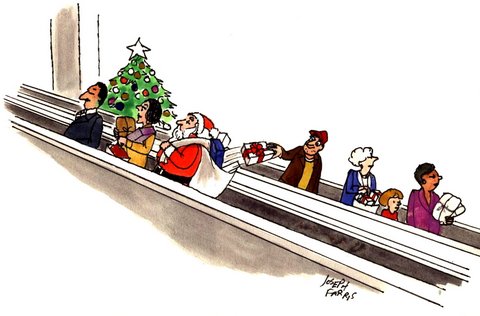
All of the staff at EQMM would like to wish our readers joyful holidays and a happy new year! We will not be posting again on this site until Wednesday, January 8, 2014. We hope the following cartoon, by EQMM contributor  Joseph Farris,  will add a humorous note to your festive season. . . .

C20

Posted in Cartoon, Ellery Queen | Tagged , , , , , | Leave a comment

DIGITAL-EDITION SALE

From now until January 3rd, receive 60% off a year’s digital subscription at Magzter.

Posted in Digital, Magazine | Tagged , , | Leave a comment