REFLECTIONS FROM A READING WEEK

I’ve been immersed in submissions over the past week and it’s revived an old line of thought. . . .

Every editor receives a share of manuscripts from writers who’ve never had a word in print on which a copyright notice looms boldly at the top. This is almost always a bad sign: Most such manuscripts turn out not to be publishable. I’ve come to think that extreme authorial anxiety over the protection of content arises from a failure to notice that creativity mostly takes wing from a relatively small cluster of basic, and shared, ideas.

A decade ago, mystery writers Peter Lovesey, Liza Cody, and Michael Z. Lewin decided to test what would happen if they each wrote a story taking as a common point of departure the same newspaper account of a crime. There’s more than a thematic convergence to the tales they came up with, which were published in EQMM March/April 2007 and later became part of our podcast series, but you can read or listen to all three in the same afternoon and not get a sense of repetitiveness. The creativity there is all in the details: The characters and their social milieus, the different narrative voices, the insights and observations that come from each author, and the subtly different mood of each tale would each suffice alone to give the reader a sense of entering a different fictional world. Even the plots, in their concrete working out, turned out to diverge enough to keep the reader wondering.

Those three authors (all friends, incidentally) were inspired to perform this experiment by the question authors so often get asked: Where do you get your ideas? Most authors find that a hard question to answer: Many will tell you they don’t know, the ideas just come. I once heard a writer say, “Where do I get my ideas? They’re floating in the air.” From my perspective at EQMM that seems, metaphorically at least, a pretty good answer—because authors so frequently catch the same idea at the same time, almost as if an idea were an airborne virus. Stories with amazingly similar themes, plot lines, even character types appear on our desks all at once, then die out as mysteriously as they briefly proliferated. A couple of years ago I was so struck by the similarity of the plots and storylines of two first stories that came to us within a month (both publishable) that I wrote to the authors to ask if they could have shared a writing course; but there was no connection between them at all. Although we’ll sometimes have to choose, in such instances, which story we’ll buy and which we’ll have to send back, authors need not worry, when that happens, that they’ve been suspected of plagiarism. Ideas can’t be copyrighted for the very good reason that they’re so often picked up from no one knows quite where.

That’s not to say there are not cases of deliberate borrowing of ideas, and some such borrowings may be concerning. Writers of classical puzzle mysteries, especially those whose plots hinge on an unusual weapon, a clever contrivance, or an especially complex and clever plot, may have more legitimate proprietary concerns regarding their ideas (including their plots) than most other writers.

But most often, even when a writer consciously borrows an idea from another writer, it’s not a case of stealing. More often it would be better considered a sort of homage. Years ago, I received a wonderfully atmospheric story by a writer who’d never published in our genre before, which we proceeded to buy and publish. No sooner had the issue hit the newsstands, however, than we received an anxious and contrite letter from the author in which she revealed that she’d copied the structure of a story by one of our genre’s grand masters to help shape her own piece. My first thought was that it was a fine time to tell us. But I realized immediately that the story had been so thoroughly filtered through the author’s own viewpoint, characters, setting, and voice that, whatever its structural borrowings, it had become unique. (Besides, structure is a part of craft that nearly every writer learns from those who’ve gone before.)

Don’t get me wrong, we have no tolerance at all for plagiarism. But there’s a big difference between imitation and plagiary, and the things that can be easily imitated or borrowed are often not the things that are key to a story’s originality.

An awful lot has been written about what it is that makes a story original. The source I find most useful on this subject is Edgar Allan Poe. Here are a few lines from his essay “On the Aim and Technique of the Short Story.” He’s speaking of Nathaniel Hawthorne’s work. “Mr. Hawthorne’s distinctive trait is invention, creation, imagination, originality—a trait which, in the literature of fiction, is positively worth all the rest. But the nature of originality, so far as regards its manifestation in letters, is but imperfectly understood. The inventive or original mind as frequently displays itself in novelty of tone as in novelty of matter.”

For “matter” in that last line, let’s substitute “ideas” and then we can see that for Poe, novelty of tone—the voice each author brings uniquely to the work, the distinctive atmosphere he or she creates—is as important as original ideas. And it is a quality it would be very much harder for anyone to borrow or steal.   —Janet Hutchings

Posted in Characters, Editing, Fiction, Genre, Publishing, Story, Writers, Writing | Tagged , , , , , , , | 1 Comment

EQMM to Be Special Guest at Passport to Murder, the 2017 Bouchercon World Mystery Convention in Toronto, from October 12-15!

A couple of months ago, in the midst of our celebration of EQMM’s 75th anniversary year, our staff received the delightful news that the magazine will be honored for “Distinguished Contribution to the Genre” at the next Bouchercon World Mystery Convention, in Toronto, Canada.

Chairs for the event, editor and anthologist Janet Costello and short-story writer Helen Nelson (both active in Sisters in Crime Canada), have given the upcoming convention an international theme, which is, of course, right up EQMM’s street. The convention’s title is Passport to Murder, an echo of the title of the department that has run in EQMM since 2003, Passport to Crime.

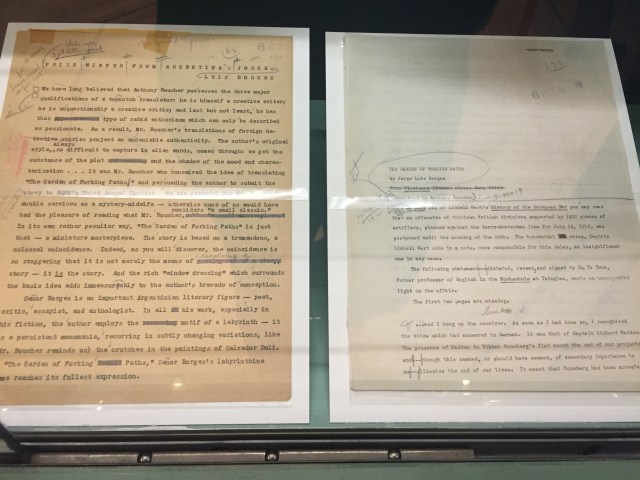
The Bouchercon organization itself has a tie to EQMM by virtue of our common reverence for its namesake, Anthony Boucher. EQMM’s current issue, November 2016, tips its hat to Anthony Boucher with a reprint of one of his stories, “A Kind of Madness.” But Boucher was much more than a writer for EQMM. He was the magazine’s second book reviewer, a longtime friend of Manfred B. Lee and Frederic Dannay (a.k.a. Ellery Queen), and a translator of crime fiction from several languages, some for EQMM. Frederic Dannay is said to have told one of the great writers of the twentieth century, Argentina’s Jorge Luis Borges, “You are the man who made me famous.” The story may be apocryphal, but it refers, nevertheless, to an important moment in EQMM’s history, the magazine’s publication of Anthony Boucher’s translation of Borges’s “The Garden of Forking Paths,” the first work of Borges’s ever to appear in English.

The fact that EQMM is to be honored not only at a convention named for Boucher but one whose theme is international is truly gratifying, and it shows how much the world of crime fiction has changed over the past couple of decades.

In 2003, when EQMM launched Passport to Crime, our monthly translation series, there was far too little crime fiction from other countries seeing print in English.

Getting up and running with the series was a challenge. Fortunately, we had the assistance of the International Association of Crime Writers, which was founded in 1986 and had, by then, established branches worldwide that could help us to identify authors, readers, translators, and literary agents in the countries they served. As in most business ventures, one connection led to another, and pretty soon we knew of translators’ organizations, yearly mystery awards similar to the American Edgars in several other countries, and Web sites that our translators could use to scout for new authors. The series remains a challenge, since we want to try to keep adding new countries and authors to the list, rather than repeating our earlier finds, and unfortunately, there are many countries that have no writers’ organizations we can tap into, though we suspect they may have a thriving literature of crime fiction. We hope the 2017 Bouchercon will afford opportunities for us to connect with writers from those less familiar crime-fiction communities.

A lot has changed on the wider crime-fiction scene since EQMM began actively seeking stories to translate. There’s been a virtual explosion of interest by English-language book publishers (especially in the U.K and the U.S.) in bringing out translations, and crime and mystery fiction seems to be a significant category. It’s easy to see why, for however introspective or character-driven a mystery may be, a strong plot is almost always present too, and such plots can provide strong hooks for marketing to a new audience. Besides, mystery fiction, with its procedural aspects (involving police and other organizations) seems uniquely positioned to give readers a sense of how other societies function.

Still, why has interest increased only now? Many non-English-speaking countries have crime or mystery writing traditions that go back at least a hundred years, and the percentage of books making it into translation for the U.S. market was, until a decade ago, negligible.

Several years ago, I posted on our Web site forum some information I’d discovered about the increase in the number of English translations being done of foreign crime fiction. A July 2, 2010 article in the Wall Street Journal entitled “Fiction’s Global Crime Wave” cited the share of translated books coming out in the U.S. as 3%, which was, of course, small, but it was (according to other sources) threefold what it had been only a few years earlier.

What was perhaps even more telling was the Journal article’s reference to a fall in sales of U.S. crime novels in overseas markets: down 25% in Germany, 15% in France, and 90% in Scandinavia. The reason for this was speculated to be that publishers in those countries had come to have so many good home-grown mysteries to draw from that they didn’t need as many U.S. imports. Other countries, in other words, especially in Europe, seemed to be experiencing a great upsurge in creativity in our field. And perhaps it’s the availability of so many outstanding new foreign titles that is fueling the interest of American, Canadian, and U.K. publishers in translations.

I could not find any data more recent than that for English-language crime-fiction translation. But I did chance upon a 2016 article in Publishing Perspectives, by Dennis Abrams, entitled “Translated Fiction Outsells English Fiction in the U.K.,” in which Fiammetta Rocco, administrator of the Man Booker International Prize, was quoted giving figures that show the average number of copies sold of translated literary-fiction titles as more than twice that of literary novels written in English. Since translated titles amount to only 1.5 percent of all books published in the U.K., the total number of translated books sold is, of course, much smaller than the total number of English-language original books sold, but when comparing the average sales of individual titles in each of the two categories, the translations won.

It would be interesting to know whether this remarkable development in the field of literary fiction is mirrored in crime fiction. I suspect that it is, and I hope to learn more about that and related topics at the Toronto convention, where I’m sure Janet and Helen have a revealing lineup of panels and events planned.

EQMM is being gifted with a table at this convention—a place where our authors and readers can gather and find us. We hope to see you there!

Thank you, Bouchercon, for this special opportunity!—Janet Hutchings

Posted in Conventions, Magazine, Passport, Publishing, Readers, Writers, Writing | 3 Comments

“What I Learned in Prison” (by T.J. MacGregor)

Trish MacGregor is the author of forty novels and the winner of an Edgar Allan Poe Award for best paperback original novel. In June 2016, she appeared in EQMM for the first time, with the story “The Unit.” We have another of her riveting stories of suspense coming up in 2017.  The experiences she describes in this post are both inspiring and thought-provoking.—Janet Hutchings

For three years in the late 1970s, I was in prison. Well, actually I was a prison librarian, not an inmate. Thankfully. That probably sounds like something from that old TV show, What’s My Line?

This prison was for male youthful offenders, in South Florida. It was new, run by the state, and I think I got hired because I spoke Spanish, had taught English to students from kindergarten through college, and had a master’s degree in Library Science. And they were looking for a Spanish teacher and a librarian. Plus, I was motivated. I had just finished a couple of years of teaching Spanish to hormonal eighth graders at a private school and knew that if I did it for another year, I probably would lose my mind!

Because the Indian County Correctional Institution was new, the library hadn’t been built yet and they brought in a double-wide trailer that was placed across the sidewalk from the education building, smack in the middle of the compound. I was provided with a generous budget to stock this library with books, music, magazines, and anything that wasn’t “obviously pornographic,” like Playboy, they said, or Penthouse. I remember standing in the middle of this huge, empty double-wide and thinking, Wow, I get to build my dream library.

So one day I drove over to the local independent bookstore in Vero Beach, Florida and started ordering books. Dashiell Hammett, Agatha Christie, Mickey Spillane, Raymond Chandler, Dorothy L. Sayers. You know the list. I also got Fitzgerald, Hemingway, du Maurier, Stephen King, and Dean Koontz. I included some of my favorites—Time and Again, by Jack Finney, and several from by Richard Matheson—The Body Snatchers, The Incredible Shrinking Man.

Nonfiction ran the gamut from memoirs to self-help to New Age titles. Instead of Playboy and Penthouse, I stocked Ellery Queen, Fate, Scientific American, and in 1978 added OMNI Magazine. I’m sure the inmate population wasn’t happy about the absence of porn, but they consumed everything else. And Tom, the bookstore owner, loved seeing me when I came shopping.

Years later, after I’d sold several novels, he hosted a signing for a group of mystery writers and invited me. It was fun and particularly gratifying because I’d made the leap from prison librarian and Spanish teacher to full-time writer.

In terms of daily life on that prison compound, I was one of fifteen women. This was a minimum-security prison, far more relaxed than maximum-security prisons, like the Florida state prison at Raiford, where the electric chair—Old Sparky—was alive and well. As a youthful offender facility, it was meant for kids as young as 15 and young adults up to 21. Never mind that there were inmates much older than that. Most of the crimes were drug-related—pot and cocaine.

Some young men were doing time for serious crimes. One inmate who eventually became an assistant in the library had robbed a convenience store so he could buy drugs. Another of my assistants, whose parents both had doctorates, had gotten high on something and raped a young girl. A man in his late twenties had killed the grandson of the Chicago mayor over a drug deal. His fiancée and I eventually became running partners and I learned a lot about what’s it’s like to live as a professional drug dealer. That inside dope helped me write my first published novel.

I remember one African-American, Ake, an older man in his thirties, who was doing ninety-nine years for murder. He’d been placed in our facility because he never caused trouble. Ake was a voracious reader, one of my most loyal customers.

Several years after I left that job, I was in a grocery store in Fort Lauderdale and heard someone bellowing, “Ms. Trish!” I turned and there was Ake, a giant of a man, rushing toward me with his arms wide open. We hugged in the middle of that grocery store and he told me he’d gotten early release for good behavior. And then he thanked me for all the wonderful books my library had provided, books that had changed his life from the inside out.

The other thing I learned as an employee in this prison is that when you have power over other people, it’s easy to abuse that power. Prison employees sold dope to inmates, no surprise there. Orange Is the New Black has that pegged. Female employees had affairs with inmates. Orange addresses that, too, but not quite in the same way since the prison in Orange is a female federal prison. In the prison where I worked, several female employees seduced the male inmates. At least one of them ended up marrying the inmate when he was released. The difference from Orange, besides the gender of the inmates, was that they didn’t interact with such snappy dialogue. No scriptwriters for those guys.

Then there were other types of abuses. Guards who patted your butt. Way to go, honey. I reported that guy to the superintendent of the prison. Nothing happened to him. After an inmate hung himself in solitary, it was discovered that he’d been on an outside work crew and had been taken to the assistant superintendent’s trailer on the prison grounds. Maybe he’d been expecting a cold glass of iced tea and lunch. Instead, he was raped.

When he reported it, he was tossed into solitary confinement and that was where he’d hung himself. When it was discovered that the assistant superintendent had been raping inmates for some time, he was forced to retire. No charges were ever brought against him.

I left this job in 1979, when the rapist-in-chief himself accused me of making personal copies of my resume in the classification department, the only place at that time that had a copier. Guilty. I did it. He threatened to place me on probation. The resumes were sent to the FBI, where I applied for a job because I couldn’t stand working in the state prison system anymore.

I went through two interviews with the FBI, who had started hiring women as agents, not just secretaries, in 1975. I was offered a job, pending my medical tests. Then I failed the hearing test because I’m ninety-percent deaf in my left ear, the result of a fractured skull when I was five. I quit my job, sold my condo, and moved. Eventually, I was hired by Florida International University to teach English to Cuban refugees.

I look back on those years in prison, though, and understand how much I gained. I used to go into the classification department on my lunch hour and read inmate files. I was curious about who they were, their backgrounds, families, their psyches. They provided plenty of fodder for future novels. The guy who headed that department was a Mormon with seven children. He was just there, filling time, waiting for retirement. The man in charge of the education department was a big teddy bear of a guy who made a difference in that he set up a GED program and then a college-level program where inmates could earn actual college credits for courses they took.

In the late 1990s, Florida’s state prisons were privatized. It meant that the more inmates they have, the more money they received from the state and the federal government. It’s probably why so many minorities are in prison for petty drug crimes, such as using or selling pot.

My three years behind bars—eight hours a day—taught me several indispensable lessons:

  • Nothing is ever what it appears to be, in either life or fiction.
  • That in a prison, the lines between good guys and bad guys are often blurred.
  • Sometimes, crime does pay.
  • There are usually two sides to a story—the wrong side and the right side—and those sides are usually open to interpretation.
  • Books change lives.
Posted in Books, Guest, Readers | Tagged , , , , , , , | 2 Comments

BOUCHERCON/EQMM 75TH ANNIVERSARY SYMPOSIUM PHOTO GALLERY PART 2

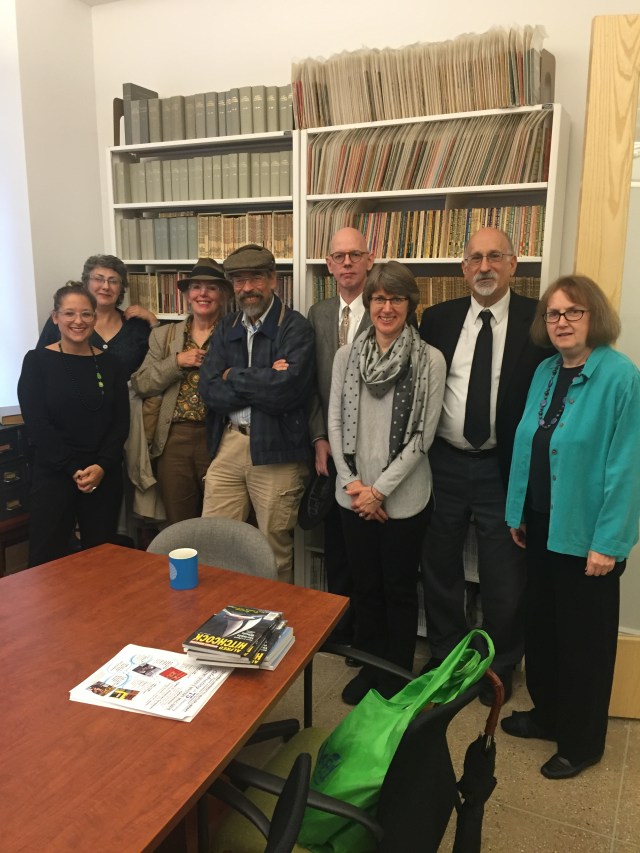
This week we want to share some photos that were not available to us when we posted about our 75th anniversary symposium last week. Following the symposium, Columbia University hosted a reception in the space that contains the EQMM 75th Anniversary Exhibition (Butler Library, 6th Floor East).  Our videographer, Ché Ryback, took some still photos of that event. A selection of them can be found below, along with three additional photos from the Bouchercon World Mystery Convention in New Orleans.

Parts 1 and 2 of the symposium video are now up on YouTube and the audio recordings for those segments are or will be available in our podcast series. We expect to have Part 3 ready by next week. We hope you’ll have a look, or a listen. And don’t forget that the 75th anniversary exhibition at Columbia is on view and open to the public until December 23!—Janet Hutchings

From the EQMM 75th Anniversary Exhibition Reception
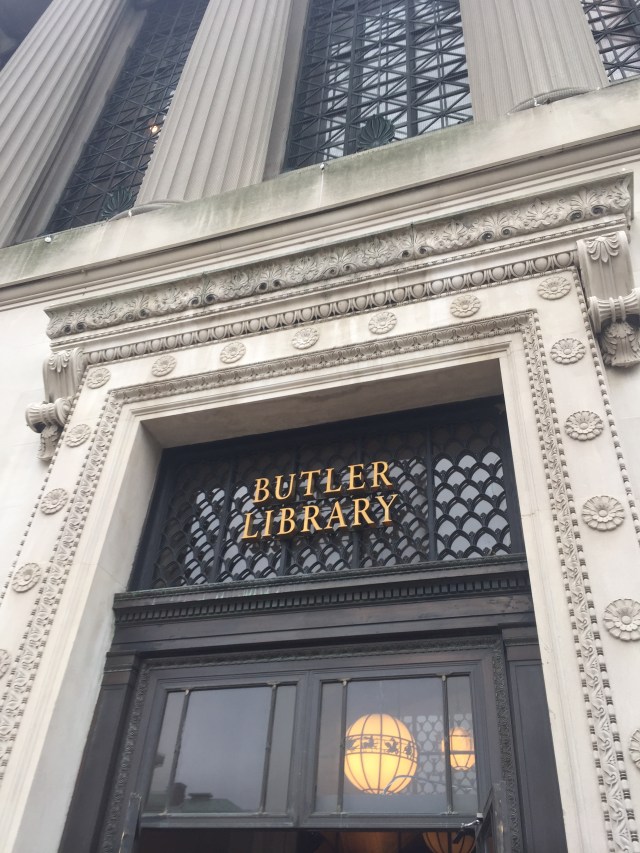
Butler Library at Columbia University
535 W 114th Street, New York, NY, 6th Floor East
Exhibition on view until December 23

eq-4 eq-6 eq-9 eq-11 eq-14 eq-18 eq-21 eq-24

Linda Landrigan, Editor, AHMM

Linda Landrigan, Editor, AHMM

Peter Kanter, Publisher, Dell Magazines

Peter Kanter, Publisher, Dell Magazines

EQMM at Bouchercon World Mystery Convention
New Orleans, LA
September 15-18, 2016

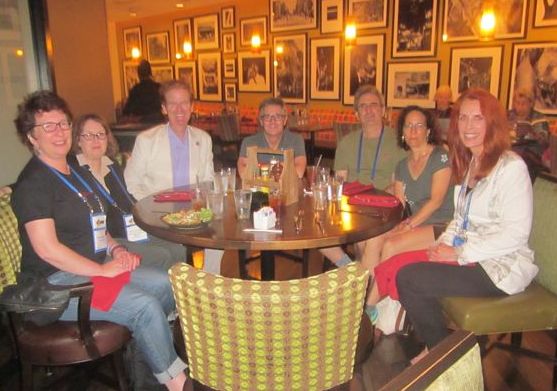
From L to R: Charlaine Harris, Paula Wolden, Daniel Distler, Martin Edwards, Hilary Davidson, Janet Hutchings, Laura Benedict

From L to R: Dana Cameron, Janet Hutchings, Jack Chapple, Art Taylor, Dave Zeltserman, Judy Zeltserman, Twist Phelan

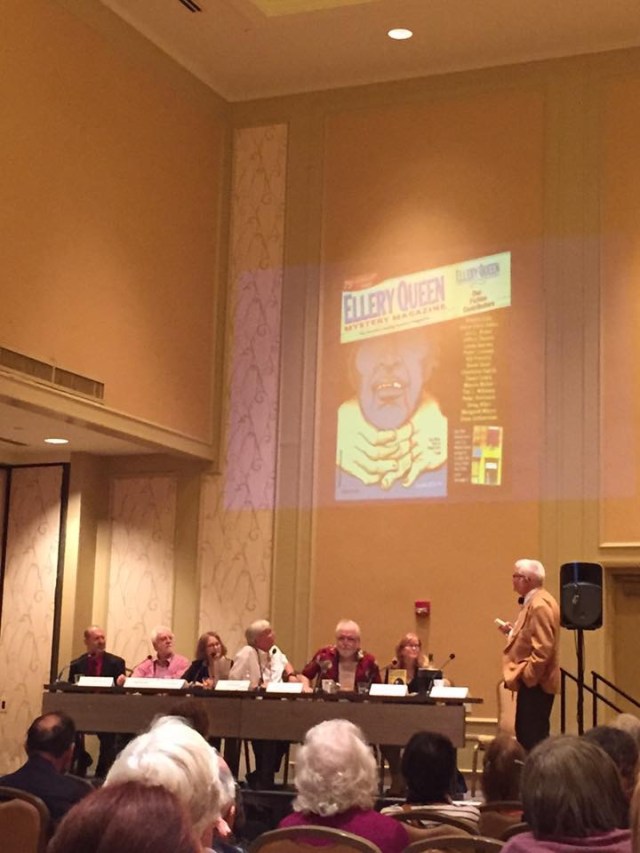
The Anniversary Panel, from L to R: Steve Steinbock, Otto Penzler, Janet Hutchings, Ted Hertel, Brendan DuBois, Shelly Dickson Carr, and James Lincoln Warren (moderator)

Posted in Conventions, Ellery Queen | Tagged , , , , , , , , | Leave a comment

EQMM 75th-ANNIVERSARY PHOTO GALLERY

Last week, in my October 12 post, I promised some photos of the celebratory events surrounding EQMM’s 75th anniversary, beginning with the Ellery Queen panel at the Bouchercon World Mystery Convention in New Orleans and concluding with the reception following the EQMM 75th-Anniversary Symposium at Columbia University. EQMM’s senior assistant editor Jackie Sherbow has collected some of the best of the photos and arranged them here. Many of you will already know who the symposium participants are, but some information about each follows the photos.

Please don’t forget that the entire symposium is being made available through both audio podcast and YouTube video. Part 1 of four segments is already up, and Part 2 is expected to follow next week. Don’t miss it!—Janet Hutchings

The Bouchercon World Mystery Convention, New Orleans, LA (September 15-18, 2016)

bcon1

The EQMM anniversary panel at Bouchercon 2016. From L to R: Steve Steinbock, Otto Penzler, Janet Hutchings, Ted Hertel, Brendan DuBois, Shelly Dickson Carr, and James Lincoln Warren (moderator)

bcon2

The EQMM anniversary-panel toast at Bouchercon 2016

September 30, 2016: EQMM 75th Anniversary Symposium, Exhibition, and Reception

1

Breakfast at the Dell Magazines office the morning of the symposium. L to R: Jackie Sherbow, Linda Landrigan, Laurie Harden, Peter Andruskiewicz, Joseph Goodrich, Laurie Pachter, Josh Pachter, Janet Hutchings.

2

Butler Library, Columbia University, site of the EQMM 75th-anniversary symposium

3

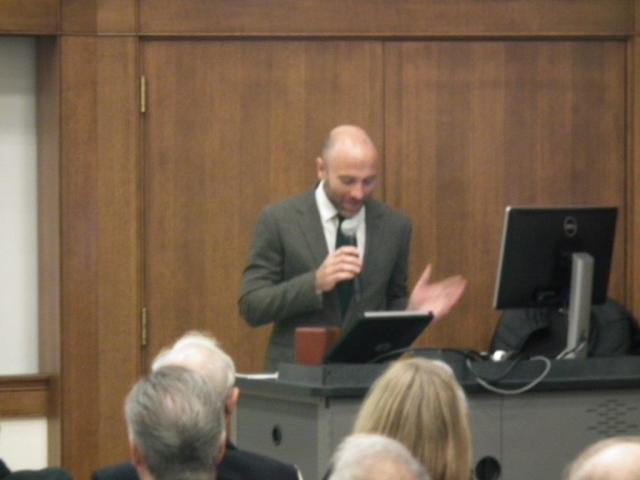
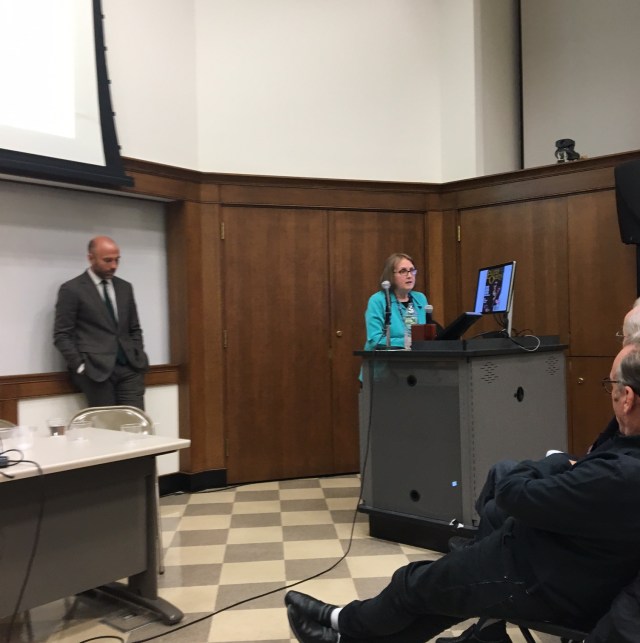
Sean Quimby of Columbia University’s Butler Library opens the event.

4

Panel 1: Making Mystery Matter: EQMM and the Shaping of American Crime and Detective Fiction. From L to R: Sarah Weinman, Leah Pennywark, Jeffrey Marks, Charles Ardai

5

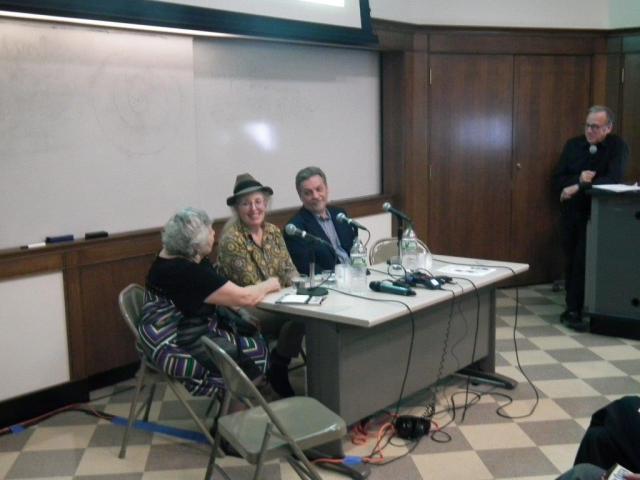
Panel 2: A Brush With Death: Crime Fiction Cover Art and Illustration from the Pulps to the Present. From L to R: Janet Salter Rosenberg, Laurie Harden, Tom Roberts, and Jonathan Santlofer (moderator)

6

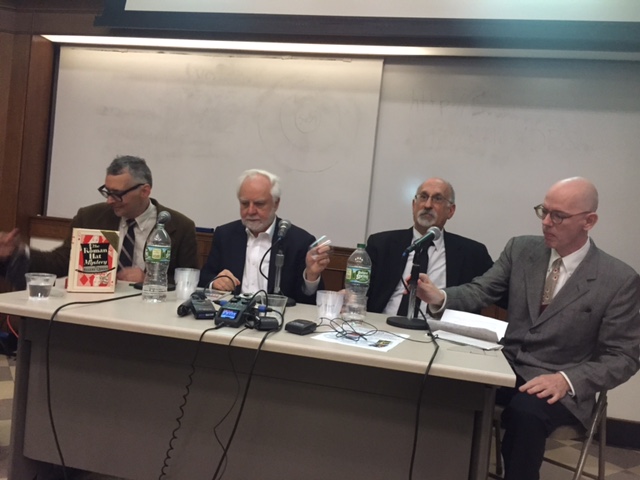
Panel 3: EQMM’s Editor’s at Work. From L to R: Russell Atwood, Otto Penzler, Josh Pachter, Joseph Goodrich

7

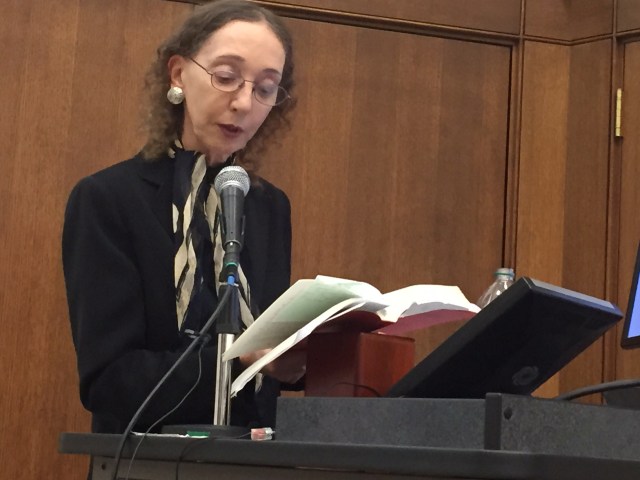
Joyce Carol Oates reads from her story “Big Momma” (EQMM 3-4/16)

8

Janet Hutchings offers some closing remarks.

10

The EQMM 75th Anniversary Exhibition at Columbia University’s Butler Library, 6th Floor East

9

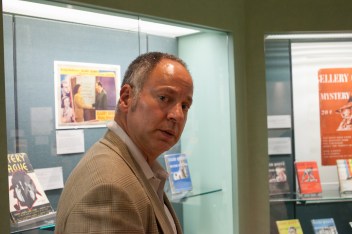
Some manuscripts within the exhibition: Jorge Luis Borges, Anthony Boucher, Frederic Dannay

11

Peter Kanter and Josh Pachter offer a bilingual toast at the reception.

SEAN QUIMBY is Director of the Rare Book & Manuscript Library of Columbia University Libraries. Previously he served as Senior Director of Special Collections at the Syracuse University Library, where he was responsible for the records of pulp magazine publishers Street & Smith, Ace Books, and Hugo Gernsback, as well as the archives of writers like Joyce Carol Oates. Trained as a historian of technology, he began his career in libraries at Stanford University.

SARAH WEINMAN is the editor of Women Crime Writers: Eight Suspense Novels of the 1940s & 50s (Library of America) and Troubled Daughters, Twisted Wives (Penguin). Her short stories have appeared in both EQMM and AHMM, and she has written about crime fiction for the New York Times Book Review, the New Republic, the Wall Street Journal, and many other publications. She is also News Editor at Publishers Marketplace.

LEAH PENNYWARK is a doctoral candidate at Purdue University. She specializes in twentieth-century American literature with a focus on detective and postmodern fiction. She has published in LIT: Literature Interpretation Theory and is finishing an article on EQMM’s impact on literary fiction in the mid-twentieth century.

JEFFREY MARKS is an award-winning crime-fiction biographer. His first book-length work, Who Was That Lady?, appeared in 2001, chronicling the life of mystery writer Craig Rice. It was followed by Atomic Renaissance: Women Mystery Writers of the 1940s and 1950s. More recent works include the Anthony Award winning Anthony Boucher; his 2013 biography of Erle Stanley Gardner; and his work-in-progress, a biography of Ellery Queen.

CHARLES ARDAI is a winner of the Edgar, Shamus, and Ellery Queen Awards, the author of novels such as Little Girl Lost, one of the writers and producers of the TV series Haven, and the founding editor of Hard Case Crime, the acclaimed pulp-fiction imprint which has published authors ranging from Stephen King and Michael Crichton to Mickey Spillane and Gore Vidal. His first professional fiction publication was in EQMM.

JANET SALTER ROSENBERG is the adopted daughter of Agnes and George Salter (EQMM’s first art director).  She was a book editor for ten years, working at Random House, Berkley Books, and Columbia University Press.  While at Random House, she collaborated with her father on Italo Calvino’s first novel published in the U.S. It was the first of several designer/editor, father/daughter collaborations. She is currently writing a memoir.

LAURIE HARDEN attended the Kansas City Art Institute and the Rhode Island School of Design, studying painting, illustration and print-making. She works as an art instructor and freelance illustrator, with clients ranging from Ladies’ Home Journal to the New York Times to Simon & Schuster. Her paintings are in many collections, internationally, including those of the National Cancer Institute and the late Japanese prime minister Keizo Obuchi.

TOM ROBERTS is an illustrator and designer who has designed more than 120 hardcover and paperback books, as well as comic books and TV storyboards. He has appeared on A&E’s Biography and his art has been shown in exhibits across the country.  He also writes articles and books on illustrators of the past, including the award-winning Alex Raymond: His Life and Art. In 1997, he founded Black Dog Books, to bring awareness to the impact pulp magazines have had on popular culture.

JONATHAN SANTLOFER is the author of a half-dozen critically acclaimed novels, including the Nero Award-winning Anatomy of Fear. He is the editor of several anthologies, and his short stories have appeared in EQMM and other magazines. A well-known artist as well as a writer, he’s on the board of Yaddo, the oldest arts community in the U.S. His artwork is in such collections as the Metropolitan Museum of Art, the Art Institute of Chicago, and Tokyo’s Institute of Contemporary Art.

RUSSELL ATWOOD is a former managing editor of EQMM and the author of short stories and two well-received novels. His interviews with mystery writers such as Reginald Hill and Colin Dexter have appeared in Biography magazine. He has also written live shows, including the adult puppet comedy “The Nickie, Jameson, and Fred Show.” His most recent venture is the opening of a combination rare bookstore/performance art space called Mostly Mystery in Westfield, MA.

OTTO PENZLER is the proprietor of The Mysterious Bookshop (in NYC) and the founder, in 1975, of The Mysterious Press, now an imprint at Grove/Atlantic. He also publishes original works and classic crime fiction through MysteriousPress.com. The editor of more than 60 anthologies, including 20 volumes of The Best American Mystery Stories of the Year, he has won two Edgars for best critical work and is a recipient of both the Ellery Queen and Raven awards.

JOSH PACHTER debuted in EQMM in 1968 at the age of 16 (the second-youngest fiction contributor ever). Over the almost half-century since, he has contributed to EQMM another four dozen solo stories, collaborations, and translations of fiction by Dutch and Belgian writers. The Tree of Life, a collection of his Mahboob Chaudri stories, was published in 2015, as was Styx, a novel he wrote in collaboration with Belgium’s Bavo Dhooge.

JOSEPH GOODRICH is an Edgar Award-winning playwright whose work has been produced across the U.S. and Canada. He is also the author of short stories and critical/biographical works in the mystery field (including 2012’s Blood Relations: The Selected Letters of Ellery Queen). His current play, Calamity Town, based on the Ellery Queen novel of the same title, recently ran to critical acclaim in Calgary, Canada.

JOYCE CAROL OATES is a winner of the National Book Award, two O. Henry Awards, and a National Medal for the Humanities (among many other honors). One of America’s most celebrated writers, she is the author of more than 50 novels and dozens of short stories, most under her own name, but a number employing her crime-writing pseudonyms Rosamond Smith and Lauren Kelly. Since 1992 she has contributed more than two dozen stories to EQMM.

Posted in Conventions, Ellery Queen, Magazine | Tagged , , , , , , , , , , , , , | 1 Comment

How We Will Miss Them Both!

This month two of EQMM’s most influential and valued contributors passed away. On October 1, the mystery world lost Clark Howard, a five-time winner of EQMM’s Readers Award, an Edgar winner for best short story with five additional Edgar nominations in that category, and a recipient of the Edward D. Hoch Memorial Golden Derringer for Lifetime Achievement from the Short Mystery Fiction Society. Clark was also a noted writer of true or “fact” crime, and was twice nominated for the best-fact-crime Edgar. He had a larger-than-life personality, and he was generous to a fault—treating his editors and friends to elaborate dinners at five-star restaurants on the few occasions when he traveled to mystery events. Clark’s life is chronicled in his autobiography Hard City, published by Dutton in 1990. It’s painful reading: As a boy he was parentless and homeless for a time, concealing himself in a bowling alley before closing each night so he’d have somewhere to sleep. While still a teenager, he served in the Korean War. Out of those tough beginnings he rose to become one of the best short story writers of his generation. He was one of a kind, and a friend to me and everyone else he knew at Dell Magazines.

This morning I signed on to my computer to the news that Ed Gorman, co-founder of Mystery Scene Magazine and one of our field’s most haunting and original writers, had succumbed to a long illness on October 15. Like many in the mystery community, I’ve known Ed for decades and counted him a friend—though I never met him face to face. Ed was shy of large gatherings. It was primarily through phone calls, paper mail, and e-mail that he managed to meet—and help—more writers and editors than we could begin to count. A nominee for the Edgar in both the best-critical and best-short-story categories, he was also 2003’s recipient of the Ellery Queen Award, which is given to editors or publishers for their wide-ranging contributions to the mystery field. Ed’s contributions to EQMM were especially significant: He contributed nearly two-dozen searing stories of dark suspense to our pages; he suggested, and developed, our first Web site; he conceived and was the first author of our Blog Bytes column; and he was an inveterate reader of EQMM who often took the time to write a complimentary letter to us about what he’d enjoyed in an issue. Those letters were such a boost; I will always be grateful that Ed took the time to write them.

This month our field lost two of the greats. May they rest in peace.—Janet Hutchings


Posted in Memorial | 4 Comments

75th ANNIVERSARY: SYMPOSIUM MEDIA AND MORE

The video and audio from the first panel of our anniversary symposium are now available!

For more anniversary coverage, stay tuned here, see our previous posts, and visit Vicki Weisfeld’s piece for Crime Fiction Lover: “75 Years of Ellery Queen’s Mystery Magazine.”

Posted in Ellery Queen, History, Magazine | Tagged , , , | Leave a comment

The Champagne Toasts Have Come and Gone!

And Now Here Is the Solution to Our 75th Anniversary Contest, Our List of Winners, and Josh Pachter’s Report on “Easter Eggs” in Arthur Vidro’s Contest Story

What a month September was for EQMM! We’ve been celebrating our 75th anniversary in print all year long, and we’ve still got two more special issues to go, but there’s nothing like the energy a devoted community of readers, writers, and fans can bestow in person, and we were overwhelmed by the enthusiasm of that community first at the Bouchercon World Mystery Convention in New Orleans on Friday September 16, when EQMM and AHMM writer James Lincoln Warren put together and so brilliantly moderated a panel composed of EQMM book reviewer Steve Steinbock, The Mysterious Press’s Otto Penzler (who is also a former columnist for EQMM!), short-story writer and Ellery Queen expert Ted Hertel, Shelly Dickson Carr (granddaughter of John Dickson Carr, who was, of course, one of the genre’s most illustrious writers and also a former columnist for EQMM), and myself. The lively discussion was punctuated by glasses full of champagne (provided by our fabulous moderator!) being lifted to the magazine and its future.

Just two weeks later, on September 30, many of us met again at Columbia University for a half-day EQMM symposium sponsored by the university’s Butler Library. It was an afternoon of insightful discussion, poignant recollections, a colorful and thought-provoking art presentation, a gripping reading by author Joyce Carol Oates, and much more. Rather than trying to summarize the afternoon myself, I’d like to direct you to two posts I’ve seen by attendees (see “Reflections on the 75th Anniversary of Ellery Queen’s Mystery Magazine” by V.S. Kemanis and “A Diamond for the Queen” by Les Blatt) and also to our podcast series, where later this week we will be posting the audio of the first panel, and our Web site, where in coming days you will find a link to the video of that portion of the program. Video and audio of subsequent portions of the program will be made available at the same locations on the Web as the editing of them is completed. And next week, we’ll be putting up a photo gallery of all of the events on this site, including the reception that followed the symposium, at which attendees were able to view the EQMM exhibition—which will continue to run through December 23.

Everyone involved in these events—from our panelists and moderators and speakers to the library’s director Sean Quimby and the exhibition curator Jennifer B. Lee—has proved an inspiration to me and to the rest of EQMM’s staff. As we go forward into our 76th year, it’s with a sense of being fortunate to belong to a truly extraordinary community.

Before we get to the 75th-anniversary contest solution and results, I want to insert a reminder to readers not to miss our two remaining anniversary issues: November, which has just gone on sale and highlights the magazine’s influence on crime fiction scholarship, reviewing, and criticism, and December, which includes some final thoughts about EQMM’s role in today’s publishing world.

And now, here is the solution to “The Mistake on the Cover of EQMM #1” by Arthur Vidro. It is followed by “Easter in the Autumn” by Josh Pachter, in which he reveals the story’s many hidden “Easter Eggs.” I will forgo introductions to Arthur and Josh, since they both have earlier posts you can refer to on this site (see “The Return of Poggioli: T.S. Stribling’s Sleuth Given a New Home in EQMM by Arthur Vidro and “Partners in Crime” by Josh Pachter). —Janet Hutchings

WHAT WAS THE MISTAKE?
by Arthur Vidro

Professor Tudorri greeted his class the following week. “Most of you failed to identify correctly the mistake on the cover of the first issue of Ellery Queen’s Mystery Magazine. Though a few of you—Danny Nathan, Manford Lepofsky, and Eli Martin—did quite well.”

He started handing the students back their papers.

“Dolores Aikin thought the mistake was the newspaper headline in the eyeglasses on the illustrated face. She said the type was backward. But that was meant to be a reflected image, so that’s not a mistake. Amos Bluefield wondered if author Stribling’s first name had been erroneously omitted. However, Thomas Sigismund Stribling—who had already won a Pulitzer Prize for his novel The Store—always used the moniker T.S. Stribling for his writing.”

Tudorri returned to the head of the class.

“The misspelling was in the surname of Anthony Abbot, which was the pseudonym used by author Fulton Oursler when he wrote mysteries. The magazine mistakenly ended the Abbot surname with two t’s instead of one.”

“How embarrassing,” said Jezreel Wright, who usually was silent as a statue.

“Yes, especially since Ellery Queen, the magazine’s editor, corresponded with many of these authors and had read their novels and short stories. However, the mistake was quickly identified and corrected—perhaps even by Fred Dannay himself, who pre-Ellery Queen had been the art director at an ad agency. I can picture him—or someone else acting on his instructions—taking an artist’s knife and scratching out that second t. On many reproductions of the first issue’s cover—including a poster-size version the magazine offered for sale—the name Abbot is spelled correctly, but it doesn’t quite align with the names of the other authors. That is because the scratch-out mark, not the t in Abbot, is flushed to the right.”

“Who told you about this mistake?” asked Dolores.

“I caught this mistake myself,” said Professor Tudorri. “And thanks to this class, now the world can know.”

* * *

AND THE WINNERS ARE . . . Jim Noy, Twila Johnson, and Art Taylor, each of whom will receive a free one-year subscription to EQMM. Congratulations to them all!

* * *

EASTER IN THE AUTUMN
by Josh Pachter

In 2011, to help celebrate the 70th anniversary of Ellery Queen’s Mystery Magazine, Arthur Vidro wrote a delightful short story titled “The Ransom of EQMM #1.” Five years later, on 8/31/16, Something is Going to Happen featured Mr. Vidro’s equally delightful follow-up, “The Mistake on the Cover of EQMM #1,” in celebration of the magazine’s 75th anniversary. This time around, the story wasn’t only a treat in its own right, but it also included an authentically Queenian “Challenge to the Reader,” which EQMM editor Janet Hutchings then turned into a contest.

The solution to Mr. Vidro’s challenge has now been announced, as have the three winners of the contest’s prizes: year-long subscriptions to the world’s leading mystery magazine. Congratulations to the three eagle-eyed readers who spotted the misspelling of Anthony Abbot’s last name the fastest!

What some readers of this blog may not have spotted, though, is that Vidro’s story also included more than a dozen cleverly planted Easter eggs, the little “in jokes” that software developers, filmmakers and authors sometimes hide in their programs, movies, and writings to reward those clever consumers who manage to spot them.

In case you missed the Easter eggs in “The Mistake on the Cover of EQMM #1,” here are explanations of the ones I noted. (If there are others that I missed, I hope Mr. Vidro—or someone else—will let me know!)

Let’s start with the easy ones. Just before the cover reproduction that illustrates the story, we hear from Danny Nathan and Manford Lepofsky, two of Professor Harv Tudorri’s journalism students. And, when the professor offers extra credit to anyone who can name the two men who wrote together under the “Ellery Queen” pseudonym, Manford identifies “Manny Lee” and Danny interrupts him to name “his first cousin Fred Dannay.” Avid fans of the Ellery Queen series probably already know that “Manfred B. Lee” and “Frederic Dannay” were themselves assumed names: Manny Lee was originally Emanuel Benjamin Lepofsky, and Fred Dannay was originally Daniel Nathan.

But that’s just the beginning! Most of the other students in Professor Tudorri’s class are named after residents of the fictional Wrightsville, the setting for a baker’s dozen of Ellery Queen’s novels and short stories, beginning with Calamity Town (1942) and, with stops along the way for The Murderer is a Fox (1945), Ten Day’s Wonder (1948), Double, Double (1950), a single chapter of The King is Dead (1952), and seven short stories and novelettes published in the ’50s and ’60s, leading all the way up to The Last Woman in His Life (1970).

Emmeline Dupre, who we see chewing on a pencil in the second paragraph of Vidro’s story, is the namesake of Wrightsville’s dancing and dramatics instructor, often referred to as the “Town Crier.” The burly Jeep Jorking is a tip of the cap to a Wrightsville police officer. Al Brown, whose sleeve is stained with ice cream, shares his name with the owner of the town’s ice-cream parlor. Ed Hotchkiss, who waits to be called on, is a shout-out to Wrightsville’s cab driver, who often hung around the railroad station waiting for a fare. The original J.C. Pettigrew was the proprietor of Wrightsville’s real-estate agency. Grover Doodle, who refers to his father’s newsstand, has the same name as the son of Mark Doodle, Wrightsville’s newsstand owner. Tom Anderson, who we learn sometimes shows up half drunk for Prof. Tudorri’s class, is staggering in the footsteps of Wrightsville’s Tom Anderson, who was the town drunk—and who wound up a murder victim in Double, Double. Gabby Warum was the community’s one-toothed train-station agent. And Wrightsville’s Carter Bradford was the local prosecutor and the boyfriend of Patricia Wright.

Which brings us to Milo Wiloughby, “a serious sophomore who wrote a medical column for the school newspaper.” I don’t know if this is an Easter egg within an Easter egg or just a typo on someone’s part, but “The Mistake on the Cover of EQMM #1” revolves around a spelling error—and Wrightsville’s town doctor was Milo Willoughby, with two L’s.

But there’s more!

Immediately before the illustration, the professor asks a gum-chewing girl in the front row to help him with an administrative task. Her name is Nikki Porter—and that was the name of the fictional Ellery Queen’s secretary (and sort of girlfriend).

When J.C. Pettigrew mentions his neighbor, who has every issue of EQMM ever published and “was written up in the Shinn Corners Courier,” he’s making a direct reference to Vidro’s previous story, “The Ransom of EQMM #1.” (And the reference to Shinn Corners in that story was itself an Easter egg, since EQ’s 1954 novel The Glass Village, which was originally intended to feature the Ellery Queen character and be set in Wrightsville, was ultimately converted into the only standalone book written by Dannay and Lee and set in the equally fictional New England hamlet of Shinn Corners.)

Last but not least, there’s the professor himself. Did you notice that “Harv Tudorri” is an anagram of “Arthur Vidro”?!

I had the pleasure of meeting Mr. Vidro face to face last month during the one day’s wonder that was the EQMM 75th Anniversary Symposium at Columbia University in New York City, that calamitous town. When the door between the corridor and the symposium room opened, there was an old woman there who introduced us, and Vidro warned me there’d be the devil to pay if I didn’t add to this blog post the several additional references included in the solution section of his story. I didn’t want to cop out on him, so to avoid that tragedy of eggs I asked Janet Hutchings to send me Part Two in advance of its official publication, and on the eighth day after I made that request, she did. Which means I can oblige Arthur Vidro and introduce you to the four players on the other side of his charming anniversary tale:

Professor Tudorri’s student Eli Martin is a reference to Wrightsville’s judge of the same name, and student Amos Bluefield is named after Wrightsville’s town clerk, who was first mentioned in Calamity Town (1942) and, as we learn in The King is Dead (1952), “died on Columbus Day eve in 1940.”

My favorite of all Vidro’s Easter eggs is the reference to Jezreel Wright, “who was usually as silent as a statue.” In Ellery Queen’s fictional Wrightsville, you see, Jezreel Wright is identified time and again as the man who founded the community in 1701, and whose statue stands in the center of the Town Square (which is round).

And that leaves Dolores Aikin, the first student mentioned in Vidro’s Part Two. Here I admit that I was stumped. It seemed unlikely that there’d be one solitary name in the story that wasn’t an Easter egg, but I couldn’t think of a Dolores Aikin anywhere in the Queen oeuvre, and even the usually helpful Google let me down. Perhaps, I pondered, this was an oblique reference to Joan Aiken, who contributed a number of short stories to EQMM in the ’60s, ’70s, and ’80s, but that seemed like an awfully big stretch. After wrestling with the puzzle for more than a day, I finally tracked down an email address for Mr. Vidro and wrote to him, begging for help . . .

. . . and then, within a minute of my hitting “Send,” a light bulb clicked on above my head and I got it: “Dolores Aikin” would be abbreviated “D. Aikin,” and, until he retired and was replaced by Anselm Newby, Chief Dakin was the head of the Wrightsville police department! I was pretty darned proud of myself for figuring this one out at last . . . until Arthur Vidro graciously responded to my email and explained that, in fact, Dolores Aikin was the librarian at the Carnegie Library on State Street in Ellery Queen’s imaginary Wrightsville. Huh. An Aikin and a Dakin, both in the same town. Who’da thunk it?

If you missed any of these buried treasures in your first reading of “The Mistake on the Cover of EQMM #1,” I hope you’ll go back and read it again with Vidro’s devilishly clever Easter eggs in mind. They make what would have been a thoroughly enjoyable short story without them even more special.

Ellery Queen’s Mystery Magazine was 75 years old when Arthur Vidro wrote “The Mistake on the Cover of EQMM #1.” What will he write when it is 80? When it is 85? The mind boggles. . . .

Posted in Books, Conventions, Ellery Queen, Fiction, Guest, History, Magazine, Writers | Tagged , , , , , , , , | 4 Comments

Interview with Rob Hart (by Scott Loring Sanders)

It had been my intention to blog about EQMMs recent 75th-anniversary events today, but since I was not able to gather all of the photos in time, we will postpone that until a bit later this month. In the meantime, this week we have a terrific start to what promises to be a series of interviews of interesting figures in the mystery world by Scott Loring Sanders. Scott is the author of two novels, and he has been contributing short stories to EQMM since 2006. His short fiction has also appeared in many other periodicals and has been anthologized in Best American Mystery Stories. In March, a new collection of his stories, Shooting Creek, is due from Down & Out Books. EQMM readers will find a new Sanders story in our November issue, on sale October 11.
Joining Scott in the discussion this week is Rob Hart, author of the novels New Yorked, which was nominated for an Anthony for best first novel, City of Rose, and South Village (which also comes out this coming Tuesday, October 11). Rob is also the publisher at MysteriousPress.com. His short fiction has appeared in many publications, including Thuglit and Helix Literary Magazine.—Janet Hutchings

I recently had the opportunity to talk with Rob Hart, the newly appointed publisher at Mysterious Press. In addition to his work on the publishing side of the business, he’s also a writer, so I thought it might be interesting to pick his brain, focusing on his firsthand knowledge from both ends of the spectrum. His answers were enlightening and didn’t disappoint.

You’ve been working for Mysterious Press for several years now, but you were recently given a new title. What is that title and what all does your job entail?

I’m the publisher and COO. I’m also the company’s only full-time employee. So my job description is: Pretty much everything. Mostly it’s making sure the trains run on time between MysteriousPress.com and our publishing partner, Open Road. I’ve done everything from acquiring and editing, all the way down to filing contracts.

So clearly a jack of all trades. How did you stumble into the publishing world? I know you started off as a reporter and then worked in politics. How does one go from politics to the world of crime, murder, and mystery? Actually, on second thought, maybe that’s not such a leap after all!

I had been working in politics for four years and was very much burnt out. I was on the clock 24/7, and dealing with a lot of high pressure and demanding personalities. About five years ago now, I saw a job posting for Otto Penzler’s MysteriousPress.com—Otto was looking for someone to run the website. It was a bit of a step back for me, but I wanted something less intense that would let me focus on my own writing.

The advantage of working in politics for so long is I got used to adapting and handling a large workload. And Otto always has ten things going on at once. He found that he could hand a lot of tasks off to me. I was doing more and more until finally he named me associate publisher, and then publisher.

I miss politics and I miss journalism but I can say without question this is the happiest I’ve ever been. I love it here.

When I first contacted you about this interview, you briefly mentioned your unique perspective of the mystery genre from both the publisher’s side as well as the writer’s. One thing you said you’d learned was the value of patience. I think this is an interesting concept that might shed light for other writers out there. For example, why does it take so long to hear back from an editor/publisher after you submit a story or book? Sometimes this can be maddening, all the waiting. Could you speak to why patience is so important and/or how you manage the inevitable waiting we all must endure as writers?

This is a long, long process. There’s no way to make it fast. Just reading a book can take several days to a week. Maybe an editor reads a book and likes it but a second person needs to vouch for it. That’s more time. Then you have to take into account that no one’s sole job is to read your book—editors and agents are often doing a dozen other things at once.

Time isn’t that bad a thing. I know it can be frustrating—especially after you’ve spent so much time working on your book. But the wheels turn slow because this isn’t a simple process. You’re not just slapping a cover on a Word document and printing it out.

I once had an author who wanted his book to come out as soon as possible. He wanted us to push up every deadline and get the book out within a few months. This is a problem for several reasons: One, you have to rush through several rounds of copyediting and proofreading, so you’re going to miss stuff. Two, you’re going to lessen the chance of getting timely reviews. You might not get trade reviews at all. And three, you’re going to force us to rearrange other parts of our schedule, and possibly negatively impact other authors who were in line first.

You need time to solicit bookstores. And design a nice cover. And send out galleys. There are a lot of moving parts. Faster isn’t always better. It doesn’t always feel nice, but that’s the process. All that nervous energy and frustration an author feels while out on sub ought to be channeled into a new writing project.

Yep, that makes perfect sense. A lot more going on behind the scenes than most of us realize. On that note, is there any advice you can offer aspiring mystery writers when it comes to submitting their work? Either the process of submitting and/or about the work itself? Any common missteps you repeatedly see?

A common misstep is not following directions. MysteriousPress.com isn’t open to unsolicited submissions. But we keep on getting them. Even after I added a note next to our e-mail address. Even after I bolded said note and increased the font size. The kind of person who figures they’ll take the chance and send it anyway is the kind of person who is going to find more doors closing than opening.

Oh, and, invest in Microsoft Word. It drives me crazy when I get a file in a strange format I then have to try and hack open. And I know programs like Pages and Scrivener will spit out a Word doc for you—it’s still good to have Word for stuff like track changes and whatnot. When you’re using other programs, something always gets gummed up. Word may be a little obnoxious but it’s the industry standard.

Finally, in a larger sense: This is art but it’s a business too, and you can’t take things so personally. I’ve seen authors burn down their reputations on social media—agents and editors read that stuff!

That’s excellent advice, and perhaps a nice transition into my next question. I’d like for you to talk about the differences you see between small, independent presses versus the major houses. Obviously publishing with one of the Big Five has certain advantages, but the reverse is also true. I’d like to hear your take on it. Maybe a pros and cons approach? Any insights you can offer?

Smaller presses are a great way for some authors to reach an audience. A lot of crime writers will tell you that when they went out on submission to the Big Five, what they hear is that their work is too niche, or too hard to market. That’s not a knock against the Big Five—they’re big companies with huge staffs and they have to take on what they think can sell.

But now, thanks to small presses, a lot of those “too niche” authors are finding homes. Stuff that’s a little riskier, or a little darker. And you’ve got some great small presses out there. My own publisher, Polis, is a small press, but it’s run by Jason Pinter, who’s done just about every job in publishing, so the books get some really nice distribution and coverage. Then there are the punk rock outfits, like Broken River, Down & Out, One Eye, and All Due Respect—small operations run by passionate folks, doing some really fun, exciting things.

There are pros and cons on both sides. At the Big Five, you might get a ton of support and make more money and sell more books. You might also get lost in the machinery, or fail to meet expectations, or find you’re compromising your vision.

At a smaller press you might get to experiment more, and get more individualized attention. You also might only sell a few copies of your book, because the press doesn’t have a marketing budget, or entrée with the trade publications, or the book is only available on Amazon.

I agree completely. My first two books were with a major publisher, while my new collection is forthcoming with aforementioned Down & Out. Eric Campbell has been a pleasure to work with. He’s so enthusiastic and passionate, and I’ve enjoyed the hands-on, one-on-one interaction. So I hear exactly what you’re saying. Of course, every publisher is different, just as every writer is. Which makes a nice transition to my next question about the “writing process.” We all approach it differently. Can you take us through a little of yours?

Right now it’s run and gun. I have a daughter who’s not yet two, so a lot of my writing is scheduled around her naps, or when my wife takes her to the park, or after she’s gone to bed for the night.

The time and place isn’t always consistent, but the nuts and bolts of the process are: I like to outline three times. The first two times I throw it away, and start from scratch a few days later. This is an idea I stole from a friend who uses this process for his short stories. He figures that he’ll remember the good stuff, forget the bad stuff, and have time to mull over how the pieces fit together.

Interesting. I’m the exact opposite. I don’t outline and I don’t throw anything away. But like I said, every writer is different. And obviously your method seems to be working because your first novel was nominated for an Anthony Award. Anything you’d like to say about that? Any sort of Bouchercon shout-out you’d like to offer?

I was really honored. It was an incredible crop of writers in the Best First category.

In terms of shout-outs, I’d like to say this: If you’re on the fence about going to Bouchercon, or any writing convention, you should just do it, if it’s within you means. You’ll find that everyone is really nice and it’s generally a very good time. Writing and reading are solitary acts, so it’s nice to go to these things and realize that you are not alone.

I saw something you recently posted on Facebook about being sick and tired of the new book you’re working on. As a fellow writer, I know exactly what you mean. But for those out there who aren’t writers, this might sound strange. Could you explain?

I was on the third copyedit of South Village at that point, and that’s after doing five or six drafts, so it’s a lot of times reading the same book. So it was me being a little cheeky—as much as I love writing, it’s still a job. And sometimes jobs are frustrating.

2016 marks the 75th anniversary of Ellery Queen Mystery Magazine, an extraordinary accomplishment by any measure. There aren’t many publications, in any genre, that can make that claim. What’s your take on the current state of the mystery/crime genre?

I think it’s a great time and a scary time. Great because there are small presses that are doing well and giving more authors a shot. There are some incredible books coming out, all across the board. The genre wall is coming down, in that a lot of great crime-fiction writers seem to be getting more mainstream recognition. Plus, in a general sense, it’s a very kind, welcoming community.

Scary because the short-fiction market is getting tough. Thuglit just closed. The Big Click closed. All Due Respect used to put out short fiction but they don’t anymore. There aren’t a lot of options for authors, which increases competition. It’s especially hard for those doing darker stuff. I recently finished a story and I’ve got no idea where the hell to send it.

I don’t know what the solution to that is. I’m not sure there is one. Short stories are a tough sell, whether it’s in an anthology or a magazine. Which is a shame, because it’s a great form, and a good opportunity for a writer to stretch muscles and try new things.

Yeah, I agree, especially what you said about the shrinking short-story market. Seeing Thuglit close was a bummer as Todd (Robinson) was producing a magazine that seemed to get better and better with each issue. But I also understand his decision to do so. Regardless, speaking of scary, what is your biggest fear? I don’t mean with regards to writing or publishing. I mean in general. Have you ever considered writing about it, fictionally or otherwise? I find it can be an interesting place to start a story.

My biggest fear used to be bees. Now it’s something bad happening to my daughter. Which I already lived through: She was born with a heart defect that required two open-heart surgeries to repair. She’s all fixed up, so now I just have normal kid stuff to be terrified of, like uncovered electrical outlets, and strangers driving vans with tinted windows. I expect a lot of that fear is going to make its way into my writing pretty soon.

Well, glad to hear she’s okay, obviously. And we’ll all look forward to seeing that stuff (tinted windows, bees, etc.) in some of your new work. I can’t thank you enough for your time, and best of luck with the new book and all of your upcoming adventures at Mysterious Press.

Posted in Awards, Books, Digital, Guest, Interview, Publishing, Writers, Writing | Tagged , , , , , , , , | 2 Comments

“How Characters I Know Affect What I Write” by (Terrie Farley Moran)

Terrie Farley Moran began her fiction-writing career with short stories, and her 2015 Agatha-nominated story for EQMM, “A Killing at the Beausoleil” is a prequel to her Read ’Em and Eat novels. The first book in that series, Well Read, Then Dead, won the Agatha Award for Best First Novel in 2014, and it has been followed by two more books, Caught Read-Handed and Read to Death. In this new post she talks about some of the differences between writing short stories and novels.—Janet Hutchings

I always brag that I received my first subscription to Ellery Queen’s Mystery Magazine from a generous aunt when I was fourteen years old. And so I have enjoyed every issue over the many (MANY!) years since.

It was the absolute perfect gift for a young girl who loved to read mysteries and eventually my love of reading mystery stories led to my desire to write them. So with many starts and stops I began writing. First, a novel that was never published and then a short story followed by another and another and eventually, the stories were published here and there. Finally I bit the bullet and submitted a story to Ellery Queen’s Mystery Magazine. The story was “Fontaine House” and it was published in the August 2012 issue.

I love the variety of the stories I read in every issue of EQMM, so it is not surprising that the short stories I write wander all over the mystery genre: a paranormal mystery here, a noir tale there, a revenge tale or two.

Well I kept writing. More short stories, another novel, and one fine day my agent sold the cozy Read ’Em and Eat series to Berkley Prime Crime. When the first novel in the series, Well Read, Then Dead hit book shelves everywhere, I started to hear from readers. Variations of the same question came up more than a time or two. “What happened when Sassy and Bridgy moved from Brooklyn to Fort Myers Beach?” “How did their beach life begin before they opened the Read ’Em and Eat Café and Bookstore?”

And there were a number of folks who were insistent that the Read ’Em and Eat series deserved a prequel short story. Now on the face of it, that sounded like a genius idea. I love writing short stories. BUT, in all my short stories I have never used the same characters in more than one story. I have found characters I loved, gave them the best story I could think of and then I left them in that story forever.

With a prequel I was trying to write a short story with characters I actually knew; characters who were familiar. I am still fascinated that it was such a struggle for me to write the story that ultimately became “A Killing at the Beausoleil.” I do realize that in my short fiction I love discovering how a character is going to respond to a situation because I never met her before. But I had already written two novels with the same protagonist and sidekick; I knew their personalities and probable responses and that changed the dynamic of writing the story.

Still, I admit, I have always envied the short-story writers among us who can write a series of stories using the same main characters. Our beloved Ed Hoch charmed us with story after story about his series characters: Nick Velvet, Captain Leopold, Ben Snow, Michael Vlado and many others including my very favorite Dr. Sam Hawthorne. Perhaps now that I have used repeat characters in one short story, I can do it again. Hmm, I wonder who I’d like to revisit next.

Posted in Books, Characters, Fiction, Guest, Story, Writers, Writing | Tagged , , , , , , , , , , , , | 19 Comments