Dennis Palumbo, M.A., MFT is a writer and licensed psychotherapist in private practice, specializing in creative issues, primarily in the entertainment industry. His award-winning series of mystery thrillers—Mirror Image, Fever Dream,Night Terrors, Phantom Limb,Head Wounds and the latest, Panic Attack—feature psychologist and trauma expert Daniel Rinaldi. He’s also the author of Writing From the Inside Out, as well as a collection of mystery short stories, From Crime to Crime. Recently he served as Consulting Producer on the Hulu limited series The Patient, and here (in an article first published in the journal Capital Psychiatry) he tells us about how the play out of the television crime drama affected his real-life patients.
After seventeen years as a Hollywood screenwriter (the film My Favorite Year; the sitcom Welcome Back, Kotter, etc.), I retired from show business and have been a licensed psychotherapist in private practice for over thirty years. During this time, my writing has been confined to articles and reviews, as well as a series of mystery novels whose protagonist is a psychologist. My point is, it’s been so long since I was a dues-paying member of the Hollywood industry that I was quite surprised to hear from the team of Joel Fields and Joe Weisberg. Writers of the award-winning TV series The Americans, they’d reached out to me to act as advisor on a new show they were developing. Called The Patient, it was about a serial killer who kidnaps and holds hostage a well-known therapist, in hopes that he can “cure” the killer of his homicidal urges.
Apparently, my former career as a script writer and my current one as a therapist prompted them to see me as a reasonable person to act as consultant on the new series. Essentially, what they wanted was for me to vet each episode’s scripts for clinical accuracy and to “make sure the therapist sounded like a therapist”—or as much like one as possible given the bizarre circumstances of the show’s premise.
Over the coming months, I did my best to keep the narrative within the range of plausibility, including suggesting the occasional line of dialogue or therapeutic interpretation. Just as we were finishing the script for the last episode, it was announced that Steve Carell had been cast as the therapist. A wonderful actor, he’d been given a salt-and-pepper beard and glasses. Whether or not it was conscious on the writers’ part, he looked somewhat like me. Which, at the time, I just found amusing.
My working relationship with Fields and Weisberg was one of the most pleasant professional experiences of my life. Moreover, the two writers were very gracious about my contribution when doing PR interviews leading up to the series premiere. During one such interview, when writing up the story for Newsweek, the reporter off-handedly mentioned that Carell’s character looked like me.
It wasn’t until the series began airing on Hulu that the ramifications of this became apparent in my therapy practice. A number of patients who’d begun watching the show pointed out that Carell’s therapist character looked a lot like me, and on occasion even sounded like me. (No surprise, since I’d suggested some of the therapeutic comments the therapist made.) Naturally, I had to process this with these patients, some of whom were quite upset at seeing the therapist chained to a bed, helpless. More than one half-jokingly worried that the series’ premise would give “some crazy person” the idea of kidnapping me. Did I feel I was in danger? they asked. I answered honestly that I didn’t, while privately wondering why I’d never even entertained that idea when working on the show.
Moreover, had I been unforgivably clueless in not anticipating this reaction from my patients? I reminded myself that Steve Carell hadn’t been cast until the series’ scripts were almost finished, that I had no idea he’d be playing the therapist, and certainly no idea how they were going to make him look. Yet I still felt pangs of remorse for the distress the show’s depiction of the therapist was causing for some of my patients.
As the weeks went on, and episode after episode aired, it became obvious that seeing an avatar of their therapist was upsetting to a number of my patients. Of equal interest during sessions was the reaction of those patients who found the whole thing amusing, or at least presented it as such. They even joked with me about the series’ story-telling: why didn’t the therapist try harder to escape? Why didn’t he just refuse to talk to the serial killer? Is this how you would react in this situation, Dennis?
Of course, the narrative choices displayed on-screen were made by the show’s writers, not me. I was merely the consultant. But this didn’t matter. What did matter, and what ended up being of real clinical interest (and value) was what some patients’ transferential connection to the therapist character and the story revealed about both their own core issues and their relationship with me. As Robert Stolorow has reiterated, there is only subjectivity and context; in this unusual situation, there was a patient’s subjective experience of me in the context of our therapeutic relationship, and then a kind of meta-subjectivity/context experience through the narrative of a TV series.
(SPOILER ALERT: I’m going to discuss the series’ final episode)
For a select few of my patients, as I’d expected, it was the series’ final episode that elicited the strongest reaction. Not only does the therapist fail to escape, he’s strangled to death on-screen by the serial-killer patient. This horrible murder is hardly ameliorated by the killer’s decision to send an anonymous letter to the therapist’s family, telling them where they can find the body so it can have a proper funeral. The last time we see the serial killer, he’s the one chained to the bed, his mother holding the key to the chain’s lock. Since she’s known all along about her son’s activities, we’re left to wonder if/when she’ll release him to potentially kill again.
A couple patients revealed that they’d cried at the end, one of them pointing an accusing finger at me and saying, “You better not fucking die!” Again, said half-jokingly. And yet, not. The few others who’d stayed with the show all the way to the end were angry at both the series’ writers and at me. Their reactions ranged from disbelief (“How could they end a show like that? How come the killer gets away with it?”) to frustration (“That’s not fair to the viewers. We deserved a better ending.”) to simple creative criticism (“I hate ambiguous endings.”).
As difficult as the sessions were with these patients over the course of the series’ run (including my own guilt at having put them through it), some of the clinical work that arose from our discussions was quite beneficial. A greater understanding of the contextual nature of our therapist/patient relationship undoubtably occurred. Moreover, we often reached a deeper understanding of the dependency/resentment dynamic at work in the therapeutic dyad. And, in one or two cases, the discussion regarding the show was a springboard to a more energized, proactive engagement on the patient’s part.
Still, I have somewhat mixed feelings about my participation in the series. It was often an exhilarating experience, due primarily to the talent, receptivity and warmth of both Joel Fields and Joe Weisberg. And while I regret the distress that the lead character’s words and looks evoked in a few of my patients, I also felt this similarity led to real forward progress in our work together. A potential disjunction becoming a fruitful conjunction.
That said, if I’m ever asked to consult on another series, my only hope is that the lead character looks like someone else.
In today’s post, essayist, short-story writer, prolific reader, and often a blogger on this site Kevin Mims talks about the frustrations of watching contemporary TV police dramas. We all know the feeling of asking, “Why would they do that!?” to our screens while knee-deep in a televised procedural . . . here, the author gets specific. Share what you think about this phenomenon in the comments section!— Jackie Sherbow
Don’t read this essay if you haven’t watched A Perfect Couple on Netflix. It is full of spoilers.
I have harped on this before, but it bears repeating because the situation just keeps getting worse. The contemporary TV crime drama relies way too heavily on some extremely illogical behavior by both the cops and the suspects involved in various mystery investigations. This current rant is inspired by the Netflix series A Perfect Couple, starring Nicole Kidman, Liev Schreiber, Dakota Fanning, and a handful of other talented and attractive people. The basic storyline is this: Kidman plays Greer Garrison Winbury, a successful author of popular crime novels. Her books sell so well, in fact, that she and her husband, Tag (Schreiber), live in a $40 million mansion in Nantucket. What’s more, she seems to be keeping most of her deadbeat relatives afloat as well. As the story begins, one of the Winburys’ three sons is about to marry a young woman named Amelia Sacks. Amelia is from a normal—i.e. working-class—background (she herself works at the Brooklyn Zoo) and thus seems almost like a fish out of water amongst the wretched excess of the Winbury family. On the night before the wedding is scheduled to take place, Amelia’s maid of honor, Merritt Monaco, is murdered on the beachfront property where the Winbury family resides. The whole family and various guests were present on the property and celebrating the upcoming nuptials, so just about everyone at the party is a potential suspect. So far, so good.
The problem is that the police who investigate the murder do very little in the way of actual sleuthing. Most of what they learn about the crime they discover while interviewing subjects in that hoariest of all TV clichés the police interrogation room. These interrogations are handled by Police Chief Dan Carter and Detective Nikki Henry. Again and again they pull members of the immensely wealthy Winbury family down to the station and subject them to thoroughly hostile interrogations. Again and again, these cops seem to believe that they have arrested the murderer, only to have to release them at the end of the interrogation. This, of course, is absolutely insane. The Winburys are fabulously wealthy and well connected. They undoubtedly have an entire team of attorneys on retainer for any sort of emergency (considering how loathsome many of the family’s members are, the Winbury’s attorneys are probably kept fairly busy). The local police would not arrest a Winbury unless they had proof positive of that person’s guilt. Otherwise, they would open themselves up to a wrongful arrest lawsuit.
What’s more, the Winbury clan would certainly be aware of their right to remain silent. And they would certainly insist on exercising that right, as well as the right to be represented by an attorney during questioning. The Winburys are not nice people They are mostly arrogant jerks. Even the innocent ones, who had nothing to hide from the cops, would never in a million years voluntarily step into a police interrogation room and allow themselves to be verbally abused by a couple of prole police officers. What’s more, the family’s attorneys would be all over the place trying to thwart any sort of investigation into the Winburys. The local yokel cops would be informed that they are not to question any member of the Winbury family without an attorney present. The attorneys would be denying the police access to the Winbury home, the Winbury cell phone records, the Winbury vehicles, the Winbury computers, and the Winburys themselves. It is idiotic to think that every one of the hostile jerks who make up the Winbury family would allow themselves to be hauled in and interrogated like a common criminal. It simply wouldn’t happen.
I’m singling out A Perfect Couple here, but this problem is widespread in contemporary crime dramas. I realize that cops do often interrogate criminal suspects in dark and scary interrogation rooms with two-way windows in them. But on TV, we see all manner of wealthy people—doctors, movie stars, politicians, investment bankers—allowing themselves to be hauled into interrogation rooms and treated like common criminals. Occasionally the writers of these TV shows provide the suspect with a lawyer, but this lawyer generally does absolutely nothing. If the lawyer does make an effort to advise his client not to answer a question, he’ll almost always be rebuffed by a client who will angrily declare, “I’ve done nothing wrong. I’m not afraid to answer the question.” A self-respecting lawyer who has been neutered like that by his own client would probably just walk away. Why sit by and watch as your client ignores your very sound legal advice and creates immense difficulties for himself by blabbing angrily to the police?
I realize that some suspects do actually spill their guts to the cops in interrogation rooms. I once served as a juror on a murder case in which a seventeen-year-old suspect was questioned in an interrogation room for eight hours. Watching even selected segments of that interrogation session was painful as hell. The child was clearly frightened and the detective was able to manipulate him into saying anything he wanted him to. The suspect changed his story over and over again at the insistence of the police officer. The suspect claimed to be in the second of three vehicles that were involved in the incident. The officer insisted that he was in a different vehicle. The officer offered no evidence to back up his claim. He just seemed to need to place the suspect in the other vehicle so that he could get him to testify as to what was said in that vehicle. The entire interrogation session was horrifying and, in the end, none of it was used in court and the child wasn’t charged with a crime. The jury was given access to a video recording of the interrogation simply because it had been entered into the evidence collected by the police. Neither the prosecution nor the defense ever used the video. It was easy to understand why the prosecutor never used it. The child was bullied into changing his statements so many times that it was impossible to know what the facts were.
But that was an impoverished minor who had no attorney and who didn’t understand his right to remain silent. Suspects like that may well sing like a canary when hauled into an interrogation room. But almost no college-educated professional is ever likely to utter a word in a police interrogation room. And if he has an attorney—which he almost certainly would—said attorney wouldn’t ever let his client be interrogated by the police. And, if the college-educated professional were a member of a fabulously wealthy and well-connected family, no cop would ever try to drag him unwillingly into an interrogation room. It’s a lazy trope of contemporary crime TV. What’s more, it usually makes for pretty dull TV.
Nearly as nonsencial is the way that cops in contemporary TV shows are able to get search warrants with such ease and speed. For about five years, the house next to mine was used as a sort of unofficial halfway house for convicts who were out on parole. The landlord apparently was making good money by allowing nearly a dozen people at a time to flop in a three-bedroom, one-bathroom house. In fact, she even parked an inoperable van in the driveway and rented it out as well. Needless to say, this was not an ideal situation. I chatted with and liked some of these ex-cons, but there appeared to be a great deal of drug dealing going on next door. The SPD spent several months observing the house from undercover vehicles parked up the street. At the end of that period, the SPD sent all of the neighbors a report indicating that they had seen plenty of behavior that appeared to be consistent with drug dealing. But the police report also noted that their investigation didn’t yield anywhere near the kind of evidence that would be necessary for them to obtain a warrant to enter the house and search for drugs. It is not easy to obtain a search warrant in America, nor should it be. None of us would want the police to be able to barge into our home simply because a neighbor suspected we might be doing something illegal.
But even before criminality moved in next door to me, I knew enough people involved in law enforcement—including a few assistant district attorney’s—to know that getting a search warrant is rarely a quick or easy process. But on today’s TV crime shows, you regularly see cops telling suspects—including well-heeled ones like the Winburys—“If you don’t willingly let me come inside and search your house, I’ll be back here in a few hours with a search warrant.”
If the cops want to search your house, you should insist that they get a search warrant first. The cops themselves would probably want to get a warrant. Anything they find in a search would be inadmissible in court if it weren’t collected lawfully. And any thinking person knows that a cop isn’t likely to be able to obtain a search warrant in a matter of hours. They probably wouldn’t be able to get it in a matter of days. Cops don’t usually appeal directly to judges for search warrants. They take their evidence to the district attorney’s office and request that the D.A. present it to a judge and then request a search warrant. This is a long and complicated process. If a cop tells you, “Let me search your house now or I’ll be back with a search warrant in an hour,” he’s probably lying to you. (I suspect that no real cop ever actually makes this statement.)
But even for a TV cop this is a stupid line of dialog. Even stupider is the fact that it often works. Why would a suspect in a murder case let a cop into his house? If he knows that he has incriminating evidence in the house, the obvious response to the cop would be, “Go get the damn warrant.” Even if the suspect has nothing to do with the murder, why would he let the cops go wandering about his house?
Usually, when the police are given a search warrant, its parameters are fairly narrow. The police aren’t allowed to search for any damning piece of evidence they can possibly find. They have to inform the D.A. and the judge of what exactly it is they are looking for in the house. And that is usually all they are allowed to look for. But if you were somehow convinced to give the police carte blanche to search your entire house without a warrant, well, God help you. Normally, people like that are only found on TV crime dramas.
If any of this sounds as if I am anti-cop, let me dispel that notion right now. I have always been an admirer of police officers in general, just as I admire doctors and teachers and firemen. These are tough jobs and I am grateful for the people who do it well. You may think that I am making this up, but at 6:30 p.m., on September 5, while my wife and I were watching A Perfect Couple in our living room, we were the victims of an attempted home invasion. The perpetrator kicked in the glass panels of our front door, sending shattered glass and splintered wood everywhere and terrifying my wife and I. We shot up out of our seats and made a beeline towards the back of the house, hoping to escape into a neighbor’s property through our backyard. I was dialing 911 while we did this. But by the time we reached our backdoor, the home invader had already gone down the side of our property and was climbing over the fence into our backyard. Terrified, we made a u-turn and bolted back through the house and out through our shattered front door. My wife was barefoot and cut up the soles of her feet. We ran across the street to a neighbor’s home and explained the situation. Unbeknownst to us, the police were already on their way, because several neighbors had already reported their own interactions.
Multiple police cars showed up within minutes of my wife and I exiting the property. Before two entered, they asked for my permission to enter the property. They also asked me if anyone else other than the intruder might be there. These cops had no idea what they would find inside. My house is small—1,235 square feet—but they spent forty minutes looking through every square inch of it. When they finally allowed us back into the house, every closet door was open and the door to the basement we never use was also opened. They had checked under the bed and behind every piece of furniture. What’s more, while they had been searching the house, their colleagues had actually caught the would-be intruder on a neighboring street, where he had gone to continue looking for a house he could rob.
Needless to say, this was an extremely unnerving experience. But it was made infinitely less traumatic than it could have been by the bravery and professionalism of the SPD. They took statements from numerous witnesses. The SPD sent a CSI photographer to our house to photograph the damage to the house. They provided me with a police report number that I could use when dealing with my homeowners insurance company. The police drove me to where the suspect had been apprehended, so that I could identify him as my intruder. And they followed up the next day with several text messages identifying the suspect and providing me with additional information.
All of the SPD officers I have ever interacted with have been consummate professionals. It burns my biscuits when I see cops portrayed on TV shows such as A Perfect Couple as buffoons, authoritarians, or both. It is highly ironic that I happened to be watching A Perfect Couple just as I found myself in the midst of a frightening police emergency. But that is exactly what happened.
As I mentioned when Sue Parman first posted on this site a month ago, she is an anthropologist by profession. In that post she pointed out how something she learned through her anthropological work turned out to be relevant to mystery writing. Here is a second post on the theme of parallels between the work of anthropologists and mystery writers. The author’s EQMM debut, the story “Gannets and Ghouls,” appears in our current issue, September/October 2024. She’s an award-winning poet, short story writer, memoirist, and artist. Recently, she won the Travelers Tales’ Grand Prize for Best Travel Tale of 2024. —Janet Hutchings
Credit: Sue Parman
To solve a mystery the anthropologist, like the detective, must decipher codes. Codes are rules, both explicitly stated and implicit in a culture. Sometimes they are written down (local building codes), sometimes unwritten but understood and shared by a group (the code of the Samurai), and often they are secret (Dan Brown’s The DaVinci Code). Genetic codes, spy codes, computer codes, area codes, bar codes, Morse Code, alphabets, language, culture itself—all depend on a system of replacing one message with another, which no one understands unless they know the system.
Mystery writers have a lot of fun with codes. They play with the alphabet (The ABC Murders by Agatha Christie) or hang clues on different meanings of words (The Word is Murder by Anthony Horowitz). A surprising bestseller was Umberto Eco’s dense semiotic mystery, The Name of the Rose, in which his medieval Sherlock Holmes, William of Baskerville, analyzes ancient texts and wrestles with issues of interpretation and truth in order to solve murders.
As an anthropologist, I’m especially interested in mystery novels set in different cultures: Laos in Colin Cotterill’s Dr. Siri Paiboun books beginning with The Coroner’s Lunch; Botswana in Alexander McCall Smith’s No. 1 Ladies’ Detective Agency series; Nigeria (Easy Motion Tourist by Leye Adenle and Lightseekers by Femi Kayode); Finland in Leena Lehtolainen’s Maria Kallio books; any book set in Scandinavia (Jo Nesbø, Henning Mankell, Arnaldur Indriðason, Maj Sjöwall and Per Wahlöö’s Martin Beck mysteries such as The Laughing Policeman, Peter Høeg’s Smilla’s Sense of Snow, and Stieg Larsson’s Girl with the Dragon Tattoo trilogy). And of course Scotland, where I studied a Gaelic-speaking community in the Outer Hebrides as described in my previous blog post of August 22, 2024. In addition to the Peter May books I mentioned there, I would add Ann Cleeves’s Shetland Island Mysteries beginning with Raven Black as well as any book set in my favorite city, Edinburgh, in particular Kate Atkinson’s Case Histories and Ian Rankin’s Inspector Rebus books.
An anthropologist must not only learn a new language (as I had to learn Gaelic in preparation for my year and a half of fieldwork in the Hebrides in 1970-71), they must learn what is left unsaid. The organization of gaps and silences is an important principle in the structure of cultural codes. In this blog I describe three examples of things unsaid that helped me decipher an underlying cultural code called “limited good.”
Unsaid Thing #1: The Mystery of Names. In the fall of 1970, a few months after I came to live in Shawbost, a village on the west side of Lewis, I was asked to serve as the village’s Secretary of the local Youth Club. Despite Gaelic being the dominant language in the village, all meetings of the Youth Club were in English, and all the minutes were in English, including the names of the participants. One of my motives for accepting the job was to get access to the minutes so I could get an idea of who the leaders were.
Individuals in the community had at least three names: their English names with which they were baptized (John MacLeod), their patronymics (Iain Iain Murchadh, or John the son of John the son of Murdo), and nicknames (Bogey, the Ghost). But the minutes included only the formal English names; and since, unlike the diversity of urban communities, there are only a handful of first names and surnames, I found myself looking at dozens of John Macleods, Murdo Murrays, and Catherine MacLeans, with no way to distinguish Iain Iain Murchadh from Iain Chonnich Murchadh or Catriona Phluic from Catriona Dubh. The minutes were useless for my purposes. When I asked why the minutes left out the means to identify the participants, I was given vague answers, such as that record-keeping required English.
Unsaid Thing #2: The Mystery of Avoiding Praise. Around that time, I read an entry in the personal notices of the Stornoway Gazette that gave me a clue to solving the mystery of minutes that followed the rules of record-keeping and yet kept hidden the identity of the participants. It took me a while to realize its significance and connect the dots.
On the anniversary of the death of a beloved elder, families frequently send little notes of remembrance to be published in the local paper, including the curious phrase, “his voice was never heard in the community.”
I was used to obituaries that praised the dead for their significant contributions, such as winning Nobel Prizes in Medicine or being nominated for Academy Awards seventeen times. Why would a culture praise their dead by saying their voices were never heard in the community? Like the minutes of the Youth Club that listed leaders in a manner that left them invisible, obituaries both recorded and erased the people they memorialized.
Unsaid Thing #3: The Mystery of the Dancing Witches. Before going to live in the village, I contacted the local minister, schoolmaster, and Harris Tweed mill owner for help in finding a place to stay. They said they would try but warned me that they would probably not succeed because no one took in outsiders. That I found someone to take me in was a matter of luck, timing, and the curiosity and kindness of a particular woman.
After being turned away by the minister and schoolmaster, I arrived, soaking wet, on the doorstep of the Harris Tweed mill. The owner’s secretary told me she was very sorry, but the owner was away on business. It was raining heavily. I commented, in Gaelic, on the heavy rain. “You speak Gaelic?” she said, surprised.
I admitted that I had studied it at the University of Edinburgh under the Reverend Willie Matheson, which led to a detailed discussion of the family connections of the Reverend to people in Lewis, and to fundamental differences between the people of Lewis and the Uists, Matheson’s home in the Hebrides. After a long moment she said she would hate to turn me away; that she was sure the mill owner would have had something in mind for me; and invited me to move in with her until he got back.
Johnina lived with her husband, Calum, their six-year-old son, Calum Beag (Wee Calum), and Calum’s unmarried sister, Annie. The house was huge, and until recently had housed Calum’s parents and four aunts. Almost a year later, after I had settled in for good with the family, I was attending a funeral wake. As the night wore on and the singing, drinking, and telling stories died down, a man sitting beside me said abruptly, “It’s no mystery how you came to live with that family. They had witches who danced on the moor.”
Credit: Sue Parman
By this time, I had heard many stories with supernatural elements and had some idea of the functions they served. Tales of the each uisge, the waterhorse that lived in fresh springs out on the moor, kept young people from wandering (especially young women, who were the preferred victims of the waterhorse). Second sight, the dreams or visions in which close family and friends sent warnings of death or danger, helped to maintain a close sense of community even though people might be scattered across the globe. But this was the first I’d heard of witches, especially in the family with whom I lived.
“Luck always comes to that family,” he said. “Like Johnina taking you in. How much rent do you pay her?”
I told him and then asked, “How do you know Calum’s aunts were witches?”
“They kept cattle and took them out to the moor. On the shieling they danced naked, and everything they asked for they got. One of them stole my grandmother’s sweetheart. And how do you explain why Calum’s never without a tweed for the loom, whereas I have to beg for one every few months?”
That’s when I realized that the man was operating by a cultural code that the anthropologist George Foster called the theory of limited good in an article published in the journal American Anthropologist in 1965. According to this theory, there are certain communities in which all desirable objects (especially money and luck) exist in finite quantity. When one person gains, another loses. Crofting communities have access to communal memory that goes back hundreds of years. Crofters talk about the Clearances (when landlords, after traditional bonds of clanship weakened, removed small landholders from their lands to make way for sheep in the 18th and 19th centuries) as if they happened yesterday, and it’s common for someone to hold a grudge against someone else’s great-great-grandfather for a debt he never paid. What better way to explain why someone has more money and luck than to invoke witchcraft?
And the threat of these kinds of interpretations creates intense fear. If someone is seen as having more than their neighbor, they become the target of envy and suspicion. They pass up opportunities to succeed, or they engage in devious deceptions to conceal their success. The focus on “equality” that I first considered admirable took on a darker tone. If we are equal, we all have access to the same resources; we share in order to redistribute excess and avoid distrust. Someone lucky enough to afford a car always gives lifts to neighbors. Most of the catch from a night’s fishing gets shared. People keep their heads down. They lie about how many tweeds they get. They don’t brag about themselves or their children. They avoid taking credit for leadership positions, such as hiding behind their English names in Youth Club minutes, and after they die, they prefer to have their descendants praise them for their voices never being heard in the community.
When my book Scottish Crofters was published in the Holt, Rinehart, and Winston Cultural Anthropology Case Studies series, I went against the advice of the publisher. Usually the cover highlighted an individual performing some cultural act appropriate to that culture. Initially I selected a photograph of Calum bottle-feeding a lamb. And then I felt a wave of horror. To put Calum on the cover would hold him up for attack and ridicule. He would be mortified. Instead, I chose a photograph in which a group of men were gathered around their sheep, their backs to the camera. By the time the second edition of the book was published, crofting law had changed. Crofts could be taken out of crofting, and croft houses (owned separately from the land) could be sold. The community was being invaded by mainlanders, even Englishmen. This new cover shows two men with sheep that can be easily identified. Those who know them are more likely to talk about the price of wool, or the contrast between the weather in Scotland as opposed to the weather at their last vacation to Florida, than they are likely to talk about witches. The secrets that would have once torn apart a closed-mouth community now belong to a larger world: the concealed nature of the British royal Kate’s cancer, for example. The glue of forbidden knowledge that once helped a village community cohere is melting. The code of silence and limits is becoming a code of limitless possibility.
A Shamus, Derringer, and ITW Thriller award-nominated fiction writer, Andrew Welsh-Huggins has produced eight novels in a series starring P.I. Andy Hayes. The latest, Sick to Death, releases this month. The Ohio author’s three dozen-plus short stories have appeared in a variety of anthologies and magazines, including EQMM and AHMM. His latest EQMM story, “Through Thick and Thin,” is featured in our current issue (September/October 2024). In this post the author talks about a switch from the series’s usual point of view that he used to create a darker mood for the new story. —Janet Hutchings
When I first began mapping out my Columbus, Ohio-set private eye series, the one thing I knew with certainty was my chosen point of view. In keeping with the classics of the genre, I would tell the story in first person, with all action seen through the eyes of my protagonist, ex-Ohio State and Cleveland Browns quarterback turned investigator Andy Hayes. I fell in love with private eye fiction reading novels told in first person by everyone from Sue Grafton and Robert B. Parker to Loren Estleman and Sara Paretsky, and saw no reason to tinker with the trope.
Then came the day, while reading one of Lee Child’s Jack Reacher thrillers, that I realized with a bit of surprise that Child occasionally changed things up. Though I reveled in the terse, third-person narrative of most of Child’s books—epitomized by that iconic line, “Reacher said nothing”—I soon discovered that some of the best books in the series were told by Reacher himself, including Persuader and Gone Tomorrow. Intrigued, I researched this phenomenon and found that Child is hardly alone in occasionally switching from third-person to first or vice versa.
Michael Connelly, for example, wrote most of his Harry Bosch novels in third person but put the narration in Bosch’s voice when the character took a detour as a private eye in Lost Light and The Narrows. After Connelly has Bosch quit the force mid-series, he explained, “I thought I’d write about him as a private eye. And since the great private eye novels are largely first-person, I thought that would be a challenge,” according to a 2015 Los Angeles Review of Books profile. He later acknowledged that he’d made a mistake taking Bosch out of the LAPD and returned him to the force, and to third person. (By contrast, Connelly writes his Mickey Haller novels all in first-person.)
Patricia Cornwell began her long-running Kay Scarpetta series with a first-person narrative in Postmortem in 1990, switched to third-person for most of the following novels, and eventually returned to first-person. “I went to third person because I wanted the ability to take on all these other personas and show the reader things that Scarpetta doesn’t experience herself,” Cornwell told The Washington Postin 2011. Ultimately, she returned to first-person out of discomfort at inhabiting the minds of criminals.
“When I shifted back to first person, it was like returning to someone I hadn’t visited in years,” she told the Post. “It was much more comfortable, for me and for the readers. In the first person, the readers feel smart, like it’s them solving the case. And because they’re holding her hand, so to speak, they feel safe, even when bad things are happening in the story.”
For his part, Ed McBain wrote most of the volumes in his 13-book series about defense attorney Matthew Hope in the first person, including the 1976 opener, Goldilocks. But he too made the switch, writing the last volume, The Last Best Hope, in the third-person. Similarly, Archer Mayor began his novels about Vermont detective Joe Gunther in the first person, then changed to third-person because it provided more creative latitude and gave other characters a voice, according to a 2013 profile.
Mayor told me in an email that he “sweated bullets” before making the switch but was rewarded when not a single reader commented.
“I felt enormously liberated, in that I could now use my new ‘God’s eye view’ position to hover over all the characters,” Mayor told me. “I never wanted to return to First Person, as a result.” He cited the new POV freedom he experienced writing 2002’s The Sniper’s Wife, told mostly from the perspective of Gunther sidekick Willy Kunkle.
As it turns out, even Sara Paretsky tried the switch, including a six-chapter third-person narrative in Total Recall in 2001, and in the short story: “The Pietro Andromache,” which appeared in 1995’s Windy City Blues, a collection of V.I. Warshawski stories. “When I wrote that story – which was relatively early in V I’s life – I wanted to explore what she looked like to people outside her head,” Paretsky shared with me in an email. “To them she seemed confident and upbeat; they didn’t see the self-doubts that often torment her.”
Emboldened by the experimentation of writers whose work I admire, I decided to try my own hand at switching POV. The first attempt, an Andy Hayes short story titled “The Whole Story,” appeared in Black Cat Mystery Magazine in the fall of 2020. I noticed right away that the switch darkened the tone of the tale and took the edge off my character’s normally waggish narration. Despite the change, the tone felt perfect for the story, about a prison inmate whose drunken driving caused an accident that killed his daughter, but who has enough questions about that day that he hires Hayes to dig into his case.
I wrote other Andy Hayes books and stories afterward in the first-person but decided to try again in “Through Thick and Thin,” which appears in the September/October issue of Ellery Queen Mystery Magazine. Once again, shifting to the third-person guided the story—about a client with a violent past he’s desperate to keep hidden—down a marginally darker path that felt perfect for the subject matter.
Here are three things I learned switching from my customary first-person to third-person:
At its most basic, the change was an enjoyable way to freshen up a long-running series and main character, not to mention a lesson in learning new things about my character by examining him from a different angle.
As I’ve already suggested, the switch subtly darkened the mood of the stories, which forced me to keep the elements of my character that readers enjoy—his sarcasm, wit, and skepticism—while sending him down slightly meaner streets.
The switch gave me newfound confidence in the character and the series, by discovering that Hayes’ story—stories—can be successfully told in a variety of ways.
And with that, Welsh-Huggins saved his work, closed the file, and shut off his computer for the day.
Jim Allyn doesn’t write a lot of fiction, but what he does write is always worth reading. Three of his last four stories for EQMM made best-of-the-year collections: see Best American Mystery Stories 2014 (“Princess Anne”) and 2017 (“The Master of Negwegon”) and Best Mystery Stories of the Year 2021 (“Things That Follow”). He has a new story, entitled “Everybody Pays,” coming up in our November/December 2024 issue (on sale October 15). In this post Jim takes up a topic that has proved controversial in our culture, but he has a unique perspective on it. Fiction writers should be especially interested, since the piece touches on the effects that entertainment (including fiction) can have on society. —Janet Hutchings
When I began working on this piece, I intended to explore the short-story collaboration my son and I have undertaken, our first. My son is a federal agent currently working in Europe. He’s a walking trove of experience and information. Brodie was a four-year Marine, a city cop in Michigan, and has served as a federal agent in California, Washington DC, Florida, and South Korea, and his current assignment is in Brussels, Belgium. He’s led SWAT team raids in San Francisco and Miami.
We’ve been aware of our symbiotic possibilities for a long time. We have kicked some ideas around, and are now finally taking a serious crack at it. Which means actually writing something. I thought the give and take and the learning curve involved with our new venture might be interesting. Fantasy man says hello to the real deal. How will that work? Can we come up with a workable process? Will it be any good? Will we ever get it done? Who’s in charge here?
We had an excellent way to jump-start our project. Brodie had written an article that was published in The University of Michigan College of Literature, Science, and the Arts Magazine. (We’re both Michigan grads). It was entitled “A Day in the Life: Field Notes from a Federal Agent.” I’d been aware of the article for a long time but had never thought of it as fodder. But why not? It wasn’t proprietary. It was “ours,” perfect for this deal, about his reflections upon a particularly hazardous raid on a known meth house.
The key incident in the meth house is a showdown and a twelve-gauge, sawed- off shotgun. Brodie confronts a shirtless, tatted gang member in a back hall. Between the two are several open doors, each a potential ambush. The gang member’s hands are behind his back.
“Show me your hands,” Brodie shouts, leveling his 9mm Sig Sauer at the man’s chest. The man ignores him. He writes, “His head slowly swivels back and forth as he sizes up his options. Sweat is pouring down my back underneath the accumulated weight of my bulletproof vest, equipment, and terror…Time slows. A beat passes. Two beats…” Later on he reports: “My work is mostly paperwork and procedure punctuated by moments of abject terror where a criminal’s choice can eliminate my own.”
Through long discussions, we began massaging and expanding and dramatizing that event. We were making progress. It was hard work. We added a key character and, of course, a killing. The story was taking shape and I was confident it would be an exciting, realistic tale.
But then something incredible happened. Armed with an AR 15-type semi-automatic rifle, twenty-year-old Thomas Crooks was inexplicably able to climb up on a roof and in just six seconds get eight shots off at Donald Trump. Crooks came within an inch or two of killing the former President before being killed by a single head shot from a Secret Service counter-sniper.
That event shook me a bit. It got me thinking about the omnipresence of guns in my writing, in my life, and in the marrow of America. As I thought about it, it seemed to me that I might be a bit of a one trick pony in that I’ve never written a story that didn’t involve a gun. In at least two stories, “The Tree Hugger” and “The Ozone Layer,” guns are pivotal well beyond their usual role of being used to shoot somebody.
The attempt by Crooks to assassinate a former President also brought back powerful memories of Dallas.
I was eighteen When President Kennedy was killed. It was deer season in Northern Michigan. I heard the news on the AM radio while I was driving into town in a Jeep loaded with a seven-point buck I had killed with a Model 1894 Winchester 30-30. When I rushed into the house and told my mother about the assassination, she got cross and told me not to joke about such things. It’s not funny, she said. Then she turned on the television and burst into tears. A young president dead. My mother crying in the living room.
I and my Edgar-winning, crime-fiction-superstar brother Doug, my senior by two years, grew up in the gun country of remote Northeastern Michigan on the shores of Lake Huron about 250 miles North of Detroit. It was and is hunting country… whitetail deer, black bear, a wide variety of wildfowl and small game. We lived in and around Alpena, a town of 14,000. To find a bigger town you have to drive one hundred miles. We grew up in the North Woods.
In our very early years, we were not around guns. We never saw my father with a gun. He didn’t hunt or fish or partake in the outdoor life generally. He was not a military man or a sportsman of any kind. My mother, a splendid, auburn-haired dynamo, divorced him. Doug and I lived with him for a while in a yellow New Moon trailer in a trailer park after she went on her way and we were wild kids always on the edge of trouble because he was a traveling salesman who left us alone for weeks at a time. We did what unsupervised kids are wont to do: anything we wanted.
In her second pass at life my mother won the heart of a local physician who was a different breed of cat: a deer hunter, a fly fisherman, a Jewish WWII vet who had marched through Europe. A successful man with money who wanted to live life. Living life was something my mother knew how to do but hadn’t had the chance. Together, they purchased a 200-acre hunting camp bisected by Black River, a trout stream, and, after relieving my father of his pair of juvenile delinquents, allowed the deep woods and open fields of “Camp” to become the Allyn Brothers playground for the rest of our lives. Under the occasionally watchful eyes of our new parental pair, we raised horses and hunting dogs and roses, fished the Black River, cleared forest roads, hunted deer and birds hard, and used the hell out of our own personal shooting range. In town, we lived in a modest ranch on the shores of Lake Huron’s Thunder Bay.
We went from living almost poor to living comfortably as fast as you can say “I do.” What we added to our new household was most decidedly a mixed bag.
I try not to treat guns casually in my writing because they have not been casual in my life. I try to give them their moment. Guns are not, and should not be treated as, casual things. Guns are momentous things gifted and damned with dangerous power. Beautiful. Life changing. Life ending. Life saving. Merciful. Savage. The scourge of a nation; the savior of a nation and everything in between.
My attraction to guns had a very early start. I loved and coveted toy rifles and pistols. Pored over pictures in magazines and gun catalogs. Maybe cowboys and soldiers portrayed in various media pounded something into me. Who knows? I have a feeling of nostalgia for guns that is poorly rooted, if at all, in fact. I know that, but the feeling remains nonetheless. It is a kind of longing and possessiveness that may well be typical of anybody who collects anything. I don’t fantasize about using guns but I do appreciate their function as an “equalizer.” Their defensive capability at a physical, personal level is very real. I think powerless kids are attracted to it.
My interest in guns of a unique variety certainly feeds my writing. I have no interest in assault rifles or the “black rifles” and semi-automatic pistols so common today. And neither does my brother. We have always liked guns of the past, guns with a history, guns of well-traveled wood and steel, not black polymer machines. Probably our favorite deer rifle is the 30-40 Krag that was carried up San Juan Hill by the Rough Riders in 1898. The Krag’s tenure as the official U.S. military rifle was very brief, being replaced by the M1903 Springfield, the rifle of Sergeant York, but it is an unmistakable and fine firearm.
Doug and I shot our first gun when we were around eight and six respectively. It was a compact Browning .25 semi-automatic about the size of a pack of cigarettes. My mother took us to a little-used open dump and we plinked at bottles and cans with the solid black Belgian pistol. Shooting the little Browning was a thrill; it had quite a pop. My mother wasn’t promoting guns or pushing them at us. She just believed that a boy should learn to shoot a gun as an important part of growing up.
Once, when we visited our mother’s relatives in Missouri, we found an old, rusty double barrel shotgun in the family barn. It was just lying in a corner half-buried in the dirt floor. My mother grew up in a place where guns sprouted from the earth.
As a teenager I was involved in two incidents of potential gun violence towards men, one involving a handgun and one involving a shotgun, one involving a teenage friend and one involving an adult asshole. I had the gun. Looking back, both incidents seem impossible, unimaginable. All participants had been drinking except the cops. Teenagers, alcohol, and guns. We all just squeaked by.
When you step into what became the Allyn Camp in the Michigan north woods, there is a vertical gun rack on your immediate left. It is a foundational part of the white pine entryway, built from floor to ceiling. It was expected that people would enter and exit the cabin carrying rifles and shotguns. Back in the day, it was always full.
Once upon a time, Doug stepped into that doorway. He removed my stepfather’s scoped Winchester .270 from the rack, drew the bolt back, looked down into the chamber, saw that it was empty, pushed the bolt home, shouldered the rifle and with an ear-shattering “BANG” blew out the entire glass storm door.
“What the hell are you doing?” his wife Eve cried.
“But it was empty,” Doug shouted back, bewildered.
“Obviously not,” Eve yelled.
Someone had loaded the rifle with the wrong caliber cartridge and the cartridge was jammed. It didn’t eject when Doug worked the bolt. When Doug looked down into the open chamber and didn’t see a shell, the Winchester should have been safe.
When Doug took the gun to our family gunsmith to have the stuck shell removed, he received a colorful, royal dressing down that only this particular, meticulous gunsmith could deliver. The man had a very theatrical voice and memorable mannerisms. The whole thing was comical (to us). Could it have been tragic? Not likely. We were taught to never point guns at people. Never. If someone had been standing outside the storm door, Doug wouldn’t have pointed the gun in that direction.
When you step into that Camp doorway these days, the gun rack stands empty. It is a catch-all for hats, gloves, bug spray, dog leashes, and the like. It was full when we were hunters. We’re not hunters any more. We’re part of a trend. There are 250,000 fewer Michigan deer hunters today than twenty-five years ago. A new survey by the U.S. Fish and Wildlife Service shows that only about five percent of Americans sixteen years old and older actually hunt. That’s half of what it was fifty years ago when I was an active hunter, and the decline is expected to accelerate over the next decade.
I joined the Naval Air Force Reserve while in high school and one teenage summer wound up in boot camp at the Naval Air Station in Grosse Ile, Michigan. We had only one shooting drill. Everyone in my group—mostly city boys from the Detroit area—lined up at the range, was given a Colt 1911 .45 semi-automatic, and instructed how to use it. After the instruction, we were all given live ammo and told to shoot in unison upon command at our own individual big paper targets pinned to easels in the sand trap before us.
The Drill Instructor gave the command and everybody in my squad began shooting except me. My gun didn’t work. After the shooting concluded, the DI came over. I was so nervous and self-conscious in that kind of rigid, formal, truly panoramic situation totally alien to my casual North Woods settings that I had neglected to insert the clip. With an unnecessary amount of loud ridicule, the DI loaded my Colt, handed it to me, and told me to shoot as required…all by my lonesome with everyone watching. A few were snickering. I was embarrassed and spooked all right. But a gun in my hand…That I was used to. A Colt 1911 semi-automatic holds eight shots. My first shot visibly loosened the paper target and it slipped to an odd angle. My second shot knocked it off its easel and it fell to the sand. My next six shots, rapidly and evenly spaced, danced that target around. Everyone could see the target jump and the sand splash. It was the first time I ever heard spontaneous applause for something I alone had done. The DI chuckled and slapped me on the back. The military is a gun country.
America isn’t gun country. It’s lots of gun countries. A tapestry. There’s one for the paramilitary types who dress up and play at war, one for the shadowy homicidal berserk, one for the single-gun home-defense people, one for the competition shooter, one for the cop, one for the hunter, one for the waiting-for-dystopia apocalyptic type. The criminal, the collector, the gunsmith, and likely many more. Although these states of being can be like Venn Circles, they can also be totally separate with extremely different individuals, mindsets, and intentions. To control the relatively few dangerous categories, we cast a legal net over all. That creates resistance and resentment, particularly because horrific mass killings are increasing even though the rate of overall gun violence has been decreasing. Nevertheless, the laws we have work to a degree but they are clearly not enough.
Laws with teeth requiring that guns in the home be secured have an excellent chance to reduce gun violence. Gun safes, gun locks, locked cabinets would have prevented my stupid gun tricks as a boozed-up teenager. I would never have risked my mother’s wrath and my stepfather’s wrath to, in effect, “break in,” to obtain a family gun. They were just handy, and I grabbed them. Reducing such “casual handling” will also help instill the appropriate caution and respect firearms deserve.
Red flag laws will also work if actively applied and aggressively enforced. Even a cursory review of mass shootings reveals a variety of cases where an intervention based on previous behavior was apparent and called for and could have prevented the act. They were seen coming, but nothing was done. Manpower and will and legal justification are critical.
In 2019, deaths from gun violence in the U.S. was eight times higher than the rate in Canada, just 100 miles away from our Camp on the other side of Lake Huron. It was 100 times higher than the rate in the United Kingdom.
I never threw a baseball or a football or a frisbee around with my dad or my stepdad and I love to do all three. Never played tennis with them. Never went swimming in the sweetwater sea together or shot baskets. Never played poker or horseshoes.
But with my stepfather I did carry a shotgun and hunt partridge and woodcock over wonderful German Shorthair Pointers. We walked the woods and fields of autumn together. Golden Octobers. We took target practice at clay pigeons in the fields of Camp. My stepfather saw me yearning for a used Winchester at our favorite gun shop and bought it for me. He gave me his Browning Sweet Sixteen shotgun because I could shoot better with it than he could. He bought my wife Suzanne a 20-gauge Browning shotgun. She hunted with us sometimes and he liked her. A beautiful little person carrying a shotgun that was almost as big as she was.
At Camp we hunted deer as a family, crowding together in the cabin on the night before opening day and fanning out through the woods half-asleep in the freezing November predawn. We’d sit all day, often seeing nothing. In the evening we talked about the day’s hunt over a big supper, fire roaring in the fieldstone fireplace, dogs lounging on the couch, sleeping in the chairs, begging under the table, and lying about the floor like casually tossed blankets. A small herd of German shorthair pointers and one black labrador retriever. It was all warm and lively and comfortable and peaceful and filled with tobacco smoke.
There weren’t just “guns” standing in the rack and hanging on the wall. They were all rifles. Sue’s Ruger .44 mag, Doug’s 30-40 Krag, Jac’s .270 Winchester, Eve’s 30-30 Winchester, Brodie’s 45-70 Springfield, Jim’s Sako .308. Couldn’t have had that particular ritual without them. Some of those rifles had been carried long ago by hunters we never knew in forests we had never seen. We understood that about those rifles. Liked that about them. They were history, memories, partners.
Any discussion of factors that might affect violent tendencies in America always includes violence in the entertainment media and that must necessarily include crime fiction in all its wildly different iterations. Some have called much of today’s entertainment “propaganda for violence.” It is hard to argue that it is “propaganda for peace.”
I used to live and work in Oxford, Michigan. Brodie graduated from Oxford High School during that time. In 2021 fifteen-year-old Ethan Crumbley walked those same halls of Oxford High School armed with a 9mm semi-automatic pistol. He shot and killed four of his fellow classmates and injured seven others. He was sentenced to life in prison.
His parents, James and Jennifer Crumbley, were the first parents ever to be charged and convicted in their child’s mass shooting at a U.S. School. They were found guilty of four counts of involuntary manslaughter, one for each of the students Ethan killed. They were sentenced to ten to fifteen years in prison. The judge said the two repeatedly ignored signs that would make a “reasonable person feel the hair on the back of their neck stand up.”
The era of parents with guns as innocent bystanders is over.
Twenty-one of the thirty deadliest shootings occurred in this our new century. It is the first century of the third millennium. New heights. In 2022 the ATF reported that the annual number of firearms manufactured has almost tripled since 2000. The report revealed that since 2009, Glock-type semi-automatic handguns bought for personal protection have been outselling rifles typically used for hunting. In the last five years alone, Americans have purchased nearly 70 million firearms, 13 million more than the entire first decade of the new century.
There’s an armed populace out there that’s unlike anything that’s ever been seen before. The mass shootings are unlike anything that’s ever been seen before. They are getting closer to all of us.
We’re pouring more and more guns into our growing melting pot and some people are demanding that we do…nothing. Except arm every adult with a Glock.
Think that approach is going to help things? More guns in more hands? Really?
Every single gun is important because of the damage a single gun can do. We should support red flag laws for high-risk individuals, an assault weapons ban, gun buy-backs, safe and secure gun storage in the home, and any other practical, reasonable measure.
One evening in the 1960’s my mother was sitting at our classically rustic hunting camp table feeding a cute little mouse with bits of cheese. Tiny mice are exceedingly precious, like pixies. Sometimes you could see them basking in the sunlight on the leaves of our houseplants. Little harmless creatures. My stepfather came up behind my mother and whacked the little mouse with a heavy green Coke bottle of that era. He objected to vermin being fed at the table. Perhaps it was his medical-school training. My mother was so upset her neck turned red. My stepfather retreated to his favorite chair, lit up a Camel, and resumed reading his newspaper. I struggled with my philosophical interpretation of that incident. Initially I was in full agreement with the actions of both parties. A true conundrum. I finally decided that the mouse was being fed as an invited guest of my mother’s and therefore was entitled to protective status and so should not have been struck with a Coke bottle by a cardiologist. My stepfather should simply have asked the tiny mouse to please leave. The little mouse scampers back inside the wall and everybody lives.
U.K. crime writer Sarah Hilary makes her EQMM debut in our current issue, September/October 2024, with the unforgettable story “Knock-Knock.” She is, of course, no newcomer to the crime scene. Her debut novel, Someone Else’s Skin, won the 2015 Theakston Crime Novel of the Year Award and was a Silver Falchion and Macavity Award finalist in the U.S. She’s the author of eight novels to date. The latest, Black Thorn, was described by The Guardian as “A creepy and atmospheric tale, beautifully and sensitively written.” Speaking of creepy and atmospheric, in this post the author takes up the question of whether mystery should be blended with the occult. Once you’ve read her EQMM story, or this post, I think you’ll welcome more such genre blending. —Janet Hutchings
Should you ever find yourself lost for words when among crime writers, simply utter the statement, ‘Dracula is a great detective novel,’ and wait for the conversation to become heated.
There are those who will feel compelled to tell you Dracula is not a detective novel, great or otherwise, for the simple reason it concerns itself with the supernatural and the supernatural has no place in mystery novels. But there will usually be at least one crime writer willing to put up a spirited (you’ll see what I did there) defence of the idea Dracula is, at its heart, a detective novel. Its many clues take the form of documents and mapped locations, there is a protracted chase, hunters and prey – all the classic ingredients. Moreover, there is strong evidence to suggest Bram Stoker originally intended it as a mystery, with his earliest notes citing a detective called Cotford and an investigator called Singleton.
Should the heated conversation require extra fuel, you can usefully throw out a few references to Arthur Conan Doyle’s abiding belief in the supernatural (most famously fairies), Wilkie Collins’ The Moonstone (widely accepted as an early example of crime fiction) and perhaps most compelling of all, Edgar Allan Poe’s stories about C. Auguste Dupin, his reclusive detective who modelled pipes for Sherlock Holmes and poems for Adam Dalgliesh.
Poe is often credited with being the father of the detective novel, but is of course far more famous for his tales of mystery and imagination involving hearts that beat under floorboards and live cats bricked inside walls (a trick few crime writers would dare attempt, since the harming of animals is all too often the portent of a doomed career). Poe even inspired a Japanese writer who adopted the pen name Edogawa Ranpo (a Japanese rendering of ‘Edgar Allan Poe’). Ranpo created a detective of his own, Akechi Kogorō, inspired by Sherlock Holmes. Like Poe, Ranpo is best-remembered for his tales of ero guro nansensu (erotic, grotesque, nonsensical), the most disturbing of which, “The Human Chair,” would give even his hero Edgar Allan a sleepless night.
Assuming the conversation gathers pace, you might like to mention that in Ireland in 1872, Sheridan Le Fanu published a short story collection, In a Glass Darkly, featuring his occult detective, Dr. Hesselius. Back then, no one was greatly concerned with staking out forbidden ground between mystery and occult. Great detectives could believe in what they liked, as long as they got the job done.
Scintillating conversation aside, why should any of this matter? Well, it doesn’t. Unless you feel strongly that the mysteries at the heart of mystery novels should never stray across the line between the natural and supernatural worlds. But isn’t it the job of the crime writer to unsettle, intrigue, baffle and disturb our readers? In which case it seems a shame to cut ourselves off from the many excellent ways in which the supernatural can aid us in that quest.
John Connelly has written in praise of just such a quest while the French writer, Fred Vargas, offers an excellent contemporary lesson in how blending elements of the occult with a rational denouement can deliver a richly satisfying read. One of my favourite short stories of recent years is “All the Livelong Day” by Mick Herron (you can read it in his Dolphin Junction collection). The story positively vibrates with brooding menace, and has more corvids than even Edgar Allan Poe could shake a stick at.
All the signs are that ‘blended genre’ is about to be big in crime fiction. My advice this fall is to let a little darkness into your mystery reading. Embrace the night, switch off the lights and listen for those heartbeats under the floor.
Lori Rader-Day is the Edgar Award-nominated and Agatha, Anthony, and Mary Higgins Clark award-winning author of The Death of Us, Death at Greenway,The Lucky One, Under a Dark Sky, and other novels. She lives in Chicago, where she co-chairs the crime fiction readers’ event Midwest Mystery Conference and teaches creative writing at Northwestern University. Her latest story for EQMM, “[The Applause Dies],” appears in our current issue, September/October 2024. In this post she takes up an important topic that doesn’t get covered much on this site. —Janet Hutchings
I hate instruction manuals. I hate the make-ready work ahead of just about anything. I would rather leap into the center of something new and figure it out. That’s how I wrote, too—until a book project forced me into a new role—triumphant researcher!—and paid me back with some of the best experiences of my writing life.
Writing Up to the Unknown As a writer, I’ve always gone the “organic” route, writing myself into a character and story, then digging myself back out again. As a road map, I used my inner sense of how a story moves—gained from being a voracious reader, of course—and my own preference for how information is unveiled. When I hit roadblocks that required research, I learned to type in “XXX” and keep moving. Those XXXs were the purview of some future Lori, who would surely figure out a workaround.
This was bad news for the Lori who later discovered, upon typing “The End” into the draft of her first novel, that she still had some XXXs to see to.
The answer to that series of Xs I’d typed into my first novel, The Black Hour, was found by reading a chapter in a sociology textbook about violence. My old friend reading! Books are always the first research step, because if someone has already gathered resources, culled the information, and distilled it all into a few hundred pages, that’s a rich vein. A good place to start, anyway, and in fact for my third novel, The Day I Died, the entire idea for the book came from spotting a book on the shelf I hadn’t been looking for: Sex, Lies, and Handwriting: A Top Expert Reveals the Secrets Hidden in Your Handwriting by Michelle Dressbold.
But sometimes it’d just not possible to find what you need to know by visiting the library.
Some writers don’t worry about research, of course. Make it up! It’s fiction! And of course we do make up a good deal.
When we’re “making things up,” though, we’re pulling from our own experience, even if we have to extrapolate a bit. If our experience doesn’t help us with a character or situation, the next best thing is to solicit the help of someone whose life experience or earned knowledge parallels the character’s life better. An expert. Imagination is great, but confirmation is better. And while I usually write about places I know really well, I learned that I can make myself a bit of an expert on the world of my story with on-the-ground research. Are you keeping track? All those XXXs of unimaginable, unfudgeable unknown can only be replaced by some combination of Experience, Experts, and X-marks-the-spot. When we want to make sure our stories don’t make us numbskulls to the readers who know, we work harder to get it right.
Getting It Wrong On-site research is essential but I didn’t understand that at first. Up until my fourth novel, I had been borrowing story settings from places I knew: the university campus where I worked, a hotel in my hometown, a chain of lakes in Wisconsin I’d been to many times on vacation. When I decided to write about a dark sky park for what would become Under a Dark Sky, I wanted to visit a place where artificial light had been controlled for the experience, but none of the official dark sky places designated (at the time) by the International Dark-Sky Association were within six hours of Chicago. I chose as my model the nearest of these properties, the Headlands Dark Sky Park, way up in the fingertips of the Michigan mitten—and then winter set in. I was forced to write a draft of the book without getting to the park myself.
The next year, while the book was still in draft, I was finally able to drive through Michigan all the way to the furthest reach of the lower peninsula and visit all the landmarks of my book—and thank goodness I did.
I’d left in two artifacts of writing without a net that definitely would have lost all Michigan readers. The first is that I had my Chicago-residing protagonist driving through . . . Lansing.
You may not understand why that’s not right, but everyone in Michigan did, when I told this story to a gathering of four hundred people at a library fundraiser in Grand Rapids. As a body, the entire room leaned back and gasped.
“I changed it!” I yelled. “I swear! I changed it!”
(It’s Grand Rapids one would drive through to get between Chicago and northern Michigan.)
The other artifact was that I’d placed my protagonist in this far-north park without mentioning that she would have seen the Mackinac Bridge on her way into town. The Mighty Mac connects the tip of the lower peninsula of Michigan, the mitten, to the upper peninsula. The bridge is visible ten miles out, a beacon that no first-time visitor would ever miss.
I swear I changed it.
Getting Close to War When I decided to attempt my first historical novel, then, I knew I would have to dig in. The inspiration for the novel was a little-known historical fact: During World War II, when millions of children were evacuated out of London and other metro areas into the countryside and away from what would be called the Blitz, ten children were quietly placed at Agatha Christie’s beloved summer home, Greenway.
Is it any wonder I had to try?
For research, I turned first to books, tracking down the only handful of published references to this episode, including the two or three sentences Christie offered in her own autobiography. Part of my research was reading the books Christie published right before, during, and right after the war, and the titles where she had fictionalized Greenway herself.
Then I moved onto the dusty records, thankfully less dusty in digital form within Ancestry.com, tracking down the names and any details I could learn about the people in Christie’s household, on the estate, and in the community. I enjoyed some true research victories doing this work, returning the names of Christie’s butler and cook, a married couple the Christie estate couldn’t confirm, and proving once and for all the names of the couple who chaperoned the group of children to Greenway—and sending that proof back to estate, so they would have it for their records.
I traveled to Greenway in 2017 as a tourist, seeing what there was to see that connected the house to that group of evacuees. There was little, except one cupboard kept behind a locked door. Inside the cupboard, the shelves were still marked with the names of five of the children: Doreen, Maureen, Pamela, Beryl, and Tina.
I had had a lot of doubts that I could tackle this story. I was American. I was not a historian. And research . . . well, we’ve covered that. But in that moment when I spied those names on the cubbies that had held their shoes, clothes, and photo albums so they wouldn’t forget their mums and dads, this story became mine. This history wasn’t ancient history, those names on the cubbies told me. This history was within reach, and it was human. And it had never truly been told. I couldn’t make it up. In the same moment the story became real to me, I also realized I would have to do my best to gather the facts.
I wrote a (bad) draft, and then went back to Greenway in 2019, knowing now what research I needed to finish the story. I needed to live at Greenway, to breathe its air and walk its grounds and poke around in its hidden spots. To stand on the hill as Agatha would have done. To know what its night sounds were, how dark it got, to understand how it would have felt to be isolated there, away from family, while bombs dropped on the river, and on the too near Channel. How close the war would really have been.
Writing Death at Greenway was a wild swing for me, but if I was going to try, then I had to put myself in that house. I had to know what the children had experienced. On this one piece of history, they were the only eye witnesses who might still be alive. They were the true experts—
Which leads me to Doreen.
Finding the Human in History In the course of my research, the staff of the National Trust, who now own the house and operate it as a tourist site, turned over a copy of a letter written to them by one of the children—Doreen, from the names on the cubbies. Her letter recounted everything she remembered about being evacuated to Greenway during the war. With a little Facebook sleuthing, I located her son and got in touch. She’s eighty-six in November, and we still write letters. Her friendship is the sort of charmed result that I couldn’t have even known to hope for when I set out on this project. She also made clear to me that though this was a story about war, her time at Greenway had isolated her from it. She had felt safe there, and loved. That’s not the typical war evacuee story. If I had never talked to Doreen, I might have got that one very important detail wrong.
We say that writing must be its own reward. Publishing is punishing, but writing can be the thing that keeps you connected to your best self and to the world around you, to gratitude, to human experience.
Research is the same way. Where it had always seemed to me that research was homework I never asked for, drudgery, now I understand it to be honest work, rewarding, and connecting. It’s a chance to learn, experience, and to live lives beyond our own, which is exactly why we read novels in the first place.
History is human, just like stories. Sure, we could make it all up. But what would be the fun in that?
Sue Parman is an anthropologist by profession and her studies include a Gaelic-speaking community in the Scottish Outer Hebrides. She’s also an award-winning poet, short story writer, memoirist, and artist. Recently, she won the Travelers Tales’ Grand Prize for Best Travel Tale of 2024. She makes her EQMM debut in our current issue, September/October 2024, with the story “Gannets and Ghouls,” an eerie tale just right for the fall season. Readers may be surprised to learn that the story is Sue’s first real venture into the mystery genre; it was her daughter, mystery writer Gigi Pandian, an award-winning contributor to EQMM, who suggested she send the story our way. In this fascinating post we get a glimpse of the tale’s underpinnings. —Janet Hutchings
The anthropologist, like the detective, specializes in the decoding of secrets.
A secret is defined by the boundary system that it protects. In Diane Setterfield’s The Thirteenth Tale, the mystery hinges on the boundaries of family, whereas in Alan Furst’s Night Soldiers spy stories, the boundary systems are nation-states in which secrets are those that enable one nation to win a war against another.
The boundary system whose secrets I’ve spent a lifetime trying to decode is that of a tightly knit village community. In the 1970s I spent a year and a half in a Gaelic-speaking crofting community on the island of Lewis in the Scottish Outer Hebrides. Crofting was created in the nineteenth century to preserve and invigorate rural communities in the Highlands and Islands by ensuring low rent and security of tenure for small plots of land. Crofters don’t own their crofts so they can’t sell them, and the crofts are too small to provide a living through agriculture alone. They supplement their income through various means, particularly the weaving of Harris Tweed, which itself is confined to the boundaries of the Hebrides, defined as cloth made from wool that has been dyed, spun, and woven by crofters in their own homes in the Outer Hebrides. All of these factors create a tightly bounded village community crawling with secrets hidden from outsiders, including the anthropological detective.
Two mystery writers who have been especially good at spinning the secrets of a tightly bounded village community similar to mine are Peter May and Tana French. In Peter May’s Blackhouse trilogy, Edinburgh detective Fin MacLeod returns to his childhood home on the island of Lewis in the Scottish Outer Hebrides. To whom does he owe loyalty, the state in which he functions as a detective, or the community that forged his early friendships and loves? Tana French does the same thing for the Irish countryside in her books The Searcher and The Hunter. When an American detective, Cal Hooper, settles in a small rural village in Ireland, his love for Trey, a half-wild child, draws him past the community’s boundaries and into its secret heart.
A murder case introduced me to the structure of secrets in Hebridean communities. After I’d chosen the village I wished to study, I was informed by outsiders that it was home to the first murder to have occurred in the Outer Hebrides in a hundred years. It took months before the villagers themselves would tell me about it, and any discussion was prefaced with the insistence that the local man accused of the murder had been found innocent. As time passed, I learned the bare bones of the story. An old woman was killed. A neighbor was put on trial and acquitted, not by the verdict “Innocent” but by the third verdict peculiar to Scotland, “Not Proven,” a verdict that essentially means “we think you’re guilty, but we can’t prove it.” Gradually I heard more rumors. The murdered woman came from family considered “gentry” because they had a shop, and although she was old and blind, it was rumored that she kept money hidden in her house. And then, in late-night ceilidhs when grievances were aired and stories told, I began to hear damning details. Although the accused lived only a few houses away from the murdered woman and sometimes did chores for her, he claimed he never saw her much. He who never had much money was now spending a lot, and a one-pound note in his possession had a corner ripped off that matched a piece found in the bureau of the murdered woman. There were other rumors—a blood-stained shirt, a claim that he had confessed the crime to his drinking mates—rumors that were torn apart and debated, denied or confirmed. It became clear that everyone in the village knew about the murder (even the children gave me their version of it); and although they might argue about the details, they were convinced he was guilty. And yet, at the trial, not a single person in the village ratted him out.
The community kept its boundary tight, its secrets intact to outsiders, but they meted out their own form of punishment. After the trial, the accused was shunned by his neighbors, and when he tried to buy a house in another part of the island, the owners refused to sell it to him. He eventually emigrated to Australia.
Toward the end of my stay in the Hebrides, I attended a County Council meeting in Inverness, and a social scientist based on the mainland asked if I’d heard about the murder. I mumbled a few platitudes about Scotland’s “Not Proven” verdict and then changed the subject. Like Cal Hooper in Tana French’s books, I’d been sucked into the network of secrets inside the community’s boundaries and was trusted to keep them. Sometimes you solve mysteries only by agreeing to keep your mouth shut.
My new story in EQMM, “Gannets and Ghouls,” is set in the Faroe Islands in a community similar to the one I studied. Both communities keep their secrets, handling them in their own way, administering their own justice.
There are secrets that I haven’t managed to decode, such as a young man whispering to his sweetheart the Gaelic term of endearment, “Mo run.”
My secret.
What does it mean? That their bond is stronger than the bond with their respective families or the village community? That the love between them is more important than any other tie? Or is it the universal expression of lovers everywhere, an attempt to give voice to the unfathomable inexpressibility of love?





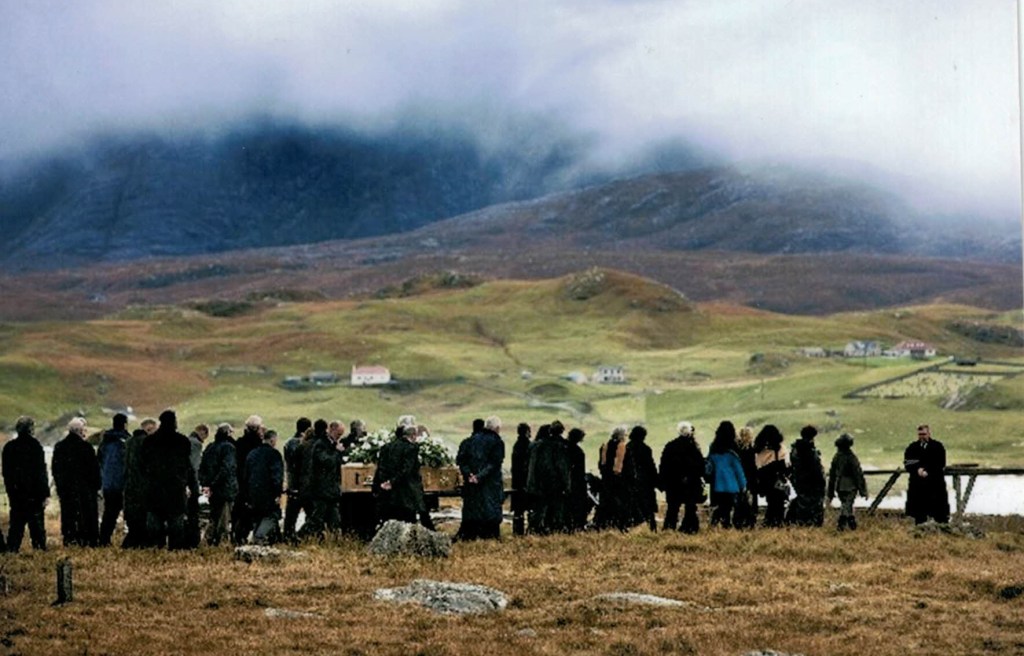

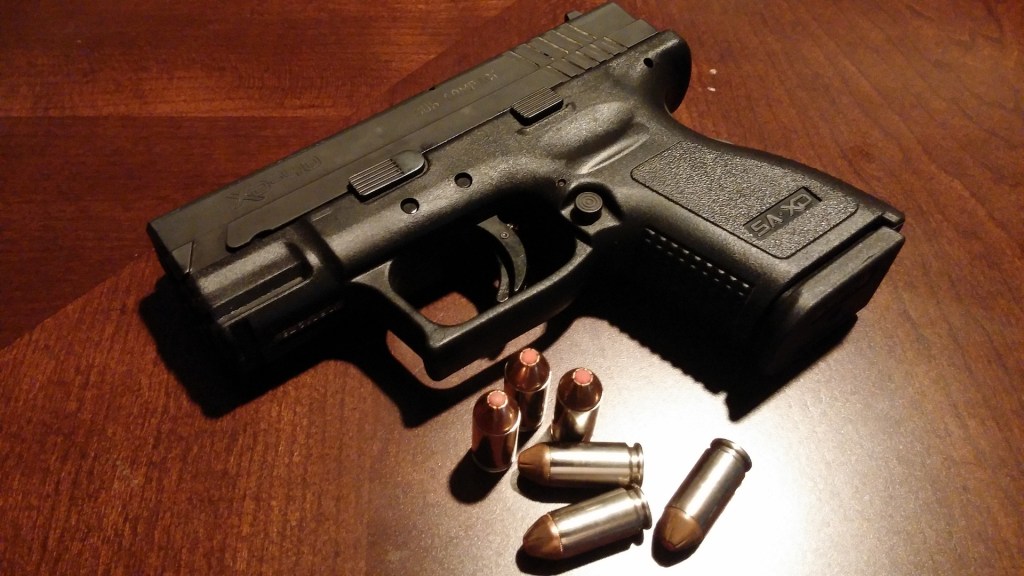
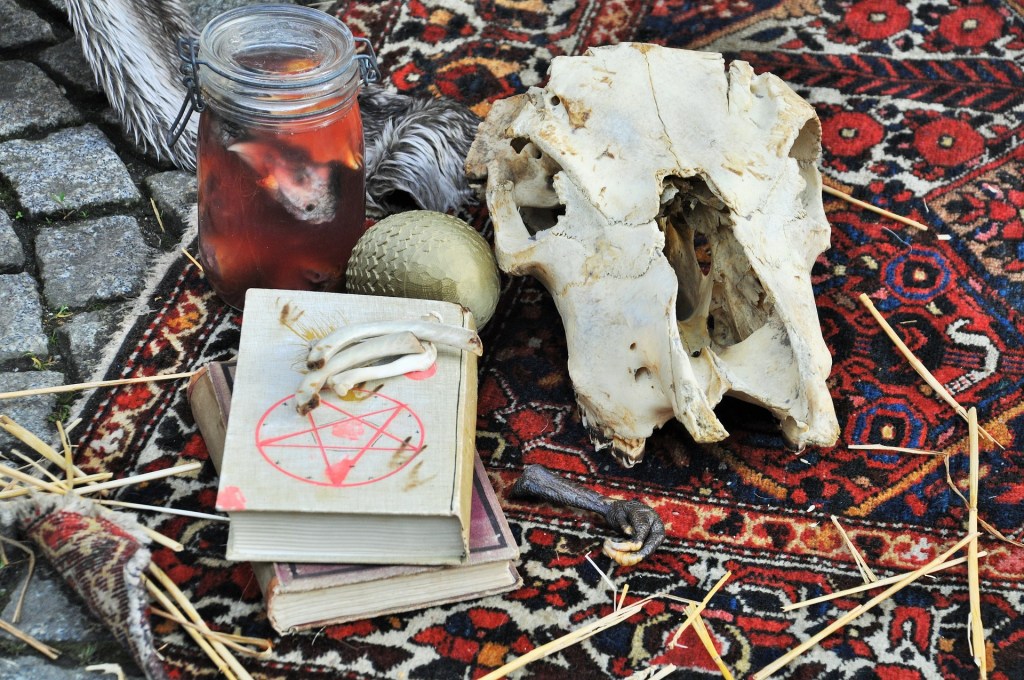



 SOMETHING IS GOING TO HAPPEN