
Robin Kirman is a pychoanalyst as well as a writer and she weaves her interest in psychology into her fiction. Her books include The End of Getting Lost, which Booklist called “… a beautifully written novel.” Her first story for EQMM, “Not All Hauntings Are by Ghosts,” appears in our September/October 2024 issue (on sale 8/13). In this post she explores some questions that underlie her very original (and chilling!) EQMM story. —Janet Hutchings
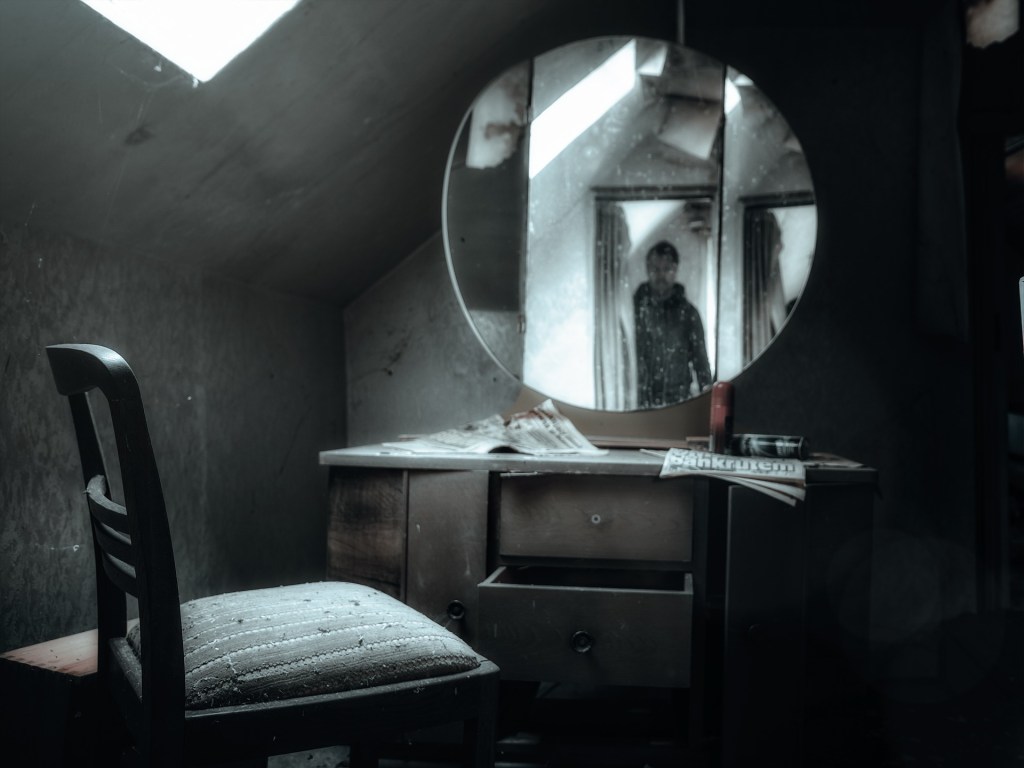
The idea of possession by a ghost or spirit has always had a firm hold in the gothic literary tradition, and features heavily in supernatural mysteries as well. Authors as celebrated as Edgar Allen Poe, Toni Morrison, Hillary Mantel, and Henry James have been drawn to explore the link between trauma and “hauntings” to create powerful psychological portraits and raise questions about the permeability of troubled minds.
Recently I also wrote a story for EQMM involving a psychologist who treats a man claiming to be possessed by the ghost of his kidnapper and abuser. At the heart of the mystery lies the question of whether or not this man is truly at the mercy of some supernatural force, or merely profoundly identified with his abuser—call it a case of Stockholm Syndrome taken to the extreme.
As a psychoanalyst as well as a writer, I took this story as an opportunity to consider what, psychologically speaking, it means to be haunted by another, and why this idea has such power over our imaginations. What interests me most isn’t the abnormality of such a condition, but rather, what it reveals about all of us, and the very nature of the self.
In what ways are all of us possessed by the important figures in our lives?
And what does psychoanalytic theory have to say on the subject?
Freud, the father of psychoanalysis, was already theorizing about the lingering presence—and internalization—of dead loved ones in his groundbreaking paper on depression: Mourning and Melancholia. In that paper, he draws a distinction between healthy mourning, in which a person grieves the lost loved one and moves on, and what he calls melancholia, in which the bereaved remains stuck in a state of prolonged devastation and, significantly, suffers a profound loss of self-esteem.
“In mourning the world has become impoverished and empty, during melancholia, it is the ego itself.” (p 246)
For Freud, the explanation for such depletion of self is that the mourner unconsciously identifies with the deceased person, who in such cases, is a source of disappointment or pain, and is hated as well as loved. The hatred that should be directed at this other becomes directed at the self, while the dead person takes up a kind of secret residence in the mourner’s unconscious—put another way, the dead now haunts the soul of the living.
In this pathological scenario, Freud suggests a linkage between such hauntings and the already tormented relationship with the deceased figure—an insight that fits well with later ideas introduced by Sandor Ferenczi, regarding identification with abusers. More generally though, Freud’s overall psychic framework introduces a mind that is always penetrated by others, in which what he terms “introjection” is at work in the perfectly healthy formation of the ego and, especially, the superego.
Freud’s superego, the part of the psyche that contains our aspirations and our judgments, is an internalization of the values and prohibitions embodied by our parents. Introjection is an unconscious process for Freud, in which qualities of another become part of our own psychic structure, without our awareness. In other words, whether we know it or not, it’s the voices of others that we hear when we feel either pride or self-reproach, a sort of ghostly echo that we carry with us always.
Following Freud, the Object Relations School (Klein, Fairbairn, Winnicott) took these ideas still further and developed a persuasive picture of the self as a series of internalized relationships. In pathological cases, the internalized objects (or people, or voices, however we think of them) rule with a kind of rigidity and force that can prevent the person from seeing others as they are, or developing any relationship that doesn’t resemble the original internalized one. In effect, such people live in a world of ghosts who deform reality and keep the person bound to historical attachments, unable to fully live in the present.
Contemporary psychoanalytic thinkers have added their own deconstructionist take on the matter, and offer a vision of the self as a collection of internalized relations with no center, a sort of kaleidoscope of dissociated identities that can never be separated from others, and can never be whole. Arguably, then, there isn’t even a self to be haunted, and the actual specter, the shadowy thing that won’t let go, is our vision of ourselves as something solid and real.