“Seventh Sense” (by Doug Crandell)

Doug Crandell makes his first appearance in EQMM with the story “Shanty Falls,” in our current issue (January/February 2019). We have another of his stories coming up soon. He is the author of the 2007 Barnes & Noble Discover pick, The Flawless Skin of Ugly People, as well as three other novels and two memoirs, and he has received a number of endowments  for his fiction, including one from the Sherwood Anderson Foundation. He’s also distinguished in the field of short fiction, having recently won Glimmer Train’s Family Matters short-story contest. In this post he talks about one of the roots of his writing, and what led him to crime fiction. —Janet Hutchings

When I was a child, we knew our grandmother’s brother had been killed, but the details were mostly hushed and vague. The secrecy of that awful fact set my mind aglow with possible explanations. I suppose the varied ways I heard the story told, by different narrators, stirred in me a desire to understand not only what had happened to my great uncle, but storytelling itself, the way one storyteller would choose details versus another. It was thrilling to listen, to see the images in my mind that were created with the spoken word. Later, as I began choosing my own reading materials, I found myself intrigued with family crimes, with the ways in which love gets entangled with temper, distrust and hurt. I couldn’t have used the phrase “character motivation” at the time, but I sensed grownups rarely knew why they did the things they did, and that only upon closer inspection did those reasons become clearer.

As a writer, I found a book early on called Movies in the Mind: How to Build a Short Story by Colleen Mariah Rae which resonated with me. Her advice to short-story writers to “dig the clay” and “tap the well” made sense to me. I often found myself thinking about the secrets in my own family, not just the large ones, but the smaller ones too, the kind that percolate just under the surface in our own subconscious and lead us places that in the real world may be off limits, but when filtered through fiction not only form fertile ground, but become crucial to our own understanding of personal motivation.

Of course, like many writers, I don’t pretend to know all the reasons I enjoy writing, and reading, but I knew that my stories often held mysteries, crimes, thrilling revelations. Most of those were linked back to my great uncle’s death, which, in the end, was nothing less than a murder at the hands of a sheriff’s posse. At the age of seventeen, Leonard and a few unnamed others left a note on the porch of a former county commissioner named Thomas Modesitt, stating his home would be blown up within twenty-four hours unless five hundred dollars was left in a culvert south of Cory, Indiana, at 9 PM that Tuesday night. Modesitt went to Sheriff Roy Tipton, who instructed him to wrap a stack of blank paper in a package and deposit this decoy in the culvert. Sheriff Tipton assured Modesitt a posse would be formed to catch those responsible.

As mystified as I was as a child about the circumstances, I found as an adult writer that my work was almost always influenced by what had happened, and how the story was transmitted from one generation to the next. Some relatives saw the crime as shameful, something that brought disgrace to the family, while others set Great Uncle Leonard’s young death as a tragic hero’s story, and still others simply told the story, using colorful language, specific details, and a narrative arc to keep the listener’s attention. I liked all the POVs, but that last one, where words were used to cast settings, describe sounds, faces, smells, and colors made the hairs on my arms stand up.

I found this focus on details in Rae’s Movies in the Mind book. One exercise I continue to use is the Seventh Sense. Rae asks writers to attempt to physically inhabit a character’s body, to stand, eat, drink a beer, and describe a sound from their POV. At first, it seemed silly to me, but then, more than twenty years ago, I tried it with my Great Uncle Leonard. I’d not yet researched or written about this specific family crime, but something about imagining how my seventeen-year-old distant kin from the 1930s would’ve have walked, how he might have run into an Indiana cornfield before being shot from behind, unleashed the deeply set identification I’d harbored of him after all the decades of hearing the story. It was as if I’d found a way, with Rae’s help and my great uncle’s guidance, to write “inside” a character rather than just putting on his or her mask while at the computer composing. The writing didn’t magically become easier, nor did every piece feel fully preformed, but I could move from my great uncle to others, getting inside their bodies and minds to more fully create stories.

As I wrote more and published short stories and novels, the family crime was always with me—not that it figured into every plot or character, but as some elemental trace of loss that was in the background. Curious, I started to search out other writers who’d been similarly impacted, some I knew personally, others I’d only read about. Of course, James Ellroy’s mother’s murder when he was just ten was the most prominent and there were other infamous ones as well, but what I became interested in were the lesser known writers like me who also carried around family criminal secrets. Some writers told me about their father’s severe gambling addiction, another relayed how the disappearance of an aunt on his mother’s side was taboo to talk about. There were stories of laundering money, a connection with the mafia, and two writers who both had domestic violence in their past to such a degree that relocation was necessary for safety. The topic intrigued me and shocked me as well; so many people trying to take tragedy and turn it into something useful, maybe not spiritually meaningful, but narratively so, which, in a way, can shine light on what it means to be human and not, inhumane and afraid.

One version of the story about my great uncle was my favorite. We’d been on a rare family trip back to where my parents had grown up in southwestern Indiana. It was for the funeral of a second cousin I’d never known. On a relative’s farm, after the funeral service, the adults began crowding into the kitchen, eating and talking, but then a splinter group formed in an adjacent room. The man telling stories was not my kin, and I’d never seen him before. He brought up the story and the others nodded their heads, slowly eating apple pie with cheddar cheese wedges from small saucers. I stayed back in a little alcove and listened. I knew the story, and so did the storyteller, and all the others, so delivery and detail would have to hold our attention.

The man spent time describing the specific color of green in the first few rows of the cornfield where Great Uncle Leonard rushed to avoid the shotgun blast. The man stood up and walked slowly about the room as he continued the story, and I couldn’t take my eyes off him. At one point, he paused, right before announcing what was in the box. “All that was in that damn box was curlycue papers.”

That choice of word, while I’d heard it before from my mother, stayed with me, and whenever I thought about the story from then on, I pictured my great uncle, a teenager, lying beside the decoy box as he died, face to the ground, blood at the base of his neck, as the little spirals of newspaper lifted, then sailed upward, some catching on high corn tassels, others drifting on to distant fields, carried as far away as the rich river bottoms. That singular word choice, chosen by someone I didn’t know, made me understand, much later, the power of a storyteller to recall details, even the ones we think we know.

Posted in Characters, crime, Fiction, Guest, History, Story, Writers, Writing | Tagged , , , , , , | 1 Comment

“How to Create a Sidekick” (by R.J. Koreto)

R.J. Koreto’s first fiction publication was in EQMM’s Department of First Stories in December 2015. He has since created two turn-of-the-century mystery series at novel length, one featuring aristocratic suffragist Lady Frances Ffolkes and her maid, June Mallow, the other presidential daughter Alice Roosevelt and her bodyguard, ex–Rough Rider Joseph St. Clair. Richard’s latest novel-in-progress stars New York journalist Ted Jellinek and his not-quite-girlfriend, attorney Penelope Tolford, the pair from his debut EQMM story. In all of these series, a duo rather than a lone sleuth solves the crime. It’s that pairing, and the role of the sidekick in crime fiction, that is the subject of this post.—Janet Hutchings 

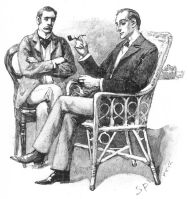
Watson & Holmes, 1893. 

The sidekick isn’t de rigueur in mystery fiction. After all, Miss Marple walked down those mean streets (okay—“country lanes”) all by herself. But I have a partiality for the sleuth-and-sidekick model, so when in my arrogance I decided I was going to write a mystery novel, I knew my sleuth would have a loyal assistant.

Creating an effective pair required more work than I realized at first. So, for the benefit of others, I’ve created some brief guidelines for the creation of the sidekick.


  1. How Are They Connected?

You have to create a plausible reason to get the pair together.

My first series features Lady Frances Ffolkes, a suffragist and a supporter of progressive causes in 1906 London. I decided her sidekick would be her lady’s maid, June Mallow. It wasn’t such a stretch: Wealthy women had personal maids to dress them, arrange their hair, and offer sympathy when a suitor or husband was being insufficiently attentive. It’s a short step to being an assistant sleuth. (Lord Peter Wimsey had his Bunter; the Toff had his Jolly.)

For my second series, though, I went in a different direction. This features Alice Roosevelt, oldest child of Theodore Roosevelt, who grew from being an unmanageable child to a wildly unconventional adult. Who would be a worthy sidekick? After all, even her father—a war hero—wasn’t able to control her.

I saddled Alice with the fictional Agent Joseph St. Clair, a former Western lawman and veteran of the Rough Riders. He’s as different from Alice as possible: a world-weary gunslinger who doesn’t see any problem wearing his long riding coat, cowboy boots, and Stetson hat on the streets of Gilded-Age Manhattan.

  1. What is the sidekick’s job?

The sidekick may be the junior partner, but they still have important tasks to do.

Mallow doesn’t forget that she is first and foremost a maid, and must force Lady Frances to sit still long enough to get her hair done and be put into a good dress for dinner with her fiancé. She is also the voice of common sense for her daring aristocratic mistress: When Lady Frances decides they have to seek witnesses in a rough London pub, it’s Mallow who brings along a rolling pin as a weapon. And when Lady Frances’s protective older brother questions Mallow about his sister’s detective adventures, Mallow looks him in the eye—and lies like a pro.

Agent St. Clair also has to keep Alice Roosevelt safe, and he can rely on his quick fists and his Colt revolver. But that’s just the beginning. He quickly finds that he has to run interference between Alice, whose antics have become legendary, and her equally strong-willed aunt, Mrs. Cowles, who raised her niece—Alice’s mother died two days after she was born. (“If Alice does something like that again, Mr. St. Clair, I will see you on the next train to San Francisco,” she warns him after Alice does something especially egregious.) When Alice boldly lies her way into New York’s exclusive and all-male University Club, St. Clair backs her play and pretends he’s a city health inspector. He can also pour oil on the water: When Alice tops that event by rifling through the files of a private detective, the outraged gumshoe demands St. Clair rein in his charge. “You’re a federal lawman. Can’t you stop her?” St. Clair shrugs. “Her father is the bravest and smartest man I know. He can’t control her. What chance do we have? Let her have her way and then we can all go home.”

St. Clair occasionally falls down on the job, however. After his fast draw saves a life at the end of one adventure, Alice decides she needs a drink and confiscates St. Clair’s flask. “Bourbon!” she says, spitting it out. “You’re charged with caring for the president’s daughter. Next time carry something civilized, like brandy.”

  1. The sidekick and the sleuth need a reason to stay together.

The sidekick’s job is not always an easy one, so they need strong bonds.

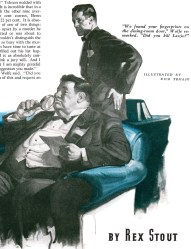
Nero Wolfe and Archie Goodwin (1938).

Sherlock Holmes dragging Watson away from his practice at all hours, Archie Goodwin trying to get Nero Wolfe’s mind away from his béchamel sauce and back to work. So why do they stay? Watson has some gratitude. After all, if he hadn’t helped Holmes in The Sign of the Four he never would’ve met his wife. Archie gets a steady job and three gourmet meals a day.

But there’s genuine friendship and affection aside from any other rewards, even if the relationship seems lopsided and perhaps even unequal at times. Holmes and Wolfe are not the most demonstrative of men, and only show their appreciation for their sidekicks on rare occasions. When they do, however, it’s genuine.

June Mallow has a pretty sweet gig as Lady Frances’s maid, by Edwardian standards: good wages, a private room, and a chance to meet a range of celebrities, from actresses like Mrs. Patrick Campbell to King Edward VII. Best of all are the rides on her mistress’s coattails: As a woman, and a servant, Mallow was at the bottom of the Edwardian class structure. But she’s intelligent, even shrewd, with plenty of ambition. And she enjoys it every time Lady Frances pokes a finger in society’s eye. What could be more fun than having her ladyship send her on a secret mission to get help—and returning with a detective inspector and squad of constables, to the astonishment of the culprit. How often does a maid get to send a gentleman to prison! Lady Frances then promises to take Mallow, an avid knitter, to a yarn shop where she’ll buy her all the skeins they can carry.

For Alice Roosevelt and Agent St. Clair, the bonds that hold them together are a little more subtle. St. Clair likes to complain about how what was supposed to be a cushy job turns into a nightmare protecting Alice from her own whims. And Alice throws a fit every time he tells her there is something she can’t do. But although St. Clair might like to say his Wild-West days are over, he admits to himself in quiet of the night that he misses the old days. He misses the adventures. Alice lets him find his way back.

And what about Alice? She keeps threatening to ask her father to give her a new bodyguard, but we know she won’t. Alice goes into a major sulk when her handsome and charming bodyguard shows an interest in a sharp-witted female reporter. You couldn’t torture her into admitting it, but she’s developed quite an infatuation for St. Clair. It’s a relationship that can never happen, but that doesn’t change her heart. There is more than one kind of bond between a sleuth and a sidekick.

So how can I apply these guidelines to my next novel?

My latest work-in-progress is a modern story, featuring reporter Ted Jellinek and his not-quite-girlfriend, attorney Penelope Tolford. (They were introduced in an EQMM story, in fact.) It’s once again a sleuth-and-sidekick story. But which is which? As they investigate a murder, Ted draws a conclusion, which Penelope disagrees with.

“You have another theory, my dear Watson?” he asks her.

Penelope just glares at him. “What the hell makes you think that I’m the Watson in our relationship?”

I’m going to have fun with this one.

Posted in Books, Characters, Fiction, Guest, Historicals, Story, Writers, Writing | Tagged , , , , , , , , , , | Leave a comment

“Have Suitcase, Will Plot” (by Robert Lopresti)

With many readers just back from holiday travel, we thought this post by Robert Lopresti would start 2019 off just right. It complements his story “Please Do Not Disturb,” which appears in our current issue, January/February 2019. Rob is one of the genre’s best-known short-story writers; his many published tales have won three Derringer Awards and a Black Orchid Novella Award. He’s also the author of two novels, but the short story (of all lengths) is really his speciality. “Please Do Not Disturb” falls into the “short short” category, and it demonstrates the impact a few well-chosen words can have. Happy New Year!—Janet Hutchings

“A writer never takes a trip purely for pleasure.”
Fredfitch

Two years ago my wife and I took a tour of Scotland, and a lovely trip it was. One evening we were sitting in a hotel room in Stirling and I found myself contemplating the nature of hotel rooms. (It had been a long day.)

And suddenly I had an idea for a crime story, all about a hotel. I picked up the nearest piece of paper, which happened to be the itinerary for our trip. It was only five pages long, so I wound up writing a piece of flash fiction, less than a thousand words long. Who knows? If our trip had been longer, I might have wound up with a novella.

I bring this up for two reasons. First, because “Please Do Not Disturb” is gracing the pages of the January/February 2019 issue of Ellery Queen’s Mystery Magazine, and I am delighted about that. The second is to illustrate the point Fredfitch is making up above. (Fredfitch by the way, is the pseudonymous author of the website called The Westlake Review.)

An author may go on vacation, but the writing part of the brain never really goes off duty. You never know when some new sight or insight may lead to something wondrously publishable.

A decade ago we volunteered at an archaeological dig in Israel. One day on a break I was sitting under the semitropical sun and a story idea popped into my head. You might expect that I dreamed up something full of Middle Eastern intrigue, or at least a tale of archaeological mischief.

Alas, no. “Shanks’ Ghost Story” (which appears in Shanks on Crime) is a tale of writers up to no good, and is set in a Pennsylvania farmhouse at Christmastime.

You may wonder how that idea connects to the place where I dreamed it up. It doesn’t. That’s the sort of thing that happens when a writer goes on vacation and lets his mind go free-range.

Of course, it doesn’t always work like that. When we visited Barcelona, Spain, I thought of a story set in, wonder of wonders, Barcelona. “On The Ramblas” appeared in Murder Under the Oaks, the 2015 Bouchercon anthology (and I even managed to include a reference to Spanish oak trees).

So far I have talked about writers stealing time from their trip to write, but there is the other kind of vacation, when the author deliberately sets time aside for that purpose. Some of the best parts of Greenfellas, my novel about New Jersey mobsters, were written in a laundromat in Port Townsend, Washington, while my wife was attending a music camp there. (The camp was in Port Townsend, not in the laundromat. Stop being silly.)

And speaking of stopping, I am going to end this piece before it gets longer than the story that inspired it. I hope your vacations are crime-free, except for the fictional kind.

Posted in Adventure, Books, Guest, Writers, Writing | Tagged , , , , , , , , , | 2 Comments

HAPPY NEW YEAR FROM EQMM

With all our gratitude to our readers, authors, and friends: Here’s to a fantastic year of crime fiction, and to a 2019 full of mystery.

Posted in Uncategorized | 1 Comment

HAPPY HOLIDAYS FROM EQMM

Wishing you the warmest of holiday happiness this year, from your friends at Ellery Queen’s Mystery Magazine.

Posted in Uncategorized | 3 Comments

MARY FRISQUE: UNSUNG WOMAN OF MYSTERY

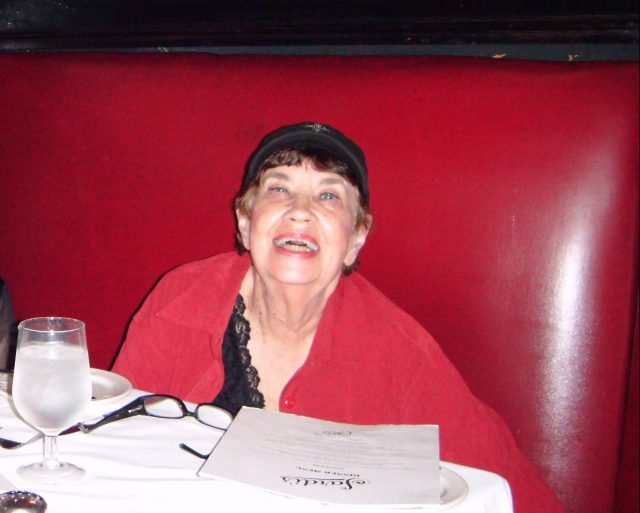
Mary Frisque. Photo courtesy of Linda Kerslake.

On November 26, Mary Frisque, Executive Director of the International Association of Crime Writers, North America, died after a brief illness. My friendship with Mary goes back a couple of decades. I met her through Edward D. Hoch and his wife Patricia. As any regular reader of EQMM will know, Ed, a Grand Master of the MWA, was EQMM’s most prolific contributor, with a story in every issue of the magazine for over thirty years. Whenever Ed and Pat came to New York City from Rochester (as they did several times each year), they’d take me out to dinner. Mary was often another guest at those splendid meals, and soon Mary and I began meeting for dinner on other occasions, often at an Irish pub, or at Uncle Nick’s, near Penn Station. It saddens me that our last Uncle Nick’s dinner was nearly two years ago now. We hadn’t lost touch—it was just that something always came up that got in the way. And then, suddenly, Mary was gone.

Mary Frisque (L) and Pat Hoch (R). Photo courtesy of Steve Steinbock.

It doesn’t surprise me that Mary didn’t want people to know she was in hospital. I only learned of it through short-story writer Linda Kerslake, a relative of Mary’s by marriage. (An only child, Mary had no other relatives.) Mary was a true woman of mystery, in so many ways. She was brilliant and very well educated, but never tooted her own horn; as a result, she often didn’t get the notice she deserved. The International Association of Crime Writers was the perfect place for her; she had a graduate degree in Russian language and literature, and already knew a great deal about the literature of many parts of the world, but especially Russia and Eastern Europe. I’m not sure what piqued her interest in crime fiction. It could have been that when she first came to New York from her native Washington State, she found a job running the office of the Mystery Writers of America. That was in the late seventies or early eighties.

By the time I met Mary, she seemed to know just about everyone in the mystery community—which is one of the unfathomable things about her. She was essentially a loner, and abhorred parties or gatherings larger than a few close friends, but she managed to connect with everyone in some way, often by letter or card, later by e-mail. She loved jazz and she was a very good dancer. One of my best memories of Mary is the afternoon during one Edgars week when she lured me and John and Barbara Lutz and several other authors from out of town to the Roseland Ballroom to trip the light fantastic. It was a blast! Mary’s friend and fellow IACW member, Jim Weikart, reminded me of another of Mary’s hobbies. “She also liked to gamble,” he said, “a hobby (not an addiction) that we shared. I remember her telling me about a trip she and Doris Cassiday made up to Connecticut, I think to Foxwoods, and how much fun it was. I once knew someone who won Quartermania at a casino and Mary always joked about finding venues for our IACW meeting that would have Quartermania. At one Bouchercon, maybe Colorado, we skipped out for an afternoon and drove to a local casino where she played slots and I blackjack. She thought it was a hoot. I don’t think either of us came away winners. But it was a good time.”

L to R: Steve Steinbock, Deen Kogan, Mary Frisque, Linda Kerslake. Photo courtesy of Steve Steinbock.

Mary had a serious side too. Any job she undertook, she did well. She was an indefatigable and invaluable resource to EQMM. I can’t count the number of times she contacted me to let me know about something important that was going on in our field or to tell me about a wonderful new author she’d just read. I often followed up on her suggestions, especially when it came to writers from overseas. Mary was incredibly well read; I can’t recall ever mentioning an author whose work she didn’t know. And she had very distinct opinions about them all! I doubt that the launch of the Passport to Crime department in EQMM, in which we publish a story in translation every issue, would have been as successful as it was without Mary’s generous outpouring of help. It was she who put us in touch with her friend Mary Tannert, a translator from German who has worked with EQMM for years now, bringing us English versions of the yearly winners of Germany’s prestigious Glauser Prize.

I am not the only one in the mystery world who found Mary’s knowledge and dedication both inspiring and a great asset. An officer of the International Association of Crime Writers, Jim Weikart tells me, “Mary was the heart and soul of IACW and we are scrambling to replace her.”

Despite all that Mary contributed to our field, quietly and unobtrusively, she never had the kind of high-profile job in crime fiction that generally leads to receipt of the field’s top awards for publishing professionals. Nevertheless, I wish she would receive some kind of award, posthumously, in order to ensure that her contribution to the field is not forgotten.

Mary Frisque. Photo courtesy of Steve Steinbock.

This will be my last post until the new year. We lost some good friends of the magazine in 2018. I will be raising a glass in their memory at the new year. But I also want to reflect about the fabulous community of authors, readers, and people in the business with which we are still surrounded. Happy holidays to you all.—Janet Hutchings

Posted in Memorial | Tagged , , , , , , , , | 5 Comments

“Diatribes of the Diaphragm” (by Craig Faustus Buck)

Craig Faustus Buck is a Macavity Award winner and an Anthony Award nominee for his short fiction. In the issue of EQMM currently on sale (November/December), with the story “Race to Judgment,”  he makes his EQMM debut. In 2015, he became a published novelist when Brash Books brought out Go Down Hard, described by Booklist as “. . . a crime-novel dream. . . . There’s suspense and violence here . . .  as well as good writing, and . . . the many asides are often both delightful and quirky.” The California author is also a screenwriter, having written and/or produced network series, pilots, movies, and miniseries. All of this puts him in an especially good position to reflect on a hazard every writer faces.—Janet Hutchings

I recently found myself lying in a recovery room, exhausted after extensive surgery. Even worse, my body was wracked by hiccups, the uncontrollable sort that turn the simple task of breathing into Sisyphean torture. These disabling hiccups lasted for (get this) three weeks! Naturally, my thoughts turned to appropriating this interminable misery for my writing.

What’s the point of suffering if you can’t put it to use? Isn’t writing about transforming pain, pleasure, fear, love, hate, dreams, defeat, ecstasy, tragedy, doom and so on into a story? And so I took a deep dive into hiccups. The medical term for these involuntary spasms of the diaphragm is singultus, from the Latin word for “gasp” or “sob.” I considered this etymology ad infinitum—gasp-sob after gasp-sob after gasp-sob—as my hiccups waged a brutal, bitter attack on my equilibrium. I called them my diatribes of the diaphragm and became obsessed with translating them into a meaningful metaphor for this blog.

My first thought was to compare hiccups to plot holes. Hiccups, like plot holes, become increasingly problematic as their frequency grows. But then what? Cure plot holes by breathing into a paper bag or guzzling a glass of water? The plot holes analogy seemed to be leading me down a cul de sac. I tried “cliches” on for size. One can be forgivable, even amusing. Two or three (assuming they’re not clustered) become annoying. More than three are deadly. As with plot holes, cliches didn’t seem to offer much substance beyond the initial concept, like a one-joke comedy sketch. I tried adverbs, grammatical errors, and typos. All for naught. As Jack London once wrote, “You can’t wait for inspiration, you have to go after it with a club.” I was flailing for that club.

Upon reflection, it became clear that I’d fallen victim to a rookie mistake: the lure of a shiny object. In this case, it was a metaphor that didn’t deliver on its promise. The hiccups were a square peg that I was determined to pound into a round hole. I had fallen in love with a flawed idea and was trying to stretch and manipulate it to succeed where it was destined to fail. After forty years of writing, you’d think I’d know better. But this happens to me all the time. I never get the message until I’ve wasted inordinate chunks of time. It’s embarrassingly common for me to come up with what seems to be an original, clever, and apt metaphor, simile or analogy, and I spend hours trying out dozens of sentence variations in a vain attempt to make it work. In my defense, I’ve yet to meet a writer who doesn’t suffer the same curse.

This all cycles back to the old saw: “murder your darlings” or “kill your babies.” This sage advice has been attributed to a variety of esteemed authors over the decades, most notably William Faulkner, Oscar Wilde, Eudora Welty, G.K. Chesterton, and Anton Chekov. Stephen King wrote a memorable variation on the theme: “kill your darlings, kill your darlings, even when it breaks your egocentric little scribbler’s heart, kill your darlings.” The irony is, in this case, “darlings” is a metaphor that works.

Arthur Quiller-Couch (public domain)

The true origin of the phrase, as is so often the case, comes from a lesser-known writer. The first-known adaptation of the metaphor arose from Sir Arthur Quiller-Couch, a Cornish writer at the beginning of the twentieth century who wrote under the pseudonym “Q.” In 1913-1914 he delivered a series of lectures at Cambridge entitled “On the Art of Writing.” In one of these lectures—“On Style”—he ranted about “extraneous ornament.” In his words, “If you here require a practical rule of me, I will present you with this: Whenever you feel an impulse to perpetrate a piece of exceptionally fine writing, obey it—whole-heartedly—and delete it before sending your manuscript to press. Murder your darlings.”

The fact that this phrase, or some variation thereof, has survived for more than a century and been attributed to so many great writers, bespeaks its wisdom and insight. And so, I took it to heart. It was with great sadness, and not a little regret, that I consigned my respiratory agony to my compost heap of misguided ideas. Those three weeks may have loomed large in my medical history, but in my literary journey, they turned out to be little more than a minor hiccup.

Posted in Uncategorized | 4 Comments

“What’s in a Name?” (by Angela Crider Neary)

Angela Crider Neary is an attorney, an avid mystery reader, and a mystery writer. She has had short stories in anthologies and in EQMM, and in 2015 her first mystery novel, Li’l Tom and the Pussyfoot Detective Bureau: The Case of the Parrots Desaparecidos, was published. It was followed up this year with a second installment in the series: L’il Tom and the Pussyfoot Detective Bureau: The Case of the New Year Dragon. My guess is that this series attracted a lot of readers right off the bat with its clever and charmingly named detective agency. In this post, Angela reflects on the importance of names in fiction.—Janet Hutchings

“What’s in a name?” Shakespeare’s famous quote tells us that a name doesn’t matter—a rose by any other name would smell just as sweet. And, of course, love transcends the differences between the names of the Montagues and Capulets.

This concept may not be so true, however, for story-writing purposes. After all, a name is a unique identifier that sets a character apart from the ordinary, displays his or her personality, or offers a glimpse into the character’s . . . well, character. A character name in a series of books can become iconic and act as the descriptor for the series. For example, Michael Connelly’s Hieronymus “Harry” Bosch is a familiar name to many mystery lovers, with books in the series referred to as “Harry Bosch novels.”

A crucial part of any story is the names of the characters. Naming a character or characters is likely one of the first things many writers do when formulating a story. It would be cumbersome, as well as devoid of personalization, to begin writing a tale with something like, “Character 1 made her way through the dark tunnel, pistol drawn. She saw a movement in the corner of her eye, pointed the gun in that direction, and fired. She shone a flashlight at the fallen body and was startled to discover she was looking into the face of Character 2.” The writer must relate to the characters in order to make them come alive on the page. Character names, however, are subject to change during the writing process where characters often take on a life of their own and may eventually suggest a more suitable name.

A name makes a character more human. Names can put the reader in the proper mindset, affect what the reader feels and thinks about the characters, and even set the tone of the story. Which brings to mind the question, how does a writer go about naming characters? Setting, geography, time period, religion, and culture, are just a few examples of factors that might play a part in what characters are named. A character’s name can also shape a character’s personality, actions, and even fate (think, a boy named Sue).

There are a myriad of ways that work to name characters in different circumstances, and the process is unique to the writer and the situation. A writer might pull a simple name out of thin air to name a character. But even then, the writer may have some angle in mind, be it conscious or subconscious. Further, a plain name might have more complex implications or indicate irony.

A writer might even use his or her friends’ names as characters, have a contest where a character is named after the winner, or offer to name a character after the name of the highest bidder at a charitable auction. My father, Bill Crider, named a character in his Sheriff Dan Rhodes series after a good friend. An interesting twist was that the character took on the characteristics of that particular friend.

I have heard of some who use online character-name generators—enter a brief description of the character and voilà!—instant character name. Some writers say that their characters tell them their names. Another good fallback is names of relatives—especially old-fashioned ones if a writer is naming older or eccentric characters. And, of course, naming a villain or murder victim after an ex-spouse/boyfriend/girlfriend can be quite satisfying, at least that’s what I’ve heard. Another option a writer might choose is to use a descriptive name for a character. Mr. Gradgrind from Dickens’ Hard Times comes to mind, whose name referenced his physically rigid appearance as well as his utilitarian nature.

Some writers draw their characters’ names from famous literature and art. The aforementioned Detective Hieronymus “Harry” Bosch is named after a fifteenth-century Dutch painter whose depictions of hell, debauchery, and the temptations of evil often parallel what Harry has seen in his life as the orphan of a murdered prostitute and his work as a detective in Los Angeles. It is said that Raymond Chandler named his character Philip Marlowe after Marlowe House at Dulwich College where Chandler was educated and which was named after Christopher Marlowe, an Elizabethan writer. I followed this pattern, myself, in my whimsical Li’l Tom and the Pussyfoot Detective Bureau books, an example of which is a cat named Purrsby, whose name was inspired by Thursby in The Maltese Falcon.

There are also pitfalls to avoid in naming characters. It trips me up when I’m reading a book and there are a couple of characters with similar names, like Aubrey and Audrey, or Stan and Dan. Also, if a character’s name doesn’t fit the character’s personality, it can be distracting, unless there is some core reason for the disparity.

So how important is a character’s name? Maybe Shakespeare was right. If a character has enough personality and depth, their name may be irrelevant. How did he name his star-crossed lovers, and did it really matter what they were named? In retrospect, it did matter, because where would we be without Romeo and Juliet? And would Sam Spade by any other name be Sam Spade? Sometimes, only time can tell.

Posted in Books, Characters, Genre, Guest, Story, Writers, Writing | Tagged , , , , , , , , | 4 Comments

HAPPY THANKSGIVING FROM EQMM

An early snowfall out the window at 44 Wall Street.

We’re grateful for you, our readers, authors, and friends!

Posted in Uncategorized | 2 Comments

“Fifty Years After the Fair”: Josh Pachter—Author, Translator, and Dedicated Mystery Fan—Interviewed by Editor Janet Hutchings on His 50th Anniversary With EQMM

Janet Hutchings: EQMM always takes pleasure in following the careers of writers who got their start in our Department of First Stories, but it isn’t often that we have the opportunity to look back on a fifty-year run of top-notch work from one of our own. In 2012, Josh, you blogged on this site about your long connection to EQMM. I’m thinking of the post entitled “Looking Back on a Half-Century Love Affair with EQMM.” Back then, however, you hadn’t quite reached the half-century milestone. Now you’re truly there.

Josh Pachter: Yeah, I lied. At that time I had in fact been reading EQMM for forty-six years and publishing in its pages for forty-four, and, no matter how you slice it, half a century is fifty years and not a year less. So the love affair I’ve had with EQMM as a reader celebrated its golden anniversary in 2016, not 2012 . . . and my love affair with EQMM as a writer celebrates its half-century mark now, today, as we near the end of 2018.

JH: Your contributions to EQMM extend well beyond your output as an individual short story writer. In addition to solo stories, you’ve done collaborations and translations. But let’s start with your solo fiction. It’s worth mentioning that your Department of First Stories tale was an homage to Ellery Queen.

JP: Yes, as I described in my “Looking Back” post, my first appearance in print—not just in EQMM but anywhere—was a story titled “E.Q. Griffen Earns His Name,” which I wrote at the age of sixteen and which Frederic Dannay, half of the Ellery Queen writing team and the magazine’s founding editor, bought for the December 1968 issue. My character was, of course, named after Ellery Queen. During the first half of the ’70s, I followed it up with half a dozen more stories: another two about the Griffen kids, a spoof of several of Ed Hoch’s series characters, and a couple of one-offs.

JH: After that, we didn’t hear from you for a while. What happened?

JP: At the ripe old age of twenty-one, I “retired” from writing fiction. Then, in 1982-83, I spent a year teaching for the University of Maryland on a US Navy base in Bahrain. There wasn’t much to do in Bahrain, so I went back to my typewriter and began a series about Mahboob Chaudri, a Pakistani cop on the emirate’s national police force. Eleanor Sullivan, who was Fred Dannay’s successor as EQMM’s editor-in-chief, bought six of those stories, and several others appeared in AHMM and other magazines. In 2015, Wildside Press published The Tree of Life, a collection of all ten of the Chaudri stories, and I blogged on this site about the series and the book as “A Long Time Ago in an Emirate Far Far Away.”

JH: For some years after the Chaudri series, we mostly saw your byline on stories coauthored with a variety of other writers. How did you end up working with so many different writing partners?

JP: In the mid-1980s, before anyone other than the military had access to the Internet, I was living in what was then Western Germany and came up with the idea of writing a series of collaborative stories that could be published individually in EQMM and other places and then collected in a book. I blogged about the project on this site in 2015, as “Partners in Crime.” The book never happened—it hasn’t happened yet, anyway—but most of the stories were individually published, several in EQMM: one was written with Ed Hoch (“The Spy and the Suicide Club,” January 1985), one with Stan Cohen (“Annika Andersson,” February 1993), and one with Jon Breen (“The German Cologne Mystery,” September/October 2005). In more recent years, I’ve written a couple of new collaborations for EQMM, including one with my Dutch friend René Appel (“A Woman’s Place,” September/October 2017) and—in what has been perhaps the proudest moment of my entire “career”—one with my daughter Becca (“History on the Bedroom Wall,” September/October 2009).

JH: That story with Rebecca Jones was your second appearance in EQMM’s Department of First Stories—and you’re the only person whose name has ever appeared there twice! Since Rebecca was a first-time author, we felt we could stretch the rules and publish your collaboration with her under the First Stories banner.

The topic of collaboration segues nicely into that of translation, since translation is, after all, a form of collaboration. You’ve been prolific as a translator in our field. What was your first translation?

JP: A short story by Dutch author Janwillem van de Wetering. He generally wrote his Grijpstra and de Gier novels in English and then translated them into his native Dutch, but he wrote his short stories in Dutch and translated them into English. In 1984, though, he was up against a deadline on a new novel, and his Dutch publisher asked me to translate two of his short stories for EQMM. “There Goes Ravelaar!” was published in the January 1985 issue, and “Houseful of Mussels” three months later—and “There Goes Ravelaar!” was a finalist for the Best Short Story Edgar in 1986. Fast-forward twenty years, and in the early 2000s you came up with the idea of including a translated story in every issue of the magazine. Knowing that I’d done some work for van de Wetering, you asked me to find a story by another Dutch author for the new Passport to Crime feature. I was happy to oblige, and between then and now I’ve provided the magazine with about twenty stories by Dutch and Belgian crime writers (something I blogged about in 2013, in a piece called “Translating is Gezellig.”)

JH: It’s not only from Dutch and Flemish that you translate, though. Recently you’ve worked on translations from several other languages.

JP: Yes, I’m always up for a new challenge. This year I translated stories from the Spanish (Luciano Sívori’s “The Final Analysis,” January/February 2018) and the Afrikaans (François Bloemhof’s “Proof,” September/October 2018), and I’m eager to tackle another new language sometime soon, possibly Turkish.

JH: When I first asked you to contribute to Passport to Crime, in 2003, you weren’t writing much fiction of your own. Why was that?

JP: When my daughter Becca was born in 1986, I got so involved in being a full-time dad that I went into writing hibernation again, this time until she went off to college. But right around the same time you invited me to begin translating for Passport to Crime, Becca told me she thought it was a shame that I couldn’t write publishable fiction of my own anymore. “I could if I wanted to,” I told her, “but I just don’t want to.” She shook her head sadly and said, “Sure, Dad, I’m sure you could.” Well, I couldn’t ignore such a blatant dare, and ever since then I’ve been contributing new stories to EQMM with some regularity.

JH: So far we’ve been talking only about the ways in which you’ve enhanced EQMM’s fiction offerings over the years. But you’ve been a contributor to EQMM in a variety of other ways. This blog site, which you’ve provided with six posts, is one example. Let’s talk about some of the other ways in which you’ve lent your talents to EQMM.

JP: Well, I’ve read two of my own stories and three of my translations for the monthly podcast. On September 30, 2016, I was on a panel (with Otto Penzler and Russell Atwood, moderated by Joseph Goodrich) at EQMM’s 75th Anniversary Symposium at Columbia University. I was the first speaker at the salute to EQMM at the 2017 Bouchercon in Toronto, and I was on an EQMM panel (with Sarah Weinman, Brendan Dubois, and David Dean, moderated by Dale Andrews) at the 2018 Bouchercon in St. Petersburg.

JH: As you reflect on the last fifty years, what milestones stand out in your memory?

JP: I’ve already mentioned my collaboration with Becca, which was an amazing high point. Other than that, probably the most memorable milestone for me is that I was in 1968 and remain today the second-youngest person ever to publish in the magazine. (The youngest was James Yaffe, who was only fifteen when he wrote “Department of Impossible Crimes,” which was in the Department of First Stories in the July 1943 issue.) Something else I’m proud of is being the only person who ever collaborated on a piece of fiction with EQMM Grand Master Edward D. Hoch, the most prolific of all EQMM contributors. And I’m also one of the small handful of people who’s published new work in the pages of EQMM in six consecutive decades: the ’60s, ’70s, ’80s, ’90s, ’00s, and ’10s.

JH: And that brings us to today. To celebrate your half-century as an EQMM contributor, EQMM has just published a new story of yours entitled “50,” in which we see E.Q. Griffen, the protagonist of your first story, fifty years older. Was it hard to reimagine this character after so many years?

JP: I already knew where my Ellery would wind up as an adult, since Becca and I put an Easter-egg reference to him into “History on the Bedroom Wall.” That story is told in the first person by a student at Middlebury College in Vermont, and the narrator refers to a “Professor Griffen” who teaches English lit there. So “50” begins with sixty-six-year-old Professor E.Q. Griffen sitting in his faculty office at Midd, preparing a lecture on Robert Frost—and the professor then gets to match wits with his teenaged self and tackle a dying-message murder both he and his police-inspector father failed to solve back in 1968.

JH: That story is in our current issue (November/December 2018), exactly fifty years after your debut in December 1968. Readers who’d like to read or listen to the original story, can find it in text form on EQMM’s website, or listen to your reading of it in this month’s EQMM podcast. So, having come this far, Josh, what’s next?

JP: Well, you’ve recently bought two new stories from me. One is a standalone, “The Secret Lagoon,” which is set in Iceland, and the other one is what I hope will be the first entry in a five-part series. It’s called “A Study in Scarlett!,” and it’s my first-ever straightforward pastiche—a fond and hopefully authentic imitation of (who else?) Ellery Queen.

Back in the 1960s, Dannay and Lee wrote six stories about a group called the Puzzle Club, a precursor of Isaac Asimov’s later “Black Widowers” series. My plan is to write five new Puzzle Club stories for EQMM in the style and spirit of the original five, and then hopefully release all ten stories as a collection “by Ellery Queen and Josh Pachter.” I’m hoping that one of them might appear in a 2020 issue, which would make me the first person to publish a new story in the magazine in seven consecutive decades!

Will I make it to eight? I hope so, and not just because that would grant me another ten years on the planet but because it will mean that Ellery Queen’s Mystery Magazine, which has been an integral part of my life for more than half a century, now, will remain a part of my life—and, I hope and trust, the lives of all of its fans and readers—for at least another decade.

JH: That’s our wish too, Josh. Happy Anniversary!

Posted in Characters, Ellery Queen, Fiction, Genre, Guest, History, Interview, Magazine, Writers, Writing | Tagged , , , , , , , | 4 Comments