Art Taylor made his fiction debut in EQMM’s Department of First Stories in 1995 and he’s gone on to become one of the most celebrated short-story writers in the crime/mystery field. He won the Edgar for his EQMM story “English 398: Fiction Workshop”; he received the Agatha Award for Best First Novel for his novel-in-stories On the Road With Del and Louise (a book largely composed of stories from EQMM); and his short stories have also earned multiple individual Macavity, Agatha, and Derringer awards, as well as an Anthony Award. Readers can find a number of standout stories in his latest collection, The Boy Detective & The Summer of ’74 and Other Tales of Suspense. What some of our regular readers may not know is that Art is also a teacher of creative writing and an associate professor of English at George Mason University. This post brings together some insights derived from his writing and teaching. It also gives some background to his story “We Are All Strangers Here,” which appears in our current issue (September/October 2022). —Janet Hutchings
My story “An Internal Complaint” (EQMM, June 2007) took direct inspiration from Anton Chekhov’s “The Lady with the Dog” (1899), explicitly echoing that famous story of infidelity and its consequences.
In “An Internal Complaint,” Philip—an aspiring writer studying Chekhov’s story to hone his craft—begins to suspect that his wife is having an affair. The story shuttles between 19th-century Russia—Philip’s retelling of scenes from the perspective of the cuckolded husband of the lady with the dog—and present-day North Carolina as Philip begins surveillance on his wife and her lover. (The manuscript title of “An Internal Complaint” was “Episodes from the Story of Evgeniy von Diderits,” which editor Janet Hutchings wisely asked me to change; the ultimate title is drawn from a key passage about the title character’s deception of her husband.)
While “An Internal Complaint” broadcasts its connections to “The Lady with the Dog,” my latest story for EQMM—“We Are All Strangers Here” in the September/October issue—owes an equally strong debt to Chekhov, even if the inspiration is so indirect there’s zero chance anyone would recognize it.
The Chekhov story in this case is “In the Cart” (1897), in which a schoolmistress is driven back to her village after collecting her small paycheck in town. Along the way, she has brief conversations with her driver and reflects on her late parents and estranged brother. She meets a local landowner and wonders what it would be like to be married to him, then dismisses the idea. She stops at a teahouse, where some of the patrons are drinking vodka; the driver reprimands them for speaking vulgarly. Back on the journey, they have to cross a river, the driver nearly tips the cart, and the schoolmistress gets her boots wet. While stopped at a railway crossing, she glimpses a woman on the train who looks like her mother, and she begins to cry, but then has a passing moment of happiness in which she imagines that the hardships she’d endured might have been a dream—before the driver calls her back to reality and they return to the village.
(If you’re waiting for what happens next, I’m sorry. That’s it.)
In “We Are All Strangers Here,” an attractive woman is sipping an amaretto sour in a hotel bar when a man claims the open seat beside her, obviously hitting on her. She surprises him by admitting that she’s married, then admitting she’s grateful for some diversion from her husband. Soon, the conversation turns to the subject of open marriages, and when the two of them are joined by another young woman, there’s a hint that the encounter might evolve into a threesome.
I’m skipping a key bit of information here—strategically, for reasons I’ll explain in a moment. But I’m pausing to emphasize that it might be tough to connect that schoolmistress in the cart to a woman in a bar chatting about open marriages. Not once does Chekhov’s schoolmistress consider a ménage à trois with her driver and that landowner.
Though both women do reflect throughout their respective stories on their lives—where they’ve come from, where they’re going—the connection between the stories is more structural, with all credit to George Saunders and his terrific craft book A Swim in a Pond in the Rain: In Which Four Russians Give a Master Class on Writing, Reading, and Life.
While I’ve taught fiction workshops for many years at George Mason University and feel like I know a few things about the craft of short fiction, Saunders’ book proved an eye-opener—pointing me toward new perspectives on crafting character, plot, style, and structure and inspiring my own work in the process.
The first section of A Swim in a Pond analyzes “In the Cart” one or two pages at a time—twice as many pages of analysis after each printed page of the story itself. That analysis tries to chart what readers know at each point in the story, what they might be curious about, and what they might expect from the next step of the schoolmistress’s journey. Importantly, from a writers’ perspective, Saunders also explores how Chekhov builds on and twists (“exploits” even) those reader expectations at every turn. For example, the meeting with the landowner suggests that this story might become a romance of sorts, saving the schoolmistress from her accumulating disappointments, emotional and financial both—but after weighing this idea, both character and plot move in a different direction, to the story’s great credit.
Building on this analysis, Saunders writes more generally, “A story is a series of incremental pulses, each of which does something to us. Each puts us in a new place, relative to where we just were.”
Thinking about that analysis, thinking about short fiction as a series of small segments which deliver information, build reader expectation, and then move in unexpected directions with awareness of potential reader expectations . . . all that led me to try this out myself, systematically—an exercise that eventually became “We Are All Strangers Here.”
The key bit of information that I strategically withheld above is also one that I strategically withheld within the story—at least til the end of the opening scene, where I hope it provides a nice jolt of surprise. After that, I tried to take this new information and complicate it further, then parcel out fresh reveals, with their own fresh complications, a bit at the time. To quote Saunders again, I hope that each subsequent section of my story does indeed offer a new “incremental pulse” and bring the reader to a surprising “new place” in their relationship with and understanding of the characters.
Another writer at the EQMM blog explored this same idea in a different way—also with reference to Chekhov. In “Chekhov for the Gun-Shy” (an essay now regularly on my syllabi at Mason), Reed Johnson talks about the idea of “ghost plots” and writes that “the fictional narrative, and the mystery story above all, is not one story but two: The first is the plot as it actually exists on the page, and the second a sort of ghost plot that consists of anticipated but unrealized events—a chain of otherwise that exists in a sort of a continually evolving dialectic with the actual.”
We often think of stories as a series of escalations: a character in a crisis or quandary facing increasingly steep troubles as the plot works toward its climax. (Google “Lester Dent’s Master Plot Formula”) But Saunders and Johnson emphasize that in addition to wrangling with plot and character, we writers also need to maintain a focused awareness on the reader and on the various potential readings of our story in order, in Reed’s words again, “to constantly innovate both within and against the conventions of the genre to avoid giving the mystery a predictable solution.”
I know there are other writers in our genre who are fans of Chekhov and draw inspiration from his work—Travis Richardson stands out, for example, with his excellent “Chekhov Shorts” project—and Saunders’ book draws also explores stories by Gogol, Tolstoy, and Turgenev to explore other aspects of short fiction writing: the pattern story, for example, and the importance of what’s left out as much as what’s included in a short story.
All this may seem very far from modern mystery and suspense fiction, but sometimes appearances deceive . . . which may be a clue to reading my own new story as well. And hope you enjoy!
Most of the many stories author David Dean has contributed to EQMM over several decades have been contemporary. Many are cases for his series policeman Julian Hall, and readers can now find several of them in the collection Tomorrow’s Dead, just released by Genius Books. Prior to publication, the book won second place in the Public Safety Writers Association’s Writing Competition, in the unpublished-story-collection category. Several more collections of the New Jersey author’s stories are forthcoming, but readers will not find in them many examples of his historical fiction. That genre is one he’s turned to frequently only recently. In this post, we get a glimpse of what spurred his interest in the historical crime field. Readers will find the first in the new series he discusses here in the March/April 2023 issue of EQMM. —Janet Hutchings
In a previous post on this site entitled “A Day in the Life of the Creative Writer”—which reads like the biography of a squirrel—I wrote of the perils of distraction. Writing can be hard work (at least for me) and I am always looking for a way out of it. Just this morning, I took off twenty minutes to meet and greet the crew of a septic system company who’d arrived for reasons you don’t want to know. But this is a blog about creative ideas, not so much the actual donkey work of writing. This is about the fun part.
I’ve been writing since 1989 so I’ve managed to have a few ideas for stories along the way, some have even referred to me as “prolific.” I’m hardly that, I think. That mantle is better worn by such stalwarts of the short crime fiction world as John Floyd, Michael Bracken, and Brendan DuBois—astoundingly creative and fertile minds. I’m more of a plodder. Yet, when you’ve been writing for over thirty years, that plodding can add up to some considerable mileage, and mileage requires ideas.
Most writers would agree, I think, that almost any story you can dream up has already been written in one form or another, so the challenge lies in somehow making this plot your own. It’s not that writers are endlessly plagiarizing, but more that they’re reimagining through their own unique lenses the material that has filtered down to them through the ages.
Additionally, if you write within a particular genre of fiction, you’re somewhat bound by the conventions that govern them. Luckily for me, I write crime fiction—some horror—but mostly crime—and it’s a very forgiving genre. It’s a house that contains many mansions, to paraphrase a passage in the Bible—cozies, historicals, impossible crime puzzlers, classical whodunits, noir, police procedurals, literary (Crime and Punishment anyone?); even science fiction (Crime Travel), the aforementioned horror (“The Tell-Tale Heart”), and Westerns (nearly every one of them) frequently feature a crime or crimes. You might even say that it’s a transcending genre. The very suggestion of a crime may qualify a story for inclusion. So crime fiction writers are given a lot of latitude.
Still, it ain’t easy.
Whenever an idea leaps forth, I snag it as quickly as I can by jotting down a sentence or two about it in my Big Book of Ideas. This book—an actual notebook—has become hoary with age, as have I. Whenever the well runs dry, I dig it out, flip through its crumbling yellow pages, focus on one jotting and ask, “What the hell did I mean by that?”
Fortunately for me, there’s usually some other scribbling that reveals its genius and I’m saved to write another day.
However, about two years ago I hit a patch that stretched before me like a hike through the Mojave in midsummer. I’d gone dry. So I did what I normally do and consulted the BB of I, but its words remained indecipherable and no comfort was to be found there. I ask She Who Walks In Beauty—my wife of many years, Robin—and She suggested household chores and other unfinished, or never taken up, tasks in order that my mind might relax and thereby be fruitful. I recoiled from this idea as unnatural to my particular creative processes. Time went by.
I considered the wisdom offered me once by the gifted Doug Allyn, who had suggested during a discussion on this very topic that I revisit some of my older stories with an eye to reworking one from a different angle. At the time of our meeting I found this quite useful. But in this instance, when I trolled through my bibliography I came away with zilch . . . nada . . . nothing. So I took to reading. If I had nothing to write I might as well read some things that I had never had a chance to read before, as well as some that I had, this time bringing to them a more mature perspective. Such was my state of affairs.
Then came the epiphany that I had been awaiting. Not just from the classic novels and short stories that I’d been reading, but also from a book that was much more modern, and if not a classic yet, certainly one with a cult following. But more on that in a moment.
Deep in the night, as SWWIB serenely slumbered at my side, even as I tossed and turned in my anguish, the answer was provided. Like the Sphinx’s riddle, it posed a question—If so many great stories were lying about in the form of dusty classics such as I was reading and were, more importantly, in the public domain, what need I of new ideas? The heavy lifting had already been done! All that was needed was to—as Doug had suggested of my own work—come at them from a different angle!
Having just completed reading The Strange Case of Dr. Jekyll and Mr. Hyde by Robert Louis Stevenson, my mind began to percolate. That story contained a crime; in fact, several of them. What if I revisited it using not only the characters original to the tale, but introducing characters of my own creation as well as historical ones of the period? What if there was a mysterious Mrs. Hyde who feared for her husband’s health and sanity at the hands of Dr. Jekyll? What if she reached out for help to another doctor, one who specialized in the vicissitudes of the human psyche? Enter Dr. Beckett Aquinas Marchland, alienist.
I’m not the first to use this particular method of constructing a story, of course. If only I were that original a thinker! Nicholas Meyer had done so with his homage to Arthur Conan Doyle’s Sherlock Holmes in The Seven Percent Solution. But the writer who sparked my particular creative resurgence was Kim Newman who wrote the imaginative and entertaining Anno Dracula, published in 1992. This is the modern novel I referred to earlier. Newman blazed the trail that I subconsciously followed with what has become the Marchland series, and the premier story, “Mrs. Hyde,” will debut in EQMM next year.
Something similar was also done by writer Alan Moore and illustrator Kevin O’Neill who created the graphic 1999 novella, The League of Extraordinary Gentlemen, in which they peopled the pages of their adventure/sci-fi/steampunk tale with the likes of Captain Nemo, Dr. Jekyll, Allan Quartermain, and other characters from Victorian classics. Dozens of films have utilized this same devise in recent years as well. Retellings of Jane Austen’s Pride and Prejudice and Shakespeare’s “Romeo and Juliet” done up as modern stories also spring to mind. In my case, I stuck to the period the original was set in.
It was fun, but exacting, to write in this manner, since millions of people are familiar with the book or some film version thereof, requiring a careful adherence to the flavor and detail of The Strange Case of Dr. Jekyll and Mr. Hyde. But this only upped the challenge. Like most writing, it was a bit like putting a puzzle together, only in this case, using two puzzles to make one whole as I introduced characters and events of my own into the fray. I kept expecting a ghostly Stevenson to show up and cry, “Damn the cheek, man!” while quirting me with his riding crop. Or perhaps he would’ve gotten a chuckle out of it. “Mrs. Hyde” does have some funny bits.
Not content to stop at mining one classic, I went next for Guy De Maupassant’s short story, “The Diary of a Madman,” followed by Bram Stoker’s Dracula (in which I discovered several non-supernatural crimes when viewed through a different lens), and finally H. H. Munro’s brilliant tale, “The Open Window.” All of these have characters that required the scrutiny and somewhat questionable acumen of Dr. Marchland’s intervention. I should say that you need not have read any of the aforementioned stories in order to understand and, hopefully, enjoy the Marchland series. Though you might get even more out of them if you have. In the end it’s all a bit of a mash-up of classic story, crime fiction, and historical mystery, dosed with splashes of humor.
I’m now eyeing The Picture of Dorian Gray by Oscar Wilde which also features several crimes and is ripe soil indeed for a nascent criminal psychologist. Even my current story in EQMM, “The Wedding Funeral,” trades on a bit of Victorian folklore (not literature in this case) concerning premature burial. The characters and setting are, however, modern and far from Britain.
So, for now at least, my cup runneth over and I am once more content at my trade. I’ve even come up with a few plot ideas without the aid of the old masters, though I’m much indebted to them for their benevolent assistance during my troubles. As is often said, you can’t be a writer without reading, and this has certainly proven true in my case.
A former journalist for the Washington Post and Bloomberg, Anne Swardson has lived in Paris for twenty-six years. Her very first mystery story was selected for the Mystery Writers of America’s 2012 anthology, Vengeance, and she has followed up with stories for a variety of other publications. She makes her EQMM debut in our September/October 2022 issue (which goes on sale August 16) with the story “Uncaged.” It’s set in Paris, and in it she makes wonderful use of her knowledge of that city—a city that, as she explains in this post, is made for mystery. —Janet Hutchings
My husband and I have lived in three neighborhoods since we moved to Paris 26 years ago. Each time we moved, we bought a 3X3 aerial photo of the new quartier from France’s geographic service, hung it on the wall and took a look.
Initially, we focused on what we could see and recognize. The parks where we took the kids to play when they were little. The tourist spots, such the Musée d’Orsay or the Invalides. Our apartment building and the ones around us.
But there was so much in those photos that was hidden from the street. What was that huge garden in back of a government building across the avenue from us? Who knew the homeless shelter two blocks away had a verdant courtyard behind its walls? Was that a fountain behind the high gate that never seemed to be open?
Our experience was, and is, a constant reminder of how much more to Paris there is than what’s visible on the surface. As I began writing fiction, it also helped me realize why Paris is an ideal setting for a mystery: The real story is hidden behind layers of obscurity at best, deception at worst.
Secrets are a key part of any mystery, of course. But in France in general and Paris especially, secrecy is a public pastime. That’s true whether you are a long-timer or just got off the plane, whether you speak the language, and whether you are French or étranger (a word, by the way, that means both stranger AND foreigner.)
So much is hidden. Government buildings, even the parliament, the presidential palace and the ornate City Hall, are largely forbidden to the public. Only once a year, on a designated September weekend, can people queue for hours to see what their taxpayer dollars are paying for. That’s when they can see the incredible gardens, too.
A monument to the deportees of World War II is literally underground, a bunker-like structure behind Notre Dame, with only a small sign to mark it. A lane featuring some of the best street art in the city can be found only by heading uphill into the city’s Chinatown district, then making a sharp right. No signs. Stores mostly don’t post their opening hours on the door, and you have to click through innumerable times on a museum web site to learn what its weekly closing day is.
But it’s not just about what your eyeballs can see. It’s what people say, and don’t say. The French call it “le non-dit”—that which is left unsaid. I don’t think we have a word for that in the U.S., especially these days. We say too much.
You can attend a dinner party in Paris and come away with no idea who the other guests were, except that they have very interesting ideas about the latest film or 18th-century hunting paintings. No one ever reveals their occupation.
Your waiter does not want to know if you are having a nice day or still “working” on your dinner, and the proprietor of that delicious bakery cares only that you greet him with a proper “Bonjour” upon entering, not what you think of the croissants.
The codes are often unspoken, at least to non-natives. You may think you know the rules to get along and then discover you read the operating manual all wrong. Invited to a dinner at the home of French friends, you show up at the appointed hour of 8:30 p.m.—to find the hostess drying her hair and the host still in jeans. The French guests all turn up half an hour later.
Until a few years ago, politicians, almost all of them male, could carry on affairs with impunity, even with underage women. They were left alone by the press on the grounds that everyone has a right to a “secret garden.” Francois Mitterrand, president in the 1980s, raised a second family with the full knowledge of the political and journalistic elite, but not a word appeared in public until he died.
“Knowledge is power,” Thomas Jefferson often said. In France, it’s the other way around: Power comes from withholding knowledge. The public deserves to know as little as possible. The government, for instance, does not record statistics about minorities. There are no figures on the country’s black population, or Muslims. It makes it rather difficult to keep records of racial discrimination in, say, employment.
There are whole categories of people, too, who hide in plain sight. Prostitutes in the Bois de Boulogne, a huge park west of the city, offer their services along the principal avenue even in daytime. Most of them are from eastern European countries, and not all knew what they were getting into when they arrived here. Not far from them is the Polo de Paris, an exclusive club, hidden behind high hedges, where the wealthy lunch at tables next to the field and gossip between chukkers.
Have you ever visited the Eiffel Tower and noticed the dark-skinned souvenir vendors? They stand by the blankets that display their wares, hawking tinny version of the real thing and keeping an eye out for the cops in case they need to grab their blankets and run.
I’ve talked to them. They come from real countries—Cameroon, Ivory Coast, Togo, Senegal—and have real stories. So does the one-man band who plays his instruments just outside the Tuileries park as tourists drop coins into his upturned hat. Have you ever ridden a public Métro or bus in Paris and wondered how the driver can bear to ply the same route every day? I can assure you, very few in Paris have asked themselves that question.
Whole neighborhoods in Paris are secrets, too, except, mostly, for those who live there. They boast vibrant street art, fantastic Ethiopian and Afghan restaurants, incredibly cheap open-air markets selling halal meat and very tacky discount stores with amazing bargains. I don’t see a lot of foreign tourists there.
And these ethnic quartiers are just as French as the Champs-Élysées. Walking through the Goutte d’Or (Drop of Gold) area in northeastern Paris with some friends a couple of years ago, I approached a Black vendor and asked the price of his papayas.
He reared back.
“Madame!” he snapped. “You didn’t say ‘Bonjour.’” Fair enough. I did, and then bought a couple papayas.
A professor and a former journalist, Meenakshi Gigi Durham made her debut as a fiction writer in EQMM’s Department of First Stories in December of 2004 with the story “The Drum.” Like many of her subsequent stories—including 2008’s “Storm Surge” (EQMM) and her upcoming EQMM story “Magic Beans” (November/December 2022)—it was told from a child’s point of view. In this post the author explores the role of the child in mystery fiction. As a college professor her work centers on media representations of children and adolescents, and she tells EQMM that she is currently exploring issues of vulnerability and violation as a starting point for social justice work. —Janet Hutchings
To paraphrase Shrek, my favorite mystery stories are like onions, layered and pungent: each narrative lamina discloses new surfaces that give way to others, until I am jolted by a revelation at the core; and so often, at least in the mysteries I love the most, that final revelation involves a child, usually a child who has been hurt.
I’m not sure what it is about childhood vulnerability that compels mystery writers and readers, but trauma in childhood is a motivating force in a great deal of contemporary mystery fiction. Of course, children have played pivotal roles in mystery writing for a long time. One rather keen insight regarding a child appears in the Sherlock Holmes short story “The Copper Beeches,” first published in 1892. A particularly nasty 6-year-old sparks Holmes’ awareness that a seemingly happy family is not as beatific it seems. “I have never met so utterly spoiled and so ill-natured a little creature,” the child’s governess Violet Hunter tells Holmes. “He is small for his age, with a head which is quite disproportionately large. His whole life appears to be spent in an alternation between savage fits of passion and gloomy intervals of sulking. Giving pain to any creature weaker than himself seems to be his one idea of amusement, and he shows quite remarkable talent in planning the capture of mice, little birds, and insects.” She adds, “But I would rather not talk about the creature, Mr. Holmes, and, indeed, he has little to do with my story.”
“I am glad of all details,” Holmes responds noncommittally, “whether they seem to you to be relevant or not.”
The child’s monstrous behavior turns out to be very relevant, although he is but a blip in the overall tale. His parents, a seemingly genteel upper-class English couple, are villains, too. “The most serious point in the case,” Holmes observes after their misdeeds have been revealed, “is the disposition of the child.”
“What on earth has that to do with it?” demands Watson.
“I have frequently gained insight into the character of parents by studying their children,” Holmes explains. “This child’s disposition is abnormally cruel, merely for cruelty’s sake, and whether he derives this from his smiling father, as I should suspect, or from his mother, it bodes evil . . . ”
This notion of a “bad seed” is actually fairly rare, however. In most mysteries involving children as a key plot device, the children are sympathetic characters whose vulnerability to evildoers both animates and exposes the dark underside of family life as it connects to criminality. We all doubtless remember that in another classic mystery—Agatha Christie’s Murder on the Orient Express (1934)—the kidnapping and killing of a toddler catalyzes the vicious murder of the millionaire/gangster Samuel Edward Ratchett. “It wasn’t only that he was responsible for my daughter’s death and her child’s and that of the other child who might have been alive and happy now,” explains Mrs. Hubbard, the murdered girl’s grandmother, at the novel’s denouement. “It was more than that: there had been other children kidnapped before Daisy, and there might be others in the future.” Revenge for the murder of a child as well as the safekeeping of all children motivates the murder, as Hercule Poirot, with his usual uncanny brilliance, understands.
In more contemporary fiction, I find that true darkness in the form of the emotional and/or sexual abuse of children lurks in the shadows of the plot. For example, in Tana French’s haunting In the Woods (2008), the mysterious disappearance and (bloodstained) reappearance of three children is intertwined with the murder of a 12-year-old two decades later, and the ongoing torment of the victim in her home upends the reader’s assumptions. Ann Cleeves’ wonderful Shetland series begins with the murder of a teenage girl and backtracks to an earlier child’s murder (Raven Black, 2006). Dervla McTiernan’s debut novel The Ruin (2018) begins with the removal of two children from a derelict dower house in which their mother has apparently died of a drug overdose, and the children’s early life—which includes sexual abuse at the hands of a religious zealot—plays out in a murder when they are adults. PD James’ Innocent Blood (1980) pivots on the protagonist Philippa Palfrey’s discovery that her birth parents were child rapists and murderers; Ruth Rendell’s masterpiece The Vault involves a child who witnesses a murder and is later psychologically abused by a mountebank “therapist.” Her 2006 novel The Water’s Lovely involves a stepfather whose accidental drowning unleashes dark truths about incestuous sexual predation. Kate Atkinson’s debut novel Case Histories—declared by Stephen King to be “the best mystery of the decade,” with which I’d concur—focuses on the disappearance (and, we learn, the murder) of the young daughter of a math professor, and sexual abuse is a factor here, as well.
The theme ripples through Nordic noir, as well, perhaps most famously in Stieg Larsson’s Millennium trilogy, particularly in the childhood sexual and physical abuse of Lisbeth Salander, the tattooed, playing-with-fire, hornet’s-nest-kicking girl of the book’s titles. It surfaces in other books in this genre, such as Camilla Läckberg’s The Ice Princess.
The children in question are almost always girls, almost always white, and almost always middle-class (Salander is an exception to the last category). They are, in the scholarly literature, “ideal victims,” damsels in distress. The Swedish criminologist Tea Fredriksson writes that such victims depend “on the simultaneous construction of equally ideal villains and saviors.” But in fact, in a number of mystery novels, the children themselves grow up to be the saviors, or are later disclosed to have taken matters into their own hands. They are not reliant on the police, or on their frequently malfeasant parents or guardians, or some other external force: they deal with their assailants themselves, though not always in ways that are safe. Of course, in other cases, they are just victims, plain and simple.
Why, I wonder, is the victimization of children such a frequent trope in murder mysteries? In part, I believe it is because the safeguarding of children is a societal norm. In most cultures, there is a common agreement that violence against children, especially sexual violence, should not happen. The revelation of such abuse in a mystery novel usually comes as a shock, especially when it is as graphically described as in the Millennium trilogy, and it cries out to the reader This should not happen. This must not happen. This is wrong. On the other hand, the norm of protecting children from abuse is, in real life, constantly abrogated: the physical and sexual abuse of children is far too common, a dark secret harbored in many homes and communities and institutions, and the mystery novel reveals what is too often concealed, rupturing our complacency about our societies’ commitments to children and underscoring the far-reaching effects of those betrayals.
A friend once confided to me that whenever she hears an ambulance siren, she wonders if something has happened to one of her children. Indeed, as parents, harm to children strikes at some deep chord within us, speaking to the not-so-secret fear we all harbor, that some danger might befall our own child. The hurt children in mystery novels connect viscerally with that fear.
I realize, in reflecting on this topic, that novels by mystery writers of color don’t seem to hinge on childhood abuse—or at least I haven’t encountered it, though children’s vulnerability to violence is still a theme in some stories. For instance, in Attica Locke’s powerful first novel Black Water Rising, the Black protagonist Jay Porter is left fatherless when a gang of white men murder his father while his mother is still pregnant with him; this is not a vital aspect of the plot, though it figures into Jay’s backstory. In the novel’s conclusion, after becoming ensnared in high-level political and corporate corruption and escaping all manner of violent villains, Jay imagines himself back in the womb, trying to feel his father’s caress; he is both vulnerable and protected in that moment. We think, of course, of Emmett Till, of Tamir Rice, of other Black children and their vulnerability to violence.
I am always both saddened and reassured by the persistence of themes of violence against children in mystery novels. Saddened because children ought not to be targets of violence; as the UN Declaration of the Rights of the Child asserts, children need “special safeguards and care,” nurture, love, and safe spaces in which to grow and thrive. But reassured because, in reminding us of children’s vulnerability and the pure evil of those who commit violence against these most fragile members of our societies, we can recognize and embrace the moral imperative of an ethics of care, not only for children but for all vulnerable people.
Times of political upheaval and intrigue often generate a wave of fictional portrayals of the period. As short story writer, essayist, and book reviewer Kevin Mims shows in this post, the Watergate era produced a remarkable number of thrillers that borrowed from real elements of the crisis. We’ll have to wait to see if our current era produces as many thrillers still worth talking about a half century hence. —Janet Hutchings
Whenever an American presidential administration ends, books about it come flooding forth. Usually these are memoirs by people who served the administration in one capacity or another. I tend to ignore most of these. I’m a pop-fiction fan and prefer novels to nonfiction. And that is why I consider the Nixon administration to have been the best administration of my lifetime. Oh sure, it produced a bunch of scandals and ended with the president’s resignation, but it also included in its ranks the greatest number of pop-fictioneers ever to come out of an American presidential administration.
One of the first important members of the Nixon administration to depart in a cloud of criminal indictments was vice president Spiro Agnew. Although the Nixon administration will forever be remembered for the Watergate scandal, Agnew’s crimes had nothing to do with Watergate. He took kickbacks from contractors during his years as Governor of Maryland. By the time this behavior came to light he was Nixon’s vice president. He resigned after pleading guilty to a single count of tax evasion. Not only was Agnew ahead of the curve on Nixon administration criminal activity, he also got a jump on the others when it came to producing pop fiction. In May of 1976, Agnew published his first and only novel, a political fiction called TheCanfield Decision, about a sitting U.S. vice president pondering his own run for the White House. The book was not a huge critical success, but it had its champions. Reviewing the book for the New York Times, John Kenneth Galbraith, who served as an advisor to four presidents, noted that Agnew flailed a bit in the opening chapters but, “As the book proceeds, one does have the feeling that Mr. Agnew struggles less and gets better.” At any rate, the novel, published by Playboy Press in hardback, sold well enough to dig Agnew out of the financial hole his legal troubles had created for him.
Next up was William Safire, a former speechwriter for both Nixon and Agnew. Safire was that rare Nixon White House employee who left office with his honor and dignity intact. He departed in 1973 to become a political columnist for the New York Times. In January of 1977, about seven months after the publication of Agnew’s novel, Safire’s first novel was published, a political thriller called Full Disclosure. Safire’s novel is a thriller about a U.S. President who is blinded in a botched assassination effort and then finds his own cabinet members trying to remove him from office via the 25th Amendment to the Constitution. Safire was a gifted writer and Full Disclosure is a much better literary product than The Canfield Decision. Safire would go on to write three more novels including Freedom (a massive Civil War novel), Sleeper Spy (an espionage novel) and Scandalmonger (about muckraking journalists in the age of Thomas Jefferson).
Agnew’s and Safire’s books may have started the trend of former Nixon aides writing novels, but it was the Watergate scandal that really intensified it. Nixon resigned from office in disgrace on August 9, 1974. Many of the most memorable books arising from the Watergate scandal were nonfiction works, memoirs written by Nixon administration insiders who served jail time such as John Dean, H.R. Haldeman, Charles W. Colson, Jeb Stuart Magruder, John Ehrlichman, and G. Gordon Liddy. Writing about the phenomenon in his own memoir, Another Life, longtime Simon & Schuster editor-in-chief Michael Korda noted that, “It was said that what you needed to survive in Washington in the early seventies was a good criminal lawyer and a book contract.” I’m sure those books were all very intelligent and sober, but I didn’t read many of them because, well, because they were serious and sober and I like pop fiction.
Fortunately for me, after the tsunami of nonfiction Watergate books came a much smaller (and less well-remembered) wave of Watergate fictions, which is to say novels written by Watergate-connected figures. These included two books by the wife of John Dean. Maureen Dean—often referred to by her nickname Mo – published her first book in 1975. Predictably, it was a memoir, called Mo: A Woman’s View of Watergate. Mo never committed any crimes nor went to prison, so she followed up her memoir with a couple of novels—Washington Wives (published in 1987 and widely believed to have been ghostwritten by literary agent Lucianne Goldberg) and Capitol Secrets (a crime novel about a murdered tabloid reporter that features a U.S. Congresswoman contemplating a bid for Speaker of the House). Capitol Secrets is the better of the two, which is surprising because I can’t find any evidence online that it was ghostwritten. Also on the list are two thrillers by G. Gordon Liddy: Out ofControl (1979) and The Monkey Handlers (1990). The Monkey Handlers is the better of the two and somewhat of a surprise because, in it, Liddy, an arch-conservative, sympathetically portrays the members of a PETA-like group of animal-rights activists.
The best-known fiction writer associated with Watergate is probably former CIA agent E. Howard Hunt, who spent 33 months in jail for helping to plot the Watergate break-in with G. Gordon Liddy. He wrote 73 books during his lifetime, including many crime and spy novels, often using aliases such as Robert Dietrich, David St. John, Gordon Davis, and P.S. Donoghue. In 1946 he won a Guggenheim Fellowship for his writing. Although Hunt didn’t write any novels about Watergate, his publishers weren’t above using his connection with the scandal to sell books. The front cover of the paperback copy of his 1973 novel Lovers Are Losers identifies the author as “The Former CIA Agent and Watergate Conspirator.”
The first member of the Nixon White House to go to prison for his Watergate involvement was Charles Colson. Known as Nixon’s “hatchet man,” Colson was willing to do just about anything to keep Nixon’s enemies at bay. According to Wikipedia, Colson once proposed firebombing the Brookings Institute and then pillaging its files during the ensuing chaos. Colson also was the man behind Nixon’s infamous list of enemies, a list that included such terrifying figures as actors Paul Newman, Tony Randall, Barbra Streisand, and Carol Channing. By the time he emerged from prison, Colson had become an Evangelical Christian speaker and writer. He also produced one novel, a 1995 political thriller called Gideon’s Torch, co-written with Ellen Vaughn. It is the story of a fictional pro-choice Republican President who uses a spike in crime as a pretext for shutting down the pro-life movement. It is rife with murder, terrorism, political intrigue, and other elements of the contemporary thriller. Though it can be a bit preachy and cheesy at times, the book is mildly entertaining and not horribly written.
But is “mildly entertaining and not horribly written” as good as it gets with novels written by Watergate and Watergate-adjacent figures? After all, almost all of these books are now long out of print and largely forgotten. Are any of them still worth reading all these decades later? Happily, the answer to that question is an unqualified yes. There is one Watergate conspirator whose fiction you ought to seek out if you like intelligent thrillers.
John Ehrlichman, along with his former UCLA classmate, Bob Haldeman, helped run three political campaigns for Nixon. He was there in 1960 when Nixon narrowly lost the presidency to John F. Kennedy. Two years later he helped out when Nixon ran a losing campaign for Governor of California against Pat Brown. And he was there in 1968, when Nixon once again ran for president, this time successfully. Nixon rewarded Ehrlichman’s loyalty with a job in the administration, first as White House counsel and then as chief domestic-policy advisor.
I’ve always felt a great deal of fondness for Ehrlichman because, like me, he was born in the state of Washington, later moved with his family to California, and was a Boy Scout. Sadly, that’s where the similarities end. Ehrlichman was not only a Boy Scout, but an Eagle Scout as well, the highest rank in American Scouting. Ehrlichman won the Distinguished Flying Cross for participating in 26 bombing missions over Germany during the Second World War. He graduated from UCLA in 1948 with a degree in Political Science. A few years later he graduated from Stanford Law School. Ehrlichman began his law career at a firm in Seattle, where he specialized in land use and developed a reputation as a fighter for environmental causes. Alas, once he was ensconced in the White House, Ehrlichman seemed to lose his Eagle Scout sense of Honor, Duty, and Civic Responsibility. Like his boss, he became secretive, occasionally unscrupulous, and convinced that enemies in the press and the federal bureaucracy were eager to take the administration down. But even now, nearly fifty years after the famous Watergate break-in that eventually led to Nixon’s resignation, many questions remain about just how guilty men like Ehrlichman, Haldeman, and even Nixon really were. Even towards the ends of their lives, Ehrlichman and Haldeman were still insisting that the Watergate break-in was engineered not by the White House but by the Committee to Re-Elect the President and its chairman John Mitchell, Nixon’s former Attorney General. When Nixon found out about the crime, he actively participated in the cover-up, even instructing Ehrlichman to use money from an illegal slush fund to buy the silence of the Watergate burglars, which included Liddy and Hunt. Both Haldeman and Ehrlichman regretted their participation in the cover-up, which tarnished the final year of their service to the president, but in fairness to him, it should be noted that Ehrlichman did not spend his entire White House career breaking laws. In fact, as Nixon’s chief of domestic policy he fought for some important causes including workers’ rights, sovereignty for Native American tribes, and the establishment of the Environmental Protection Agency.
After the Watergate scandal broke, Ehrlichman was found guilty of obstruction of justice, perjury and various other crimes. He was sentenced to a jail term of up to eight years. While waiting for the appeals process to play out, and hoping for a pardon from Nixon, Ehrlichman left his wife and five children and moved to Santa Fe, New Mexico, where he grew a bushy biker beard and set about writing a novel in the hopes of making enough money to offset the cost of his legal woes. To educate himself on the fine points of thriller writing, Ehrlichman told an interviewer for Esquire back in 1976, “I read every Travis McGee novel that John D. MacDonald ever wrote.” It seems to have paid dividends. The book Ehrlichman wrote, The Company, sold more than a million copies and was made into a twelve-and-a-half-hour, six-part ABC-TV miniseries called Washington: Behind ClosedDoors. Eager to get on with his life and his new writing career, he decided to voluntarily enter prison while the appeals process was still ongoing. He served eighteen months at a low-security federal prison near Safford, Arizona. After leaving prison, Ehrlichman, now divorced, returned to Santa Fe, remarried, had a sixth child, and continued to pursue a career as a thriller writer.
While in prison, Ehrlichman began work on his second novel, The Whole Truth. This novel is, in many ways, simply a retelling of The Company. But The Whole Truth is magnitudes better than The Company. Ehrlichman clearly took his time with this book, and it shows. The characters are more fully developed, the dialog is better, and the plot is complex but still highly plausible. Ehrlichman also put his legal knowledge to use in The Whole Truth. The centerpiece of the book is a Senate hearing clearly modeled on the Watergate hearings. Presiding over the hearing is Harley Oates, a drawling Democratic Senator from the Deep South and obviously patterned after real-life Senator Sam Ervin, Jr., who presided over the Watergate hearings. The portrait is not meant to flatter Ervin. Oates is a preening phony, waxing poetic about the sanctity of the U.S. Constitution while secretly accepting bribes from the President and the Attorney General in exchange for steering the inquiry away from the White House. Ervin was indeed a Constitutional scholar. He also had a tendency to preen before the cameras. But Ervin was not a crook. And he appears to have been angered by Ehrlichman’s fictional portrait of him. Ehrlichman’s The Whole Truth was published in May of 1979. In December of 1980, Ervin came out with his own nonfiction account of Watergate and appended Ehrlichman’s title to it: The Whole Truth.
Though Ervin might not have liked it, critics mostly approved of Ehrlichman’s second novel. Kirkus Reviews’ unnamed reviewer wrote: “Ehrlichman has wrapped his basic narrative flair around scores of behind-the-scenes goodies and dozens of hints of further Nixon-era nastiness–a combination that’s likely to prove that The Company wasn’t just a first-time-lucky fluke.”
Ehrlichman’s next novel took years of research, as he traveled all across China and elsewhere to get the details right. Published in May of 1986, The China Card is Ehrlichman’s best and biggest book. It is a political thriller set against the backdrop of Nixon’s efforts to renew the American diplomatic ties to China that were terminated in 1949. This time, Ehrlichman doesn’t bother disguising his Nixon White House cronies behind aliases. Here Richard Nixon plays Richard Nixon, Henry Kissinger plays Henry Kissinger and H.R. Haldeman plays H.R. Haldeman. Also appearing as themselves in this novel are Mao Tse-tung, Chou En-lai, and Soong Ching-Ling. Ehrlichman seems to be the only novelist who understood the grand operatic nature of Nixon’s historic 1972 visit to China. A year after The China Card was published, Nixon in China, an opera by composer John Adams and librettist Alice Goodman, made its debut at the Houston Grand Opera, validating Ehrlichman’s belief in the dramatic potential of the event. The opera is not based on Ehrlichman’s novel, but it covers much of the same ground. Neither the novel nor the opera was an immediate critical success. Though the opera is now considered a modern masterpiece, it received decidedly mixed reviews in its original run.
Ehrlichman’s book got the same kind of reception. Kirkus Reviews, which had enthusiastically reviewed his two earlier novels, called The China Card “padded and contrived . . . heavy with self-importance but light on originality.” Sadly, The China Card never got the kind of critical reassessment that has made a modern classic of Nixon in China.
In the 1970s, legions of young Americans were inspired by the exploits of Woodward and Bernstein to seek careers in journalism. By 1986, many of those young would-be Bernsteins and Woodwards were ensconced in the highest levels of American journalism, and they all seemed to share a contempt for Nixon and his cronies. Nicolas Kristof, of the New York Times, was one of those young journalists. At about the time that The China Card was published, Kristof wrote a piece for the Times called “The Success of the President’s Men,” which briefly reported on what the likes of Ehrlichman, Haldeman, Liddy, Hunt, Colson, and other Watergate felons were doing nearly a decade and a half after the break-in at the Democratic National Headquarters. Kristof seemed saddened to learn that, for the most part, all the president’s men were doing fine, thank you. They were writing books, running businesses, traveling the lecture circuit, appearing on TV news shows and on talk radio, and basically using their former notoriety to their advantage.
It is easy to understand why Americans were angry about the crimes these men committed. But it seems downright un-American to begrudge them the fact that, having served their time in prison and rehabilitated themselves, they were now thriving. Alas, The China Card seems to have suffered as a result of Nicolas Kristof Syndrome, the tendency to want to take swipes at the men who were brought low by the great Woodward and Bernstein.
What Ehrlichman’s harshest critics couldn’t see was that his books were an ongoing condemnation of his own behavior as a White House advisor. From his prison cell, Ehrlichman sent an audio-taped statement to the U.S. District Court in Washington, D.C., in which he said: “I abdicated my moral judgments and turned them over to somebody else. And if I had any advice for my kids, it would be never, ever defer your moral judgments to anybody. I’m paying the price for that lack of willpower.” This is a lesson that every one of his fictional counterparts ends up having to learn.
A freelance editor and a writer of both nonfiction and short stories, Sandra Murphy won a Derringer Award in 2020 for her short story “Lucy’s Tree.” A collection of her stories, From Hay to Eternity, was published in 2017 by Untreed Reads. The St. Louis author’s first story for EQMM, “Sit. Stay. Die.,” was coauthored with Michael Bracken and appears in our current issue (July/August 2022). As you’ll have deduced from that story’s title, it centers around a dog. The real dog who served as inspiration for the story is mentioned in this post—along with other colorful pets who have come into the author’s care. We have another of Sandra’s stories, “What’s the Holdup?”, coming up in 2023.
The real dog behind Finn in the story “Sit. Stay. Die.” by Michael Bracken and Sandra Murphy.
Write what you know. It’s common advice for writers, but Taco Bell mild sauce has more spice than my life. Since my genre of choice is crime and mystery, I write about blackmail and bribery, capers and car chases, heists and hit men, larceny and lewdness, mayhem and murder.
To know more about crimes, I’d have to become a familiar face, seen in every crowd, the woman who hovers behind the yellow tape and ducks out of sight when a sharp-eyed cop looks her way. I’d soon find myself in an interrogation room, face to face with Good Cop and Bad Cop. “It’s research,” I’d say. “I’m a writer.” The conversation would further deteriorate when I segued into “How big would you say this room is? Is that two-way glass? What do you call this paint color, or should I say pea soup green?” I’d either be released or held for observation.
I found a better way to bring my stories to life than chasing crime scenes. It turns out, my life is spicier than I first thought. There’s that time I flashed a cop, for instance.
For a short time, I made flashy jewelry for stage actors whose performances changed faster than their costumes. It wasn’t a money maker, but it was fun and an educational look behind the scenes. One night, in lieu of an autograph, I talked dogs with Jimmy Vaughan after his concert. He had a Westie then. I have one now.
When Michael Bracken, my sometimes writing partner, emailed and said, “Here’s an idea, a pet sitter, female, is hired to stay at the house with a dog while his owner travels. When she arrives, she finds an envelope of money for her fee, but his suitcase is still by the door. She looks for him and finds a body. What do you think?”
I emailed back and said, “Do you know what I do when I’m not writing? I’m a pet sitter and have been for years.”
Michael’s reply was to the point. “That will save time on research.”
The result is “Sit. Stay. Die.”
Over the years, I’ve cared for dogs, cats, Guinea pigs, ferrets, chinchillas, a rat, turtle, bunnies, fish in a bowl, tank, or koi pond, and birds from parakeets to parrots. I’m known as the Sitter of the Last Resort. When other sitters say no way, I say sure, why not? Those jobs are the most fun as I find ways to work with bullies or the fearful.
One of the ferrets faked his own death. A coal black bunny would wait until the food dish was almost within reach, then would shriek, jump, and probably laugh at my reaction. I found if I lay on my side on the floor, Gizmo the chinchilla would sit on my hip and watch television with me.
I’ve met felines of all sizes, colors, and temperaments, from Evil Buster the Biting Cat to Rosie who meets me on the stairs with head butts.
It’s the dogs though who occupy the most space in my heart. Mixed breeds and purebreds, they’ve ranged from Chloe, a three-pound Pomeranian who had to be carried the three flights to and from the condo. Her little legs were too short to manage the marble stairs. At the other extreme was Oscar, a 225-pound Mastiff who lived with his brother, Ralph, who weighed 180, and little sister, Gracie, petite at 160. Over 500 pounds of dog in three bodies, all gentle, all slobbery.
Pet sitting isn’t without its hazards. After all, I am going into what I hope is a people-free house. Dates have been mixed up or owners left later, arrived home earlier, forgot to call. I’ve walked in on them in their jammies or in the middle of dinner. One client failed to mention a workman in the other side of her two-family house. She didn’t tell him about me either. I opened the front door to make my escape and almost walked into him, he with an open boxcutter in hand. No blood was spilled although panic levels were turned up to an eleven for both of us.
Owners have forgotten to mention they have an alarm, so when the blaring noise wakes the neighborhood, panics the dogs, and I have no code, the police are called. Although I generally wear black, I must not have the look of a cat burglar because they always believe me when I say I’m the pet sitter.
Our story’s dog character is based on Finn, a Border collie I pet sit. When I met the real live Finn, a liver and white Border collie, he was just a pup. He lived with two other dogs, Delphi, a medium-sized black mix, and Ari, a huge, white German shepherd. I tried to walk all three at once. Delphi walked dead ahead with the pull of a locomotive. Ari ambled. Finn, well, he had the energy and attention span of a hummingbird on Red Bull and meth. He zig-zagged in front of me, behind me, almost wrapped me in his leash. Arrival back at the house, still upright and alive, was cause to kiss the ground, but not where the dogs might have been.
In our story, Finn knows how to call 9-1-1, can help his person, Betty, if she’s hurt, and knows the names and colors of his toys, all things real dogs can do. This Finn is bilingual and understands basic commands in English and instant obedience commands in German, known as Shutzhund training.
Pets look forward to sitter visits and why not? With a sitter, they’re the center of attention. I know where the treats are and have time to play. I never force a pet to do something he’s hesitant about or refuses. We’ll find a solution. Because of that, I’ve never been bitten.
I’m told it’s weird when I talk to pets like I would talk to anyone, explain what I want them to do, tell them when I’ll be back. I was once told, “Dogs don’t know how to talk!” I replied, “They talk, you don’t know how to listen.”
The addition of a dog to your story, especially for a mystery, brings humor, suspense, and invests the reader into the tale. When it’s time for the main character to rehash the red herrings, alibis, and motives, a dog can be a sympathetic listener. It also eliminates the need for a human sidekick to be on hand, no matter the hour.
There are pet people and dog people. Pet people will enjoy the story and not sweat the details. Dog people will zero in on an error faster than a dog can spot a squirrel and will let you know you’ve barked up the wrong tree.
Write what you know, write what you can research, and write what you can imagine. Take a closer look at your life. It might be spicier than you first thought. Add a dog like Finn to your story. Finn is a Good Boy.
I have one rule I won’t break. I will put a dog in jeopardy, but he’ll never die. The humans? They’re on their own!
Some sad news reached EQMM recently: On June 17, 2022, Douglas Dannay died in Lancaster, Pennsylvania. Born July 3, 1933, Doug was the eldest son of Frederic Dannay, who, together with his cousin Manfred B. Lee, wrote the Ellery Queen novels and stories and founded EQMM. I did not know Doug at all well, as he lived, until his retirement, in Merrick, Long Island, not in New York City where the magazine was based, and he was often unable to attend EQMM events. However, the limited contact I had with Doug left me with two strong impressions: that he was very intelligent and that he was extremely modest.
Doug’s connection to EQMM was not just a familial one. His own fiction, a story entitled “Tough Break,” published under the pseudonym Ryam Beck, appeared in EQMM’s Department of First Stories in October, 1956. Here’s how his father, Fred Dannay, introduced the story:
Ryam Beck’s “Tough Break” is the author’s first published story—that is, in a professional sense. Mr. Beck tells us that two of his stories have appeared in high school and college literary magazines, but “Tough Break” is the first story that has earned him even a modest chunk of coin of the realm. For a new writer Mr. Beck has a surprisingly firm grip on characterization—the people in his story come alive; and the narrative flow is both driving and disciplined.
“Tough Break” is the tale of a gambler who is unlucky in love—which, according to an old saying in the profession, is not the worst thing in the world that can happen to a gambler . . . But speaking of old sayings, we could paraphrase W.S. Gilbert (of Gilbert and Sullivan fame) by calling your attention to the fact that, taking one consideration with another, a gambler’s lot is not a happy one, and reminding you that there are times when the punishment should fit the crime . . .
We cannot tell you much about the author. He is 23, unmarried, was graduated from Haverford College where he was elected to Phi Beta Kappa, and his ambition is to become a serious and successful writer. As we have assured so many other beginners with talent, we of EQMM are always willing—nay, eager—to lend a helping hand.
Hallelujah, the young ones keep coming on . . .
I do not know for sure whether, when this submission first arrived at the EQMM offices, Fred was aware that it was from his son, for it may have been submitted under a different pseudonym than Ryam Beck—a name Fred would likely have recognized as based on the name of his first wife (Doug’s mother), Mary Beck. But whether he realized the author was his son or not, there was absolutely no nepotism here. The story stands up well even after sixty-six years. I’d have bought it myself—and we’ll be reprinting it in our March/April 2023 issue, where you can see for yourselves.
Doug Dannay playing chess with his father, Frederic Dannay, with beloved stepmother “Bill” Hilda Wiesenthal looking on.
Twenty-three-year-olds can seldom see exactly where their ambitions will take them. I imagine that Doug may have begun a career in teaching as a path parallel to his aim of becoming a “serious and successful writer.” It is, after all, a frequent career choice for those seeking to write at night and on weekends. In Doug’s case, though, the teaching itself caught fire. He became a legendary middle-school teacher of English literature and poetry, earning this unsolicited praise from a former student who tracked down his brother Richard Dannay in 2019 in the hope of getting a thank-you message to Doug fifty years after taking his classes:
Douglas Dannay in the classroom, teaching
That message—the finest tribute one could imagine receiving—was read by Richard at Doug’s funeral. With such a rewarding career in teaching absorbing him every day, it’s not surprising that Doug never devoted as much time to his own writing as he’d anticipated when he debuted as a fiction writer in 1956. But he never abandoned the effort either. Even more attractive to him than novel or short story writing was the prospect of writing for the theater, and in 2010 I received an e-mail from him saying that he had completed a play—and did I know of an agent who represented playwrights to whom he might submit it. Unfortunately, I did not, and in future correspondence Doug never mentioned the play again. If it’s among his things, it’s my hope that something can be done with it. I expect it’s good; after all, Ellery Queen himself described this author as one with a “firm grip on characterization” and a “driving flow” to his way of unfolding a narrative.
Doug was far more than was comprised in his work as a teacher and writer, of course. He was, as his brother Richard said in his obituary, which appeared in the New York Times on June 22nd and 23rd, a beloved husband, son, father, brother, grandfather, uncle, and friend, and, not to be left out, “Pinter’s pal”—Pinter being Doug’s dog, named for the playwright Harold Pinter.
An aficionado of traditional mysteries, Arthur Vidro publishes the thrice-yearly journal Old-Time Detection, which explores mystery fiction of the past. He has special expertise in the works of Ellery Queen, and was one of the winners of EQMM’s 80th Anniversary Trivia Contest. In this post, he discusses a contemporary of Ellery Queen who started his writing career late in life, Harry Kemelman. Kemelman made his fiction debut in EQMM’s Department of First Stories, so we consider him one of our own! —Janet Hutchings
Do you remember the first mystery book you bought new? I remember mine.
During my growing-up years, a local thrift shop always allowed little me to take whatever used books I wanted, for free. But their selection was limited.
So was my income. I never received an allowance and was never strong enough to mow lawns or shovel much snow. Money was tight. Eventually I took my savings (from occasionally baby sitting for a neighbor) to Macy’s—they had a book department then—and bought Wednesday the Rabbi Got Wet by Harry Kemelman.
My first purchase of a new book.
I had become a Kemelman fan about two years earlier, when my cousin Howie was discarding items from his bookshelf. He needed the space for his college textbooks.
Though I was still a kid, I was beginning to read adult books and was the only mystery reader in the family. So Howie offered me his two mystery books—Friday the Rabbi Slept Late and Saturday the Rabbi Went Hungry, both by Harry Kemelman.
I accepted the paperback books and read them.
That copy of Friday proudly proclaimed the book had won an Edgar award. I had never heard of the Edgar awards. Nor had I heard of Kemelman.
Harry Kemelman (born 1908) was a contemporary of the Ellery Queens (born 1905) and John Dickson Carr (born 1906). But Kemelman was a late bloomer, his first book appearing when he was middle-aged. He was still writing a full generation after the others had stopped. His eleven best-selling murder mysteries starring Rabbi David Small began in 1964 and ended in 1996.
Kemelman entered the mystery world with his much praised and highly anthologized short story “The Nine Mile Walk,” which first appeared in the April 1947 issue of Ellery Queen’s Mystery Magazine. That tale starred Nicky Welt, a professor of English language and literature at a small New England college. While planning to show how a string of inferences can be totally logical but still not be true, Professor Welt breaks down a sentence handed to him—“a nine mile walk is no joke, especially in the rain”—and draws inference upon inference until, lo and behold, a crime is solved even before it is discovered.
All the Nicky Welt stories were collected in book form in 1967 as The Nine-Mile Walk: The Nicky Welt Stories of Harry Kemelman. In his lengthy introduction to that collection, Kemelman explained how his original Welt tale in EQMM led to the creation of his most famous character, the murder-solving Rabbi David Small.
Turns out, wrote Kemelman, that shortly after EQMM published “The Nine Mile Walk,” several publishers approached him, all interested in seeing a Nicky Welt mystery novel. Kemelman’s response, according to that introduction:
“Naturally, I was flattered, but at the same time I felt I had to refuse. I felt that the classic tale of detection was essentially a short story—the primary interest on the problem, with character and setting emerging as adjuncts.”
Years later, Kemelman produced a novel he titled The Building of a Temple. It focused on the sociological situation of the Jew in suburbia. Kemelman sent the fiction manuscript around to various editors, all of whom praised it while declining to publish it. It didn’t have a large enough potential sales value.
Eventually, however, one editor—not identified by Kemelman in his Nine Mile Walk introduction—who was a fan of the Nicky Welt stories suggested Kemelman incorporate a detective story into his novel of the Jewish suburban community.
Kemelman liked the idea. He knew that the traditional function of a rabbi, as opposed to a priest or minister, is as a judge, an interpreter of the Law, rather than as a religious leader. This could be demonstrated by getting a rabbi involved in a murder mystery and having him work his way out of it. (Rabbi David Small himself was one of the chief suspects in Kemelman’s first published novel.)
The idea had extra appeal to Kemelman because it provided a solution to the problem he saw in writing a full-length mystery novel. In Kemelman’s words in that lengthy introduction to The Nine Mile Walk collection:
“The murder would provide only one thread, albeit an important one, of a larger narrative. That would be the story of the entire community in which the murder occurs and which affects everyone involved.”
The result was the bestselling series of mystery novels featuring Rabbi David Small.
I suspect the editor who made the helpful suggestion was Arthur Fields, a publishing executive who formed his own imprint in 1972. Fields was co-dedicatee in The Nine Mile Walk and the sole dedicatee in Wednesday the Rabbi Got Wet. Tuesday the Rabbi Saw Red was published under the Fields imprint, which soon disappeared when the publisher died. In his final novel, Kemelman revealed a bit more, dedicating the book “in memory of Arthur C. Fields, who started me off, and Scott Meredith, who brought me along.”
Kemelman’s Friday the Rabbi Slept Late (1964) won an Edgar for Best First Novel. It was a surprise best-seller.
His mom was especially proud—even though she couldn’t read the book. At least not at first.
Here is a little tidbit that probably appears nowhere else on the Internet. (It comes from the rear dust jacket of the first edition of Kemelman’s Saturday the Rabbi Went Hungry.)
Harry Kemelman encountered only one frustration with his highly praised first novel. Of the half-dozen translations of his book, none was in the only language his ninety-six-year-old mother reads: Yiddish. All this time she has been carrying around her son’s novel backside front—where it shows his photograph. Well, recently mother and son had their wish: the book is being serialized in a Yiddish newspaper, so now she can share the delight of thousands of readers.
Kemelman’s subsequent Rabbi novels were also hits and probably played especially well in Jewish suburbia (where I grew up). The murder mystery was important, sure, but just as compelling were the other major plots of the books—would the Rabbi cave in to the temple’s board of directors and perform a marriage ceremony when one party was Jewish (and a rich benefactor of the temple) and the other party was Christian? Would the board really fire him over it? Will the board replace Rabbi Small with a younger, hipper, more gregarious (and less costly) newly ordained and upcoming rabbi who already has successfully substituted for him?
It’s true the murder mystery sometimes took a book seat to the other goings-on. Heck, my favorite parts of the books were always the temple’s board meetings. Rabbi Small and the other characters in the New England town of Barnard’s Crossing aged at the same pace as their readers aged. As the series progressed, the Rabbi and his wife, Miriam, went from young adults to late-middle age, and readers took in the births, growing up, and moving out of their two children.
Definitely an armchair detective, Rabbi Small always reached the solution via sound logic by exercising the talmudic realm of his little grey cells. His input is often sought by Chief of Police Hugh Lanigan. Of course, talmudic logic is hardly legal evidence, possibly by denying the truth some culprits might avoid punishment—but the Rabbi successfully thinks his way to the truth, as Professor Nicky Welt had done previously.
The Rabbi even made it to television. Starting in early 1977, “Lanigan’s Rabbi” was a monthly component in the prime time NBC Sunday Mystery Movie (taking its turn in the rotation with “Columbo,” “McCloud,” and “McMillan”). Perhaps in a bid to gain audience size, the leading role was given to the Chief Lanigan character (played by Art Carney), while the Rabbi (played by Bruce Solomon) got second billing. Janis Paige played Mrs. Lanigan, with Janet Margolin as Mrs. Small. Only four episodes were produced.
While that series was on the air, I purchased that rabbi book at Macy’s.
In addition to those four episodes, the 1976 series pilot, based on Friday the Rabbi Slept Late, starred Stuart Margolin as Rabbi Small, teaming up with Carney’s Chief Lanigan.
In 1992, shortly after The Day the Rabbi Resigned was released, this reader wrote to Mr. Kemelman—the first time I ever wrote to an author—praising Kemelman’s body of work and thanking him for all the pleasure I had received from the books since I had begun reading them in the mid-1970s.
Kemelman wrote back. At one point Kemelman and I discussed how computerization was leading to more errors creeping into published works. As Kemelman put it:
In the old days when copy was set by linotype, publishers had proof-readers, and by the time galleys were sent me, there were only about half a dozen errors for me to correct. In the page proof that followed, a single error was unusual. Nowadays, when copy is done on word processors (sometimes I think by high-school dropouts), there are as many as ten or fifteen mistakes in the first dozen pages.
I am glad that you enjoyed the book and am highly appreciative of your kind offer to copy edit the next one. I trust there will be a ‘next one.’ In fact, my contract with Random House calls for two more. I am working on the next Rabbi book right now, but it takes me a couple of years to do one so don’t expect one in the immediate future.
All the best,
Harry Kemelman
There was indeed a “next one” — That Day the Rabbi Left Town, published in February 1996.
Soon after that final book was published, I mailed Kemelman the April 1947 issue of EQMM, hoping he would sign it on the page where “The Nine Mile Walk” begins. He kindly complied, 49 years after the story’s initial publication.
I do not know if Mr. Kemelman began work on the third Rabbi novel called for by his final book contract. He died in December 1996 at age 88.
As for my cousin who placed those first two Rabbi books into my hands? He became a rabbi himself.
A Harry Kemelman Checklist
Friday the Rabbi Slept Late (Crown, 1964; Hutchinson, 1965)
Saturday the Rabbi Went Hungry (Crown, 1966; Hutchinson, 1967)
The Nine Mile Walk: The Nicky Welt Stories of Harry Kemelman (Putnam, 1967; Hutchinson, 1968)
Sunday the Rabbi Stayed Home (Putnam, 1969; Hutchinson, 1969)
Common Sense in Education (Crown, 1970: non-fiction)
Monday the Rabbi Took Off (Putnam, 1972; Hutchinson 1972)
Tuesday the Rabbi Saw Red (Fields, 1973; Hutchinson 1974)
Wednesday the Rabbi Got Wet (Morrow, 1976; Hutchinson, 1976)
Thursday the Rabbi Walked Out (Morrow, 1978; Hutchinson, 1979)
Conversations With Rabbi Small (Morrow, 1981: fiction but not a mystery)
Someday the Rabbi Will Leave (Morrow, 1985; Hutchinson, 1985)
One Fine Day the Rabbi Bought a Cross (Morrow, 1987; Century, 1988)
The Day the Rabbi Resigned (Fawcett, 1992; Severn House, 1992)
That Day the Rabbi Left Town (Fawcett, 1996; Severn House, 1997)
A multiple O. Henry Award winner and a Willa Cather Prize winner, Sheila Kohler writes both literary and crime fiction. She’s the author of eleven novels and three short-story collections. One of her novels, Dreaming for Freud, revolves around the historical figure who is the subject of this post. The author’s most recent story for EQMM, “A Secret Country,” appeared in our May/June 2022 issue. —Janet Hutchings
Freud’s discovery of psychoanalysis may have become almost forgotten today or rarely practiced—too time consuming, too expensive, not sufficiently scientifically documented, but his skill as a writer is surely still there for us to emulate and enjoy. Not for nothing did he receive the Goethe prize. Particularly in his five famous case histories which read like mystery stories, we can admire this expertise. Perhaps the earliest of his case histories, published in 1905, known as the Dora case, is the best example. Dora, who was really Ida Bauer, after three months of treatment, escaped, which enabled Freud, because of the case’s brevity, to write it up more easily. Dora, in a sense, by refusing treatment gave him the gift of the case history.
From the first few lines of the case Freud immediately makes us aware of his control of the material, revealing the heart of the matter only gradually, letting the information emerge at just the precise moment when we are about to raise a question. The case-history starts at the end, or anyway, in the middle, with the patient and the mystery of her various symptoms: a cough, bodily pains, a suicide note, whose meaning is to be discovered by our Sherlock Homes, while the patient herself gives us our Watson.
Freud has a great sense of timing. Like Dostoevsky at the beginning of The Brothers Karamazov, when speaking of the father’s death “which I [i.e., the author] shall relate in its proper place,” Freud gradually leads us through the intricate unravelling of this tightly tied and complicated knot. Like Nabokov in the preface to his Lolita Freud captures our interest by telling us that “Sexual questions will be discussed with all possible frankness, the organs and functions of sexual life will be called by their proper names, and the pure-minded reader can convince himself from my description that I have not hesitated to converse upon such subjects in such language even with a young woman.” Who among us could resist such an invitation to read on?
Both Nabokov and Freud speak of the necessity of hiding the identity of their characters. Nabokov announces that “Save for the correction of obvious solecisms and a careful suppression of a few tenacious details that despite H[umbert]H[umbert]’s efforts still subsisted in his text as signposts and tombstones (indicative of places or persons that taste would conceal and compassion spare), this remarkable memoir is presented intact.” Freud tells us of his attempts to hide the identity of the real Dora. “I have picked out a person the scenes of whose life were laid not in Vienna but in a remote provincial town, and whose personal circumstances must therefore be practically unknown in Vienna.” Is the purpose of these statements only to respect privacy? Or is it also—primarily, even—to make us curious? How much truth do they hide? Regardless, mystery is created, and questions are aroused in our minds.
It is Freud’s ability to create mystery and, at the same time, to give us precise details which makes us see, hear, and understand Dora’s dilemma. We wonder from the start what is troubling this seventeen year old who Freud describes as “in the first bloom of youth” so deeply.
Freud chose here a high-stakes story. One might even equate it with a soap-opera quartet. Dora’s father who had been successfully treated by Freud for syphilis brings his young daughter, an intelligent, lively girl telling him that his goal is to get her to be reasonable. He maintains that she has been led astray by unsuitable reading. and adds that she has merely fancied a whole scene where a certain Herr K has attempted to seduce her.
Herr K, it turns out, is, in fact, the husband of the woman Dora’s father is having an affair with, and whom her father covers up for, along with, in effect, offering him his daughter, in compensation. Freud adds to the suspense maintaining, “ I had resolved from the first to suspend my judgement of the true state of affairs till I had heard the other side [i.e., Dora’s], as well.” We, too, wish to hear the other side of course, identifying with the hapless girl.
It is easy to put ourselves in the place of this girl between her sixteenth and eighteenth year. We recognize at once that her situation was a desperate one. The three adults with whom she was closest, whom she loved the most in the world, were apparently conspiring—separately, in tandem, or in concert, to deny the reality of her experience. Freud, at least listens and makes us listen, too, to this high-stakes story, which remains shocking, even to us today. Who would not empathize with this vulnerable, young girl, treated as a pawn in her father’s adultery, part of a diabolical quid pro quo: “You take my daughter, and I’ll take your wife.”
Like many skilled mystery writers Freud often uses a binary structure with reiteration and reversals. We learn of two seduction scenes: the first, in Herr K’s office, when Dora is only 13, where he has proposed to meet her along with his wife. Instead, he comes alone and clasps her to him and begins forcibly to kiss her. Revolted, she wrenches herself away and flees, not mentioning the scene to anyone.
The second such scene takes place two years later, by a lake where the family has a house. Dora has previously learned from the governess to the K’s’ children that he, Herr K, while “ardently courting” the governess, had complained, “I get nothing out of my wife.” He uses the same sexual allusion with Dora in a similar overture of love. Insulted and traumatized by this crude approach, she slaps him in the face and flees and ultimately, this time tells her father of his behavior. That same afternoon, when she awakens from a nap, she finds Herr K again beside her, insisting that he can enter whenever it suits him. Yet the father denies the truth of Dora’s account, putting it down to her reading of unsuitable literature. Where we wonder does the truth lie in all of this?
We are presented, too, with two dreams, around which the case history is organized, like any successful novella.
How wonderfully suggestive these dreams are, is reflected in the fact that they have been used again and again as inspiration by various writers, such as in D.M. Thomas’ “The White Hotel.”
Henry James once said, “Tell a dream, lose a reader.” But that is not what happens here. Who could forget Dora’s first dream of a burning house and the jewel-case that must be saved? Or her second one, which involves a train station, a letter, and the death of her father? These two dreams conjure up many mysterious dangers: of fire, of death, of voyages.
Freud also introduces mystery by using an obfuscating, third-person narrator. This device allows him to claim he is protecting confidentiality, but also frees him up to introduce arguments to convince us of his opinion.
Mainly, Freud, like an unreliable narrator gives us his own version of what his patient has supposedly told him. Here, he describes Dora’s dragging her leg after that famous kiss: “That is how people walk when they have twisted a foot. So she had made a ‘false step,’ which was true indeed, if she could give birth to a child nine months after the scene at the lake.” One supposition , namely that pregnancy could result from a kiss, leads him to the next, namely “the false step.” Does Dora accept all of this? We have only what Freud’s third-person narrator tells us: “And Dora disputed the fact no longer.” Poor Dora!
Freud’s need to curtail and at the same time to select the essential in the exposition of his analysis is reinforced, he tells us, because of the patient’s “resistances and the forms in which they are expressed.” This resistance, of course, was useful to Freud as a mystery writer, although it might have made his task as a therapist more difficult. Resistance enables him to create conflict. For example, when he likens the jewel box in her dream to her vagina, Dora, in one of the few moments we are privileged to hear her voice directly, says “I knew you would say that!” We immediately agree with her because, indeed, what else would Freud have said!
Similarly, whatever “resistance” may mean clinically, it enables Freud to delay his revelations until the right moment not only for the patient but also for the reader. We are held in suspense and brought along gradually like Hansel and Gretel following the crumbs in the forest to accept as reality what might otherwise have seemed unbelievable.
Nor does he disappoint us: behind each revelation there is always an even deeper one. The fourth major character, in this quartet, we discover, after Dora, her father, and Herr K, is Herr K’s wife. All three of these adults betray Dora in varying and horrifying ways. We learn, early on, that Frau K has shared a bedroom with Dora, knowing that her husband is sleeping elsewhere. She has shared the secrets of her troubled marriage with Dora, who is taken with her “adorable white body.” As it turns out, Dora is in fact attracted to her rather than to her husband. Thus, Freud gives us a much more interesting and unusual triangle, surely a more believable one for such a young girl, cleverly divulging this at the right moment. He thereby introduces the theme of bisexuality, much on his mind at that time, as revealed in the letters to Fliess, whom he himself may well have been in love with.
As in a good mystery story, nothing is what it seems: behind every object, every gesture, every word, lies its opposite. Ultimately, Freud leads us on with reiteration and reversal like any wily mystery writer. What Dora feels as disgust, Freud assures us is desire. Love and hate are juxtaposed: this is the best and the worst at the same time, as in a Dickensian world. Truth remains elusive, but what matters here is the skill of the writer, our pleasure in this well-told tale and, above all, the deeper truths about human nature we find scattered here like gold, which are to be extracted by our unreliable narrator, Freud, himself.
A government information librarian and the Coordinator for Special Collections at California State University, San Bernadino, Jill Vassilakos-Long is the coauthor, with her colleague Michael Burgess, of the bibliography of historical crime fiction Murder in Retrospect. She debuts as a fiction writer (writing as Jill Vassilakos) in our current issue, July/August 2022, with the historical mystery story “The Message of Amun-Re.” In this post, she provides some helpful tools for readers searching for good books in our genre. —Janet Hutchings
I have to admit that my To Be Read list is already too long to get through in this lifetime. But there’s no law against looking, right?
I’ve been a librarian for a long time. How do my traditional tools stack up against newer websites and apps, when I’m looking for a good read? I asked around, to see what other readers are using today.
This is a rundown of what I found:
Amazon: other customers were interested in . . . stayed pretty much in series.
GoodReads: Historical mystery list was all right, I do like the book synopses.
Reddit: r/mysterybook, r/booksuggestions, and r/suggestmeabook, if you type historical mysteries in the blank next to the subreddit title in the blank at the top of the list, it brings up posts that include the phrase “historical mysteries.” The information is dated to the last active conversation on the list, but the conversations were informative.
What Should I Read Next? (https://www.whatshouldireadnext.com/); I searched Ellis Peters (best known as the author of the Brother Cadfael series). I thought I might get ecclesiastical historical mysteries. I did not. I did get some historical mysteries: Rex Stout, Ngaio Marsh, Lindsey Davis, Ruth Downie, etc., but also many non-mysteries. Nothing set in medieval England. I’m baffled. I could not figure out the site logic well enough to use it intelligently.
Literature-Map (https://www.literature-map.com/) was a little better. (Peter Tremayne was near Ellis Peters, which I thought was reasonable.) It did not help me find any new authors, but if someone was new to the genre, it could be useful.
WorldCat (https://www.worldcat.org/) let me search, but the first screen of results was mostly reference books about historical mysteries, not historical mystery books.
The thing is, I’m a librarian. I know a tool, the Catalog of the Library of Congress, that I can use to find targeted lists. While it’s a professional tool, anyone can use it. But using it well takes some work. (https://catalog.loc.gov/)
Why I like it:
It is, essentially, created through the work of tens of thousands, possibly hundreds of thousands of Catalogers working in libraries. Have you ever seen a Cataloger create a record? It’s not a casual thing. They hold the book in their hands, they page through it, they read the Table of Contents, they look up information on the series… the mindset is “Every book has a reader who needs it. How would that person search for it? How can I make sure they find it?”
They don’t just add a couple subject tags to a title. They use MaRC (Machine Readable Catloging) records. MaRC records have over a thousand fields, every single one of them has its own usage rules. The MaRC field for form/genre is 655. To find books in a genre, that’s the field I need to search.
I think it’s useful enough that anyone who loves books should learn how to use it. I’ll walk you through the search process.
The first hurdle is that the Library of Congress has dumbed down the interface. Libraries all want to be Google, because Google is so successful. But the difference between a broad search that pulls in tons of records and a focused search that pulls in records that precisely meet my needs, is counted in my time. So, I went looking for a better search interface than the single blank that shows up on the main page. It turns out that under search options (to the right of the search blank) you can select Keyword Search, and then set the Keyword Search to “Expert” (just pull down the search menu under “ALL”).
The terms that can be used in that field: https://www.loc.gov/aba/publications/FreeLCGFT/GENRE.pdf). “Historical mysteries” is not a genre heading. Both “Historical fiction” and “Detective and Mystery fiction” are on the list.
Begin with experimentation, to try out the search syntax.
In Keyword Search, with the search type set to “expert”: I typed
KSFG “mystery and detective fiction”.
The search found 45 records. That can’t be right. It’s too few. One of the world’s best search skills is recognizing anomalous results. These tell you that there is a problem with the search. If the results look improbable, first check for typos in the search.
No, the search was typo-free; but something was clearly off. I looked at the subject heading again and saw that I got it backwards, it’s not “mystery and detective fiction” it’s “detective and mystery fiction.” When you’re asking a machine it doesn’t understand the question, it just performs a character matching search. So, the order matters.
KSFG “detective and mystery fiction” found 3,789 records. Still unbelievably low.
The next strategy for a failing search is to simplify the search.
KSFG “mystery fiction.”
The results hit the retrieval limit of 10,000, which was in line with my expectations. I checked a few of the records, and “mystery fiction” and “detective and mystery fiction” were both found in the Form/Genre heading. I’m not sure why. The policy to add form/genre headings is pretty new. One of the reasons that cataloging is not a rapidly-changing field is that going back and updating millions of records to bring them to current standards is pretty much impossible, or at the very least, unlikely to be funded, which amounts to the same thing. This means that records get updated piecemeal, as catalogers come across them and are moved to update them. In some systems, there is an attempt to automate some updating of older records. If “mystery fiction” is a term that was used in older records, maybe in a different MaRC field, it is possible that some sys admins automated moving that term to the new field. An examination of the records found shows that both terms are used, and that the “mystery fiction” search finds both, so it’s a good choice.
This is where things get fun. Students today learn about Boolean operators (AND, OR, NOT) when they learn about set theory – in grade school. Boolean operators are how computers search, they create sets by finding results sets for search terms, then they combine those sets depending on the Boolean operator used in the search.
AND:
The computer finds the set that matches your first criteria (in this case that the form/genre headings include “mystery fiction”). Then the computer finds the set that matches your second criteria, for instance that the form/genre headings include ‘historical fiction.” The computer looks at your search to figure out what you want done with the two sets, and if you have used the Boolean AND operator, it finds where those sets overlap. In other words, it creates a search result set of records that have BOTH “mystery fiction” AND “historical fiction” in the form/genre field.
It looks like this: KSFG “mystery fiction” AND KSFG “historical fiction”
”AND” finds the overlap in the sets – the records that have BOTH terms.
This search found 2,034 books. I go back to my search screen and add a limit for publication year 2022-2023. That takes the results list down to 6. (If I choose “past year” so that I get those published in 2021, it finds 61. There have certainly been more than 6 historical mysteries published in 2022, but it takes a while for books to get cataloged. Maybe there are 30 on a shelf waiting for cataloging!)
There are other searches I try as well. I can combine the genre search with a general subject search (the field tag is KSUB). Some examples are:
KSFG “mystery fiction” AND KSFG “historical fiction” AND KSUB England
OR:
or I could search KSFG “mystery fiction” AND KSFG “historical fiction” AND (KSUB “monks” OR KSUB “nuns”)
“OR” finds all the records that have EITHER of the search terms. If you are creating a complex search that has other elements besides those joined with OR, then use parentheses around the terms joined with “OR” to force the system to combine them into one set.
KSFG “mystery fiction” AND KSFG “historical fiction” AND (KSUB “monks” OR KSUB “nuns”) found 48, and a lot of them are new to me!
NOT:
The third Boolean operator is “NOT.” You use NOT in your search when you are getting a lot of noise in the results and you need the computer to winnow the list. These were actually pretty clean searches, but, to provide an example so that you have the syntax in case you need it:
KSFG “mystery fiction” AND (KSFG “science fiction” OR KSFG “fantasy fiction”) NOT KSUB “vampires”
So, a little playing around in the Catalog of the Library of Congress gave me targeted prospect list. I will probably check out some of the titles on GoodReads or look for reviews and decide what to add to my TBR list.
I hope you all find wonderful books and the time to read them.









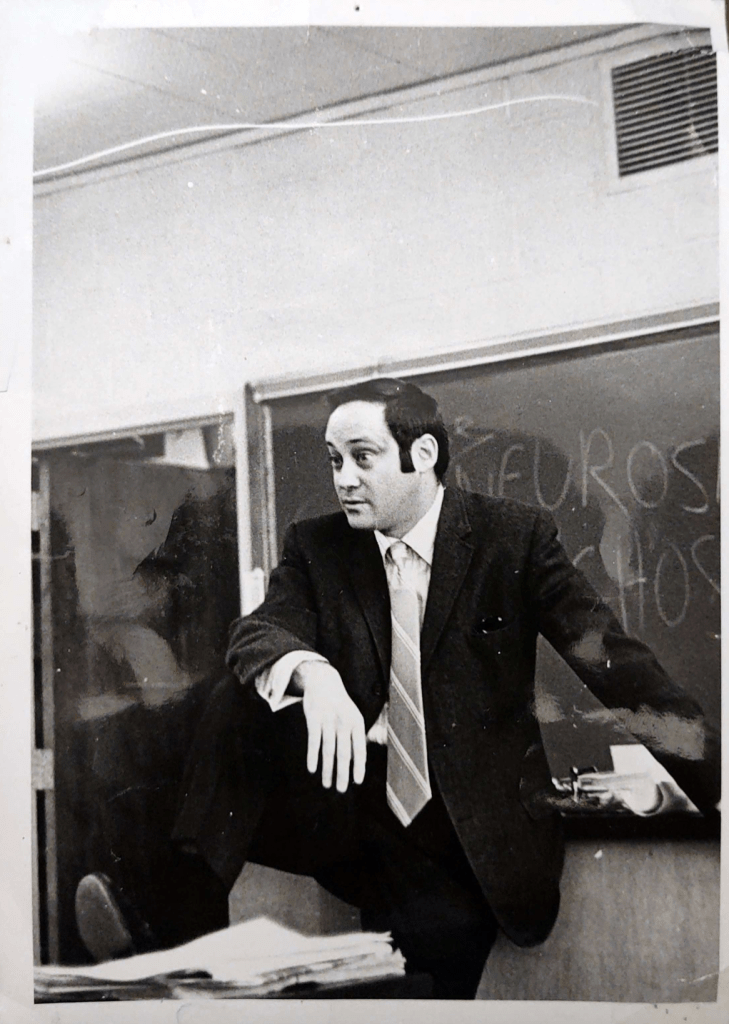
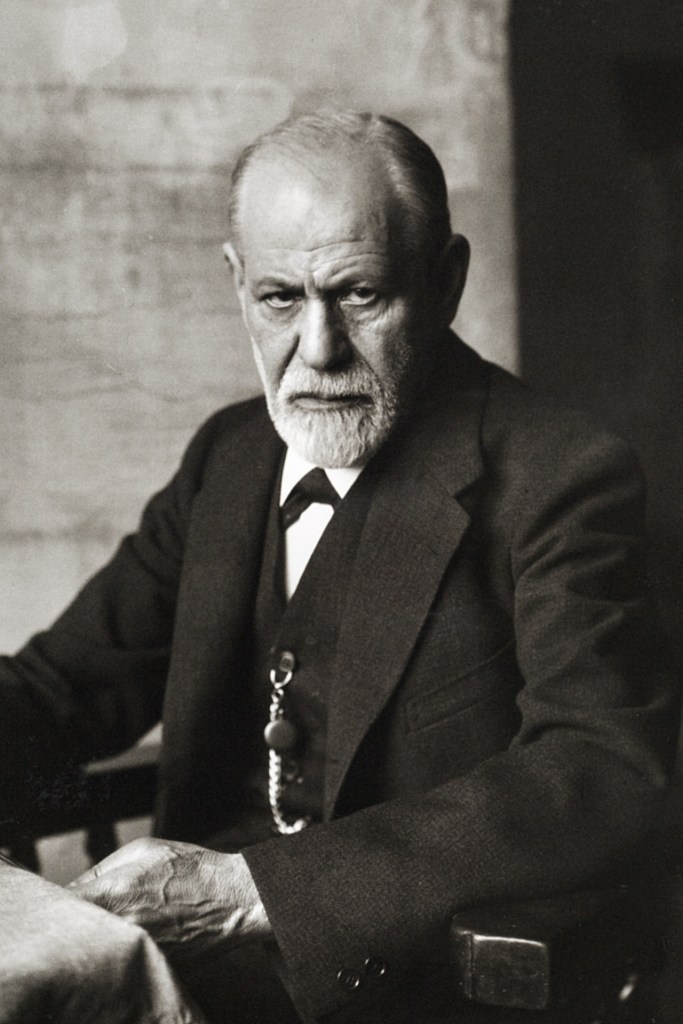

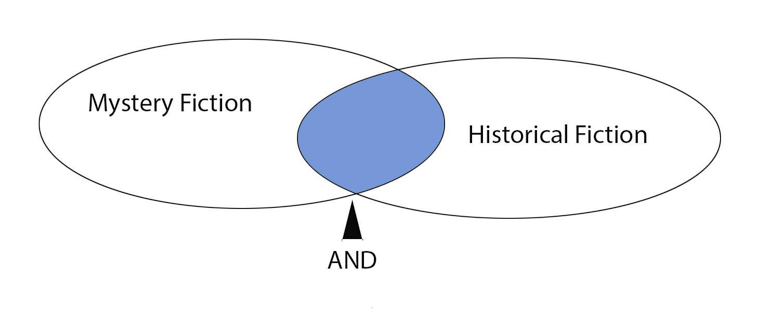

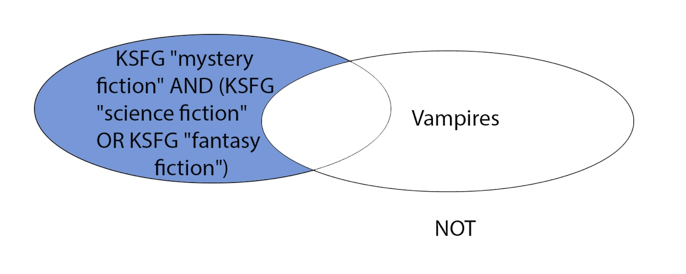

 SOMETHING IS GOING TO HAPPEN