“A Waterfall of Stories: 10 Exciting Books by Authors of Color” by Manju Soni

Manju Soni, who writes under the pen name M. J. Soni, is a former eye surgeon turned author. Her debut nonfiction book, Defying Apartheid, captures her experiences as a young activist against apartheid. In recent years, she’s turned to fiction writing. Her short stories have appeared in Akashic Books anthologies, Apeiron Review, The Establishment, and EQMM. Don’t miss her story “Juvenility” in our current issue (November/December 2022)! Manju is a recipient of the Leon B. Burnstein/MWA-NY Scholarship and a 2020 runner up for the Eleanor Taylor Bland Crime Fiction Writers of Color Award.  Her recently completed first novel, Precious Girls, is out on submission. She’s an active member of Sisters in Crime and Crime Writers of Color, and for this post she provides reviews of ten new books by crime writers of color that we think will pique your interest.  —Janet Hutchings

Stories and storytelling have been part of human culture for as long as there have been humans.

Tales, fables, myths, and legends have been with us for so long we often take them for granted. We rarely ask, who are the storytellers, whose stories are heard, and whose are not, why do some stories become part of our popular culture and others don’t, and the most important question of all, what impact do these choices have on us as the human race.

Through millennia much of storytelling was oral, lessons passed down from one generation to the next, and the next, and the next. But these magnificent waterfalls of human stories all over the world were dealt a terrible blow by colonization. Western Europeans regarded people of color whose lands they conquered, as primitive, as savages. So, they set out to “civilize” these peoples by breaking up families and societies, tearing the bonds between generations and thus severing the continuity of the thread of storytelling that kept people together.

The author Doris Lessing talks of a Shona friend whose grandmother was the storyteller for her clan. But her friend knew not one story of his grandmother’s. “The Jesuits beat all that out of me,” he said. He was flogged, all the children were, for any hint of “backwardness.”

Slavery broke the bonds between the elder storytellers left behind in Africa, and the enslaved people brought to the Americas.

Today, only a few cultures in the world continue this tradition of oral storytelling. Amongst them are the Aboriginal and Torres Strait Islander people of Australia, widely regarded as the oldest living cultures outside of Africa. They call their stories Dreamings, and they are closely guarded “lessons” told only to a chosen few and repeated back for accuracy, in order to pass on important lessons on geography, on acquiring food and shelter, and of social norms.

In the modern world, the printing press became the main conduit of storytelling which meant only those storytellers with access to it were heard, and this often meant White people.

The publishing industry in the West has struggled to address this issue of systemic racism within it. In the past few years, and especially with the rise of the Black Lives Matter movement, we have seen a range of authors being published whose stories are as diverse as humans themselves.

Here are 10 exciting crime novels by authors of color that explore worlds often unseen. I hope you find them as fascinating as I did. And you can find more writers of color at the Crime Writers of Color website https://www.crimewritersofcolor.com/books. Founded by Walter Mosley, Kellye Garrett and Gigi Pandian, CWOC is a great resource for both authors and readers.

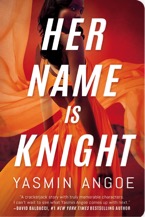
Her Name is Knight by Yasmin Angoe

“Echo cast one more look at herself, making sure the swim cap was securely on her head, the waterproof earpiece embedded in the diamond stud earrings she wore.”

Nena Knight, code name Echo, was trafficked as a child from her village in Ghana. Now, she’s an elite assassin who works for an international agency called the Tribe, a secret organization that ensures Africa’s interests are maintained on the world stage. Interweaving the story of her past with the present, we see Nena become Echo and take vengeance when she learns a new member of the Tribe is the man who murdered her family and sold her into captivity.

Runner (Cass Raines #4) by Tracy Clark

“I yanked the door open and all but flung my half-frozen self into the snug White Castle, the hawk clawing up the back of my neck, my lungs shocked rigid by the subzero wind chill.”

Cass Raines is a PI, and an ex-cop. When the desperate mother of a missing teen comes to her for help, she agrees to help. But the girl doesn’t want to be found, and as Cass digs further she realizes the breadth of the conspiracy that is keeping the girl and other kids on the street rather than at home.

But as Cass gets closer to the truth she and the girl are in an ever increasing danger.

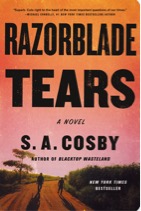
Razorblade Tears by S.A. Cosby

“Ike tried to remember a time when men with badges coming to his door early in the morning brought anything other than heartache and misery, but try as he might, nothing came to mind.”

One of Barack Obama’s Recommended Reads for Summer, Razorblade Tears follows the story of two fathers, one White, one Black, whose gay sons are murdered leaving their baby girl fatherless. We see the men struggle to overcome their own prejudices in order to work together to find the truth and bring the murderers to justice. A poignant portrayal of grief and revenge.

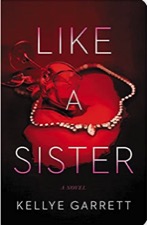
Like a Sister by Kellye Garrett

“I found out my sister was back in New York from Instagram. I found out she’d died from the New York Daily News.”

In a family ravaged by tragedy, loss and the ego of their father, music mogul, Mel Pierce, half-sisters Lena and Desiree, haven’t spoken to each other for years. But when Desiree is found dead, of a suspected overdose, in a park in the Bronx, near the home Lena shares with her aunt, Lena is convinced Desiree was on her way to see her. Why? Did her sister need her?

Lena is a smart and determined protagonist, and like a magician, Garrett unspools the mystery, making everyone a suspect until the twisty end.

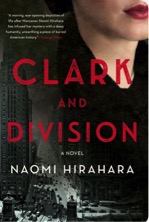
Clark and Division by Naomi Hirahara

“Rose was always there, even while I was being born.” Set in 1944, Naomi Hirahara’s story about two sisters, is narrated by Aki, the younger sister, who survives the Japanese internment only to lose her vibrant, beautiful, charming sister to murder in Chicago, on the corner of Clark and Division. It’s a chilling reminder of the impact of historical events on a Japanese-American family and the stoicism required to weather these events.  

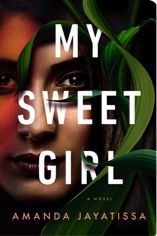
My Sweet Girl by Amanda Jayatissa

“There’s a special place in hell for incompetent customer service agents, and it’s right between monsters who stick their bare feet up on airplane seats and mansplainers.”

Paloma has lived a privileged life after being adopted from an orphanage in Sri Lanka. Now, at thirty, the man subletting her apartment discovers her secret, and is then found dead in a pool of blood.

On the run, with flashbacks to the harrowing time at the orphanage, we follow Paloma as she runs away from her past but never reaches a safe place. 

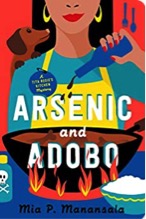
Arsenic and Adobo by Mia P. Manansala

“My name is Lila Macapagal and my life became a rom-com cliché.”

In this cozy food-themed mystery, Lila, recovering from a bad breakup, moves back home to help her aunt run her restaurant. But when her vindictive ex, a food critic who gives the restaurant a bad review, dies in the restaurant, Lila becomes the main suspect. And so begins a mouth-watering romp to find the real murderer.

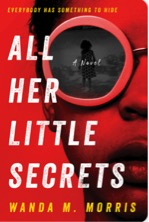
All Her Little Secrets by Wanda M. Morris

“The three of us—me, my brother, Sam, and Vera or Miss Vee as everyone in Chillicothe called her—looked like a little trio of vagabonds as we stood in the Greyhound Bus Station, which, in Chillicothe, meant a lean-to bus port in the parking lot of the Piggly Wiggly.”

Ellice Littlejohn is a top-notch lawyer at a firm to match. But when she finds her boss, and lover, shot dead in his office, she walks away, desperate to keep her past from destroying her present. Promoted to replace her boss, she soon realizes everyone has a hidden agenda, and she’s being set up to take the fall. But secrets will out.

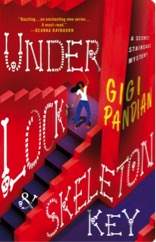
Under Lock & Skeleton Key by Gigi Pandian

“Tempest Raj tested the smooth, hardwood floor once more.”

Tempest Raj is a stage magician who has returned home after being accused of a careless and risky magic accident, where she was “apparently” witnessed preparing for the unsafe stunt. She firmly believes her former stage double, Cassidy, was responsible for the accident.

But when Cassidy is found dead inside a wall of a building being constructed by Tempest’s parents’ company, called Secret Staircase Construction, she and her best friend Ivy, have to solve the murder before someone kills Tempest, or accuses her of it.

Diverse and quirky characters, like Tempest’s  grandparents, Grandpa Ash who is of Indian ancestry, and Grandma Mor who is Scottish, together with their brilliant fusion recipes, and Tempest’s rabbit, Abracadabra, add a lot of fun in what is an intriguing mystery.

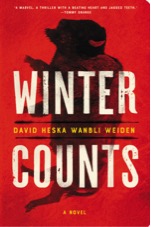
Winter Counts by David Heska Wanbli Weiden

“I leaned back in the seat of my old Ford Pinto, listening to the sounds coming from the Depot, the reservation’s only tavern.”

In 1885, the murder of Chief Spotted Tail of the Rosebud Sioux Tribe resulted in the Major Crimes Act being passed by the federal government. The Act, still in effect today, ensures that a serious felony committed on a reservation by a Native person has to be referred to the FBI, but the FBI has a right to decline prosecuting if they deem fit. The result is many victims and their families are left without justice, in the gray area between the FBI and tribal police. This is when they turn to Virgil Wounded Horse, the protagonist of Winter Counts. A local enforcer on the Rosebud Indian Reservation in South Dakota, Virgil is also a vigilante. Following the trail of a new drug cartel rapidly expanding its heroin dealings on the reservation, Virgil has to follow the trail to Denver. And things become personal when his nephew is caught in the crossfire.  

Posted in Uncategorized | Leave a comment

“Henry Slesar” by Russell Atwood

Our blog post this week is by Russell Atwood, a former managing editor of EQMM whose first work of fiction appeared in EQMM’s Department of First Stories. He went on to write two novels starring P.I. Payton Sherwood and, most recently, the haunted-house novel Apartment Five Is Alive. The latter is perfect for this Halloween season and it’s now available as an audiobook narrated by Jack de Golia, available on iTunes and Audible.com. Bram Stoker Award-winning author Tom Deady says the book is “Full of compelling characters and genuinely creepy scenes . . .  The climax is claustrophobic and ultimately stunning.” Russell is also the creator and writer of the comedy-horror-puppetshow The Bride of Pugsley on YouTube channel SidMartyLovecraft. His subject for this post is a writer whose work he would have come across often during his years at EQMM, the unforgettable Henry Slesar.  —Janet Hutchings

One of the drives central to all writers is immortality. Whether they acknowledge it or not, at some point all writers look around and notice “Life is short” and many stories go untold and lives are forever forgotten. All writers attempt to create something that will weather through all ages, long after their passing. Henry Slesar can rest easy that he’s come closer than most.

Prolific in numerous fields of writing—sci-fi, pulp fiction, daytime soap operas, advertising copywriting, television and movie screenwriting, award-winning mystery novels—author Henry Slesar was born June 12, 1927 “Henry Schlosser” in Brooklyn, NY, his parents Jewish immigrants from Ukraine. He attended the School of Industrial Arts in Manhattan and soon found he had a knack for copywriting and design. At the age of 17 (right after his graduation), Slesar was hired by the NY advertising agency Young & Rubicam, launching his twenty-year career as an ad man in the era of Mad Men. He is credited for coining the term “coffee break” and a long-forgotten but hugely successful “The Man in the Chair” ad campaign for McGraw-Hill.

He published his first short story, “The Brat,” in 1955, in Imaginative Tales magazine. The 1950s saw an explosion of activity for Slesar, setting a pace he maintained throughout his career, turning out clean, quality prose in a variety of genres and mediums, though suspense was always his forte. In 1957 alone, Slesar published over forty short stories under his own name and various pseudonyms such as O. H. Leslie (the O.H. presumably a nod to author O. Henry, because many of Slesar’s stories climaxed in a twist ending). In 1960, he wrote his first original novel, The Gray Flannel Shroud, a mystery set in a big advertising agency (which the author had ample first-hand experience to draw from) where a murder is committed while the staff is in the middle of promoting a new baby food. It won the Edgar Award for Best First Mystery Novel from the Mystery Writers of America.

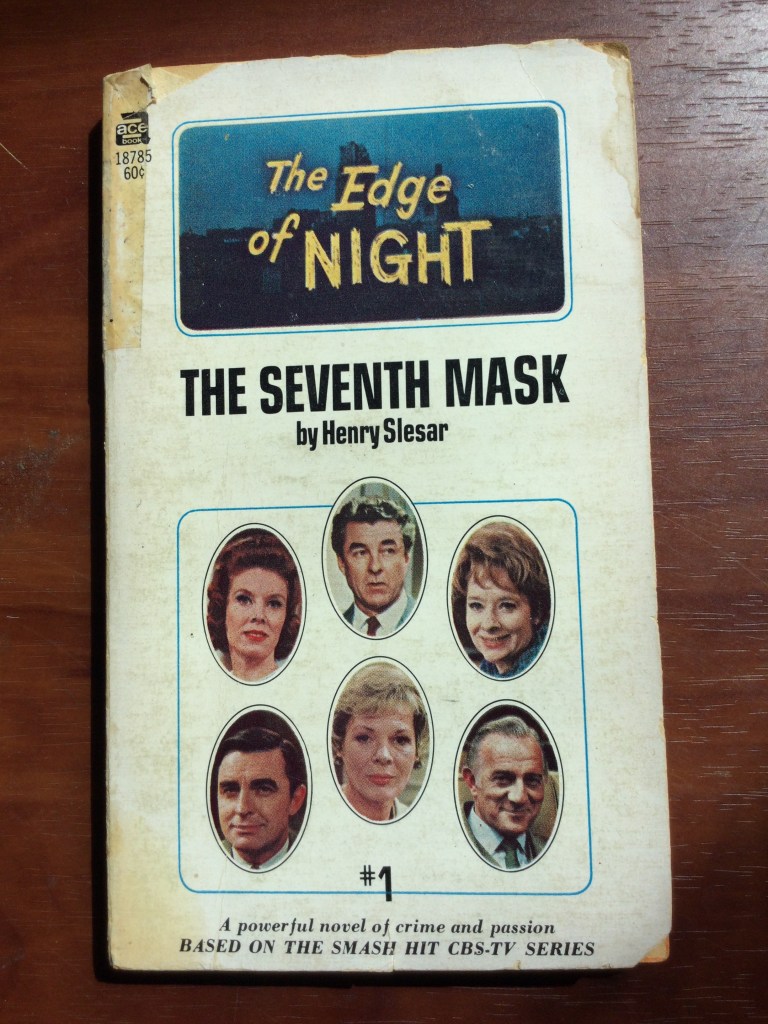
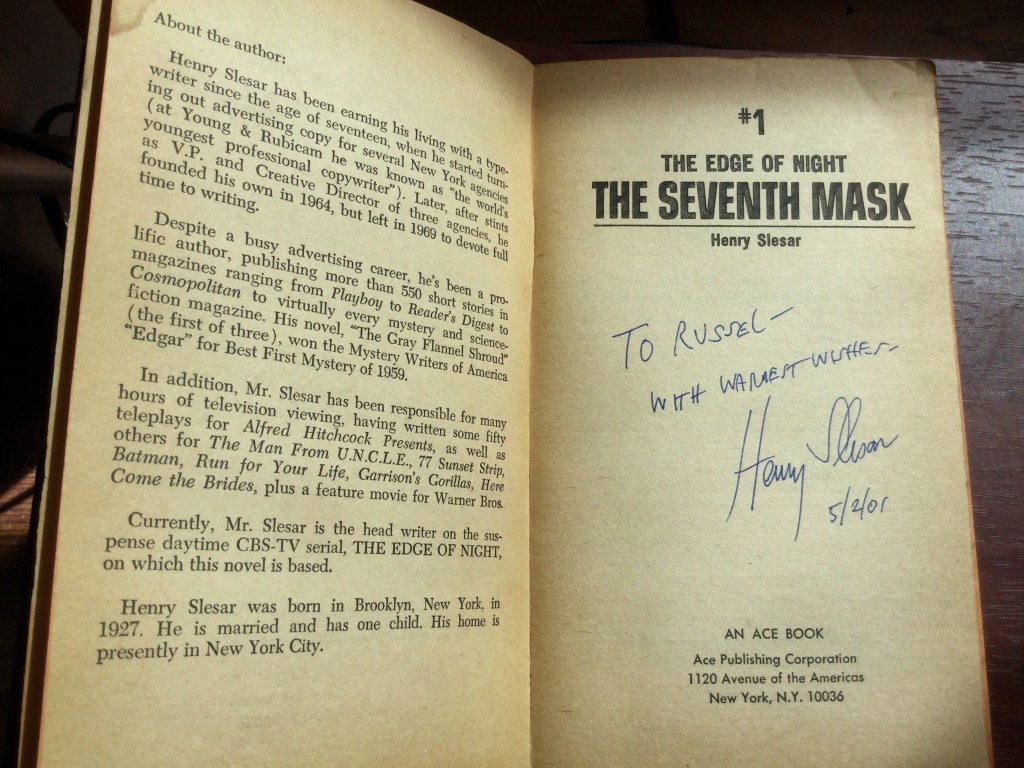
It was also around this time that Slesar opened his own advertising agency and began writing for television, igniting an extraordinarily long relationship with the CBS daytime soap opera The Edge of Night. In The Soap Opera Encyclopedia, writer Chris Schermerin comments that “Slesar proved a master of the serial format, creating a series of bizarre, intricate plots of offbeat characters.” He eventually became the head writer for this mystery-oriented serial from 1968 to 1980, leading TV Guide magazine to once refer to him as “The Writer with the Biggest Audience in America.” He won an Emmy in 1974 for his writing on the show, wrote an original novel based on the series (The Seventh Mask), and garnered numerous nominations and nods from the Writers Guild, and a second Edgar for best television script in 1977. He also wrote for other daytime and late-night serials such as One Life to Live, Somerset, Executive Suite, and Capitol. (Later, in 1998, Slesar would draw from his experience to write the mystery novel Murder at Heartbreak Hospital, about murders committed on the set of a daytime soap opera).

Courtesy of the author

In 1960, director Alfred Hitchcock came across one of Slesar’s short stories, “M is for the Many,” in Ellery Queen’s Mystery Magazine and acquired it for an episode of his television series Alfred Hitchcock Presents, retitling it “Heart of Gold.” This began a relationship between the two that led to twenty-one of Slesar’s tales being adapted for the show.

In the introduction to his short story collection Death on Television, Slesar wrote about where he and Hitchcock met creatively in relation to their love of the “twist ending”:

“For some people, irony may seem like a by-product of cynicism. Anatole France called it ‘the last phase of disillusion.’ But for Hitchcock . . . irony was the key ingredient of storytelling, along with its two components: humor and pity. “Let’s face it. There’s nothing intrinsically funny about crime…[Hitchock] made a conscious decision to put the story before the gory. He chose delight over fright.

“It wasn’t merely a cynical outlook on life that dictated the Hitchcock choices. It was an attitude that smiled, sometimes sadly, upon the frailties of the human personality. It was more than just a ‘sense of humor.’ The taste for irony, in the words of Jessamyn West, ‘has kept more hearts from breaking than a sense of humor—for it takes irony to appreciate the joke which is on oneself.’

Slesar was a master of the twist ending, and often these types of stories are labeled gimmicky, but Slesar’s twists always grew out of the foibles of human beings.

In the 1970s, several of these stories were also used in the attempted rebirth of radio drama on American radio when Himan Brown (the creator of the old-time-radio show Inner Sanctum) started the CBS Radio Mystery Theatre. Brown chose one of Slesar’s stories, “The Old Ones Are Hard to Kill,” to launch the new series and during the decade-long run forty-three short stories of his were transmitted over the airwaves.

In 2001, I ran into Henry Slesar at a mystery writers reading in the East Village, and I told him how now over this new thing called “the Internet” I was able to listen to all the old broadcasts of CBSRMT. He chuckled and said, “Himan would be happy.” But I don’t think he quite believed me. And as fertile as his imagination was, I don’t think he could have imagined that today you could also watch old episodes of his series The Edge of Night, the tapes of which he thought were lost forever. But it turns out old fans recorded these shows on their VCRs while they were at work and now they are making them available to a whole new generation via the platform of YouTube.

Courtesy of the author

This Halloween season I want to focus on five of Slesar’s stories that appeared on CBS Radio Mystery Theatre. They are guaranteed to leave you with a chill down your spine:

1) “Prisoner of the Machines” (01/16/1980), starring a young John Lithgow. A sci-fi tale that starts off with a classic premise and wrings every last futuristic nightmare out of it.

2) “Kitty” (04/09/1980) Suffer from Ailurophobia? The morbid fear of cats? Then you might want to pass on this horror story of an Egyptian mummified cat-queen living in 1970s Manhattan. It leaves marks.

3) “Murder Museum” (04/09/1974) A wax museum is the setting for a tale of a young artist tormented by his tragic family past, which becomes the newest exhibit in the Chamber of Horrors.

4) “Bargain in Blood” (06/10/1974) This creepy, fantastic tale might be familiar as it was filmed as an episode of the original Twilight Zone, about a young man who discovers he can “swap” anything his heart desires. But buyer (and seller) beware.

5)” The Last Escape” (10/17/1974) This story was filmed as an episode of Alfred Hitchcock Presents and is about a second-rate escape artist and third-rate human being who decides to make a comeback recreating one of Houdini’s greatest escapes. But his downtrodden wife and assistant has an escape of her own in mind. This is to me a classic Slesar story, because break it down to simple facts and it would make a gory and dismal newspaper story, but in Slesar’s hands the shocking ending is a delight.

These radio shows can be listened to on numerous sites including YouTube, archive.org, and for great details on this whole series check out the CBS Radio Mystery Theatre page: CBSRMT.com

The advent of the Internet has given new life to these broadcasts, introducing them to a new generation of listeners, and for the writers maybe even a slice of immortality.

Henry Slesar died April 2, 2002 at the age of 74, but he is immortal.

Posted in Uncategorized | 4 Comments

“Lessons from Reading” (by Vikram Kapur)

Dr. Vikram Kapur, who has been shortlisted for many awards, including the British Commonwealth’s Short Story Prize, has a PhD. in creative and critical writing from the University of East Anglia. His short stories and essays appear or are forthcoming in places like The Hong Kong Review, Mekong Review, The Los Angeles Review of Books, and The Huffington Post, and he is the author of three novels. His evocative short story “10” appears in the November/December 2022 issue of EQMM. Here he talks about lessons he has learned from reading two influential texts.

I first encountered Hemingway’s “Hills like White Elephants” as an undergraduate in the early nineties. I don’t recall the year. What I do recall clearly is how much the story mystified me. It was the first story I’d ever read that was as much a mystery to me by the end as it was at the beginning. And it wasn’t even a mystery story. Well, not the way I saw mystery stories back then. There was no crime, no action, no detective, no great reveal . . . To tell the truth, it was unlike any story, mystery or otherwise, that I’d read until then. Growing up in India in the eighties and nineties meant growing up on a steady diet of maximalist movies and novels that told you exactly what you were supposed to think at any given moment. (If you’ve ever seen a Bollywood film or read a Salman Rushdie novel you’ll know exactly what I’m talking about.) “Hills like White Elephants” was anything but maximalist. The description was minimal, the prose spare. The two people at the center of the story were not even named; they were merely identified as the American and the girl. All they did in the entire story was argue with each other at a bar in a railway station somewhere in Spain. I couldn’t for the life of me figure out why they were arguing. Somewhere, an operation was mentioned. I had no idea what it entailed. I’d heard that Hemingway wrote about wars. But the operation didn’t seem to be a military operation. The argument appeared to resolve itself by the end of the story as the girl agreed to do what the American wanted. But she did so with a reluctance that made me pessimistic about the future of the relationship. What she agreed to, however, remained a mystery.

To be a good writer you have to be a good reader. Of your own work as well as the work of others. The first thing I learned while reading “Hills like White Elephants” was that I just wasn’t a good reader. I’d been spoon fed by writers for so long that I’d become lazy. I didn’t have the patience or insight to read between the lines, which made it impossible for me to read someone like Hemingway whose omissions are just as canny as anything he put in his stories. I read absinthe without thinking of its hallucinatory quality. Or white elephant without picking up on the various meanings behind the use of the word.

Ultimately, I was able to figure out the story with the help of my professor. (The operation actually referred to an abortion.) Once I did, I didn’t know what to marvel at more; my incompetence as a reader or Hemingway’s brilliance in packing so much in a short piece. I resolved to read far more closely from then on. I also took two important writerly lessons to heart. Until then, I’d believed that size mattered in writing. “Hills like White Elephants” put that idea away for good. The story was no more than a few pages long. Yet it packed more depth and complexity than stories five times its length. Several novels for that matter. Furthermore, I got to know how cageyness can be used in a story to intrigue the reader. Merely being cagey doesn’t work for a writer. But when cageyness is employed in a manner that makes the reader care enough about the story to want to unwrap its layers then it is worth its weight in gold.

A few years later I read Peter Hoeg’s Danish novel Smilla’s Sense of Snow in English translation. At the time, I knew nothing about Scandinavian fiction. It was just that the cover caught my eye one night at a Barnes and Noble store. The blurbs on the jacket told me that the novel had been heaped with critical acclaim. The synopsis on the back promised a beguiling mystery. I was intrigued enough to buy the book.

Until then, I’d only read straight-out mysteries—think Conan Doyle and Agatha Christie. I thought all a mystery novel was supposed to do was set up a crime that sent the detective, and by extension the reader, down a twisting, turning path that eventually led to the criminal. The main thing was to keep the plot moving quickly and the surprises coming thick and fast. Everything led to the great reveal at the end which had to be the biggest surprise of all.

Smilla’s Sense of Snow quickly disabused me of such notions by turning everything I believed about the mystery novel on its head. The writing was poetic rather than functional. There were vivid descriptions of Copenhagen and Greenland. Snow was used as a motif right through the novel. And the most interesting part was not the way the novel solved the crime but how it examined identity by delving into what it is like to belong to two cultures that are incompatible with each other. (The central character, Smilla Jaspersen, is half-Danish and half-Greenlandic.)

Furthermore, Smilla was unlike any fictional detective I’d met. For starters, she wasn’t even a detective; she was a glaciologist. She was also rather hard to like. Her experience of life had left her bitter and unsentimental. She didn’t trust easily and reveled in being a loner. Her only redeeming feature, as far as I could see, was her commitment to getting justice for Isaiah, the six-year-old boy she had befriended, who dies at the beginning of the novel. And that was what made me care about what happened to her. As I read on, I found myself caring less about the mystery and more about what happened to Smilla. By the time I reached the end of the novel, I realized that was the author’s greatest accomplishment. He had got me to root for a deeply flawed character.

Over the years, the lessons I learned from “Hills like White Elephants” and Smilla’s Sense of Snow have found their way into everything I have written. The moment I find myself getting verbose, I think of “Hills like White Elephants” and see if I can’t say the same in fewer words. I work hard to make my prose lean and keep the action moving. But not at the cost of building character. It may not be possible to develop each and every character, but it is important that the main character is well-rounded. I guess it is possible to hook a reader simply through plot in really short stories. But, as the story gets longer, it is more likely that the reader will stay with it because she cares about the main character. For novels it is a no-brainer. I can’t see anyone investing the amount of time it takes to read a novel if they don’t fall in love with the characters.

The abiding lesson of Smilla’s Sense of Snow, however, goes far deeper than craft. As an Indian writing in English, I often find myself writing for an audience that is as unfamiliar with the world I’m writing about as I was about the world depicted in Smilla’s Sense of Snow. The memory of how the novel managed to immerse me, in spite of that, gives me confidence that I might be able to do the same while evoking India on the page.

Posted in Uncategorized | Leave a comment

“Mystery and the Poetic Form” (by Janet Hutchings)

Of all the many forms of mystery and crime story that EQMM has published over the past eighty-one years, the story in verse is the rarest. And it’s not because poets don’t write mystery stories (and vice versa). EQMM’s founder, Frederic Dannay (half of the Ellery Queen writing team) was profoundly interested in poetry: He wrote poetry and had an extensive poetry collection. And he was far from alone in being a mystery writer/poet. As I noted in a 2015 post for this site, Dannay compiled an anthology entitled Poetic Justice in which he included mystery or crime stories by famous poets such as Sir Walter Scott, Dylan Thomas, Ogden Nash, and Walt Whitman, to name a few. But to say that someone is a poet who also writes mysteries (or a mystery writer who also writes poetry) does not necessarily imply that such a writer has produced a mystery in verse form. Many poets don’t focus on long-form narrative poems at all, let alone narrative poems in which the story is a crime or mystery.

Fred Dannay never missed an opportunity to mention how many Nobel and Pulitzer Prize winners EQMM had published (mostly reprinted, actually!). Neither do I. One of those Pulitzer Prize winners was Stephen Vincent Benét. Benét’s Pulitzer Prize was for poetry—for his book-length narrative poem John Brown’s Body. But even though Benét clearly had the skill and desire to tell complete stories in verse, as far as I’ve been able to determine, he never wrote a mystery story in verse. He did, of course, write prose short stories, most notably “The Devil and Daniel Webster.” He also wrote at least two short stories that fall squarely into the mystery genre, one a locked-room mystery entitled “The Amateur of Crime,” the other “Floor, Please,” one of his earliest stories, which found its way into a pulp magazine in 1924. Both stories were reprinted in EQMM in the 1940s. It’s a somewhat curious thing, to me, that Benét appears never to have combined his loves for narrative poetry and the mystery. But then, one can see that it might prove exceptionally difficult to tell a locked-room tale in verse, since there are many prosaic details about time, place, and the whereabouts of suspects that need to be worked into such a story.

At first glance at least, the crime subgenre of the mystery would seem to lend itself a little more readily to verse form. It’s not only that there is less need in most crime stories to establish to precision particulars of timing and the placement of persons and objects. It’s that the crime story often turns on the emotional impact of what occurs, and poetry can enhance the emotional impact of a narrative. However, in my brief search for crime or mystery novels in verse form, I came up with only one notable example, the 1997 Edgar nominated Who Killed Mr. Chippendale by Mel Glenn, and that book is a YA rather than an adult novel. I’m sure there must be many more examples, and perhaps readers of this blog will help me out by pointing me toward some.

When it comes to mystery short stories in verse, EQMM would expect to see a good portion of whatever is being written. And we don’t see many. Since 1979 John F. Dobbyn’s crime/adventure verse stories set in the Yukon have been featured intermittently in our pages, most recently in the September/October 2021 issue. And coming up in our March/April 2023 issue is a noir story in verse by Michael Wiley. The latter has been expanded into a five-story, fully developed mystery since the original tale was submitted to us and purchased (although the original story stands entirely on its own). EQMM would normally like to follow up with publication of the subsequent stories in a connected sequence that we’ve started, but the whole of this sequence has become too long for us. We have tight space constraints to begin with, and verse requires quite a bit more space than prose for an equivalent word count.

Which brings me to one of the reasons I had for taking up this topic today: to ask if any of our readers knows of a book or magazine publisher well suited to this area of the mystery. We like being able to present the occasional verse story in EQMM, but from a formatting as well as a space standpoint, we are not the ideal publication for the form. Our layout is basic and meant to maximize the use of space, whereas it often matters a great deal with poetry how it is laid out on the page—and what overall look is conveyed.

It seems to me that the mystery in verse could become a burgeoning area of our field if enough of the right publications existed—assuming, of course, that there’s an audience for such mysteries out there. I’m guessing there might be. Fred Dannay thought there was a natural affinity between what poets and mystery writers (or at least their fictional detectives) try to do, and that is to make order out of chaos. We live in confusing, disturbing, chaotic times. Times that seem just right for a powerful intertwining of the emotional impact of poetry and the clarity of the detective.

Posted in Uncategorized | 4 Comments

“Life Doesn’t Always Work Out” (by Michael Z. Lewin)

Michael Z. Lewin is the winner of the 2021 Lifetime Achievement Award from the Private Eye Writers of America, and he’s been writing private-eye novels and stories, as well as other types of crime fiction, since 1971. He’s known for two popular series, one starring Albert Samson and the other the Lunghi family of detectives. His most recent novels are Whatever It Takes and Men Like Us. Mike is also a prolific short story writer and a longtime contributor to both EQMM and our sister magazine, AHMM. You won’t want to miss his new story collection, Alien Quartet: Four Albert Samson Stories, or his story coming up in our next issue (November/December 2022), “Two, Four, Six, Eight.” It’s real crime, not fiction, that’s on the author’s mind in this moving post.  —Janet Hutchings

I am too young, obviously, even to think about writing a memoir of my life and work for my children and grandchildren. But in not-thinking about such a thing it’s occurred to me that instead of describing, painstakingly, what has happened to me, it might be interesting to consider what might have happened to me instead.

I’m thinking first of a friend I made in the seventh grade (which made me 12, for those of you less familiar with US school sequencing.) I don’t, in fact, remember when I first met Jerry, or began to hang out with him, but in the eighth grade graduation picture he is there, taller than everyone else, smiling for the camera. In it he has a blunt face, like Roger Federer’s, and is not especially handsome (were any of us at thirteen?)  But his appearance in the picture vividly connects for me with the ambitious, brave and inventive guy I knew him to be in high school and later.

Inventive? As a sixteen-year-old he wangled an arrangement with the local morning newspaper to bring local election results to them. This meant getting the voting results from polling stations’ machines, and driving downtown to the Star offices to turn them in.

There were too many polling stations for Jerry to cover quickly enough himself, so he recruited me to do a few—and perhaps other friends who could drive.  We made a little money and saw the inside of a newspaper office . . . Not every high school kid gets to do that.

Brave?  For reasons I never asked or knew, Jerry “collected” the license plates of police vehicles, with particular interest in those driven by plainclothes cops.  (Are the motivations spurring any collector understandable to the rest of us?)  This “hobby” even led him to sneak into the police parking lot beneath headquarters in downtown Indy to write down plate numbers.

I put such a collector into a book once, a kid being caught there. But without consequences: the appearance in my book just a gift to Jerry. Because as well as plate numbers he collected more general info about the city police, and later provided me with the floor plan of police HQ that I used when I began writing my Leroy Powder novels—Powder being an Indy cop.

And ambitious . . . Jerry did not aspire, as far as I know, to be a policeman.  His longterm target was to become Governor of Indiana. And as part of that plan he resolved that I would become his campaign manager . . . Perhaps writing crime fiction gave me the requisite deviousness.

But while waiting to become thirty—the age of eligibility—he went to college in Indiana and then off to Detroit to work for General Motors. There, during the introductory training program, the head of the company came in to ask the new recruits how they were doing and whether anything could be improved.

Unlike the rest of his intake, Jerry wrote several pages spelling out what was working well and what wasn’t and submitted it.  The result was that he leaped up the “freshman” corporate ladder to join the team that went to company branches assessing the efficiency of their performance.

By now I lived in England, and he came to visit us in the seventies at the end of a European vacation.  He talked again of his plans to become Governor.  I was still in the mix.

And that’s what I’m thinking about in this non-memoir episode.

Jerry was one of those guys whose ambition and charisma you believe in.  So I figured he would become Governor—with or without my lack of experience in the political process. (Hey, perhaps I’d have learned quickly.)

But think about it.  Maybe, under Governor Jerry, Indiana could have become a more socially empathetic State. Poor and disadvantaged people might have been given sympathetic and comprehensive help to find their way, or just to survive.

Because once upon a time Indiana was a leader in socially sympathetic legislation . . .

In 1799 the US government enacted a “poor relief” law requiring local counties and townships to care for people who couldn’t care for themselves, designated as “paupers.” These people were to be auctioned off. Members of their community bid for the paupers services by saying how little money they’d need from government to feed and clothe the pauper. Whoever bid the least won the pauper, and his or her labor—not exactly a recipe for good treatment. Paupers including children who’d lost their parents and had no relatives who’d take them in were subject to auction.  This happened throughout the US and its territories.

In 1813—three years before statehood—the Indiana territory legislature did pass a law that required impartial justice to rich and poor, “regardless of race.”

But it wasn’t until 1834 that Indiana became the first State to ban the enslavement that resulted from the practice of pauper auctions.

Hoosier historians may be able to update me, but in years of writing books and stories set in Indiana, I can’t remember another genuinely caring piece of legislation that Indiana paved the way with.  When I moved to Indy in 1948 there were still lines on the floors of busses to designate seating areas by color.

Just think what Governor Jerry and I could have done.  If he was lucky and forceful enough to get himself elected despite my running his campaign, there would have been no limits.

Except it didn’t happen. And not because I refused to interrupt my writing career.

Jerry’s visit to England was the last time I ever saw him. He was murdered in Detroit in the mid-seventies. He was robbed and his body set alight in a vacant lot. The murder was never solved.

My point here is to underline that real crimes—as opposed to the fictional ones—affect real people.  And murders affect more than just the victim.

These truths are explored in a lot of the darker crime fictions, while being skipped over in so many of the lighter forms of this genre.  I don’t mind books and stories that don’t go all serious on us—there are many kinds of entertainment and education to be had in mystery fictions, even in mine. But please, don’t treat crime, real crime—including small crimes—casually.

Anyone whose home or even car has been broken into—whether anything was taken or not—knows that the disturbing effects of such things are real, and they last.  And more “serious” crimes . . . Lordie.  How does one get over them?

In response to Jerry’s murder I wrote a novel about a crime writer—not remotely me, of course—whose friend was murdered. This fictional and big-headed writer thinks his special understanding of crime ought to enable him to solve the murder. Even to do it better than the police, who strike him as incompetent and puzzlingly resistant to accepting his help.  Spoiler alert:  he can’t help and he doesn’t solve it.

I, at least, didn’t try flying to Detroit to “contribute.”

In my first crime novel, Ask the Right Question, my private eye has a best friend named Jerry Miller.  That was the name of my real life friend.  And in real life he ended up murdered.  I’ve never used the whole real name of someone I knew in a book again.

Posted in Uncategorized | 4 Comments

“What is a Thriller?” (by Kevin Mims)

In today’s post, Kevin Mims, a frequent contributor to this site, takes a stab at defining one of the broadest of entertainment genres—the thriller. Each year, when EQMM makes its submissions for the best-short-story award given by the International Thriller Writers, we have to make judgment calls as to what counts as a thriller and what does not. It never seems to get easier, but Kevin’s take on the subject is interesting. —Janet Hutchings

One of the most difficult popular fiction genres to define with any precision is the “thriller.” For the last half century or so, when publishers or p.r. reps or reviewers have applied the word “thriller” to a novel, it has usually been done to convey to potential purchasers that the book is fast-paced and suspenseful, a novel you “won’t be able to put down.” Such books are also sometimes called “page-turners” or, if they contain some aspect of supernatural horror, “chillers.”

On her self-titled blog, Savannah Gilbo, a so-called “book coach,” has compiled a helpful list of “Ten Things Every Thriller Novel Needs.” But even this list leaves room for some quibbles. For instance, Gilbo lists “a crime” as the first element that every thriller novel needs. I disagree with her. I consider Peter Benchley’s 1974 novel Jaws to be one of the greatest thrillers of the twentieth century, but it isn’t a crime novel. The villain of Jaws isn’t a criminal; it is a force of nature. Likewise, I consider Michael Crichton to be one of the preeminent thriller-writers of the last sixty years, but in many of his novels— Timeline, Jurassic Park, Sphere, The Lost World, Disclosure, The Terminal Man, The Andromeda Strain, etc.—crime is not a major part of the plot. The 1962 novel Fail-Safe, by Eugene Burdick and Harvey Wheeler, is one of the greatest thrillers of the Cold War era but it isn’t a crime novel. It is about a series of technical and procedural failures that causes the U.S. to accidentally target the Soviet Union with warplanes carrying nuclear weapons that could wipe out all of Moscow and its environs. The 1958 airplane thriller Runway Zero-Eight, written by Arthur Hailey and John Castle, tells the nightmarish tale of what happens when the pilot and co-pilot of a passenger jet flying across Canada are stricken with a case of food-poisoning and can no longer fly the plane. Early on, foul play is eliminated as a cause of the food-poisoning. This is a thriller with no bad guys and no crime. But it is nonetheless riveting.

So, if a thriller isn’t necessarily a mystery or a crime novel, what is it? I would argue that, at the very least, all thrillers need a relatively brisk pace and a great deal of suspense. They also need relatively high stakes. Ira Levin’s 1967 novel, Rosemary’s Baby, is widely regarded as one of the best American thrillers of the twentieth century. The stakes are high: a young pregnant woman tries to prevent a satanic cult from sacrificing her unborn child to the devil. Levin does a good job of ratcheting up the suspense, so that the final one hundred pages or so of this relatively short (218 pages in paperback) novel fly by. The book has been justifiably described as a horror novel and a novel of psychological suspense. It is also a crime novel as well as a mystery. But, for me at least, the term “thriller” seems almost tailor-made for books like Rosemary’s Baby. This is clearly a book meant to be gobbled up in a sitting or two. Though it is a horror novel about Satanism, Levin doesn’t delve too deeply into the history of Satanism or its impact on world culture, the way that Anne Rice’s novels often stretch back centuries in order to explore vampirism or witchcraft.

Here are some of the other novels from the same approximate era that I would categorize as thrillers: William Goldman’s The Marathon Man (despite also being a crime novel) and Magic (despite also being a crime novel and a psychological – as opposed to a supernatural—horror novel), Ken Follett’s The Eye of the Needle (despite also being a spy novel, a war novel, and a historical novel), James Grady’s Six Days of the Condor (also a spy novel and a crime novel), Ira Levin’s The Stepford Wives (also a sci-fi novel and a social satire), Stephen King’s Carrie (also a horror novel), John Farris’s When Michael Calls (also a crime novel), The Day of the Jackal (also a crime novel), Trevanian’s The Eiger Sanction (also a crime novel and an adventure novel), and Mary Higgins Clark’s Where Are the Children, A Stranger Is Watching, A Cry In the Night, and The Cradle Will Fall (all of which are also crime novels).

Do I have a foolproof formula by which I can separate the thrillers from the crime novels, or from the horror novels, or from the spy novels? No, not really. What Supreme Court Justice Potter Stewart said of pornography is true of me and the thriller novel, “I know it when I see it.” Or, perhaps more accurately, “I know it when I’ve read it.” Many fans of the genre say that a ticking clock (or a hard-and-fast deadline of some sort) is a necessity for a good thriller. I don’t think a ticking clock is an absolute must for a thriller, but I do prefer thrillers that take place over a relatively short period of time. Andrew Klavan’s 1995 novel True Crime (the source of the 1999 Clint Eastwood film) is a classic of the ticking-clock thriller genre. It is the tale of a crusading journalist who has just a few hours to find evidence that will prove the innocence of a man scheduled to die in the state’s gas chamber for a murder he didn’t commit. Many of Michael Crichton’s novels unspool over a short period of time. Rising Sun covers just three days. Congo unfolds over the course of thirteen days. The Andromeda Strain covers a span of just five days.

Are suspense novels and thrillers the same thing? I don’t think so. I think of Patricia Highsmith as a writer of suspense novels (which are usually also crime and/or mystery novels). Although her novels sometimes provide thrills, they are generally much more slowly paced than traditional thrillers. Graham Greene called her “a poet of apprehension.” Her novels are full of tension and unease, but they often move very slowly (by intention). Highsmith didn’t write “page-turners,” she wrote “slow burners.”

Although John D. MacDonald was capable of writing good thrillers—such as Cape Fear—his best-known works, the Travis McGee novels, are detective stories rather than thrillers. Thus I think of MacDonald as a crime writer or a detective novelist. The same is true of Ross Macdonald and his Lew Archer books. Crime writer (or mystery writer, or spy writer, etc.) is not a lesser designation than thriller writer; it is simply a different designation. I consider Lee Child and Harlan Coben to be thriller writers, even though crime and mystery permeate their works. I consider Thomas Harris to be a thriller writer, even though his books all deal with crime. Although her books contain plenty of crime and mystery, I consider Mary Higgins Clark to be a writer of thrillers. The same is true of Tess Gerritsen.

Now let’s talk a bit about the various subcategories of thrillers. Michael Crichton was said to specialize in techno-thrillers. The term seems fair to me, even though some of his thrillers (such as The Great Train Robbery and A Case of Need) contain nothing that would strike a contemporary reader as cutting-edge technology. Tom Clancy was a writer of political thrillers or military thrillers. Clive Cussler has been described as a writer of nautical thrillers (although that term doesn’t describe all of his books). Robin Cook is the master of the medical thriller. The Genesis Code, John Case’s 1997 novel of cloning and international adventure, has been described as a bio-medical thriller. That sounds about right to me.

And then of course there are Scott Turow and John Grisham and all of their fellow lawyers-turned-bestselling-authors. When Turow’s Presumed Innocent first hit the bookstores in 1987, the publisher could have promoted it as a “legal novel” or a “courtroom drama,” appellations that had been applied to earlier bestsellers such as The Caine Mutiny or The Anatomy of a Murder. But, by the 1980s, “thriller” was the term of choice for the kind of books that were known to keep pop-fiction junkies sitting up all night in their armchairs. And so the publicity department for Farrar Straus & Giroux promoted Presumed Innocent as a “legal thriller.” It might not have been the first use of the term, but it was the first time the term was applied to a cultural juggernaut, a book that, in its way, would become as seminal as Rosemary’s Baby or The Day of the Jackal or Jaws. Four years later, when John Grisham, a lawyer like Turow, broke into the big time with his second novel, 1991’s The Firm, the appellation was just waiting there to be exploited. As it happened, Grisham would go on to be the most successful author of legal thrillers (as measured by book sales) of the twentieth century and (so far, at least) the twenty-first. Of all the subgenres of thriller, the legal thriller is probably America’s most popular, thanks in large part to Grisham.

I have written before about my prejudice in favor of short thrillers. If I were appointed America’s czar of popular fiction, I would decree that no book longer than 400 pages could be labeled a thriller. Sadly, I have no such authority. What’s more, I must concede that, over time, I have grudgingly begun to appreciate the long thriller. Stephen Hunter’s nearly 500-page novel Dirty White Boys is one of the most thrilling novels I have ever read. The Thomas Harris thrillers The Red Dragon and The Silence of the Lambs are both over 400 pages long and I wouldn’t want them even a sentence shorter. My admiration for these and a handful of other very long thrillers has convinced me that it would be foolish to impose an arbitrary limit on the length a thriller novel can run.

Let me close with a list of authors whom I believe deserve to be categorized as thriller writers. This list is purely subjective, obviously. For instance, it contains far more male writers than females ones. This isn’t because men write more thrillers than women. It’s because I read more thrillers by men then women. The authors on this list might just as easily be categorized as crime writers or horror writers or fantasy writers or science fiction writers or adventure writers. Few of them confined themselves to a single popular genre. But, if forced to categorize them, I’d place them in the thriller genre, as hard as that genre may be to define. Here we go:

Ira Levin

Michael Crichton

Richard Matheson

Thomas Harris

Robert Harris

Stephen Hunter

John Grisham

Ken Follett

Frederick Forsyth

Dean L. Koontz

Mary Higgins Clark

William Goldman

Dan Brown

Lee Child

Harlan Coben

Robin Cook

The writing team of Lincoln Child and Douglas Preston

Gillian Flynn

Allan Folsom

David Morrell

Nelson DeMille

Tess Gerritsen

Alistair MacLean

John Katzenbach

James Rollins

Trevanian

F. Paul Wilson

Jack Higgins

David Wiltse

David Martin

Feel free to recommend other thriller writers in the comments below. The above list emphasizes authors who wrote multiple thriller novels. It doesn’t include authors such as Patrick Suskind, who wrote Perfume, one of the most unusual thrillers of the twentieth century, but no other true thrillers. James Dickey wrote two great thrillers—Deliverance and To the White Sea—but he’s better remembered as a poet than as a novelist, so I left him off the list. Walker Percy’s 1987 novel The Thanatos Syndrome is a bio-medical thriller, but all of his other novels are mainstream stories of life in the American south. Norman Mailer’s 1984 novel Tough Guys Don’t Dance is a great thriller. But it’s the only true thriller in his rather extensive bibliography. There are plenty of other one-off thrillers out there, books whose authors either produced only one thriller or, in some cases, only one really good one. Perhaps I’ll devote an entire essay to them at a later date. Until then, stay safe, keep reading, and have a thrilling time.

Posted in Uncategorized | 1 Comment

“The ‘Art’ of Writing” (by Twist Phelan)

Twist Phelan is the author of the Finn Teller spy novels and the Pinnacle Peak mystery series (both for adults); her latest book, Snowed, is her first middle-grade mystery, due for release this fall. She’s also a short-story writer whose honors include two ITW awards and Canada’s Arthur Ellis award for best short story. Many of her stories have had their first appearance in EQMM. She’s got a haunting one, “The Kindness of Strangers,” in our current issue (September/October 2022). If you’ve been following her work in EQMM, you’ll know that Twist produces a wide range of types of stories—something she discusses in this post. —Janet Hutchings

My mother was a lifelong modern and contemporary art groupie. As a kid I was taken not only to museums and galleries, but almost as often to artist’s studios—warehouses, garages, stone quarries, furnaces, lofts, even a tent in the forest that smelled of mildew and cat.

Mom, a scientist by training, was fascinated by creativity, particularly how art was made. She liked hearing artists talk about their process—where ideas came from, how a piece was planned and executed. Several painters and sculptors became friends. Some became famous; most did not. On occasion an artist would give or sell her work, which decorated the houses my family grew up in. I didn’t really appreciate what hung on the walls or was tucked into the corner of the family room until I started visiting museums and galleries on my own, where I recognized a few names on the wall labels.

I’m big into eavesdropping (or, as writers call it, doing research). During studio visits, the artists were usually kind enough to give me some materials to play with. While I dabbed paint onto canvas, made armatures out of wire bits, glued together wood scraps—and once started a small fire using a shard of stained glass—I listened.

I remember one abstract artist describing how he’d carry around a scene or idea in his head for weeks, even months, until he felt ready to paint it. He’d start with a sketch, adding enough detail until he thought it would be a sufficient guide. Next, he’d work out the color palette, mixing pigments until the hues were right. Then he’d prepare a very large canvas and go to work, spending long days and sometimes nights in the studio. (I saw more than a few sleeping bags in artist’s workplaces.) He’d first lay down what he called the bones of the piece, the paint strokes that would be the basis for the work. The next pass would include secondary shapes and the addition of color. The final stage was adding details until he knew the painting was finished.

Some sculptors worked from sketches or a maquette (small-scale model of a larger work), others preferred taille directe, going straight to carving the chunk of wood or stone, Once a sculptor had me stare at a large cube of marble for several minutes. “What do you see?” she asked. “Just rock,” I admitted. She saw more—on our return visit months later, a large mountain lion was emerging from the stone block. “I just chip chip chip away what doesn’t belong,” she said, paraphrasing Michelangelo, when I asked her how she did it.

I liked seeing mixed media artists work, assembling cloth, paper, wood, paint, and found objects until the arrangement was right. “Sometimes I want to emphasize color,” one explained. “Other times, it’s shape or texture. You work until the piece shows what you want to highlight.”

Visual art and writing have their respective advantages. A picture can indeed be worth a thousand words—that is, a complex idea often can be more effectively demonstrated by a single image than a written description. Such is the power of the graphic! But while a photograph or painting can perhaps better convey a scene, words usually excel at describing the action taking place before, after, and therein. The best prose constructs the setting in your imagination, allowing you to paint your own picture of what is happening. And a story needs a lead character reacting to a catalyzing event to set off the action, while a piece of art may by inspired by something the artist experiences or imagines, the specifics usually unknown by the viewer.

Even though what they depict may differ, visual art and writing are similar when it comes to their creation. Both require talent, the learning and practice of technique, the development of the creator’s particular style or voice. Both benefit from uninterrupted time during creation. Both are usually better if started with a plan—ranging from an idea of the beginning and ending to a detailed outline in the case of a story; preliminary sketches to a precise model for a painting or sculpture—developed through multiple passes, and finished with a unique take in the big-picture sense of things. Searching for the right word or phrase matters as much as mixing the right shade of color; narrative style is as important as brushstrokes. And both writers and painters usually end up spending more time than they want to staring at a blank page/canvas.

My time spent around artists apparently has blurred the line further for me between making art and writing; I begin each short story as though I were creating a painting or sculpture. (Perhaps this is why visiting art museums is a favorite way to recharge my inspiration.) Word count determines the medium I use as a model.

I think of a long-form story (ten thousand words up to novellas) as though it were a triptych painting—three large canvases filled with shapes and colors, quiet broad strokes and busy details. Each act is one of the panels; as with the painting, not complete without the other two. Both are often embellished with inside jokes, surprises, and twists that require concentration to discern; layered tales in a limited space, often suggesting more beyond their parameters.

My shortest works—around two thousand words—are like sculptures. The story usually arrives nearly fully formed in my mind. I quickly put it down, in full, on paper before I lose it, ending up with a block of words without paragraphs and sometimes even sentence breaks, XXX substituting for a description or character name here, the right word there. It’s like a piece of marble with a finished sculpture hiding inside. I then edit edit edit away until it’s honed to the essential, revealing just the story, including its final devastating paragraph, the unexpected yet inevitable ending, the twist or reveal that lingers. Like a sculpture, a very short story still has to support its weight, be anchored around its center of gravity. Its negative space—the words that were cut or never put down in the first place—defines its boundaries and brings balance and focus. Stop too soon with the red pen and the end result lacks refinement. Cut too much and you can ruin the entire work.

My stories in the six- to eight- thousand-word range most resemble mixed media works. Some elements (voice, character, plot, theme, prose, setting, imagery) are emphasized over others, but in the end everything comes together in perfect balance. This freedom to choose what is highlighted and what is consigned to the background is very useful when one of the goals is misdirection!

Finally, there’s the title. I craft it to be a maquette, giving a hint—and more, to be understood after the story is read—of what the larger work is about. Triptych painting and novella, sculpture and very short story, mixed media and character/plot/theme-driven works—is creating art and fiction writing more alike than not?

Posted in Uncategorized | 3 Comments

“Easter Eggs for Everybody!” (by Leigh Perry)

An Agatha Award winner and a multiple nominee for many other awards in the mystery field under her real name (mentioned in this post!), Leigh Perry makes her pseudonymous EQMM debut with the story “The Skeleton Rides a Horse” in our current issue (September/October 2022). Over the years, she has contributed a number of stories to EQMM that fit squarely within the genre, all under her real name; her mysteries under the byline Leigh Perry employ paranormal elements—perfect for our fall issue. I hadn’t realized until reading this post that a number of the author’s previous EQMM stories contain Easter Eggs. I’m looking forward to revisiting those stories to locate them. —Janet Hutchings

In reading over some of the recent entries here at Something Is Going to Happen, I noticed that quite a few EQMM contributors cite works of literature that inspired them: John Dziuban and Maj Sjowall and Per Wahloo, Mark Harrison and Nick Hornsby, Art Taylor and Chekhov, David Dean and Robert Louis Stevenson. And as it happens, I also drew inspiration for my recent EQMM story from a mystery novel.

In “The Skeleton Rides a Horse,” a murder investigation takes place at a convention for fans of the classic Western TV show Cowtown, but that show doesn’t exist outside the pages of Who Killed the Pinup Queen? by Toni L.P. Kelner. The character Ruben Timmons and his Cowtown Companion also show up in the Kelner book. There’s just one thing that keeps this story from being a legitimate literary homage: I myself am Toni L.P. Kelner. I wrote a number of books under that name before morphing to Leigh Perry for the Family Skeleton series. So I think that makes my use of Cowtown more of an Easter egg than anything literary.

To be clear, I’m not talking about dyed hard-boiled eggs or even the plastic kind with candy tucked inside. I’m going by the Wikipedia definition: “An Easter egg is a message, image, or feature hidden in software, a video game, a film, or another, usually electronic, medium.” In my case, it wasn’t so much a feature or message as it was a joke, but I didn’t really expect anybody to laugh at it other than me. In fact, many of my writing decisions are made to amuse myself. I hid a lot of Easter eggs in “The Skeleton Rides a Horse.”

The most obvious egg is the fact that there are three men named some variation of Mark, so they’re known as the Marks—a cheap reference to the Marx Brothers. Their descriptions are based on Groucho, Chico, and Harpo, too. Most of the character names in the story came from the Marx Brothers Western Go West,and the cranky horse my protagonist rides is named after the Marx Brothers’ mother. (Why did I pick on the Marx Brothers? My reasons are complicated, but they made sense at the time.)

This is, for better or worse, this is not the first time I’ve loaded a short story with Easter eggs. In “Skull & Cross-Examinations,” an EQMM story about a lawyer aboard a pirate ship, I named characters after real and fictional lawyers. I don’t know if my husband’s grandfather or Rex Stout would have appreciated the shout-outs, but they would probably have not found them actionable. In my carnival mystery “Sleeping With the Plush,” the characters are named for the authors of my favorite carnival memoirs. And to demonstrate that I have absolutely no shame, when I used a lingerie shop setting for “An Unmentionable Crime,” I named characters Frederick and Vicky for Frederick’s of Hollywood and Victoria’s Secret.

I do have an important rule for hiding Easter eggs, mind you. Finding an Easter egg or bit o’ trivia must not be necessary to the enjoyment of the story. You don’t have to recognize that Melody is a character in Go West to read “The Skeleton Rides a Horse” or know that pirate Nathaniel Parker is named for Nero Wolfe’s favorite lawyer to solve the mystery in “Skull & Cross-Examinations.” If a reader catches a reference, that’s lovely, but it isn’t important to anybody but me. Plus there’s a bonus. Planting Easter eggs actually helps me during the writing process.

You see, writing a piece of fiction requires me to make choices about the setting, character names, murder weapons, placement of clues, back stories, first person versus third person, ad infinitum. Using Easter eggs helps me make some of those choices. For instance, once I decided to use Cowtown references, I already had stuff I could use as background and plot points. The details of that imaginary show, the existence of the book Cowtown Companion, pompous sayings from the Cowtown code, and the idea of a TV-Western-themed dude ranch in Massachusetts all came from my book. Those were the bits and pieces I started with to create the rest of the story. References to the movie Go West gave me the idea of an IOU of some sort being involved, and established the Groucho-inspired character as not being entirely trustworthy.

Of course, in looking over my notes for the story, I’m reminded of lots of things I didn’t use. Go West had a romantic subplot I thought about emulating, I was originally going to use more characters from Who Killed the Pinup Queen?, and the Marks were going to be brothers at one point in the story’s genesis. I jettisoned all of that without prejudice. I mean, I love my Easter eggs, but Easter eggs that don’t serve the story are like the one my sister and I missed that one year and found in a hollow under a tree months later—they really stink!

So if you read any of my short stories, be aware there will likely be Easter eggs hidden among the pages, but unlike the hardboiled kind, missed Easter eggs won’t affect your reading of the story.

Posted in Books, Characters, Novels, Setting, Story, Western | 2 Comments

“When a Single Murder Seems Quaint” (by John Dziuban)

John Dziuban is a recipient of the Ginny Wray Prize in Fiction, awarded yearly for the best writing by a student at Purchase College in White Plains, New York. His nonfiction has appeared in several online publications. His first published work of fiction, “Down the Mine,” appears in EQMM’s current issue, September/October 2022. Like most writers, John is also a devoted reader of the form of fiction he writes, and he was lucky enough to inherit a remarkable collection of mysteries! It forms his topic for this post. —Janet Hutchings

These are dark times we’re living in. No sh*t, Sherlock. Climate change, global pandemic, political upheaval, and mass murder are black clouds, both literal and metaphorical, flashing unavoidably before our screen-strained eyes. In the context of all this tension, and when mass death has become below-the-fold-news, is a single fictional murder in a story still relevant? I think so, jaded as I am. How about you? For me, it’s all in the humanity.

A few years ago, my wife Silvia’s Aunt passed away suddenly. As the family went through her possessions in the cavernous pre-war Upper West Side apartment where Aunt Liz had lived since before Watergate, my gaze naturally kept returning to the books that occupied the entire twelve-foot living-room wall. I’d skimmed the spines many times during visits, hadn’t ever had a chance to really dive into them, but I knew this: they were every one of them mystery novels. Not a Stephen King horror book in sight, none of that nasty Thomas Harris “psychological thriller” stuff for Aunt Liz, nope. Just straight up mysteries. (Oh, the conversations I never had with her. Oh, how I wish she could see my name in the pages of Ellery Queen.)

When the collective gaze of the family came to the wall of mysteries and the inevitable question of what to do with all those books was raised, my response was loud and immediate, practically Pavlovian: We’ll take them! Never mind that our suburban starter home was very small and completely out of shelf space. This collection was a family treasure, at least through the eyes of that family’s shortest-tenured member.

So, we did take them. We pulled them all down from the wall, boxed them up, walked them down the many flights of stairs in that elevator-less apartment building, packed them in the car, and drove them home. As I unpacked them, dusted them off, and placed them alphabetically on the brand-new set of shelves that our living room was hardly big enough for, I got to take a close look at every single one. Every bit of salacious jacket art and all those titles, leaving no pun unturned (Murders and Acquisitions anyone? Yes, please and thank you Haughton Murphy, best-selling author of the Reuben Frost Mystery series).

In doing all this work, I fell in love with this strange and hyper-specific library, got to know dozens of titles, covers, and authors, dating from the 1960s to present. Many names popped up over and over: Sue Grafton and her alphabet series, tragically lacking book Z, Robert B. Parker posing on the back flap with his dog, but none of them spoke to me quite like one of the oldest series in the collection: a set of slim, black paperbacks bearing the distinctly un-American names of their co-authors, Maj Sjowall and Per Wahloo, a Swedish duo who began publishing their Martin Beck series of mysteries in 1965. I had no idea how to pronounce those names, still don’t quite even after enlisting the help of a friend who grew up in Sweden, but upon reading I did know this: I wouldn’t stop until I’d read all of them.

A bit of research will tell you that these books are considered the genesis of “Scandinavian Noir,” and I don’t know about you, but when I hear those words, I think of bleak settings, bleak characters, bleak writing. Not so in the Martin Beck world. Cynicism? Yes. In boatloads numerous enough to fill a fjord, but these books are full of a dark joy. Sjowall and Wahloo’s jaded eye falls on every character, group and place that they go. Location of murder? Dirty tourist trap. The hippies that protest in the streets? Hopeless young idealists who haven’t had the rose-colored views beaten out of them yet. The police who beat up the hippies in the street? Dumb brutes spoiling for a fight. Even Detective Martin Beck himself isn’t safe. He’s a terrible husband, who, over the course of the books, slowly moves further away from his marital bed. Literally: in one book he and his wife share a bed, in the next they have separate beds, in the next he sleeps on the couch and so on. He’s not even a particularly good detective! He spends the majority of the pages bumbling around town without the slightest clue as to who might have done the crime, eventually falling into the solution by chance.

As I read and thought about the authors’ writing (and my own, as any writer does) it struck me that these stories of single murder, perpetrated by a single, seemingly sane individual felt somehow quaint all these decades since the books were published. And what a terrible thought that is, what a terrible reality to face. As a writer who hopes to publish books (agents, publishers: johndziuban@gmail.com) somewhere along the lines of these mysteries, murder stories, noirs, is it even possible to make a story about a single death fly? It must be. Does anyone care? Surely someone. How do Sjowall and Wahloo make me care? It’s the humanity, stupid.

In the first book the titular character Roseanna is dead before the first page, but they spend the subsequent pages filling that character in. Telling me why it’s a tragedy that this pretend person is no longer with us in 1965. They show me pictures of her and let the people who knew her react to her death, tell us about Roseanna’s hopes and dreams. And goddamnit of course the loss of a single life by murder is a tragedy. Why the hell wouldn’t it be? Because it happens every day? Because we’ve all seen streaming video of lunatics killing dozens with automatic weapons in schools, theaters, and grocery stores? Am I so desensitized? Are we mystery obsessives obsessed with death? I don’t think so. Show people statistics and you’ll get a ho-hum. Show them a character and they’ll care. The obsession is not with death, but with life, with what is no longer there.

I haven’t yet finished the entire Martin Beck series, but I certainly will and you could do a lot worse with your time as well. Every time I see their covers or think of their fully formed characters, I think of Aunt Liz too and how much I wish she was still here to talk about these stories. I’m thankful for her thousand pounds of mysteries on my wall, and I wonder if she’d agree with me that we’re obsessed with life rather than death. I choose to believe that she would.

Posted in Books, Characters, Department of First Stories, Novels | Leave a comment

Summer Reading (by Mark Harrison)

By this week or next, nearly all public schools will have reopened, bringing an end to summer vacation for kids and with it the end to summer reading—both assigned and voluntary. For fifteen years, writer Mark Harrison’s day job has been in education—for the past ten years as a special education teacher. There may still be time for some kids to squeeze in a little summer reading, and this post contains interesting ideas for it based on Mark’s own experience. For adults in search of a late-summer read there’s Mark’s own debut story, “Dogs in the Canyon,” which appears in the Department of First Stories of our current issue (September/October 2022). Don’t miss it! —Janet Hutchings

The Killer Angels held such promise.

After having spent the previous summer with Gulliver’s Travels and Don Quixote, I had finally been assigned something of interest, a novel that was more Fletch than Pride and Prejudice. The mystery, I assumed, was set in Florida, at a private country club that housed a senior golf league known as the Angels. A private investigator would be hired by the club to investigate which of the Angels was murdering its other members, just like Matthew Scudder in A Long Line of Dead Men.

The Killer Angels was no mystery, though. It was a historical novel written by Michael Shaara, set during the Civil War, focusing on the Battle of Gettysburg. 

Mr. Green said it would be a good read, but it wasn’t, at least not for me.

I wanted more Lee Child, not more General Lee. 

Schools don’t really do mysteries, though, not even during the summer. You won’t find much Chandler or Connelly or Parker in the English Department’s book closet, though I once saw a copy of Early Autumn tucked between O’Brien and Poe.

“Too much plot,” a teacher once told me. “Not enough meat on the bone.” 

Better to assign a 518-page novel about the history of philosophy (Sophie’s World), which is what happened to me. 

“A Novel About the History of Philosophy.” That was the book’s subtitle.

The story itself was fine. I learned a lot about Kierkegaard and Descartes, Spinoza and Hume—more so than I probably wanted to—and I understood its purpose as a foundational text, especially when paired with Zen and the Art of Motorcycle Maintenance.   

But I didn’t enjoy it.  

I always figured that if I had the opportunity to assign summer reading I would say, “Just read whatever you want.” I wasn’t being lazy or glib and didn’t mean to come across as disinterested or indifferent. I believed in summer reading, but it wasn’t important to me if the student read Stargirl, The Chocolate War, or The Adventures of Tom Sawyer. Better, I thought, to give students a choice and let them select whatever book they wanted, of any length, from any genre. If it were short, there was a chance that the student might read another book, especially if they enjoyed the first. A shorter book might serve as a gateway to something else by that author or to someone else whose stories were similar. 

That’s how it works. 

All I wanted was for my students to read and to eventually enjoy reading.

That, to me, was the point of summer reading, especially for students who struggle to read. I couldn’t imagine forcing one of my students, at sixteen, to struggle through 1984 after reading, in succession, Lord of the Flies, The Odyssey, and Brave New World. It seemed cruel. I had no problem if a student wanted to read a graphic novel, a romance novel, or a science fiction novel. If she grew up on Encyclopedia Brown and Nancy Drew, perhaps she would have discovered Lois Duncan and read Ransom or I Know What You Did Last Summer.

As a teacher, it didn’t make sense to assign a novel that wouldn’t be read. I knew that there was no way my students were spending their free time reading The Immortal Life of Henrietta Lacks or Of Mice and Men.

Not happening.

But when it came to assigning summer reading I turned out to be no different than anyone else. I didn’t say “read anything.” Instead, I selected a specific book, recommending High Fidelity by Nick Hornby. 

Everyone likes music, right? 

Well, thirty students claimed to have read High Fidelity when they returned to school in September but the actual number was closer to two. 

Thank you, Sarah, and thank you, Matthew. It would have been a long and painful class discussion without you, though the fault was entirely my own. Perhaps I overestimated the interest a sixteen-year-old would have in a thirty-five-year-old’s top five breakups, lead-off album tracks, and novels, The Big Sleep chief among them.   

I haven’t bothered making any recommendations for summer reading since High Fidelity, but with the end of summer approaching, I’m often reminded of Hornby’s debut. I even went to our school library just the other day to see if we had it. We did, though I almost missed it, its cover different, the novel buried on the bottom row. Finding the book was a comfort in part, affirming its place as a potential high school text, but I felt embarrassed flipping through its pages, half-wishing there was a more sanitized version. 

There isn’t, at least not to my knowledge, but in skimming through the text, I wondered what Rob Fleming, the book’s protagonist, might recommend if it were August 15th and he was looking for one last book to read. What would he have offered as a Top 5 if he were going on vacation and could only list crime novels and mysteries? The Friends of Eddie Coyle (George V. Higgins), The Bat (Jo Nesbo), Small Crimes (Dave Zeltserman), The Goodbye Look (Ross MacDonald), and Defending Jacob (William Landay)?

I’m only kidding about Defending Jacob, which, for the last eight years, has been a running joke in our house, my wife recommending it whenever I finish a book and am in search of something new to read. Maybe an early Peter Swanson novel would be more fitting, something like The Kind Worth Killing

I just finished reading Swanson’s Nine Lives, which was good, inspired by Agatha Christie’s And Then There Were None.

I’ll probably give his novel Before She Knew Him another read when I’m on the beach this month. With any luck, I won’t see any children racing to complete their assigned reading. I’d prefer to see them reading whatever they want to read, even a magazine. 

I suppose that if they have to read something like Breakfast at Tiffany’s, they can always watch the video.

George did.

And I’m pretty sure that’s what Matthew and Sarah did.

There’s no character named Jack Black, kids.

Posted in Uncategorized | Leave a comment