
Happy reading this season and all others!

Happy reading this season and all others!
Sophia Lynch made her fiction debut with the story “Rendering,” in the Department of First Stories of EQMM’s January/February 2024 issue. The story turns around a life model who agrees to a private session at an artist’s home—a situation with inherent potential for sinister developments and suspense. The author herself has worked as a life model and studio assistant. She’s currently immersed in her first novel, while also producing a handful of new short stories which she describes as “about strange people doing appalling things.” In this post she discusses her interest, as a crime-fiction writer, in finding the relatable within the criminal. —Janet Hutchings

I remember the first time I encountered the phrase madwoman in the attic. I was fourteen, watching the pilot episode of the crime series Cracker, conveniently titled “The Mad Woman in the Attic.” For those who know the show, fourteen may seem a tad young to be exposed to its central themes of violence, addiction and adultery, not to mention the grim dealings of the Greater Manchester Police in the nineties, and I can’t argue with that. But the house rule in those days was that if a TV series or film was a little . . . rough, but also well-written and acted I could watch it under parental supervision. In other words, as long as it was British I was all set.
Cracker appealed to my state of mind at fourteen (Anglophilic and cynical). There was something glorious about those thick Northern accents and all the bad perms and stone-washed jeans against a backdrop of industrial decay, but most of all the razor-sharp and unexpectedly compassionate intelligence of its psychologist protagonist, Dr. Edward “Fitz” Fitzgerald, portrayed by the late Robbie Coltrane. Others of my generation will invariably remember Coltrane as Hagrid, the friendly, half-giant groundskeeper from the Harry Potter movies, but to me he will always be the abrasive, half-in-the-bag, Glaswegian Fitz.
At that point I hadn’t really thought about being a professional writer, but I was positive that I would become a forensic psychologist. Criminal psychology fascinated me. Where it originates, what it hides, what it allows, the stories that it writes. Episodes of Cracker appealed to me especially because they are not “whodunits” but “whydunits,” many of which relate to prior experiences of psychological trauma. Within the first twenty minutes of almost every episode the audience is provided with a clear picture of who commits the crime and how they do it, but what we’re really here for is the criminal’s story. This waits for us on the other side of a locked door that cannot be brutalized or bullied open. The key to it is understanding.
When we are introduced to Fitz’s methods in the first episode of the series, he references this locked door directly as he attempts to extract a confession from a suspect claiming to have amnesia. “Nobody ever loses their memory,” the psychologist says to his subject. “It gets locked away like a mad woman in the attic. Occasionally you hear her scream, but you don’t unlock the door and have a look. Right?”
Like a mad woman in the attic. The use of simile seemed to imply that madwomen might be commonplace in attics, that every house might have one stashed away up there. At the time I had no knowledge of the similarly titled 1979 work of feminist literary criticism by Sandra Gilbert and Susan Gubar, nor had I read the fictional inspiration of Gilbert and Gubar’s examination, Charlotte Bronte’s 1847 novel Jane Eyre. But my ear caught and cradled the disturbing phrase all the same, because it echoed the imagery of another mystery story that had always frightened and fascinated me: The Adventure of the Copper Beeches by Sir Arthur Conan Doyle, which first appeared in print in 1892.
While there are many of the original Sherlock Holmes stories that I am fond of and whose cleverness and Victorian oddity delights me, The Copper Beeches is one that I find genuinely chilling. It evolves from the “strange experience” of Violet Hunter, a governess who accepts a position at a rural estate working for the Rucastles, a family that can at best be described as eccentric (father is weirdly fixated on her hair, mother is pale and unsmiling, son comes across like a young Jeffry Dahmer). She is not subjected to any “actual ill-treatment” at the hands of her employers, until she ventures upstairs into a seemingly uninhabited wing of the house and encounters a barricaded door, behind which she senses someone moving around. In relating the details of her experience to Holmes, Violet mentions hearing footsteps and seeing a shadow beneath the “sinister door”. There is nothing inherently horrific about these details—they aren’t a witchy laugh or the sound of scratching. Yet they are carefully chosen by Doyle, and disturbing enough to send Miss Hunter fleeing downstairs with his readers close on her heels. “A mad, unreasoning terror rose up in me at the sight, Mr. Holmes,” she says.
Violet’s terror and ours is, as Fitz would say, understandable. Empty, dark, shut-up rooms are creepy enough, and empty, dark, shut-up rooms that are barricaded from the outside and then turn out not to be empty at all are fight-or-flight territory. What kind of person gets locked behind a “sinister door” anyway? Not a normal person, that’s for sure. Not someone who bathes or brushes their teeth, because you need plumbing for that and most disused wings of old English estates probably don’t have plumbing. Definitely someone hideous, someone harboring a gruesome plot to break out in the middle of the night and murder everyone in their beds. And assuming Violet Turner had read her Bronte, that’s certainly where her mind would have gone when she sensed movement behind that barred door.
Of course, even outside that specific literary context, the thought of a hidden occupant of a barricaded room who moves about in there and offers no explanation for herself is eerie enough (there’s a reason so many people stayed up all night shopping for home security systems after that Netflix series about phrogging aired). It’s all very well for danger to be outside, as we all know it is. But when, as the urban legend puts it, the call is found to be coming from inside the house, the tables are unsettlingly turned.
Had The Adventure of the Copper Beeches been written as a horror story, we might be content to remain unsettled. But it’s a mystery, and we want at the story, the motive, the humanity, the why.So at this point I will repeat my earlier question: What kind of a person gets locked behind a “sinister door,” anyway?
This time I will allow my rational mind rather than my fight-or-flight impulse to answer: In Victorian England, most likely a person who is female. More specifically, a female person whose existence threatens the ability of a male person to hold onto power. In the case of Charlotte Bronte’s antiheroine, Bertha Mason, it is Rochester’s wish to remarry that motivates him to keep his current (unsuitable) wife under lock and key. In the case of Alice Rucastle, the unwilling occupant of the shuttered wing at The Copper Beeches, it is her father’s desire for control over her late mother’s estate that results in her imprisonment. Both suffer from somewhat vague forms of mental illness, although Bertha’s “madness” is reported to predate her confinement, while Alice’s diagnosis of “brain fever” (a common Victorian euphemism for a nervous breakdown) is directly provoked by her father’s abuse. Regardless of the actual threat that these women may or may not pose to the outside world, their custodians’ fear of them is, somewhat ironically, rooted in their own terror of being confined by the laws of society. And it is in attempting to avoid these constraints by reducing their female captives to subhuman pieces of baggage that their own inhumanity is revealed.
It’s tempting to dismiss both Rochester’s and Rucastle’s actions as merely monstrous and therefore unsympathetic. However, my inner Fitz nags at me to dig for the relatable within the criminal. Say we attempt to see these women as their custodians do. What are they representative of to them? Indiscretions. Stories they are reluctant to tell. Sources of ruination, of chaos, of disorder. Uncomfortable feelings. Repressed memories. Most of us harbor multiple examples of of these things at any given moment. Most of us have attempted, at some time or another, to lock them away. And when we do, they go mad. For the determined captors among us this escalation is met only with blind fear and an attempt at increased security (a metal bar across the door, a mastiff set to roam the grounds below). For the investigators, it provokes a test of compassion, the search for what is understandable within that which presents as purely threatening.
For all our attempts at understanding, I can’t imagine an instance in literature or film where a madwoman in the attic will not come across as at least vaguely threatening. After all, unlike skeletons in the closet, madwomen have voices. They have noises to make, tales to tell, tales that might prove sympathetic. They have agendas. Once free, there’s no telling what they might do. They might run off to Southampton to marry their true love. Then again, they might burn the house down. Given what they’ve been through, it could easily go either way. Of course, as with the criminal mind itself, this is what makes them fascinating, what makes us want to let them out and listen to what they have to say, despite how bad their breath might be or what havoc they might wreak. Or perhaps more likely because of that.
“The Mad Woman in the Attic”. Cracker: Season One, written by Jimmy McGovern, directed by Michael Winterbottom, Granada Television, 1993.
Gilbert, Sandra M. and Gubar, Susan. The Madwoman in the Attic: The Woman Writer and the Nineteenth Century Literary Imagination. Yale University Press, 2000.
Bronte, Charlotte. Jane Eyre. Penguin, 2006.
Doyle, Arthur Conan. The Adventures of Sherlock Holmes (Illustrated and Annotated): The Adventure of the Copper Beeches. Solis, 2020.
Edgar Allan Poe Award nominee Janice Law created one of the first fictional female private eyes with her Anna Peters series, launched in 1976. She has continued writing in the crime fiction genre at both novel and short-story length. Her latest book is 2022’s The Falling Man, which is set in the art world—a milieu she knows about, since she is not only an author but a painter. She has an interesting story to tell about her last story for EQMM, “The Knight-Wizard” (July/August 2023), and she’s provided us with some of her art inspired by the story. For those who did not get a chance to read the story when it was published last year, we are posting it here. Enjoy! —Janet Hutchings
(Click here to download a PDF copy of Janice Law’s “The Knight Wizard”)

“The Knight Wizard” began with a single sentence in Helen Macdonald’s fine Vesper Flights: a note about a little boy in a secretive household who became enthralled with a fantasy novel. A gift from the Muse that took some time to arrive at a story. When it did, the characters, the house, the grounds, the beach all emerged from memories of summers seventy plus years ago.
How strange that memory, which grows increasingly faulty with age, should preserve so much detail from childhood, including the Gilded Age shingled mansion which it was my folks’ job to close up every fall. In those days, a trip to the Cape, where a massive house had to be packed up and readied for winter, was counted as a “holiday” for my parents, at least by their employers.
While Mom and Dad were bundling everything from kitchen supplies to the big white china eagle crucial to the dining room decor, I got a precious week’s reprieve from elementary school. Needless to say, I loved the place with the wraparound porches, the visiting sailors dormitory in the attic, and the living room with the vast fireplace and the interesting library. There was beach access by a track along the neighbor’s spectacular gardens and, by the house itself, an interesting border of sunflowers, cherry tomatoes, and lettuce, destined all those years later, to be Henry’s favorite hiding place.
As soon as young Henry came into mind, I knew that house was his summer home, and having given him an unhappy mother and father, I gifted him with a lovely nanny. Bella is modeled on my mother, a highly intelligent and practical woman with a real genius for both children and pet birds. She had patience, humor, and perception, as well as high standards and genuine sympathy.
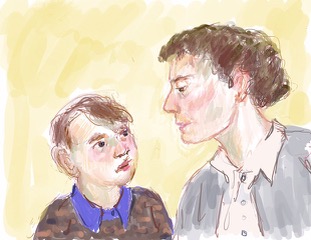
At a different time, she would have made a wonderful children’s doctor or nurse. In Edwardian Scotland, she had to leave school at fifteen to work in a laundry. Domestic service, even strenuous as it was in those days, was probably a smart move. Mother traveled from Scotland to Canada as a nanny. Later, when she found it too painful to leave the young children she had raised, she saw much of the world as a personal maid.
Writing Bella brought back a whole lost world, and I’d like to think Mom would have enjoyed the story and been amused by The Kings of Seaforth and the Knight Wizard’s difficult-to-explain parentage. (Biographical Note: My father served in the Seaforth Highlanders, a genuine Scottish regiment that had no truck with knight wizards in any era.)
Like all my fiction, “The Knight Wizard” is a mix of lucky bits of miscellaneous information, observation, and experience, but it is unusually heavy on personal details. Old age definitely weakens short term and recent recall, often with annoying results. But there is compensation for writers. A great storehouse in the neurons is still waiting to be used, and when it is called upon, the past does return, rich and precious and as mysterious as ever.
R. T. Raichev’s articles related to mystery fiction have appeared on this site frequently. This time, he trains his critical eye on Patricia Highsmith, an author whose short stories appeared in EQMM over several decades. R.T. Raichev is also a novelist and short story writer. “Blind Witness,” a new story in his series starring mystery writer Antonia Darcy, is coming up in our May/June 2024 issue. Don’t miss it! —Janet Hutchings
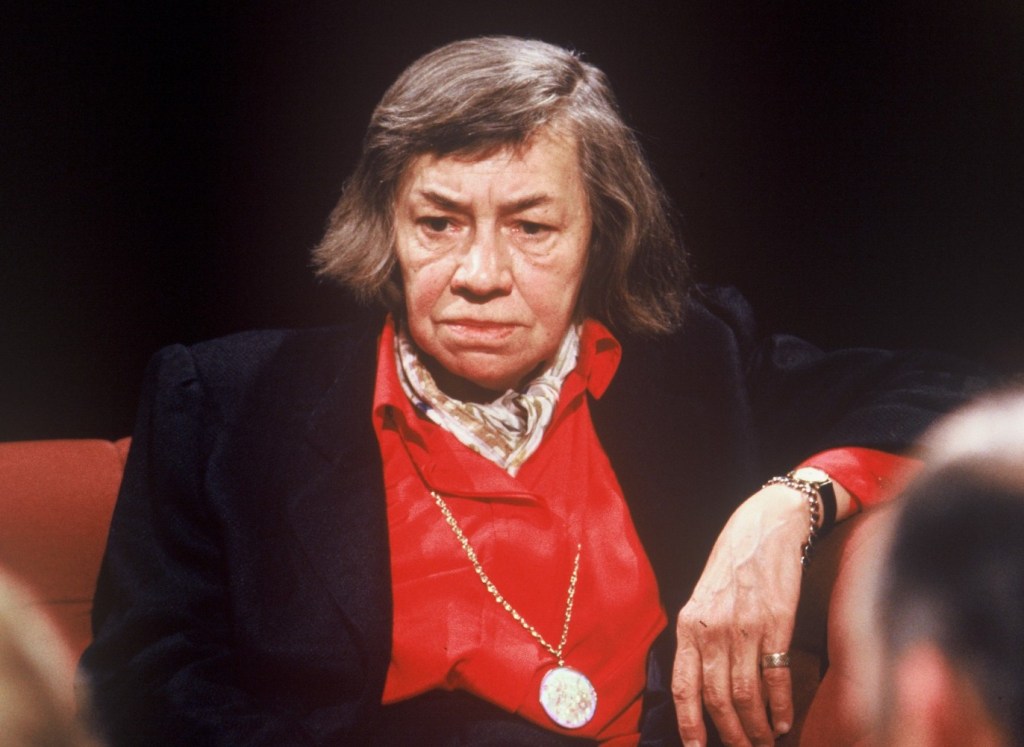
What kind of book was a nine-year old American girl in 1930 most likely to be seen curled up with? That perennial favorite the Wizard of Oz, never out of print, with doughty Dorothy as a heroine to emulate? Louisa May Alcott’s Little Women? The first Nancy Drew adventure, which had just been published? Or perhaps Karl Menninger’s The Human Mind, also fresh from the mint—a collection of case histories of mental aberration and deviant criminal behavior, such as kleptomania, pedophilia and satanism—
No, of course not, not the Menninger. Age inappropriate, taboo topics, too shocking and outlandish and, at any rate, it would be incomprehensible to a child. Well, yes, absolutely. Yet, it was Menninger and not Nancy Drew—or Dorothy—or Jo March—that captured the precocious imagination of a (not very happy) little girl, 9-year-old Pat—the future author Patricia Highsmith. She read and then re-read the Human Mind and got to know it well—having picked it up from her stepfather’s shelf. Later in life Highsmith explained how she had been instantly drawn to Menninger’s agglomerate of anecdotes and analyses of irrational urges which led to violence and self-destruction, that it was indeed The Human Mind which propelled her towards becoming a writer. And not any writer—she became—in the words of author and critic Terry Castle— “one of the greatest, darkest American storytellers since Poe.”
From what various biographies tell us Patricia Highsmith was a strange lady whose preoccupations, fixations and unhealthy obsessions are reflected in her writing. “Murder,” she records in her diary in 1950, “is a kind of making love, a kind of possessing.”* She seemed to be riveted by what most other people found objectionable. “They give me a sort of tranquility,” she said of the snails she kept in a fish tank—and later, in much greater numbers, in her back garden. She condemned the French calling them “cannibals” for consuming gastropods.
While Patricia Highsmith the novelist has been saluted as the doyenne of the psychological thriller, it is titles like the Countess of Outré and Duchess of Weird she deserves for her short stories. It is in them that she gives vent to her murkiest fantasies involving derangement, anarchic disorder and various kinds of unimaginable terror. In that respect her stories resemble Roald Dahl’s Tales of the Unexpected, (think “The Landlady,” “Pig” and “Royal Jelly”) or Shirley Jackson’s stories such as “The Lottery”.
Highsmith’s stories have been seen as merciless indictments of the suburban American dream of the mid-20th century which are likely to leave the reader feeling by turns startled, oppressed and amused. But there are also those who find them too disturbing, off-putting, queasy, even stomach-churning. British publisher Victor Gollanz disliked Highsmith “intensely”—as Julian Symons records in his Bloody Murder. Crime writer Robert Barnard didn’t see the point of Highsmith either.
She wrote nine collections of short stories on subjects that embraced the bizarre, the surreal, the nightmarish and indeed, the taboo. So we get matricide in “The Terrapin,” decaying immortality in “No End in View” (about a woman who has reached the Biblical old age of 190 but simply refuses to die), an unnerving sack-like creature that haunts a lonely housewife (but is not a figment of her imagination) in “Not in This World, Probably in the Next,” a colony of snails crushing the man who breeds them in “The Snail-Watcher” and a giant snail chasing and killing the scientist who not only discovered it but gave it his name (Clavering) in “The Quest for Blank Claveringi”. And in “Woodrow Wilson’s Necktie” we encounter a playful young psychopath who murders all the staff of an Indiana waxworks and substitutes their corpses for the display dummies
Patricia Highsmith also wrote not only one but two stories featuring a severed hand. The first of these—“The Hand”—comes from one of her most unorthodox short-story collections Little Tales of Misogyny**. The book was first published in a German translation in Switzerland in 1975—which somehow adds to its oddity—under the title Kleine Geschichte für Weiberfeinde. In its original English version it saw the light of day in the UK in 1977 under Heinemann’s prestigious imprimatur. Each kleine geschihte—as a German would say—involves a female protagonist who either falls prey to some violent misdemeanor—or is its perpetrator.
Though “The Hand” is only two pages long Highsmith manages to deliver a shock with the very first sentence:
A young man asked a father for his daughter’s hand and received it in a box—her left hand.
The young man signs a receipt for it and although there has been no official marriage, “on paper, or in the church,” he starts worrying that the girl’s father will hold him responsible for her upkeep. He tries to see the girl but each time is “blocked by tradesmen,” so he buries the hand in his garden. When the police learn of it, they arrest him, he is found criminally insane and locked away in a “State Institution”—while the real madman, the girl’s father, remains at large.
The girl—who hasn’t bled to death—visits the young man—”her stump concealed in a muff”—but now she disgusts him and he refuses to so much as look at her. Consequently he is placed in a “more disagreeable ward” where, deprived of books and company, he goes truly insane. He thinks what a “horrible mistake, crime even, it had been demanding such a barbaric thing as a girl’s hand”. He lies on his bed with his face to the wall—and dies.
The story is written in a simple, brisk, matter-of-fact style. None of the characters is given a name and it is never made clear where or when the action takes place. Should it be taken as a universal warning about the perils of asking for things in ambiguous terms? The moral seems to be that conventions of marriage are barbarous and ruinous for both parties and that marriage should be avoided at all cost. It is up to the reader to decide whether The Hand is a Kafkaesque fable, a skewed satire inspired by Gogol’s “The Nose” (Highsmith did read the great Russians), a macabre but not-to-be-taken-too-seriously cautionary tale—or just a cruel joke. (I can’t help thinking of it as a treatment for a film Luis Bunuel meant to make but never did.)
Highsmith’s other story centering round a severed hand is entitled “Something the Cat Dragged In.” It first appeared in Verdict of 13, A Detection Club Anthology (Faber) in 1979 as one of thirteen short stories written by members of Britain’s Detection Club under the editorship of the then Club president Julian Symons. Each contributor was asked to submit a story which in one way or another concerns a jury; it didn’t have to be an official jury presiding in a court of law nor did it need to number twelve. The main requirement was that the ‘jury’ should make an important decision about a crime and its perpetrator. (As it happens, the crime in each case is murder.) Among the illustrious contributors were Ngaio Marsh, P.D. James, Christianna Brand, Dick Francis, Michael Innes and Symons himself.
“Something the Cat Dragged In” is completely different from “The Hand” in that it follows a conventional plot-line, contains suspense and has a structure that resembles a three-act play. It opens in an uncharacteristically (for Highsmith) ‘cosy’ fashion at a manor house in the English countryside, at tea-time, with a small, well-bred house party engaged on a game of Scrabble. The family cat, Portland Bill, brings in a peculiar-looking object which is initially taken for a dead pigeon or a goose foot but turns out to be two human fingers, “dead white and puffy…which included a couple of inches of what had been the hand”.***
Host and guests play at detectives. They suspect foul play. They deduce from the short, thick, dirty nails that the victim was a “workman of some kind”. A wedding ring is discovered embedded in one of the fingers; the initials engraved on it provide a clue about the man’s identity. Further investigation leads them to a neighbour named Dickenson who, faced with the prospect of the police getting involved, makes a confession: he killed one of his workers, Bill Reeves. The latter was a truly despicable character, a “creep,” a compulsive harasser of local wives, including Dickenson’s.
The killing itself was unpremeditated, a sudden, spontaneous outburst of lethal violence (a typical Highsmith trope), the result of a serious provocation on Reeves’s part. It all happened in the field. It was in fact Dickenson and another of his farm hands called Peter—with whose wife Reeves had had an affair—who killed Reeves by means of a hammer and an axe. (The sharing/transference of guilt is another recurrent Highsmith motif.) They then buried the body in the field—minus the fingers which they chopped off in order to get rid of the ring—but which they then lost and the fingers were found and carried away by Portland Bill.
Host, hostess and guests act as jury and, after some deliberation, reach the decision that the odious occurrence was justifiable homicide, consequently they do not report Dickenson to the police. They then get rid of the fingers.
It is the story’s ‘Englishness’ that, to my mind, is its most remarkable features—the whole conservative, somewhat comic upper-class ethos!—coming as it does from the pen of Patricia Highsmith. A Colonel Phelps sporting a ‘Kipling-style moustache’ is one of the guests—sang-froid, phlegm and discretion mark the characters’ demeanor as they deal with the tense situation—an effort is made to keep the incident dark from Edna, the housekeeper-cook (pas devant…)—the dead fingers are wrapped in a copy of the Times and then placed inside an empty house-slippers box—the arrival of the tea-tray interrupts the discussion about whether to call the police or not—they keep shooing Portland Bill off the fingers—roses are being dead-headed by a character who then wonders, ‘Why did Americans always think in such violent terms?’ (The Colonel has brought his American niece with him.)****
Class—another very English thing—is one of the story’s themes. We learn that Dickenson is a “gentleman farmer…whose family had owned their land…for generations.” And Dickenson describes the victim as, “Arrogant, you know, so pleased with himself, that the master’s wife had deigned to look at him.” Dickenson is not sure whether it was he or Peter who deliver the fatal blow—but he is prepared, very feudally, to take full responsibility. He tells his host, “You understand, I think. I can talk to you. You are a man like myself.” By which he means both are gentlemen.
The morally ambiguous ending—allowing the killer to go scot-free—is characteristic of Highsmith. It will be remembered that she wrote five novels (of varying quality) starring likable killer Tom Ripley whom she never allowed to be apprehended. And she makes us sympathize with and really care for long-suffering Vic and love-lorn, delusional David, murderous protagonists of, respectively, Deep Water (1957) and This Sweet Sickness (1960). All three of these characters display strong psychopathic traits.
On the last page of “Something the Cat Dragged In” cook-housekeeper Edna, who clearly knows what has been happening, either from accidental over-hearing or eavesdropping, says, “I bet Mr Dickenson wrecks his car on the way home. That’s often the way it is.”
Edna means Fate—or God—intervening and providing either Karma or Holy Punishment. But in a triumphant concluding sentence the author—who once declared the “public passion for justice quite boring and artificial”—makes it absolutely clear that nothing of the sort happens:
Tom Dickenson did not wreck his car.
* A similar sentiment has been expressed by Alfred Hitchcock who is quoted as saying, “Film your murders like love scenes, and your love scenes like murders.”
** Highsmith’s other two collections of highly unorthodox short stories areThe Book of Natural and Unnatural Catastrophes (about bizarre extremes of environmental degradation and various apocalyptic disasters in a demented world) and The Animal Lover’s Book of Beastly Murder, which deals with the murderously competitive desires of a number of animals.
*** Other cats have also played crucial roles in murder mysteries, tho I can only think of cats in English whodunits. In Agatha Christie’s A Murder is Announced (1950) the Vicarage cat Tiglath Pilser shows Miss Marple “how the lights fused,” what in fact the killer did as an essential part of the murder scheme. In Ngaio Marsh’s Scales of Justice (1955) a cat called Thomasina Twitchett eats an important murder clue—the fish bearing the imprint of murderess’s high heel. In Marsh’s Black as He is Painted(1975) a cat named Lucy Locket provides a pointer to one of the mysteries in the story, in the shape of a ceramic medallion fashioned as a fish. Incidentally, Highsmith considered whodunits just “a silly way of teasing people.”
**** Highsmith lived in Sussex, England for a while in the 1960s. Her 1965 novel Suspension of Mercy is also set in the English countryside. The fact that she manages to get a certain rarefied type of Englishness right and make it genuinely amusing defies the notion that she was a predominantly melancholy, gloomy sort of American writer whose sense of humour was of the gallows kind. It is also a testimony to Highsmith’s powers of observation and to her versatility. Pity she didn’t do anything else in an ‘English’ vein.
Peter Lance Graves told EQMM that it was his discovery of the Ellery Queen novel The Greek Coffin Mystery, as an adolescent, that sparked his love of crime fiction. He went on to read Agatha Christie and “took way too long to discover John D. MacDonald.” But he soon became fascinated with true crime as well. In this post he brings to life a true crime that, for him, comes very close to home. But then he brings us back to fiction through discussion of a recent crime novel with a similar theme. The Illinois author’s first published work of fiction, the story “Neighborly,” appears in the Department of First Stories of our current issue (March/April 2024). —Janet Hutchings

This happened on January 23, 1930—at a rail terminus for the Chicago & Alton line near Granite City, Illinois—just across the Mississippi from St. Louis. Trains lumbered in and out of the bustling rail hub, sending passengers and freight to Chicago and parts east. On this day, like any other day, the hard men of the “running trades”– brakemen, flagmen, conductors, firemen—washed up in the locker room of the C&A hotel . . . sat elbow to elbow in the adjacent restaurant… trod wearily upstairs to the bunkhouse for a few hours of sleep. Multiple sets of tracks snaked along both sides of the spartan hotel, which sat within the freight yard itself. The hotel rumbled day and night as rail cars were switched and mammoth steam locomotives were turned at the roundhouse nearby.
But on this gray January day, the familiar rhythm of the hotel was shattered by the clap of a gunshot in the locker room—followed by two more. Chairs skittered across the wooden floor of the restaurant as diners leapt to their feet. Then, raised voices and footfalls on the stairs as men hustled down from the bunkhouse. In the locker room, a man lay on the dingy tile floor, blood streaming from his wounds. All three shots had found their mark. Standing above him, a fellow brakeman dropped a gun to the floor and said, “Call the police.”
These two men—Leroy “Bud” Rudder and Ray French—shared more than just a vocation. They had shared an enduring friendship, then a home, and ultimately . . . a woman. Now, three pistol shots served as a ringing coda to a three-year saga of two young families shattered by tragedy and betrayal.
Bud and Ray were both brakemen for the Chicago & Alton, and had worked together for 5 years or so. They lived near the C&A shops in Bloomington, Illinois—midway between St Louis and Chicago—and in fact they were next door neighbors in 1925 and 1926. “The Shops” in Bloomington were renowned for their workmanship; Pullman sleeping cars were built there. At one time, more than 2,000 men labored there to repair and maintain locomotives and rolling stock.
Bud Rudder was a veteran of the Great War. Bud and his wife Gladys had two young kids, as did Ray French and his wife, Nellie. By all accounts, Bud and Ray were best friends. Gladys and Nellie—each with two kids under the age of 7—were also good friends, keeping company while their husbands were on runs with layovers in Chicago, or at the other end of the line near St Louis.
To understand how tightly woven was this community fabric, you must consider the times. Immigrants worked The Shops: the Germans, the Irish, the Scotch. The work was dangerous—men were burned in the foundry or crushed coupling the rail cars. Limbs, eyes were lost. There was no air conditioning, so people sat out in front of their houses on summer evenings and talked. Some men couldn’t leave the bottle alone, so “callers” went from house to house in the middle of the night to rap on windows “Hey, Joe. You awake? Number 65 North to Chicago at 3:30.” Few households had telephones. At O’Neill’s grocery store, you paid what you could, paid the rest next week. In this tight community of rail workers, growing families routinely moved from rental to rental, always within shouting distance of The Shops. By 1927, Ray and Nellie had moved a few blocks away. Work was steady and both young families were eking out a living in the bustling orbit of the C&A shops.
In April of 1927, Gladys Rudder’s parents visited from Indiana and spent the week, en route to their new home in California. The day after they left, Gladys—who was newly pregnant with their third child—began feeling poorly. The doctor visited and initially believed her symptoms were associated with her pregnancy. But Gladys’ condition worsened, and a few days later she went to the hospital. She was diagnosed with scarlet fever, as were Bud and the kids.
Scarlet fever was highly infectious, and prior to the advent of antibiotics, not effectively treatable. Two days after being admitted to the hospital, Gladys was dead. Bud and the kids were quarantined at home—a sign on the door flapped in the breeze, warning “Scarlet Fever—KEEP OUT.” While her family was quarantined, Gladys was quickly buried—to prevent further infections. Bud’s daughter, Betty, was not quite 5 years old. Little Leroy, called Junior, was barely 3.
Shortly after Gladys passed, Bud accepted the gracious offer from Ray and Nellie French to move in with them. Such was the bond of fellow railroaders and their families who had each other’s backs. Nellie rode herd on the four kids, as Bud and Ray continued those runs back and forth between Chicago and St Louis. Sometimes they went on runs together. Other times Ray would go north to Chicago, and a day later Bud might go south. These runs typically involved a layover.
You can guess the rest. By October, the living arrangement had gone astray. Bud and Nellie had begun an affair, which they made little effort to conceal. Bud, Betty and Junior were ejected from the French house.
In 1927, it would have been unconscionable for a working man to raise two kids under 5 by himself—let alone one in the brakeman pool. Bud placed his daughter Betty with another neighborhood couple—Peter & Alice Nenne. The couple was 10 years older and childless, but Pete Nenne was an engineer with seniority for the Chicago & Alton, and they were well situated in a newly built home. Bud and Junior went to live with yet another railroader Albert Carlson, and his wife.
The ensuing years brought more turbulence. Bud placed legal custody of Betty with the Nennes; he and Junior remained with the Carlsons until Albert was killed in a freak rail accident in 1929. Appropriately, Bud moved from the widow Carlson’s home to a rooming house, leaving Junior in her care. Ray and Nellie French attempted to reconcile but the relationship was understandably fraught, and Ray filed for divorce in September of 1929, listing Bud as a co-respondent in the divorce. Meanwhile, Bud and Ray continued to work together in the same C&A pool of brakemen. In December of 1929, Ray was granted the divorce. Just weeks later, Bud and Ray had their fateful encounter in the locker room at the C&H hotel.
Local newspaper accounts provide insight into the incident and ensuing events.
“Blood transfusions have been resorted to in an attempt by physicians to save the life of Leroy F. Rudder, 32, who is in a Granite City hospital with bullet wounds in his head, chest and abdomen inflicted by Ray T. French, 33, according to the United Press.”—The Daily Pantagraph, Friday, January 24
“Several days after the divorce was granted, Rudder and French’s former wife Nellie were quietly married. The two men did not meet until last Thursday. Threats passed between them and shortly French was seen to draw a revolver and fire three shots at Rudder, each taking effect. French insists he shot as Rudder drew a knife but an exhaustive search by police fails to reveal the blade.”—Edwardsville Intelligencer, January 27, 1930.
“Witnesses are said to have told police that French fired three times as Rudder drew a knife. No such weapon has been found by police nor have witnesses offered to corroborate the testimony. Mrs. Rudder was at the bedside of her husband . . . she did not visit French in his cell.”—The Daily Pantagraph, January 26, 1930.
“Hovering between life and death for two days, Leroy F. Rudder succumbed at midnight Saturday at St. Elizabeth’s hospital from bullet wounds received during an altercation with the former husband of his wife. In an effort to save the victim’s life, several blood transfusions were made, but not from fellow employees. They replied they were not in sympathy with the man and that others should be called upon.
“Testimony at the inquest showed that French fired the fatal shots as Rudder advanced on him with a knife. Hilton Taylor, another brakeman, who was in the washroom at the time of the shooting, corroborated French’s testimony. J.R. Craig, brakeman, who was in a sleeping room at the hotel, testified that he was awakened by the sound of loud voices and heard French say, ‘Don’t pull that knife on me you—’ Then heard three shots.” — Granite City Press Record, January 28, 1930.
“Mr. French made a plea of self-defense, asserting that Rudder drew a knife. When the knife alleged to have been carried by Rudder was presented to the jury, a verdict of exoneration was quickly reached.”—The Daily Pantagraph, January 28, 1930.
One of Bud Rudder’s pallbearers was Peter Nenne, the C&A engineer who adopted Bud’s daughter, Betty. My mother, Betty Graves. The loving, adoptive grandfather I grew up with helped lay to rest the biological grandfather I never knew.
And buried with him was a tragic story of loss, love, betrayal . . . retribution. Grampa Nenne told us Betty’s dad had died in an accident on the railroad. My mother never spoke of it.
Ray and Nellie French would each marry others—Nellie, twice more. Ray continued to work at the Chicago & Alton, advancing to the position of conductor. The widow Carlson remarried and adopted Junior, who grew up, married and moved to California. Betty married and had four sons. What would have become of this brother and sister who twice suffered tragic loss, were it not for the benevolence of neighbors, these railroaders who took them in and held them close in the depths of the Depression.
The story may have remained buried forever, had it not been for the dogged efforts of my brother, Steve, who painstakingly searched birth and death records, pored over newspaper articles and contacted members of both the Rudders and French descendent families. Steve is the true detective in this story. I, merely the reporter.
As a lifelong devotee of crime fiction, I have always been intrigued by stories such as my family’s real-life mystery. Stories that probe the reverberating effects of a crime that smolders through the ensuing years—haunting families, investigators and reporters. And more the better if the narrative transports me to a different world and sparks my imagination.
I highly recommend just such a novel—Blaze Me a Sun, by Swedish author Christopher Carlsson. Translated by Rachel Willson-Broyles, Blaze Me a Sun is a fine example of literary fiction in the crime genre. On one level, it a police procedural. It is certainly a deftly plotted, page-turning whodunit. But the beating heart throughout the novel is the poignant reflections of the main characters as they search for the truth (and not just a solution to the mystery.)
The story begins with a writer looking into an unsolved murder committed 30 years prior in a small Swedish town. The characters are richly drawn:
The dynamic relationship between characters is rewarding, as is the depiction of small-town Swedish culture. Carlsson expertly weaves the tale as another young girl goes missing, a mutilated body is found in an abandoned car, and a young woman narrowly escapes the killer, only to endure another tragedy. Along the way, a body is unearthed . . . evidence long concealed is discovered . . . a killer is identified . . . the mystery solved. Or is it?
To reveal more would spoil this very entertaining novel that spans generations as it peels away family secrets—and keeps you guessing until the very end. You’ll find Blaze Me a Sun to be a satisfying turn on a long-ago death.
Carlsson, Christopher. Blaze Me A Sun, 2021. Translated by Rachel Willson Broyles, Hogarth/Random House, 2023
Two years ago, essayist and short story writer Kevin Mims contributed a post to this site about the work of Frederick Forsyth. He’s clearly a big fan of the best-selling English thriller writer, although he prefers the author’s earlier works to those released in the 2000s. In this post, however, he takes a second, more favorable look at those later works. —Janet Hutchings

Back in September of 2021, I wrote an essay for this blog about Frederick Forsyth’s 1982 short story collection No Comebacks, which I consider a masterpiece. Towards the end of that essay I noted that, “The last Forsyth novel I was able to finish was The Phantom of Manhattan, published in 1999…The newer stuff seems mired in excess data, though opinions on that may vary.” Shortly after that essay was published I began to feel a bit ashamed of myself. Had I actually read any of these later books? No. I ran into a rough patch with Forsyth in the mid 1990s. His 1991 novel The Deceiver (actually a collection of linked novellas about a British spymaster named Sam McCready) was one of my favorites, possibly my absolute favorite of his books, although there is a lot of competition for that title. But after that I began to struggle. My problems began with the one-two punch of (no pun intended) The Fist of God (1994) and Icon (1996), which were connected by certain recurring characters and themes. The books seemed to have been written in a period of time when Forsyth was feeling particularly ungenerous towards America’s intelligence services. In these two books, Forsyth seems frequently to be comparing American-style intelligence gathering (largely electronic and highly technical) with the British style (one-on-one personal relationships between field agents and their foreign assets) and finding the Americans wanting. I have no trouble with books that criticize America. But in Fist of God and Icon, I felt as if the author were beating me on the head with his favorite hobbyhorse.
The terrorist attacks of September 11, 2001, seem to have triggered in Forsyth a renewed sense of fondness for America and Americans. It’s not as if he was ever anti-American. Like a lot of British spy novelists, Forsyth tends to treat M16’s “American cousins” (i.e. U.S. intelligence operatives) as somewhat foolhardy and patronizing but also brave and reliable. But after 9/11, he seems to have gained a great deal of sympathy for America, as well as a greater appreciation of just how much work goes into trying to defend the country from its many foreign enemies. Defending a relatively small island nation like Great Britain from terrorists is difficult enough. But defending a vast land mass with hundreds of millions of people in it is a great deal more difficult, which probably explains why the CIA relies more heavily on technology than on humint (intelligence gained by human operatives in the field). After 9/11, Forsyth’s thrillers took on a decidedly more friendly tone towards America and its military, its government, and its intelligence services.
Avenger, published in 2003, is the best of Forsyth’s twenty-first century novels. The plot was designed to illustrate the need for CIA agents to deal with small-fry thugs in order to bring down much larger thugs. The set-up is ingenious. Calvin Dexter is a lawyer and a former U.S. Army “tunnel rat” who, during the Vietnam War, descended into the ingenious labyrinth of tunnels that the North Vietnamese Army employed for sneaking behind enemy lines and pulling off all sorts of successful guerilla actions against the U.S. and South Vietnamese Armies. As the novel opens, Dexter is offered a job by a Canadian billionaire named Stephen Edmonds. Several years earlier Edmonds’s eighteen-year-old grandson had volunteered to travel to Bosnia and help out the innocent civilian victims of the Bosnian War (which lasted from 1992 to 1995). The boy disappeared in Bosnia and his grandfather wants to know how and why. Dexter travels to Bosnia and engages in some thrilling detective work. Eventually he learns that the grandson was killed in gruesome fashion by a sadistic Serbian warlord named Zilic. The grandfather wants Dexter—aka “Avenger”—to track down Zilic and make him pay for his crime—extra-judicially, of course. In early 2001, Dexter begins tracking Zilic to the Central American compound where he now lives comfortably thanks to the CIA, which has bought him off because of the intelligence he has delivered on other villains. As Dexter is closing in on Zilic, he doesn’t know that Zilic is in the process of helping the CIA nab a particularly nefarious terrorist named Osama bin Laden. Zilic and bin Laden are acquaintances and Zilic is setting up a meeting with the Saudi Arabian terrorist at which CIA agents will be waiting to kill or capture him. Naturally all of this is happening in the late summer of 2001. Thus the reader finds his loyalties curiously mixed. We’ve waited all book long for a showdown between Dexter and Zilic, a showdown in which Dexter delivers to Zilic the kind of painful retribution he deserves for what he did to Stephen Edmonds’s grandson and plenty of other victims. But at the same time, we’d love to see Osama bin Laden caught or killed before the September 11, 2001 terrorist attacks can be carried out. So we find ourselves both rooting for Zilic’s death, and yet still hoping that Dexter fails so that Zilic can help deliver a much bigger villain into the hands of the CIA.
Forsyth followed it up with The Afghan, published in 2006. Unfortunately, this one is a sequel of sorts to The Fist of God, one of my least favorite Forsyth novels. The Afghan was shorter and, in my opinion, much more readable than The Fist of God, but it is my least favorite of the final five.
The Cobra, published in 2010, was the twelfth of Frederick Forsyth’s fourteen novels. Although not quite up to the standards of the novels he produced in the 1970s and 1980s, The Cobra is nonetheless a thrilling adventure novel. This is another right-wing fantasy in which a team of noble pragmatists decide to ignore such niceties as civil rights and judicial procedure and simply go out and destroy an enemy of the Western world, in this case a South American cocaine cartel and its drug-lord leader. Curiously, this group of extra-judicial warriors is brought into existence by none other than U.S. President Barack Obama.
Next, in 2013, came The Kill List. Once again, we have a lone good guy possessed of almost supernatural skills in the art of finding and killing international terrorists. This hero’s name is Kit Carson, but that name (thankfully) is rarely used in the novel. Forsyth tells us that, when his parents gave Kit that name, “the reference to the old frontiersman was entirely coincidental.” Sure. Carson uses a few different aliases when he is on the trail of a villain, but Forsyth usually just refers to him as the Tracker (the real Kit Carson, of course, was a famous tracker). In fact, most of the important characters in the book are known primarily by nicknames. The villain is called the Preacher. He is an Islamic terrorist who uses the internet to broadcast hateful Islamic sermons to his followers and urge them to commit acts of terrorism on the West, particularly Great Britain and the U.S. (Forsyth admirably points out that the Preacher’s understanding of Islam is a complete—and intentional—misreading of the Prophet Mohammad).
In 2018, Forsyth brought out The Fox, his final novel (he has stated in interviews that he is no longer writing fiction). In The Fox, he gives us a title character (real name: Luke Jennings) who is a young computer wizard who uses his skills to wreak havoc on foreign despots in Russia and Iran. Making his title character a computer wiz was an unfortunate choice because Forsyth appears to know little about computers. Although I am twenty years younger than Forsyth, I too am completely ignorant of computers. But even I found myself rolling my eyes at some of the magical things The Fox was able to do with computers.
Considering how off the mark the technical details in The Fox are, you might be surprised by the fact that it managed to earn even 3.8 stars from the Goodreads crowd. That slightly-above-average rating is a testament to Forsyth’s other storytelling gifts. Even when his computer-knowledge fails him, he knows how to set up exciting action sequences. Both Russia and Iran send secret hit squads after Luke Jennings, and Forsyth creates some great suspense as British forces try to neutralize them before they can kill the Fox. I enjoyed the novel and found its 336 pages flying by. The novel doesn’t come close to matching such masterpieces as The Day of Jackal, The Odessa File, or The Fourth Protocol, but it isn’t really trying to. The book seems to be written for fans of the Jason Bourne films and the Mission: Impossible franchise. It is lightweight and frothy in the manner of a silly action movie. If you approach it the way you would a James Bond film, you’re not likely to go away disappointed.
If, like me, you gave up on Forsyth sometime in the late twentieth century, you made a mistake. I urge you to follow my lead and atone for that error. Even the lesser works of a great master are generally better than average.
P.D. James once said, in an interview about her famous series sleuth Dalgliesh, “An experienced senior detective told Adam Dalgliesh, when Adam was new to the CID, that all the motives for murder came under the letter L: love, lust, lucre, and loathing. He added: ‘They’ll tell you, laddie, that the most dangerous emotion is hatred. Don’t believe them. The most dangerous emotion is love.’”
Since at least the early 1700s in England, an entire day has been associated with the celebration of this “dangerous” emotion—as the saint’s day for St. Valentine was transformed to focus on traditions such as sending notes and tokens, cards, candy, and flowers to loved ones. One of the legends as to why this day devoted to love and romance formed around the Christian feast day honoring an early Christian martyr named Valentine is that on being imprisoned by the Romans, the martyr Valentine fell in love with his jailer’s daughter and sent her a love note signed “from your Valentine” just before his execution. In the early 1400s, another legendary letter—a love poem—was supposedly sent from the Duke of Orléans, who was imprisoned in the Tower of London, to his wife on the feast day for St. Valentine. So it seems that Valentine’s Day as we know it has roots, in real life, in crime (or perceived crime) and punishment.
In mystery fiction, love often plays out in stories of obsession, or forms the motive for getting rid of a spouse who stands in the way of a new love affair, or explains the false confession of one suspect trying to protect another. And of course, Valentine’s Day in particular makes a great fictional setting for a suspense story: Secret admirers may be a source of pleasant puzzlement and guesswork in grade school, but the secretly admiring adult who sends an anonymous valentine is likely also to send a frisson of fear up the spine of the adult recipient—although I wonder if the cyber valentines of today can pack the full mysterious punch of those paper missives that used to be slipped surreptitiously into mailboxes.
Let’s not forget that Valentine’s Day also opens a Pandora’s box of devious methods for murder. All those irresistible boxes of sweets and bottles of wine—and bouquets of flowers too!—have the potential to conceal and deliver deadly poisons, while secluded lover’s lanes, country getaways for a little quality time together, and moonlit walks on the beach all offer opportunities for fatal “accidents” to happen. With that in mind, it might be safer to stay at home this Valentine’s Day and read something full of suspense rooted in love to commemorate the day. If you’re a subscriber to EQMM, 2024 has already brought right to your door a number of stories that fit the theme and in one way or another show how dangerous love can be.
In the January/February issue there’s “Where the Heart Is” by Jacqueline Freimor, and in our current issue (March/April 2024) there’s
“Turnabout” by Sheila Kohler, “Video Girl” by Manju Soni, and “A Second Opinion” by Fernando Santos de Oliveira (in Passport to Crime).
If that whets your appetite for more stories of love mixed with danger or obsession, our upcoming May/June issue will be a bonanza for you. There you’ll find “Blood and Butter” by Tyler Fiecke, “And the Moon Disappears” by Randall Silvis, “The Low Waters” by Larry D. Sweazy, “Artificial Hearts” by Twist Phelan, and Quick Change” by Michael Kardos.
Happy reading and happy Valentine’s Day from EQMM!—Janet Hutchings

The Black Mask department of EQMM’s March/April issue (on sale next Wednesday) features a story by Nils Gilbertson entitled “Apple Juice.” Despite the cosy-sounding title, it’s a gritty noir story. In this post, the San Francisco Bay area native tells us about a noir writer whose work he was introduced to in childhood, an author who influenced him much later as a writer. We’re willing to bet most of our readers don’t know much about Friedrich Dürrenmatt, but may want to look for his books after reading about him here. Prior to selling “Apple Juice” to EQMM, Nils Gilbertson had short stories in Mystery Magazine, Mickey Finn: 21st Century Noir Vols. 2 & 3, Rock and a Hard Place, Mystery Tribune, and elsewhere. His story “Washed Up” was named a Distinguished Story in The Best American Mystery and Suspense 2022. —Janet Hutchings

My family has a habit of ending Christmas morning with a stack of new books halfway to the ceiling. Familiar with each other’s preferred genres, we do not always play it safe when it comes to book gifting. There is little excitement in watching someone open the latest release by their favorite author. Rather, the goal is to find a book they have never heard of, an author with whom they are unfamiliar. Hopefully, one they come to love. There is pride in facilitating that journey.
In my late teens, I devoured the noir classics. Hammett, Chandler, Cain, Thompson. Sure, they were dark. But they also shed light on oft-ignored truths. Truths we feel and think and see but are too afraid to acknowledge. I couldn’t get enough of those books, and my family knew it. So, when I tore the wrapping from the thin paperback, I was hoping for a familiar title. The Big Sleep, Red Harvest, Pop. 1280. On this occasion, though, the unfamiliar title surprised me: The Pledge by Friedrich Dürrenmatt.
“He’s an old Swiss author,” my mother explained. “We used to read him in school.” She smiled at my skepticism. “It’s dark,” she said. “Same as the ones you like. We know how to write over there too, you know.”
I came to learn that Dürrenmatt was a prolific Swiss playwright and novelist. His work spanned a variety of genres and incorporated dark comedy, irony, and existential themes. While best known for his plays such as The Visit and The Physicists, it was his psychological crime tales that grabbed my attention. His novel, The Pledge, begins:
Last March I had to give a lecture in Chur on the art of writing detective stories. My train pulled in just before nightfall, under low clouds, in a dreary blizzard.
The peculiar framing drew me in immediately. It is told from the perspective of a mystery writer who befriends a former chief of police, Dr. H, in a bar. The next morning (after a night of drinking whiskey until three a.m.), Dr. H gives the writer a ride back to Zürich. The writer does his best to fend off the hangover as they traverse the icy terrain.
The day seemed still dark, though the sun had risen a while ago. There was a patch of metallic sky gleaming somewhere through a covering of dense, sluggishly lumbering, snow-filled clouds. Winter seemed unwilling to leave this part of the country. The city was surrounded by mountain, but there was nothing majestic about them; they rather resembled heaps of earth, as though someone had dug an immense grave.
The Swiss mountainside has never sounded so grim. On the drive, Dr. H explains that he considers detective fiction to be a lie. A “waste of time” that only perpetuates the falsity that crime-solving is akin to a logical game—put the right pieces in the right spots and the truth will reveal itself. He laments:
What really bothers me about your novels is the story line, the plot. There, the lying just takes over, it’s shameless. You set up your stories logically, like a chess game: here’s the criminal, there’s the victim, here’s an accomplice, there’s a beneficiary; and all the detective needs to know is the rules, he replayed the moves of the game, and checkmate, the criminal is caught and justice has triumphed.
Dürrenmatt’s character suggests that honest detective fiction would tell of a world where the characters are so human that the plot doesn’t always make sense. This is the same world where we don’t know who killed the chauffeur. A world that acknowledges, as Dostoevsky put it, that man is not a piano key. It is messy and people are corrupt and act irrationally. In that world, tidy solutions are the exception to the rule. To Dr. H, for art to stray from this reality is a betrayal.
Dr. H goes on to tell the writer the story of Inspector Matthäi, a brilliant and stoic detective who becomes obsessed with solving the murder of a young girl after he makes a pledge to the girl’s parents. But Matthäi’s investigation is spoiled by poor timing and random, unforeseeable obstacles, leading to his downfall. In other words, the case unfolds in a manner that, to Dr. H, reflects the real world, not the “manageable world” often set up in detective fiction. “That world may be perfect, but it’s a lie.” Towards the end of the book, Dr. H reflects on Matthäi’s story, noting that:
[W]e have to realize that the only way to avoid getting crushed by absurdity, which is bound to manifest itself more and more forcefully and clearly, and the only way to make a reasonably comfortable home for ourselves on this earth, is to humbly include the absurd in our calculations. Our rational mind casts only a feeble light on the world. In the twilight of its borders live the ghosts of paradox.
Despite my immediate suspicion that The Pledge fit alongside the noir and hardboiled traditions of mid-century America, it was only later when I read Raymond Chandler’s famous essay, “The Simple Art of Murder,” that I made a more concrete connection.
Chandler’s essay begins: “Fiction in any form has always intended to be realistic.”Chandler and Dürrenmatt work from the same premise: that there is inherent value in art reflecting the world as it is. Chandler and Dürrenmatt also agree that the folly of some mystery fiction is its rejection of the reality of crime.
As Chandler describes, some detective novels adhere to a specific formula and are “sold to the world as problems of logic and deduction.” He notes that truth and plausibility are not considered, which leads to stories that “are too contrived, and too little aware of what goes on in the world. They try to be honest, but honesty is an art.”
Chandler praises Dashiell Hammett as an example of an author who “wrote or tried to write realistic mystery fiction.” In doing so, “Hammett gave murder back to the kind of people that commit it for reasons, not just to provide a corpse.”
There, Chandler gets to the heart of what makes good crime fiction so intriguing. It is not only the intricacy of the plot or whether we can crack the case based on the crumbs the author leaves us. Rather, it is the glimpse it offers into the soul of the subject—whether it be the perpetrator, victim, or investigator. It is the psychological inquiry regarding why people act as they do. Crime fiction reminds us that we share a world with such people and that, under a particular set of circumstances, each one of us could be one of them.
While Dürrenmatt and Chandler both embraced the genre’s turn toward realism, they offered different solutions to how literature should confront the dark corners of reality. Dürrenmatt, through his character Dr. H, proposes an absurdist and somewhat nihilistic approach: to understand the limits of reason and logic and to humbly include the absurd in our calculations. Such a conclusion places him in the lineage of Kafka and Camus, and explains why many of his works are steeped in irony and self-labeled as tragi-comedy.
Chandler proposes that there can still be a hero in this grim world, even if it is a fallen hero. This is Philip Marlowe, Sam Spade, and others who stalked the pages of Black Mask. He closes his essay by describing such a person:
But down these mean streets a man must go who is not himself mean, who is neither tarnished nor afraid. The detective in this kind of story must be such a man. He is the hero; he is everything. He must be a complete man and a common man and yet an unusual man. He must be, to use a rather weathered phrase, a man of honor – by instinct, by inevitability, without thought of it, and certainly without saying it.
Between the rich tradition of hardboiled and noir fiction and the countless talented writers it inspired, there is more to read than most of us can find time for. Nonetheless, I submit my humble proposal: to save a spot on the shelf for Dürrenmatt’s The Pledge. It is beautifully written, yet dread-inducing; chilling, yet honest. The world it takes place in, as Chandler would put it, “is not a fragrant world, but it is the world [we] live in.”
Cited throughout:
Chandler, Raymond. The Simple Art of Murder, 1950. Vintage Crime/Black Lizard, 1988.
Dürrenmatt, Friedrich. The Pledge, 1958. Translated by Joel Agee, The University of Chicago Press, 2006.
Lawrence Ong (who writes under a pseudonym based on a family name) is an instructor in the writing program at the University of Chicago, where he teaches academic writing. He will make his debut as a fiction writer in the Department of First Stories of EQMM’s March/April 2024 issue (on sale February 13) with the story “Murder Under Sedation.” It’s an excellent “fair play” detective story—a story of a kind we see too seldom these days. I’ve long suspected that one of the reasons the classical detective story has fallen out of favor with writers is that it requires so much skill at plotting (not to mention a lot of subtlety!) to pull it off. In this post, through the analysis of a story by the iconic John Dickson Carr, Lawrence Ong shares some insights into how the misdirection of a classical whodunit is achieved. —Janet Hutchings

When I was eleven, my parents bought me The Oxford Book of English Detective Stories, edited by Patricia Craig. I was already a seasoned veteran of Agatha Christie and Arthur Conan Doyle. But the other dozens of authors in the anthology were new to me. Among them were two of my future constant companions. Their surnames began with C: G.K. Chesterton and Edmund Crispin. So did the surname of the author of my favorite item in the book: “The House in Goblin Wood” by John Dickson Carr (who wrote it under the pseudonym Carter Dickson), which was originally published in EQMM in 1947. When I first encountered it, I thought it was the best mystery short story I’d ever read. Decades (and hundreds of stories) later, I still think that.
Back then, I likely valued the story’s solution (ingenious yet simple) and the impact of its final line. By my teenaged years, I appreciated the subtle (not overdone) spookiness of the atmosphere and the economy of characterization. But as I grew older, my orientation to mysteries changed. I became something I’d like to coin a term for: an encluesiast. (Rhymes with and is derived from “enthusiast.”) Encluesiasts do prize the solution itself. (Who doesn’t like a clever one?) But they attach far greater importance to how the solution has been signaled all along. They live for those little tidbits of pivotal information slipped into otherwise innocent paragraphs, like covert operatives trying to blend in with a crowd—the hints that cause you to smite your forehead with self-reproach when they hoodwink you, but pump you full of pride when you spot them before the detective does.
“The House in Goblin Wood” is an encluesiast’s Eden. It consists of a little over 7000 words. But Carr manages to pack in at least eight solid clues. That is more than one typically finds in novels many times longer, where clues have hundreds of pages to hide in. Goblin Wood may seem too sparsely planted for camouflage, and the trail leading out of it has breadcrumbs aplenty. Yet, how many readers have gotten lost in it?
“The House in Goblin Wood” is what taught me that mystery short stories can have the depth of cluing and misdirection typically associated with novels only. It is precisely that aspect that I propose to explore in this essay.
If you have not read “The House in Goblin Wood,” please stop reading this now, and start reading the story itself. Not just because I’ll spoil everything in the next section. Go read it even if you have no intention of returning to this essay afterwards. It is time well spent. And if you’ve read it before, re-read it. Carr’s transatlantic identity means that you can find it not only in The Oxford Book of English Detective Stories but also in Twelve American Detective Stories (edited by Edward D. Hoch). It’s also in the Longman Anthology of Detective Fiction and (of course) The Third Bullet and Other Stories, an all-Carr collection. (Or break out your handy copy of the November 1947 issue of EQMM!)
***
SPOILERS BEGIN HERE
Let’s begin with the story’s premise. Not the premise from the reader’s perspective. The premise that Carr himself most likely started with:
Solution: A body “disappears” by being dismembered and transported from the crime scene in picnic hampers.
Such a scheme has at least six crucial requirements:
(a) The hampers must be large enough
(b) The victim must be small enough
(c) The original contents of the hampers must be disposed of, to create room for the body
(d) The murderer must have expertise in dismembering
(e) There must be a way to commit the murder without creating a telltale mess
(f) There must be a way to transport the body in the hampers without creating a telltale mess
Before the solution is revealed at the story’s end, Carr has provided the readers with all six of these facts.
This is not quite enough, however. If the reader knows that a corpse has disappeared, their eyes will naturally alight on the picnic hampers—the only large receptacles removed from the house. Therefore, one essential piece of misdirection needs to be in place. The reader must think that the crime is an impossible escape, rather than an impossible murder. The victim must be seen or heard alive after their death. This adds an additional requirement:
(g) Someone must be capable of impersonating the victim
(About the supposed escape, little needs to be said. The house’s trick window is cheap. It suffices only because the escape is not the story’s true focus.)
Last, of course, is a requirement common to any good murder story:
(h) There must be a motive
Let’s proceed through the story in chronological order. The first of these requirements to be satisfied is (d). We are told very early that Bill is a surgeon. This is not one of those jobs or hobbies that immediately hangs a “culprit” sign around one’s neck. (“Hmm, the killer somehow left no footprints in the snow… I wonder which one did it: stockbroker Smith, journalist Jones, or circus acrobat The Amazing Antonio…”) Nonetheless, Carr clearly wants something more artful than (e.g.):
“Mr. Merrivale, this is my fiancé, Dr. William Sage.”
“A doctor, eh? What sort?”
“A surgeon.”
Carr’s clues need to be “motivated,” as magicians use the word. In magic, every gesture a magician makes must seem justified. If they transfer an object from one hand to another, if they reach into their pocket, if they riffle through the deck face-up—there must be a good reason why. (A good fake reason, of course.) Likewise, Carr’s clues are motivated in the sense that there is a within-story justification for why this information is being revealed.
And so, Carr drops Bill’s occupation in the midst of a comic misunderstanding. H.M. has slipped on a banana peel, which he wrongly believes was placed there by Eve; and he suggests that the presence of a doctor is in case the slip resulted in injury. Bill quickly reassures H.M. that he’s not that sort of doctor, but rather a surgeon. One has to wonder whether Carr designed this whole banana peel incident as motivation, to justify why Bill volunteers this specific fact.
Elements (a), (b), and (g) are all provided in the space of two paragraphs. They do most of the story’s “dirty work” and are worth quoting in full:
H.M.—though cheered by three good-sized picnic hampers from Fortnum & Mason, their wickerwork lids bulging with a feast—did not seem happy. Nobody in that car was happy, with the possible exception of Miss Adams herself.
Vicky, unlike Eve, was small and dark and vivacious. Her large light-brown eyes, with very black lashes, could be arch and coy; or they could be dreamily intense. The late Sir James Barrie might have called her a sprite. Those of more sober views would have recognized a different quality: she had an inordinate sex appeal, which was as palpable as a physical touch to any male within yards. And despite her smallness, Vicky had a full voice like Eve’s. All these qualities she used even in so simple a matter as giving traffic directions. “First right,” she would say, leaning forward to put her hands on Bill Sage’s shoulders. “Then straight on until the next traffic light. Ah, clever boy!”
First, note that the hampers are not given a sentence all to themselves. (Perhaps Carr thought that would draw too much attention to them?) They are in a subordinate clause. This can have the psychological effect of diminishing their seeming importance. To establish (a), Carr doesn’t say “large” directly. He says “good-sized.” And in the penultimate paragraph of the story, when the hampers’ role is revealed, H.M. will again describe them as “good-sized.” (Only then do we know precisely what their size is “good” for…)
This sentence also reveals two other necessary facts about the hampers. They have lids. (Obviously, we need them to conceal the hampers’ contents.) And—as the phrase “bulging with a feast” implies—they currently have a lot in them. This is key. When a third of a corpse (presumably weighing at least thirty pounds) is placed in each, it cannot be noticeably much heavier than the original contents of the hampers, or H.M. might say, “Humph. Why is this hamper so heavy?” (Here, Carr might still be stretching a point, though. Just how much could there have been in them originally that the crockery and any leftovers alone could plausibly weigh that much?)
Then, there is the paragraph describing Vicky. Her crucial smallness, (b), is conveyed by one of three adjectives in the opening sentence, sitting innocently alongside “dark” and “vivacious,” so it doesn’t jut out. Carr will tell it to us again, however, in the fourth sentence, which is what also gives us (g). Despite Vicky’s smallness, her voice is as full as Eve’s. Note the brilliance of this. Thanks to the first sentence, the paragraph as a whole might seem to be about how unalike the two women are, and yet one of its two main purposes is to tell us that they are alike enough for one to impersonate the other!
Next, Carr lays the groundwork for (e). Bill needs to dismember Vicky in the bathtub. Truly, Carr didn’t need to clue this beyond mentioning that the bathroom contains a bath. (More on this soon.) But he is a virtuoso, and so he decides to provide a clue: that bath-tap will drip, even though no one has visited the house in a while, signaling that the bath has been used recently. Here is how he sets that up:
“I must apologize,” [Vicky] said, “For the state the house is in. I haven’t been out here for months and months. There’s a modern bathroom, I’m glad to say. Only paraffin lamps, of course. [….]”
Note that Carr has again justified why this fact was mentioned. He doesn’t just have the narrator say, “The house hadn’t been used for months.” Rather, Vicky mentions it to explain why the house is in disarray. The modernity of the bathroom is also juxtaposed with the antiquated lighting, so that she is not mentioning the former for no reason.
This brings us to (c). After the picnic is done, Carr writes:
It was only afterwards, when the cloth was cleared, the furniture and hampers pushed indoors, the empty bottles flung away, that danger tapped a warning.
Again: camouflage. The hampers and the jettisoning of their former contents hide mid-sentence.
All that’s left to prepare are (f) and (h). We get the motive first. But it’s not the motive the reader might suspect on a first reading—for Carr plants a false motive in addition to the true one.
H.M. asks Eve, “Are you pretty well acquainted with this Adams gal?”. The response:
“I’m her first cousin,” Eve answered simply. “Now that her parents are dead, I’m the only relative she’s got. I know all about her.”
Answered “simply,” indeed! This is the motive—a mercenary one. But Carr’s false plant is romantic jealousy, having Eve later cry out, “I won’t let her have him […] I won’t! I won’t! I won’t!”. Why this false motive? Because it’s the motive of someone working alone. It’s fine for the reader to suspect Eve. Carr, in fact, probably wants the reader to do so. But they should suspect Eve in a way that rules out the possibility that she’s in league with Bill.
Of course, this is not enough cluing for Carr. He has Eve say something else too, something that acquires new meaning by the story’s end:
“I’m patient,” said Eve. Her blue eyes were fixed. “I’m terribly, terribly patient. I can wait years for what I want. Bill’s not making much money now, and I haven’t got a bean. But Bill’s got great talent under that easy-going manner of his. He must have the right girl to help him. If only . . .”
This is less about motive itself (although the financial angle is highlighted by the fact that Eve and Bill are poor), and more about establishing that she has the temperament to hatch the scheme. If Vicky disappeared, it would take years for Eve to inherit the family wealth. Eve needs to be “terribly, terribly patient” about money. And she is.
There’s no way to be coy about (f). Carr needs to give us the oilskin and let us scratch our heads about how it could have been used. But when we consider (f) and (h) in close succession, it is worth observing how skilled Carr is at setting up retrospective reinterpretations of facial and vocal expressions. Eve’s “blue eyes were fixed” when she declares her willingness to wait for money, an expression that H.M. will later refer to when he says, “And, burn me, how her eyes meant it when she said that!”. Likewise, H.M. says, “It must have given young Sage a shock […] when I found that piece of waterproof oilskin he’d washed but dropped.” We see this shock when Bill asks H.M. (who has just run across the oilskin) “Have you found anything?” in what we are told is a “strained voice.” The source of strain has become clear.
The last new element, then, is (e). For once, Carr is so unartful here that one almost has to give him credit for the gall. (I have to admit, though, that this is my least favorite bit of cluing in the story.) He writes:
They had gathered, by what idiotic impulse not even H.M. could have said, just outside the open door of the bathroom. A bath-tap dripped monotonously.
This is what writers call “lampshading”: drawing attention to an implausible event’s implausibility rather than trying to ignore it. There is no good reason why Bill, Eve, and H.M. should have this conversation by the bathroom, except to give an excuse to mention the clue of the telltale dripping. So, Carr doesn’t try to give a good reason. They had an idiotic impulse, okay! What more do you want?
The way (g) is finally deployed is wonderful, precisely because it seems like something from another genre, like from a horror or suspense novel:
[Bill said,] “Anyway, we won’t hear from Vicky until tomorrow morning.”
“Oh, yes, you will.” whispered Vicky’s voice out of the darkness.
Eve screamed. They lighted a lamp. But there was nobody there.
Their retreat from the cottage, it must be admitted, was not very dignified.
How they stumbled down that ragged lawn in the dark, how they piled rugs and picnic hampers into the car, how they eventually found the main road again, is best left undescribed.
How often does the false evidence that a person is still alive send people fleeing with fear out of a house?
A reader, caught in the rush of the characters’ hasty exit, is liable to miss the reappearance (and removal) of the hampers. (This time paired with the rugs for cover.) There is another reward to re-encountering this passage after knowing the solution. How they piled those hampers in the car “is best left undescribed,” eh? I wonder why the narrator doesn’t describe it…
***
There you have it. A short road to a clever solution, but one meticulously paved with even cleverer clues. I hope you’ve enjoyed traveling down this road again. And perhaps we might observe a moment of silence for poor Vicky, who died so more encluesiasts could be born.
Sam Wiebe is a winner of a Crime Writers of Canada Award and the Kobo Emerging Writer Prize. He’s also been nominated for the Edgar, Hammett, Shamus, and City of Vancouver Book Awards. His several novels include four in a series set in Vancouver, featuring P.I. Dave Wakeland, who is also the protagonist of his first story for EQMM. Entitled “The Barguzin Sable,” the story is featured in our March/April issue, which goes on sale in a couple of weeks. In the meantime, Sam has provided some reading suggestions for those who like to see their favorite series detectives in a setting other than their usual turf. —Janet Hutchings

Rebus and Edinburgh. Warshawski and Chicago. The detective is so linked to the city in which they operate that a cliché persists: “the city is itself a character.”
Yet often over the course of a series, a detective is called out of town, summoned to a locale foreign to them. Florida salvage expert Travis McGee ends up in New York City; Swedish detectives Martin Beck and Kurt Wallander make trips to Hungary and Latvia, respectively; Cajun Dave Robicheaux leaves Iberia Parish for Montana, while Wyoming sheriff Walt Longmire sojourns a while in Philadelphia.
So why send the detective out of town? What are the benefits of an unfamiliar setting?
W.H. Auden believed the traditional detective story required “a closely related society so that all its members are potentially suspect.” When a murder is committed, this idyllic community is thrown into chaos by guilt. The detective is, according to Auden, “a genius from outside who removes guilt by giving knowledge of guilt.” Once their job is done, they serve no further purpose in that community, and must move on. Agatha Christie’s Hercule Poirot functions in such a way. Perhaps no detective spent as much time abroad as Poirot. A Belgian expat, Poirot is equally not-at-home in Egypt, Siberia, or the English countryside. He arrives, detects, and leaves.
The hardboiled detective novel doesn’t recognize an innocent society: finding the killer in Raymond Chandler’s Los Angeles no more restores order than temperance laws restored sobriety. Yet Dashiell Hammett’s Red Harvest functions in a similar way to Auden’s prescription: the Continental Op is sent to Personville to rid the town of violence and corruption. The PI is a working-class character; they go where the work takes them.
A foreign location highlights different aspects of the detective’s character. When Kinsey Milhone leaves Santa Theresa, she leaves behind her support system, including cops and attorneys who know her and make allowances for her methods. Establishing that same level of trust in a different town is impossible, so Milhone operates with no safety net, sans benefit of the doubt.
“New York is where it is going to begin,” Travis McGee ponders in Nightmare in Pink, describing how societal collapse will start in Manhattan, until “by dawn of the next day there will be a horrid silence of sprawled bodies and tumbled vehicles, gutted buildings and a few wisps of smoke.” Of course this says less about New York than about McGee himself. His reaction to the crowds and turbulence of the urban landscape adds a paranoid edge to the usually confident detective.
New cities bring new perils. Bringing Edinburgh’s John Rebus to London in Tooth and Nail pits the detective not only against a serial killer, but against an English culture that looks down on the Scots. Maj Sjowall and Per Wahloo’s Man Who Went Up in Smoke and Henning Mankell’s Dogs of Riga send their detectives behind the Iron Curtain, where the justice system operates in a vastly different manner. When Spenser leaves Boston to stop a terrorist plot in Montreal in The Judas Goat, or when VI Warshawski heads to Lawrence, Kansas in Fallout, they move into a world that functions differently than the world they’re used to.
Of course some detectives don’t need to leave their city to be in a hostile place: Easy Rawlins and Mas Arai only need to leave their Los Angeles neighborhoods to find social circles where their skin color marks them as other. Qiu Xiaolong’s Inspector Chen frequently interacts with a US Marshal named Catherine Rohn, both in Chen’s hometown of Shanghai and in Los Angeles; this friendship shows the similarities and differences between Chinese and American cultures.
Authorial considerations also apply. When Reed Farrel Coleman took over Robert B Parker’s Jesse Stone series, he brought the police chief of Paradise, Massachusetts to New York for the reunion of Jesse’s minor league baseball team. An unfamiliar setting was a way to clear the slate, focusing on aspects of Stone’s character that Parker hadn’t previously mined.
But perhaps the best reason for an out of town entry in a detective series is what it brings back. If a city is indeed a character, then defining that character is easier by comparison and contrast. While most of Henry Chang’s Jack Yu novels take place in New York’s Chinatown, Red Jade travels as far afield as Victoria, B.C.: the Chinatowns in these far-flung cities are similar, different, and linked to New York’s, painting a larger picture. When Philip Marlowe or Kinsey Milhone leave L.A. for Mexico (in The Long Goodbye and J is for Judgement), it’s to find answers to cases originating in their backyard.
The risk of an out of town book is also its reward. Who is this person outside of their natural habitat? New relationships are formed, and old ones change. In Gasa-Gasa Girl, Beverly Hills gardener Mas Arai travels to New York to aid his daughter, strengthening their relationship and coming to terms with his hakujin son-in-law. In Dogs of Riga, Kurt Wallander falls in love with a Latvian officer’s widow, who becomes a character in further novels. The professional relationship between Absarohka County Sheriff Walt Longmire and Deputy Victoria Moretti becomes briefly romantic when the pair visit Moretti’s hometown of Philadelphia. When Dave Robicheaux is framed for murder, he takes his adopted daughter Alafair on the run with him to Montana. In Robicheaux’s case, solving the murder doesn’t just mean finding the guilty person and clearing his name: it also means being allowed to go home.
Done right, a brief trip out of town re-invigorates a series, bringing out hidden aspects of the character and the place where they function best.
A Brief List of Out of Town Detective Series Novels
Burke, James Lee. Black Cherry Blues
Chandler, Raymond. The Long Goodbye
Chang, Henry. Red Jade
Christie, Agatha. Death on the Nile
Murder of Roger Ackroyd
Murder on the Links
Murder on the Orient Express
Coleman, Reed Farrel. Robert B Parker’s Blind Spot
Grafton, Sue. J is for Judgment
Hammett, Dashiell. Red Harvest
Hirahara, Naomi. Gasa-Gasa Girl
Johnson, Craig. Kindness Goes Unpunished
MacDonald, John D. Nightmare in Pink
Mankell, Henning. The Dogs of Riga
Mosley, Walter. Devil in a Blue Dress
Paretsky, Sara. Fallout
Parker, Robert B The Judas Goat
Qiu Xiaolong, A Case of Two Cities
Rankin, Ian. Tooth and Nail
Sjowall, Maj, and Per Wahloo. The Man Who Went Up in Smoke

 SOMETHING IS GOING TO HAPPEN