“How to Read Disreputably” (by Kevin Mims)

Kevin Mims is a short-story writer and essayist whose stories have appeared in many literary magazines and in EQMM and AHMM. His essays have appeared in the New York Times and many other newspapers. He last contributed a post to this site almost exactly a year ago. He returns with a piece focused entirely on reading and readers. It will bring back some vivid memories for those of us who used to carry “pocket books” around in pockets or bags.—Janet Hutchings

When I was a lad I enjoyed reading in literary genres that were regarded as disreputable: crime fiction, sci-fi, fantasy, western, film novelizations, true crime, etc. Back then, serious books tended to be published in hardback editions and in so-called “quality” paperback editions, the latter being larger than traditional paperback books and printed on paper that wouldn’t turn yellow with age. Disreputable literature, on the other hand, was most commonly found between the covers of small paperback books. These were called “mass market” paperbacks or “pocket books” because they could literally be stuffed into the back pocket of one’s jeans. Thin collections of short stories by the likes of Ray Bradbury, Fredric Brown, Ernest Haycox, and H.P. Lovecraft were staples of my literary diet. Likewise, paperback novels by such luminaries as Alistair MacLean, Agatha Christie, Isaac Asimov, and John D. MacDonald could frequently be seen bulging in my back pockets.

One problem these days is that there are no disreputable literary genres anymore. Grown women unashamedly sit in the bleachers and read semiliterate soft-core porn (Fifty Shades of Gray) inspired by silly juvenile fantasy fiction while waiting for their daughters’ soccer practice to end. Grown men avidly read books that recast Abraham Lincoln as a zombie hunter. In the 1960s and 70s only nerds could be seen carrying around tattered paperback copies of J.R.R. Tolkien’s fantasy novels. Now respectable businessmen and -women eagerly devour the latest installments of multivolume fantasy cycles by the likes of George R.R. Martin and Diana Gabaldon in an effort to stay one step ahead of the prestigious big-budget television miniseries based on those tomes. Many of these pillars of the community are reading their Fifty Shades books and Vampires vs. Zombies books on e-readers, which make it impossible for the person sitting across from them on the subway to determine if they are reading Stéphane Mallarmé or Stephenie Meyer. Thus you might conclude that one advantage of the e-reader is that it has made it possible to read disreputable literature in public without fear of being caught at it. But I don’t think this fact is important to most of those who use an e-reader. The truth is that few people these days are ashamed to be caught reading trashy books.

In the old days, reading a tattered, yellowing paperback bedizened with a lurid cover was a way of letting your freak flag fly. It allowed you to announce to the world that you didn’t give a damn about what the cultural snobs thought. And the beauty of it is that much of what passed as pop detritus back in the 60s and 70s is now actually recognized as a truly valuable contribution to Western culture. Tolkien’s fantasies are now taken seriously as literature. Likewise, genre writers such as Patricia Highsmith, Elmore Leonard, and Jim Thompson, who were mainstays of the pulp-fiction mass-market paperback racks in the 60s and 70s are now regarded as masters of the American idiom. Their books are now published in classy looking trade-paperback editions and their lives are the subjects of serious literary biographies. Time has vindicated many of my own freak flags. The snobs who looked down their noses at me as I read my paperback copy of Leonard’s Mr. Majestyk on a Portland, Oregon, bus back in 1976 now probably speak admiringly of Leonard’s pitch-perfect ear for the way America’s hustlers, grifters, and losers speak. But plenty of my paperback heroes still remain unappreciated. It seems unlikely that the literary snobs will ever embrace the likes of Fredric Brown or Ernest Haycox or Lewis B. Patten despite the many pleasures to be found within their prolific output of novels and short stories. That’s their loss. The point is that the cheap, yellowing, pocket paperback was a uniquely satisfying physical object. The spines tended to be stiff, which meant that it took a bit of effort to hold the book open. The pages tended to absorb odors, which meant that they sometimes smelled vaguely of cigarette smoke or the musty old garage in which the book resided before you bought it for five cents at a yard sale. Blocks of print were occasionally slightly askew on the page, so that one paragraph might be out of alignment with the paragraphs below and above it. Sometimes the print at the far left side of right-hand pages and the far right side of left-hand pages tended to get sucked into the vortex at the center of the book like light being sucked into a black hole. This forced the reader to hold the book with both hands and splay it apart like a mousetrap that one was setting. Occasionally the reader had to squint at the places where some previous owner’s sweaty thumb had washed away some of the printer’s ink. Sure, these imperfections were frequently annoying, but the hardship of reading a cheap paperback generally added to the sense of accomplishment one felt upon finishing the book. Cheap paperbacks could be not only intellectually demanding at times but also physically demanding. All of these physical demands are lost when one reads on an e-reader.

Some literary snobs argue that the greatest flaw of the e-book is that it can never replace the tactile pleasure of holding in one’s hand a really well-made physical book, a book bound with cloth covers, dressed in a beautiful glossy dust jacket, and printed on acid-free paper upon which the words have been set in an elegant typeface ideally suited to the subject matter. But my complaint is that the e-book cannot replicate the thrill of reading a disreputable genre novel in a disreputable format—i.e., a spavined old pocket paperback whose pages are yellowed and whose print is annoyingly small and whose cheap cardboard is so fragile that dog-earing the corner a few times is likely to cause it to break off like a piece of graham cracker.

Until just recently, when she graduated from high school, I used to escort a granddaughter of mine to various volleyball tournaments when both of her parents were otherwise occupied. The parents and grandparents who accompanied the athletes at these day-long (and sometimes weekend-long) events almost always brought along something to read during the long empty stretches between matches. Most of these adults were, unlike me, reasonably well-off suburbanites and they tended to prefer e-readers to actual books. I usually brought along old paperback books because they were easier to carry than hardbacks. I recall a time when I was amidst a bunch of volleyball parents who were sitting around reading during a break between matches. One of the parents, looking around at the others, began asking us all what we were reading. All of the other parents seemed to be devouring current bestsellers by the likes of Dr. Phil or Deepak Chopra or James Patterson or Sandra Brown. Everyone listened politely while each person described the bestseller she was reading on her e-reader. When it came my turn, however, I held up an old yellow-paged Avon paperback edition of Margaret Millar’s The Fiend. The book had been published in 1964. My paperback edition was a reprint from 1974. Its back pages advertised other popular Avon titles of the era such as Richard Bach’s Jonathan Livingston Seagull, I’m OK – You’re OK by Thomas A. Harris M.D., You & I by Leonard Nimoy, and The Brothers System for Liberated Love and Marriage by Dr. Joyce Brothers. The cover painting was a lurid montage containing an unsmiling woman in a bridal veil, a sad-looking little girl holding a glowering cat, and a shadowy man in a long coat, standing in a public park and eyeing the little girl with evil intent. Everything about the book screamed “cheap, sensationalist trash involving pedophilia!” But Millar’s novel, like almost all her work, is a well-written story of suspense far more interested in psychological portraiture than in cheap thrills. Written back when the sunny, upper middle-class suburbs of southern California were pretty much a literal embodiment of the American Dream, Millar’s book was way ahead of its time in its ability to demonstrate how even in these homogenous, upscale communities, marriages were falling apart, childhood was fraught with anxiety, and even the most ordinary of people could have terrifying tendencies hidden behind their placid outward appearances. I was eager to sing the book’s praises to my fellow readers, but before I could even say, “I’m reading The Fiend by Margaret Millar,” I was interrupted by someone who said, “Wow, that looks like a golden oldie.” Someone else observed, “My grandmother used to have a whole shelf full of old paperback mysteries like that.” Pretty soon everyone was talking about the boxes of old paperbacks their parents used to keep out in the garage, or their neighbor lady who was always buying bagfuls of old paperbacks at thrift stores and yard sales. Although it was almost certainly the best written and most intelligent of the books under discussion in that little circle of volleyball parents, no one wanted to hear about The Fiend. It was relegated to the status of nostalgic curiosity simply because of the format in which I was reading it. No one in that circle of parents was ever likely to read The Fiend because, even to this day, no e-book version of the novel is available. If you want to read The Fiend, you pretty much have no choice but to seek out a yellowing old paperback at a thrift store or from the box in the garage of the crazy old lady who lives next door to you. Although I was frustrated by the fact that I wasn’t given an opportunity to sing the praises of a great-but-sadly-neglected master of the American suspense novel, I was gratified by the reappearance of a feeling I hadn’t experienced much of since high school—the thrill of reading a disreputable book in a very public place, the thrill of letting my freak flag fly proudly. Crime novels are no longer a disreputable genre because, hey, no genre seems to be disreputable anymore. Scott Turow, Michael Connelly, P.D. James, Dennis Lehane, Kate Atkinson—no one is, or should be, ashamed to read the works of these very gifted crime writers in a public place. But, nowadays, no one is ashamed to read even the works of total hacks in public. The only way to make yourself appear disreputable these days is to grab hold of some cheap-looking old paperback. I’m not talking about one of the glossy-covered James Patterson or John Grisham bestsellers that reside on the spinner rack at the airport bookstore. Those are perfectly respectable these days. The covers are usually masterpieces of contemporary design and the words are printed on bright, white, acid-free paper. No, if you want to really experience the thrill of reading a disreputable book in public, you need to get hold of a lurid-looking paperback book published sometime in the 1960s or 70s and then whip it out in the grandstands of some high-school gymnasium or kids’ soccer park or public conveyance or sidewalk bistro. Only then will you get the kind of stares and odd remarks usually reserved for those who have toilet paper stuck to the bottom of their shoes. It is an experience that no e-reader will ever be able to replicate. I recommend it highly.

Posted in Books, Fiction, Genre, Guest, History, Novels | Tagged , , , , , , , , | 5 Comments

“Crime Research: Behind the Facade” (by Howard Halstead)

Howard Halstead’s outstanding fiction debut, “Limelight,” was published in our Department of First Stories in January 2014. His second story for us, “A Dark Symmetry,” is featured in July 2015—on sale this week! Another Halstead short story, in which he brings his love of history to bear on a fictional creation, envisioning the world of Arthur Conan Doyle’s Professor Moriarty, is forthcoming in The Mammoth Book of the Adventures of Moriarty. Before he turned to fiction-writing, the British author was already well known for books on history and true crime, under the name Howard Watson. Recent Watson titles include Twisted History and Secrets & Lies: Elite Fighting Units. His research for his true-crime books takes him on travels well off the tourist trail, as he reveals in this post.Janet Hutchings

Rome: It’s my fault. I’m looking for a story or at least some texture: a shard of the city beyond tourist queues, porticoes, and palisades, behind the facade. I have an excuse: I write both crime fiction and true tales from the dark side of history (which often amounts to writing true crime). And, like many writers on their travels, I’m looking for the gutter between the pages of the guidebook. I’m no better than the most guileless of tourist who points a camera through the window on a sightseeing drive-thru, feet never touching the ground. I’m just a different sort of culture-vulture, picking at the bones of the city, searching for tasty scraps.

So here we are again, Leanne and myself, in the wrong part of town, probably going the wrong way.

Disoriented by too many turns and too few signposts, we are lost. At the mouth of the alley, we stand momentarily. It is unlit except for the ambient light of the city and an unshrouded but weak moon. The deep shadows mask the unknown, but we are hungry and it is late, and surely this must be the right direction. The target, somewhere beyond this alley, is close but, for the last half an hour, has avoided detection. It is a truffle restaurant prized by locals, unregistered by guidebooks, and we only have a vague address. We are two pigs snouting the ground, being driven crazy by its proximity.

Leanne reaches out for my hand. What could possibly happen to us? We are not afraid of ghouls in the night. We stride purposefully into the darkness, feigning confidence. The pattern of the brickwork on the high wall to our right is just about visible; the shapes to the left, at the foot of shuttered warehouses, are heaped bags of rubbish, and our noses tell us they are wet with bin juice and peppered with dogshit. We walk on. The black deepens and the pattern of the brickwork is lost.

The alley is too long and seems to be curving away from our destination. There is still no square of blazing light or sound of blaring traffic to announce the main street. The aspic-preserved world of the Coliseum, Forum, and St Peter’s, tasted earlier today, seems distant beyond years. We should turn back. Of course we should. But still we walk on.

Leanne’s hand grips tighter. It is not a tweak of affection. I have held that hand for long enough to know that it is a warning. I turn towards her, ready to say something stupid and laugh her—and myself—out of any fear. But she is pointedly staring straight ahead, her face immobile. I look away and I see what she is now refusing to look at. Against the high wall, the moonlight reveals a girl’s face, at first seeming to float in isolation in the darkness. But now I see a gloved hand gripping her chin. The hand is not hers. A man, unshaven, long hair, black leather, thirties, is forcing her chin upwards with his left hand. His other hand holds a syringe.

We are just metres away. Our feet keep walking towards the strange embrace. The needle nears the pale exposed flesh of the girl’s neck. She can be no more than sixteen, seventeen. I want to shout but I don’t know the story. The who-what-or-why. And perhaps I am a coward after all. The girl keeps staring expressionless at the night sky but the man sees us as we draw level. The needle is poised. His eyes fix on mine. The remorseless expression is that of a man inured, a man immune to the thousands of years of Roman civilization and the rule of law. He is capable of anything. He seems to make a calculation and his eyes narrow. All my senses are primed. Fight or flight. I fear a flashing blade but it does not come. He simply smiles a cruel little smile. He turns back to his prey and we walk on.

We stare ahead and see nothing more, but we hear the girl’s small sigh and know that the needle has slipped into the vein.

Soon we are sitting safe in the restaurant, and it is all it promised to be, but the food is made tasteless by the sense of our own weakness and ridiculousness.

It is one of a series of events that have punctuated our research travels—in Amsterdam, desperately holding a mugger’s arm to stop him getting a weapon out of his hoody pocket; being saved from a band of thieves by mysterious, besuited, sunglass-wearing vigilantes on another street in Italy; in the Meatpacking District, before the whole area became a designer hotel-cum-gallery, wandering into an abandoned slaughterhouse and running straight out again, full pelt, having disturbed a criminal gathering and seen hands reach for hardware.

I blame myself, of course. And yes, I am a fool to place myself and my albeit willing partner in jeopardy. But, and I know this might be a stretch, I also blame Wilkie Collins for his depiction of the country house and the village of Frizinghall in The Moonstone, often regarded as the prototype for the mystery novel. I even blame Agatha Christie for the village of St Mary Mead, home to Miss Marple. And I certainly blame Raymond Chandler for his Los Angeles, Jo Nesbø for his Oslo, and Donna Leon for her Venice. In each case, these distinctive writers have pulled off the same trick that is vital to so much crime writing: they create a credible world, a place we can readily understand, and then they peel back the skin. They capture the genius loci—the true “spirit of the place.” And if the place is credible then the reader accepts that the otherwise incredible can happen.

I’m narcotically drawn toward the warp and weft, the texture of a place. Standing in the Hagia Sophia may help to disclose the incredible twisted history of Istanbul; walking along Abdi İpekçi Street, pocked by the designer shops that have made the high streets of the world’s major cities so homogenous, may reveal the city’s capital aspirations; but step off that street and walk parallel to it, just a hundred metres away, and you’ll find yourself teetering on the precipice of the third world on an unpaved road with decrepit residential buildings, broken scooters, and children playing in the dirt. It then becomes far easier to understand the ambitions and motivations of the shop assistant in one of those glamorous shops.

For me, the most satisfying crime novels capture the complex spirit of a place, which is perhaps necessarily entwined with the character of its people. And the quickest way to understand a place is to leave Main Street, to walk the back streets, to find the shadows, to eat and drink where the locals eat and drink, and sometimes that’s where the real story starts taking shape. Marlowe is “of” Los Angeles, the real city, not just Hollywood. Miss Marple is “of” St Mary Mead and all its intricacies beyond the village fete and manicured gardens. They understand the spirit of the place beyond the clinical cartography of the surface. They are the water diviners of the little known and little seen, detecting the underground streams.

And so to Kyoto. I had already written about the history of samurai, ninja, and yakuza, but had never felt close to understanding contemporary Japan despite filleting innumerable reference books, history books, documentaries, and Web sites. It had always remained “other,” steeped in stereotype, with a proper understanding of its culture escaping my remote reach. With a new project on the horizon, we flew the 10,000 miles to try and make the Land of the Rising Sun real but our initial day-to-day experience was of an unassailable wall of politeness. Politeness, civilization, and honour are the stereotypical building blocks of the British character, but compared to the Japanese we are just rude barbarians.

“It is an honour for me . . .” and “Gomen nasai, I’m so sorry, so sorry . . .” have formed the soundtrack to our travels, and bowing is even more constant than imagined, with car drivers lowering their heads to each other with stately grace. In an ancient wooden inn, where the Shoguns of centuries ago stayed, a kimono-wearing server spills a couple of drops of cha onto the tatami. Her flushed shame as she short-steps hurriedly from the room makes us fear that she is about to resign in dishonour.

The violence of the yakuza and POW camp commander seems a world away from what seem to be the safest city streets I have ever walked. Where is the undertow? Where are the rot, deceit, desire, and machination that are embedded in every human society, that make history? Where is real life beyond the politeness and order?

We take to the backstreets. We twist and turn and turn again without reference to maps, guidebooks, or GPS. We find ourselves on a very long, very narrow residential street, little more than an alleyway. It is deserted and we are lost again, but finally we have a glimpse behind the facade. Each local area has a little wooden street shrine, but the one we now pass is battered and includes a cracked orange plastic vase, a long-dead flower, and a ripped paper lantern. Above the shrine, washing is strung from windows and clotheshorses are overloaded on the tiny balconies of very cramped three-storey houses.

A motorcyclist tears down the narrow lane. His visor is pure black. He veers towards us but sweeps past at speed. We are forced to get the map out, a siren call for the criminally inclined. The map is no good to us. The lane doesn’t seem to be marked.

A young man is standing stationary, looking at us. He is just twenty yards away but there is no turning from which he could have appeared so suddenly and we have heard no door. He face is set, determined. He finally moves. His walk is direct. He is coming straight for us.

He bows slightly. “So sorry. Are you lost?” he says in perfect English.

He takes our silence as affirmation.

“I will walk you to the main crossing.” He repeatedly flicks the inside of his index finger with his thumb as he speaks.

We look ahead. We can see for at least 200 yards without any obvious sign of a crossing, main or otherwise.

“No, thank you,” Leanne says. “It’s too far. Please just point us in the right direction.”

“I’m so sorry, you don’t understand—as a Japanese it is my honour to help you.”

I detect the slightest of smiles on his otherwise expressionless face. Are we being played? He walks ahead and we follow. I’m sure I hear a quiet, high-pitched laugh, but when he turns his head back to us he seems emotionless. Still I hear the faint rasp of skin as he flicks his thumb against his index finger. My mind is racing. I hear that laugh again. This time I’m certain that I didn’t imagine it. Leanne looks at me quizzically, her senses alert. Her hand reaches out for mine and momentarily grips hard. It is not a tweak of affection. I have held that hand for long enough to know that it is a warning.

Anything can happen before we reach the crossroads.

Posted in Fiction, Genre, Guest, History, Setting, Suspense, Writers, Writing | Tagged , , , , , | Leave a comment

“The Series P.I.—Some Pros and a Con” (by Harley Mazuk)

Harley Mazuk’s first published work of fiction appeared in EQMMs January 2011 issue. Normally a “first” is assigned to our Department of First Stories, but the tale was so thoroughly rooted in the old-style hardboiled tradition that we decided to publish it in the Black Mask section. That first story introduced series character Frank Swiver, and Frank returned in two more stories for EQMM. Before turning to fiction writing, Harley worked as a copy editor, writer, and managing editor in corporate communications for the federal government. He has recently signed a contract for the publication of his first novel, White with Fish, Red with Murder, starring Frank Swiver. He will also soon be reappearing in EQMM with the launch of a new series; watch for it in the September/October double issue. —Janet Hutchings

When I graduated college, I needed a draft deferment; I needed a job; I needed a ticket to Canada. What I had was a low lottery number, 1-A status for Vietnam, and a B.A. in English.

I did manage to get that deferment, and found an entry-level job in D.C. with the Treasury Department, my Salem Custom House. By the mid ‘90s, I was pulling the strings that made a large three-letter agency dance like Juliet Prowse in Can-Can, like Gwen Verdon in Damn Yankees. Then one afternoon, I stopped at a Walter Mosley book signing. A line of fans waiting for Mosley’s autograph wound through the store, practically out the front door. About three-quarters of them were young women. I thought it might not be so bad to write detective fiction and sign my name for the gals. I might even find it more rewarding than just pulling strings.

Some ten years later, retired, with a government pension, I finally tried my hand at private-eye fiction. I’m neither a “cool-headed constructionist” nor a “grim logician,” capable of turning out intricate puzzle plots, as Chandler puts it in “The Simple Art of Murder.” I figured my best bet to attract readers would be with lively, likable characters they might care about.

Many of the best-loved characters in detective literature are recurring or “series” characters. Nancy Drew and Maisie Dobbs, Inspector Ghote and Inspector Maigret, Tom Ripley and Hannibal Lecter all have their fans. I wanted to create my own recurring character, a series P.I. The protagonist in my half-dozen stories and two novels is Frank Swiver.

Frank grew out of my interests and beliefs, and out of what I liked about Hammett’s and Chandler’s P.I. characters—hard work, courage, dedication to the client, and a tendency to take the job, but not themselves, seriously. I started writing about Frank in 2005, in a novel, White with Fish, Red with Murder. By the time I’d finished I had a detailed character sketch for a private eye. Of course, I did write a two-page character sketch for Frank in the process, as I did for many of my characters. The sketch covered things like date and place of birth, height and weight, current home address, the location of his office, and make of his car. These are little things, but handy references for me so that the proverbial jezail bullet wouldn’t migrate someday from Frank’s shoulder to his leg. It was the novel itself, though, not those two pages of “driver’s license” info, that was the valuable character sketch. The novel told me how Frank talked, what sorts of women he liked, what he drank and how much. I knew from that book how loyal he could be, and what he might do if someone took a shot at him.

Frank and I spend many a pleasant hour sitting in the Black Lizard Lounge, sharing a bottle of wine. Carignan, Garnacha, or Zinfandel, it doesn’t matter much, so long as it’s red and from California or Spain. Sometimes when we’ve had a few, Swiver talks about Cicilia Ricci, a waitress he met at John’s Grill in 1933.

“Cici, now there was a dame. 5’2”, 95 pounds. My first true love. I’d just stopped in John’s for a nickel beer, but I paid with a piece of my heart. We were together the better part of a year, then she threw me over for that ex-bootlegger, O’Callaghan. He had dough, good looks, and a ready story.”

When Cici left him in ‘34, Frank went into a tailspin of heavy drinking. His old college pal, Max Rabinowitz, a lifelong Red, saw Frank slipping into darkness. Max cleaned him up and took him to a political meeting at Berkeley in 1937.

“I’d drink anything then. I sank so low. Max helped me pull out of it. Sometimes we both think it would have been better if he’d just let me sink.”

Before the night was out, they had joined the Abe Lincoln Brigade, and were off to fight in the Spanish Civil War. Max lost an eye to a shrapnel wound. Frank saved his life but fell victim to what we’d now call PTSD. He’d killed several men, fascists, at close quarters and the violence traumatized him.

“When we made it back to the States, I suffered terrible nightmares. Dark images I can’t think about. The drinking started again. Now it was wine. I’d picked up the grape bug in Spain. The nightmares persisted. I was on the streets. I began going to a Dorothy Day hospitality house. I went for the free meals, but I read, too. I listened. One day I realized I was a pacifist. Then the nightmares started to go away.”

Yes, Frank’s a pacifist. Maybe a story takes a violent turn, maybe it doesn’t. But if the going gets gashouse, Frank faces it with courage, . . . and non-violence. People ask why a pacifist got into shamus work. It’s one trade that takes little capital to start up.

“All I needed was a coat, a hat, and a gun. And I didn’t even use the gun.”

In White with Fish, I brought Frank and a newly-widowed Cici back together in 1948, fourteen years after she’d dumped him. Frank’s girl Friday, Vera Peregrino, didn’t like the way he was playing house with Cici. Vera walked out as his secretary, and wanted no more to do with him. That gave me a new story arc. Frank wants to salvage his relationship with Vera, win her trust back. As the writer, I give him every opportunity.

“Yeah? You’re not making it easy for me,” he says. “You’re always writing these parts for femmes fatales—”

“Don’t complain,” I tell him. “You know you love it. But you’re not going to get Vera back if you chase every new skirt that comes along.”

Frank Swiver is still suffering from the loss of his girl; he drinks too much. He’s traumatized from his war experience in Spain, and he’s a pacifist, trying to make it as a private dick. (Good luck to the poor client who walks in.) All this is background for every story, but I don’t need to re-write the background each time. I just portray Frank as a man who acts like a fellow with all that baggage would act.

It’s challenging to know what to leave in, what to leave out, but it helps to think of the stories as episodic, standalones. Those of you who enjoyed Art Taylor’s scholarly essay, “The Curious Case of the Novel in Stories,” should note, my series is not so closely linked as to be a novel. Still, I’m often surprised at how much explanation I can omit, and usually the story’s better for it. The action zings along when you skip that expository stuff and get down to business. The plot and the characters are manifest for the readers in action, not in exposition.

Writing a series featuring Frank is not just about Frank. John Huston could call on Warner Bros. featured players like Elisha Cook, Sydney Greenstreet, Mary Astor, and Peter Lorre. I don’t have such a cast of ace performers, but I do call on characters from books and stories I’ve written: Joe Damas, ex-forger for the Maquis; Max Rabinowitz, eye-patch-wearing, card-carrying attorney; Marcus Aurelius Wolff, sinister fat man and wine collector, and, of course, Vera and Cici. Sure, the fat man and the femme fatale are types, but Damas, Wolff, and Cici are intense and uncompromising. They’re not afraid to come in and get their hands dirty. When Wolff hauls out his sap, or Cici flashes her smaragdine eyes, they pull it off with authority.

These have been some of the advantages for me of working in a series–a fully fleshed-out private eye, an underlying character arc for continual development, and a stable of secondary characters ready to walk on and perform when I need them.

What are the limitations?

Well, to pick up on a theme Raymond Chandler entertained in a 1949 letter, a private-eye story may not be about the private eye. The P.I. is only a catalyst to stir up the other characters and the plot, but he leaves the tale as he was when he entered, unchanged by events. My protagonist can’t live happily ever after. He never gets the girl, never marries. (And this is not a bad thing for the noir writer.) The P.I.’s wants and desires carry over from story to story, book to book. For, as Chandler wrote in a review of Diamonds Are Forever: “beautiful girls have no future [with James Bond], because it is the curse of the ‘series character’ that he always has to go back to where he began.”

Sorry, Frank. But let me buy you another glass of the Louis Martini Monte Rosso Zin.

Posted in Books, Characters, Ellery Queen, Fiction, Genre, Guest | Tagged , , , , , , , , , , | 9 Comments

“It’s Not So Lonely Here in the Garret” (by Michael Wiley)

Michael Wiley belongs to a select group of writers who got their start in the Private Eye Writers of America/St. Martin’s Press Best First Novel contest.  The book, published in 2007, was The Last Striptease, featuring P.I Joe Kozmarski, and it went on to earn a Shamus Award nomination for best first novel. Two more novels in the Kozmarski series followed, including the 2011 Shamus Award winner A Bad Night’s Sleep. Michael is a professor of English Literature at the University of North Florida as well as a book reviewer and “occasional journalist.” He manages to juggle it all while continuing to produce both more books—his two upcoming titles, Second Skin and Tar Box (Severn House) are both thrillers featuring series character Daniel Turner—and short stories.  He first appeared in EQMM in December of 2014 with the story “Concrete Town,” and he has another story, “The Hearse,” coming up in EQMM soon.  How he does it all is a secret he shares here.—Janet Hutchings

Like many other book-loving kids, I believed that writers live solitary lives. If they were like Nathaniel Hawthorne, they would stay in their mom’s house until they were in their thirties, refining their craft, pounding out short stories. Or if they were like Joseph Conrad—parentless and adventurous—they would lock themselves in a ship cabin with a pencil and paper while storms howled around them. When they shimmied down a tree from their childhood bedrooms to meet with an editor, or passed a homeward-bound steamer that might deliver a manuscript to a publisher, they exchanged only a few words before disappearing back into the realms of the lone imagination.

I still believed in this myth when, as a would-be writer, I graduated from college in the early 1980s. I rented a studio apartment and furnished it with a mattress, a table, and two chairs (the second being for an editor if one ever stopped by to exchange a few words before abandoning me to my lone imagination), a stereo, a television, and a writing desk. The stereo and television disappeared in a burglary, but the thieves left my typewriter, so I was all right. I had a place to sleep, a place to eat, and, most importantly, a place to write.

But I didn’t write. Not much, anyway. I sat at my desk day after day and waited for writing to happen to me. I figured it must be happening elsewhere to others—in childhood bedrooms, in ship cabins, on the banks of a secluded pond, in garrets around the world. I spent two years in that apartment and completed three published articles, a handful of unpublished poems, and a couple of unpublished short stories.

Then I moved in with my girlfriend—now my wife—and, as happens, a new love replaced a love for writing.

I put my fingers back on the keyboard to write fiction again only years later when my wife and I started having children and all of the chaotic noise of existence meant I could barely think straight, much less put together a sentence. Oddly, though, I now had something to say—stories to tell. Surrounding myself with infants and toddlers and coming to understand the complex emotional and psychological business of life taught me how to write the kind of crime fiction I’ve always enjoyed. Yes, having children taught me how to write about murder.

My first, unpublished book manuscript, written in sleep-deprived incoherence, is now in a box, where it will remain. Then St. Martin’s published my second manuscript, The Last Striptease. And my belief in the myth of solitary writers collapsed.

When my editor called to tell me she would be publishing the book, she wanted to do more than exchange a few words before abandoning me to my lone imagination. At that time and in future conversations, she wanted to talk, really talk—about books, mine and others’, about the many writers she loved and thought I should read and love too, about the publishing process, about her own background as a reader, writer, and editor.

In our first telephone conversation, she also invited me to the Bouchercon Mystery Convention, held that year in Madison, Wisconsin. On that island in the middle of cornfields, I confirmed that my image of the writing life—at least the crime-writing life—had been all wrong. The writing life doesn’t look like an individual in a lonely garret. It looks like a party with a thousand close friends. At Bouchercon—and at any of the dozens of smaller crime-writing conventions held around the world—you can hang out at panel sessions with dozens of likeminded fans of crime fiction. And you can walk into the coffee reception first thing in the morning or into the bar at any time of the day or night and chat with a New York Times bestselling writer or a short-story writer who has published a dozen mysteries in the pages of Ellery Queen.

These people may spend their days and nights scheming of new criminal plots, but they are friendly and generous of time and spirit. There are exceptions, but the truly hard nuts are few. When I was passing through airport security in Anchorage, returning from another Bouchercon, the guards grabbed a woman I’d seen at the convention because she had concealed a pistol inside her jacket. But somehow—even in the post-9/11 anxiety—she convinced the guards that she had no ill intent, and they sent her on her way. Maybe Alaskan guards are used to such things. Or maybe they looked into the woman’s eyes and decided she was more interested in imagining murder than committing it.

In the ten years that I have been publishing crime fiction, I have talked at many bookstores, libraries, and other venues for book events, and at every one of them people have been excited about making connections with others who share an interest in crime, criminals, and crime detection. And when I’ve gone home after events, I’ve turned to social media to make more connections and continue the conversations.

It’s true that there are some J.D. Salingers among crime writers, as there are readers who would rather hole up with a book than spend an afternoon with Salinger. I’m guessing that most of us in our community have hours and days when we would prefer to bury ourselves alone in a mystery than see or hear from our friends.

And it’s true that, between events, when I’m in the middle of a manuscript, with a deadline still months in the future, I happily spend a lot of time alone. Like most writers, I’m self-motivating and sometimes even self-satisfied. I might get an occasional e-mail or phone call from an agent or editor, but most of my messages consist of spam promoting sexual aids or get-rich schemes based in faraway countries. And a lot of my calls are wrong numbers or requests for donations to one charity or another.

But even when I’m most alone I’m not really apart from the community. I hear the voices of characters from others’ books that have influenced me. I live among my own characters, too. And sooner or later an infant or toddler—or, in recent years, a teenager—will scream bloody murder because a sibling has committed some minor offense. Or music will turn on in a farther room. Or voices will come through the window from outside. And those will be the people—the voices and sounds—that make me imagine and that lead to the stories and books I write.

Posted in Conventions, Guest, Writers, Writing | Tagged , , , , , , , , , , | 3 Comments

EDGARS/MALICE PHOTO GALLERY

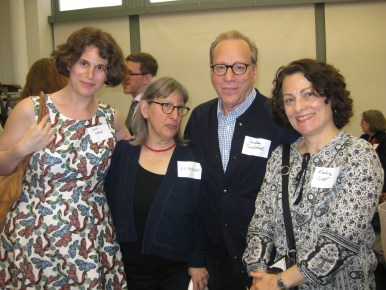
The last week in April/first weekend in May is always our busiest time at the Dell mystery magazines. This year, it all got going a day earlier than usual. On Tuesday, April 28, we hosted a bagel breakfast in our new offices on Wall Street for those of our nominees and Readers Award winners who’d come into town in advance of Wednesday’s Edgar Allan Poe Awards. As always, it was a cozy, comfortable gathering, which began at nine A.M. —and continued into midafternoon! While AHMM editor Linda Landrigan and I were whiling away the day in pleasant conversation, senior assistant editor Jackie Sherbow was representing us at the annual Edgars Symposium. We joined her in early evening for the MWA’s Agents and Editors Cocktail Party, where we were pleased to run into many of our magazines’ contributors.

Wednesday, of course, was the big day. Our annual cocktail party, at which we present the EQMM Readers Awards, and honor the Robert L. Fish Award winner and nominees for the Edgar and Agatha awards, was held in the afternoon. Third-place Readers Award winner Miriam Grace Monfredo (“The Tavern Keeper’s Daughter, December 2014) was unable to travel from Rochester for the occasion, unfortunately, but second- and first-place winners Marilyn Todd (“Blood Red Roses, September/October 2014) and Doug Allyn (“The Snow Angel, January 2014) were present, along with Fish Award winner Lauren James (a.k.a. Zoë Z. Dean). Doug Allyn was also a nominee for the Edgar for best short story for his Readers Award winning tale, as was Brian Tobin, whose work commitments prevented him from attending, for “Teddy,” EQMM May 2014. In attendance at the party were several other Edgar nominees in other categories. They included John Floyd, for a story in The Strand, Francis M. Nevins in the critical/biographical category, Steve Hockensmith for best juvenile mystery, and Charles Ardai, winner of the Ellery Queen Award. You’ll find photos of most of them in the following selections from the cameras of Carol Demont and Jackie Sherbow in NYC, and Josh Pachter and Tara Laskowski at Malice.

The Edgars banquet this year was a star-studded event, with Sara Paretsky, incoming MWA President, as master of ceremonies and Stephen King presenting the Ellery Queen Award and then claiming the Edgar for best novel. Zoë Z. Dean’s Robert L. Fish Award (for “Getaway Girl” EQMM November 2014) was presented by past Fish Award winner Ted Hertel. The short-story Edgar went to Gillian Flynn for “What Do You Do?”, from the anthology Rogues. Congratulations to winners and nominees alike!

With the events in New York over, many writers, editors, and agents went on to Bethesda, Maryland for the Malice Domestic Convention. I had the pleasure, while there, of catching up with many of my favorite authors, including Charlaine Harris, Toni and Steve Kelner, Dana Cameron, Martin Edwards, Ann Cleeves, Josh and Laurie Pachter, EQMM’s fabulous reviewer (and author) Steve Steinbock, Doug Greene, Margaret Maron, Dorothy Cannell, Terrie Farley Moran, and many others, not least—and saved for last because he was this year’s short-story Agatha Award winner (for his November 2014 EQMM story “The Odds Are Against Us”)—Art Taylor, along with his wife author Tara Laskowski.

Unfortunately, I was unable to attend the short-story panel moderated by my colleague at AHMM, Linda Landrigan, but I understand it was an interesting and lively session. Congratulations to Art Taylor and all of the other Agatha Award winners, including the winner for best first novel, Terrie Farley Moran, who got the idea for the setting for that winning book from Dell Magazines’ own Christine Begley, Vice President for Editorial.

I wish we could have obtained photos of all of our guests, friends, colleagues, winners, and nominees, but we did capture a good number of them. Enjoy—and let us know if you have any photos of the events that you’d like to share.—Janet Hutchings

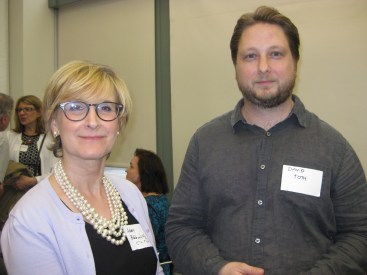
Kevin Todd, Sheila Williams, and Marilyn Todd

Kevin Todd, Sheila Williams, and Marilyn Todd

Sarah Weinman, S. J. Rozan, Jonathan Santlofer, and Katia Lief

Sarah Weinman, S. J. Rozan, Jonathan Santlofer, and Katia Lief

Peter Kanter and Barry Zeman

Peter Kanter and Barry Zeman

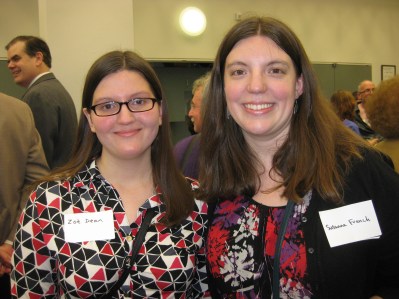
Zoë Z. Dean and Susanna French

Zoë Z. Dean and Susanna French

Linda Landrigan, David Dean, and Janet Hutchings

Linda Landrigan, David Dean, and Janet Hutchings

Linda Landrigan, William Burton McCormick, and Abigail Browning

Linda Landrigan, William Burton McCormick, and Abigail Browning

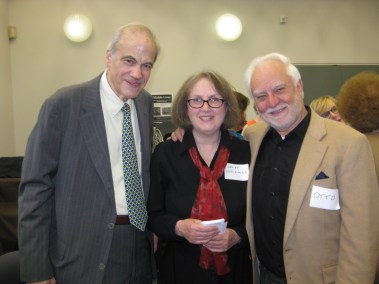
Richard Dannay, Janet Hutchings, and Otto Penzler

Richard Dannay, Janet Hutchings, and Otto Penzler

Doug and Eve Allyn and Peter Kanter

Doug and Eve Allyn and Peter Kanter

Abigail Browning and David Toth

Abigail Browning and David Toth

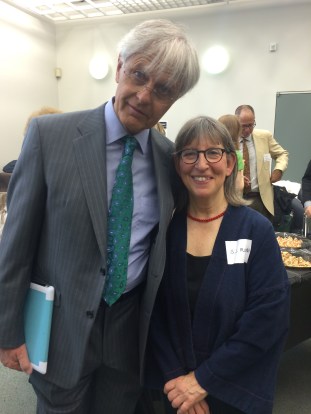
Larry Light and Meredith Anthony

Larry Light and Meredith Anthony

Abigail Browning, Christine Begley, and Carol Demont

Abigail Browning, Christine Begley, and Carol Demont

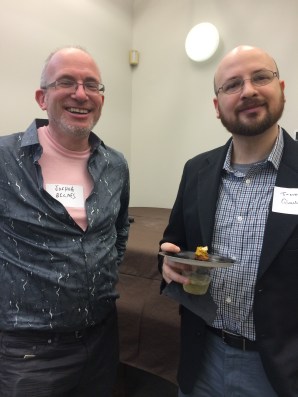
Joshua Bilmes and Trevor Quachri

Joshua Bilmes and Trevor Quachri

Richard Koreto, Marilyn Todd, and Dorothy Cummings

Richard Koreto, Marilyn Todd, and Dorothy Cummings

David Dean, Dale Andrews, and Liz Zelvin

David Dean, Dale Andrews, and Liz Zelvin

Joseph Goodrich

Joseph Goodrich

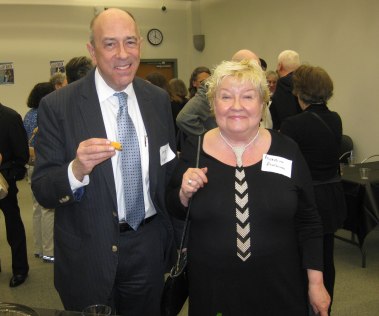
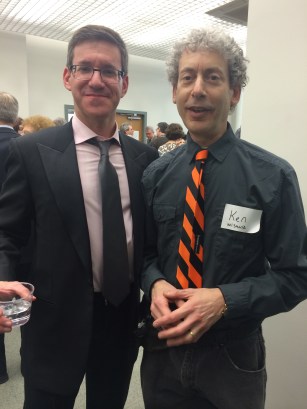
Charles Ardai and Ken Wishnia

Charles Ardai and Ken Wishnia

Sarah Weinman and Kate Stine

Sarah Weinman and Kate Stine

Kevin and Marilyn Todd and Jay Carey

Kevin and Marilyn Todd and Jay Carey

Tara Hart

Tara Hart

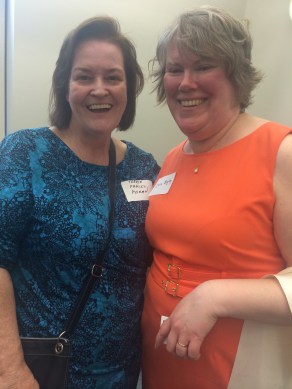
Terrie Farley Moran and Christine Begley

Terrie Farley Moran and Christine Begley

Francis M. Nevins

Francis M. Nevins

Parnell Hall and S.J. Rozan

Parnell Hall and S.J. Rozan

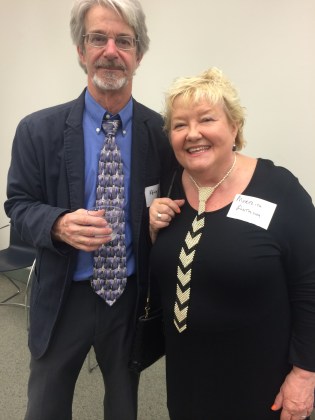
Kevin Egan and Meredith Anthony

Kevin Egan and Meredith Anthony

Emily Hockaday, Jackie Sherbow, and Deanna McLafferty

Emily Hockaday, Jackie Sherbow, and Deanna McLafferty

Marilyn Todd accepting her EQMM Readers Award

Marilyn Todd accepting her EQMM Readers Award

Doug Allyn accepting his EQMM Readers Award

Doug Allyn accepting his EQMM Readers Award

Crowd at the Dell Magazines Pre-Edgars Cocktail Party

Crowd at the Dell Magazines Pre-Edgars Cocktail Party

Sarah Weinman at the Edgars

Sarah Weinman at the Edgars

View from the Dell table of Stephen King presenting the Ellery Queen Award to Charles Ardai

View from the Dell table of Stephen King presenting the Ellery Queen Award to Charles Ardai

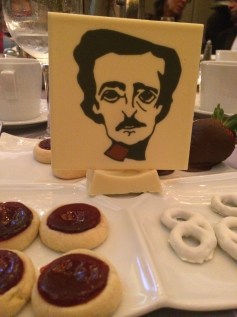
The Chocolate Edgar

The Chocolate Edgar

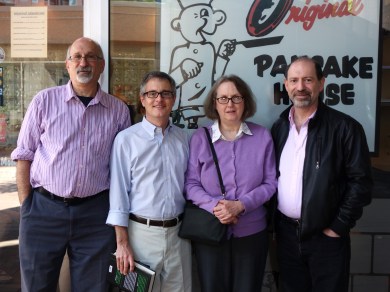
Josh Pachter, Art Taylor, Linda Landrigan, and Steve Steinbock in Bethesda

Josh Pachter, Art Taylor, Janet Hutchings, and Steve Steinbock in Bethesda

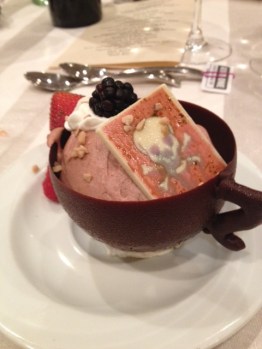
Deadly dessert at the Agathas

Deadly dessert at the Agathas

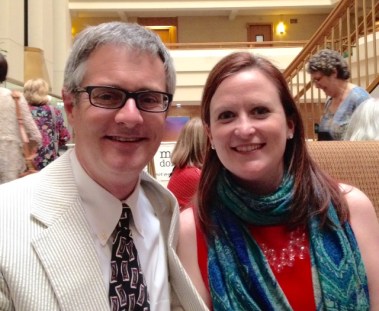
Art Taylor and Tara Laskowski at the Agatha banquet

Art Taylor and Tara Laskowski at the Agatha banquet

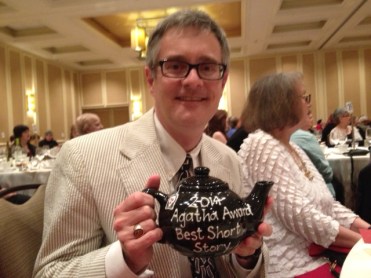
Art Taylor with his Agatha Award

Art Taylor with his Agatha Award

Posted in Awards, Conventions, Magazine | Tagged , , , , , , , , , , , , , , , , | 4 Comments

CRIME FICTION IN JAPAN

Over the past few years EQMM has received a number of excellent stories from Japanese writers, and that has inspired me to expand on a post I made on EQMM’s Web-site forum four years ago, shortly after the Fukushima nuclear disaster.

Everyone who loves mysteries ought to be at least a little bit of a Japanophile, since Japan’s mystery-writing tradition goes back almost to the beginning of the genre in the United States, Britain, and France—and since it is in Japan, more than anywhere else, that the puzzle mystery continues to give off healthy new shoots today. I’ve written elsewhere about the oddness of the fact that the only place in the world in which the novels of Ellery Queen have remained consistently in print is Japan, a country whose respect for tradition and order is about as far, culturally, from the New York of Ellery and Inspector Queen as could be imagined. Think of the Queen novel Cat of Many Tails, in which the whole city hovers on the edge of chaos over the work of a single serial killer, and compare that to the calm cohesiveness and cooperation one could observe in TV news reports of Japan after the harrowing earthquake of 2011 and the Fukushima leaks.

Japanese interest in Western mystery writing goes back to the 1880s, when the work of Poe, Doyle, and others began to appear in Japanese translation. The writer often called the father of the Japanese mystery, Tarō Hirai, wrote under the pseudonym Edogawa Rampo, which a little thought, or fast pronunciation, will tell even the uninitiated is a phonetic nod to the most important name in the pantheon of American mystery writers, Edgar Allan Poe. Edogawa Rampo had already produced some of his most famous work before Ellery Queen appeared on the American scene at the end of the 1920s. But once the work of Ellery Queen became available in Japanese translation, interest in his distinctively American version of the detective story took root and continues to exist in Japan to this day.

In 2004, EQMM first published the work of Norizuki Rintaro, a writer of the “new traditionalist movement” in Japanese mystery writing. Following in the footsteps of Ellery Queen, the writer-sleuth protagonist of the Rintaro books and stories bears the same name as the books’ author. And the author’s decision to cast a father-son/police inspector-mystery writer detecting team as the central players in his stories and novels further mirrors Ellery Queen—his acknowledged inspiration.

For a number of years EQMM has been commissioning translations of the Mystery Writers of Japan Award (Best Short Story) winners and runners-up. These awards are the equivalent of the Mystery Writers of America’s Edgars. For all the respect and reverence the Japanese have shown Western mystery writers, there has been relatively little reciprocal translation or homage. And this is a loss to Western readers, for Japanese writers have brought their own innovations to the classical forms established by American and European masters of the genre. In my own reading of Japanese mystery fiction I’ve discovered writers with an interest in more subtle aspects of human psychology than is typically found in American writers of the classical whodunit. The little I’ve been able to read in English translation convinces me there must be a treasure trove of material there waiting for American publishers. The only Japanese writer I’m aware of who’s gained sufficient entry into the U.S. mainstream to garner a major award nomination here is Natsuo Kirino, who received an Edgar nomination in 2004 for her novel Out.

But I think things are starting to change. As I mentioned, EQMM has an ongoing commitment to bringing as many of the Edogawa Rampo short-story winners into print in the U.S. as possible. And in recent years a new publisher, Locked Room International, founded and run by John Pugmire, a frequent translator for EQMM, has been making classical puzzle novels from a variety of other languages available in the U.S. Some of Locked Room’s titles are by Japanese writers, including Koga Saburo (a pseudonym of Haruta Yoshitame), a contemporary of Edogawa Rampo who trailed the father of Japanese mystery writing into print by only four months. 2015 sees Locked Room International’s release of the first English-language edition of Ayatsuji Yukito’s The Decagon House Murders. At around the same time, EQMM will publish the first English translation of Saburo’s short story “The Spider.”

Another writer of the Japanese neoclassical school, Soji Shimada, will see the re-release of an earlier English translation of his novel The Tokyo Zodiac Murders this year by Pushkin Vertigo. One of Soji Shimada’s locked-room short stories, “The Locked House of Pythagoras,” appeared in EQMM’s August 2013 issue, and another, “The Executive Who Lost His Mind,” is upcoming in this year’s August issue.

I don’t want to give the impression that all the good mystery and crime writing coming out of contemporary Japan belongs to the classical school. In 2013 EQMM published Nagase Shunsuke’s “Chief,” a nominee for the Edogawa Rampo Award. Like many of the other Rampo Award nominees we’ve seen over the years, its focus is more on societal issues, and how the police and others deal with social conflict, than on the solving of a puzzle. Reader engagement with the characters and their struggles is of central importance in such stories, and this trend in Japanese mystery writing parallels the currently dominant school of crime writing in the West.

Last but certainly not least, there is the Japanese psychological thriller. Some of the stories belonging to that category that have crossed my desk barely qualify as crime stories: no murder, no puzzle, no enacted violence. The brilliant story “Eighteenth Summer” by Mitsuhara Yuri, which first appeared in English in the December 2004 EQMM and which we later reprinted in the anthology Passport to Crime, centers almost exclusively around its characters’ inner lives. Yet out of that material of emotions, thoughts, and mistaken assumptions the author managed to craft a sensitive, suspenseful narrative that leads somewhere quite different from where the reader expects. It’s a shame that Mitsuhara Yuri’s work (and that of many other Japanese psychological-suspense writers) is not available in English. It seems to me that this is a subgenre of the mystery at which Japanese writers truly excel.—Janet Hutchings

Posted in Books, Characters, Ellery Queen, International, Passport | Tagged , , , , , , , | 2 Comments

“I Am a Genre Writer” (by Margaret Maron)

Margaret Maron’s achievements as a mystery and crime writer have been recognized by all of our field’s major organizations. She is a Grand Master of the Mystery Writers of America, a recipient of the Malice Domestic Convention’s Lifetime Achievement Award, and the most recently named Lifetime Achievement Award winner for the Bouchercon World Mystery Convention. The many other honors her fiction has earned include the Edgar, Anthony, Agatha, and Macavity awards. Margaret began her writing career with short stories, and she has always continued to find time for the short form despite producing nearly three dozen critically acclaimed novels. Her most recent story for EQMM is May 2015’s “We on the Train!”; her most recent novel, Long Upon the Land, in the Judge Deborah Knott series, will be released by Grand Central Publishing this August. In the 1940s, when EQMM was launched, founding editor Frederic Dannay explained that one of his goals for the magazine was to show that the mystery was a genuine literary form. He’d have been pleased, I think, to feature Margaret Maron’s work, for it exemplifies the high literary standards that can be attained in the genre.—Janet Hutchings

I am a genre writer. I write murder mysteries. This means that I am often asked why I write mysteries instead of “literature”—as if one were slightly disreputable and the other stamped with the Good Housekeeping Seal of Approval.

Why should that be? After all, doesn’t all fictional writing fall into one genre or another?

If you find a horse, dusty trails, and handguns, then it’s a “Western.” If there are bug-eyed aliens, space ships, or alternate universes, then it’s “Science Fiction.” If it’s witty, funny, and everyone goes shopping, then it’s “Chick Lit.” Ghosts and vampires and spooky woo-woo? “Supernatural” or “Paranormal.” Ghosts and spooky woo-woo and heroines running around in wispy nightgowns? “Gothic.”

Other genres are Romance, Fantasy, Historical . . . the breakdown into subsets goes on and on. Only if it doesn’t fall squarely in one of those easy categories is it called “Literature,” which is neither more nor less important than any other genre and usually co-opts aspects of the others. There is excellent writing in this category; there is also pretentious navel-gazing.

It’s the same for all fiction. Every subset has its classics that have stood the test of time as well as the duds that were remaindered two weeks after their pub date.

I myself have always loved mysteries. Things happen in them. Conflicts are presented and then resolved. There is a crime (usually a murder), there is someone to solve that crime, and, in the end, justice must seem to have been done. The guilty are not always punished, the innocent do not always triumph, but one usually closes a mystery novel feeling satisfied with the outcome.

“But isn’t that formulaic?” I am asked.

“No more formulaic than a sonnet,” I reply. The sonnet form, fourteen lines divided into an octave and a sestet, dates from the thirteenth century. Dante and Shakespeare wrote sonnets, so did Seamus Heaney, so does Billy Collins.

It’s what a writer does with a form that keeps it fresh.

Edna St. Vincent Millay said it perfectly in a sonnet that begins “I will put Chaos into fourteen lines.”

Chaos, then order.

I grew up reading Nancy Drew, but I also read all the classics of the Golden Age: Christie, Sayers, Rinehart, as well as Rex Stout, Erle Stanley Gardner, Charlotte Armstrong, and any other mysteries my mother borrowed from the bookmobile that came out to the farm every month. The first mystery I ever owned though was Home Sweet Homicide by Craig Rice, which Mother bought at a used-book sale when I was ten or eleven.

Dinah, April, and Archie Carstairs, aged 14, 12, and 10 respectively, are the children of Marian Carstairs, a pulp writer who churns out a new murder mystery every two or three months, much like Craig Rice herself. When the next-door neighbor is murdered and a handsome bachelor police lieutenant comes to question them, the smart-alecky kids immediately think he would make a great husband for their mother. So of course, they decide to solve the murder themselves and give her the credit.

I loved that book and reread it at least twice a year for the next four or five years. It took me that long to realize that I wasn’t rereading it for the scenes with the kids, but for the scenes with the mother, who spent most of the book up in her room, pounding away on her manual typewriter. The whole idea of being a writer seized my imagination.

When I first began to write, I read lots of how-to books and tried several different forms before I found my voice. The usual advice is to write what you know, but I had a horror of taking off my clothes in public, which immediately precluded the coming-of-age novel that is often a novelist’s first book. I did not want to cannibalize my childhood nor smear my parents and relatives nor exaggerate any hardships I might have experienced.

It is a terrible burden to want to write and realize you have nothing to say . . . at least nothing you want to say in public. Yet, nowhere in all those how-to books did I ever see “Write what you like to read.”

Eventually it dawned on me that the mystery form would best fit all my needs. Even if I had nothing profound to say, I could write a story and perhaps earn a living if enough people found it entertaining. Over the years, I have gone from thinking I had nothing to say to realizing that there is nothing I can not say in this form. And because mystery novels are perceived by and large as entertainment only, this means mystery writers can fly beneath the radar and slip in social commentary, political ideas, and maybe even a little educational propaganda.

My books are set here in my native North Carolina, which used to be rural and agrarian, where landowners could do what they liked with their land because of the sparse population. As our population soars, it’s been hard for some of my fellow citizens to realize that new rules and regulations aren’t all bad.

In Shooting at Loons, I let my Judge Deborah Knott ask her friend Chet why his coastal community doesn’t have zoning laws to protect homes from having a fish factory built next door:

Chet shook his head. “People here are so adamantly opposed to any kind of government interference that they won’t allow zoning of any kind.”

“That’s crazy,” Deborah said. “Zoning’s the only way a community can control growth and have a say in what’s built.”

“Well, why don’t you just run on over and tell them that if you get a few minutes off from court?” Chet said with asperity. “You think people haven’t tried? Every time the county planners try to hold a hearing on the subject and explain how zoning would protect us, they’re lucky to get away with their lives.”

Here in NC, where tobacco is slowly being phased out, some farmers would love to grow industrial hemp, so in Hard Row, I had Deborah ponder why they aren’t allowed to:

“Hemp is a wonderful source material of paper and cloth and our soil and climate would make it a perfect alternative to tobacco. If it had first been called the paper weed or something equally innocuous, North Carolina would be a huge producer. With a name like hemp, though, our legislators are scared to death to promote it even though you’d have to smoke a ton of the stuff to get a decent buzz.”

Only three sentences tucked in between arguments for raising ostriches or shiitake mushrooms, but if enough readers get used to the idea that not all hemp is created equal, farmers may eventually be allowed to raise the industrial variety.

This is why I don’t mind being dismissed as a “genre writer.” As long as my books are published and read, I’m going to keep writing them, no matter what they’re called.

I will put Chaos in fourteen lines . . .

Posted in Books, Characters, Courtroom Mysteries, Fiction, Genre | Tagged , , , , , , , , | Leave a comment

“Hold That Thought” (by Dandi Daley Mackall)

Dandi Daley Mackall is the author of more than 450 books, many of them for children and young adults. In 2012, she won the Edgar Allan Poe Award for Best Young Adult Mystery for her novel The Silence of Murder (Random House/Knopf). Her most recent novel is The Secrets of Tree Taylor. Many will also know Dandi’s work through the TV dramatization of her novel My Boyfriends’ Dogs, the most-watched original Hallmark movie of 2014. The multitalented author will make her EQMM debut in our September/October double issue. In this post she talks about a vital source of inspiration for fiction writers. —Janet Hutchings

I steal. And I’m not alone here. Every author I know steals—from faces glimpsed on a city bus, to names heard at dusk when suburban moms call kids in to supper, to the smell of a dusty barn, sunlight slanting through cracks in just the right way to make the dust dance.

But my most fruitful thefts come when I steal from myself. I’m a firm believer in capturing our own powerful and emotionally-charged moments and holding onto them, only to pull them out and let them morph in our fiction. My best scenes, and I suspect this is true for most writers, contain appropriately disguised moments I’ve lived through, intense memories that are frozen in my mind.

Sometimes nations, and even the world, have things happen that people will remember for the rest of their lives. Anyone who was alive when President John F. Kennedy was assassinated can tell you exactly where they were, what they were wearing, and who else was in the room with them when they heard the news. For another generation, it’s the space shuttle explosion that’s frozen in memory, with all the emotions of that day. And for most of us, the vision of the World Trade Center disaster comes back to us with strong emotions and details that won’t fade.

We all have our own personal frozen moments too—the trepidation of the first day of school; that first kiss; first heartbreak, first child, first family death. And when we call up those moments, we get details that don’t go away like other memories. They’re frozen, which can be a good thing, or a bad thing. For a writer, those moments are gems, gold to be mined at just the right time, in exactly the right scene.

There are a lot of ways to create suspense, but for me, the most effective way is to re-create suspense stolen from my past. I’ve purloined my own panic, experienced on a back street in Krakow, Poland, during the communist era, when the Curtain was Iron and I was hopelessly lost, driving well past the city’s curfew, an illegal printing press on the floor of my unreliable Renault. I’ve also stolen the less grounded, but just as intense, feeling of panic when I was lost a few years ago driving through Cleveland with a sick child in the passenger seat.

For years when I did school visits and Young Author programs, I stressed the importance of being a good observer, both for personal safety and for sharpening descriptive skills necessary for good writing. Dramatically, I told the (true) story of the dreadful month when I was the victim of a stalker. I’d spotted a white pickup at several points on my daily jog and hadn’t thought much of it, though I could see a man sitting behind the wheel, watching. Then came the phone calls, the omnipresence of that infernal pickup, and the final confrontation, involving a police rescue and capture. Awful stuff—but wonderful frozen moments.

During a Q and A session with seventh graders, one student asked, “Have you ever used that story about the white pickup truck?” I hadn’t. But the following week, I brought the moment out of the freezer and wrote a scene into my novel The Silence of Murder. Since then, I’ve used that angst in a scene where the narrator believes something terrible has happened to her best friend. And I’ve thawed the moment again for another novel, when my main character says yes to a marriage proposal, then seriously reconsiders. Tapping into suspenseful frozen moments can take us most places we want to go in our fiction.

Sometimes, we don’t even realize we’ve tapped into a frozen moment and stolen from ourselves until it’s too late to take it back. In the first chapter of The Silence of Murder, a mother delivers a slap to her son, and the son never speaks again. I had no idea where that slap came from until the first time I did a pubic reading from the book. I was so overcome with the memory of an event I hadn’t consciously thought of in decades that I had to take a break before finishing the reading. When I was a freshman in college, one night I ventured to a little market for munchies. The place was deserted, except for a young mother and her perhaps two-year-old son, who sat in her shopping cart and made faces and noises. As I recall, I made faces at him too, when Mom wasn’t looking. Mostly, Mom was yelling, screaming at him to shut up. As I stared at the shelves, debating crackers or cookies, crackers or cookies, out of the corner of my eye, I saw the woman’s hand sweeping backward, then hauling off to slap her son. The sound of hard hand on soft cheek echoed in the aisle. Then that silence, the air sucked from the building before the cry. And what did I do?

Nothing. I took crackers and cookies, and I left. Even then, I knew I should have done something. Said something. Given her a dirty look. Something so she’d know she didn’t get away with it.

I don’t know if I even gave that moment a thought the next day, the next month, the following years. But it was there, frozen like a brand to my cerebral cortex. Waiting.

I have one last frozen moment that came to fruition when I received the cheerful message that my story would be included in an issue of Ellery Queen’s Mystery Magazine. I can picture a Thursday when my parents returned from shopping in Kansas City, about an hour from my small country town. I can see my dad’s grin when I, in fuzzy PJs, met him at the front door. It was the grin that told me he’d bought the latest issue of Ellery Queen’s Mystery Magazine and that it would be okay, even on a school night, for us to stay up and read.

And now, one more imagined frozen moment. A girl in a small town waits for the September/October issue of EQMM, sees my little story, and . . .

Posted in Books, Characters, Fiction, Guest | Tagged , , , , , , | 2 Comments

“And Then There Was Why: The Mystery in Mystery Fiction” (by Tim L. Williams)

Tim L. Williams’s short stories began appearing in EQMM in 2005. A number of them have gone on to be nominated for, or to win, major awards in the field. In 2011 he received the International Thriller Award for his EQMM story “Half-Lives,” and he is currently nominated by that organization again for his 2014 EQMM story “The Last Wrestling Bear in West Kentucky.” His 2013 story “When That Morning Sun Goes Down” (EQMM, August 2013) was nominated for the Edgar Allan Poe Award for best short story, and two of his earlier EQMM tales were nominated for the Private Eye Writers of America’s Shamus Award. It isn’t only in the mystery field that the Kentucky author’s work appears regularly, however. He is a contributor to many literary magazines and is a college professor as well as a writer. Last month, New Pulp Press brought out a collection of his stories called Skull Fragments (paperback and digital editions are available at Amazon, Barnes and Noble, and other stores). Booklist, in reviewing the collection, described the author’s style as “deceptively foursquare with a poetic power for all that. There’s literary achievement here.” In his second post for this site, Tim discusses an aspect of fiction that literary critics often fail to acknowledge the presence of in works from our genre.—Janet Hutchings

A couple of years ago, at a professional conference, I ran across a friend from my undergraduate days, a fellow English major with whom I’d shared a number of Lit and Creative Writing classes. Feeling nostalgic for those long-gone days when nothing seemed more important than Cormac McCarthy’s refusal to use quotation marks and whether or not Minimalism was a dead end or a much needed corrective for the extremes of the 1960s Experimentalists, we decided to ditch the evening session and hit a local bar. For a little while, it was fun. Then, when we were both nearing our limit, this old friend mentioned that he’d “seen” a couple of my detective stories.

“Don’t you feel silly writing that stuff?” he asked. “I’d feel foolish if I spent my days explaining that Colonel Mustard killed Professor Plum in the library with a lead pipe.”

I’d like to say that I made a rousing defense of the genre, one so eloquent it sent him running to stock up on Chandler and Thompson, Hammett and Highsmith, Reed Farrell Coleman and Daniel Woodrell. The truth is I was so shocked, I don’t remember exactly what I said. Whatever it was, we parted ways a few minutes later, and wherever he is now I wish him well. Overall, he seemed like a decent guy. He just didn’t realize that the mystery genre isn’t as simplistic, orderly, and buttoned-down as its most dismissive critics have always liked to pretend. He didn’t understand that the real mystery in a mystery or suspense tale is never truly solved.

Depending on the manner of telling—what Stephen King refers to in Danse Macabre as the method of attack—we may learn who committed a murder, how it was done, the circumstances that lead to it, the trials and tribulations of the victim, the perpetrator, or the investigator. We had certainly better know the “motive”—greed, revenge, hatred, resentment, perversity, etc. But in the best of mystery and suspense fiction, no matter whether it’s cozy, hardboiled, or noir, the fundamental question of why can’t be answered.

Don’t misunderstand. I’m not saying that violence in life or fiction lacks motive, but motive itself exists at the nexus of internal desire and external circumstance. The unanswerable “why” I’m speaking of is buried deep in our consciousness. One husband discovers his wife in bed with another man, checks into a hotel, and phones a lawyer. Another survives the shock, forgives his wife, and works to rebuild his marriage. A third reaches for a knife or a gun or a chopping ax and guarantees himself a spot on the evening news. All three had the same motive for killing a spouse, but only one did. This is the why that I’m speaking of, and it seems to have its roots in the mystery of personality.

Back in the mid nineties, my cousin woke on a July morning, made his wife and sons a rare weekday breakfast of scrambled eggs, bacon, and biscuits and lingered at the table before pouring a Styrofoam cup of coffee, kissing his wife, and heading out the door. Ten or fifteen minutes later, he stopped at a convenience store, filled a five-gallon container with gasoline, and bought a package of Dolly Madison chocolate-covered doughnuts. On the outskirts of town, he turned onto a gravel road that dead-ended at a repossessed farm, polished off the doughnuts, lugged the five-gallon can fifty yards into an overgrown field, emptied the gasoline over his head, and struck a light.

It didn’t make sense. He was happily married, had two sons he loved, and was nearing the end of his nineteenth year in the Air Force. He had never seen combat and had never been diagnosed with depression. Neither he nor his wife was having an affair. He’d recently passed his yearly physical.

But of course there were problems. He had debt, but nothing that hinted at financial disaster. He’d been frustrated at his lack of promotion. As he neared the end of his service, he seemed uncertain about the future and what he might do. Only a couple of years earlier, his mother had died. His childhood hadn’t been easy. We could say that the “motive” for his suicide was a mixture of grief, professional frustration, and worry for a combination of personal and financial reasons. A particular set of external circumstances reacted with his internal landscape and resulted in a horrific suicide.

But that doesn’t really explain it all, does it? He was one of four boys, all close in age, who experienced the same childhood and had similar genetic dispositions. Financially, he was better off than his older and younger brother, if not quite as prosperous as the oldest of the boys. The circumstances of his life were not more traumatic than those of his siblings. One had served in Vietnam and another had lost his two-year-old son. None of the other three attempted suicide. In the end, my cousin’s actions remain a mystery. We know what happened; we know how it happened, and we have the sketchy details of the circumstances that contributed to his death—the “motive” if you will. But the why remains unanswered. For me it is this unanswerable question that is the engine that drives the mystery genre. No matter how tightly plotted or how lifelike the characters, that question cannot be answered. In fact the more well-rounded and well-developed the characters, the more we readers feel that paradox and understand that the real mystery at the heart of mystery must remain unsolved.

I was a late-life baby, and my father and my uncle grew up during the Great Depression in a coal-mining town that was depressed long before the market crashed. To make matters worse, their father died when my dad, the youngest of the boys, was eleven. It fell to my dad and his brother, Ed, only two years older, to scrounge for themselves, their widowed mother, and baby sister. They were rough kids. One day, walking home along the railroad track, they spotted a friend of theirs, a boy my dad’s age, coming towards them. My uncle pulled a slingshot from his back pocket, nudged my dad’s elbow, and said, “I’m going to shoot Hubert’s eye out.”

And then he did. In one nearly fluid motion, he picked up a cinder, fitted it, pulled, and let fly. He never forgave himself. When I was a teenager and he was in his mid sixties, he would say, “It troubles me. Hubert was a good boy. I didn’t have no reason to do that.”

Violence certainly doesn’t hold the patent on irrational or inexplicable behavior. What is more mysterious than romantic love, religious sentiment, the desire to create art? Violence, love, religion, art. We are talking, of course, about aspects of life that help define what it is to be human, and of course, human consciousness itself is a mystery. If not, philosophy, religion, materialism, and a few dozen other “isms” wouldn’t compete to offer the solution to that particular puzzle.

No matter how skillful the writer and no matter which “category” he or she works in, there always remains the mystery of the individual at the core of the mystery novel or tale—something Poe made clear in “The Tell-Tell Heart,” and “The Imp of the Perverse.” If Colonel Mustard killed Professor Plum in the library with a lead pipe because he discovered the good professor was sleeping his wife—there you go, “motive”—why didn’t Captain Mayonnaise stab Professor Pedantic for seducing his? What about Justice Wargrave, that forerunner of both Dexter and Jigsaw, and Lou Ford, the cliche-obsessed lawman who is the grandfather of so many of the colorful psychopaths in modern noir? We are given details, explanations, and believable “motivations” for their action. But there are millions of boys who, like Justice Wargrave, are born with a cruel streak and a perverse sense of justice who don’t gather criminals on an island and murder them off one by one. Sadly there are thousands of children who suffer the same abuse as Lou Ford yet rarely speak in cliches and never beat to death hookers, church ladies, and bums. And it isn’t always about the villains. Why exactly is it that Marlowe feels the need to be a knight errant? Why is he so willing to accept every beating that comes his way in pursuit of justice in an unjust world? Those questions are never truly answered, yet any reader knows immediately that Marlowe is alive and breathing and unforgettable when he or she opens a Raymond Chandler novel.

An important thing to keep in mind is that mystery fiction is fiction for a reason that goes beyond make-believe characters and circumstances. At its core, all good fiction recognizes and probes the mysteries of identity and human consciousness. Simply identifying the traits and circumstances that lead to violent or creative individuals is the province of journalism, psychology, and sociology. Most of the traditional, hardboiled, and noir writers I know want more than that. In fact, a number of them are former journalists. Former is the important word. If these friends were satisfied with writing about how Colonel Mustard killed Professor Plum in the library with a lead pipe, they would have never changed careers, because at its core, that is what journalism does. It reports the facts and the circumstances of external events. Fiction has another concern. Henry James called it capturing the quality of felt life, and felt life is always complex, always mysterious.

For me, fiction is fundamentally about the unknowable yet powerful mysteries of life, and crime fiction, with its emphasis on the violent and the extreme, provides a shortcut to those mysteries. Perhaps no other contemporary writer has probed those mysteries as deeply, as well, and as often as Joyce Carol Oates. In her most powerful stories and novels, Oates binds her perpetrators, her victims, and her readers in a web in which each strand of action, motivation, circumstance, and connection disappears into mystery and yet remains as true, if not “truer,” than the life we experience every day.

To answer my old friend’s question, I often feel foolish, but never when I’m reading or writing in the crime genre. Like I said earlier, I was shocked and probably inarticulate in my response. I wish that I had nodded wisely, scratched the beard I didn’t have at the time, and said,

“Sure Colonel Mustard killed Professor Plum. But why do you think he did it?”

Posted in Business, Characters, Genre, Guest | Tagged , , , , , , , | 2 Comments

“RULE #1: PLEASE IGNORE ANY RULES FOUND BELOW” (by John Morgan Wilson)

John Morgan Wilson’s first novel, Simple Justice, which launched his Benjamin Justice series, won the Edgar Allan Poe Award for Best First Novel for its year of publication, 1996. Three other novels in the eight-book Justice series received Lambda Literary Awards. John also coauthored two whodunit novels with bandleader Peter Duchin. His first short story for EQMM appeared in 2003, and he has contributed half a dozen stories to our magazine since then. The latest, “Dial M for Marsha,” will appear towards the end of this year. Other stories by the West Hollywood author have appeared in AHMM and various anthologies. John’s versatility as a writer adds weight to the view he expresses in this post about rules and fiction-writing.—Janet Hutchings

In a world with no shortage of writers to tell you how it should be done, Ross Thomas was more inclined to let you find your own way.

I met him briefly in 1995, when he was making a rare public appearance through the UCLA Extension Writers’ Program, where I taught an occasional nonfiction class. At the time, I was working furiously on my first novel and figured some advice from Mr. Thomas wouldn’t hurt.

Why Ross Thomas? Among other honors, he’d been awarded two Edgars—for Best Novel (Briarpatch, 1984) and Best First Novel (The Cold War Swap, 1966)—and had about two dozen mysteries, thrillers, and spy novels in print. His assured voice, graceful style, and wicked wit distinguished his work from the more conventional. He was also a pro, through and through.

“He was always at the top of his game,” his friend Lawrence Block recalled a few years ago in Mystery Scene, “and never wrote a bad sentence or a lifeless page, never created an unengaging character.”

That evening at UCLA, he made two comments that especially resonated with me as someone who’d always tottered on a tightrope between insecurity and confidence.

Asked about the importance of talent in achieving success, he replied that all an aspiring writer needed was “the ability to write a simple declarative sentence,” implying that it was more about what one did with his or her talent that mattered—finding the imagination, discipline, perseverance and chutzpah to make a go of it.

Number two?

“Write what you want to write,” Ross Thomas said. “There are no rules, absolutely none.”

*

My mother, a high school English teacher, often stayed up late marking up her students’ papers with her fearsome red lead pencil, from which no spelling, punctuation, or grammatical error was safe.

She slashed away at my assignments as well, highlighting problem areas without specifying the actual mistakes, demanding that I correct and retype the papers before I went to bed, no matter how late the hour or how exhausted I was. She also made me take a typing class during summer school—summer school!—then repeat it in the second session until I could type forty words a minute, with minimal errors. (Commas always bedeviled me and still do, something a psychiatrist might explain.) I was never the brightest student, but I managed to turn in essays and reports that were orderly, grammatically correct, and dutifully dull.

I didn’t fully appreciate her dictates until I was nineteen, a college dropout at loose ends in the cultural tumult of the 1960s. Almost by chance, I got the opportunity to cover sports for my local newspaper, where the gruff but good-hearted sports editor seemed stunned that a wayward teenager could type, let alone produce clean copy.

With the appearance of my first byline, I knew I wanted to write for a living. But I also realized how much I had to learn—and unlearn. That started with breaking some of the rules my mother and other well-meaning English teachers had drilled into me.

My new lessons came quickly:

“Kid, this is what we call an inverted pyramid—most important facts at the top, descending in order, because we trim for space from the bottom.”

“Cut the fancy wordplay, get into your story fast.”

“I don’t mind a sentence fragment now and then, if it works.”

“Tighten it up, punch it up, give it some life.”

*

A few months later, I returned to college as a journalism major, paying my way by writing for small newspapers and magazines, which had their own mandates about form, style, and content.

I eventually added an English minor, enrolling in two short-fiction classes. One was unabashedly commercial in approach, taught by a prolific pulp writer who set down inviolable rules about what qualified as acceptable storytelling in a checklist of sixty-seven dos and don’ts. The other instructor, warmer and more supportive, encouraged us to read widely, explore creatively, and not restrict ourselves to any one type or category of writing.

I finished several stories in each class—all unpublished—and gleaned useful ideas from both. But it was in the second course that I felt like someone had opened the cage and let me fly.

*

My first novel, completed in ’95, took the form of a traditional mystery, but went against the grain in other ways. The protagonist, unapologetically gay, was angry and abrasive, and given to discursive rants and disturbing bouts of violence. The specter of AIDS and grief hung heavily over the story. The final chapter, rather than being shorter and propulsive, was the longest in the novel, with three characters sitting at a table, talking.

A close friend, an aspiring mystery writer herself, warned me that my novel would never appeal to mainstream tastes.

“You’ll never make any money from a book like that,” she said.

What surprised me was not her frankness, but that she assumed I’d written my first novel concerned with how much money it would make. Surely many writers do, which is fine, but that was barely on my radar. My novel was dark, impolite, and certainly flawed, but it was good enough to get me a multi-book deal with Doubleday, and a start as a published fiction writer.

More importantly, it was the novel I wanted to write—the novel I needed to write—not one designed to meet someone else’s expectations.

In Bird by Bird, Anne Lamott put it this way: “Write as if your parents are dead.”

*

A decade or so ago, I found myself on a crime-writing panel with two determinably best-selling authors to my right and, on my left, two newbies who’d written critically praised first novels more in a literary vein.

The author on my immediate right, a promotional dynamo, was ticking off the requirements for a bestseller—likeable hero or heroine, arch villain, shocking twists and turns, breathless pace, justice always served in the end, etc. The words “should” and “must” issued forth like bullets from a Tommy gun in a Mickey Spillane hard-boiler.

When it came my turn to speak, I suggested that not all writers are wired to follow formulas, or consider bestseller lists to be the Holy Grail. We each write for different reasons, I said, finding our rewards in different ways. Nor does everyone measure success by sales figures, I added, though it’s always nice when one’s book finds readers and makes some money.

I also pointed out that it’s possible to succeed commercially without fitting neatly into a genre mold. As an example, I cited Patricia Highsmith and The Talented Mr. Ripley, an “inverted” mystery featuring a fascinating psychopath who gets away with murder in the end.

I could just as well have mentioned other authors who’d written crime fiction with an individualistic stamp, and done quite well: Josephine Tey, Raymond Chandler, Graham Greene, Harper Lee, G.K. Chesterton, Ross Macdonald, Ruth Rendell, James Ellroy, Walter Mosley, Joyce Carol Oates, Joseph Wambaugh, Robert Bolaño, Jane Smiley, Jack Finney, Alice Sebold, Keigo Higashino, and countless more.

Oh, yes, and Ross Thomas.

*

By 2002, I was producing nearly a book a year, plus the occasional article and many hours of fact-based TV writing. I was making a living, but slipping badly into a creative rut.

So, thirty-five years after I wrote my first short story in college, I took a break and wrote another one.

Published in EQMM, it leaned heavily on L.A. noir tropes, and broke no new ground. But it was fun to write, and challenging, the compressed form demanding keen attention to every line, every word.

It was also liberating. When most of us sit down to write short fiction, there’s no contract, no deadline, no fiats about form, content, tone, type. Even in genre publications like EQMM or AHMM, which set certain boundaries regarding subject matter, the range of expression is remarkably broad. Since that breakthrough in EQMM, my short pieces there and elsewhere have ranged from light to dark, and some so personal and wrenching that I wept while writing them. Others were so offbeat for me they felt like an unexpected adventure in a strange land. That includes my latest for EQMM, a double murder mystery—or is it?—so deviously plotted that it took me weeks of revision to get it right.

That’s a lot of time to spend on a story of only a few thousand words.

Ah, but what a good time I had!

“Write what you want to write,” Ross Thomas said that night at UCLA, months before lung cancer ended his life when he was sixty-nine. “There are no rules, absolutely none.”

Posted in Books, Business, Editing, Guest | Tagged , , , , , , , , , , | Leave a comment