Old Loves That Keep Us Up: Revisiting Robert B. Parker (by Tom Andes)

Tom Andes has had stories in a variety of literary journals and crime-fiction publications, including Best American Mystery Stories 2012. He also won the 2019 Gold Medal for Best Novel-in-Progress from the Pirate’s Alley Faulkner Society. A musician as well as an author, he’s released two well-received EPs. His most recent fiction is a story for EQMM entitled “Hell-Bent for Leather,” which appears in our current issue (September/October 2024), and a soon-to-be-published novel, Wait There Till You Hear From Me (Crescent City Books, 2025). In this post Tom talks about a mystery writer who moved him from an early age and whose work continues to be impactful for him on rereading. —Janet Hutchings
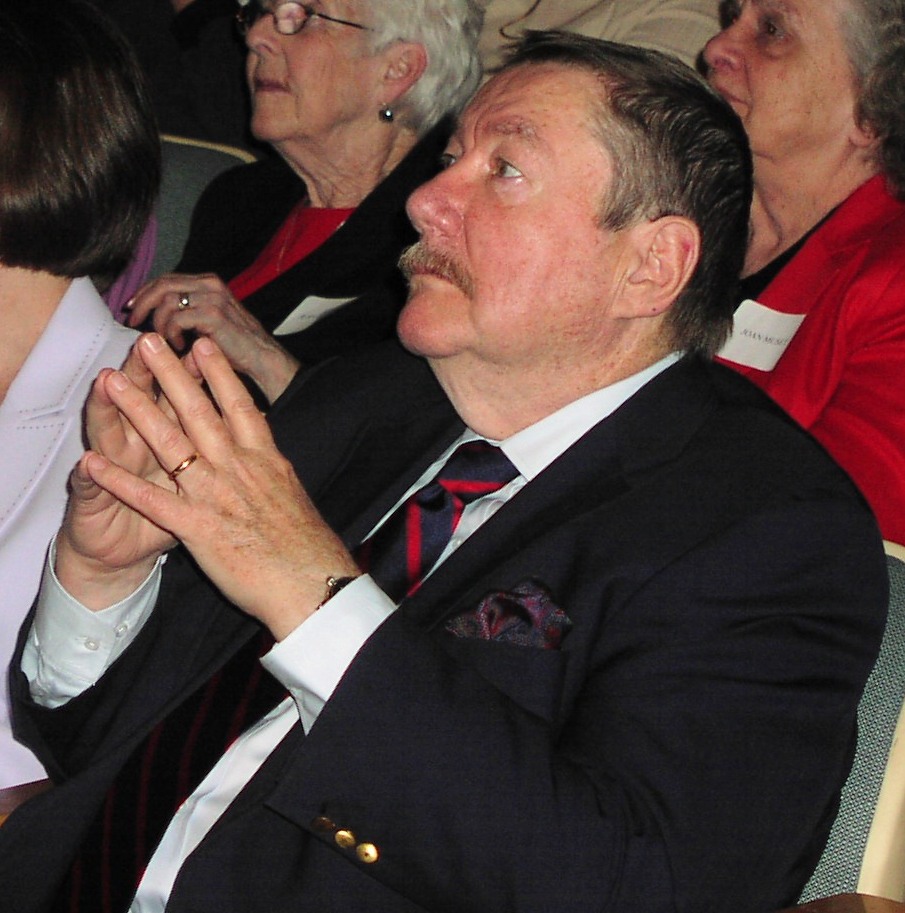
Manchester (N.H.) Library, CC BY-SA 2.0 https://creativecommons.org/licenses/by-sa/2.0, via Wikimedia Commons

Not all our adolescent loves hold up over the long run. Play me the music I loved in junior high, and odds are I’ll cringe. My first rock concert at age 13 was David Lee Roth’s Skyscraper tour, with Steve Vai playing the heart-shaped guitar with three fretboards (eat your heart out, Jimmy Page). I can’t tell you the last time I listened to that record, or for that matter, anything Roth did without Van Halen. Metallica’s Master of Puppets? I haven’t put that on in decades—though late in the pandemic, I did find myself listening to a lot of Judas Priest, which inspired my story, “Hell Bent for Leather.”

More interesting for me is what survives. I don’t know how many hundreds of hours I’ve spent listening to the Rolling Stones’ Exile on Main Street since I discovered it on vinyl in my parents’ record collection when I was 15. I still love that album. Ditto The Pogues’ Rum Sodomy and the Lash. For months, in ninth grade, I felt asleep with REM’s Green in my headphones. Every few years, I find myself doing a deep dive on that, Document, and the band’s other records from the same era.

I’ve returned to certain books and found myself disappointed. I’ve returned to other books and felt like I was reading completely different novels. That’s how it was with The Catcher in the Rye. First time through, I identified with Holden. The second time through—only a few years later—I thought, “man, this kid’s a jerk.”

Again and again, I’ve gone back to Graham Greene’s The Quiet American and The Power and the Glory. Though I suppose both are literary novels, Greene maintained he learned how to write novels by writing what he called “potboilers,” which seems as good a way as any to transition to what we’re talking about today, which is mystery fiction.

A few years ago, I found myself arguing with a friend. I made the innocuous (so I thought) statement that mystery and crime fiction moved me more profoundly and gave me a deeper, richer, more resonant emotional experience than most literary fiction. This person had spent their life writing literary fiction, and they felt invalidated by what I was saying, as if I were dismissing their life’s work.

Of course, I hadn’t meant it personally, and I hadn’t meant to slag this person’s writing off, either. Whatever genre we’re writing in, the rewards seem so small, the payoff so negligible, I understand why they felt that way: especially writing literary fiction, the edification that comes from the sense we’ve written something of enduring artistic value is often the best payoff we’re going to get. And this person is a brilliant writer. Still, here I am all these years later defending myself—or perhaps I’d just like to return to this point because it’s still the truth.

I don’t care whether literary or mystery fiction is “better,” mind you. Most hierarchical ideas about quality in writing are a moving target, based on a contingent set of standards that have more to do with what a given audience wants to believe about itself than with any eternal verities of storytelling. Just look at a list of Pulitzer winners from 100 years ago if you don’t believe me. I’m interested in what keeps me up at night. And it’s still the truth: mystery and crime fiction move me more profoundly and give me a deeper, richer, more resonant emotional experience than most literary fiction.

At the time I was having this argument, I was halfway through rereading Robert B. Parker’s Spenser novels. I was trying to explain to this friend how I could be moved to tears by Spenser’s relationship with Hawk, despite the obvious artifice of a detective novel, and despite the fact Spenser and Hawk are both tropes, the Detective Hero—descended from the Cowboy Hero and the Rugged Individualist—and his Black sidekick.

I’d approached rereading the Spenser novels with trepidation, to be honest. I loved those novels when I was a teenager. They’re part of the reason I wanted to write. Picking them up again, I was hoping for an injection of straight storytelling magic, a shot in the arm I could carry into my own work. What if with hindsight, they sucked? What if the magic was gone, or anyway, worn off? What if they’d aged less like Exile on Main Street than Bon Jovi’s Slippery When Wet?

To be sure, they’re a product of their era. In the first book, The Godwulf Manuscript, Spenser is a swinging single, and he hooks up with his client and later, her college-aged daughter. Hey, it was the seventies.

Over the course of those first few books, though, something happens. Susan Silverman enters the picture, and she becomes Spenser’s romantic partner. Susan’s a psychiatrist, and she often ends up explaining Spenser to himself, and by extension to the reader. She gives voice to the code he lives by, which is a code he doesn’t often articulate, though he does understand it. For all that he’s a tough guy, Spenser has an interior life; he can be brutal, but he’s not a brute. To be sure, aspects of their relationship are idealized. Sometimes Susan is, too. Yet over the course of the series, Spenser and Susan have an ongoing conversation about the paradoxes of long-term partnership, marriage, and monogamy, and that deep, heartfelt examination of romantic love is part of what forms the subtext of the series and makes rereading it so rich and rewarding.

I suspect the subject of long-term romantic partnership was close to Parker’s heart. He and his wife Joan separated for a time. When they got back together, they moved into a house in Boston with three floors, one for Parker, one for Joan, and one in the middle, which they shared.

Aspects of Spenser’s relationship with Hawk might strike contemporary audiences as being “problematic.” Yet literary fiction in the 1980s was lily white, and if Parker’s ideas about race sometimes seem ham-handed—he insists that it’s okay for Spenser to use the n-word, for instance, because he’s pals with Hawk—the Spenser novels nevertheless acknowledge the reality of racism in the United States, and the fact that race is an organizing principle in our culture. By and large, Parker’s white literary contemporaries elided the subject of race altogether.

Not that Parker was highfalutin. The Spenser novels are action-adventure stories like Mickey Spillane’s books or like The A-Team, something else I loved when I was younger, though I haven’t tuned in to see how it holds up. Like Shakespeare, Parker wasn’t writing for posterity. He told an interviewer he was writing to put food on the table.

None of this is to say that you should agree with me about Parker’s books. What keeps me up at night might put you to sleep. Not that I don’t believe in verities of storytelling, either, because I do—deeply and profoundly, as an article of faith.

I was fortunate enough to take a few workshops with the great short story writer Lee K. Abbott before he died. Lee was a literary writer, but he had a soft spot for crime fiction. He loved Tana French’s novels, and his eyes would light up when he talked about James Lee Burke. After Lee died, I read an interview where he gave this piece of advice to apprentice writers: read what moves you and try to figure out what about it speaks to you, so you can emulate it in your own work. Read what moves you—not necessarily what’s “good,” and certainly not what’s “literary.” I’m still trying to figure out what it is about Parker’s novels that I find so moving. All I know is that when I reread them, I feel like I’m sitting down with a group of old friends. And that’s still the ultimate test of a book for me: above and beyond genre or what’s “good,” it has to be something that engages me, that keeps me up at night.

Posted in Uncategorized | 3 Comments

Is it Normal to be Haunted by Ghosts? What Psychoanalysis Has to Tell us About the Mind and Possession (by Robin Kirman)

Robin Kirman is a pychoanalyst as well as a writer and she weaves her interest in psychology into her fiction. Her books include The End of Getting Lost, which Booklist called “… a beautifully written novel.” Her first story for EQMM, “Not All Hauntings Are by Ghosts,” appears in our September/October 2024 issue (on sale 8/13). In this post she explores some questions that underlie her very original (and chilling!) EQMM story.  —Janet Hutchings

The idea of possession by a ghost or spirit has always had a firm hold in the gothic literary tradition, and features heavily in supernatural mysteries as well.  Authors as celebrated as Edgar Allen Poe, Toni Morrison, Hillary Mantel, and Henry James have been drawn to explore the link between trauma and “hauntings” to create powerful psychological portraits and raise questions about the permeability of troubled minds.

Recently I also wrote a story for EQMM involving a psychologist who treats a man claiming to be possessed by the ghost of his kidnapper and abuser. At the heart of the mystery lies the question of whether or not this man is truly at the mercy of some supernatural force, or merely profoundly identified with his abuser—call it a case of Stockholm Syndrome taken to the extreme.

As a psychoanalyst as well as a writer, I took this story as an opportunity to consider what, psychologically speaking, it means to be haunted by another, and why this idea has such power over our imaginations. What interests me most isn’t the abnormality of such a condition, but rather, what it reveals about all of us, and the very nature of the self.

In what ways are all of us possessed by the important figures in our lives?

And what does psychoanalytic theory have to say on the subject?

Freud, the father of psychoanalysis, was already theorizing about the lingering presence—and internalization—of dead loved ones in his groundbreaking paper on depression: Mourning and Melancholia. In that paper, he draws a distinction between healthy mourning, in which a person grieves the lost loved one and moves on, and what he calls melancholia, in which the bereaved remains stuck in a state of prolonged devastation and, significantly, suffers a profound loss of self-esteem.

“In mourning the world has become impoverished and empty, during melancholia, it is the ego itself.” (p 246)

For Freud, the explanation for such depletion of self is that the mourner unconsciously identifies with the deceased person, who in such cases, is a source of disappointment or pain, and is hated as well as loved. The hatred that should be directed at this other becomes directed at the self, while the dead person takes up a kind of secret residence in the mourner’s unconscious—put another way, the dead now haunts the soul of the living.

In this pathological scenario, Freud suggests a linkage between such hauntings and the already tormented relationship with the deceased figure—an insight that fits well with later ideas introduced by Sandor Ferenczi, regarding identification with abusers. More generally though, Freud’s overall psychic framework introduces a mind that is always penetrated by others, in which what he terms “introjection” is at work in the perfectly healthy formation of the ego and, especially, the superego.

 Freud’s superego, the part of the psyche that contains our aspirations and our judgments, is an internalization of the values and prohibitions embodied by our parents. Introjection is an unconscious process for Freud, in which qualities of another become part of our own psychic structure, without our awareness.  In other words, whether we know it or not, it’s the voices of others that we hear when we feel either pride or self-reproach, a sort of ghostly echo that we carry with us always.

Following Freud, the Object Relations School (Klein, Fairbairn, Winnicott) took these ideas still further and developed a persuasive picture of the self as a series of internalized relationships. In pathological cases, the internalized objects (or people, or voices, however we think of them) rule with a kind of rigidity and force that can prevent the person from seeing others as they are, or developing any relationship that doesn’t resemble the original internalized one. In effect, such people live in a world of ghosts who deform reality and keep the person bound to historical attachments, unable to fully live in the present.

Contemporary psychoanalytic thinkers have added their own deconstructionist take on the matter, and offer a vision of the self as a collection of internalized relations with no center, a sort of kaleidoscope of dissociated identities that can never be separated from others, and can never be whole. Arguably, then, there isn’t even a self to be haunted, and the actual specter, the shadowy thing that won’t let go, is our vision of ourselves as something solid and real.

Posted in Uncategorized | Leave a comment

If We Rebooted Columbo, Would He Be on TikTok? (by Anna Stolley Persky)

Anna Stolley Persky is a lawyer, journalist, and essayist who recently turned fiction writer. Her first published fiction, “The Jews on Elm Street,” will appear in EQMM’s September/October 2024 issue (on sale August 13 ), in the Department of First Stories. Her story came to us through Art Taylor, a longtime, award-winning EQMM contributor who was Anna’s teacher when she was working toward an MFA in creative writing at George Mason University. In this post, Anna discusses some of the things that lay behind the enormous popularity of the iconic TV character Columbo and considers what kind of appeal he would have for a modern audience. She shares an EQMM connection with the creators of Columbo, Richard Levinson and William Link: They too got their start in our Department of First Stories.   —Janet Hutchings

Before we had Instagram and Internet accessibility, we had books to distract and teach us. Like many of my Gen X peers, I grew to love mysteries by seeing the world through the eyes of fictional sleuths, from Donald J. Sobol’s Encyclopedia Brown to, eventually, Agatha Christie’s Hercule Poirot and Miss Marple.

But I mostly credit my lifelong obsession with the mystery genre not to books, but to television. I credit one actor, Peter Falk, and one 1970s show beloved by so many of us: Columbo.

I’m far from alone. I have already read probably a dozen essays and blogs about why this one show—with this one character created by the imitable team of Richard Levinson and William Link—is stamped into our collective memory, at least for those of us of a certain age. Lieutenant Columbo, in his wrinkled raincoat, stood out as the antithesis of the hero cop. He didn’t carry a gun. He wasn’t macho. He was awkward, clumsy, and constantly broke. He ate smelly eggs or dipped into a dead man’s caviar and then complained it was too salty. Yet, he was deceptively clever. The villains always underestimated him. We rooted for Columbo as he appeared to stumble his way into solving each murder.

And of course, there was the brilliance of the show’s structure, showing the audience the identity of the killer at the beginning. We weren’t trying to solve the mystery. We were invested in watching for that moment Columbo realized who the murderer was and then, what Columbo did next.

Certainly, Columbo was a character-driven show. But threaded throughout was the looming approach of the computer era and Columbo’s attempts to understand it.

Columbo wasn’t a Luddite—it was more that he was often charmingly ignorant and flummoxed by technology. He generally expressed curiosity, especially if the murderer’s alibi was dependent on a new development, like the latest in DVD recording need for “Fade into Murder.” But on a day-to-day basis, Columbo didn’t use the advancements available to him, even in the 1970s.

Lately, I’ve been thinking about Columbo’s love/hate relationship with technology and how he would leverage modern gadgets, electronics, AI, and other innovation were he to return for a new season of sleuthing.

Columbo lived in an era of change, yet he never seemed to catch up to it, and that was okay then. Would it be okay now? Would we respond to a shabby detective who fumbled with modern developments or is that no longer a likeable trait in the mystery genre?

There’s always talk about recreating Columbo for a new generation. Certainly, Natasha Lyonne did a fantastic take on the old mystery show in her recent first season of Poker Face. But still, there are those of us old fans who fantasize about Mark Ruffalo, who may already be too old or too controversial, or Tom Holland as potential Columbo reincarnations.

Would modern developments be woven into the plots? Would the new Columbo fall down a Twitter rabbit hole? Would he solve a mystery by pursuing a social media influencer on TikTok?

The old writers did an expert job in showing how Columbo lagged behind modern times yet needed to catch up. Here’s a perfect example from the 1991 episode “Caution: Murder Can Be Hazardous to Your Health” episode. Columbo is tracking a murderer who deleted from his victim’s computer an article the victim wrote about the murderer’s porn star past. Columbo looks for clues in the computer, but he’s clearly hesitant. He peers at the computer, anguish on his face.

 “Anybody know how to work these things?” Columbo says. “These machines . . . they baffle me.”

Eventually, Columbo uses the computer to help solve the murder, but it’s not without resistance and confusion. In a Season 9 episode that aired in 1990, Columbo is equally mystified by a fax machine.

Columbo’s constant bewilderment when it came to technology was, at the time the shows aired, both frustrating and recognizable because, like his concerns about money, he reflected his audience. Even if we had mastered the fax machine by 1990, we were probably already struggling with another new device.

At 55, I’m always stumbling around new technology. Would a new Columbo trail behind me, discovering with awe this thing called “the cloud” or marveling at a smart watch before using it to somehow track down a killer?

And what about cell phones? Would Columbo hover over his phone, checking the Internet instead of peering into people’s faces and watching their reactions? Columbo could drop his phone on the ground, cracking it, or let it get soaked in the rain and try to frantically rescue it by thrusting it into a bowl of rice. Or would he forget his cell phone like he did his gun, proving to the world that the old skills of reading people still matter, and would the modern audience appreciate him for that?

Any discussion of Columbo, a television show, is to me also a reminder of what makes a better mystery novel or short story. My favorite mystery novels are also character driven. I’ve already preordered the next Louise Penny so I can know what’s going on with Chief Inspector Armand Gamache and his friendships with the quirky residents of Three Pines. And don’t even get me started on my love of the complicated and secretive Elizabeth Best, ex-spy and main sleuth in Richard Osman’s The Thursday Murder Club series.

The writers of Columbo deeply understood character.

One my favorite examples of Columbo’s priorities comes in “Try and Catch Me,” which aired in 1977. The murderer is Abigail Mitchell, a mystery writer played by the phenomenal Ruth Gordon. Abigail is irresistibly feisty and can’t stop herself from playing with Columbo. While at a women’s club, she surprises Columbo by announcing that he will be giving a speech about his “special field”: “hyper modern chemical techniques and their application to advanced criminology.” She throws a lob at him where he is weakest.

Of course, Columbo has no idea what she is talking about, so he pivots, speaking to the crowd of women about what he knows, which is people.

He says he likes the people he meets, even some of the murderers.

“I like ’em and even respect ’em, not for what they did, certainly not for that, but for that part of them which is intelligent, or funny, or just nice, because there’s niceness in everyone, a little bit anyhow,” he says.

Do the next generations understand the importance of character? I just spent the last three years in an MFA program for creative writing with mostly Gen Z writers, with maybe a sprinkling of Millennials. I think they mostly understood character development, but I’m not sure how much patience they had for it, and they are the writers of the next generations. Can Millennials and Gen Z, not to mention Gen Alpha, be lured from their Insta reels by a new Columbo character?

Don’t they still need to understand each other’s motives to get through their lives?

Do we still relish in the more subtle art of sleuthing by talking? I hope so.

And yet, technology exists, as it did then, and continues moving forward. And, since this is an essay about the possible modernization of Columbo, I thought it might be best to embrace the latest developments myself. With this goal in mind, I grudgingly asked Chat GPT to write a storyline for a Columbo episode set in 2024.

I’ll start with a brief aside. Chat GPT may be good at writing thank you notes (not that I would know, of course), but it’s a hot mess when it comes to fiction, which I suppose will keep human writers employed, at least for a little while longer. The storyline it came up with was a convoluted jumble in which Columbo finds the body of a tech mogul with a VR headset. The mystery itself made little sense, but Chat GPT got a few details right, including Columbo referencing his wife and fiddling with equipment he should never touch. And it landed the ending.

Columbo: “I gotta say, the world’s getting too advanced for an old cop like me. But you know, in the end, it’s still about understanding people. Technology changes, but human nature stays the same.”

Then it had Columbo driving off into the sunset, although it failed to mention that he was at the wheel of his crappy 1959 Peugeot, on the verge of a breakdown and in need of a good wash.

Posted in Uncategorized | 2 Comments

A Thrilling Honor: Publishing an Anthology of Mystery Masters (by Shawn Reilly Simmons)

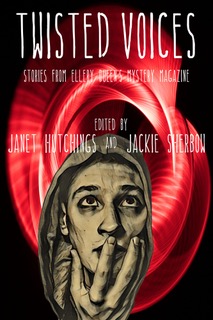
Shawn Reilly Simmons is the author of nine mystery novels and more than twenty-five published short stories, two of which have won the Agatha Award for best short story. She is also an Anthony Award-winning anthologist and the president and managing editor of Level Best Books, which she co-owns with Verena Rose. Verena Rose is Level Best’s chief financial officer and acquisitions editor. She has a particular interest in historical mysteries and has had several historical mystery stories of her own published in various anthologies. She’s also an Agatha Award-nominated editor and an Anthony Award-winning anthologist. This dynamic duo started making a mark in the field as publishers in 2015 when they took over and expanded Level Best Books, which was founded in 2003. They deserve a salute for the great work they’re doing; works published by the company have now won the Agatha, Anthony, Macavity, Derringer, and Robert L. Fish awards, and they publish everything from short fiction to historical novels to young adult fiction, true crime, and more! One of their releases this week is an anthology of stories from Ellery Queen’s Mystery Magazine entitled Twisted Voices, which I co-edited with EQMM’s senior managing editor, Jackie Sherbow. We’re so pleased to have this post from Shawn telling readers about it!  —Janet Hutchings

As a publisher, some moments stand out as true milestones. For us at Level Best Books, our latest project represents just such a pinnacle—Twisted Voices, an anthology featuring stories from some of the most renowned mystery writers in the field. This collection, born from our partnership with the prestigious Dell Magazines, is not just a book; it’s a celebration of the mystery genre and a testament to the enduring power of short-form crime fiction.

The honor of bringing together these literary luminaries under one cover cannot be overstated. Twisted Voices: Stories from Ellery Queen’s Mystery Magazine pushes the boundaries of perception and storytelling. It features an impressive lineup of award-winning authors, including Gary Phillips, Joyce Carol Oates, Martin Edwards, Ian Rankin, and S.J. Rozan, among others.

What sets this collection apart is its unique focus on narrators who are integral to the mystery itself. From capers to noir tales, each story presents a narrator whose particular way of thinking affects the storytelling in unexpected ways. This approach goes far beyond the simple concept of an unreliable narrator and challenges readers to question their own perceptions and biases as they navigate each tale.

This anthology has been expertly curated by Janet Hutchings and Jackie Sherbow, two highly respected editors in the short fiction writing community. Their involvement adds another layer of prestige to this project, as they bring their deep understanding of the genre and a keen eye for quality storytelling as well as the selection and arrangement of these stories. When Janet and Jackie reached out to us to discuss a potential collaboration, we were over the moon, having been fans of theirs for so long. The wealth of talent they’ve nurtured over the years is on full display in this anthology.

For the team at Level Best Books, bringing this collection to life has been a labor of love. Each story selected represents the best of what mystery fiction can offer: ingenious plots, compelling characters, and that satisfying “aha!” moment that keeps readers coming back for more. The diversity of voices and styles in this anthology spans the full spectrum of the genre, from crooks and kids to private eyes and struggling artists.

But beyond the stories themselves, what makes this project truly special is the opportunity it provides for readers. In a single volume, mystery enthusiasts can experience the work of multiple masters of the craft, each pushing the boundaries of narrative perspective in crime and suspense fiction.

For aspiring writers, this anthology serves as both inspiration and a masterclass in short mystery fiction. Studying how these accomplished authors construct their stories, develop their characters, and build suspense within the confines of the short story format—all while playing with the concept of narrative reliability—is an education in itself.

We hope Twisted Voices will find a cherished place on bookshelves and nightstands, ready to provide thrills and puzzles whenever the mood for a good mystery strikes.

Publishing this anthology is more than just a feather in our cap—it’s a dream realized. It represents what we at Level Best Books strive to achieve: bringing outstanding mystery fiction to eager readers. We’re deeply grateful to Dell Magazines for the collaboration, to the authors for their brilliant contributions, to Janet Hutchings and Jackie Sherbow for their expert editing and support, and to the readers who make projects like this possible.

As this anthology makes its way into the hands of mystery lovers everywhere, we hope it will be received as what it truly is—a love letter to the mystery genre and a tribute to the incredible writers who keep us all guessing, page after thrilling page.


Shawn Reilly Simmons is the Managing Editor at Level Best Books.

www.LevelBestBooks.us

Posted in Uncategorized | Leave a comment

Streaming Thrills: Introducing Rabia Chaudry Presents The Mystery Hour with Alfred Hitchcock’s and Ellery Queen’s Mystery Magazines (by Jackie Sherbow)

One of the most exciting developments of 2024 at Dell Magazines is the launch of a new podcast series entitled The Mystery Hour, presented by popular podcaster Rabia Chaudry and featuring stories from EQMM and AHMM. The readings are flawless and engrossing, and each episode ends with Rabia Chaudry sharing, briefly, her knowledge of some true-crime cases that the fictional story brings to mind. The series launched yesterday with “A Small Mercy” by Alice Hatcher, first published in EQMM’s November/December 2023 issue. Listen to this first episode and I guarantee you’ll be hooked. The following post by EQMM and AHMM Senior Managing Editor Jackie Sherbow reveals how the series came about. Jackie was instrumental in finding, managing, and shaping the project!  —Janet Hutchings

My friends think I’m slightly unhinged: I’m one of those people who are always listening to a true-crime podcast, even when falling asleep. This, after editing mystery stories all day. So when author and friend of EQMM Sarah Weinman reached out to put me in touch with acclaimed podcaster Rabia Chaudry, I was a bit starstruck, and certainly delighted to hear that she has been a lifelong fan of Ellery Queen’s Mystery Magazine and Alfred Hitchcock’s Mystery Magazine. And she had a proposal for us.

Rabia is an attorney, advocate, and author of the New York Times best-selling book Adnan’s Story as well as the executive producer of a four-part HBO documentary series The Case Against Adnan Syed. Rabia is also coproducer and cohost of the podcasts The 45th, The Hidden Djinn, Nighty Night, and Undisclosed. For those unfamiliar with the Adnan Syed case, you may remember it from the groundbreaking 2014 podcast Serial. Rabia and the Undisclosed team were a major force in reversing the subsequent public and legal biases against Adnan Syed, leading to his eventual evidence-based exoneration. Several of her other podcasts feature her as a narrative fiction storyteller.

And she was e-mailing me. And to my surprise she was a bit starstruck too, due to her admiration of the magazines. She wanted to do a storytelling podcast with stories from the Dell mystery magazines. We were thrilled.

Many of you know that we have had a podcast series for many years; many of you have even contributed your stories to it. Our podcasts had a DIY charm: None of us are audio engineers, and we worked with free software and amateur recording devices (often, these days, our smartphones). Here was a chance to have a professionally produced podcast on a podcasting network with all the networks and support that entails.

It has been an enlightening learning process for us at Dell, but thanks to the help of our web, digital, marketing, and contracts departments (Abigail Browning, Carol Demont, Joy Brienza, and Darcy Bearman)‑plus Rabia and the folks at Rhapsody Voices‑we the editors of EQMM and AHMM were able to navigate through this process. Thanks to Rabia’s experience in the podcasting realm, The Mystery Hour has been taken aboard by the leading content network Rhapsody Voices.

We’re proud to share that the atmospheric and suspenseful pilot episode came out yesterday and that new episodes will come out on subsequent Wednesdays. Each story is one of the high-quality tales readers love from the pages of EQMM and AHMM.

You’ll be able to subscribe to The Mystery Hour wherever you get your podcasts, and you’ll also find updates on the “Podcasts” section of our website (please see links to Apple and Spotify as well as our podcast page below). We hope you’ll find these suspenseful and intriguing stories, read with panache by Rabia, riveting midweek listening. (Just be careful if you’re listening before bed!)

Apple https://podcasts.apple.com/us/podcast/the-mystery-hour/id1756397106

Spotify https://open.spotify.com/show/2I59pUzrU1ZrXUCGXMkrkD?si=4db130e923dd42ac

Podcasts https://www.elleryqueenmysterymagazine.com/the-crime-scene/podcasts/

Posted in Uncategorized | Leave a comment

People Are a Mystery: The Intellectual Satisfaction of Suspense (by Kai Lovelace)

In EQMM’s upcoming September/October issue (on sale August 13), talented new writer Kai Lovelace has a story in the Department of First Stories. Entitled “Head Start,” it’s a scary Halloween tale of the psychological suspense variety. When he isn’t writing fiction, Kai works at an independent bookstore and as an entertainment journalist. He tell us that he’s been attracted to the macabre, especially the work of Edgar Allan Poe, from an early age, and when he decided to start writing seriously he found that many of his ideas fit into our genre due to the complex psychological exploration involved in many mysteries. That aspect of the mystery is his theme for this post.  —Janet Hutchings

On some level, all narrative storytelling utilizes an element of dramatic thrust based on tension and release. Whether it’s Stephen King or Sally Rooney, the question remains: what’s going to happen? Suspense and crime fiction taps into a heightened form of this dynamic by accessing the shadow realm of the psyche—characters who embrace moral relativism and indulge in criminal behavior raise the stakes and create catharsis for the reader. Escapism can simultaneously provide relief from life’s horrors while grappling with them allegorically, as this form of storytelling mirrors the basic way our brains function in daily life, piecing together information and anxiously awaiting various outcomes, ideally learning something in the process.

Genre itself is an elusive term, sometimes tapping more into commercial than creative spheres, yet the specific pleasures from experiencing the archetypes of a beloved milieu (well-executed, that is, saving them from cliche) can be acutely joyous, and blending genres sometimes risks tonal imbalance. Suspense is one of the most enduring and malleable forms of storytelling as it contains that basic structural element of narrative momentum translated an infinite number of ways, engaging the reader in carefully balanced mental exercises. At its heart is an exploration of personality and what makes us human.

Traditional whodunits literalize this concept and use unique characterization (usually of a professional or amateur sleuth) as a vessel for exploring the plot, so that as the strands of a narrative come together to reveal the perpetrator of a crime, we are also privy to the specific world view of an eccentric personality. However, those specifics are often only as interesting as the lens through which they are depicted. The labyrinthine plots of Raymond Chandler play second fiddle to Philip Marlowe’s running commentary on the world around him, his cynical heroism exposing all manner of personal and societal hypocrisies via exquisite prose. Chandler pushes the boundaries of formalism within the whodunnit, often creating situations so complex as to ironically approach a greater realism than other tightly-constructed stories wrapped up more cogently (the unresolved fate of a certain chauffeur in The Big Sleep is a dangling thread apparently not even Chandler knew the answer to). But even in the case of more old-school practitioners such as Agatha Christie or Georges Simenon, the plot details of each book often grow hazy in memory while the personality of the protagonists remains palpably sharp, emphasizing the paramount importance of character.

Considering story-tellers who utilize suspense in subtler, abstract ways illuminates the wide-ranging versatility of the genre. Chester Himes’ Harlem Detectives series creates dramatic irony by blending elements of traditional mysteries with action and social commentary. As his two protagonists pursue cases, intercut scenes often reveal events and create new plot wrinkles many steps ahead of his recurring detectives, whose single-minded brutality is neither endorsed nor condemned. Len Deighton’s spy novels tend to rely on a detached, heady form of suspense, with plots so confusingly opaque that his characters rarely even know exactly what’s going on until the very end, if ever. This vicarious effect mirrors the reader’s perception and increases psychological realism.

These more abstract techniques are essentially character-based. Clues are dropped in the form of actions, memories, quirks, lines of dialogue, which covertly point towards decisions characters will make, setting up future payoffs organically and gradually forming a blurry picture that will ultimately come into focus, ideally as late into the narrative as possible. With an engaging story short-circuiting the analytical part of the brain and enough balls in the air, so to speak, it’s virtually impossible to anticipate where things are going and much easier to go with the flow and allow yourself to be surprised. In this way, the formula never stales despite untold iterations of similar story elements.  

Many novels of Vladimir Nabokov, not typically associated with crime or suspense fiction, nevertheless hinge on a criminal act. Murder is the linchpin which provides underlying structure to the plots of Lolita, Laughter in the Dark, and Despair, the latter of which is a particularly interesting example of a genre-bending suspense novel. Much like Lolita, the protagonist is a uniquely delusional misfit whose sociopathic tendencies compel him to carry out a sinister plot for personal gain, and Nabokov takes advantage of the first person format by creating a false sense of security and empathy before pulling the rug out from beneath us with a painfully hilarious twist towards the end. It’s hiding in plain sight for the entire story, but by exploiting the readers’ blindspots, comes as much a surprise to us as to the pathetically endearing anti-hero, and completes our understanding of his character. Unreliable narrators are another added complexity, as we are simultaneously viewing the world from their eyes and from our own, hopefully more rational, perspectives, creating uneasy dissonance. This is also a technique cleverly employed by Donald Westlake, Charles Willeford, and Lawrence Block in various misanthropic first-person narratives.

Flannery O’Connor is another literary giant whose work hinges on subtle psychological suspense. Her classic story “A Good Man Is Hard To Find” is a clear antecedent to everything from Psycho to The Texas Chainsaw Massacre, wherein ordinary, flawed, supposedly “civilized” people stray from the beaten path and encounter dangerous outsiders who embody the id. I would argue that O’Connor’s Catholic themes are not at odds with this interpretation. 

In most of Elmore Leonard’s novels, information is never withheld from the audience. The suspense generates from wondering what decisions the characters will come to and how their personalities will clash or mesh to result in unexpected alliances, betrayals, and reverses of fortune. No traditional storyteller could get away with his feints, anti-climaxes, and dropped threads without acknowledging that the entire plot itself is one big MacGuffin, an excuse to explore the personalities of his central cast. Yet the effect of his stories is almost always satisfying because of the destinations of his character arcs. In The Switch, afrustrated housewifefinds personal liberation through total abandonment of her law-abiding domestic life, an outcome slowly brewing from the first page. Bandits depicts a ragtag group of petty, borderline incompetent criminals in New Orleans ultimately devoting themselves to humanitarian causes, serving as the pay-off to a complex robbery gone wrong.

Roald Dahl’s adult-oriented short fiction also explores twisted psychologies by layering subtle clues, testing and prodding his characters until their neuroses explode in surprising, disturbing ways. Although there is no mystery in such stories as “The Way Up To Heaven” and “Georgy Peorgy,” there is still tremendous suspense generated in the way he tightens the screws on his characters until they snap, arriving at destinations which logically conclude their journeys in ironic, tragic fashion. In “The Landlady,” the dark fate of the protagonist becomes clear to the reader, but never to the character himself, equally hilarious and creepy.

At the farther end of this spectrum, Paul Auster’s New York Trilogy and James Sallis’ Lew Griffin series knowingly embrace the idea of mystery as a purely abstract exploration of identity and eschew literal plot entirely, a risky endeavor that sometimes pays off enormously. 

In any case, the engine driving these explorations of the dark side is always character, and so suspense and crime fiction’s enduring and versatile appeal is due to the way it grapples with the ultimate intellectual puzzle, the mystery of the human mind.

Posted in Uncategorized | Leave a comment

Hot Off The Press – 43 Years Later! First Female MWA President Speaks With Edgar Winner John McAleer (by Andrew McAleer)

Andrew McAleer is the author of 101 Habits of Highly Successful Novelists and coeditor (with Gay Toltl Kinman) of Edgar & Shamus Go Golden. He recently completed two books featuring his father John McAleer’s Golden Age detective Henry von Stray, which will be published in 2025 and 2026: Look for A Casebook of Crime, Volume 1 January 2025 and Volume 2 January 2026, from Level Best Books. Also coming up soon are two more anthologies he’s coedited with Gay Totl Kinman: Shamus & Anthony Commit Capers (Level Best, September 2024) and Agatha & Derringer Get Cozy (Down & Out Books, November 2024).  A frequent contributor of posts to this site, Andrew shares with us this time some excerpts of his father’s May 12, 1981 interview with the first woman to serve as president of the Mystery Writers of America, Helen McCloy.   —Janet Hutchings

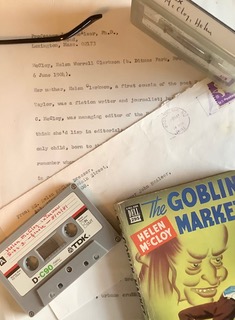
: John McAleer’s original biographical notes and cassette recordings of Helen McCloy. (Photo Credit: William Kyle Auterio)

Not long ago I decided to tackle the job of sorting through my father John McAleer’s old black cassette tape box. Among its contents I found two cassettes that immediately piqued my interest. Written on their labels in my father’s distinctive handwriting were the words: “Helen McCloy interview 5/12/81.” Born on June 6, 1904, Ms. McCloy would have been nearly 77 at the time. She died on December 1, 1994.

In addition to listening to the fascinating interview while converting the tapes to digital format, I thought it would be interesting to know where the interview took place. After a thorough investigation of my father’s records, I located his “Helen McCloy” file complete with her original correspondence to him. Poring over the documents with extraordinary interest, I quickly deduced the recordings occurred at her Boston residence located on Bowdoin Street.

I had heard my father often talk about his admiration for Ms. McCloy and her literary works. In addition to having a mutual love of crime fiction they served together on the boards of the Boston Authors Club and the New England Chapter of the Mystery Writers of America—a chapter she helped found in 1971. My father held that Ms. McCloy was one of the more important contributors to the modern detective story and he was not alone in his assessment.

When discussing the importance of good writing and proper structure, Ross Macdonald ranked Ms. McCloy among Elizabeth Saxony-Holding and Charlotte Armstrong. (Murderess Ink).  Publishers Crippen & Landru, a publishing house of experts who specialize in preserving the best of classic crime literature—Edward D. Hoch and Ellery Queen among them—credit Ms. McCloy as, “[O]ne of the finest authors of the Golden Age of Detective Stories.”

Moreover, Ms. McCloy was more than a fine author—she was a groundbreaker whose literary influence exists today. In her first book, Dance of Death (1938), she introduced the idea of a psycho-analytic detective in her character Dr. Basil Willing, a psychiatrist. According to her, no such detective of this kind existed in America. A series character, Willing appears in thirteen novels and ten short stories. As part of Crippen and Landru’s  Lost Classics series, all ten Dr. Willing short stories now appear in one volume, The Pleasant Assassin.

Through Dr. Willing, Ms. McCloy introduced a new crime-fighting proposition: “Every criminal leaves psychic fingerprints. And he can’t wear gloves to hide them.” A noteworthy and innovative corollary to Locard’s principle: Contact between physical items results in an exchange of material.

Ms. McCloy’s literary contributions to the genre didn’t go unrecognized during her lifetime. In 1950, she became the first woman to serve as president of the Mystery Writers of America.  In 1954, she won the Edgar Allan Poe Award for Outstanding Mystery Criticism. In 1980, her suspense novel Burn This (her final Willing novel) won the Nero Wolfe Award. In 1982, she was the guest of honor at Bouchercon and, in 1990, she received the MWA’s highest honor, its Grand Master Award. 

To hear Helen McCloy’s voice—a literary legend of the classic, fairplay puzzle mystery, who made her debut during the Golden Age of Detection, discuss her craft and life with my father seemed surreal. Miraculous, really, when you consider the fragile cassettes survived more than four-decades of abandonment.

So miraculous, in fact, that it’s worthy of sharing interview excerpts for the first time anywhere exclusively with Ellery Queen’s Something is Going to Happen followers.       

* * *

McAleer: Where was your birthplace, New York City?

McCloy: Yes, but actually I was born in Ditmas Park, which was part of Brooklyn.

McAleer: When you were still in school, did you look forward to a career as a writer?

McCloy: Yes, I can’t remember when I didn’t want to write.

McAleer: You were about 34 years old when you published your first book, Dance of Death in 1938, but had you been writing before then?

McCloy: Oh, yes all during the 1920s and 1930s in Paris. I had written a book, but I hadn’t got it published, I was such an amateur at the time. I have a copy of it some place if I can ever find it. I sent it to every publisher in New York and London and they all rejected it. And every time it came back I rewrote it because I thought there must be something wrong with it, so I must have rewritten it about forty times. It still didn’t get published.

McAleer: What was the title of it?

McCloy: Largent’s Luck.

McAleer: Did you ever study psychology or psychiatry formally?

McCloy: No, but I did a great deal of reading while I was in Paris and I belonged to the Institute of Metapsychique, which was like a society of psychologists and I would attend lectures.

McAleer: R. Austin Freeman created a medico-legal detective Dr. John Thorndyke, had you read much of Freeman and, if so, did you like the Dr. Thorndyke character?

McCloy: I read a lot of Dr. Thorndyke in the 1930s. I read everything—all the detective stories I could in the 30s.

McAleer: Did Freeman influence your creation of psycho-analytic detective Dr. Basil Willing?


McCloy: No. Basil Willing is a psychiatrist because at that time, I don’t think there was a psychiatrist detective. There was one English psychiatrist detective that wasn’t published much in this country. I wanted a detective who was different. There had been no psycho-analytic detective. Willing is eclectic and was new at the time. (1938). What really made psychiatry respectable is when returning soldiers from World War I came home and were helped by psychiatry—this is what really made Freud’s reputation. (Compiler’s note: English physician and author Anthony Wynne introduced amateur detective Eustace Hailey, a doctor of mental diseases in 1925, but McCloy borrowed nothing. [JJM notes].) 

McAleer: Are there any writers whom you admire through the years—other detective writers whom you look upon as influences on your work?

McCloy: Well, there is just one I greatly admire and who is unfashionable today even with the French people…but he’ll come back one of these days…that’s [Honoré de] Balzac. He was not always unfashionable because Henry James said he was the matrix of modern literature. Actually there is not a trend in modern literature—except maybe in [James] Joyce’s works—that is not anticipated in Balzac—even the detective story.

McAleer: Rex Stout and Theodore Dreiser were influenced by Balzac. What are your thoughts about Jane Austen?

McCloy: Oh, I love Jane Austen and among mystery writers there is one American woman I particularly enjoy and that’s Elizabeth Daly. My favorite.

McAleer: I have all her novels. Daly didn’t start publishing until she was in her 60s, writing all her novels during a period in life when most people think they’ve had it!

McCloy: Daly has a great literary style and taste and understanding of New York City.

McAleer: Do you gravitate more toward the British mystery than American?


McCloy: I do. They’re the type I like to read because I find them more traditional. Today there’s so much more violence than detection.

McAleer: What do you consider to be your best book?

McCloy: Through Glass, Darkly. Two-Thirds a Ghost I consider my second best.

(Compiler’s Notes: Both novels are part of the Willing series. McCloy chose her favorites wisely! In a recent email from Level Best Books publisher and editor Verena Rose, she shared with me her joy in recently discovering Helen McCloy. “It’s always lovely to discover a new author, but it’s doubly wonderful to discover an author such as Helen McCloy. Two-Thirds a Ghost was my introduction to her crisp writing and interesting plots. I look forward to many more reading hours in her capable hands.”

McAleer: Have you ever written any story that you might consider gothic?

McCloy: I hope not. I wrote two books, A Change of Heart and A Question of Time—which an enemy of mine might describe as gothic—because the editor at Dell said they wanted stories revolving around young girls. I don’t like to write stories around young girls—I don’t like to be told what to write. However, that was a period where gothic stories were selling a lot. (Compiler’s Note: A Question of Time was released in 1971 and A Change of Heart in 1973.)

* * *

In Twentieth Century Crime and Mystery Writers, biographer Nancy C. Joyner observed, “Surprisingly and regrettably, critics have tended to neglect Helen McCloy’s work, perhaps because it sometimes is unfashionably solemn. Yet the variety and the urbane erudition demonstrated in her short stories and novels make them an undisputed and valuable contribution to American detective fiction.”

Critics have neglected McCloy and they oughtn’t to have. Especially when we consider her novel form of  “psychological-suspense approach” in her works. (Encyclopedia Mysteriosa).

Fortunately, Helen McCloy’s literary fingerprints are still on the crime scene for all to observe . . . with extraordinary interest. 

Posted in Uncategorized | Leave a comment

The Wit and Widsom of Barnaby Jones (by Kevin Mims)

Essayist and short story writer Kevin Mims has contributed posts to this site on a number of different topics. This time he offers some thoughts about a classic, but sometimes overlooked,  TV crime drama. You may want to revisit the series after reading this if you saw it years ago—or tune in for the first time if you’re too young to have watched it when it aired.   —Janet Hutchings

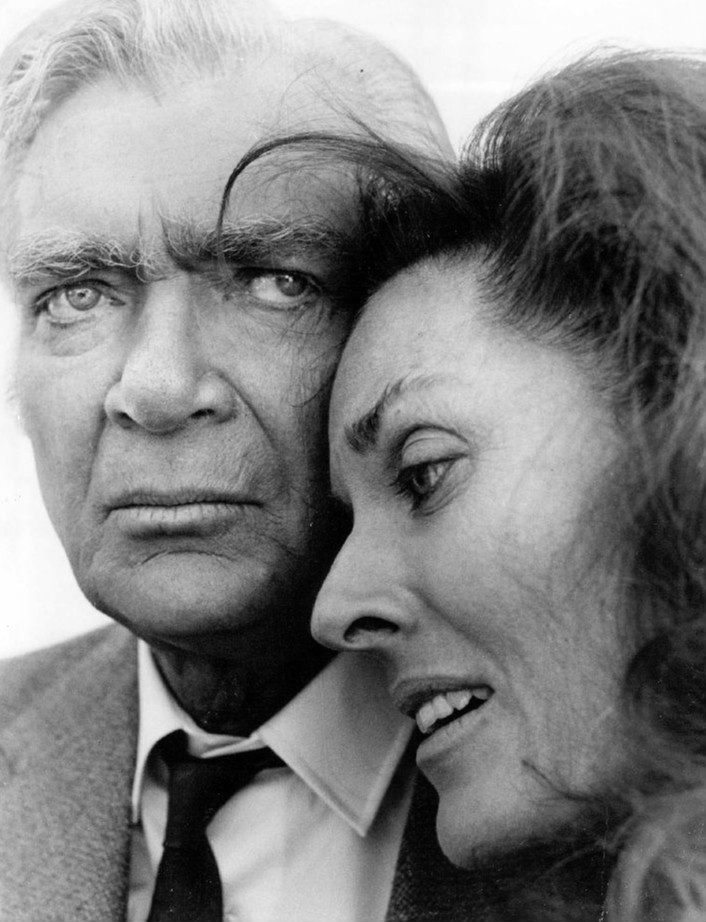
CBS Television, Public domain, via Wikimedia Commons

When people discuss the prestige TV crime dramas of the 1970s, they tend to mention Columbo, The Rockford Files, Kojak, The Streets of San Francisco, Police Story, McCloud, and McMillan and Wife. Sometimes they also throw in Starsky and Hutch, Baretta, and Angie Dickinson’s groundbreaking Police Woman. One show that doesn’t get enough attention from genre aficionados is Barnaby Jones, a Quinn Martin production that starred Buddy Ebsen and Lee Meriwether and ran on CBS TV from 1973 to 1980, for a total of 178 episodes. The Rockford Files, one of the most highly regarded TV detective shows of all time, notched a total of 123 episodes (later augmented by 8 TV movies scattered over five years in the 1990s). Likewise, Peter Falk’s iconic Columbo character appeared in only 45 canonical episodes of that program between 1971 and 1978. After a decade-long hiatus the character was resurrected, less successfully, for an additional 24 episodes, which aired on ABC TV between 1989 and 2003. Even among Quinn Martin productions, Barnaby Jones was exceptional. The Streets of San Francisco and Cannon, both Quinn Martin productions of the 1970s, ran for a total of 121 and 122 episodes respectively.

Of course, longevity alone isn’t always a sign of a high-quality TV series. Some mediocre programs seem to last forever. And some very good programs get cancelled far too prematurely. Crime novelist Max Allen Collins has called City of Angels, starring Wayne Rogers, “the best private eye series ever.” It debuted in February of 1976 and was cancelled in May, after a run of just 13 episodes. The fact that Barnaby Jones ran for eight seasons tells us that it was popular but not that it was necessarily a good show.

The series came along at a time when network television was focused on a 1970s version of what we nowadays call “inclusion.” These days, inclusion, when applied to television, generally refers to an effort to highlight stories featuring racial minorities, LGBTQ people, women, and others whose stories tended, in the past, to be overshadowed by the stories of heroic white, heterosexual males. In the late 1960s and the 1970s, TV networks made an effort to give their viewers heroes who weren’t necessarily ideal physical specimens (though they were all still very much white, heterosexual, and male). Thus, we got Ironside (starring Raymond Burr), a show about a San Francisco police chief who is confined to a wheelchair. We also got Longstreet (starring James Franciscus), about a blind New Orleans insurance investigator. We got Baretta (starring 5’ 4” Robert Blake) about a short detective. We got Cannon (starring William Conrad), which featured an obese private detective. And we got Barnaby Jones, which was about a senior-citizen detective. Buddy Ebsen was a few months shy of 65 when the program debuted in January of 1973. The final episode aired on April 3, 1980, one day after Ebsen’s 72nd birthday.

The series began with a crossover episode that also featured William Conrad’s Cannon character. In the opening episode, Barnaby Jones is a retired private eye (and a one-time college science teacher). He comes out of retirement to investigate the murder of his son, Hal, who was also a private eye and a colleague of Frank Cannon’s. Together, Barnaby and Cannon bring Hal’s killer to justice. At the end of the episode, Barnaby decides that he wants to become a full-time detective again. He hires his widowed daughter-in-law, Betty (played by Lee Meriwether), to run his office.

Many of the most successful TV crime series of the 1970s employed a gimmick or two that set them apart from the rest. Columbo, for instance, had numerous such gimmicks. Foremost among these was the format. Each episode began with a murder being committed. The viewer always knew who the killer was. Columbo wasn’t a whodunit. The pleasure came from watching Columbo develop a rapport with his chief suspect as he slowly reeled him in. What set The Rockford Files apart from other detective shows was its humor. Columbo contained plenty of humor, but it was light on violence and action, so the humor didn’t seem out of place. The Rockford Files, on the other hand, had plenty of car chases, shootouts, fistfights, and other hallmarks of the violent TV detective show. The humor in Rockford seemed more subversive than the humor in Columbo, because Rockford often employed it just as he was about to be beaten to a pulp by some thug, or as he was being led off in handcuffs by some overzealous police officer. Police Woman was distinguished by the fact that its tough-guy cop was actually a female police detective. Kojak tried to distinguish itself from the pack by bringing gritty, realistic detail to its stories of crime on the streets of New York City. By comparison with these programs Barnaby Jones was fairly conventional. The writers of the show didn’t emphasize the character’s age much, and Barnaby regularly engaged in the kind of action-hero antics—car chases, shoot-outs, even karate chops—that were commonplace on TV crime dramas of the era. One thing that did distinguished Barnaby from the other detectives was his interest in forensics. His office was equipped with a laboratory where he regularly examined things—blood, dirt, fabrics, paint, etc.—under a microscope. He also had a darkroom, where he could develop his own photographs. He was ahead of the curve here. By the end of the twentieth century, forensics would be all the rage in crime dramas, not just on television but also on the big screen and in many a series of crime novels. But when Barnaby Jones debuted back in 1973, forensics generally took a back seat to shoot-outs and fisticuffs.

Columbo was noteworthy for the high quality of its guest stars. But many of Columbo’s most memorable guest stars also guest starred on Barnaby Jones, including Jack Cassidy, Ross Martin, Susan Clark, Roddy McDowell, Patrick O’Neal, Ida Lupino, and William Shatner. What’s more, the writers of Barnaby Jones weren’t required to employ any specific storytelling formula. Sometimes you knew from the first act who the killer was and how he did it. Sometimes these things were not revealed until the final act. Thus, when they wanted to, the writers of Barnaby Jones were free to employ the Columbo formula. Many Barnaby Jones episodes begin by showing us exactly who the killer is and how he committed the crime. Then, like Columbo, Barnaby shows up and begins slowly unraveling the villain’s perfect crime. By the time Barnaby Jones debuted, Columbo was the most highly-regarded crime show on TV, so it makes sense that Quinn Martin and company might have wanted to borrow a few pages from the Columbo playbook now and then.

It is a tribute to Ebsen’s acting skills that he was able to make a success of Barnaby Jones. From 1962 to 1971, he starred as Jed Clampett in The Beverly Hillbillies, one of the most commercially successful TV shows of its era. Jed Clampett was a hick from Tennessee who somehow managed to make a fortune, which allowed him to move to Beverly Hills, California, where he thrived as a fish-out-of-water among his much more sophisticated and refined neighbors. Very few TV actors of the era were able to escape being typecast after portraying an iconic character in a sitcom. None of the actors in Gilligan’s Island went on to break out of their comic mold. Don Adams, Barbara Felton, and Ed Platt, who starred in Get Smart, all saw their careers peter out after the show went off the air. Things got so bad for Ed Platt that he committed suicide in 1974 at the age of 58, having failed to resume the film career that he left in order to take on a role in a sitcom. Shrewdly, the creators of Barnaby Jones had Ebsen’s character often pretending to be just another down-home country boy like Jed Clampett. Ebsen’s Jones liked to assume an “aw shucks” manner in order to lull his prey into a false sense of intellectual superiority over him. Barnaby Jones claims (believably) to have been born and raised in North Carolina, and Ebsen gives the character a comfortably folksy geniality most of the time.

It must be conceded that the mysteries on Barnaby Jones are generally not all that clever or absorbing. The killers and victims generally have very little in the way of back-story. This was true of most of the crime dramas of the era. But among the things that set the show apart from most of its competitors were the homespun pieces of wit and wisdom that Barnaby was forever spouting to his listeners. Those alone make the program worth watching. Some of these possessed the mysterious quality of a Zen koan. Some of them feel like they might have come out of Poor Richard’s Almanac. And others feel like something your grandfather might have told you when you were just young’un yourself. Here are just a few examples of the wit and wisdom of Barnaby Jones.

 “When one egg gets broken you blame the chicken. When they’re all broken you get the feeling there has been a fox in the hen house.”

“It takes more than age to make an antique.”

“When you don’t know what you’re looking for, it doesn’t hurt to look everywhere.”

“Sometimes a man has to gamble with what he hasn’t got.”

“Even a young possum knows enough to tell when it’s been treed.”

“It doesn’t take courage to commit murder, just a particular kind of cowardice.”

“The great thing about each day is that nobody has ever used it before. It’s fresh and you can do what you want with it.”

“Never try to bury the truth. It has a sneaky way of coming back to haunt you.”

“The only thing that’s a cinch is the strap on a saddle.”

“Love is the most misused four-letter word around.”

“Bananas and grapes may come in bunches but not coincidences.” All eight seasons of Barnaby Jones are currently available for streaming on Amazon Prime. My wife and I have been bingeing them for a month or so now. When the show debuted in 1973 I was fourteen years old and Barnaby Jones struck me as sort of a dull old fuddy-duddy. I couldn’t understand the program’s popularity. I preferred rugged tough guys like Mannix, and Rockford, and Baretta. Now the character seems filled with hard-won intelligence and amazing insights into human foibles and frailties. I suspect those qualities were always there in Ebsen’s performance. They’ve just been waiting for me to grow wise enough to appreciate them.

Posted in Uncategorized | 4 Comments

The Mystery of Mastery (by Jay Randall)

Jay Randall is the fiction-writing pseudonym of a freelance author who lived in Asia for many years. His articles and essays have appeared in The Atlantic, Smithsonian, Scientific American, and Newsweek, among many other publications, but his first work of fiction, the story “Midnight Caller,” has only just come out this week. It appears in our current issue (July/August 2024), in the Department of First Stories. The story centers around a student of crime fiction. Its author is obviously very well read in the genre, and in this post he talks about the most essential but most mysterious element behind compelling fiction.  —Janet Hutchings

Many years ago, I ran across a jacket blurb that was unexpectedly rich in meaning. I can’t remember the author of the book or the blurb, but the statement has stuck with me: “[the author] emerges as a second Dreiser—but a Dreiser who can write.”

What a revelation! Theodore Dreiser was an unquestioned giant of American literature, but here was confirmation of my experience of Sister Carrie and An American Tragedy—forced upon me when I ran out of reading material in the backwaters of China. Dreiser told a good story, and he understood people, but his sentences were terrible. (I remember that the fat, facing-pages translation of David Copperfield I acquired next came as a colossal relief.)

Since then, I’ve often reflected on what I’ll call the mystery of mastery. I’m guessing most readers of this blog are familiar with the feeling. You start a new book or story and it’s immediately obvious whether or not you’re in capable hands. Sometimes you think you can see why. The guttural, Anglo-saxon verbs that Wallace Stroby, with an unerring sense of rhythm, employs to build the vivid action sequences of The Barbed Wire Kiss, for example. Or the high-octane, rage-fueled brio that Newton Thornburg—a mostly forgotten author I like so well I gave him a cameo in “The Midnight Caller”—brings to Cutter and Bone. Then you see the same thing somewhere else and it just feels clumsy or hackneyed. Maybe it’s your mood.

The greatest mystery, to me, is the mastery of Michael Connelly. Like everyone else, I love his books, whether it’s Harry Bosch or Mickey Haller or Renée Ballard, for their razor-sharp plotting. But his sentences also give me that same feeling of surety I experienced when I cracked open David Copperfield after slogging through Sister Carrie, and I’ve never been able to pinpoint why. For the most part, Connelly purposely eschews “style,” or even its more workmanlike cousin, “voice.” His sentences are the kind you read in a news magazine—albeit a good one, from the days when everybody still read magazines—and yet they’re somehow better than that.

It’s authority, I used to think, his background on the police beat. That and the fact that he never puts a foot wrong. (You’ll never find a clanger of a sentence in one of Connelly’s books.) But then I delved into a few novels by other folks with even stronger claims to their subject, district attorneys and FBI agents turned author and so forth, and it was immediately obvious that real life expertise is good marketing but unconnected to mastery.

Write what you know must be the most misleading and unnecessarily discouraging bit of “craft” advice ever conceived, as well as the hoariest, I’ve decided. Sure, there are masters who have experience—everybody knows that Ian Fleming and John Le Carré were spies, and George V. Higgins was an Assistant U.S. Attorney. They’re the exceptions. Most of the time, when I pick up a novel by a moonlighter or second-careerer, I find the same mistake-free, magazine prose that Connelly uses, but there’s no magic. There’s nothing wrong with it, but there’s nothing right about it, either.

I can’t lay any claim to mastery myself, of course. Too often, I find the same, frustrating lifelessness in my own efforts, and my many failures have given me a true respect for anyone who finishes a book, let alone manages to get one published. How is it that I know it when I see it, yet can’t replicate it, or, dare I hope, am only able to replicate it in tantalizing spurts?

Maybe that’s why those of us who can see it love it so much. We all know somebody who can’t tell the difference between Kem Nunn and—you’ll have to fill in the blank. I promised myself I wouldn’t call anybody out as an unredeemable Dreiser. Surely those poor souls can’t love books the way we do. Or, hell, maybe they can. Maybe they read the way I used to as a kid, when the idea of “craft” had never crossed my mind, with an innocent joy.

I hope that’s true. I’ll never know. It’s a mystery.

Posted in Uncategorized | 1 Comment

A Golden Age, Maybe . . . But The Challenge Persists (by John J. McKeon)

In 1991, John J. McKeon’s first novel, The Serpent’s Crown, was called “powerful, riveting and timely” by the New York Times Book Review. But shortly thereafter he became engrossed in a quarter-century career as a freelance business journalist. He’s recently started focusing exclusively on fiction again and has a story entitled “The Great Wolf” in EQMM’s next issue, July/August 2024 (on sale June 11). The story turns around a writer and his career, so the following post, in which the author reflects on the current state of the fiction marketplace, ties right in.   —Janet Hutchings

I belong to a small writers’ group that has been meeting for monthly dinners at Chinese restaurants for thirty-plus years now. My personal marker: After one of our first meetings we lingered to watch O.J. Simpson’s white Ford Bronco lead a police armada along the L.A. freeways. An early example of “you can’t make this stuff up.”

We also share a large beach house every fall for a week of writing and bickering. We don’t “workshop” stories or even swap manuscripts much. We’ve all published (in some cases published a lot), and our interests are pretty diverse.

What we don’t talk about, much, is writing. We’ve all done it and will do it again. Besides, we’re really not good at much else.

The one thing, though, that we do blabber on about is the evergreen topic of who’s publishing what, and where, and for how much.

That, and who/what we should read next. However stressed the publishing industry can sometimes appear, it definitely keeps readers supplied with new tales. 

I’ve often had the experience of stumbling on a mystery or thriller that I’ve enjoyed, only to find it’s number nine in a seventeen-book series . . . and counting. The number of ongoing mystery series is truly daunting, as a visit to the bookstore at almost any writers’ conference will demonstrate.

Add in the increasing ease and quality of self-publishing options, and the result can only be described as a boom.

Readers can choose among an impressive cast of detectives to find the sleuth of their dreams.

Some are good with their fists and know exactly where to get an untraceable gun. Others whip up a peerless martini and sling quips with suave abandon. Still others figure out the whole befuddling puzzle without leaving their fireside armchair.

Then there are the amateurs who solve crimes with sheer persistence and common sense, generally impeded by a dense police detective.

A would-be mystery writer could easily conclude that we live in a golden age. Online submission engines generate dozens of pubs open to our work, and it seems that new mystery magazines are springing up all the time, especially when we consider the web-only publications. Facebook regularly fills my timeline with calls for submissions and recommendations that I join groups dedicated to matching writers with outlets.

It might seem that mystery writers today have more places to publish than ever before, and anyone who isn’t getting stuff out there regularly just isn’t trying.

This outpouring of published mystery fiction is good for writers, of course.

Or is it? Raymond Chandler, as long ago as 1944, wrote in The Atlantic[i] about the “production of detective stories on so large a scale, and by writers whose immediate reward is small and whose need of critical praise is almost nil.”

He added: “The average detective story is probably no worse than the average novel, but you never see the average novel. It doesn’t get published. The average — or only slightly above average — detective story does.”

Except that today, the average novel does get published, thanks to self-publishing. The old, idealized model of selling a work to a “name” commercial publisher, having it come out in hardcover and appear on bookstore shelves, being reviewed in prominent places, and so forth . . . for the vast majority of aspiring authors, that’s just gone. In its place we have self-publishing.

Depending on what source you consult, millions of self-published books appear annually. All aimed at a public whose average member, according to recent surveys, might or might not read one book a year.

Most editors, when asked, will describe themselves as overwhelmed by their submission queues, and underwhelmed by the quality of what they’re seeing.

With so very, very much out there, why do we keep trying to add to it? In part, I suppose, we see this tsunami of the humdrum as a chance to shine by comparison. The secret is to figure out how.

As the pubs always advise, I read a lot of mystery mags, novels, and online stories, to see what kinds of things are being bought and published. And I’ve been noticing something interesting.

A striking number of the stories I have most enjoyed—the most engaging and satisfying stories—don’t really hinge at all on what we would conventionally think of as “detective work.”

In one story, a guy hides under a bed while someone is murdered in the next room. After a period of cowering, he gets up, looks around, gathers his own stuff and goes on with his day. 

In another, the narrator has a date with a woman who tells him she thinks she’s being followed by a hitman. They talk about it, they walk home, he kisses her good night. Next day it’s in the news that someone broke into the woman’s apartment and murdered her.

I found numerous other examples: Stories in which suspects, interviews, stakeouts, red herrings and other conventions of the gumshoe trade are conspicuously absent.

Yet I could not stop reading. In the first example, I felt every bit of the narrator’s dread as he “ear-witnessed” a murder. In the second, the narrator’s retrospective anguish over what he could have/should have done made for a lot of emotional impact.

Maybe all these examples show is a further blurring of the line between “mystery stories” and “stories.” Tales whose protagonists are passive recipients of information from others are hardly new. That’s how Oedipus was undone, after all, and that story has held up pretty well.

It may be true that there are only six basic plots (or seven, or nine, or 36, depending on who’s counting.) It may indeed be impossible to come up with anything really new.

So in our quest to stand out, perhaps we should concentrate on characters for a while, or setting, or writing style, or . . .

Or perhaps something completely otherworldly, ridiculous, impossible will play out on our TV screens while we sip our favorite beverage . . .

Or something. One way or the other, we’ll keep writing, largely because we can’t imagine not writing.

It’s what we do.


[i] https://www.theatlantic.com/magazine/archive/1944/12/the-simple-art-of-murder/656179/

Posted in Uncategorized | 1 Comment