“The Joy and Sorrow of Magazines” (by Maxim Jakubowski)

This is the first post for our site by Maxim Jakubowski, but he’s someone whose name is known to nearly everyone in the mystery field. He worked for many years in publishing and later owned London’s Murder One bookstore for twenty years. His first novel was published when he was sixteen and he is now the author of twenty-one novels spanning several popular-fiction genres. He’s a well-known anthologist and short story writer as well, and he’s currently the chair of the U.K. Crime Writers’ Association. His latest novel is The Piper’s Dance (2021), and he’s compiled two anthologies we’ll be watching for next year: The Perfect Crime, a landmark anthology of material from writers of color, co-edited with Vaseem Khan, and Black Is the Night a collection of new stories inspired by Cornell Woolrich. In this post he talks about his lifelong love for fiction magazines such as EQMM and his passion for collecting.—Janet Hutchings

It’s no secret that I began my life in the world of books in the SF and fantasy genre—initially as a reader, then as fanzine editor—and quickly graduated to actually writing fiction. But when I look back, I have come to the realization that I owe it all to magazines.

I must have been just about fourteen, and living in Paris, France, where my father had set up business just a couple of years following my birth in London, and had become an avid borrower at our local bibliothèque using my mother’s library card, indulging at the rate of almost a book a day in fiction galore, whether Alexandre Dumas, Victor Hugo, SF, or crime and mystery (Agatha Christie in French translation, Arsène Lupin, Fantomas, but also early Série Noire adaptations of Peter Cheyney, James Hadley Chase and Mickey Spillane), but I was fast running out of reading material and on a shopping errand came across a small store just a quarter of an hour’s walk from our home, where I spotted a small digest-size magazine on sale with a Jean-Claude Forest cover illustration (this was years before he became famous for Barbarella . . . ). The magazine was called Fiction, and this was issue 56. I would find out later that Fiction was a French version of U.S. mag The Magazine of Fantasy and Science Fiction (still going today and competing with EQMM‘s sister publications Analog and Asimov’s). The cover illustrated the lead story which turned out to be the opening instalment of a serialisation of Robert A. Heinlein’s The Door Into Summer. Notwithstanding the fact that I would have to pay for the magazine from my own pocket money, I never hesitated.

Back in my room, I devoured the magazine in record time. I was hooked. I had seldom read much in the way of short stories before and hadn’t realized how much the form suited popular fiction, creating an instant in time, a world in miniature which could encompass both plot and characterisation to the fore in what was essentially a delicate and/or clever nutshell of fiction, as opposed to full-length novels which could sprawl, digress, play a game of hall of mirrors but also took a toll on reading time. This revelation excited me, and I embarked immediately on a mission to locate the previous fifty-five issues of the magazine, which I did on a limited budget, mostly in the dusty boxes of the bouquinistes along the Seine river, alongside also discovering many of the greats of genre fiction in U.S.-imported paperback originals. It took me at least two years to complete my collection, while still being first in the queue every month when a new issue was produced. I quickly graduated to the “Readers Letters” page, eventually contributing the occasional short story myself. By then I had of course also extended my collecting to Fiction’s sister publication, Mystere Magazine, which was the French franchise of EQMM.

What was wonderful about those years is that both magazines not only published the best of current short fiction and authors in the genre, but also frequent material by well-known literary figures of the present and past who had dabbled on occasion into SF and crime. Thus my education into popular fiction began, as did my rapidly spreading collector’s habit. And, needless to say, the strong desire to emulate those writers. And as short stories seemingly wouldn’t take as long to write or as much of an emotional commitment as a novel, I much preferred practicing the form. Even now, with twenty-one novels under my belt, I still get enough of a kick and satisfaction in crafting a short story.

Skip several years and I am now working in book publishing and no longer reliant on the pocket money my father dolefully handed out—a man who fought in the Spanish Civil War, on the good/losing side, and never quite understood how his offspring became something of an intellectual, despite having been sired by a man who never read a book in his life—and my collecting vice is now a full, glorious, wonderful folly. I accumulate books with a passion, across genres and the mainstream, delving when I can afford it into first editions, signed and inscribed copies, which to my utter surprise my wife doesn’t even mind. And my children, and later even grandchildren also become avid readers, which I now see as one of my greatest achievements; not that any of them would ever dare read my own books, for fear of embarrassment!

Fiction‘s long run came to an end several decades ago, but I have moved on to EQMM, which I began acquiring monthly from the 1980s and of which I promptly began hunting down back issues, alongside its sister magazines Hitchcock, Asimov’s, and Analog. (I have a complete run of Asimov‘s and Analog going back to when is was Astounding SF in the 1940s.) On a trip to one of my favourite cities, New Orleans, at a time when it still hosted a couple of handfuls of used-book emporiums full of dusty shelves and nooks and crannies, I venture into a dark and crowded antique store on Royal Street which had a few interesting Dell and Pyramid 1950s paperback originals in their window display between prints and garish vintage clothing. (A tip from collectors past: tourist cities are always good hunting grounds for old books and magazines; something about visitors invariably abandoning books in hotel rooms, I guess.) Inside, I dig out ten or so titles (mostly Rex Stout and Dell Shannon book-club editions, for which I always have a demand for in the used-book section at Murder One, my London specialty bookstore), and I am making arrangements to have them shipped to our New York shipping agent when the store owner suggests I might be interested in some old stuff he keeps at the back. He leads me to a musty storage area with cardboard boxes piled high.

By nature a pessimist, I open one of them with no great expectation only to find the carton filled to the brim with truly old issues of EQMM in rather excellent condition. I try and keep a straight face, not wanting to see the asking price rise in line with my visible interest, and move to the second and then third box. I quickly note that the actual first issue of the magazine is part of the lot as well as the very early, eminently collectable, issue featuring legendary pinup Bettie Page on the cover. My temperature rises. It turns out I am in the presence of a run of the magazine’s first twelve years, with not an issue missing. I nervously ask the store’s owner for his asking price—which turns out to be rather modest, and I have no need to negotiate. The deal is done. The shipping costs back to the U.K. will probably be as high as that of the magazines, but I am in seventh heaven.

I move on to Beckham’s which has always been a fertile territory for more used books, but the decision has already been made: the magazines will go straight onto my shelves at home and not go on sale in the bookshop. Being sole owner of Murder One has its privileges!

This was not quite the end of the story, as UPS or whichever carrier the store used then took nearly four months to transport my acquisitions from New Orleans to Queens, and I had by then drawn a line on the affair, assuming the magazines were cursed and lost in transit!

At any rate, this is how I am now the proud owner (do I hear you say hoarder?) of a complete collection of Ellery Queen’s Mystery Magazine from its launch to the present day. In fact when I integrated the arrivals onto my shelves, there were only a couple of duplicates (which Murder One inherited and sold at an unholy profit . . .).

But you know how it goes with collectors: you never stop, even when the saner part of your mind insists and reminds you daily that it’s all a gentle kind of madness. Because it’s not just the lines and lines on the bookshelves of just EQMM, but also its sister magazines, rival publications (oh, how I treasure my runs of Black Mask, Manhunt, Dime Detective Monthly, and sundry pulps), and—reserve my place in the asylum right now—similar magazines in French. And that’s not forgetting thousands of film magazines that retrace the history of the cinema in an assortment of languages. Did I forget to mention I also collect music magazines and have a full run of Rolling Stone, Creem, Spin, and others. Maybe I shouldn’t mention the LPs, CDs and DVDs . . . should I? Yes, I do have a patient wife. Streaming or digital versions, do I hear you say? I’m deaf. Digital just cannot compete in my affections with the feel and smell of paper and print.

And of course I’ve made no mention of over 30,000 books at the last count (but is it my fault that publishers send me twenty or so new books a month to review or judge for the CWA Daggers?). So, yes, we have a large house, and have extended a number of times, and even built two storage buildings at the back of the garden, but still the collecting habit persists. But what compares with the pleasure of pulling an old magazine out of its sequence and dipping into it, reading again a story at random, an article, a review which will point you to an author you had hitherto been mostly unaware of? Books and magazines are my life, and I would never want it to be any different.

You might justly point out that I can’t take them with me, and that my children wouldn’t know what to do with this accumulation of material, but suitable arrangements have been made for the collection’s destinations when I must inevitably pass; they have, in my will, been promised to two university archives that specialize in popular culture.

Magazines (and books)? They made me what I am. And I proudly stand before you like on an initial visit to Alcoholics Anonymous and say, “My name is Maxim and I am a collector.”

Posted in Books, History, Magazine, Writers | Tagged , , , , , , , , , , , , | 5 Comments

“A Semiforgotten Masterpiece of Short Fiction” (by Kevin Mims)

With EQMM’s 80th anniversary issue (September/October 2021) on sale now, this post, which begins by marking another significant anniversary in crime fiction, seems apt. It also calls attention to an important collection of short fiction of which I’d been unaware. Short-story writer and essayist Kevin Mims is a frequent contributor to this site.—Janet Hutchings

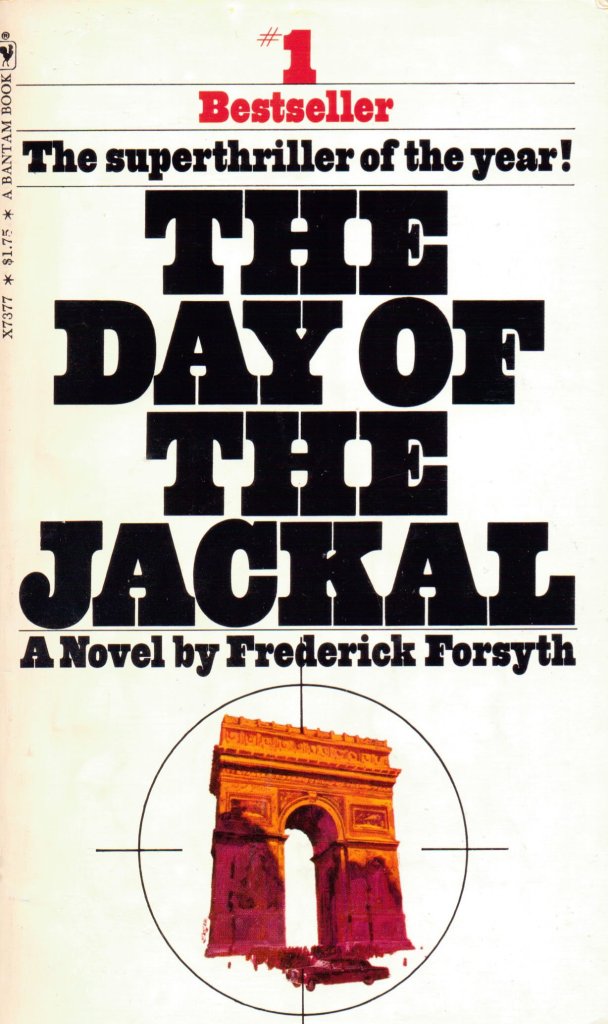
Fifty years ago, in August of 1971, Viking Press published Frederick Forsyth’s The Day of the Jackal (Hutchinson & Co. had published it a few months earlier in the U.K.). A fictional account of an attempt to assassinate French President Charles De Gaulle, The Day of the Jackal is one of the most influential crime novels of all time. I was planning to write a fifty-year retrospective of the novel but, foolishly as it turns out, cancelled that plan because I figured mine would be just one of dozens of tributes to this classic piece of fiction. I assumed that the New York Times and other media organizations would write about the book and even conduct an interview with Forsyth to accompany the main story. Curiously, this didn’t happen. Blame COVID-19, blame the busy news cycle—blame anyone you want. The sad fact is that a book that had an impact on popular fiction somewhat similar to the impact that Sgt. Pepper’s Lonely Hearts Club Band had on popular music was allowed to pass its fiftieth anniversary largely under the radar.

Jackal’s influence was everywhere in the 1970s and in just about every subsequent decade as well. Prior to Jackal, most crime writers didn’t bother to make themselves experts on guns. The weapons their fictional killers used were generally just described as pistols or revolvers or rifles or Derringers or Smith & Wessons—you name it. But Forsyth’s assassin needed a special weapon, a rifle that would be accurate at long range but which could be broken down into small parts and shipped in a suitcase that no one would suspect contained a rifle. The Day of the Jackal goes into great detail about how the gun is designed and bored and assembled and stabilized and so forth. Later, this kind of almost fetishistic detail about guns would become more commonplace, but it was fairly rare prior to The Day of the Jackal.

Other details from Forsyth’s novel were borrowed countless times in other books. One such detail involves the acquisition of a fake identity and has come to be known as TheDay of the Jackal fraud, because it has appeared in so many fictions and has been attempted with various degrees of success by numerous real-life fraudsters. It involves visiting a graveyard and finding the tombstone of a dead person who was born close to your own birth date. Armed with this person’s name and date of birth, you then visit the local hall of records, give them the fake name and birth date, claim that they are yours, and then inform the clerk that you have lost your original birth certificate and would like to obtain a copy. Armed with this birth certificate, you can then go out and acquire a fake driver’s license, a fake passport, fake credit cards, etc. Modern technology has rendered this ruse all but obsolete, but at the time that Jackal was published, it was a brilliant and brilliantly effective way of obtaining a false identity. 

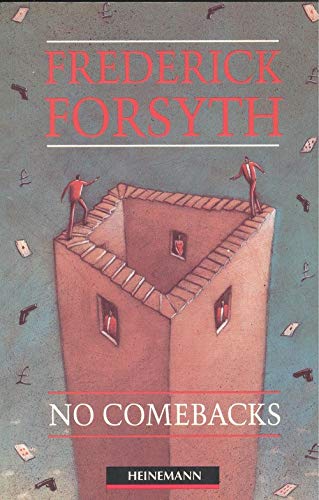
Believe it or not, The Day of the Jackal is not actually the subject of this essay. To do it justice I would have had to reread it carefully, and the time has passed for that. Instead, I’d like to recommend a different Forsyth book, No Comebacks, a collection of short stories published in 1982. This book is also a bit of a one-off wonder. And because readers of Ellery Queen’s Mystery Magazine are by definition fans of short crime fiction, I think this book deserves mention here.

We are living in an era of great crime writers. Most of these writers specialize in novels. But excellent collections of short mystery and/or crime fiction still get published all the time. For the most part, they fall into two categories. Category one is the multiauthor anthology. These include the annual collections such as The Best American Mystery Stories (fill in the year), as well as various geographical collections of crime stories set in Boston, or New Orleans, or Los Angeles, and so on. We have also seen the recent publication of many really good single-author crime-story collections. These include No Middle Name, a collection of Jack Reacher stories by Lee Child; The Beat Goes On, a collection of DI Rebus stories by Ian Rankin; The Pyramid, a collection of Inspector Kurt Wallander stories by the late Henning Mankell. These are worthy additions to the genre, but each story in the book features the same crime fighter.

One of the things that made No Comebacks fairly unusual is that it was a best-selling collection of crime stories from a lone author that didn’t feature any pre-existing characters. Such books still get published, but you practically have to be Stephen King to hit the bestseller list with a collection like that. Which probably explains why the closest thing we’ve seen to No Comebacks in the last few years is King’s 2015 bestseller The Bazaar of Bad Dreams, a collection of stories, many involving crime and punishment, that are not all connected by a main character or an obvious theme.

No Comebacks is by no means an obscure book. It has been in print for nearly forty years, and it has a fairly high rating at the online book review site Goodreads, where nearly 4,000 people have rated it and nearly 200 have reviewed it. 

The collection has many things to recommend it. Lets start with the twists. Forsyth is as much a master of the surprise ending as O. Henry, Saki, Richard Matheson, or Rod Serling. Like those masters, he is also capable of planting entertaining surprises at just about any point in a story. It can diminish the enjoyment of such stories to reveal the surprises in a review, so I am going to mention only one of them. The fourth story in the collection is called “There Are Some Days . . .”, and in its opening pages we find ourselves in the company of an Irish truck driver named Liam Clarke. His truck is being transported aboard a large ferryboat from La Havre, France, to the small Irish port town of Rosslare. After the ferry docks at Rosslare, Clarke drives his vehicle into a sort of truck barn where it will be examined by customs agents. Clarke and a customs inspector discover that the truck is leaking oil because of a broken “differential nose-piece.” (One of the pleasures of Forsyth’s fiction is its detailed knowledge of various professions that I can’t help thinking of as manly, although I know little about any of them myself: truck driving, marlin fishing, the demolition of buildings, etc.) At any rate, the problem is serious and the truck will not be allowed to leave the customs barn until it is fixed. Clarke calls the company he works for. They promise to send a repairman in the morning. In the morning, as promised, a repairman arrives with a new differential nose-piece and he and Clarke repair the truck. When they have just about finished, another large ferry arrives at the dock and a truck identical to Clarke’s rolls off the boat and into the customs barn to be briefly inspected. Off on a grassy knoll a few hundred yards away, a criminal named Murphy watches through binoculars as the second truck rolls off the ferry and into the barn. Murphy plans to hijack this truck. He knows what its contents are and he has found a gang of criminals from Northern Island who will pay him handsomely for the ill-gotten gains. Murphy expects it will take this truck about ten minutes to clear customs. But just five minutes later, he sees the truck exit the barn. All the better, he thinks. But the reader knows that he has made a critical mistake. The truck exiting the barn is not the one Murphy is waiting to hijack. It is Liam Clarke’s identical truck (he works for the same company as the other driver, but carries a very different kind of cargo). And this is only the first in a whole series of bizarre plot twists that will lead us to a very surprising conclusion.

Because he grounds his stories in very specific details, generally pertaining to ordinary workaday life, Forsyth’s shocking plot twists never seem unbelievable. The title story is a good example of this. In many ways it is a variation on The Day of the Jackal. Like Jackal, it concerns a contract killing which is negotiated in one country but carried out in another, meaning that the hitman has to bring his weapon across a European border. But Jackal was set in 1963, when airport security was fairly lax. The story “No Comebacks” is set in 1973, by which time airport security was anything but lax. In 1963, the Jackal was able to carry most of his contraband material from England to France in baggage that he took aboard a commercial air flight. But from 1965 to 1972 the world experienced what author Brendan I. Koerner, in his excellent nonfiction book The Skies Belong to Us, dubbed “a Golden Age of Hijacking.” At one point, an airplane was being hijacked in U.S. airspace just about once every week. The situation in Europe wasn’t much better. Thus by the end of 1972, just about every piece of passenger luggage carried aboard an airplane or stowed in its cargo hold was inspected before it was allowed to pass. Forsyth is keenly aware of this. Writing from the perspective of a French hitman who needs to find a way to get his murder weapon into Spain, Forsyth writes: “Airplanes were out—thanks to international terrorism every flight out of Orly was minutely checked for firearms.” Instead he uses a meticulously detailed workaround involving a fat book on Spanish history whose pages he has hollowed out, international mail, and some cutting and pasting tools. His ingenious plan is so homespun —involving stuff anyone could acquire over the course of short shopping spree—that it seems totally believable.

One thing you might not expect to find in a Frederick Forsyth book is humor, but his stories actually pack quite a lot of it in, even the grimmest of them. Sometimes this comes in the form of authorial understatement. Of an irate farmer who is having a mental breakdown after a roadside confrontation, we are told, “He was having a noisy personal conversation with his creator.” 

The plots of these stories are fiendish. In “Money With Menaces,” a timid little insurance clerk seeks out a bit of extramarital companionship only to find himself being blackmailed by some very bad people. But is the insurance clerk really the milquetoast he appears to be? In “Used in Evidence,” a lone elderly holdout is preventing a development firm from razing a rundown housing project and building a shopping mall in its place. But is it just sentimentality that keeps the old man from wanting to surrender his home of thirty-plus years? None of us likes paying taxes, but you’ll be amazed when you see what lengths the protagonist of “A Careful Man” goes to in order to keep the UK’s Office of Inland Revenue from collecting what he owes them. A story called “There Are No Snakes In Ireland” might have made an excellent installment of Rod Serling’s Night Gallery. “Sharp Practice” involves a couple of card sharps who teach an Irish judge a lesson whose moral could be summed up in this famous quote from Damon Runyon: “Some day, somewhere . . . a guy is going to come to you and show you a nice brand-new deck of cards on which the seal is never broken, and this guy is going to offer to bet you that the jack of spades will jump out of this deck and squirt cider in your ear. But, son . . . do not bet him, for as sure as you do you are going to get an ear full of cider.”

Born in 1938, Forsyth is now in his eighties, and he remains active as a writer. His most recent book, The Fox, was published in 2018. As good as he is, Forsyth is not without his faults as a writer. Years ago, I attended a lecture by John Irving in which he noted that: “In the end, a writer’s greatest strength will often end up being his biggest weakness.” Or words to that effect. He pointed out that writers who are praised early in their careers for creating clever dialog, often end up focusing all their attention on writing clever dialog, to the detriment of their work. Writers praised for their wicked plots will often create plots that are more and more complex until eventually they are pretty much incomprehensible. Early in his career, Forsyth was heavily (and justifiably) praised for the depth of his research and for his ability to explain all sorts of complex operations—an identity swindle, the workings of an engine, how to smuggle contraband across various international borders—so that anyone could understand it. This trait was a hallmark of his best books. But by the 1990s, this research began to weigh down many of his books. At least that is my opinion. The last Forsyth novel I was able to finish was The Phantom of Manhattan, published in 1999 (it was a source of Andrew Lloyd Webber’s 2010 musical Love Never Dies). The newer stuff seems mired in excess data, though opinions on that may vary. Those later books have plenty of fans, judging by various online review sites. For me, the golden era of Frederick Forsyth fiction is the stretch from 1971 to 1982. Any legitimate list of the best thrillers of the twentieth century has to have The Day of the Jackal at or near its top spot. But don’t overlook No Comebacks. The title isn’t one of Forsyth’s best-known, but any legitimate list of the best single-author collections of crime short stories ought to include it. It is a shame that Forsyth hasn’t written more short stories because he has a real knack for it.

Posted in Books, Fiction, Genre, Guest, History, mystery fiction, Novels, review, reviews, Writers | Tagged , , , , , , , | 2 Comments

Who, Why, and How: Mystery’s Most Important Questions (by M. Zizzari)

M. Zizzari’s fiction debut, “Rage and Ruin,” appears in the Department of First Stories in EQMM’s current issue (September/October 2021). The author is currently a student at Simon Fraser University, majoring in criminology with a minor in English. It’s evident from this post—which discusses a way of looking at the genre that was articulated by EQMM in its early years!— that a love of mysteries is in this writer’s blood.—Janet Hutchings 

Ellery Queen Mystery Magazine is currently celebrating its anniversary; it has been in publication for 80 years now, and deservedly so. And for a magazine with such a long and varied history, which welcomes and has published just about every type of mystery fiction there is, what better way to commemorate the occasion than by taking a look at what are considered to be the main forms of mystery fiction? Fittingly, I stumbled across an old article from American Speech that contained the line: “Ellery Queen’s Mystery Magazine, XVI (October, 1950), 53, groups mystery fiction into three classes, ‘whodunit,’ ‘howdunit,’ ‘whydunit,’” and in light of this, I thought I would start with those three classes before going on to discuss a fourth class.

The first form, I trust, requires no introduction: the whodunnit. The whodunnit is often considered the quintessential mystery story, and even those who do not consider themselves to be fans of the genre would have no difficulty in recognizing the form and those who have mastered it, such as Agatha Christie or, aptly, Ellery Queen. In a whodunnit, the protagonist, who is often a private detective or some layperson imbued with admirable powers of deduction, comes into contact with a crime that has, usually, only recently taken place. Generally, this protagonist, through witness accounts or via their own investigation, gains all the facts of the case save one—the identity of the culprit—and must use this information to fill in that final piece of the puzzle. They must determine who done it. In theory, any mystery story that concerns itself primarily with uncovering the identity of a criminal would fall under the classification of a whodunnit, from the grizzled, hard-boiled stylings of Raymond Chandler, to the cozier, more youth-oriented works of Carolyn Keene.

On a personal level, what I have always enjoyed most about whodunnits is trying to put the puzzle pieces together before the protagonist’s big reveal at the end. While not all whodunnits are necessarily fair play mysteries—those which give the reader the information necessary to solve the case themselves—I always tried to keep the clues in mind and attempted to follow the detective’s logic as closely as possible. For the fair play stories, I felt a sense of pride if I had managed to accurately predict the perpetrator, and in those that were not, I still took satisfaction in seeing how all the pieces slotted together. The best whodunnits manage to capture intellect within art. The objectively logical, encased within the subjectively beautiful.

When compared to the whodunnit, the whydunit is a term far less commonly encountered. Unlike a whodunnit, the whydunit does not hide the identity of the criminal from the reader. Indeed, the opposite is true, as the criminal is often the protagonist of these stories. Rather than following a detective, we follow a criminal or would-be criminal in an almost introspective way, as they contemplate the crime they have or will commit. Whydunit concerns itself with the motivations of the culprit, emphasizing the psychological aspect of criminality.

The howdunnit can, perhaps, be considered the counterpart to the whydunit. Where the latter looks at the deeper, internal questions behind the crime, but the former takes a more external approach, and questions the mechanism of the crime. The narrative of a howdunnit focuses on revealing the method the culprit used, and the answer to that question is the ultimate goal for the reader.

Interestingly, when I went to write an example of a howdunnit, the story that came to my mind was one of Nabokov’s works. What makes that point interesting, for those who aren’t aware, is that the famous writer Vladimir Nabokov was well-known to dislike mystery fiction. Nabokov once said, “there are some varieties of fiction that I never touch—mystery stories, for instance, which I abhor,” and he referred to the genre as “a kind of collage combining more or less original riddles with conventional and mediocre artwork.” And yet, despite his vocal denouncement of the genre, I believe that some of his works fall under the category of mystery fiction. Particularly “Revenge,” which was originally published in Russian in 1924, and which I would argue is a rather good example of a short story howdunnit.

“Revenge” follows an aging biology professor who has decided to murder his wife. Here we already have the main element of mystery fiction, the crime, but we are not barred from the knowledge of the killer’s identity. While Nabokov avoids the riddle of who, he does not avoid the riddle of how. Quite the contrary, as though the professor comments on the fact that he has settled upon a method, he does not state what it is. The reader spends the entire story wondering as to what the professor’s plans actually are—wondering how it will be done, something which is not revealed until the very end of the story. I will refrain from giving more details, as I don’t want to give away too much, and I think anyone who has not read this story should give it a read. The point remains that though this story does not fit the definition of a whodunnit, it does seem to fit our working definition of a howdunnit.

Having looked at all three classes of mystery fiction as recognized by EQMM in 1950, and some examples of them, we now arrive at what I consider to be the final class of mystery fiction: the howcatchem. Compared to the other terms, howcatchem is quite new, having come into popularity in the 1970s. In stories of these sort, the author crafts a mystery in which the identity, method, and even motivation, are known to the reader. The beginning typically follows the criminal as they perpetrate their crime, before switching perspectives to follow the detective tasked with solving it. The howcatchem is sometimes also referred to as the inverted detective story. I personally favour the term howcatchem, not only because its style is in keeping with other terms of the mystery genre, but because it is the one my father used fondly when he first introduced me to the show, Columbo.

Columbo is the show that popularized not only the term, but the form itself. Every episode begins with the culprit, introducing the audience to them briefly before the murder occurs, allowing the viewer some insight into the character and their motives, and continuing to follow them to the moment of the act and past it, to how the killer attempts to cover it up. By the time the titular homicide lieutenant, Columbo—played by the incomparable Peter Falk—arrives on the scene to investigate, the viewer has seen everything, and thus, is already in possession of all the pertinent information. If nothing else, the viewer has the answers to all the questions that most mystery fiction centres on; they know whodunnit, whydunit, and howdunnit, but they’re left asking themselves, “how does he catch ‘em?” The aspect that is left until the ending’s big reveal is exactly where the killer went wrong. The viewer scours that opening looking not for clues, but for mistakes. I can easily recall asking my father to rewind the episode so I could watch it again and try to determine where the murderer slipped up, often pausing to discuss my theories.

Mystery has the power to compel its audience more powerfully than perhaps any other genre, and even those who later feel it has lost its power over them have been irrevocably impacted by it—traces of its influence still there to be found, as evidenced with Nabokov. The engagement a person has with the genre may be intellectual, emotional, or a combination of the two. But nonetheless, all mystery fiction seems to have a special ability to draw in its audience, regardless of which classification it falls under.

Posted in Uncategorized | Leave a comment

SIGTH SCHEDULE UPDATE: New posts Thursdays!

Dear readers, we will now be posting updates to our blog on Thursdays rather than Wednesdays. Thanks for sticking with us and happy reading!

Posted in Uncategorized | Leave a comment

“Mystery/Suspense and the Beauty of Brevity” (by Trey Dowell)

Yesterday, EQMM’s 80th Anniversary Issue (September/October 2021) went on sale. In it you’ll find Trey Dowell’s flash-fiction thriller “The Problem With Fish Markets.” (And yes, it’s possible to write a genuine international-intrigue thriller in one thousand words—though I might not have believed it before reading this story!) Trey recently won the Bethlehem Writer’s Workshop 2021 Short Story Award, judged by New York Times bestselling author Charlaine Harris (another frequent EQMM contributor). His short stories have also been nominated for Derringer Awards several times. Although Trey’s fictional range is wide—he’s written full-length novels as well as stories in several genres—in this post he talks about what’s involved in keeping a crime story—or any story— short. —Janet Hutchings

So, I’ve been hammering away at this whole “writing fiction” thing for about fifteen years now. I’ve had a modest amount of success (and a somewhat-less-modest amount of failure), but one of my guiding principles has always been to try everything: different genres, alternate styles, different formats. Sci-fi, crime, and horror are definitely my jam—but hell, let’s try western noir, political satire, and romance too, right? Throw in a nonfiction article every now and then. Anything to broaden my experience as a writer, plus, pushing boundaries means I avoid stagnation’s icy grip. Variety might be the spice of life, but for me (as a writer) variety isn’t just a spice—it’s the whole damn meal.

One of the ways I enjoy mixing things up is with story length. I’m not the type of writer whose ideas are birthed in distinct, 350-page, three-act packages, no matter how much I wish they were. I don’t try to stretch or condense an idea into something it’s not. Frequently, I imagine conversations, single scenes, perhaps nothing more than one climactic point in a character’s life—interesting set pieces that don’t have nearly enough meat on their bones to build a novel around them. But those moments often make for one helluva good short story.

More often than not lately, my ideas have coalesced in the smallest of literary packages: flash fiction. A story of less than 1000-1500 words. Two to three pages to grab readers’ attentions (and maybe their throats) and yank those bastards all the way through to the finish, until they look away from the page and whisper “daaaaaamn.”

And trust me, when it comes to flash fiction, short doesn’t mean easy.A writer friend of mine entered a flash contest several months ago where he was randomly assigned a genre and received “mystery.” His complaint to me was “How the HELL can I write a mystery in only 1000 words? Just describing the damn crime that needs to be solved takes half those words. It can’t be done!” 

I tried to console him as best I could, but in the back of my mind all I could think was Oh HELL yes it can.

You see, many, many years ago (back when dinosaurs still roamed the earth and I was in junior high school) I read my very first crime short story. “After Twenty Years,” by William Sydney Porter—better known by his pen name, O. Henry—absolutely blew my little twelve-year-old mind. A classic tale of friendship and betrayal, “After Twenty Years” (published in 1908) is also a master class in misdirection, building to one of Porter’s trademark twist endings. 

For those who aren’t familiar, I now present my wholly inadequate summary: a successful career criminal waits in the evening gloom to reconnect with a long-lost buddy. A beat cop stops by long enough to chat up the boastful, ostentatiously wealthy man for a moment, then moves on. After a short wait, the criminal’s pal finally makes his appearance, and the two men greet each other warmly on the darkened street. After strolling to a well-lit corner, the criminal is shocked to see that the person walking with him arm-in-arm is not his old friend at all, noting that twenty years doesn’t change the shape of a man’s nose. The “friend” is, in fact, a police detective, happy to report that the wanted criminal has been under arrest for the last ten minutes, and been allowed to boast and talk in order to incriminate himself further. At the very end of the story, the detective gives the criminal a hand-written note from the beat cop who’d chatted with him earlier—the actual long-ago friend—confessing that when he showed up at the agreed-upon place and time, and realized the man he’d come to meet was a known fugitive, the cop hadn’t had the heart to arrest his friend, and instead had the detective/imposter do it for him.

My pathetic summarization notwithstanding, “After Twenty Years” is somehow both taut and richly descriptive, and sneakily suspenseful. The ending finishes the reader off with a metaphorical gut-punch—and in my case, left a pre-teen boy in its wake, muttering “daaaaaaamn.” 

I reread the story twice, looking to see what I’d missed, wanting to discover how the magician had shown me the pretty, shiny thing in one hand, while his other hand got in position to yank the rug from beneath my feet. 

“After Twenty Years” is timeless example of subverting reader expectations, written over a century ago—when readers hadn’t been inured to twist endings and didn’t automatically assume one was coming. Even better, Porter accomplished all that in only 1,200 words. That’s all. And I’m not talking about bare-bones, Ernest-Hemmingway-adjectives-be-damned sparse prose either. No, this is 1,200 words of English from freaking 1908, a time period not exactly known for its economy of language: 

“The policeman on the beat moved up the avenue impressively. The impressiveness was habitual and not for show, for spectators were few. The time was barely 10 o’clock at night, but chilly gusts of wind with a taste of rain in them had well nigh depeopled the streets.”

And yet, even with his impressiveness being impressively impressive, Porter does the job so damn well, and in a modicum of pages. Flash fiction at its finest. As an enthralled twelve-year-old, I couldn’t understand exactly how Porter did it, but I believe I do now.

See, in fiction, there’s this constant battle over what’s “most important”—what really makes a story work. And if you ask writers, they usually aren’t shy about expressing their opinions: 

“Novels are all about character. Gimme memorable characters, let me see their arcs. Great novels are born of great characterization.”

“Short stories are all about plot, you fool! Surprise me, show me the twists. Get me from point A to B, but make damn sure it ain’t an easy trip.”

“Plot is a whore! Writing is all about beautiful language!!”

<yes, I actually had a writing teacher say the words “Plot is a whore.”Not making that one up> 

Conventional wisdom is that ALL those things matter . . . and they do, of course. But when it comes to my favorite length—the short short, the flashiest of flash—I don’t believe any of those are the secret ingredient. 

For me (and Porter too, I think), flash fiction is primarily about emotion. And I don’t mean the emotions of the characters in a story—I mean the emotion of the reader. I usually start the writing process not with a particular character, or a specific plot framework, but instead with a simple question: how do I want the reader to feel at the end of this story? 

Excited? Despondent? Surprised?

I focus on that emotion, then generate a blueprint which will build that feeling up, line by line, paragraph by paragraph, all the way to the very end. 

Want devastation? Trap a guy in a hot car beneath the August sun, mount a thermometer on the dash, and watch him hallucinate as that temp just keeps tick tick ticking higher and higher. Trust me, it ain’t gonna end well.

How about breathless? Watch a covert operative race through the streets of Venice, chasing his former lover. If she eludes him, it’s a death sentence for him and everyone he cares about.

The beauty of flash is that it allows the writer to double down on everything—emotion, pace, tension, suspense—in a way that you simply can’t in a 5,000-word short or a 100,000-word novel. In 1,000 words, you can drop the freaking hammer on suspense and keep people riveted to every word, because it’s an emotional sprint. Do it properly and a reader’s blood pressure will spike. Try going nonstop, heart-in-throat-suspense for anything more than ten pages, though, and the only thing that spikes is projectile vomiting and refund requests. 

And to writers (like my beleaguered friend) who whine“but mystery needs more words,” I would respond “Well, what kind of mystery?” 

A cozy, with ten characters, half as many red herrings, and an amateur detective who has to explain how they solved the crime? Or a police procedural, led by a burnt-out cop with anger issues, that plays out over the span of five days?

Yep, the flash format is way too limited to tell that story. But that’s also a very limited definition of the mystery genre. To me, flash fiction isn’t about setting up a mystery for your characters—it’s about giving your readers a mystery. Keeping them in the dark as they struggle to understand what has happened, what’s going to happen, and what the consequences might be.

Instead of giving people a cerebral puzzle that unfolds over the course of twenty or more pages, flash fiction allows you to stuff readers in a dark closet, have the stench of a dead body overwhelm their nostrils, and hear the creak of approaching footsteps. It’s the difference between thinking and feeling a story. Stomp on that gas pedal in paragraph one, and keep it floored until you hit the wall. That’s suspense, and it runs on pure emotion.

It’s a beautiful thing when it works.

And if you manage it juuuuuust right, and you listen really closely, you get to hear the greatest one-word compliment a writer can ever receive.

“Daaaaaaaamn.”

Posted in Fiction, Genre, Guest, Noir, Readers, Story, Suspense, Writers, Writing | Tagged , , , , , , , , | 4 Comments

EQMM 80TH ANNIVERSARY TRIVIA CONTEST

We’re celebrating our eightieth anniversary with an EQMM anniversary tradition: A trivia contest! This year, we’ve reached out to Ellery Queen and EQMM experts to bring you a fresh challenge.

To find their questions and enter the contest, visit our website at elleryqueenmysterymagazine.com.

4 Comments

“Tick-Tick-Boom!: Ratcheting Up the Tension with a Ticking Clock” (by Sandy Smith)

Sandy Smith makes her EQMM debut in our 80th Anniversary Issue (September/October 2021)—on sale next week!  She’s had a number of stories published elsewhere. Two were nominated for Best of the Net (2018 and 2019) and another for the Pushcart Prize (2019). What she has to say in this post about creating suspense does not derive only from her own writing, however. She’s a freelance editor for publishers including Soho and Little, Brown, and she will be teaching an online class in short-story writing at The Loft Literary Center in Minneapolis this fall. —Janet Hutchings

In the 1998 German thriller Run Lola Run, the titular character has twenty minutes to summon up 100,000 Deutschmarks to save her boyfriend, a bagman who has misplaced the money he is due to deliver. The structure of the film is experimental, doubling and tripling back on itself to suggest alternate endings, but what drives the relentless pace throughout is the ticking clock that Lola has to beat to save her man. The film moves at a frantic, breath-stealing pace, and it feels terribly, wonderfully stressful to race the clock alongside Lola.

Sometimes, the ticking clock is literal: Cinderella, while living her best life at the ball, must keep an eye on the clock. Her fairy godmother’s enchantments expire at the stroke of midnight, and she must get home by then or risk exposure. Other literal clocks might be attached to bombs or missile launchers. 

On the other hand, a ticking clock doesn’t have to be a clock at all. Although time constraints may be imposed to create a sense of urgency, as in Lola, as a literary device, a “ticking clock” may be purely metaphorical. It can really be any factor that puts the protagonist under pressure by introducing a literal or figurative deadline. If the protagonist doesn’t accomplish a given objective by this fixed variable, dire consequences threaten. As long as there are clearly defined stakes, a rising sense of urgency, and a countdown of some sort, you’ve got a ticking clock. 

Other examples of imposed deadlines include the car that is running out of gas on a dark and lonely road, an arctic explorer’s dwindling supply of carefully rationed food, or a desperately ill patient’s failing heart juxtaposed with their status on a donor list. An innocent man on death row waits anxiously for an eleventh-hour pardon while the clock ticks. Pregnancy, too, provides a ticking clock as it unfolds inexorably over nine months, each month drawing closer to a dramatic conclusion and a big reveal. 

Mystery and crime stories practically have ticking clocks built in—detectives must catch serial killers before they kill again; bombs must be disarmed before they explode; heists must be pulled off before the cops arrive; hostages must be ransomed or rescued before time runs out. In all these cases, that feeling of racing time to avoid disaster propels the plot and accelerates the pace. If you’re trying to save the world from a computer wargaming us to nuclear annihilation, you’re going to run, not walk, to bring in the briefcase full of codes that stops the countdown.

Whatever form it takes, a ticking clock must come with high stakes. If there’s no consequence for running out the clock, there’s no point in having a clock. Say, for example, the ticking clock is a plane that the protagonist is determined to catch. Not much is at stake if that character is flying to Miami just for a bit of sun and fun, and there’s another plane an hour later with plenty of open seats. However, if the protagonist must be on that plane because her lover has been poisoned and she is in possession of the only known antidote AND it’s the last plane of the day AND there’s someone chasing her to make sure that antidote is destroyed before the plane takes off . . . she’s going to be racing hard to make that plane, and our pulse will be racing as a result.

The ticking clock device should be obvious inside the world of the story—it’s not enough for the reader to know about it; the protagonist must feel the pressure mounting too. If the audience knows but the protagonist doesn’t, that might make for a compelling tragedy, but it won’t provide the same propulsive tension created by sharing in the protagonist’s stress. 

It’s usually best if the clock starts ticking early, shortly after the characters are introduced and the stakes are established. At that point, inserting a clock galvanizes the action by adding suspense. As the deadline approaches, the going should get rougher to keep the anxiety high. The clock usually runs out at the moment of climax, or when the protagonist accomplishes the mission on deadline, but definitely not before. Denouement starts when the clock stops.

Also, although a ticking clock serves as the primary, or most immediate, concern, it shouldn’t be the only form of conflict. Consider a story about a pair of experienced climbers ascending a mountain on what was supposed to be the climb of a lifetime. The going is difficult, but they summit successfully and celebrate a bit at the top. Soon, however, it becomes obvious that a storm is rolling in. Experienced enough to be aware of the danger of getting caught at the summit in bad weather, they decide to cut their celebration short and begin to descend. As they make their way down the mountain, faster than is strictly prudent but pressured by the oncoming stormfront, one of the hikers falls and sustains a terrible injury. Incapacitated, he can’t go on. His partner does what she can to cobble together a rudimentary shelter and make him comfortable in it while she goes for help. Both of them know the situation is precarious. His injuries are grave, and if he’s going to make it he needs medical attention sooner rather than later. Then the storm arrives with devastating force, and she must race against her partner’s life-threatening injuries and battle the weather for her own survival. Things get so bad that she is forced to spend several hours in a trail shelter, where she encounters another hiker, who, unbeknownst to her, is an opportunistic predator. 

Our hiker now has to contend simultaneously with a person-versus-nature and a person-versus-person conflict under the pressure of the ticking clock of her partner’s worsening condition. The sustained pressure of that mission deadline—to get her partner rescued—is amplified by these new conflicts. At the same time, thoughts of her partner give her the resolve to get through the storm and the courage to fight off the attacker. If it were revealed to the reader, but not the protagonist, that the injured partner succumbed, the ticking clock would still exist for her, but the tension would diminish substantially for the reader. The denouement would be protracted as she makes her way to safety, and the story is drained of dynamic tension because we already know that she’s failed to meet the deadline. A better climax would occur as she returns to her dying companion with a search-and-rescue team in the barest nick of time. 

For additional examples of the ticking clock device, check out the following:

  • Thomas Harris, Silence of the Lambs. Novice FBI agent Clarice Starling must stop serial killer Buffalo Bill before he murders the senator’s daughter he has kidnapped.
  • Cormac McCarthy, The Road. The ticking clock here is the father’s illness, which worsens as he and the boy travel to safety.
  • High Noon. This 1952 Western film is a superb example of a protagonist who must confront mounting obstacles while running out a ticking clock. 
  • Speed. A 1994 action thriller in which the ticking clock is a bus wired with a bomb that’s activated once the bus goes over fifty mph and will detonate if it subsequently slows to below fifty mph. 
Posted in crime, Editing, Readers, Writers, Writing | Tagged , , , , , , , , | 3 Comments

“The Last Great Crime Novel of 1975?: Once Upon a Time in Hollywood by Quentin Tarantino” (by Kevin Mims)

In a follow-on to his March 10 post for this site entitled “The Greatest Year in the History of Crime Fiction” (1975),  essayist and short story writer Kevin Mims reviews one of 2021’s new books as if it were a release from that earlier era. . . .—Janet Hutchings

I recently read Quentin Tarantino’s book Once Upon a Time in Hollywood, a novelization of his 2019 film Once Upon a Time . . . in Hollywood. I can’t tell you how it ranks against other crime novels of 2021 because I haven’t read enough yet. But on March 10 of this year, I contributed a post to this blog arguing that 1975 was the greatest year ever for crime fiction. And I believe that Tarantino intends for us to treat his novel as though it were an artifact from the 1970s. Why? Let’s look at the clues.

The book, like the film, concerns itself, in part, with the murderous “family” of Charles Manson. Since the book provides us with an alternate history of Manson’s clan and their killing spree, it naturally had to be written sometime after 1969, when the murders occurred. But Tarantino’s book, which was released as a paperback original, doesn’t present itself as a contemporary paperback. In the back pages of the book, we find full-page advertisements for a variety of popular 1970s books: Erich Segal’s Oliver’s Story (published in 1977), Elmore Leonard’s The Switch (1978), and Peter Maas’s Serpico (1973). Anyone familiar with mass-market paperbacks of the era knows that those books usually carried advertisements in their back pages for other recent titles from the same publisher. Usually they were for books of the same vintage and in the same genre. Which makes the back-page material in Tarantino’s novel seem inauthentic. Tarantino and his publisher (Harper Perennial Paperbacks) seem to be trying to make this novelization look like a relic from an earlier age. Because it carries an ad for a novel (The Switch) published in 1978, we have to assume the illusion they want to create is that this paperback was published no earlier than that. 

The Manson Family story gained new cultural currency in 1974 with the publication of Vincent Bugliosi and Curt Gentry’s Helter Skelter, a nonfiction account of the murders. The book was a bestseller and won the 1975 Edgar Award for Best True Crime Book. If Tarantino’s novel had in fact been published in the 1970s, 1975 would have been the ideal year for the hardcover to appear. The book is perfectly in tune with the zeitgeist of that year. As noted in my earlier essay, many of the most successful crime novels of 1975 were, like Tarantino’s, inspired by real-life crime stories. These include E.L. Doctorow’s Ragtime (the year’s best-selling novel), Judith Rossner’s Looking for Mr. Goodbar (the year’s fourth best-selling novel), and Michael Crichton’s The Great Train Robbery (the eighth best-selling novel of the year). 

Following the illusion, the publisher seems to be trying to create of 1970s publication for Tarantino’s book, let’s suppose that there had also been a hardback and that it had appeared in 1975.  Viewed as a 1975 crime novel, how well does Once Upon a Time in Hollywood stack up against the rest of the Class of ’75? Could it have stood out in a year so rich in masterpieces? In my opinion, the answer is a resounding yes.

Though literary purists might object, I believe Tarantino’s novel compares favorably with Doctorow’s masterpiece Ragtime. Doctorow’s novel is loosely tied to the real-life murder of famed architect Stanford White, who was killed in 1906 by Harry Thaw, the deranged husband of legendary beauty Evelyn Nesbit, whom White had allegedly sexually assaulted when she was still a teenager. Though Thaw and his crimes are mentioned in Ragtime, Doctorow seems much more interested in exploring a particular time (the turn of the twentieth century) and place (New York City and its environs). And he seems most interested in interweaving the real-life stories of various celebrities of the era with the fictional stories of his own invented characters. This is pretty much what Tarantino does in his book. He explores a particular time (late 1960s) and place (Hollywood and environs) and weaves together the real-life stories of various celebrities (Sharon Tate, Roman Polanski, Bruce Lee, James Stacey, and others) and the stories of his own invented characters. Doctorow is the more careful prose stylist, but there’s something endearing and addictive in Tarantino’s more conversational, expletive-laden, narrative style. It’s like he’s sitting in the room with you, telling a compelling story but interrupting it often to interject equally compelling commentary on movies, music, pop fiction, etc. 

Younger readers may look at an old hardback copy of Doctorow’s Ragtime—with its ornate lettering and unillustrated cover; the flap copy describing a book set in a long-gone era—and come away with the notion that this was a fairly sedate historical novel. But they’d be wrong. Ragtime is filled with horrific violence, most of it race-related, and it is probably just as relevant to our present-day predicament in America as it was in 1975. The well-mannered prose belies an angry, incendiary story about a Black man who retaliates against a racist society by trying to violently overthrow its government. The prose works in counterpoint to the ill-mannered behavior of many of Doctorow’s characters.

Tarantino, on the other hand, doesn’t try to keep any kind of distance between the narrator and his characters. Tarantino is, for all intents and purposes, a character in his own book, perhaps the main character. His expositional asides about such things as the films of Akira Kurosawa are as full of foul language as the rants of the characters are. But Tarantino’s prose is appropriate to the historical setting of Once Upon a Time in Hollywood. What’s more, Tarantino’s prose isn’t at all bad. 

The book is full of gripping scenes. One of the most memorable scenes in the film is the one in which Hollywood stuntman Cliff Booth (Brad Pitt) picks a fight with legendary martial artist Bruce Lee (Mike Moh) on the set of the TV series The Green Hornet. The same scene appears in the book, but here Tarantino slows it down and gives us the thoughts of both Booth and Lee. The men have decided to have a contest. The first one to knock the other on his ass twice wins. In the book we hear Cliff’s strategy running through his head. He decides to let Lee knock him down easily in their first clash. If it happens easily, Cliff figures Lee will get lazy and try the exact same assault tactic the second time around. But once Cliff knows the tactic, he’ll be able to anticipate it and knock Lee on his ass. In the book (unlike the film) we learn that Cliff is a World War II vet who killed more Japanese soldiers in up-close combat (with his hands and a knife, usually) than any other American. He isn’t even slightly fearful of Lee. But Lee doesn’t know this at first. He attacks and easily knocks Cliff on his ass. And, as expected, he comes back with an identical second assault, but this time Cliff easily defends himself, throwing Lee up against a car and causing injury to the martial artist. Suddenly Bruce understands exactly what has happened. 

Bruce also quickly recognizes that, while Cliff wasn’t anywhere near as skilled as the opponents he fought in any of his martial-arts tournaments, he was something they weren’t. In the film it is strongly suggested that Cliff might have murdered his wife. The book leaves no doubt about it. Cliff cut his wife in half with a spear gun meant to kill sharks. And she’s not the only person Cliff has killed since the end of the war. 

The book also abounds with gripping scenes that aren’t in the movie at all. One such scene takes place between two and three in the morning at an upscale home in Pasadena. Manson has brought some of his acolytes with him to watch as they put the youngest member of the family, a teenager named Debra Jo “Pussycat” Hillhouse (a fictional character probably based on Leslie Van Houten, played by Margaret Qualley in the film) through an initiation ritual they call “the kreepy krawl.” This involves breaking into a home at night and wandering through it, possibly even interacting with the occupants if they are awake. As the rest of the family stand outside, Pussycat goes around back, jimmies open the sliding door, and enters the dark and silent residence. The next several pages are very tense. Tarantino does a fine job of demonstrating how thoroughly Manson is able to colonize the minds of his followers. Though “Charlie” remains outside, Tarantino writes, ominously, “She [Pussycat] can hear Charlie’s grin in her brain.”

Just as there are scenes in the book that aren’t in the movie, there are scenes in the movie that aren’t really in the book, including perhaps the biggest scene of the film. In fact, this is Tarantino’s gutsiest move. The film’s climax is a scene in which fictional TV star Rick Dalton, Cliff Booth, and Booth’s dog Brandy violently dispatch with several Manson Family members who have broken into Rick’s home. We get a brief mention of that episode early in the book but it isn’t dramatized and never comes up again. The book arrives at an ending that employs something rarely seen in a Tarantino film: subtlety. The book’s ending is soft, moving, and sweet.

Although I loved Once Upon a Time in Hollywood, much of my enjoyment derived from the many cameos involving celebrities from my youth, people such as Robert Conrad (star of The Wild Wild West), Otto Preminger (first known to me as Mr. Freeze on Batman), Dennis Wilson (drummer for The Beach Boys), and many others. The book is also filled with references to Elmore Leonard, T.V. Olson, Marvin H. Albert, and other pop-fiction writers whose works I devoured back in the day. As a teenager I felt guilty about enjoying the music of The Monkees more than the music of The Beatles, but Tarantino convinced me (through his loving portrait of Sharon Tate) that this wasn’t uncommon. Will a twenty-five-year-old reader who has never heard of the pop group Paul Revere and the Raiders enjoy Tarantino’s book as much as I did? Hard to say. I read Ragtime back in 1976. I found it a chore to get through. I re-read it last year, while researching my essay about the crime fiction of 1975, and found it brilliant. In 1976, I’d never heard of the Stanford White murder or most of the other people and events referenced in the book. Over the subsequent forty-five years I’ve learned much about American history that I was never taught in school. And so, naturally, I derived much more enjoyment from Doctorow’s novel. When Ragtime was published, the events it depicted were sixty-nine years in the past. The events depicted in Tarantino’s book are now fifty-two years in the past—pretty much ancient history from the perspective of a millennial. But because much of the cultural material described in Tarantino’s book is preserved on film or audiotape and is easy to access, it might not seem quite as remote to today’s twenty-somethings as the trial of Harry Thaw seemed to me in 1976.

But how might Tarantino’s novel have fared had it been published in 1975, crime- fiction’s annus mirabilus? Well, a lot would have depended on how it was presented to the public. If it had been given plenty of promotion—just as Ragtime, Mr. Goodbar, and The Choirboys were—I’m convinced it would have been a sensation. Readers whose minds had been blown in 1974 by the incredible forensic detail of Helter Skelter might have been in need of a good alternative history, a book that posits what might have happened if an alcoholic, has-been TV star and his stunt double had somehow managed to kill off a few of the Manson family before the group could wreak the havoc for which they became notorious. 

I can’t say that Tarantino is as good a novelist as he is a filmmaker, but that’s only because he is an excellent filmmaker. But as a writer of film novelizations? Well, with his very first effort he may have just established himself as the greatest of all time.

Posted in Books, Criticism, Guest | Tagged , , , , , , , , | 1 Comment

“How to Create a Successful Villain” (by Sheila Kohler)

An award-winning author of novels and short stories, with two O.Henry Awards to her credit, Sheila Kohler writes crime fiction as well as literary fiction. Her most recent novel is the thriller Open Secrets, published by Penguin in 2020. Publishers Weekly said of the book: “The plot moves swiftly amid luxurious settings to a closing twist . . .” One of Sheila’s recent short stories, “Miss Martin,” was selected for the 2020 volume of Best American Mystery Stories. She draws on her experience as a writer, reader, and teacher of literature in this post about a type of character central to crime fiction.—Janet Hutchings

It is often useful in a story or novel to create a villain. Villains, let’s face it, immediately increase the suspense in a story, create conflict between good and bad—one we would like to believe exists—and  make the reader fear for the hero or heroine who is put in danger. If we look at the fairytales of our youth, those we have loved, there is often this clear dichotomy between good and evil: the wicked stepmother in Cinderella; the wicked witch in Hansel and Gretel for example. The more evil the villain the more there is at stake (poor Cinderella reduced to sweeping up the ashes and Hansel and Gretel in danger of being consumed by the witch).  

At the same time, in a story for adults it is obviously necessary to make the reader believe in the reality of the evil villain and perhaps for them even to engage the reader’s interest. We like to follow characters we can identify with to some extent. This can be difficult to do as in life, though of course evil people certainly exist, they rarely admit to their nefarious doings, or are even conscious of their faults. So often they come to us, and perhaps even to themselves, disguised behind a show of pious words, good intentions, and apparent rectitude. 

So how to make a villain credible and even sympathetic on the page? It is perhaps useful to look at the great villains portrayed in literature, those who have lasted, as examples. We can study by what means they engage our interest, hide their evildoings behind a certain facade, and convince us to follow their exploits and at moments even identify with them.  

If we take Shakespeare’s Richard III, surely one of the earliest antiheroes, we notice from the start of the play how Richard engages a certain sympathy and interest: He is after all presented as a crippled man who cannot use the ordinary means to seduce or gain success. He is reduced to cunning and dark deeds by the shape nature has thrust upon him.  

Richard tells us:

“I, that am rudely stamp’d, and want love’s majesty

To strut before a wanton ambling nymph;

I, that am curtail’d of this fair proportion,

Cheated of feature by dissembling nature,

Deformed, unfinish’d, sent before my time

Into this breathing world, scarce half made up,

And that so lamely and unfashionable

That dogs bark at me as I halt by them;”

In other words, it is not his fault if he is driven to crime; it is the fault of fate; it is his destiny.  

From the start of the play he speaks directly to the audience, confides in us, makes us—as we follow his exploits with fascination—complicit to some extent in his ambition and ultimately his crimes: “Now is the winter of our discontent / Made glorious summer by this sun of York; / And all the clouds that lour’d upon our house / In the deep bosom of the ocean buried,” he tells us with such apparent sincerity. We are immediately drawn in, interested. Questions arise in our minds. Early on in the play Richard admits to his ambition, his diabolical plans, and with his wit and sincerity wins at least our interest and a certain fascination in his outrageous acts.

In the scene with Lady Anne as she follows the bier of her dead father-in-law, Richard dares to appear. He who, you will remember, has killed not only her husband but her father-in-law, manages to seduce her (and perhaps his audience, too) even at this moment and even in her great grief. He appeals to her Christian forgiveness and begs her to have pity on him. He uses flattery and provokes her guilt at the same time, telling her that these deaths are her fault, she is responsible. If he has killed, it is because of her beauty and his great love for her: “Your beauty was the cause of that effect— / Your beauty, that did haunt me in my sleep / To undertake the death of all the world, / So I might live one hour in your sweet bosom.” 

Then he offers to die himself, giving her his sword.  He wins her and for a moment at least his audience by the use of such outrageous behavior. 

If we take a more recent example of a villain like Tom Ripley in The Talented Mr. Ripley, we see how Patricia Highsmith, like Shakespeare, presents her antihero from the start as an underdog. He, too, though not misshapen  has suffered in his childhood. He is an orphan, has lost his parents and been forced to live with his disapproving aunt who calls him a “sissy.” He gains our sympathy immediately in a scene where his aunt makes him run desperately beside the car while she drives ahead, for example. We are moved because he is hardworking and ambitious despite these setbacks, and because of his starry-eyed admiration for his friend Dickie Greenleaf who has everything Tom lacks: money, a boat, class, arrogance, freedom. 

We begin to root for him, though we are already aware he is not what he presents himself to be, when Dickie’s father sends him to Italy to bring his errant son home to his dying mother.  We even begin to wish him success, watching him with fascination as he dresses up in Dickie’s clothes and stands before the mirror. Here, surely, we identify to some extent with his desire to be like the friend he admires so much.  

Despite the fact that this sentiment leads him to actually take Dickie Greenleaf’s place in a scene of struggle on the water and that he goes on from there to kill again (the very unlikeable Freddie), we don’t really want the law to catch with up with him. By the end of the book, despite his crimes, we are delighted when he tells the taxi driver to take him to his hotel in the town where he appears to have escaped the law. “A donda, a donda?”  the driver asks, wanting to know to which hotel he wishes to go. And Ripley who now has all—the money, the clothes, perhaps even the class—replies to our satisfaction: “Il meglio! Il meglio!”, the best.  

These examples show us how we tend to root for, or at least be sufficiently interested in the exploits of, a character born or fallen into unfortunate circumstances that might explain their actions and gain our sympathy, particularly if the character shows wit and determination in their fight for success. If the villain charms us in the fight for what they consider their right, we too are taken in—or at least amused by the skillful use of flattery and apparent self- deprecating sincerity, a confession of sins: “I’ve always been a narcissist, I know.”  And how easily others can be made to feel guilty for the sins of the villain, as Richard III makes Lady Anne, blaming her beauty which has inspired his great love and his terrible crimes. 

 All of this, when in the hands of a skillful writer, can be used to gain our interest, our suspension of disbelief, and even at times our recognition of the darker sides of our own humanity.

Posted in Characters | Tagged , , , , , | Leave a comment

“This Location Screams for a Murder” (by Elvie Simons)

A Canadian currently residing in the Pacific Northwest, Elvie Simons has had stories in a variety of publications, including The Dark City Mystery Magazine, The Prairie Journal, and Island Writer Magazine. She debuts with EQMM in our current issue (July/August 2021) with the story “Not So Fast, Dr. Quick,” a classical mystery solved by the local doctor. Setting is key to the story, and in this post the author reflects about location as the source for story ideas. —Janet Hutchings

Photo by Elvie Simons

The welcome cool after a day spent baking in the heat. The quiet lull as guests trickle past to change for dinner. Before the sun has even tucked beneath the horizon, I think about murder. 

There’s something about a spectacular location that sends me to a dark place. As the sun sets at a posh resort, I look around and wonder: who here has a motive to commit that most heinous crime? Over the rolling waves and the musician’s sound check, I can almost hear the shriek of a grim beachside discovery. I see waiters in starched white uniforms rushing up from the beach, grave lines on their faces. My sunset bevvy is still half full when the characters start to form: an investor hellbent on expanding the resort, a local farmer, the plight of the monarch butterflies. It’s all here, waiting to be written, and all because of the location.

As a writer of mysteries, this is how many story ideas come to me. Writing instructors say it should happen the other way around, that characters come first. It’s true, the hard work begins when the characters develop. They need full, complicated lives or the story will be flat. But mystery is a unique genre. Often, the location itself is the main character, the thing we remember years after we’ve put the book down.

My favorite mystery location is no doubt shared with many readers of this blog. That titular train made even more famous by Agatha Christie. Mid-pandemic, I found myself clicking adverts for excursions on the Orient Express, considering unlikely dates and pricing. For a few delightful minutes, I imagined myself as a passenger in that beloved mystery, hurtling down the tracks, trapped within a conspiracy. I didn’t imagine Poirot checked into a nearby cabin. It was the train. It was always the train.

The Orient Express wasn’t my first murder-mystery train. That was the Canadian. For decades, this less famous silver locomotive has made the 4,500 km trip across Canada from Toronto to Vancouver. Eric Wilson, the writer of middle-grade mysteries, introduced countless young readers to the genre and gave me that train. Published 42 years after Christie’s novel, Murder on the Canadian was no doubt an homage to the more famous work. Were I not afraid to make my own tribute, I’d plot a tale inspired by my travels on that train: a young woman in economy class, a prairie snowstorm, a broken-down train. The perfect closed circle.

Another dreamy location is the seafaring vessel. Having worked for years myself on famous Tallships, including replicas of the Bluenose and H.M. Bark Endeavour, I’m still stumped about how to turn one of them into fiction. I read instead of the cruise ship in Christie’s Death on the Nile, the luxury ship in Ruth Ware’s The Woman in Cabin 10. Small and exclusive, both provide beautiful intimate settings for mystery.

Lately, I’ve started seeing ads again in the local newspaper for European river cruises. I imagine a suave mystery set aboard one of these boutique boats putting along the Seine or the Danube. Is this mystery out there, already written? I can only hope. For the boats and trains of crime novels are places I feel I’ve been, and I remember these stories today because of the setting.

The July/August 2021 issue of EQMM provides a delicious feast of mystery settings, both traditional and innovative. The issue is joyfully bookended by mysteries in libraries. As readers, we’re already inclined to love a mystery in a library, but the uniqueness of these libraries provides playful twists to the crimes. With Joyce Carol Oates’ Bone Marrow Donor, we enter an operating room along with the patient and get a haunting, new take on the mystery location. A comic convention from Barbara Allan, the fireworks store from Michael Grimala—these venues make my daydreams of a beach resort murder, of a river cruise mystery, feel flat and overdone. They satisfy my need as a reader for something new, a mystery in a place I’ve never seen before, never even considered as the setting for a crime.

The creativity of place goes one step further in the issue’s short piece The Concert by Ragnar Jónasson and Víkingur Ólafsson. In real time, the story takes place in a grand auditorium, but I read the location differently. Occurring entirely during the performance of a rarely heard vocal piece, the ‘location’ here was really a piece of music. What a refreshing idea!

Of course, sometimes we want a familiar location. We love the classics. My mother, her nose in a mystery book for much of my childhood, has a strong influence on my tastes. She insists her favorite stories are set in Cornwall. Not just the UK, not England, but specifically Cornwall. Something about the cliffs, she says, and the sea, heightens the tension for her. I see with delight that fellow issue contributor G.M. Malliet has a novel coming out entitled Death in Cornwall. I know what we’ll be reading in my house come October!

Christie herself wrote stacks of books set in villages. Small towns, be they British, American, or Canadian like my own story’s Boucher Island, are delightful playgrounds for crime fiction. The limited number of suspects, the way everyone meddles in each other’s business? They’re ideal setups for the mystery writer. The police procedural may love a bustling city full of organized crime, but my favorite mystery novels choose a setting that’s close and intimate. A train, a boat, maybe even a library.

So, while I devour and daydream of distant murder locations, most of my mystery writing is true to the small-town crimes I was raised on. My own Dr. Quick, a semi-retired doctor/detective, was herself inspired by a commuter cottage island in the St. Lawrence River. With no cars and less than 200 residents, who could picture that island and not immediately think about possibilities for murder? 

I named it Boucher Island. It means butcher and it sounds better with a French accent. I’m busy plotting the next crime that will trouble the island residents. I also dream of travel for Dr. Quick: a safari, the aforementioned river cruise. Dr. Quick lives in a world free of travel restrictions and has the odd luck of finding mysteries wherever she goes. 

But the unexpected locations in this issue of EQMM have me thinking. Maybe she doesn’t need to take a safari to stumble upon an exotic murder. I’m surrounded by locations full of potential for a new spin on an old crime. 

Still, it’s fun to dream, especially as I’ve yet to break the pandemic travel bubble. Maybe I’ll voyage with words back to that posh Mexican resort, to a murder discovered just before dinner. Maybe Dr. Quick took a granddaughter along for the ride. 

The mystery writer’s brain sees opportunity in every venue. Like a puzzle that must be solved, we’re never free to simply enjoy the scenery. It’s all the setting for another crime. Some locations just scream for a murder.

Posted in Adventure, Classic Mystery, mystery fiction, Setting | Tagged , , , , , , , , , | 2 Comments