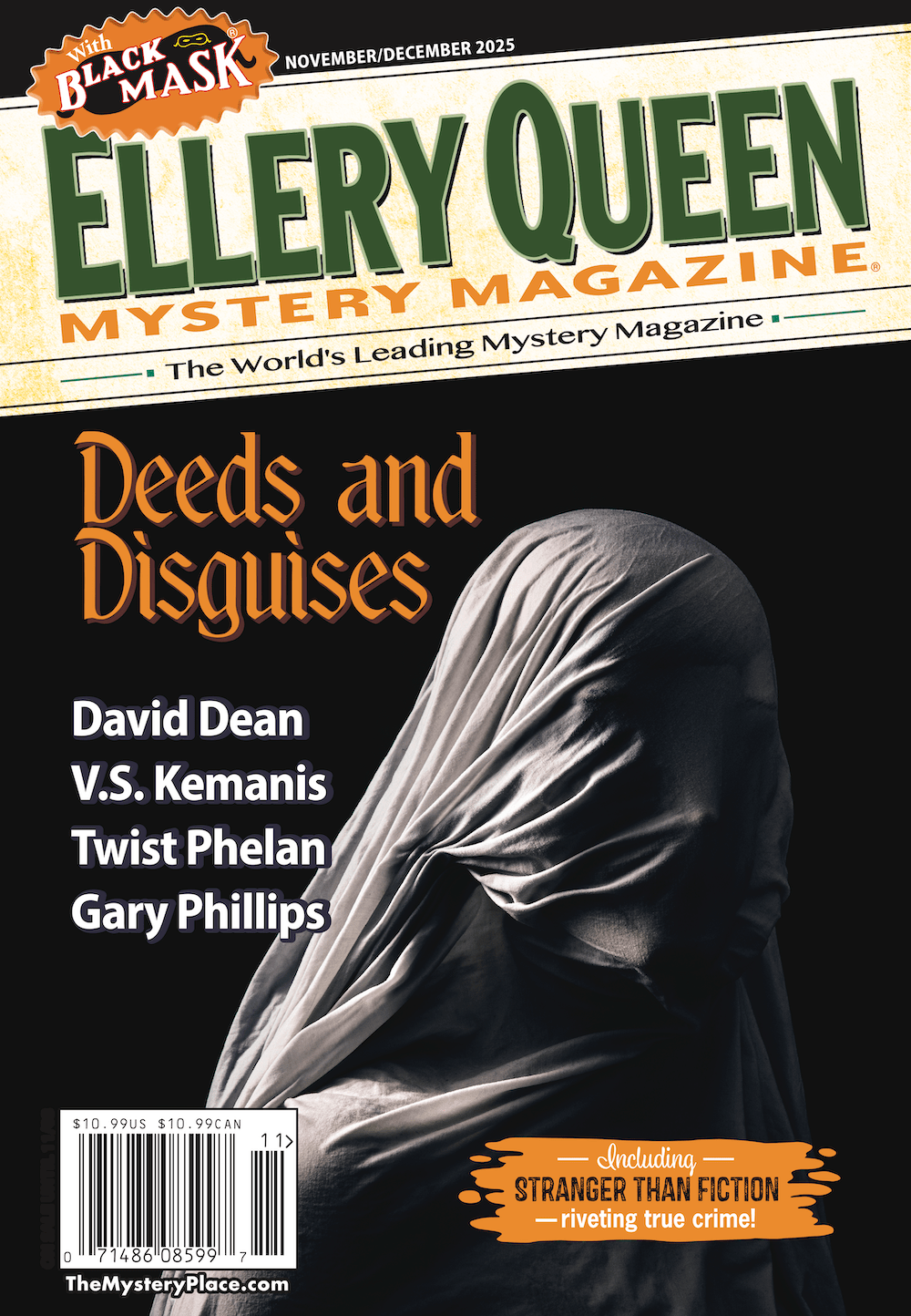
EQMM regular and anthropologist Sue Parman returns to our blog with this fascinating history and exploration of the occult mystery! She continues this mysterious tradition in our Nov/Dec issue with “Death Is Only the Beginning”
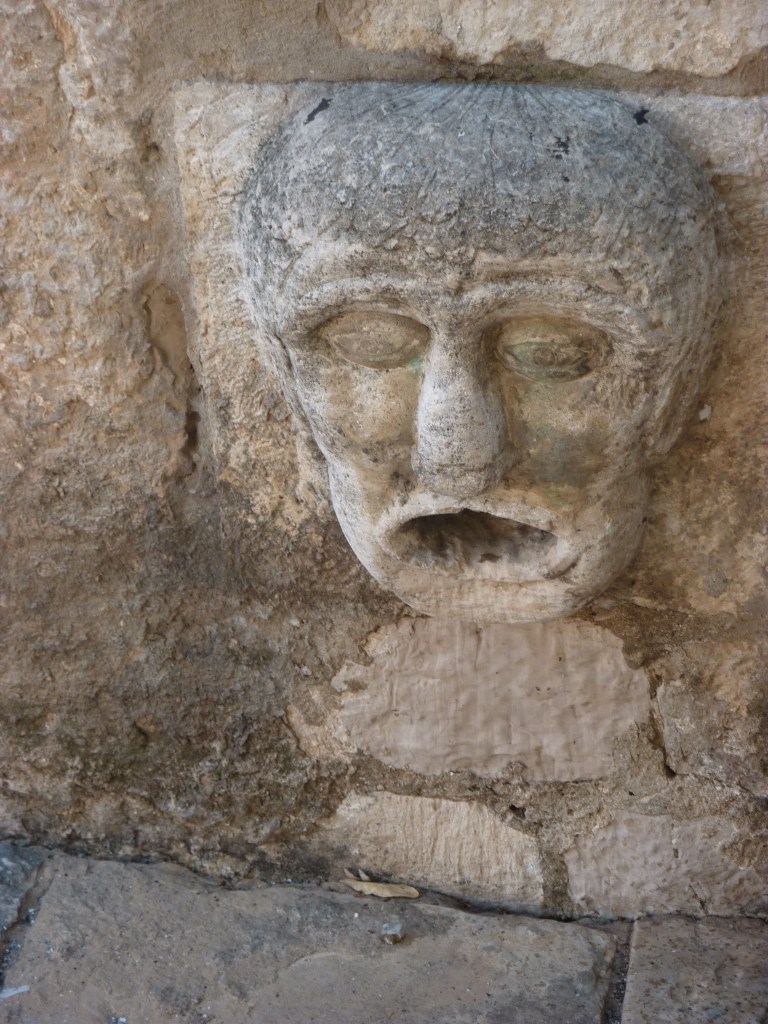
In my story, “Death is Only the Beginning,” George Tsarvas is an archaeology graduate student hired by the mysterious Omega Society to investigate a four-thousand-year-old mystery on a Greek island where people buried those they believed to be vampires. George joins a host of occult detectives who since the 19th century have been solving mysteries associated with supernatural elements such as the undead, ghosts, demons, and various magical and fantastic beings.
The first occult detective in fiction may have been Harry Escott (created by Fitz James O’Brien) who, in a story published in Harper’s Magazine in 1855, investigated a ghost in “The Pot of Tulips.” In 1859, a short story called “The Haunted and the Haunters, or, The House and the Brain” by Edward Bulwer-Lytton was published in Blackwell’s Magazine and is identified as one of the earliest Victorian ghost stories. It features a gentleman-scholar who solves the mystery of a haunted house. In 1869, Sheridan Le Fanu introduced Dr. Martin Hesselius, a German physician, in a short story called “Green Tea.” Dr. Hesselius goes on to solve mysterious supernatural occurrences in a collection published in 1872 called In a Glass Darkly. The stories explore the idea that these supernatural events may be explainable in medical or psychological terms. Dr. Messelius is a precursor of Bram Stoker’s Van Helsing in Dracula (1897) and Conan Doyle’s Sherlock Holmes in Hound of the Baskervilles (1902).
Sometimes called the first psychic detective of fiction, Flaxman Low was created by British authors Hesketh Hesketh-Prichard and his mother Kate O’Brien Ryall Prichard (known by their pseudonyms H. Heron and E. Heron) in a series of stories initially published by press baron Cyril Arthur Pearson in his monthly Pearson’s Magazine and later collected under the title Ghosts: Being the Experiences of Flaxman Low in 1899. Pearson promoted the stories as real, much to the surprise of the authors who conceived of Flaxman Low as a leading scientist of the Victorian era. In a story published in 2009 (“The Things that Shall Come Upon Them” in The Improbable Adventures of Sherlock Holmes), Barbara Roden pairs Low with Sherlock Holmes to investigate a haunted house. In an interview to promote the book (Barbara Roden, Author of “The Things That Shall Come Upon Them” – The Improbable Adventures of Sherlock Holmes : The Improbable Adventures of Sherlock Holmes accessed December 16, 2025), Roden notes that Hesketh Vernon Hesketh-Pritchard was a good friend of Conan Doyle, and she wanted to leave the reader in doubt about the role of the supernatural in the mystery.
The tug of war between naturalistic and supernatural explanations of mysterious phenomena continues to this day. Sherlock Holmes left little room for supernatural explanations, despite his author’s spiritualist leanings, but other occult detectives took the supernatural seriously. William Hope Hodgson’s occult detective, Thomas Carnacki, distinguished between the “ab-natural” and the “natural” world, each requiring different strategies of investigation, and other writers have continued Carnacki’s adventures (e.g., 472 Cheyne Walk: Carnacki, the Untold Stories; Carnacki: Heaven and Hell). Alice and Claude Askew wrote stories about an occult investigator, Aylmer Vance. Rose Champion de Crespigny created Norton Vyse who used psychic powers to investigate mysteries. In The Dream Detective, Sax Rohmer created the occult detective Moris Klaw who used “odic force” in his investigations. Aleister Crowley created Simon Iff, Dennis Wheatley Neils Orsen. The occult detective theme has been used to create series by Douglas Adams (Dirk Gently), Jessica Amanda Salmonson (Miss Penelope Pettiweather), Jim Butcher (wizard and Private Investigator Harry Blackstone Copperfield Dresden in The Dresden Files), Dean Koontz (Private Investigator Jessie Blake and his partner Brutus the Hellhound in The Haunted Earth), and many others.
One of my favorites is Algernon Blackwood’s Dr. John Silence, a medical doctor who trained himself to develop paranormal skills that enabled him to battle ghosts, fire elementals, astral werewolves, and various malevolent cults. He was aided by two pets, a black cat named Smoke and a golden collie named Flame. I suggest that a future blogposter might want to examine the role of pets in occult and other kinds of mysteries.
My story “Death is Only the Beginning” deals specifically with vampires. Literary occult detectives sometimes work against vampires, sometimes in partnership with them, and sometimes they are vampires themselves (or some other supernatural being, such as Faith Hunter’s shapeshifting investigator who in the Jane Yellowrock Series is hired by vampire clans to solve problems). In The Vampire Files by P.N. Elrod, a detective becomes a vampire and solves supernatural crimes. The Canadian TV series Forever Knight features an 800-year-old vampire working as a homicide detective in modern-day Toronto, and in Blood Ties, a 400-year-old vampire, Henry Fitzroy, teams up with a private investigator, Vicki Nelson, to solve paranormal cases. In Moonlight, the private investigator is a vampire, and Angel features a vampire detective agency.
Archaeologists are ideal investigators in stories about vampires. Vampires often have ancient origins, and who better to investigate them than a scholar trained to interpret the past? Archaeologists are often trained to decipher ancient scripts, and delight in uncovering buried histories and forbidden knowledge (as in Indiana Jones in “Raiders of the Lost Arc”). Like Van Helsing and Sherlock Holmes, they are trained in the rigorous observation techniques of the scientific method.
Examples of books that feature occult archaeologists include the first book of The Blood Gospel titled The Order of the Sanguines by James Rollins and Rebecca Cantrell in which an archaeologist teams up with a Vatican priest and a military forensic expert to investigate the crucified body of a mummified girl in a subterranean temple in Masada, Israel, that is exposed by an earthquake; The Historian by Elizabeth Kostova in which an historian pursues archival and archaeological clues to uncover the truth about Vlad the Impaler, the medieval ruler whose bloody reign provided the basis for the legend of Dracula; The Vampire Tapestry by Suzy McKee Charnas that features Dr. Edward Lewis Weyland, a respected anthropology professor who has some of the characteristics of a vampire (drinking blood, immortal) that are biological rather than supernatural in nature; The Space Vampires by Colin Wilson in which a race of intergalactic vampires are brought back to earth by human astronauts and begin to take control of humans not by bloodsucking but by draining their energy; and The Strain Trilogy by Guillermo del Toro and Chuck Hogan in which a vampiric virus infests New York City and only a small band of epidemiologists and a Van-Helsing-like professor of East European literature and mythology can save the world.
How does my story fit into the canon of vampire mysteries? The regions most popular for vampire stories include big cities like Los Angeles, Toronto, New York, and New Orleans; small towns with secrets (Oxford, England; Nocturne Falls; Bon Temps, Louisiana); eastern Europe with Gothic castles, fog, wolf-infested forests, and ancient curses; and alternate-reality cities laced with magic. Mine belongs to the third category of eastern Europe.
But I couldn’t find any books featuring an occult archaeology detective investigating Greek vampires. For anyone planning to write one, the following books might be useful: The Vampire of Vourla and Other Greek Vampire Tales, 1819-1846, edited by Álvaro García Marín (2024); Greek Vampires by George Horton (2023); The Vampires of Athens series by Eva Pohler; The Oxford Handbook of the Archaeology of Death and Burial (2020) edited by Sarah Tarlow and Liv Nilsson Stutz (which discusses deviant burials and liminal dead); and The Restless Dead: Encounters Between the Living and the Dead in Ancient Greece by Sarah Iles Johnston (2013).
Of my three stories published in EQMM, all hint at supernatural explanations; only one settles on a naturalistic explanation (“The Book of Dead Cats”). “Gannets and Ghouls” and “Death is Only the Beginning” are both clearly in the camp of the occult. In the latter, George Tsarvos is not only an occult investigator, he is part of the supernatural universe himself.
Sue Parman is an anthropologist who enjoys writing stories that blend science and speculative elements. Her nonfiction essay set in the Scottish Outer Hebrides won Travelers Tales’ Grand Prize for best travel tale of 2024 and was included in the anthology Best Women’s Travel Writing (2026). Her short stories have been published in Ellery Queen Mystery Magazine, The Antioch Review, Lumina, and other journals and anthologies. She is also an award-winning artist and playwright. (https://www.sueparman.com)