In this week’s blog post, Jeff Soloway discusses how a friend’s birdwatching hobby helped inspire his latest story for EQMM, “Birds Are Like Beethoven”
People are always sidling up to us writers with story ideas that demand or cry out to be written, mostly ideas in which they play a starring role. Such types are usually best ignored, especially if they work in sales or M&A and/or their story embodies lucrative business or interpersonal lessons. We get a lot of those.
More rarely, but more thrillingly, someone steps forward with a genuinely compelling story, one that may not demand to be written, but rather, over time, persuades. Such was the case for my latest in EQMM, “Birds Are Like Beethoven.”
The idea came from my friend Sarah (I’ll call her), whose life story is objectively fascinating. She was brought up by a single mother in East New York, landed a full scholarship to one of the finest and fanciest private schools in Manhattan, attended Stanford, and is now the head of a team investigating allegations of biased policing in New York City. She’s married to an Italian film critic. Their little daughter is named after the heroine of his favorite horror/action movie.
One day, my wife and I invited Sarah and her family to our apartment. Sarah stepped inside, handed over the girl to her husband, my wife, and my daughter; shooed the trio off to the playground downstairs; accepted a glass of wine from me (the only remaining host); and informed me of the subject of my next story. It would be something not just personal to her but central to her self-conception.
Of course I was interested. This was no M&A blowhard. This was a Black woman who’d studied her way out of poverty and now busted cops accused of racist policing. And now she was about to reveal some hitherto unrevealed facet of her experience.
What I want you to write about, she said, is birdwatching.
Seriously? I thought.
Now, I love to base my characters on reality. As a crime writer, I’ve been fortunate to befriend a number of usefully intriguing people: strippers, prosecutors, drug dealers, graffiti artists. (One of them liked to paint graffiti while selling drugs—it went about as well as you’d expect.) One of my closet friends was an interpreter for federal drug-trafficking trials. My wife is a former travel writer who now, like Sarah, investigates police misconduct in New York City.
Why, I gently asked Sarah, the hell should I write about birdwatching?
I knew birdwatching was her favorite hobby. I had no idea why.
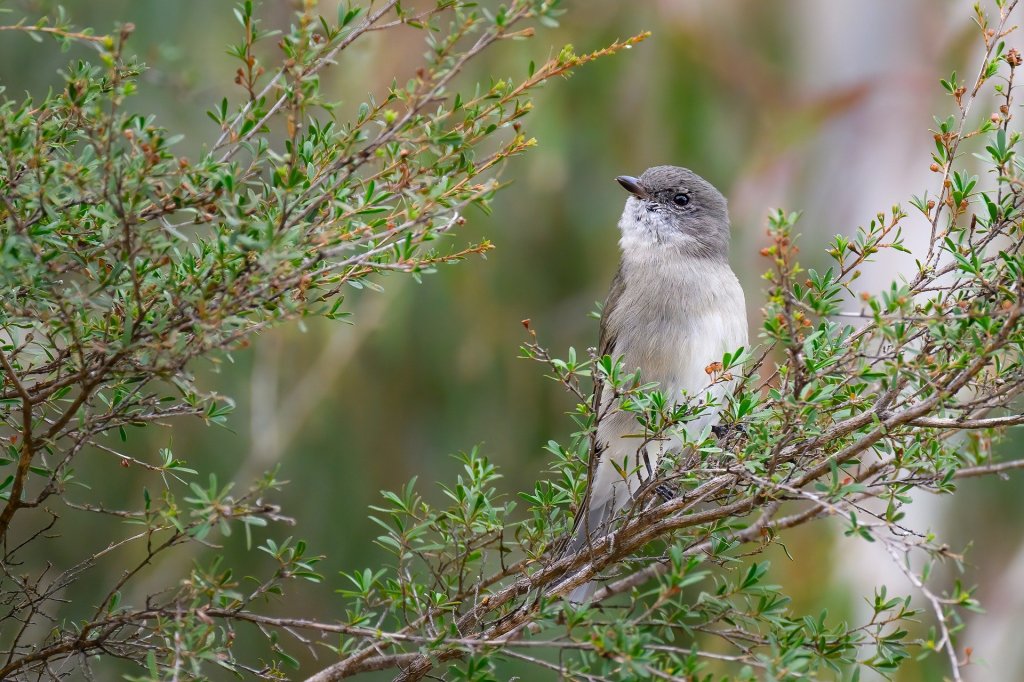
Sarah was prepared for the question. Birders, she explained, are the ultimate natural detectives, being attuned to the tiniest clues in the behavior of tiny animals. From a few chirps, hops, or swoops, birders learn to interpret birdsong, mating behavior, interbird squabbles, and bird psychology, particular signs of fear or distress. Every birder, in short, has to be Sherlock Holmes, since birds themselves are as quiet and secretive as criminals, but much smaller. Also they can fly. Imagine, Sarah invited me, a birder who devoted her patience and sensitivity to the cause of thwarting crime.
Go on, I said.
She expounded on the dramatic possibilities. Birders spend their days with their eyes lifted to the sky, or to higher tree-branches, or (in Manhattan) to ledges on tall buildings. They carry expensive equipment that could easily be mistaken for weaponry. They often operate at dawn and dusk. The intensity and obscurity of their observation attracts suspicion from civilians.
We gazed through the window down to my apartment complex’s concrete courtyard, where Sarah’s toddler-daughter was frolicking in the playground with my teen-daughter as our spouses looked on, and we talked through possible story scenarios. Afterwards, she lent me a bird book (What the Robin Knows—excellent) to assist with the facts. A few days later, I got started on the story—not the story I had expected to elicit from her, but the story I now urgently wanted to write.
Of course, my friend is more than her favorite pastime. As I puzzled out the story’s plot, my mind fixed not just on the concept of Birdwatching Sherlock but also on other elements I associate with Sarah. I imagined a birder stumbling into a dangerous police misunderstanding, the kind so often investigated by her agency. And as I envisioned how the birder would look and speak, I thought of her as well.
As the story took shape, the birder character remained central, but I decided to make the point-of-view character someone else. I settled on a 12-young-old boy, a non-birdwatcher, who at once loves and (being a 12-year-old boy) is baffled and exasperated by this family friend. A stand-in for the reader, he would be the one asking questions and receiving instruction, about birds but not just birds. This character was perhaps not entirely unlike my son when he was 12. Other details came from my life as well. The setting of the story became the apartment complex that I still Iive in and that Sarah came to visit. The courtyard that features in the story’s climax is where her husband and my wife and daughter took her little girl to play.
After I finished, I sent Sarah the story. I doubt it was what she expected, but she insisted she liked it—after gently but painstakingly correcting a few of my birdwatching references. Her favorite line in the story became the title.
No one but me could have written the story, but I could never have written it without her. None of us really invents anything anyway.

 SOMETHING IS GOING TO HAPPEN
Sounds like a very interesting story, one I will be sure to read. The 12-year old boy character sounds especially interesting as it reminds me of myself as a child.