Hard Knock Life: On the Films of Abel Ferrara (by Michael A. Gonzales)

Harlem native Michael A. Gonzales is a culture critic, short-story writer, and essayist who has written for The Paris Review, The Village Voice, and other publications. His fiction has appeared in several anthologies. His first story for EQMM, “The Life and Times of Big Poppa,” will appear in the Black Mask department of our May/June 2023 issue (on sale April 18). In this post he shares some insights into the work of filmmaker Abel Ferrara and reveals how two of Ferrara’s movies influenced his own work.  —Janet Hutchings

In the early 1990s, the two New York City films that had the most effect on me as a writer of noir/crime stories was Abel Ferrara’s double dose of big city sleaze King of New York (1990) and Bad Lieutenant (1992). While I had already discovered the pulp-lit of Chester Himes, David Goodis, Cornell Woolrich, and Jim Thompson, the holy quartet of streetwise scribes who led me to the path of noir, Ferrara brought that sensibility to life on screen. Two decades later when I began writing crime fiction, it was those two films that inspired me. 

A native New Yorker, born in the Bronx in 1951, Abel Ferrara was a hard knock kind of guy whose films had the raw, rough, and unpredictable energy of the city itself. Like my favorite Bronx Boys including writer Jerome Charyn, director Stanley Kubrick, comic book artist George Perez, and rapper KRS-One, he is a no bullshit kind of guy with vision that often borders on genius.

Ferrara started making movies in the early 1980s beginning with the B-movies Ms.45, China Girl, and Fear City, but it wasn’t until 1990 that I was introduced to his bleak worldview and neo-noir sensibilities through my friend (and future noir novelist) Jerry Rodriguez, who invited me to see King of New York with him in Times Square. After staring at the poster outside the Lowes Astor Plaza, where a block away hookers walked the street and three-card monte cats ripped off tourists, I wandered into the movie house not really knowing what to expect.

Sitting amongst a typical rowdy crowd who screamed at the screen and smoked weed openly, it didn’t take long after the movie began for me to block out the distractions and become absorbed by Ferrara’s dangerous visions of thug life in our hometown. Released at a time when “the drug game,” primarily crack and powdered cocaine, ruled the streets of the city, having hit hard my own Harlem neighborhood, Ferrara’s film introduced us to recently released kingpin Frank White (Christopher Walken) and his gang of mostly black henchman led by the energetic, and slightly crazy, Jimmy Jump.

Played with ghetto swagger by Larry (Lawrence) Fishburne, the crew was determined to take over the cocaine trade as well as giving back to the hood by building a state-of-the-art hospital in Brooklyn. Never one to do any acting halfway, Walken too was at his best as Frank White. Whether he was talking shit, gazing out of the window in his Plaza Hotel suite, or standing up to some subway muggers, the audience cheered for that troubled man who had so much on his mind.

Soon after getting out of prison, Frank unleashed a blood-bath gang war on everyone from the Italian mob to the Chinese gangs to the NYPD dudes (Wesley Snipes, David Caruso) determined to take him down. Yet, as good as Walken was, he was no comparison to Fishburne’s role as the bugged-out, blow-sniffing, gun-shooting Jump, who had more swagger than a million Jay-Z’s. Looking like his daddy might’ve been a Black Panther back in the day, Jump was crazier than most gangsters, but he still reminded me of a few cool but deadly dudes I knew in Harlem. Fishburne doesn’t walk in the film, he moves swiftly as a dancer, quietly as a jungle cat, and the role was one of his best.

Screenwriter Nicholas St. John, who’d collaborated with Ferrara on the director’s previous projects, gave Jimmy Jump some of the coolest lines in the movie. “Trust isn’t one of my stronger qualities,” he says, moments before killing a drug dealer. Additionally, the film also featured wonderful co-starring performances from Paul Calderon, Steve Buscemi, Roger Guenveur Smith and Giancarlo Esposito. Since many of those actors had worked together in other New York-centric films (mostly Spike Lee joints), the ensemble acting was seamless as the robbers, cops, and various baddies battled for supremacy in a decaying metropolis.

While King of New York overflows with violence, there are many dimensions to the film, as though Godard, fairy tales, and gangsta rap inspired Ferrara equally. The Schoolly D. songs used in King of New York, especially “Saturday Night,” only added to the hip allure of the film, an aural black cherry on top of a cake made out of dynamite. The song being played also gave Walken the opportunity to dance. Schoolly, who came from Philadelphia and was releasing songs long before Ice-T or Snoop Dogg, has been cited as the original gangsta rapper. He and Ferrara were perfect for one another, and would later work together on other films, including The Blackout (1997) and ‘R Xmas (2001).

While obviously influenced by Martin Scorsese, whose Goodfellas came out the same year, Ferrara’s perspective of our beloved sin city in King of New York was more diverse. Indeed, he sees the city as a melting pot where different races and nationalities worked together, a town where Blacks, Irish, Asian, and Latinas worked on both sides of the law and looked out for one another. 

Shot by cinematographer Bojan Bazelli, the film had strange texture that worked perfectly. Between him and Ferrara, the nighttime streets, rides on the subway, and various shoot-outs, including the brutal climax where damn near everybody died, felt like something Frank White actually dreamt while he was dying in jail.

Like most of Ferrara’s films, King of New York was shot on a tight budget, but the director still managed to master mix a calm art-house sensibility with a manic pulp vision that was dark, dangerous, and intoxicating. However, if King scraped the surface of the scum that drove cabbie Travis Bickle crazy, then Bad Lieutenant dived in deep and just continued swimming to the bottom for infinity.

Released two years after King, Harvey Keitel played the title character, a cop so damaged that even his fellow officers were disgusted by his behavior. The cops gave him sideways glances when he accidentally dropped a kilo of coke he stole from a crime scene or talked badly about the Catholic Church putting up a $50,000 reward for the capture of the “boys” who raped a nun.

Still, that was small stuff compared to the rest of the inspired decadence of the ninety-six-minute movie. The lieutenant, who wasn’t even given a name, was perhaps one of the most damaged characters in ‘90s cinema, filled with enough dread and pathos to fuel six David Fincher films. As he smokes crack in tenement hallways, masturbates in front of two teenaged girls, and shoots up with a hooker, we almost feel sorry for this pale-faced mess of a man.

Embracing those dark and scary places, Ferrara shot Bad Lieutenant, which he co-wrote with Zoë Lund, as though it were a modern-day horror movie. If King of New York was a dream, then Bad Lieutenant was a nightmare. The movie’s unintentional (I think) comic relief comes when he was at home surround by crying babies, an oblivious wife, and an old, white-haired mother-in-law who said nothing but stared at Keitel fearfully. She was the only person in the house who actually looked at him.

While one of the main plot points concerned the raped nun, Ferrara’s masterpiece was a brilliant study of a man who no longer believed in anything: a Catholic who doesn’t believe in God, a cop who doesn’t believe in the law, and a man who doesn’t believe in death because he’s already living in hell.

Keitel never stopped challenging himself when it came to taking difficult roles, and in Bad Lieutenant, he played the ruined character with the rawness of a pus-oozing sore. Unlike other scary cat directors, my man Ferrara (the tainted saint of cinema, the outlaw auteur, the Hubert Selby Jr. of movies) captured it all.

                          ***

One of the things I’ve always loved about New York City is how we can run into our cultural heroes on the street, in restaurants or in the living room of some Greenwich Village-dwelling weed dealer. That said, in 1996, I had the pleasure of meeting Abel Ferrara at a wrap party for Spike Lee’s Get on the Bus.

The celebration was at a midtown Manhattan nightclub called the Supper Club and when I saw him, he was standing upstairs looking like Ratso Rizzo from Midnight Cowboy with his arms wrapped around his then-actress/girlfriend Annabella Sciorra. In pure fan-boy style, I walked over to him and began gushing about how much I loved King of New York and Bad Lieutenant. Looking like he was high on something, he shook my hand and mumbled, “Thank you, man,” in a voice that reminded me of Tom Waits. There was a small pause and then Ferrara asked, “You want to come with us over to the bar.”  

I’ll always be thankful to Jerry Rodriguez, who later wrote the crime novels The Devil’s Mambo (2007) and Revenge Tango (2008), for introducing me to the work of Abel Ferrara.

—For more on Jerry A. Rodriguez and his novels:

Partners in Crime: The Life, Loves & Nuyorican Noir of Jerry Rodriguez

Posted in Uncategorized | Leave a comment

Turn Forth Her Silver Lining (by Archer Sullivan)

Pseudonymous author Archer Sullivan has had stories published in several literary and genre magazines, mostly under her own name, but her first fiction sale at professional rates was to EQMM. The story will appear in the Department of First Stories of our May/June 2023 issue (on sale April 18). She tells us that she’s a ninth generation Appalachian who currently resides in Los Angeles, where she is a real-life Beverly Hillbilly. Her topic here touches on something I’ve always believed in: the healing power of fiction. —Janet Hutchings

It’s interesting the way fiction heals. The way we can fall into a story when we most need it, lose ourselves in it, emerge changed. I can point to specific books throughout my life that shepherded me through tough times. Robin McKinley’s work in middle school. Sherlock Holmes in my early teens. In high school: The Princess Bride. Hitchhiker’s Guide to the Galaxy. Slaughterhouse Five. Later: Bleak House, Watership Down, True Grit, the many works of Lois McMaster Bujold. I regard these books as old friends and have distinct memories of where I was when reading them, how I felt.

A few years ago I was diagnosed with a chronic illness. I’d had it all my life but my symptoms had always been mild enough to generally ignore. Then, one day, something new happened. Sitting at my computer, typing, pain rushed through my hands. It was like lightning and fire all at once. And it didn’t stop. I felt it when I ate, when I watched TV, when I ran errands, and when I tried to sleep. But the worst was typing.

I had just begun a fledgling writing career, but I couldn’t type for more than ten minutes without agonizing pain. To make matters worse, I was suddenly alienated from my friends and family. I’m a socially awkward, neurodivergent, introverted person and I do almost all of my communication with the outside world via the keyboard. For me, thinking out loud exists on a sliding scale somewhere between exhausting and impossible so my entire life had (at least since I was twelve and had access to the internet and a computer) been conducted through typing. Now, suddenly, I felt completely closed off. Any fine movement of my fingers seared with burning, throbbing pain. Determined to find a fix, I was in and out of doctors’ offices, testing centers, and physical therapy clinics every single week.

I want to say up front—because there is a time and place for suspense and a blog post isn’t necessarily it . . . even if it’s the EQMM Blog—that this pain was eventually resolved. But, it took a while.

And, in the meantime, I found solace in books. Mystery had always been my favorite genre, but I’d never given it my full focus.

Now, suddenly, I had all the time and motivation to catch up. I re-read Sherlock Holmes, then discovered Alan Bradley’s fabulous Flavia series. I still remember—in the worst of that pain—lying on the sofa and laughing out loud at Flavia’s antics and rare, bold voice. I read several of Robert Parker’s Spenser novels and fell in beside Hawk and Susan in my amused admiration of Spenser’s unalterable moral compass. I decided—around the time I lost the ability to open even a peanut butter jar—that I could be soothed by Poirot’s fussy and meticulous crime solving and read ten or twelve Christies in a row followed by a few dashes of Dorothy Sayers, Ngaio Marsh, and PD James. Then I came back across the pond and stuck with the PI genre from Hammett to Chandler to McDonald to Hansen to Parker (once again) and then to Grafton.

I dipped into noir but always found it unsatisfying. Perhaps this should have been obvious. Noir is intentionally bleak, after all. So, while I appreciate the beautiful writing in many noir novels, I cannot actually enjoy them. Though I may admire the way the author works, the stark language, the devastating social landscape, noir isn’t an escape for me. And an escape is what I needed.

This is the thing about mystery—especially traditional mystery but usually in PI as well—you begin with a problem (a dead body, a missing person, a stolen item) and you end with a solution. Sounds simple. But in a world where we are all jaded, harried, and/or a little bit broken, this concept has power.

There are bad guys and there are good guys and, by the end, the bad guys are punished thanks to the efforts of the good guys. PI often goes into grayer territory than traditional mystery, but while a PI may skirt the law to creatively solve problems, they almost always stick to their own moral code which almost always ends in a positive solution for Team Good (or at least Team Not As Bad.) And that simple thrust of plot from problem to solution, from bad to good, from wound to healing, is good medicine.

Traditional mystery takes it a step further, presenting the reader with a problem at the beginning (usually a dead body) and challenging them to be part of the solution (finding the killer.) So when we read WhoDunIts we aren’t just watching the events unfold, we’re part of the process. Every step of the way. It’s empowering. And it’s a reminder that life isn’t (or doesn’t have to be) noir. Yes, we are a complicated species with myriad serious problems, but that doesn’t mean we’re doomed. Sometimes heroes emerge. Sometimes life changes for the better. Sometimes we manage to side-step what seems to be our fate.

Pain is a much studied phenomenon these days. In reality, it’s nothing more than the brain’s reaction to specific stimuli via nerves that may or may not be relied upon to accurately convey information. And yet it feels so solid. Sometimes, it can feel as if it will never end. As if it flows from an endless source. As if you, yourself, are made of it. And, in those times, it is often necessary to know that at least something is solved. Something is fixed. Someone is saved. There is good in the world and, at the end of the day, it wins.

As I went from doctor to doctor and test to test, Flavia’s conversations with Dogger pulled me through. As I lay awake at night with my hands throbbing to the point of frustrated, exhausted tears, Cordelia Gray’s determination held me together. As we finally came to understand the root cause of my pain (not my hinky finger joints but compressed nerves in my cervical spine) I celebrated with Poirot. And as I began the long journey back from muscular atrophy and nerve damage, I hung my hopes on the hook beside Spenser’s Red Sox cap.

It was more than a year before I came back to the keyboard. I remember the moment. The cold sweat slicking my skin, the pounding of my heart, the tears in my eyes. I was terrified that I would try to write and it would start all over. But I put my fingers to the keys and I typed. And I waited. I typed. And I waited. And no pain came.

I sent up a silent prayer of thanks to all the authors who had sat at their keyboards and typewriters and notebooks and sheafs of papers before me, who had put their hearts and heads and precious time into giving me and so many others hours of not only entertainment and diversion, but something deeper and more meaningful.

When I finished that first new story, I realized I was a different writer—a different person—than I’d been before. I still had the same chronic illness and would always have odd problems and distressing symptoms as a result. And, the pain could always come back if I didn’t stay on top of my physical therapy, strength training, postural adjustments, etc. But I could write.

And what I wanted to write was mystery.

Posted in Uncategorized | Leave a comment

All the Ways We Have to Reach You (by Janet Hutchings)

Last week’s post on this site generated a conversation about the need for writers to subscribe to publications to which they submit work. This week I’d like to discuss the various ways in which not only writers but all readers can purchase subscriptions or individual copies of our magazines. There have been some changes lately pertaining to the marketing of our digital subscriptions, but before we get to that I thought you might find it interesting to take a little journey back in time and see how EQMM has adapted to previous changes in the magazine marketplace.

When EQMM was launched in 1941, the newsstand was king. There was no viable way to get going other than to put as many copies as possible out on the newsstands, hope you’d be seen, and then try to convert as many of the newsstand buyers as possible to subscribers by way of ads or inserts. It was a very uncertain business, as EQMM’s founding editor, Frederic Dannay, wrote at the time. He called the launching of EQMM “experimental” because he wasn’t just facing the usual problems of visibility and competition; he was putting an entirely new type of magazine out there. That is not to say that there were not other magazines that fell roughly into the same category: There were still many pulp genre-fiction magazines on the market, including the famous Black Mask, so there would have been a readymade section for EQMM on the newsstands. What was different was that EQMM was digest-sized, printed on better paper than the pulps, and instead of being devoted to one type of mystery or crime story, it had very broad parameters for content.

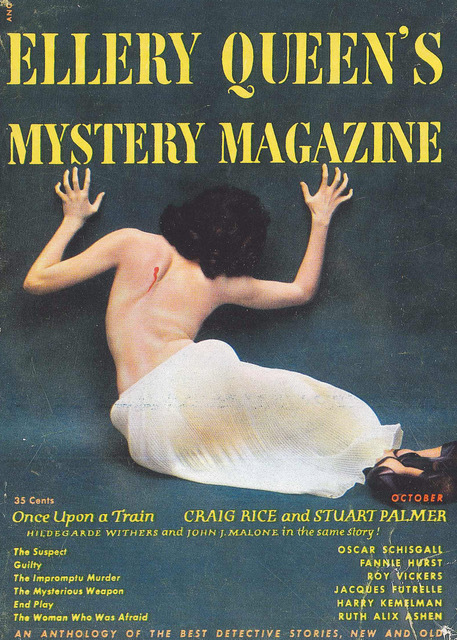
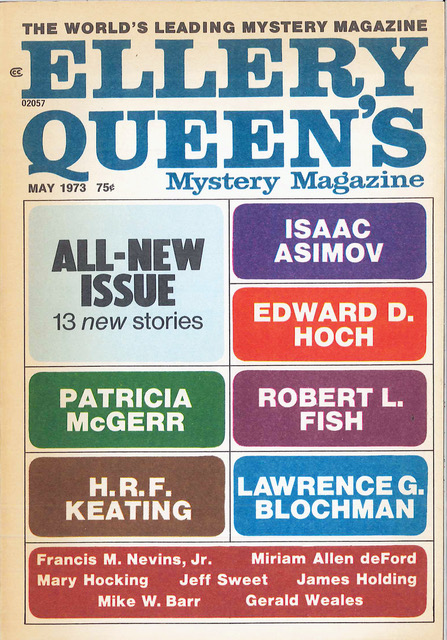
Dannay’s experiment was, of course, a success: The first issue sold over 90,000 copies—which would, today, be an absolutely astounding feat for a genre-fiction magazine. Nevertheless, competition on the newsstand was fierce. You had to stand out in some way to get the attention of new readers and as the first point of contact with buyers was the cover image, a lot of attention had to be paid to art. In EQMM’s first years, the famous book designer George Salter served not only as art director but cover artist for many of the covers. Eventually, in order to remain competitive on the newsstands, EQMM had to resort to more lurid and sexually explicit covers than was typical of the Salter issues. By that time, though, the magazine had already converted a number of its newsstand readers to subscribers, and Dannay didn’t feel comfortable sending copies with nudity and sexual violence depicted on the cover into households where kids might pick them up. Thus began in interval in which only newsstand buyers could obtain issues with cover art. Subscribers got plain-type covers.

By the mid 1950s a new multimagazine subscription business had come into existence: Publishers Clearing House. They offered customers the chance to choose from a selection of magazines from different publishers with the sale going through PCH—which, of course, took a cut of the profits. Their business model was a new concept in magazine marketing. In the mid 1960s, PCH added to their mailings the chance to enter sweepstakes at the same time a customer placed a subscription order. This was a very successful move for both PCH and the magazines it represented, including EQMM. By the mid 1970s, other similar multimagazine subscription businesses were coming into existence, and this way of acquiring paid circulation became the primary means for EQMM and many other publications—superseding newsstand sales.

And then it all changed—pretty suddenly! Because there was a hitch to those sweepstakes offers. Although many people believed it was only possible to enter the sweepstakes if you subscribed to one of the magazines offered, it was stated on the promotion (if you looked) that you could enter without buying a thing, and government regulations stipulated as much. In the 1990s, a lawsuit was brought against PCH alleging that entries that came in without purchases were being discarded. A series of further lawsuits brought against PCH and other companies in the multimagazine subscription business led to greater government oversight and eventually to most of the companies discarding the sweepstakes model. Their profits fell, which in turn resulted in their needing to take a larger cut of the profits made on each subscription.  Eventually, the proportion of the profits going to PCH and other such companies made it unprofitable for magazines like EQMM, which make their money on sales of the magazine rather than advertising dollars, to continue to acquire new subscribers through them.  That primary source of new business, for us, dried up.

The next decade was a difficult one for nearly all subscription-based magazines. I may have the figure slightly wrong after all this time, but I recall reading that the majority of American magazines lost at least ten percent of their subscription base during that period, and the more a publication had depended on sources such as PCH, the bigger the drop was.

That we were able to survive during those years is a testament to the commitment of our longtime subscribers. We started with a large subscriber base and managed to retain an adequate percentage of it. If you are one of those subscribers who were with us through the 1990s and early 2000s, thank you!

And then, miracle of miracles, in 2008 the e-reader came along! Our magazines were perfect for those early devices, since we print in black and white and have few visuals. Our marketing department was right on top of this revolution in publishing, and as a result our magazines became among the first to be offered on e-readers. Eventually, advances in technology took away our advantage, as it became possible to display full color, glossy magazines on most devices, and they flooded the digital marketplace. Fortunately, by that time we had already built up a significant digital-subscription business.

But now we come to a new turn in the road. After fifteen years, Amazon is discontinuing its digital subscription program. In September of 2023, the Amazon digital newsstand will close. In its place, Amazon is now offering Ellery Queen’s Mystery Magazine, and all of the other Dell fiction magazines, on its Kindle Unlimited service. Kindle Unlimited is a convenient, economical option, particularly for those who read multiple magazines and books on Kindle. The difference is that each time a new issue comes out, you’ll need to go to where the magazine is displayed and click on the “Read for Free” button. It won’t be delivered automatically.

If you prefer a digital subscription, the good news is that in the near future those will be available through our website. Available formats will include ePub and PDF, both of which are readable on Kindle, Nook, tablets, and other Apple and Android devices. The reader experience will be similar to the previous Kindle experience. We’re excited by the possibilities opened up by bringing digital subscriptions into our own sphere of business, but we ask you to be patient as we make this major transition. We’ll let you know, both on this site and on our social media, when this option goes live.

And, of course, you can always subscribe to the print magazine! Print subscribers continue to account for the largest part of our readership. Print subscriptions to EQMM can be purchased from us directly here. For our other magazines, please visit the individual websites.

If you’re someone who prefers to purchase the odd single copy of the magazines, you’ll likely not find them at your local big-box stores. They are, however, available in the magazine section of most Barnes & Noble stores—which makes sense, since our magazines are more akin to books than to the types of magazines found at giant retailers such as Walmart. You can also buy single digital issues on Amazon, Barnes & Noble, and other e-tailers. I hope this has given everyone a picture of where and how issues of the Dell fiction magazines can be obtained. What started me on this topic was last week’s discussion of the need to convert writers to readers, so I’ll close by adding that if you are a writer, you can sometimes obtain a discount on your subscriptions to magazines to which you contribute. The Dell mystery magazines occasionally offer such a discount, so keep your eyes peeled for one.—Janet Hutchings

Posted in Uncategorized | 9 Comments

Expecting the (Un)expected (by Janet Hutchings)

Ever since EQMM changed from monthly single issues to double bimonthly issues, a lot of my reading for the magazine has been concentrated in the “off” months, when there is no issue to release. This presents a challenge. No matter how much anyone enjoys reading—and I enjoy it a lot—when you read only fiction (indeed, only certain types of fiction) for many hours a day, day after day, it can be difficult to come to each new story unfatigued by what can come to feel like a sameness in themes, content, and styles. Fortunately, the crime-fiction field comprehends a vast literary space; the strength of the Dell mystery magazines, it seems to me, is precisely that there is so much variety in what we offer. But variety in the subgenres into which our submissions fall doesn’t necessarily result in a complete change of pace for us as we evaluate those submissions.

Even the most voracious readers have their favorite authors. I’m no exception. There are authors who brighten my day when their names appear in our submissions queue. Nevertheless, all authors have themes and types of characters and plot motifs that they revisit from story to story (or, for that matter, from book to book), albeit in ways that may not at first be apparent. When I am first becoming acquainted with an author’s work, it may take a while before I spot the elements that will be repeated in future submissions. It can be something as large as a type of plot—an author is irresistibly drawn to conspiracy stories, for example. Or it can be something as small as a descriptive element—such as always mentioning the specific height of each character (as one of our award-winning authors often does). In between those big and small preoccupations, there are innumerable ways in which the things that absorb a given writer shape the story. I recently listened to an audiobook by an author I’ve read before (and like) whose approach is mostly realistic, with the exception of a slight slant towards what seem to me to be unrealistically dark outcomes. 

There is nothing wrong with such preoccupations or predispositions. They’re necessary, I think: Good fiction derives from concerns that are deeply absorbing to the creator. But for a professional reader it can be a challenge to put expectations based on an author’s previous work aside and see each new submission in a fresh light. When I’m feeling a little daunted looking at a particularly long list of submissions, I’ll often start by reading those that come from authors whose names I don’t recognize. My hope, I suppose, is to encounter a new voice, and to see a plot unfold without any preconceptions on my part as to how it’s going to play out. If I find something new that’s right for us, it gives me energy to delve into more of the queue.

Of course, as just about any editor at any magazine will tell you, the majority of the good submissions we receive are from established authors, with whose work we are already familiar. A lot of anthologies in our field accept only blind submissions and require that authors not employ series characters who might be recognizable to the judges. I always felt that this would be an inadequate precaution against bias if I or any of my colleagues at the Dell mystery magazines were asked to serve as an anthology judge. I was pretty confident that I would recognize the work of many of EQMM’s regular contributors even with the names stripped from the manuscripts and no series characters appearing. Yesterday, however, a misclick on my computer resulted in the opening of a submission that I believed was by one of our regular authors (whom we’ll call Author A) when it was actually by someone else we often publish (Author B). I recall thinking, as I was reading the story, that it was something of a departure for Author A. However, I happened to know that Author A had an interest in the world in which this story was set and in the subgenre to which the story belonged, so I didn’t question that it was, in fact, by Author A. It was only when I returned to the submissions list that I saw my mistake. It occurred to me, then, that it might be more interesting to read submissions if one did not know who the author was. One would be reading from a fresher perspective. In this particular case, had I realized who the author really was, I might have seen where the story was headed—because I’d have remembered how other stories by Author B had unfolded. And as I mentioned above, all authors (at least all that I’m familiar with) repeat or reuse, consciously or unconsciously, some elements of their earlier fiction.

My point in sharing these reflections is, in part, to suggest a strategy to writers in making fiction submissions. EQMM allows multiple submissions, and we truly appreciate every author who thinks of EQMM as a potential market. We try to give careful consideration to everything submitted to us. But we receive a lot of stories, and if you want your work to be read with a fresh eye, it really is best to try to space your submissions out a bit. A number of unpublished authors make a new submission to EQMM every couple of weeks, and in such cases it is nearly impossible, after many have had to be turned down, to open the next submission with the anticipation of finding a story we can use. Even established authors risk having their submissions not stand out as much as they otherwise would when a large number of stories are submitted in a short period of time. It’s sort of like binge-watching a TV series. Do you remember each episode as clearly when you watch that way as you would if the episodes were spread out as originally aired? I don’t, and the same thing holds for me with multiple story submissions from a single author.

Of course, the problem from a writer’s perspective is that there are so few good markets for short stories. How can you avoid submitting too frequently to a given publication when there are so few alternatives? I don’t have a good answer to that. All of us in the mystery community need to figure out how to generate more readers of short crime fiction. If we could crack that tough nut, a proliferation of publications would likely follow. —Janet Hutchings

Posted in Uncategorized | 14 Comments

Head Trips (by L.S. Kunz)

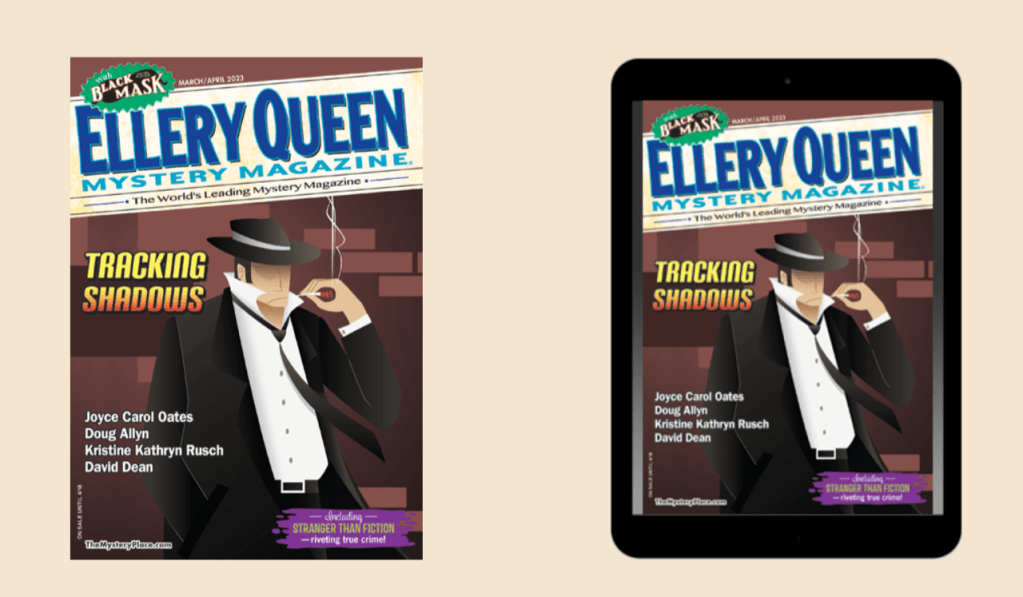
L.S. Kunz  has received awards for her short stories and middle-grade fiction, including the Bronze Typewriter from the League of Utah Writers, but her debut story in the Department of First Stories of EQMM’s March/April 2023 issue, “Midnight Run,” is her first professionally published work of adult fiction. It’s a heart-pounding thriller that you won’t want to miss. In this post, the author points to some things mystery fiction can teach us that pertain to real life.  —Janet Hutchings

A few years back, a good friend of mine gave me a copy of The Devil in the White City. I hadn’t read Erik Larson before, and I had almost no interest in the 1893 Chicago World’s Fair. Still, I trusted my friend, so I opened the book. That was Saturday morning. The laundry didn’t get done that weekend, but Erik Larson’s masterpiece did. I couldn’t put it down.

I had a similar experience reading John Berendt’s Midnight in the Garden of Good and Evil, a love song to 1980s Savannah, with its mossy oaks, shady squares, and unforgettable residents. Both books are true crime where murder is an excuse to immerse you in a time and place as unique as the characters who live there.

In The Monster of Florence: A True Story, Douglas Preston, with the help of his friend and fellow investigator Mario Spezi, weaves a similar tale. A series of unsolved murders provide the backdrop to explore Florence’s cramped cobblestone streets and the sweeping Tuscan countryside.

With Preston for a guide, you bask in the glow of Florence’s Renaissance past and pick through the debris of history right up to the early 2000s when Preston fulfilled the dream of moving his family to Florence.

In the shadow of Michelangelo’s David and Giambologna’s Abduction of a Sabine Woman, Preston peels back Florence’s touristy sheen to reveal an underbelly every bit as violent as the statues lining its historic streets. He lays bare the corruption and incompetence, pride and panic, beauty and banality that make modern Florence a treasure and a trash heap.

Florence’s brilliant past doesn’t immunize it from modern decay. By the time the police drive Douglas Preston from Italy and arrest Mario Spezi, you are shocked but hardly surprised. Bad identifications, false confessions, tainted crime scenes, planted evidence, fear, ego, ineptitude. It’s all in Douglas Preston’s book.

But it isn’t confined to Preston’s book. Around the world, in locales sublime and humdrum, innocent people are in prison. Right now. Convicted based on mistaken identifications or coerced confessions, faulty forensics or bad investigations. As Saul Kassin explains in Duped: Why Innocent People Confess—and Why We Believe Their Confessions, these incarcerated innocents aren’t bad people who were leading bad lives and barreling toward trouble. They are regular people. Just like us. It’s the stuff of nightmares and fiction, but it’s real.

One of my favorite things about mystery fiction is being transported to far-flung destinations. In my earliest reading memories, Mary Downing Hahn guided me into a crumbling graveyard in the wooded countryside of Holwell, Maryland. There, I perched, breathless, on the edge of a tombstone as I waited for Helen to come. Barbara Brooks Wallace tucked me behind the curtains in dreary Sugar Hill Hall, where I could sneak peeks at the forbidding Mrs. Meeching and the forbidden bowl of peppermints. Agatha Christie captained me up the Nile. Daphne du Maurier abandoned me on the windswept Cornish coast. And Mary Stewart sent me scrambling down scree and over cascading waterfalls in the French Pyrenees.  

Today, I revisit these old haunts like old friends, and seek out new mysteries set in exciting new places. But my literary journeys haven’t just transported me to new viewpoints. Without my realizing, they’ve transported me to new points of view as well. Subtly, step by step, my favorite mystery writers have taught me to look beyond the obvious. To spy the shortcuts my mind creates and reject them. To search for truth.

Books like Thinking, Fast and Slow, by Daniel Kahneman, and Rationality, by Steven Pinker, teach us that our brains naturally—and without our conscious input—simplify the world. To handle life’s complexities, our brains create shortcuts. If we want something to be true, it feels true. Even if it’s not. The more we hear something, the truer it feels. And once we’ve decided something is true, our brains filter the evidence to fit that belief.

But truth is nuanced, and justice often lies somewhere in the gray. Mystery fiction won’t let us be complacent. It teaches us to look beyond the narrative that feels true to find the real truth. The obvious suspect might be the culprit, sure. But the investigation never stops there.

As Maria Konnikova explains in The Confidence Game, “When we’re immersed in a story, we let down our guard” and “we may absorb things under the radar, so to speak.” “We may even find ourselves, later, thinking that some idea or concept is coming from within our own brilliant, fertile minds, when really it was planted there by the story we just heard or read.”

Admittedly, Konnikova was talking about con artists—how they use narrative to trick us into doing their bidding. But influence doesn’t have to be a grift. Stories turn us into better people—better citizens—even as they transport us.

Recently, Tana French’s The Searcher sent me tramping through western Ireland, across checkerboard fields, over “sprawling hedges” and “dry-stone walls,” in air as “rich as fruitcake.” I confess, when I first saw the bucolic village of Ardnakelty, I expected more of a ramble—a buddy story sprawling across the dappled countryside. Gruff but good ex-cop and grubby but guileless little girl bond while they solve the mystery of the girl’s missing brother.

But Tana French was never going to let my feet or my mind off so easy. As the sheen of the village tarnishes, so do its inhabitants. The ex-cop isn’t as gruff but good as he thinks he is. He wasn’t above the brutality he saw during his career. He was part of it. Complicit.

And the villagers aren’t as innocent as they appear. Except for the child caught in the middle, no one is spotless. Fear, cowardice, greed, bias, anger. None of it is visible from the country roads, but it’s there, lurking behind tweed caps and curtained windows, driving secrets deeper into the dark, protecting its own.

By the time “[t]he land has left its luring autumn self behind” and its “greens and golds have thinned to watercolor,” the ex-cop has changed too. The mountains have “burrowed deep inside him.” The only way he will solve the mystery is to acknowledge the bad in himself and accept that the answer to every problem isn’t a badge. Right and wrong are rarely as simple as we want them to be. Sometimes, the solution isn’t to seek revenge but to sit down and listen.

Mystery fiction has taught me to assess the real world with a reader’s eye. Sherlock Holmes taught me never to be deceived by the “obvious fact.” Doyle, Arthur Conan, “The Boscombe Valley Mystery,” The Adventures of Sherlock Holmes. Miss Marple taught me to reserve judgment till I have enough “definite knowledge” to make “definite assertions.” Christie, Agatha, Nemesis. And to act on behalf of others. Even if it’s dangerous. After all, “we are not put into this world, Mr. Burton, to avoid danger when an innocent fellow-creature’s life is at stake.” Christie, Agatha, The Moving Finger. And Mrs. Pollifax taught me that “small rebellions” can change the world. Gilman, Dorothy, The Unexpected Mrs. Pollifax.

Douglas Preston and Mario Spezi could have cowered in the face of pressure and threats. They could have stopped investigating. But they didn’t, and the world is better for it. Only by calling out unfairness can we hope to change society for the better.  

The best mystery fiction and true crime makes us better citizens of our communities and of the world. It sheds light on injustice and forces us to face our own ignorance. And it does it all while immersing us in the spellbinding sights and sounds and smells of distant destinations we may never get to visit in real life but can’t get enough of.

Posted in Uncategorized | Leave a comment

Out of One, Many (by Mike McHone)

Detroit freelance journalist Mike McHone started writing short stories in the mid 2000s, but it was only in 2018, after picking up his first copy of EQMM, that he decided to switch the focus of his writing to crime fiction. His work has since appeared in EQMM, AHMM, the Anthony Award-nominated anthology Under the Thumb: Stories of Police Oppression edited by S.A. Cosby, and in a number of other publications. He was the 2020 recipient of the Mystery Writers of America Midwest Chapter’s Hugh Holton Award for his soon-to-be-published debut novel You Make Yourselves Another. His new story in the March/April 2023 issue of EQMM, “Carver (and) [Company],” has a most unusual cast of characters. In this post he gives us a glimpse of what inspired him to create them. —Janet Hutchings

If a writer is lucky enough to hang around long enough to see at least a few of their stories wind up in print, it’s inevitable someone will ask where they get their ideas. After my story “Carver (and) [Company]” appeared in the March/April 2023 issue of Ellery Queen, I had three people ask me how I came up with the main character and the plot. Since I barely know what I’m doing (with writing, editing, dressing myself, life in general), I’ll try my best to answer.

First and foremost, if you haven’t read the story, well, shame on you. What the hell are you waiting on? I demand you buy five copies of the magazine to atone for your sins. Secondly, I’ll put the plot on a bumper sticker for you, as my hero Kinky Friedman would say. Josephine Carver is a private investigator and like most P.I.s she’s in need of a case to get some money in her pocket. The case she decides to take on involves infidelity. A wife suspects her husband of cheating, so she goes to Jo Carver for help. Jo takes the case and along the way discovers the “cheating” husband is not who he appears to be.

So far, there’s nothing new. Infidelity’s been done a million times in P.I. yarns, and if I had a nickel for every time a cheating case took a weird turn in a detective story, I’d have enough cash to buy a carton of eggs. However, from the outset (and by that I mean the very first line), we see something a little different concerning Jo Carver. She has assistants who help her piece together clues and ultimately solve the case, except her assistants live inside her head.

Yes, dear reader, Jo Carver hears voices.

No, she’s not insane, hasn’t suffered any traumatic event, doesn’t have a split personality, borderline disorder, or any form of psychosis. Her brain, as she says, is just wired a little differently, and because of this, she communicates with two very distinct voices that have been there since she was a child. The first voice is stern, by-the-book, critical, and sounds exactly like her grandmother Gertrude, hence her calling the voice Gertie. The other voice has a laid back, take-it-as-it-comes vibe whose tone reminds Jo of a fat, lazy cat, which is why she calls it Eddie, the name of her grandmother’s tabby.

Even though the voices are foils and the banter between them can be humorous, there was one important aspect that I made sure to implement when fleshing out the details of this story. This piece may be categorized as a comedy, but Jo would never be the butt of a joke. We can laugh at the circumstances she gets herself into, some of the things she says, or the replies from Eddie or Gertie, but we’ll never laugh at her for who she is. That would be cruel, and frankly there’s enough of that nonsense in the world as it is.

When I originally started this story, the main character was completely different. It was a person suffering from PTSD and the voices were quite nasty, but I quickly jettisoned that because I didn’t want to get too dour. However, I found the idea of intrusive narration by way of character interjections interesting to work with, and truth be told, I find the study of auditory hallucinations and disembodied voices fascinating. Historical figures like Sigmund Freud, Martin Luther King, Carl Jung, and Joan of Arc all claimed to hear inner voices. Sometimes, like Joan of Arc, the voices acted as a spiritual guide. Sometimes they were, as in Jo Carver’s case, voices of a relative that could be critical but helpful. According to some of the source material I poured through,  many people are in the same situation that Jo’s in. No trauma, no psychosis, just little voices popping up every so often to share thoughts. 

Although psychological communities around the world are still gaining perspective on auditory hallucinations, there have been a number of studies and articles done in recent years, some of which can be found here, and I hope you find them as interesting as I did:

https://www.popsci.com/hearing-voices-neuroscience-hidden-speech/

https://www.mind.org.uk/information-support/types-of-mental-health-problems/hearing-voices/experiences-of-hearing-voices/#.Xc6QxVf7SM8

Why Might People Hear Voices?

https://understandingvoices.com/

So, delving into an unordinary psychological character trait was one reason I developed this character, but the other was to try something I’d never attempted. Basically, I wanted to write a wholesome, good-hearted character who could go an entire story without saying fuck every two seconds. I did it and I now await my Edgar, Anthony, Pulitzer, or Nobel nomination, please and goddamn thank you.

I’ve written my fair share of neo-noir stories and tales that involve killers, betrayers, backstabbers, liars, and warped protagonists with enough baggage to make JFK International jealous. This time around, I wanted to take it in a different direction because, let’s face it, the world of mystery and crime fiction is filled to the brim with hardboiled characters and dicks (pun intended?) who can outshoot or out-think anyone. It’s chock-full of beautiful geniuses with square jaws and barrel chests with wits sharp enough that the Gillette corporation could package them up and send them out to market. They can kick ass, take names, are the smartest smartasses in the room, and look good while doing so.    

Jo Carver? She’s not a genius. She’s intelligent, but her cases are solved through hard work, experience, and maybe a little luck but not ungodly brilliance. She’s polite, not sarcastic. She’s ex-military and knows how to handle firearms, but she doesn’t get into shootouts willy-nilly. Taking all of this into consideration reveals the truly odd and sublimely weird aspect of this character that sets her apart from most fictional P.I.’s, detectives, or crime fighters.

She’s a nice person without any emotional baggage who just wants to help people.

Wacky, eh?

In today’s society, where it’s commonplace to argue on social media about quite literally anything from whether or not Coke is better than Pepsi (it isn’t), up to and including if COVID-19 is real (it is) and whether or not the Earth is flat (it’s not, and, please, stop entertaining this bullshit), where shootings in the U.S. are as much a natural, everyday occurrence as wind and sunlight, where self-righteousness drowns reason, where empathy is the most precious of all gifts due in part to its rarity, it’s nice to think that a good person is out there helping people, even if that person is fictional. Yeah, shootouts are cool, car chases are neat, punching a bad guy is badass, but being nice and lending a helping hand in this day and age?

Well, that is strange, isn’t it?

But, sadly, it shouldn’t be.

Posted in Uncategorized | 2 Comments

Two Mysteries (Only One of Which Was Ever Solved) by Michael Kardos

Michael Kardos is the author of the story collection One Last Good Time and three novels, the most recent of which is Bluff (Mysterious Press). His short stories have appeared in many magazines and anthologies and have twice won the Pushcart Prize. He co-directs the creative-writing program at Mississippi State University. Michael’s first story for EQMM, “What You Know, What I Know,” appears in our current issue (March/April 2023). In this post he talks about two real-life mysteries—and what fiction can do that real life often cannot. —Janet Hutchings

The first mystery:

When my sister Julie and I were kids, my parents would host dinner parties for their friends. Sometimes Julie and I ate ahead of time; other times we were allowed to eat with the grown-ups. At some point in the evening, once the eating slowed down and wine glasses had been refilled a couple of times, the grown-ups sitting around the table would begin to tell jokes. My parents loved joke-telling. They especially loved jokes with long set-ups. “I can never remember jokes,” people have told me my whole life. My parents remembered them. Or at least my mother did. My father was—is—someone who wants to believe he’s a good joke-teller. In practice, he’s the guy who gets almost to a punchline before frowning and saying something like, “Wait—did I mention he had a wooden leg? Well, he has a wooden leg. That’s important.”

Usually, the jokes at these parties were clean, or clean-ish. But one joke was not clean. It was so not clean that my parents always made Julie and me leave the room ahead of time. All we ever learned was the punchline: “If I were a rich man.”

But we never learned the joke leading up to it. For years, we wondered: what could possibly be the very dirty set-up to a lyric from Fiddler on the Roof?

The second mystery:

My mother was a high school English Teacher in Brooklyn. Early in her career—this would’ve been in the late 1960s—her school sponsored a poetry-writing contest for which she was the judge. The winning poem came from a student she never liked, a student whom she believed could never write a poem like the one he submitted. I say submitted, rather than “wrote,” because that’s precisely the point. She believed he plagiarized the poem. But this was decades before the internet, and despite my mother’s vast knowledge of poetry, this poem wasn’t familiar to her. It simply struck her as something a high-school student—and particularly this high-school student—wouldn’t have written. Without evidence of plagiarism, though, she had no choice but to go ahead and select the poem as the winner. It was, after all, the best poem.

Growing up, I heard the story about this so-called poet several times. Even decades after the fact, the whole episode still nagged at her, so much so that she still remembered a couple of the lines from the poem. Had he written it? Had she failed, as a teacher, by assuming, without any evidence, the worst about this young man?

No. There’s no way he could’ve written it.

Unless, of course, he did.

One day, about ten years ago, my own family happened to be visiting my parents back in New Jersey, and the subject of the old high-school poetry contest came up. My mother recited a line from the poem, and my wife asked, “Why don’t you just Google the line?”

And for the first time, she did. Seconds later, she was staring at the answer to a fifty-year-old mystery. I don’t recall the poem—it’s been ten years, and my mother is no longer alive to ask. But suffice it to say, the kid had, in fact, half a century earlier, plagiarized the poem to win his high-school writing contest. The mystery had finally been solved; my mother was right to have been suspicious all along.

But she didn’t feel vindicated. She just felt sad, and she later confided that she would’ve been happier not to know—to keep alive the smallest hope that this unexceptional student, for one particular moment on one particular day, had risen above the limits of her expectations.

The problem with my mother’s situation was that either her former student had plagiarized, or he hadn’t. One or the other. And because of my mother’s limited understanding of this student, the answer reduced him to one sort of kid or another.

But what if she—and we—knew more? What if, yeah, the student had plagiarized the poem, but here’s how it went down: The kid (we’ll call him Ben) was well aware of his lousy reputation. He could do no right at school or at home. He kept getting in trouble. So one Mother’s Day, he finds some nice poem in a book and copies it onto a piece of paper and gives it to his mother, who loves it so much. “Did you write this, Ben?” she asks. And because of the look in his mother’s eyes, and because what could be the harm, he shrugs and mutters, “Sure, I did.” Unbeknownst to Ben, his mother enters the poem in the school-wide contest. (She knows Ben would never stoop to entering a writing contest himself.) Ben has no idea the poem’s been entered, but then he wins. And so now he’s terrified of being exposed. But the teacher, a nice young lady, Mrs. Kardos, she seems content with giving him the prize even though he’s getting a D in her class, and surely she must know he couldn’t have written the poem. Days and weeks and years pass. And although he always feels a twinge of guilt about it, there’s no denying the much-needed lift it gave to his mother all those years ago. And not just then. For decades. Even now, when she’s in her 80s and he’s approaching 60, she’ll sometimes refer to him as “my poet.”

That’s not what happened. But it’s what fiction can make happen.

In the realm of fiction, mysteries exist to get solved. But the solution itself isn’t enough, and sometimes isn’t even the point. What fiction can do—and what “real life” often fails to—is to bring a story to its conclusion, to solve the mystery, in a way that enlarges our sense of wonder and possibility.

Which brings us back to that long-ago joke my sister and I were never allowed to hear. Many years later, I said to my parents, “Remember that dirty joke you always kicked me and Julie out of the room for with the punchline ‘If I were a rich man’? What was the joke?”

My parents looked at each other. They vaguely remembered the punchline. Neither one remembered the joke.

“You’ve gotta be kidding me,” I said.

I’ll admit, after that I looked online for the joke a few times, to no avail. But this incident wasn’t so long after the plagiarism mystery got solved, and pretty quickly I stopped searching, deciding it was better not to know. Maybe one day I’ll change my mind. For now, though, I prefer to imagine my parents and their friends young and red-faced and doubled over in laughter after hearing the best, dirtiest joke there ever was, a joke that will always live tantalizingly just out of reach.

Posted in Uncategorized | 2 Comments

Hardboiled Poetry (by Michael Wiley)

A Shamus Award winner and college professor Michael Wiley is one of the most innovative crime writers we’ve come across. He always seems to be trying something new, whether it be with his P.I. Sam Kelson, a character who cannot keep his thoughts to himself due to a brain injury, or his latest character Franky Dast, hero of The Long Way Out, an exonerated ex-con who investigates a series of murders in Northeast Florida. Michael has also written well-received series featuring P.I. Joe Kozmarski and homicide detective Daniel Turner, but his new story for EQMM, “Bad Boy,” featured in our current issue (March/April 2023) is perhaps his most original work in the field. It’s a full-length noir tale told entirely in verse, and it’s got several sequels (which we expect will eventually be published in book form) that, taken together, form something very like a whodunit mystery. He talks about what led him to write the story and its sequels in this post.  —Janet Hutchings

I fell in love with hardboiled crime fiction for its poetry. As a kid, when I read Raymond Chandler’s Farewell, My Lovely and met Moose Malloy—a man “as inconspicuous as a tarantula on a slice of angel food”—I became hungry for metaphor. When Frank and Cora drew blood in a violent kiss in James Cain’s Postman Always Rings Twice and their kissing “was like being in church,” I realized that plain words can knock a reader out too. By the time I saw David Goodis create sparks by making words and whole sentences turn on each other in Nightfall—“The trouble with people is they don’t understand people”—I was a goner. I thought, who needs Wordsworth’s daffodils?

I went to college in Chicago planning to become a professional writer. I took all the classes I could find to prepare myself, and I burst from graduation ready to get started.

Then, like a lot of young writers, I ran into walls. Thick, high walls. Most of them of my own making. I wrote stories that mimicked the voices of the writers I loved and that were populated by unoriginal characters acting in plots we’d seen before. For four years, I survived by writing articles for small magazines, speeches for a Chicago politician, and industrial video scripts for every company that would write me a check. Anything to pay the rent. When I looked toward the future and saw only more walls, I did what I already knew how to do. I went back to school, this time in New York.

As a graduate student, I studied poetry and learned three things: (1) New York pizza gives Chicago pizza a run for the money, (2) I didn’t know how to write, and (3) I needed Wordsworth’s daffodils.

Not only needed. I learned to love his poetry so much I wrote a dissertation on it. Wordsworth isn’t hardboiled. Ever. But he uses plain speech, which he calls “the real language of men.” And when he isn’t tiptoeing through the tulips, he’s digging deep into criminal psychology and clashing morality—in a man who’s more blameworthy than the woman he catches stealing from him, in a town’s response to a woman who might have killed her baby, in an ex-con who, though free from jail, can’t shake off the mental chains of his own guilt.

I also realized that much of what gets called our greatest poetry revolves around crime stories, the darker the better. Shakespeare famously deals with blood and violent death, and as I read and re-read him, I saw how much he meant to writers like Chandler, whose Detective Marlowe channels Hamlet and other tragic heroes.

If Hamlet often acts like a detective, the first major literary PI—Edgar Allan Poe’s C. Auguste Dupin—knows that the poetic imagination is a key to good investigative work and is himself “guilty of [writing] doggerel.” Of course, Poe too, when he wasn’t busy solving blackmail cases and murders in the Rue Morgue, wrote rhymes about birds.

Then, there’s the hardest boiled poet of all—that badass Emily Dickinson, who opens poems with lines like

I heard a fly buzz—when I died.

My life had stood—a loaded gun.

Because I could not stop for death—he kindly stopped for me.

These are little words. Hard words. Every one of them with enough punch to break a rib. Every one capable of knocking down a reader. “None stir the second time—on whom I lay a yellow eye,” she says. Take that, Mickey Spillane.

A few years after finishing grad school, when I started writing stories again, I wanted to make every word count the way that Poe and Dickinson do and the way Chandler, Cain, Goodis, and many other great crime writers, past and present, do too.

I’ve written eleven mysteries and thrillers now, some stronger than others. If my books haven’t “stood—a loaded gun”—I’ve done my best to make them shoot straight and hit their targets.

In doing so, I’ve also wondered how a crime story might work if boiled all the way down to essentials—the compact muscles, vital organs, blood, and bones of poetry.

When I read Robin Robertson’s The Long Take­, a two-hundred-page noir poem set in post-World War Two America, which was shortlisted for the Booker Prize, I realized what such a story might do. Robertson’s book is a mashup of the kind of tough fiction I’ve always loved to read and write and the powerful poetics I’ve admired. I saw in it rhythms, tones, and style choices I hadn’t thought through before.

So I fell to temptation.

“Bad Boy”—in the March/April issue of EQMM—is the result.

It’s an experiment to see how well, by using the stuff of poetry, I can tell a story that gives the pleasures of hardboiled fiction. The narrator—Bad Boy himself—speaks in deliberate cadences. I mean these cadences and occasional off- or internal rhymes to add to the atmosphere and mood, while staying true to his voice. He talks about his gritty life in the little town of Hollow Rock (aka “Nowhere Tennessee”)—about what’s missing and what he’s willing to do, mostly on the wrong side of the law, to fill the holes he feels. Every word counts. Take out a line or two and the thing would collapse like a skeleton missing a femur. His silences count as much as what he says.

Some of us find joy on mean streets and in midnight alleys. In “Eating Poetry,” Mark Strand says he “romp[s] with joy in the bookish dark.” I romped a little while writing “Bad Boy.” The dark story has brought me joy. I hope it brings you some too.

Posted in Uncategorized | Leave a comment

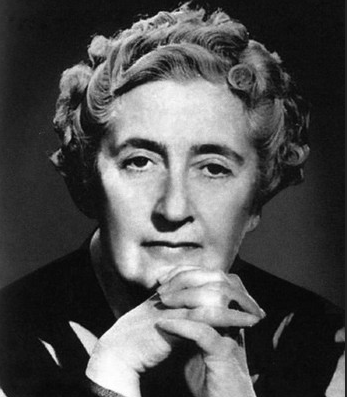
Why Agatha Christie Remains the Queen of Mystery (by Autumn Doerr)

This week we have a post from a reader of this blog who was inspired to submit an essay to us by some earlier posts on this site. She’s a mystery writer as well as a reader. We’re pleased to introduce you to Autumn Doerr, who has some worthwhile reminders of what mystery writers owe to Agatha Christie.  —Janet Hutchings

Why is Agatha Christie the best-selling author of all time (if you don’t count the Bible)? Copious amounts of ink have been spilled answering that question. With your indulgence, I will add some digital words to the topic, from the perspective of a mystery reader and writer.

Christie’s genius was to advance her stories through misdirection, the foundation of a good mystery. For her, this foundation stone included: sleuths who are often underestimated and even dismissed; the weaving in of crimes other than the murder in order to distract from the truth; including messages both written and verbal that can have more than one meaning and can be (and are often) misinterpreted; and perhaps most importantly, giving her characters secrets that drive their behavior.

These are all familiar strategies used by mystery writers, but Christie was the virtuoso when employing them in her work. When I start to write a new mystery, I revisit each form of misdirection as a reminder of how to get the reader to “look over there.”

All of the forms of misdirection I’ve mentioned are used in most of Christie’s books. I’ll give some examples of each.

Let’s begin with Christie’s crime fighters, particularly Miss Jane Marple. She is often ignored, underestimated, misjudged, and even dismissed, which fools characters trying desperately to hide malfeasance. Miss Marple is so well drawn a character—an outwardly harmless old lady with her heart-shaped spyglass and knitting needles—that her mild-mannered countenance leads others to miss that she’s as sharp as a tack. So adept are her detecting skills that in The Murder at the Vicarage she’s able to solve the murder while nursing a sprained ankle and without leaving the confines of her cozy home in St. Mary Mead. Overlook this old lady at your peril. Her entire character is an elaborate case of misdirection through underestimation.

Another of the tricks Christie used to deceive was to include among the suspects criminals who are thieves, adulterers, blackmailers, embezzlers, or drug addicts. This is a clever ways to bury information and hide the identity of the killer, because stacking up what turn out to be unrelated crimes obfuscates the true motive of the killer. The characters in Christie’s stories are fully fleshed out and explored to the point that many could have a novel of their own. An example of Christie’s use of completely unrelated criminal activity to throw us off the scent is in the book At Bertram’s Hotel. There are thieves with elaborate schemes, a priest and his doppelganger, and a will reading that bring suspects to the hotel. None of these distractions has anything to do with the murder of Mickey Gorman. Christie’s use of multiple motives, misdirection, and the development of each of the characters and their secrets is so satisfying that when the killer is revealed it takes some time to process who has done what to whom. When Miss Marple eliminates all of the distracting storylines and cuts through the misdirection, the murderer is identified but the killer is just one piece of an elaborate puzzle.

We find another clever form of misdirection in Christie novels when characters misinterpret a written message that leads to a misunderstanding. One example is the phrase, “I can’t go on . . .” in The Moving Finger. This device is also used in the Tommy and Tuppence mystery By the Pricking of My Thumbs. A note reads, “Mrs. Lancaster is not safe.” In each case, the message is plausibly misunderstood. Similarly, one of the witnesses to a shooting in A Murder is Announced says, “She wasn’t there.” The inflection and which “she” is being referred to are only later revealed to be crucial clues.

As stated above, probably the most effective way to keep a story moving using misdirection is to provide characters with the need to protect a secret. Since nearly all of Christie’s characters have secrets to keep, the motives behind their secrets become part of the misdirection and take our attention away from the murder at the heart of the story. When all of the misdirection, in the form of characters with secrets to keep, common misunderstandings, and criminal behavior, is ultimately stripped away, a killer is revealed. In The Moving Finger and other novels, Miss Marple observes that the only relevant fact when you strip away the interesting yet irrelevant side stories is that there has been a murder. She says that all that matters is “that Mrs. Symmington died.”

Part of the pleasure of reading Agatha Christie, for me, as a mystery writer, is dissecting how a master such as Christie does it. I’m not just reading to discover whodunit but observing how they planned and executed the crime, and, in the end, get caught, all while throwing us off track. This is at the heart of a satisfying mystery. When I get stuck with my own mystery writing, I always go back to the basics. It was Agatha Christie who turned those basics into an art form.

Posted in Uncategorized | 3 Comments

The Mystery of Writing Mysteries (by Terena Elizabeth Bell)

Terena Elizabeth Bell’s work has appeared in The Atlantic, Playboy, The Yale Review, Juked, and other literary magazines, and she’s won grants from the Kentucky Foundation for Women and the New York Foundation for the Arts. She is making a departure from the usual placement of her work with her debut in EQMM’s March/April 2023 issue with the story “Meth.” In this post she talks about what is attractive to her about mystery and crime fiction—and what is not. If you like her story “Meth” (in our issue that goes on sale next week) make sure not to miss her recently published debut short story collection, Tell Me What You See.

I didn’t think of myself as a mystery writer until last year, but maybe I just didn’t know what a mystery was. I certainly grew up reading enough Nancy Drew and watching “Murder, She Wrote” to have some idea, but that idea was not for me. Mysteries were for people in far away places: Nancy in California with her housekeeper Mrs. Gruen, Jessica Fletcher in Cabot Cove. Even Sherlock Holmes was across an ocean, but let’s face it: I found him perceptibly clever when I was eight years old but around college he began to bore me. Sherlock is a one-trick pony: a horribly rude man who points out he’s smarter than everyone else, and when you’re an intelligent child this is admirable, but as an adult it wears on you.

In other words, save these characters’ intelligence, none of them were much like me. I wrote—and still write—about the people of Kentucky, the place I’m originally from, and Louisville-native Sue Grafton excepted, you don’t see many mystery writers from there. (Even Grafton’s books were set in California.)

As a young writer, this made it difficult for me to identify with the genre. That doesn’t mean the commonwealth was not a mysterious place: When I was eight, my cousin Bubba died in a car accident my grandmother swore was murder. The sheriff’s office did not investigate, which she said proved they were in on it. She went to the scene, drove the curve, looked down in the valley where the car caught on fire. I was in my 20’s when I found out no one else believed this—no one but my grandma and me.

Bubba’s death was the traditional mystery, my grandmother a Southern Fletcher. But at the end of the case, she did not ride on the sand to chirpy music upon her bicycle. She mourned. She grieved for my cousin the rest of her days, a long 22 years after.

I’ve never written about this before, which is odd since I write about everything else. I also say I never thought of my stories as mysteries before, but to prove that, we’d have to examine what a mystery means: Does labeling a story as the genre mean that the problem is solved, or are some cases never finished?

If a story is a mystery, does it even have to have a problem or can it simply dwell in the mysterious? As a Christian, I believe in the mystery of faith: man’s inability to fully comprehend salvation. But I’d never call the Bible a mystery.

Merriam-Webster defines the word as “something that is difficult or impossible to understand or explain”—something that, to me, could define anything.

Back in Kentucky when I was in school, we learned about Edgar Cayce, a 1920’s clairvoyant from my hometown and one of the greatest mysteries of the 20th century. Known as the Sleeping Prophet, he went into trances and, in those trances, spoke solutions: medical diagnoses, financial warnings, the location of Atlantis. He got these gifts from an angel, he claimed, who descended when he was a boy. The figure then asked what he wanted in life and Cayce said to help others. One of my uncles by marriage was a relative of his and, as a child, his parents told him, “Stay away from your crazy cousin Edgar,” each year at the family reunion.  In 1991, he was featured on “Unsolved Mysteries;” yet, he was no mystery to us back home. We didn’t wonder where he got those gifts. We knew he was a wacko nut job.

The crazy is common in Southern gothic, which is the genre I labeled my writing before. I like the unusual. I enjoy the off-beat. I would rather write about my grandmother than about who killed my cousin. The stories I write focus on the uncommon, my people and settings are always tilted. There is no whodunnit, my stories do not care; the mystery comes from context and character.

If I’d been 18—not 8—when my cousin died, would I have so readily seen it as murder? Or would I have seen it as the case of a woman who loved him, unable to come to terms with his death?

None of us were there, we don’t know what happened. He was in the passenger seat with no other body.

I write mysteries that are unsolved because in real life, there often are no answers. Life is not clean, it is not cozy. Life has mysterious faith of its own.

No. I do not write about California or New England. Instead of asking who, I ask why—a question all authors must ask themselves: Why do we write what we write? Why do we label as “genre”? Why focus on who when we could write about how? Or even where or why?

Posted in Uncategorized | Leave a comment