Reading: Classified (by Kristopher Zgorski)

Kristopher Zgorski debuted as the reviewer for EQMM’s Blog Bytes column (replacing Bill Crider) in our May/June 2018 issue, around the same time that he received the Raven Award from the Mystery Writers of America for his review site BOLO Books. BOLO Books (www.bolobooks.com) remains under his direction. The site is designed to highlight new books on or just before their release dates and also features in-depth reviews, author interviews, guest posts, composite sketches (often of people in the publishing industry), and critiques of cover designs and trends in covers. Kristopher has also recently launched, in conjunction with author Shawn Reilly Simmons, the YouTube vlog, WE ARE WHAT WE READ (https://www.youtube.com/channel/UCjGBcvh9gj0czjxlvxWueTg), in which authors talk about books they’ve read that have impacted them. (Be sure to tune in!) In 2024, in recognition of his contributions to the Malice Domestic community and the Malice Domestic genre, Kristopher will receive the Amelia Award from the Malice Domestic Convention. In this post he takes up an important topic not only for readers but for those of us who work in the publishing business. You can find more insights from Kristopher in each EQMM’s Blog Bytes department—a column that surveys and evaluates many different types of websites and blogs focused on crime and mystery fiction.  —Janet Hutchings

Let’s take a moment to contemplate the concept of sub-genres within crime fiction. The first thing readers need to remember is that there are logical reasons for placing books in categories. These are largely marketing decisions that serve several purposes: They help with bookstore placement; they aim to improve target advertising; and they help to manage reader expectations. But sub-genre classification is not meant to be any type of definitive statement. It is a guideline, just one of many tools designed to guide readers toward enjoyable reading experiences.

It is easy to tell it is not an exact science, because even within the industry and amongst readers (both sides of the equation) people don’t necessarily agree on the categories themselves. How many sub-genres are there? Too many to contemplate, given that if you can classify a handful of books by some similar characteristic, it may be valid to call that a sub-genre—even if you are the first person to make such a connection or claim. However, the reality is that a book can—and typically does—fit into more than one sub-genre.

For example:

The Police Procedural—This is likely a story in which some official investigation of a crime is the central driving force for the narrative. Readers are privy to how evidence is collected, clues are interpreted, and leads are followed until—usually—the culprit is uncovered and brought to justice.

The Serial Killer Novel—This is a narrative in which the central murder is part of a string of similar crimes, often perpetrated against victims with some common denominator such as physical or personality traits that may or may not be the root cause of the crime. Often the driving force propelling this type of narrative is the criminal’s preparation between crimes.

In this example, what happens when these two sub-genres are combined within one novel? Thomas Harris’s The Silence of the Lambs contains both procedural elements and some foundational components of the serial killer novel. This does not mean that every fan of police procedurals will enjoy the book. A reader simply might not relish the idea of serial crimes and would rather read about a different type of investigation. Similarly, a reader may find the mind of serial killers to be fascinating and yet have no interest in how the police investigate such cases. 

When we think about publishing in these terms, we begin to see how sub-genres can be useful tools but are not hard and fast rules.

There are even disagreements about what the core characteristics of a sub-genre really are. Let’s look deeper into one of these cases.

The Cozy Mystery—This is typically defined as a mystery novel that has an amateur citizen conducting an independent investigation that contains little to no on-page violence, bad language, or sex and most often takes place in a small, insular community.

But what happens if you break just one of those unofficial rules? Is a book that would otherwise have been classified as a cozy no longer a cozy? And if that is the case, then what is it? Fans of crime fiction will know that this leads to new artificial designations such as “an edgy cozy.” Or like Rob Osler recently proclaimed after Devil’s Chew Toy (his cozy mystery with a gay main character) was released, a “Quozy” (that is queer + cozy). These are useful qualifiers that help to join the right reader with the right book, but in the end aren’t they all still cozy mysteries at their core? (Let’s not even get into what’s so “cozy” about murder and/or whether Agatha Christie, the Grand Dame herself, wrote cozy [she didn’t].)

To complicate matters further, writers are now intentionally mixing genres in an effort to manifest something exciting and completely unique. This ability to craft cross-genre novels only works because there are genres (and sub-genres) in the first place. Here we see how a reader’s expectation going into a certain type of novel can be circumvented by an author who is then able to anticipate what a loyal reader assumes will happen and proceed to do something completely different.

But at what point do we see several similar cross-genre novels and then declare that style of book to be a new sub-genre of its own? Three, ten, a hundred?

These are artificial ways of categorizing books, but they are helpful. Right? Even that is debatable.

Anecdotally, I queried several of my friends who read way more than the average and each of them said that sub-genre rarely affects their decisions on what to read. They seem to be more interested in relatable characters and complex plots regardless of the particular crime fiction sub-genre a book most adheres to. The most often expressed caveat was some type of delineation between novels that are “too dark” or “too light,” but almost always with the qualifier that exceptions are possible on a case-by-case basis.

In contrast, when I asked individuals who are more likely to only consume one or two books a year, sub-genre seemed to be more prevalent in their thinking. If you are looking for a light beach read for your yearly vacation, it makes sense that if you previously enjoyed a cozy mystery, you might stick with that when the next opportunity presents itself. Why rock the boat when relaxation is the goal? (It’s worth noting that a common refrain with these more casual readers was “I look at the bestseller list,” which is a topic for another day.)

In the end, every single novel written is a combination of elements that already exist. Readers get to choose what they want to read based on any criteria they deem appropriate. The job of marketing teams at publishing houses is to make it easier for readers to make the most informed choices. Sub-genres are just one of those methods. A tool to be used—or not—as each individual reader sees fit. In many ways, it’s almost like magic that the right books reach the right readers at the right time—almost like an invisible thread links the two on some astral plane that controls the universe. Hey, wait a minute, has anyone ever written a book about that?


Posted in Uncategorized | 1 Comment

The Poetry of Mystery (by Mehnaz Sahibzada)

This week EQMM’s July/August 2023 issue went on sale. In it you’ll find “Death in the New Age,” a new story by Mehnaz Sahibzada. The author  is a 2022 Jack Hazard Fellow in fiction writing. Since debuting in our Department of First Stories in 2010 under the name Mehnaz Turner, she’s had stories in Jaggery, Strange Horizons, Mystery Magazine, and other publications. Mehnaz is also a poet; her poetry collection My Gothic Romance came out in 2019. It’s the connection between poetry and mystery that she discusses in this post.—Janet Hutchings

I read my first mystery novel when I was eleven years old and on a train cutting through the Swiss Alps. The book in my hand was Agatha Christie’s, The Mirror Crack’d from Side to Side, a handsome navy hardback with the paper jacket removed. I loved the causal flourish of diving into Marple’s St. Mary Mead as the train snaked its way through tunnels and across bridges that broke into an expanse of deciduous trees. I had lugged the novel from California to Saudi Arabia, where me and my Lahore-born parents, as well as my younger sister, would reside for three years during the 1980s before returning to the U.S.

Now on a family trip to Europe, I was finally reading the book.

My father, a physician, worked at Al-Hada Hospital in Taif. My mother, a stay-at-home wife during this era, busied herself with trips to the souk where she sought out spices for the curries and cakes she placed before us on the long dining table inside our desert abode. On weekends we’d visit the Kaba in Mecca or picnic by the Red Sea with a tin of kababs. And somewhere amid living in Pakistan, America, and Saudi Arabia, as well as my family’s travel excursions through Europe & Asia—I fell in love with the mystery genre. I couldn’t understand why every text in a bookstore wasn’t a mystery, nor why every person I encountered wasn’t a diehard fan. My proud young mind pitied the human who found little interest in the whodunit. How dull their reading lives must be, I reckoned. It wasn’t just amateur detectives, like Jane Marple, who appealed to me, but also the aesthetics I associated with the cozier moods of the genre: mahogany dressers, magnifying glasses, lush countryside, and cups of peppermint tea. I devoured Nancy Drew and Trixie Belden stories; watched Murder She Wrote, Scooby-Doo, and Colombo to the detriment of completing my homework and spent more time than I care to admit trying to perfect my pronunciation of Poirot (a feat I’ve yet to master). My favorite board game, predictably, was Clue, and I could amuse myself at any dull gathering my parents dragged us to by imagining the cohort of guests as a sea of suspects. I wondered about the inner lives each body guarded—who might be guilty of something yet to be discovered? 

This habit of reframing reality so it was refracted through the lens of a mystery has accompanied me into adulthood and my present life. I have relied on it through college courses, faculty meetings, weddings, and plane flights—reading the room with as much curiosity and anticipation as I would a good detective novel. Yet while the reading of mysteries was my first love, as a writer I gravitated toward poetry, which I began writing with a preternatural ferocity around the same age as I discovered detective stories.  At school teachers passed out the odd printed copy of a poem for us to squint over in class, but at home, I wasn’t drawn to reading poetry even if my notebooks teetered with the earnest rhymes I’d penned myself.

As I came of age, this identity of being a poet became part of my social image—but my alter ego, I noticed over time, had the silhouette of a detective. The classic detective as a loner, stoic, and observer—having an unsentimental yet probing nature—has always been a draw for me. As a Pakistani-American introvert, born in one country and raised in another, with a childhood marked by international travels and experiences, I could relate to the sense of alienation romanticized in the aloof figure of the sleuth.  At the same time, writing poetry gave me a space to piece together the clues and red herrings my shifting realities presented.  I explored spiritual questions like, is there really a God?  And practical ones like, why don’t most American women veil?

All through high school, college, and beyond, I kept my nose in mysteries, finding joy in the fresh scent of a book and a cup of hot chocolate. In graduate school, pursuing an M.A. in Middle Eastern Studies (1999), I read thrillers while working on my thesis—where I researched Islamic Numerology and attempted to solve the puzzle of why certain numbers (like three, seven, and forty) have become familiar patterns in literature and religious rituals.  It wasn’t until later, when I became a high school English teacher and began teaching mysteries, that I seriously entertained the possibility of occasionally writing them as well, and came to understand mystery stories as the suspenseful sibling of poetry, the genre I wrote in most frequently over the course of my life, and as I grew older, appreciated more and more, as a reader. 

I consciously began to grasp how the practice of engaging with mysteries for the poet might represent some understandable pattern when I read W. H. Auden’s 1948 essay, “The Guilty Vicarage: Notes on the Detective Story, by an Addict,” in which he explores both the allure and archetypal elements of traditional mysteries. In the essay, Auden comments on the psychological appeal of the genre and how it provides readers with a sense of order in a chaotic and uncertain world. The detective, as an emblem of the pursuit of justice, is usually the figure to help restore it. As a mystery-loving poet, I found solace in Auden’s essay.  And in researching his career in poetry, I stumbled upon his poem “Detective Story,” which I have returned to again and again when searching for poetic responses to the mystery genre.  Poetry and mystery writing, while distinct forms with conventions all their own, have much in common:  they can present a riddle for the reader to solve and rely on atmosphere to immerse them in a game of appearance versus reality, often maintaining a degree of emotional restraint. The detective, as archetypal lone wolf, works to uncover the truth; yet the poet is often a keen observer of reality, piecing together clues to uncover deeper meanings. While the poet explores the mystery of being through fragments, the detective parses together fragments to solve crimes. Poetry has a long history as a vehicle for social justice while mysteries can explore the brutal consequences of murder, greed, and social inequities. 

These connections did not occur to me all at once: they unfurled over time, making my relationship with both genres simultaneously more intimate and more strange.  Not only could my reality be reframed when observed through poetry or mystery goggles, but viewing the mystery genre through the lens of poetry and vice versa deepened my appreciation of both these forms while complicating their aesthetics.  There seemed to be something synchronistic about the meeting of these genres in my mind: both shared the obsessive philosophical quest to discover the truth. I understood that in surveying reality we are always operating through a particular lens or set of lenses: mine also hinged on the meeting point of poetry and mystery writing.

The summer after I turned twenty I wasn’t yet ready to piece together the clues of my own life to understand how my passion for poetry and mystery would later intersect.  But in June of 1994, I walked into the Tate Gallery in London, the first stop on my backpacking trip with a college friend; in the gallery I wandered aimlessly alone, gazing fleetingly at the art on the walls, until I stumbled upon James Waterhouse’s 1888 painting of “The Lady of Shalott,” inspired by Alfred Lord Tennyson’s poem of the same title.  I stood so transfixed by the painting, I couldn’t move for several minutes. Something in the Lady’s expression seemed to capture yearning in a way I had never before surmised.  Later that morning, in the museum store, I purchased a poster of the painting and a stack of postcards of it as well.  The latter would become bookmarks for the many mystery novels I was to consume in the years that followed.  But it would take me another decade or so to make a connection that surprised me:  I entered my classroom one morning to teach and closely analyze, for the first time, Tennyson’s 1832 poem entitled, “The Lady of Shalott,” with a group of high-school seniors. It was a piece I vaguely knew. My heart skipped a beat when we encountered the lines, “The mirror crack’d from side to side; ‘The curse is come upon me,’ cried The Lady of Shalott.”

With a shudder, I realized that the title of the first mystery I ever read on that train ride through the Alps came from a line of poetry. 

I thought again of the Waterhouse painting that had arrested my attention at the Tate Gallery: it wasn’t just the Lady’s mysterious yearning that had struck me that day in the museum, but also this glimpse into my own reserved nature spontaneously overflowing into lyric.

Posted in Uncategorized | Leave a comment

Facing Reality (by Bev Vincent)

Next week EQMM’s July/August issue goes on sale. It contains a new story by Bev Vincent, “His Fathers’ Son.” The Bram Stoker, Edgar, Ignotus, and ITW Thriller award nominated author of more than 120 published stories has not appeared in our pages for many years. We’re glad to feature his work again.  Bev is also the author of several nonfiction books, including The Road to the Dark Tower and Stephen King: A Complete Exploration of His Work, Life, and Influences. He also co-edited the anthology Flight or Fright with Stephen King. He is, as you’ll see from those credits, an expert on the work of Stephen King, and he makes several references to the “King of Horror” (who is also an MWA Grand Master and multiple Edgar Award winner!) in this post. The post provides an interesting take on a question that must now  concern many editors: Are readers ready for stories about the Pandemic?—Janet Hutchings

In Avengers #74 (March 1970), comic book writer and publisher Stan Lee wrote a Stan’s Soapbox column in which he addressed a frequent question from readers about why the comics contained “so much moralizing.” Comics, according to these readers, are supposed to be escapist reading and nothing more. “None of us lives in a vacuum—none of us is untouched by the everyday events about us—events which shape our stories just as they shape our lives,” Lee wrote.

Do people read mysteries or watch crime series to escape from reality? Some people would say they do, but what exactly are they escaping from? Even the cosiest of mysteries usually contain at least one murder most foul—even if the deed itself is off-screen—or some other dastardly deed, and the motives for the crimes are often familiar and ugly. Something from everyday life.

In the not-so-cozy realm, we often read about the brutal thing people do to each other. Domestic violence, beatings and torture. Grizzly murders. Ruthless behavior. Not exactly escapist. Real world stuff.

Mysteries are usually set against recognizable backdrops. We layer our fictional constructs on top of the familiar world. Many have been set during the chaos of war or in the aftermath of well-known geopolitical or social incidents.

It isn’t realistic to completely ignore certain events, but when is it “too soon”? It’s hard to imagine a crime novel set in the 1940s that didn’t acknowledge World War II. How many years did it take after 9/11, though, for writers to feel comfortable incorporating that tragedy into their stories? Did this reluctance come from writers’ feelings about the experience or from worries they might alienate audiences by referring to something so fraught with emotion? Perhaps a little of both.

I remember (vaguely) a high school English class in which we discussed some romantic poet who talked about how you can’t write about an experience while you’re still in the middle of it. A period of reflection is required to process it. But how long? Stephen King foreshadowed the destruction of the World Trade Center as a plot element in the final Dark Tower novel in 2004, and I remember some readers confessing their discomfort about it.

One of the most impactful incidents in recent years, of course, has been the coronavirus pandemic. It has been interesting to observe how writers—both in print and on screen—have responded to it. Some have chosen to ignore it completely or pay the minimum lip service. A recent episode of Law & Order, for example, featured a murder suspect wearing a “Covid mask,” without any other reference to the pandemic.

Grey’s Anatomy was the first major TV series to tackle the pandemic head on, which made a lot of sense for a medical drama. Even that series, though, postulated a post-Covid reality after that initial season, even though the pandemic was ongoing. Their viewers may have been exhausted by both living through and re-experiencing Covid. The actors, too, probably.

Writing crime stories set after early 2020 has its challenges. The way people have been living has changed. Working remotely means people aren’t as likely to get into violent conflicts with co-workers or experience road rage while commuting to the office. On the other hand, incidents of domestic violence have increased because people in strained relationships were spending much more time together.

As writers, we have to adjust to this new reality if we mean to be contemporary and realistic. I recently published a caper story where a gang of inept criminals has their latest get-rich-quick scheme stymied by the pandemic. Petty thieves don’t find many bills and coins in cash registers at convenience stores these days, since a lot of people have converted to digital forms of payment. A recent TV episode had a character using his presence on a Zoom teleconference as his alibi in a murder investigation, only to have a savvy forensic technician discover he had hacked the conference with a pre-recorded loop. Before Covid, that scenario would have required much more setup to make it relatable to a general audience. These days, most people are all too familiar with Zoom.

When King was working on his 2021 crime novel Billy Summers, he originally intended for it to be set in 2020. However, he reached a point in the story where he needed to get a couple of secondary characters out of town for a while. At first, he thought he’d send them on a cruise, but by mid-to-late 2020, no one was going on cruises. His solution to the problem was to move the entire novel back a year, pre-Covid. That’s the choice facing a lot of writers—incorporate the new reality or find a way to work around it.

In his forthcoming crime novel, Holly, King is going all-in on the pandemic. The main character, who has appeared in five previous stories, is a hypochondriac, so her fastidious attention to personal hygiene serves her and the story well. Other people in her immediate sphere have been seriously affected by the virus. There’s long Covid and Zoom funerals and all the other changes we’ve experienced since early 2020. Fist/elbow bumps. Are you Team Moderna or Pfizer—or no team at all? Negotiating when to mask and when not to. Covid denial and fake news.

King has always written about people in familiar circumstances, so it should come as no surprise that he decided to tackle something we’ve all experienced recently. There’s something else, though. It may be wise to chronicle the wound of lockdowns and prolonged acute illness and death while it is still fresh in our minds. We have been reflecting on it for a while now—perhaps it’s time to turn that reflection into prose. In a few years, we may not think as much about the days when we stockpiled toilet paper, masked before entering crowded rooms, used hand sanitizer like never before, and adopted the phrase—and the associated behavior—“social distancing.”

Writers who incorporate the pandemic into their work now are acting as social historians, in a way. Chroniclers of a unique period in our recent history. There will be, no doubt, many non-fiction books written about the pandemic, but those works may not be as accessible to a general audience. Ten, twenty, thirty years from now, when people are reading works of popular fiction written today, they will learn about what it was like to live though a pandemic from the perspective of people who experienced it, but in the more accessible vector of fiction.

This is the reality of 2023. At some point, as writers, we’ll probably all need to face it one way or another.

Posted in Uncategorized | 3 Comments

In Defense of Crime Fiction (by Dominique Biebau)

This week Thrillerfest is being held in New York City. The event includes master classes, seminars on the craft of writing, and advice from pros on how to pitch thrillers to agents and editors. It also includes a banquet at which the International Thriller Awards will be presented. This year four of the nominees in the short story category are from EQMM. One of them is a story from our Passport to Crime department: “Russian for Beginners” by Dominique Biebau. In this post, Dominique talks about the relevance of crime fiction to today’s world. We wish him and all of the other nominees from EQMM—Smita Harish Jain, Joyce Carol Oates, and Anna Scotti—good luck on Saturday night, when the award winners will be announced! —Janet Hutchings

Sometimes, writing crime fiction seems an irrelevant, even somewhat banal, occupation in a world that verges on catastrophe. The war in Ukraine, pandemics, climate change . . . As a thriller author, it is hard not to feel like a violin player on the Titanic. Do these times really need stories about fictional crimes when there is no shortage of real problems? How relevant is the thriller genre? Is it still morally acceptable to read crime stories, let alone write them?

In moments of existential doubt, I always turn to Hercule Poirot. 

As a teacher and a Belgian thriller writer, I spend one third of my life apologizing for the fact that I have too many holidays. Another third is spent apologizing for investing my time in something as frivolous as crime stories. The final third, however, I spend pointing at maps, showing where my native country is situated and explaining that, no, it’s not a part of France, and—God forbid!—I am not Dutch. 

Belgium is a bit like Delaware. No-one actually knows anything about us. We only have three famous people, two of whom are fictional: Jean-Claude Van Damme, Tintin, and Hercule Poirot. (Yes, Jean-Claude Van Damme is, despite appearances, a real person.)

Of these three, Hercule Poirot has influenced me the most. 

An egg with a moustache. That’s how I got to know Agatha Christie’s top detective. For me—as for so many others—the British actor David Suchet is the ultimate Hercule Poirot. Suchet portrayed the sleuth the way his creator probably intended him to be. Vain, cool, but with a mild benevolence towards anyone with fewer little grey cells than himself. 

Later in life, I continued to devour Agatha Christie’s crime novels and—as I became a crime writer myself—Poirot started to symbolize the way the world looks at crime fiction. At the beginning of most of Christie’s novels, Poirot is perceived as a clown, an eccentric buffoon. This appraisal, however, changes as the quirky little man morphs into an avenging angel bringing down the hammer of justice on his former mockers. The same can be said about crime stories in general: Seemingly innocuous and trivial, they too contain more than meets the eye.  

My favorite Poirot book is, without a doubt, Curtain: Poirot’s Last Case. In this book (written in the 1940s, published in 1975), an old, ailing Poirot goes after an unremarkable man who has committed five murders without raising any suspicion. Poirot throws himself into the case with the ferocity of a Nemean lion, something that will ultimately cost him his life—and that of the murderer. The book shows Poirot at the apex of his powers, a master leaving the stage with one final bow. By killing the murderer himself, the detective outpaces fate. He becomes fate.

In Curtain: Poirot’s Last Case, as in all of Agatha Christie’s books, nothing happens without good cause. The book is a meticulously constructed game of dominoes, where each stone topples another. Personally, I find that a particularly comforting thought. In real life, fate may strike with blind hunger, but in the Queen of Crime’s books, fate always has its reasons. Wanton, senseless violence has no place in Poirot’s universe and in the end, every question gets a satisfactory answer. 

During his time as an inspector with the Brussels police, Poirot has learned the tricks of his trade and he applies this knowledge with an almost autistic thoroughness. He takes his time. That idea, too, can be particularly comforting. In Agatha Christie’s books, no one dies unseen. Every life gets the attention it deserves, even if that attention often comes too late: in Curtain: Poirot’s Last Case, for instance, it takes decades before the crime is punished. 

Finally, Agatha Christie gave her famous detective the background of a refugee, a Belgian who has fled the ravages of the First World War. Poirot’s status as an exile makes him an outsider, someone who is regularly subjected to ridicule because of his outlandish ways. His foreign background, however, enables him to puncture the social delusions underpinning early 20th-century English society. 

The reader may find it strange that Poirot, having fled the horrors of war, throws himself into fighting crime with apparent pleasure. Hadn’t he grown tired of misery by then? Yet, on a deeper level, his choice is understandable. Wars are hard to stop, even a genius like Poirot can do nothing but flee. This inability forces him to shift his field of action to a level he can handle: the world of personal conflict. This shift contains a poignant message: Poirot, faced with the inevitability of history, only picks the battles he can win. He takes personal responsibility, but also meekly bows his head when reality exceeds his capabilities. This way, he creates isles of justice in a world that is engulfed by violence and indifference.  Too often, thrillers are accused of being nothing more than escapist entertainment. Those who read them would do so to escape reality or to marvel at someone else’s misery. The Hercule Poirot books have taught me that this is not so. Even though his adventures deal with murder and mayhem, they also create a vision of a world that is intrinsically better than ours: a place where every victim gets justice and every villain their comeuppance; a world where—on the rubble left by wars and climate change—poppies of justice can grow and flourish.

Posted in Uncategorized | 2 Comments

Edward D. Hoch, the Accidental Poet (by Andrew McAleer)

Andrew McAleer is the author of 101 Habits of Highly Successful Novelists and a co-editor of the anthology Edgar & Shamus Go Golden. In that volume, as he notes in the following post, he included a story by his father, John McAleer, that was discovered long after its author’s death and more than eighty years after it was written. John McAleer was known in our field not only for his mystery short stories but for his Edgar Award-winning biography of Rex Stout. Andrew McAleer, who is also a published mystery short story writer, tells us he recently completed a volume of short mystery stories featuring his father’s Golden Age detective, Henry von Stray. In this post Andrew turns his attention to another of our genre’s revered writers of the recent past: Edward D. Hoch—a subject dear to our hearts at EQMM.   —Janet Hutchings

Devotees of crime literature (Ellery Queen Mystery Magazine readers especially) will always remember Edward D. Hoch as a true master of the genre. A master of puzzles, deduction, humor, and the impossible crime. Additionally, as Francis M. Nevins, Jr. correctly observed in Twentieth Century Crime and Mystery Writers, Mr. Hoch was, “[T]he sole surviving professional writer of short mysteries.”

Ahh . . . but Mr. Hoch was more . . . much more—he was also a poet!

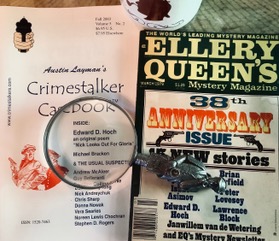
Mr. Hoch denied being a poet even though proof to the contrary exists. Twenty years ago I held in my hands an original poem written by Mr. Hoch on his official letterhead. How did I track down this poetic evidence? On February 24, 2003, I sent him a letter asking him to write me one. He did.

When I mailed the request I figured it was a long shot at best he’d reply. After all, Mr. Hoch was, among many other things, an MWA Grand Master, Edgar winner, and, by 2003, a monthly contributor to EQMM for three decades. No question about it, he would, quite understandably, be too busy to respond—let alone find time to author an original Nick Velvet poem for my fledgling magazine Crimestalker Casebook. I was wrong.

A mere seven days after posting my letter (Boston to New York), I sat at my desk reading an original Edward D. Hoch poem, “Nick Looks Out For Gloria.” The humorous verse consists of six lines with a delightful and clever rhyming scheme structured around Mr. Hoch’s iconic Nick Velvet caper-story series. As a great admirer of the Clerihew verse created by E. C. Bentley (Trent’s Last Case), I thought—and still do—that Mr. Hoch’s poem was as good as anything Bentley wrote in this tradition.

A signed cover letter dated March 3, 2003, accompanied the poem. Mr. Hoch humbly wrote: “I’m certainly no poet . . . feel free to reject it.” The poem did not receive a rejection and appeared in the Fall 2003, Volume 5, No.2 issue of Crimestalker Casebook. Other than finding a home in Edgar and Shamus Go Golden, for my father, Edgar winner John McAleer’s Henry von Stray mystery story (discovered eighty years after first penned in 1937), publishing an original work by Edward D. Hoch ranks as my highest literary honor. Fortunately for me, and all of Mr. Hoch’s fans, fate played a helpful role in making it all happen.

Here’s why:

I founded Crimestalker in 1997 at a time when authors seeking outlets for short crime fiction had few options. The pulps were long dead. Online magazines were virtually nonexistent. As a result, the short supply of hard-copy crime fiction magazines couldn’t meet demand. The few respectable mystery magazines that come to mind from that period are Ellery Queen, Alfred Hitchcock, Murderous Intent, and Mystery Time. In response, I founded Crimestalker Casebook, a publication dedicated to new mystery authors of merit. Ideally, each issue would include a veteran crime fiction author. This way, new authors would appear alongside industry veterans and could start building a publishing platform. Some of the veterans who generously contributed to Crimestalker include: William Link, Robert B. Parker, June Thompson, Gregory Mcdonald, Peter Lovesey, William G. Tapply, Katherine Hall Page, and Tom Sawyer. All literary giants; however, when it came to the mystery short story, Crimestalker authors couldn’t have hit a bigger jackpot than to appear beside Edward D. Hoch. Such praise still holds true today, as no author accomplished—or ever will—what Mr. Hoch did in his chosen literary field.  

In Encyclopedia Mysteriosa, William L. DeAndrea echoes Nevins’s observation that with the death of the pulp magazines, Mr. Hoch was the only one of his colleagues to make a living as a freelance, full-time writer of mystery short stories. EQMM Editor Janet Hutchings (Mr. Hoch’s editor for many years) confirmed in a recent correspondence that Mr. Hoch had a story appear in every issue of EQMM from May 1973 until December 2008. (See also, the Oxford Companion to Crime & Mystery Writing, Rosemary Herbert.) As an aside, the November 2008 EQMM had a story by Mr. Hoch finished by Jon. L. Breen. Mr. Hoch had been working on the story at the time of his death on January 17, 2008. An unprecedented thirty-five year plus run!  

More documentary evidence refutes Mr. Hoch’s “no-poet” claim.

“Nick Looks Out For Gloria” was not Mr. Hoch’s first published poem. He later wrote me that he’d had another published: “Who Killed Lenore?” This poem appeared in the briefly revived Saint Magazine (August 1984). Ironically, if more mystery short-story publishing outlets had existed in 1997,  “Who Killed Lenore” might be a stand alone.

Looking back I may have been a bit naïve asking Mr. Hoch to write a poem for my magazine consisting of about six subscribers, but I’m thankful I did because it provides us with the only other known example of this major American writer’s poetry. Perhaps more importantly, it provides us with one of the many examples of his kindness toward a new generation of mystery writers.

EDITOR’S NOTE: Andrew McAleer forwarded a copy of “Nick Looks Out for Gloria” to EQMM, and we thought readers should have a chance to see it. Here it is!

NICK LOOKS OUT FOR GLORIA
by Edward D. Hoch

Do you need an orange rind or a swizzle stick,

A burnt candle or a weathered brick?

Do you have the cash, the fifty grand for his fee?

If you use Nick Velvet it won’t be for free.

He’ll get what you want, bring it right to the house,

Then buy a gift for his high-maintenance spouse.

Posted in Uncategorized | 10 Comments

A Lazy Trope of Contemporary TV Crime Shows (by Kevin Mims)

An essayist, short story writer, and popular-fiction aficionado, Kevin Mims frequently contributes to this site. In this post, he reveals something he hasn’t alluded to before—his childhood love of model trains. Adult model-train enthusiasts were common in past generations, but as Kevin points out in this post, contemporary crime fiction (especially on TV) has created a  cliche of the hobby as associated with potentially dangerous minds. I agree with Kevin that this is a lazy trope—the kind of thing all good writers should avoid. I hope the post will lead to a discussion of other lazy shortcuts common in our genre. —Janet Hutchings

Growing up, I always wished I had a model railroad. But I was one of six children, and my parents couldn’t afford such elaborate toys. So I never had one. My wife, a baby boomer like me, also wanted a train set as a child. But she was a girl, and thus such a gift was deemed inappropriate. One of my best friends, Don K., is another boomer who grew up coveting a model train set. He never got one either but, even at 70 years old, he still loves to visit model train expositions. I sometimes think you can divide all American baby boomers into two groups: those who had model train sets as a kid, and those who wanted one but never got it. I’ve worked in bookstores for much of my life. Every time I sold a book or magazine about model railroading, the purchaser seemed to belong to my own approximate age group. For most of the twentieth century, model railroading seemed to be a respectable, if somewhat eccentric, hobby for grown men to pursue. But in the twenty-first century, model railroads seem to have become a symbol of a dangerous fixation on the past, primarily among older white guys. This trend has become particularly prevalent on TV crime shows. For the last twenty years, lazy Hollywood screenwriters have turned a love for model train sets into a clichéd way of representing baby boomers with an unhealthy nostalgia for a bygone time.

In HBO’s The Sopranos, the character of Bobby Baccalieri Jr. (played by Steve Schirripa) is a late baby boomer (born around 1964), a mobster, a killer, and a model train enthusiast. The Sopranos is, among other things, a show about American men trying to deal with a world in which white, male privilege is rapidly giving way to greater roles for women and nonwhites. Bobby’s love of model trains seems to represent his desire to return to a simpler, more homogenous past. In the second to last episode of the series (spoiler alert!) Bobby is killed by members of a rival mob. Fittingly, he is shot dead in a hobby shop where he is checking out a model of a Blue Comet train set. Two gunmen open fire on him and he falls dead across a model train display. Symbolism doesn’t get any more heavy-handed than that. His refusal to evolve and his nostalgia for an earlier, less complicated America are directly related to his death. Just in case you needed another nudge in the ribs, the episode was titled The Blue Comet. It first aired in June of 2007.

Two years later, on the Showtime series Dexter, viewers were introduced to a character called Arthur Mitchell ( played by John Lithgow), a baby boomer (born 1949), a Christian, a family man, and a model-railroading enthusiast. Alas, Arthur is also a serial killer known as Trinity (the FBI believes his killing sprees always come in threes). Arthur’s life went bad in 1959, at age ten, when his older sister saw him spying on her in the shower. She slipped and cut herself and bled to death in front of him. His parents blamed him for the death. His childhood—and his family—both pretty much ended with the death of his sister. As an adult serial killer, only his model railroad set can take him back to the innocence of his early childhood, before his sister’s death destroyed everything he loved.

In the second season of HBO’s prestige TV series Big Little Lies, fabulously wealthy businesswoman Renata Klein (Laura Dern) learns that most of her assets have been seized by the government because her Boomer husband, Gordon (Jeffrey Nordling, born in 1962), has been arrested by the FBI for insider trading and stock manipulation. Gordon, it turns out, is a model train enthusiast. Renata is horrified when she discovers that Gordon’s expensive toy train set is one of the few family possessions that he has managed to shield from government seizure. She makes this discovery in episode two. But her anger over it continues to boil until (Spoiler Alert), in the final episode, in one of the climactic scenes of season two, she takes up a baseball bat and destroys his little toy village and the expensive model train that runs through it. Gordon managed to remain unnervingly calm throughout most of season two, despite the fact that both his wife and daughter are suffering great emotional distress as a result of his malfeasance. But seeing his beloved train set—symbol of a simpler, more male-friendly past—destroyed by a shrieking female is more than he can take. Finally, the horror of what he has done seems to be dawning on him, and he appears to understand what Bob Dylan meant when he wrote “It Takes A Lot To Laugh, It Takes A Train To Cry.”

Also in 2009, in an episode of Midsomer Murders titled “Small Mercies,” Olivia Colman (who would go on to win an Academy Award for Best Actress for her performance in the 2018 film The Favourite) played a mentally unstable woman whose life revolves around a miniature village with a model train set that runs through it. The episode was partially filmed at the Bekonscot Model Village and Railway, located in Beaconsfield, England. Naturally, Colman’s character, Bernice, ends up being a murderer, and the first of her victims is killed because Bernice discovered him desecrating the model railway village by having sex on the site of it. Bernice couldn’t stand the thought of such disrespectful behavior towards a model railway and miniature village. Bernice isn’t a baby boomer herself, but she’s engaged to marry a boomer named Edward Palfrey (played by Paul Bentall, born in 1948), and she appears to share his somewhat older, stodgier worldview.

More recently, in August of 2021, Netflix debuted a new 8-part thriller called Clickbait. In this series, when family man Nick Brewer (Adrian Grenier) is kidnapped and murdered, suspicion begins falling on the multicultural cast of characters who lived in his orbit: his fortyish wife (Betty Gabriel), her lover (Motell Gyn Foster), the older brother (Daniel Henshall) of a Millennial woman Nick was believed to be having an affair with, Nick’s Millennial co-worker (Ian Meadows). But in the end (spoiler alert!), it turns out that Nick wasn’t killed by any of these people. No, the killer turns out to be Ed Gleed (played by Wally Dunn, born 1960), a Baby Boomer introduced only in the final act of the drama and given little character development. About the only thing we ever learn about Ed is that he loves his model train set. And the model train set he loves isn’t incidental to the plot. The viewer is led to believe that if Wally had paid more attention to his marriage and less attention to his model trains, the tragedy of Nick Brewer’s death never would have occurred.

In the 1970s, when Hollywood wanted to signal to TV or movie viewers that a character might be unstable they often made him a disgruntled Vietnam War veteran. This made a little bit of sense. Plenty of veterans of that war suffered emotional and psychological scars from their service that made it difficult for them to reenter civilian life. But the stigmatizing of model railroaders seems completely misguided. For nearly as long as we have been married (43 years) my wife has been dragging me to various northern California model railroad shows and exhibitions. I have met and chatted with plenty of model railroad enthusiasts at these gatherings. And, yes, most of them have been baby boomers like myself. But I’ve never read anything about a connection between a love of model railroads and anti-social behavior. Mostly these guys seem like friendly, neighborly fellows. If I had to guess, I’d say that most of these hobbyists are probably pretty conservative. They have a love of the past that seems to echo William F. Buckley’s definition of a conservative as someone who stands athwart history yelling Stop! But evincing a fondness for the 1950s, the 1940s, or even the 1890s shouldn’t automatically get one labeled a sociopath. Plenty of boomers simply long for a time when life didn’t constantly move at the speed of sound. You can’t really stand athwart history, but you can stand athwart a model train set and bring a tiny version of an American small town to a halt if you so desire. Is that so bad?

Posted in Uncategorized | 5 Comments

Judge Crater, Call Your Office: The Curious Disappearance of a Prohibition Era Judge (by Kate Hohl)

Kate Hohl makes her fiction debut in the Department of First Stories of our current issue (May/June 2023) with the evocative historical crime story “The Body in Cell Two.” She’s clearly well versed in history, including famous true crime cases, as you’ll see in this fascinating post. We hope to see more from her at both novel and short-story length soon! —Janet Hutchings

Gangsters. Chorus girls. Corrupt Tammany Hall politics. The disappearance of a prominent judge and subsequent manhunt. Sounds like the plot of a mystery novel. Or maybe a pitch for a limited series on Netflix. But once upon a time, these were the elements in a real-life missing person case that captivated the nation. A story so big that every detail of this unsolved mystery was splashed across the front pages of newspapers from coast to coast.

Before Amelia Earhart, there was Judge Crater. In 1930, Crater, a New York Supreme Court justice walked out of a restaurant in Hell’s Kitchen and seemingly vanished into thin air. Once touted “the mystery of the century”, Judge Crater’s disappearance baffled law enforcement and spawned countless amateur sleuths determined to crack the case.

I first stumbled across Judge Crater’s name while watching an old William Powell movie. In it, Powell’s character refers to someone “pulling a Crater.” When I heard the phrase referenced in two other movies, I had to know more. As someone who loves to read and write historical mysteries, I became fascinated with this real-life case of a missing person.

Here are the details that are generally regarded as facts: August 9, 1930, was a hot day in New York City that slipped into a hazy and humid night. Judge Crater hailed a cab after having dinner with two friends at Billy Haas’ Chophouse located on 330 West 45th Street. Sally Lou Ritz (a writer would be hard-pressed to craft a better name) a showgirl and the judge’s rumored girlfriend, and William Klein, an entertainment lawyer, would be the last people who claimed to see Judge Crater alive.

So, what secrets and scandals had transpired in Crater’s life that led to his disappearance on that night in Prohibition era New York?

Joseph Force Crater was born in 1889 into a wealthy family in Easton Pennsylvania. Crater’s grandfather owned a grocery store and surrounding orchards that were the source of the family’s wealth. After graduating cum laude from Lafayette College, Crater decided to study law. Much to his mother’s dismay, he chose Columbia over Harvard. Somewhat prophetically, his mother declared that the New York City of 1910 was a “horrible place. A den of iniquity.” After graduating from Columbia Law school, he took a job at New York University, teaching law at night. During the day he worked as a secretary for Robert F. Wagner, a big name in local New York politics.  Crater worked for him up until Wagner’s 1926 election to the United States Senate. Crater, blessed with charm and quick wits, soon realized that politics could be his path to easy money, so he threw himself into the local dealings of Tammany Hall.

Crater would often work late hours on party affairs, mixing business with pleasure. That dedication paid off. He formed relationships with influential figures like charismatic New York Mayor James J. “Jimmy” Walker, Governor Alfred E. Smith, and then New York Governor Franklin Delano Roosevelt. Friendships that seemed to cement Crater’s future in New York Democratic politics.

As a member of Tammany Hall and the Cayuga Democratic Club, Crater also rubbed shoulders with gangsters and bootleggers like Jack “Legs” Diamond, a notorious gangland figure of the time.

During the height of Prohibition, Crater frequented the speakeasies that went on to become some of the most famous and glamorous nightclubs in the world:  The Stork Club, the Cotton Club, the 21 Club.  By all accounts, Crater’s marriage to Stella Mance Wheeler was strained by his playboy lifestyle.

Ten years after he’d left Easton, Pennsylvania for the bright lights of New York, Crater was flourishing. In 1929, Franklin Delano Roosevelt, the governor of New York, named him to the state Supreme Court. Rumor had it that Crater’s next step on the political ladder would be an appointment to the Supreme Court of the United States.

Then came the stock market crash on October 29, 1929, that sparked the Great Depression. A time of soup lines and dance marathons. Shirley Temple was a box office darling and “Happy Days Are Here Again” topped the hit parade in 1930, but few Americans were living the good life. Unemployment skyrocketed, people lost their houses, and the Dust Bowl with the resulting crop failures meant that many were caught in a downward spiral of poverty.

But unlike so many other Americans, Crater not only managed to hold onto his money, he grew his fortune. Tammany Hall politicians had countless creative schemes to make money from its constituents and by all accounts, Crater was an enthusiastic participant in many of them. One deal might have proven to be his undoing.

In 1929, Crater was made Receiver in a high-profile foreclosure. Libby’s Baths, a hotel located at the corner of Christie and Delancey Streets were indebted to Irving Trust—a firm with Tammany Hall ties—to the tune of a hefty $1.5 million (over $27 million in today’s dollars). Libby’s was forced into foreclosure by Irving Trust before they could file for bankruptcy. As Receiver, Crater was tasked with trying to maximize profits for the lender, Irving Trust. Rumors pointed to the fact that Crater cashed in on both sides.

In the days before his disappearance, while staying with his wife at their summer house in Maine, Crater received a call from New York. He told his wife he had to return to the city to “set some people straight.” Upon his return to his office, his law clerk claimed that the judge withdrew five thousand dollars from the bank and packed it into two suitcases that he brought to his apartment on lower Fifth Avenue.

On that hot August night in 1930, Judge Crater arranged to go to see a Broadway show with Sally Lou Ritz, his girlfriend who was rumored to have gangland ties.  Sally Lou later claimed that she decided not to accompany Judge Crater to the show. At 9:15 pm Crater, wearing a green and brown pinstripe suit and a straw Panama hat, climbed into the back of a cab in front of Billy Haas’ Chophouse deep in the heart of Hell’s Kitchen and was never seen again.

In those days before cell phones and social media, it took four weeks before anyone realized that Crater, along with the suitcases that contained the five thousand dollars, was missing. His business and political colleagues believed he had rejoined his wife up in Maine at the family’s summer house. His wife thought he was still away on business. When his disappearance was finally discovered it hit the front page of the newspapers like a bomb. A high-profile judge with connections to powerful businessmen, politicians and organized crime, the story was immediately newsworthy. A nationwide manhunt ensued, with false sightings reported almost daily.

But Crater had disappeared without a trace.

Police initially believed that Crater had taken the money and hopped a train out of town to avoid the scandal of being implicated in a corruption investigation. Then came the speculation that Crater may have been kidnapped or murdered because of his connections to organized crime. The media attention ratcheted up to a frenzy when his wife Stella Wheeler Crater went public with her belief that her husband had been the one investigating corruption in the New York justice system and had, in fact, received death threats.

Crater’s disappearance shone a spotlight on the illegal activities of Tammany Hall and was one of the contributing factors that led to the downfall of the political machine. The political career of mayor Walker was one of the casualties.

To “Pull a Crater” became synonymous with someone vanishing without a trace. Comedians of the day integrated the phrase “Judge Crater, call your office!” into their acts. There were countless reports of Judge Crater sightings a la Elvis Presley through the years, all revealed to be hoaxes. In 1939 almost ten years after his disappearance, he was declared legally dead.

Over the years, there have been many theories about the case. That Crater was the victim of a gangland hit, his body dumped in the Meadowlands. A policeman’s widow believed she found evidence that her husband, a New York City police officer and his brother, a cabby, killed Crater and buried him under the boardwalk in Coney Island, at the site where the Aquarium would be built. Another story went that Crater was buried in someone’s garden in Yonkers, but no human remains were ever found there.  In 1979, missing person’s file number 13595, a case that had stayed open for fifty years, was officially closed.

As the legend of Judge Crater has faded over time, the New York City that he inhabited has also slipped away. The building that housed Billy’s Chophouse on W. 45th Street was torn down in the 1960’s and replaced with a nondescript brick apartment building. The Stork Club and the Cotton Club are long gone. The 21 Club, the legendary eatery that opened on New Year’s Day 1930, the year that Crater went missing, finally shuttered its doors in 2020, a casualty of the pandemic.

The world has significantly changed since that day Judge Crater climbed into a taxi and headed west toward Ninth Avenue never to be seen again. But our fascination with true crime and unsolved mysteries remains as strong as the day he disappeared.

Posted in Uncategorized | 7 Comments

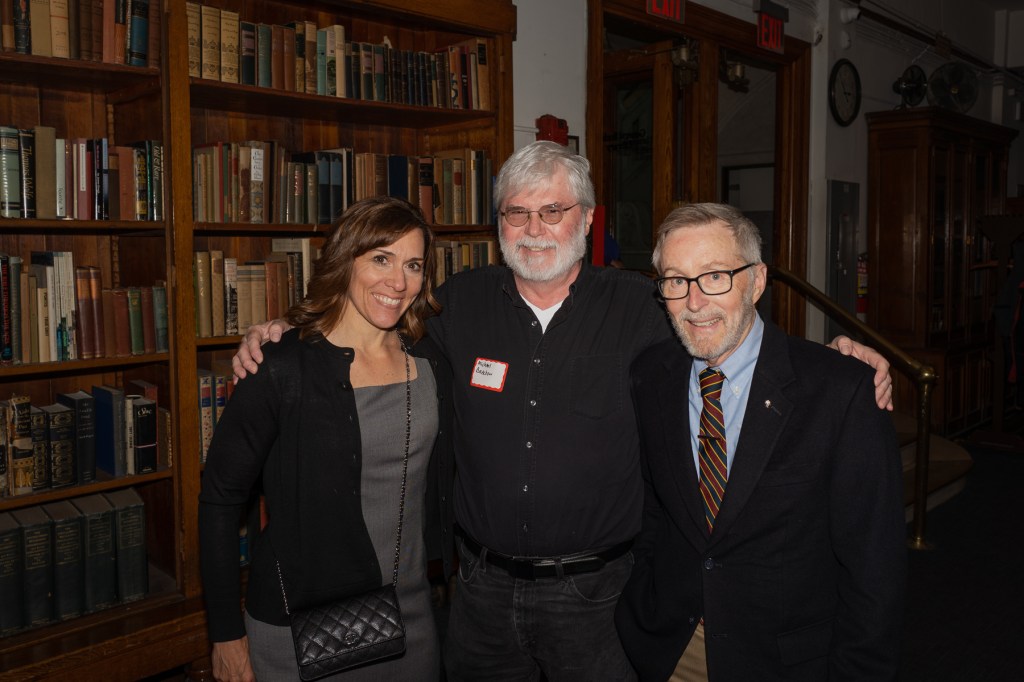
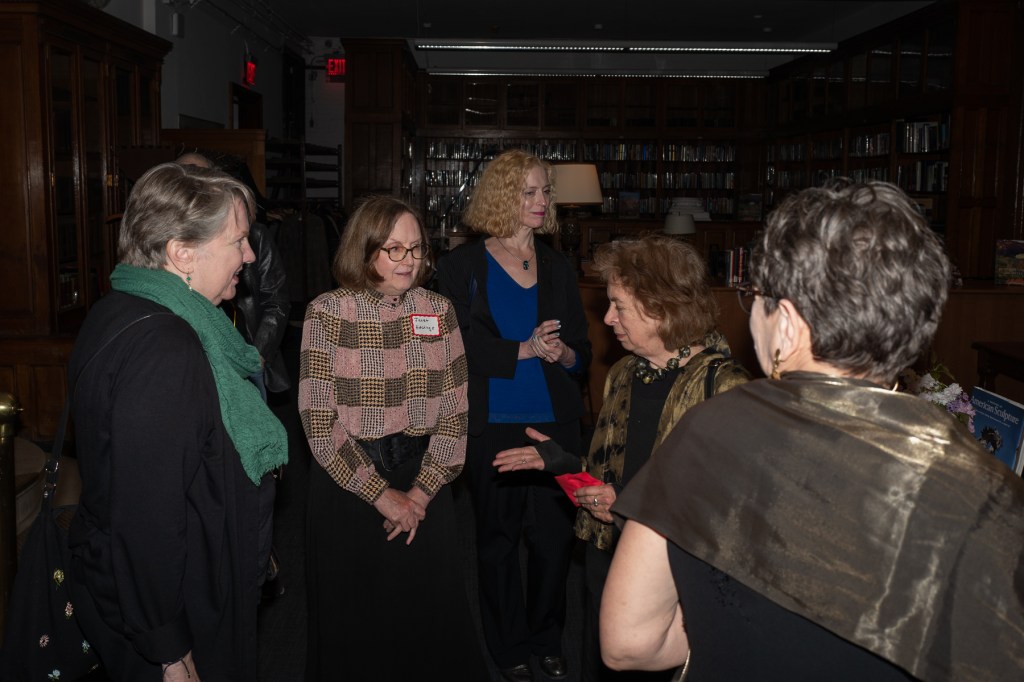
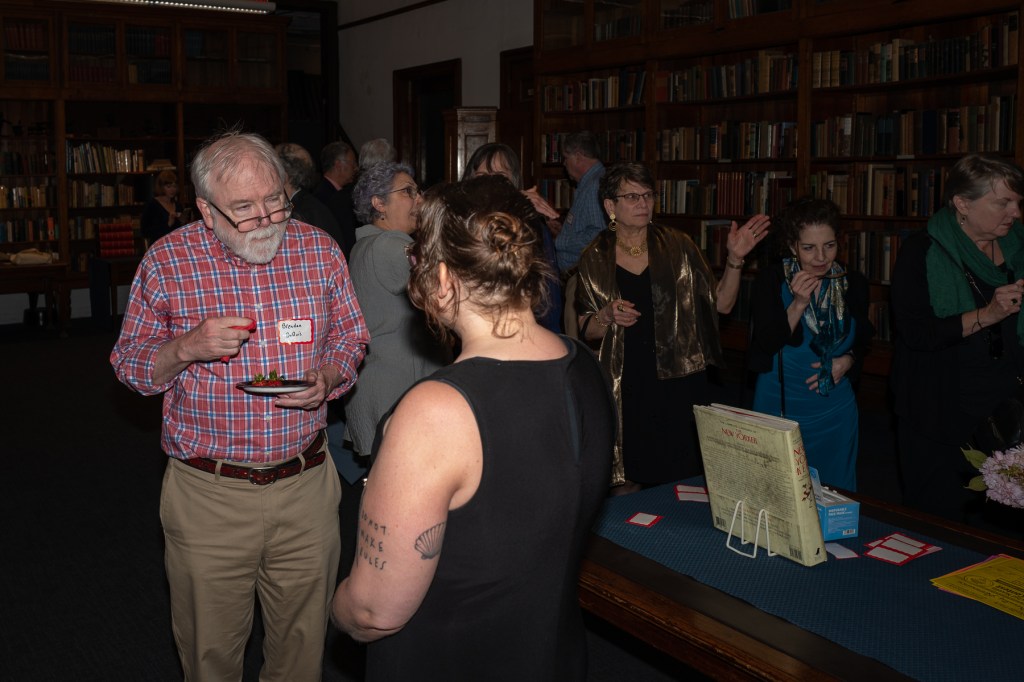
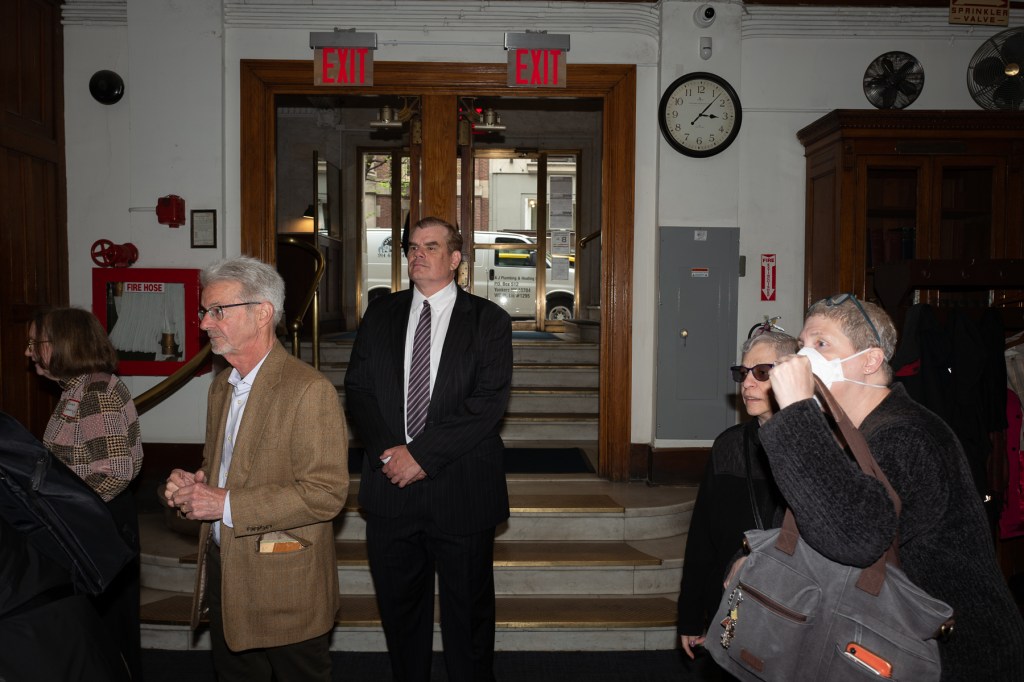
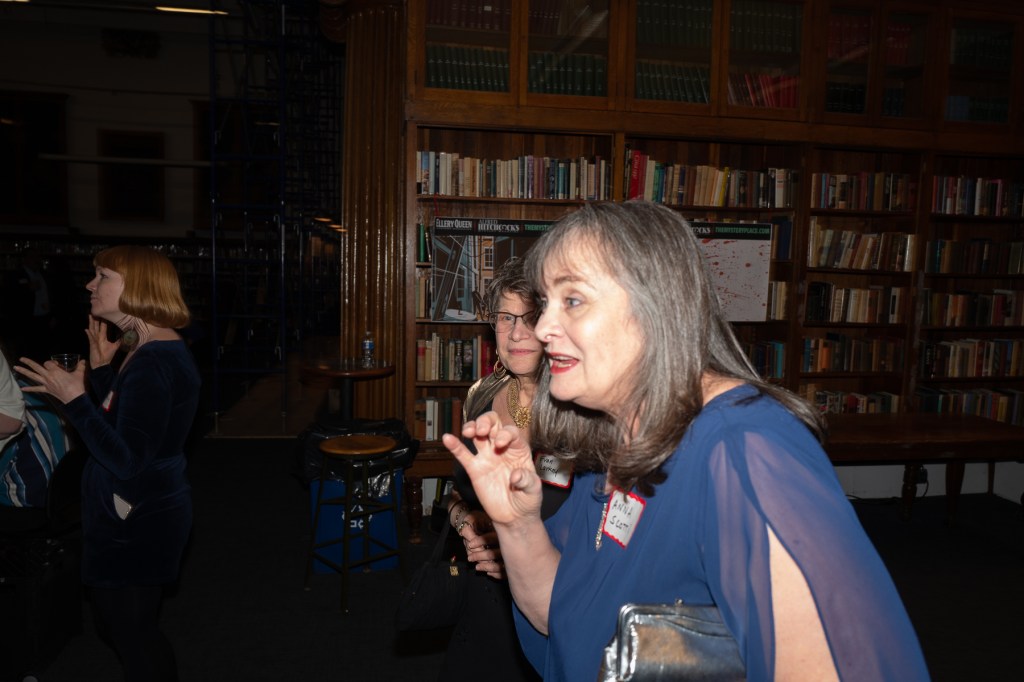
EDGARS AND MALICE RECAP AND PHOTO GALLERY 2023

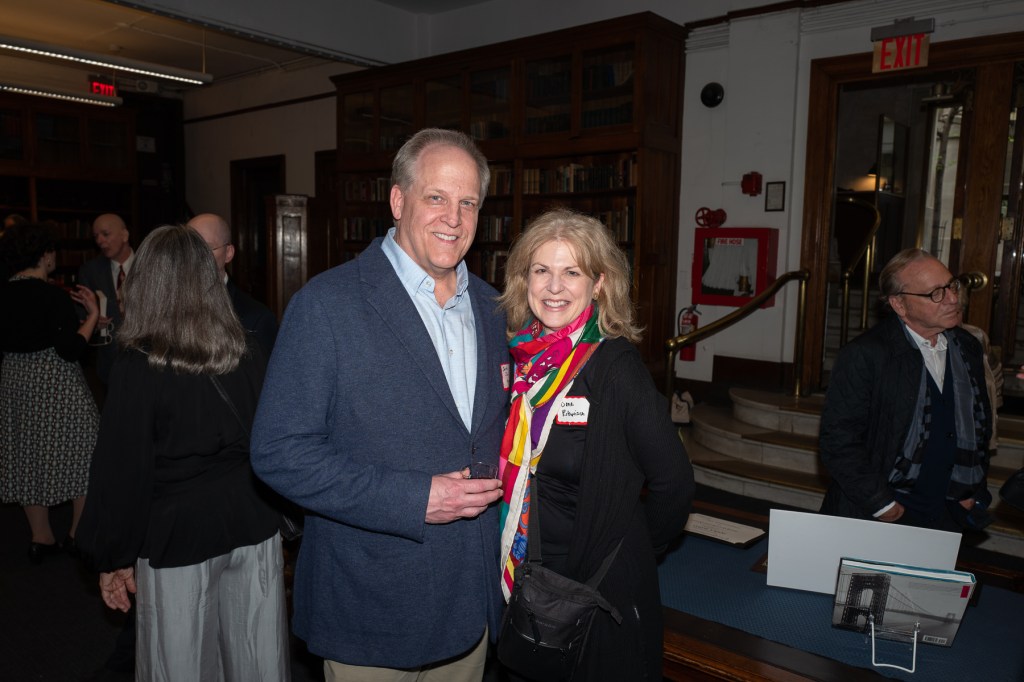
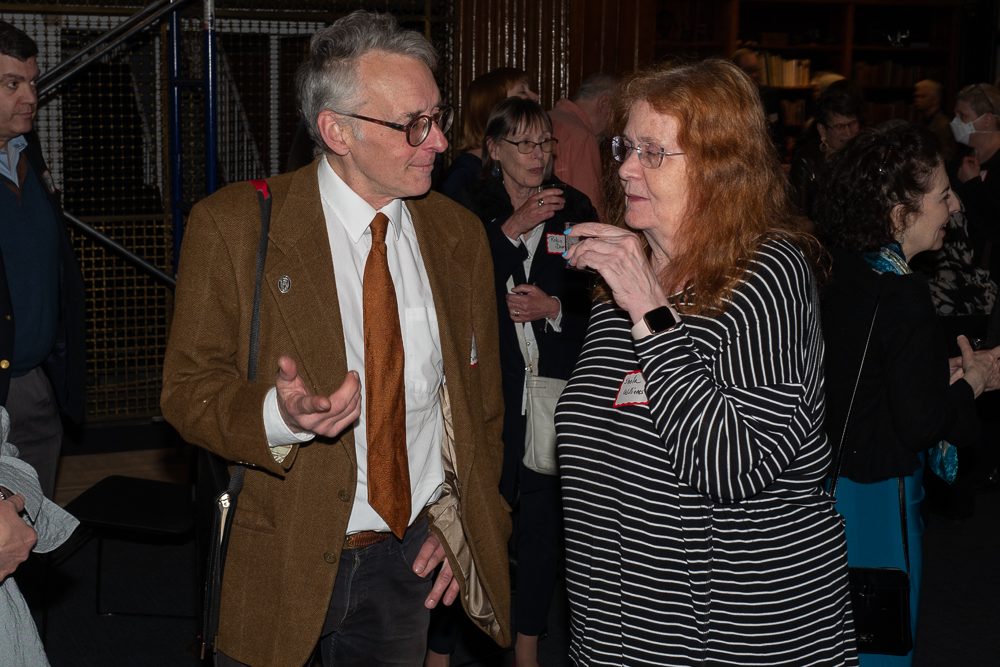
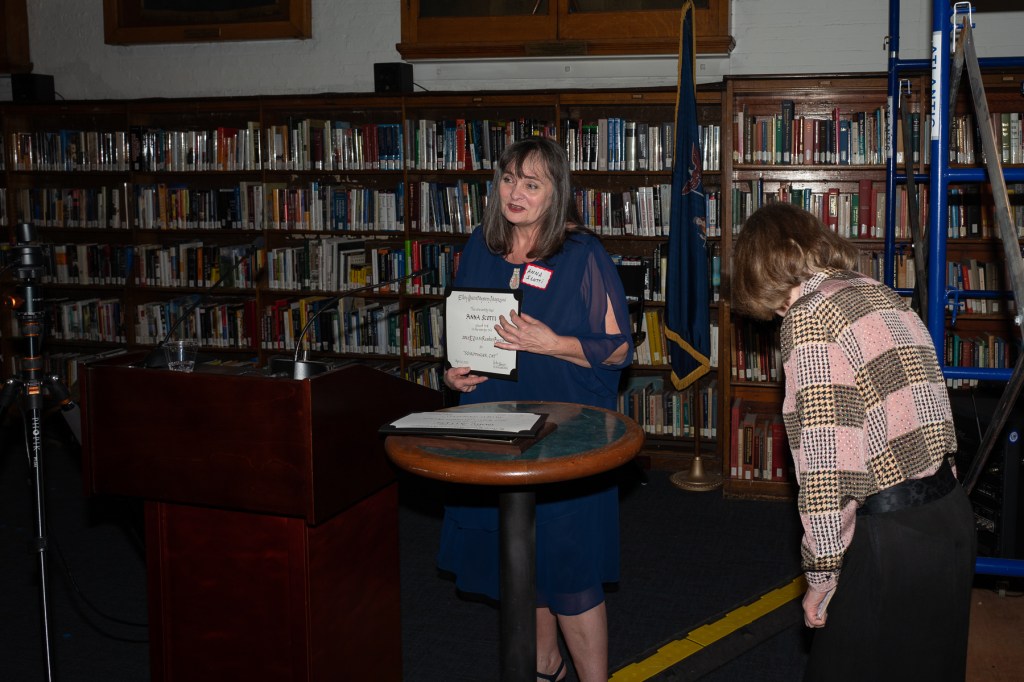
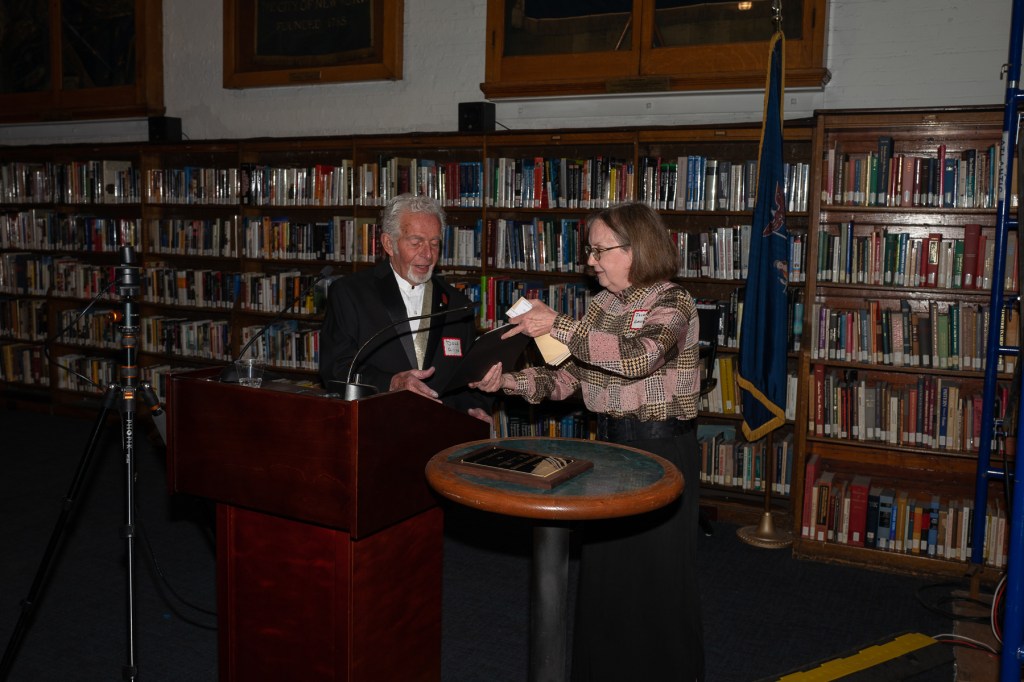
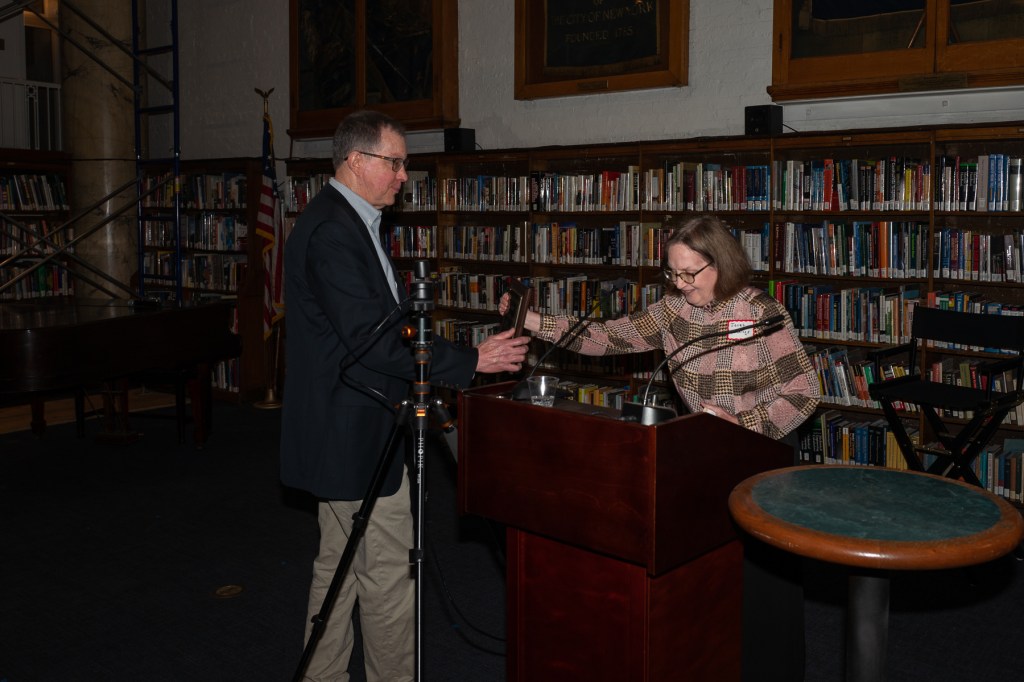
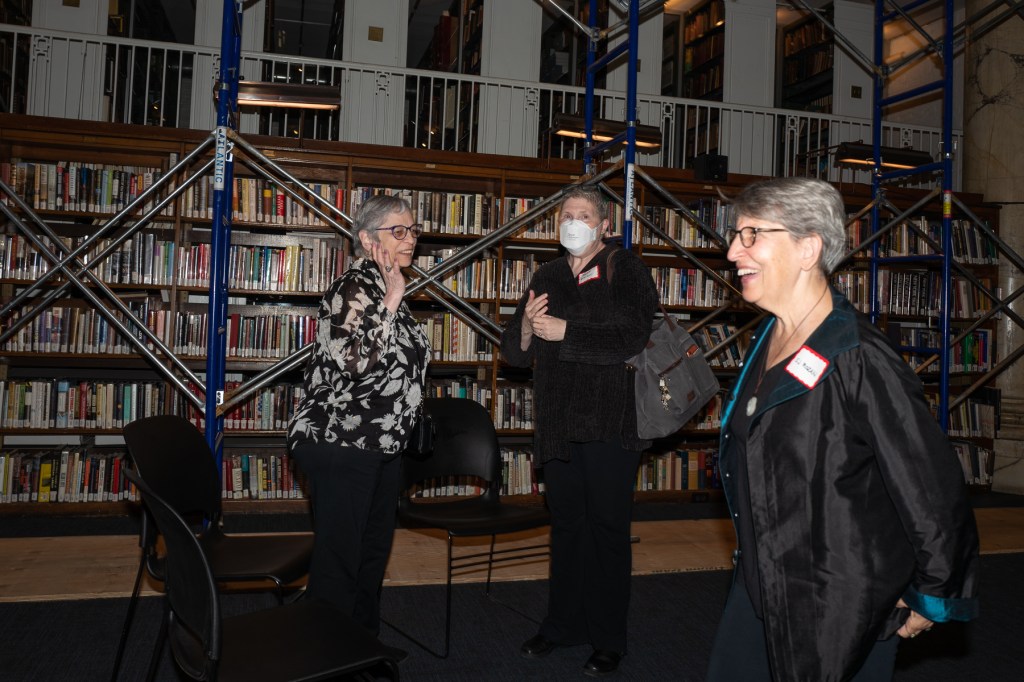
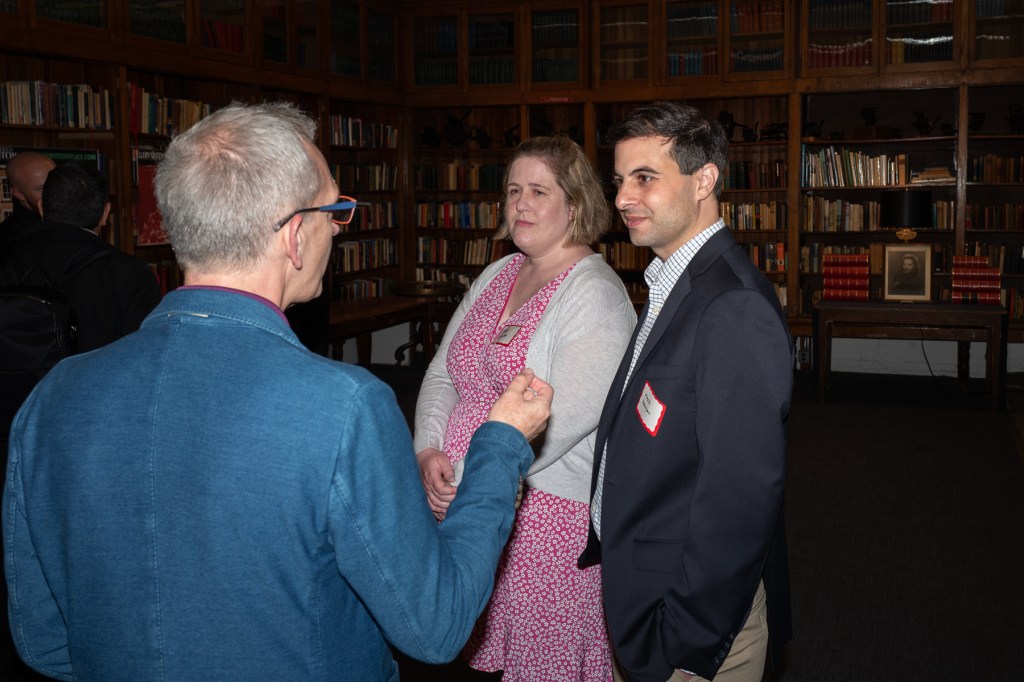
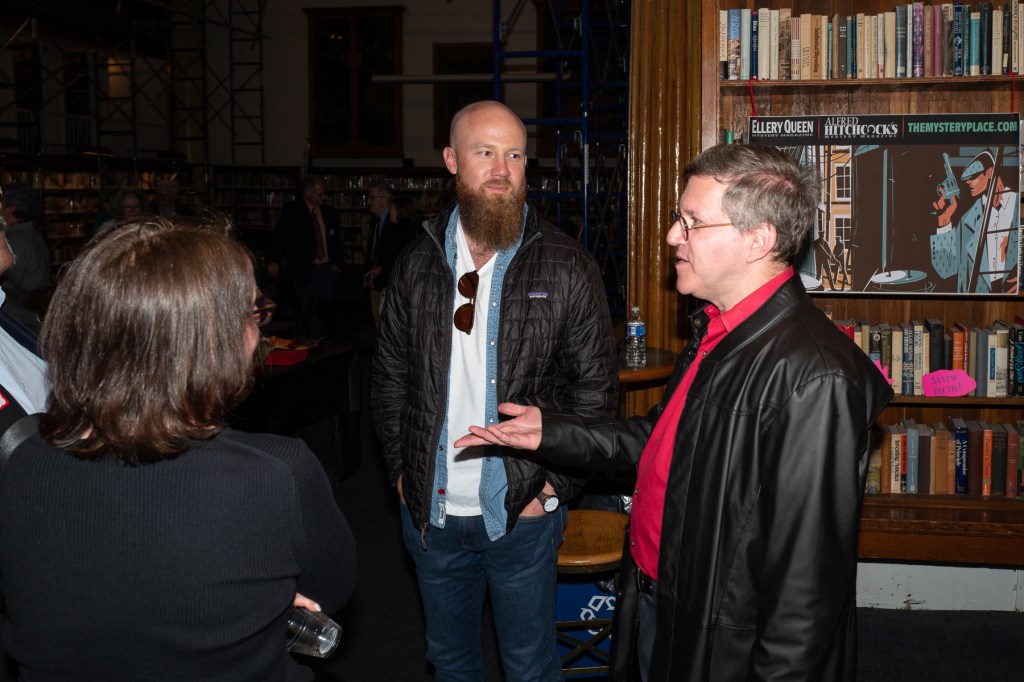
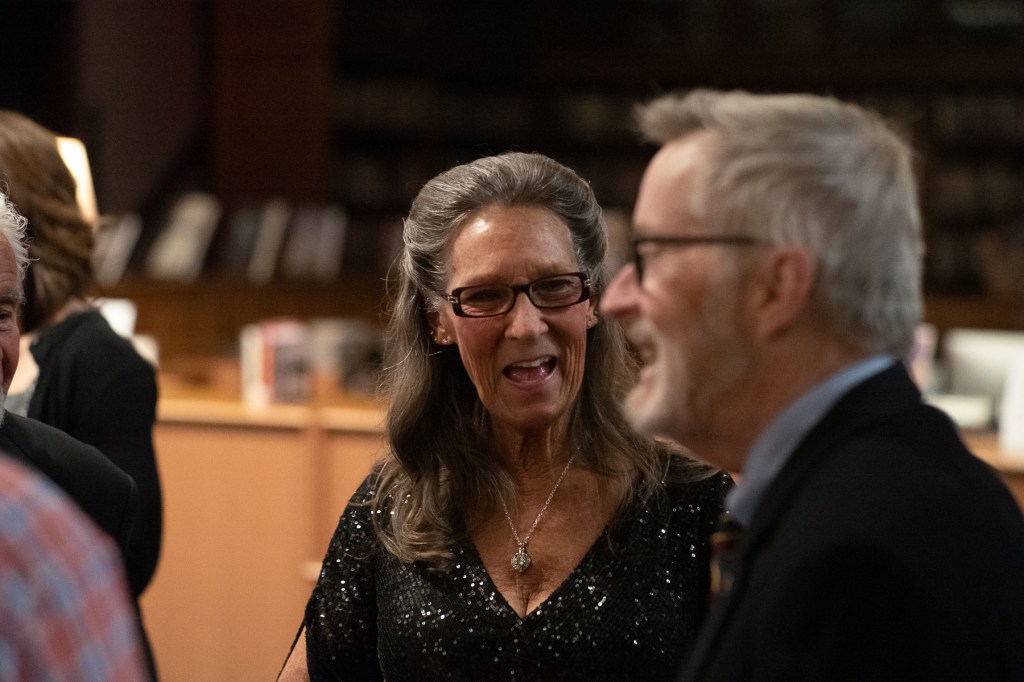
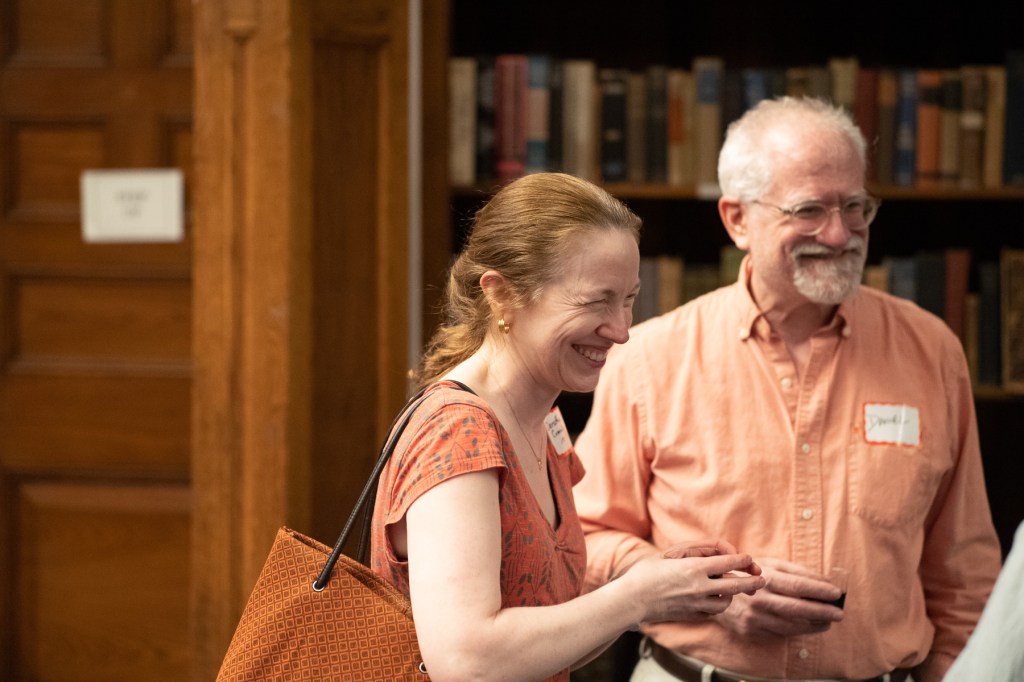
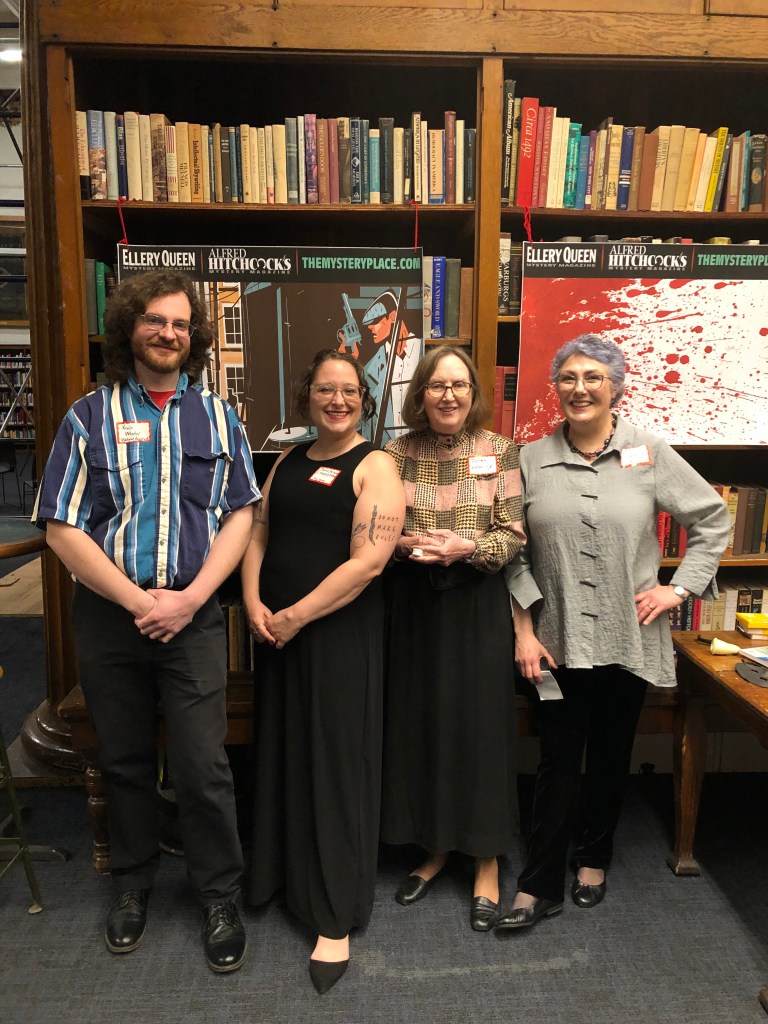
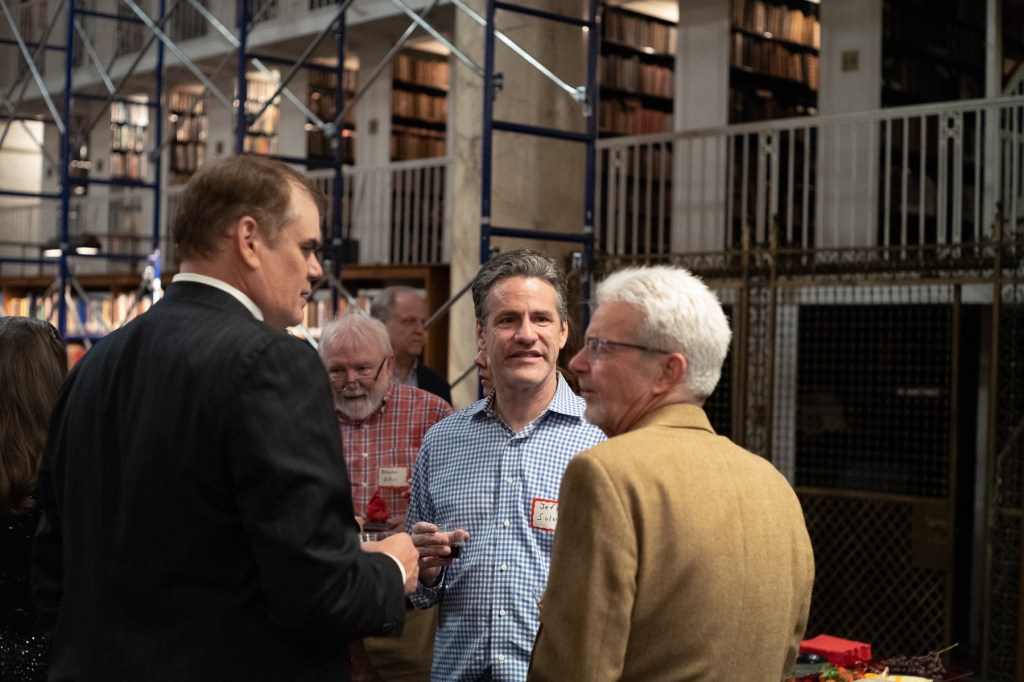
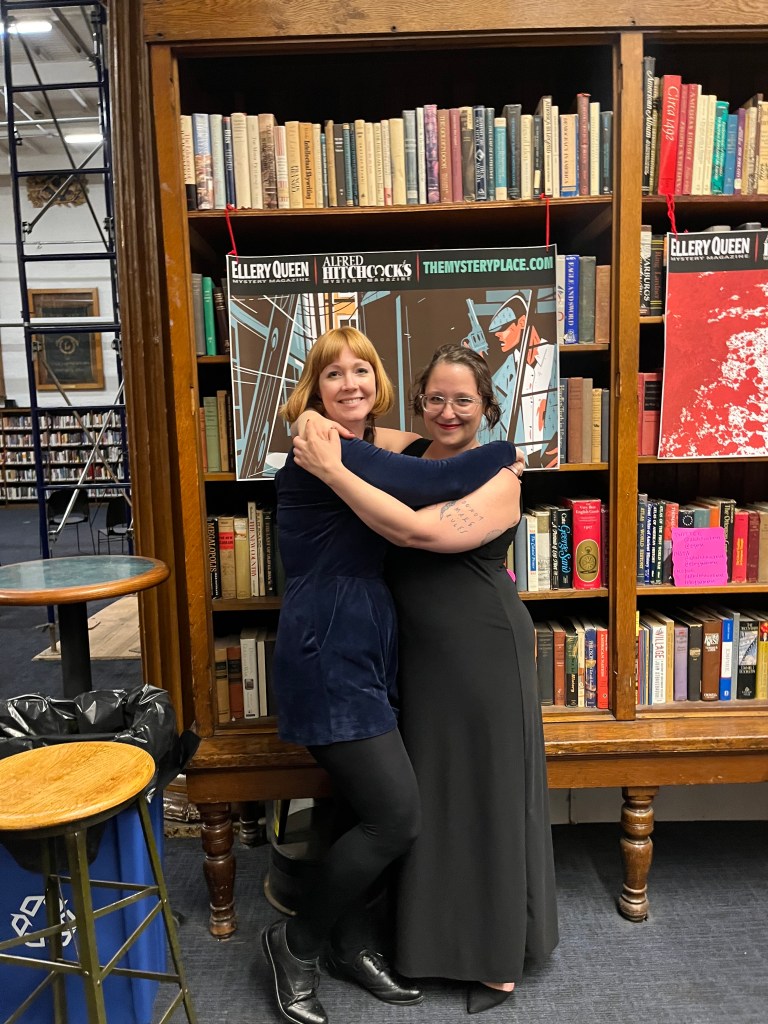
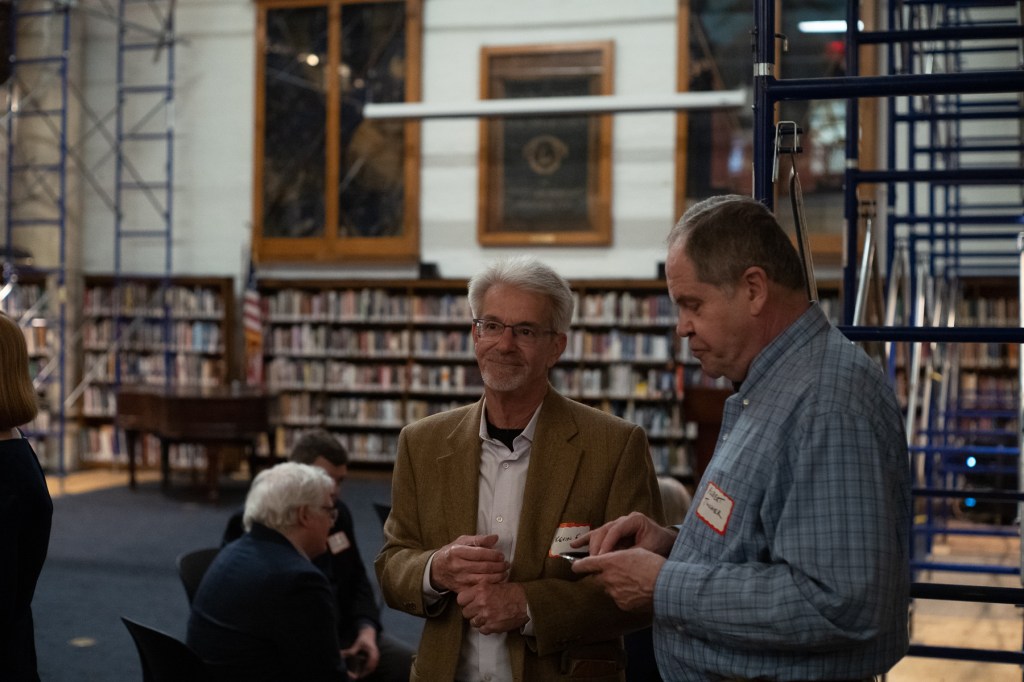
It’s my pleasure this week to herald the return of our photo gallery of events surrounding the Edgar Allan Poe Awards in New York City and the Malice Domestic convention in Bethesda, Maryland! The festivities all kicked off for the Dell Mystery Magazines with our pre-Edgars party, at which it’s been our  custom for many years to present the EQMM Readers Awards. The Readers Awards presentation had to be done virtually in 2020 and 2021. In 2022, we held an in-person gathering, but it was a scaled-down celebration, with few guests attending from out of town and only two of the year’s four Readers Award winners present. As you’ll see from the photos below, last week’s party filled the house (which was, as in several previous years, the library of the General Society of Mechanics and Tradesmen, on 44th Street in Manhattan). Attendees included third-place Readers Award winner Anna Scotti, who flew in from California to receive her scroll for “Schrödinger, Cat” (EQMM March/April 2022); Doug Allyn, whom we hadn’t seen since our 2019 pre-Edgars party, who took second-place honors for “Blind Baseball” (EQMM May/June 2022);  and W. Edward Blain, who captured readers’ votes with his pandemic-inspired story “The Secret Sharer” (EQMM July/August 2022), which took first place from a field of more than a hundred stories published in the magazine in 2022.

Also with us at our pre-Edgars party was this year’s winner of the Robert L. Fish Award for best short story by a new American author, Mark Harrison, who took that prize with his September/October 2022 EQMM story “Dogs in the Canyon.” Mark’s debut came under the banner of EQMM’s Department of First Stories. Two other Department of First Stories “graduates” also made their mark at this year’s Edgars—albeit in categories other than the short story. Martin Edwards, who got his start in EQMM in 1991, won the Edgar for best critical/biographical work for The Life of Crime: Detecting the History of Mysteries and Their Creators, and Eli Cranor, whose Department of First Stories debut was just last year, took home the Edgar this year for best first novel for Don’t Know Tough.

Three of this year’s Edgar-nominated stories—those by Gregory Fallis, William Burton McCormick, and Charles John Harper—came from the pages of our sister publication, AHMM. All three of those names will be very familiar to EQMM readers, for all three authors have also had stories published in EQMM on multiple occasions. Bill and Charlie were with us for the party and the subsequent banquet, making it feel all the more like old times. Greg—who won the Edgar for “Red Flag” (AHMM March/April 2022)!—was, unfortunately, unable to attend.

As you scroll through the photos below, you’ll see a few more authors who’ve been nominated for awards this year, including Carol Goodman, a nominee for this year’s Mary Higgins Clark Award (and someone who will be making her EQMM debut this fall) and Rob Osler, last year’s Robert L. Fish Award winner for his debut EQMM story and a nominee this year for the Agatha Award for best first novel.

On our way from our party to the Edgar Awards banquet, the Dell Mystery Magazines staff, accompanied by John Landrigan and Doug and Eve Allyn, made a literary stop. The Algonquin Hotel, meeting place of the famous Algonquin Round Table in the 1920s, is right down the street from our party venue. Wanting to kill some time before the banquet and have a quiet place to chat, we claimed a large round table (the only one of its kind) in that hotel’s illustrious lobby. Whether it was the same round table at which literary figures such as Dorothy Parker and Harold Ross (of the New Yorker) lunched together each day for a decade, exchanging witticisms and collaborating on projects, I don’t know. It’s unlikely, of course, a hundred years having passed. What I do know is that Dorothy Parker had a special connection to EQMM. She was known to be a regular reader, and when I began my tenure at EQMM I inherited some papers I can no longer find that contained quotes about the magazine from various literary luminaries. Dorothy Parker’s contribution—no doubt phrased more eloquently—was something like: “The only thing that could make EQMM better would be for it to come out more often.” A comment that I’m sure warmed the heart of then-editor Fred Dannay.

Once the Edgars were over, many of us were on our way to the Malice Domestic convention. For me and at least one EQMM author, Rob Osler, that meant the 5:30 A.M. train to Washington, D.C. We arrived to drenching rain, but in good time. I was able to make a breakfast appointment with an author who goes way back with EQMM, one of the convention’s guests of honor, Ann Cleeves; Rob tells me he made the deadline for Malice’s “speed dating” event, at which authors move from table to table, with two minutes in each spot in which to convince readers to try their work.

After a four-year absence from Malice, I had the pleasure this year of reconnecting with some old friends and making some new ones: Art Taylor and Tara Laskowski, Stacy Woodson, and our Blog Bytes columnist Kristopher Zgorski joined me for lunch, along with a bright new star on the mystery scene, Ashley-Ruth M. Bernier.  At dinner Friday night I caught up on the news of EQMM contributor Dana Cameron and previous EQMM Readers Award winner and this year’s Malice Domestic toastmaster, Barb Goffman, as well as meeting for the first time Smita Harish Jain, a current nominee for the ITW Thriller Award for her September/October 2022 EQMM story “Publish or Perish.”

For me, Malice came to an end on Saturday morning. I needed to get back to New York, but not before breakfasting with EQMM’s invaluable translator Josh Pachter and his wife Laurie, our esteemed Jury Box columnist (and translator!) Steve Steinbock, and authors Gigi Pandian, James Lincoln Warren, and Michael Bracken.

Of course, I haven’t been able to mention here all the many wonderful writers and mystery lovers I ran into while at the Edgars and in Bethesda. You’ll spot some of them in the photos. An important event I had to miss was Saturday’s short-story panel (photo below contributed by Josh Pachter), but I heard it had a big audience and generated lots of interest. That’s a good sign for our magazines and for short-story lovers!—Janet Hutchings 

Stacy Woodson, Michael Bracken, David Dean. Photo by Ché Ryback.
Carol Goodman, Janet Hutchings, Kathleen Marple Kalb, Michele Slung. Photo by Ché Ryback.
Stephen Kelner, Toni L.P. Kelner, David Dean. Photo by Ché Ryback.
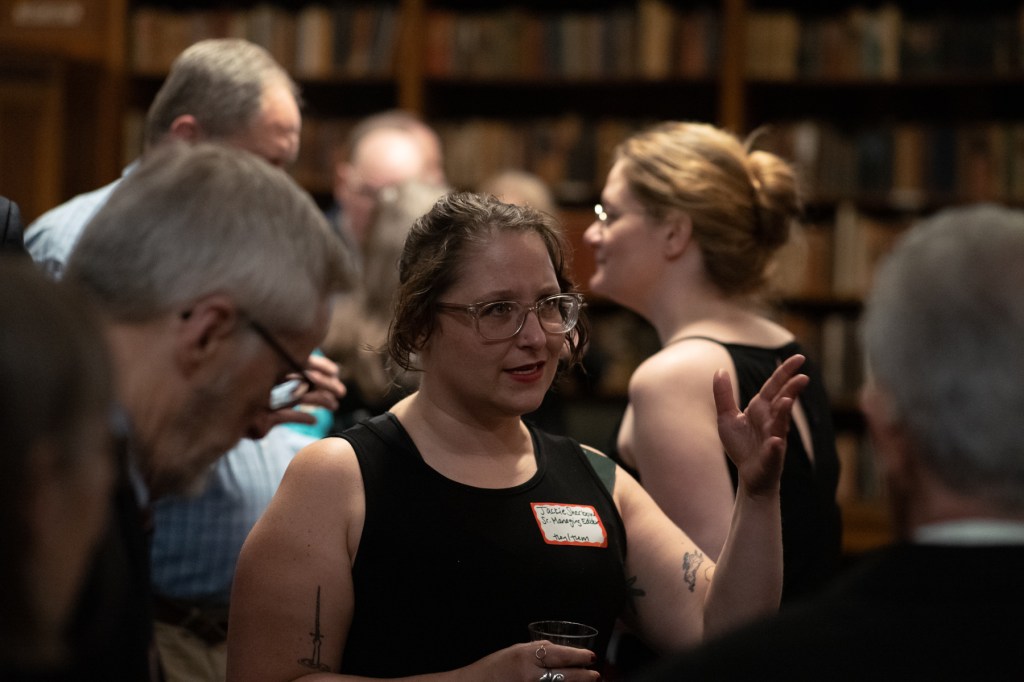
Brendan DuBois, Jackie Sherbow. Photo by Ché Ryback.
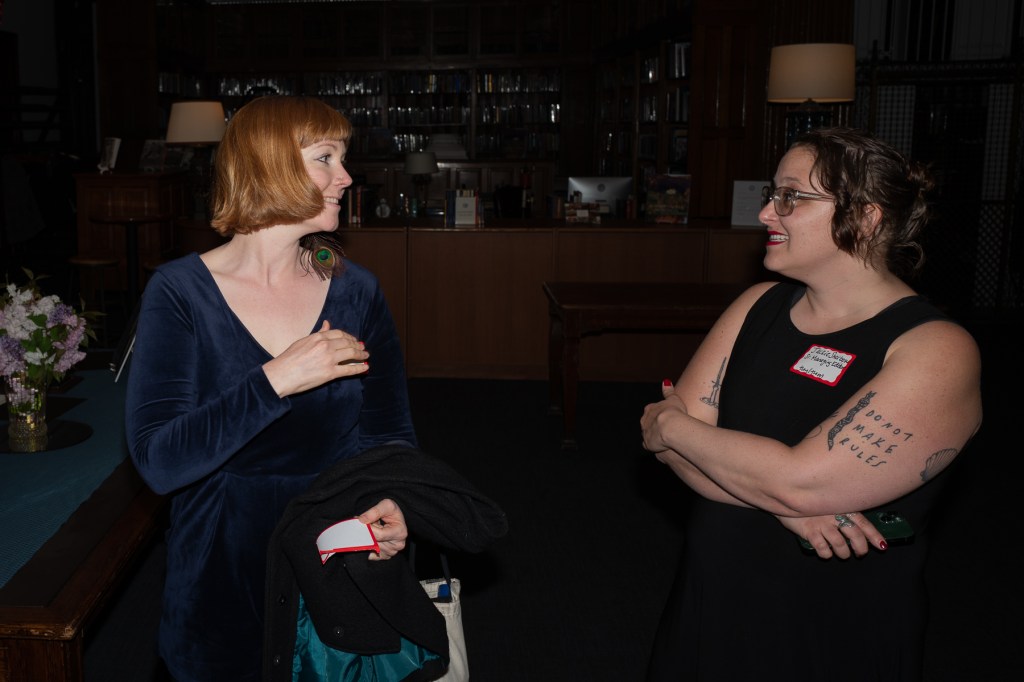
Analog and Asimov’s Sr. Managing Editor Emily Hockaday, AHMM and EQMM Sr. Managing Editor Jackie Sherbow. Photo by Ché Ryback.
Richard Dannay, Gloria Dannay, Peter Kanter. Photo by Ché Ryback.
Kevin Egan, Wililam Burton McCormick, Sharyn Kolberg, Jacqueline Freimor. Photo by Ché Ryback.
EQMM Readers Award winner Anna Scotti. Photo by Ché Ryback.
AHMM Editor Linda Landrigan, Kevin Egan. Photo by Ché Ryback.
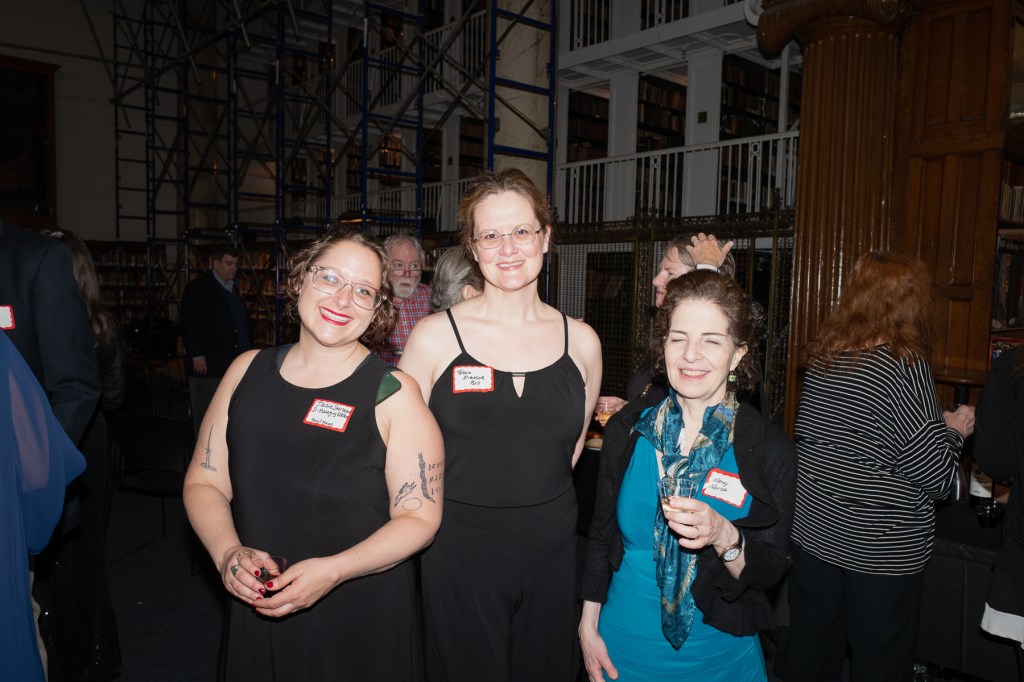
Jackie Sherbow, Terena Elizabeth Bell, Nancy Novick. Photo by Ché Ryback.
Charlie Rethwisch (a.k.a. Charles John Harper), Dana Rethwisch. Photo by Ché Ryback.
Meredith Anthony, Jane Cleland. Photo by Ché Ryback.
Russell Atwood, Asimov’s Editor Sheila Williams. Photo by Ché Ryback.
Anna Scotti accepts her Readers Award from Janet Hutchings. Photo by Ché Ryback.
Doug Allyn accepts his Readers Award from Janet Hutchings. Photo by Ché Ryback.
Robin Dean, Peter Kanter. Photo by Ché Ryback.
W. Edward Blain. Photo by Ché Ryback.
W. Edward Blain receives his Readers Award from Janet Hutchings. Photo by Ché Ryback.
Sharyn Kolberg, Jacqueline Freimor, S.J. Rozan. Photo by Ché Ryback.
Emily Harrison, Mark Harrison. Photo by Ché Ryback.
Eli Cranor, Charles Ardai. Photo by Ché Ryback.
Kate Hohl, Moses Cardona, Eli Cranor. Photo by Ché Ryback.
Russell Atwood, Martin Edwards. Photo by Ché Ryback.
W. Edward Blain. Photo by Ché Ryback.
Eve Allyn, David Dean. Photo by Ché Ryback.
Terena Elizabeth Bell, LaToya Jovena. Photo by Ché Ryback.
LaToya Jovena. Photo by Ché Ryback.
Sheila Kohler, Elizabeth Zelvin, Carol Goodman. Photo by Ché Ryback.
Dell Magazines/Penny Publications Publisher Peter Kanter. Photo by Ché Ryback.
Jackie Sherbow. Photo by Ché Ryback.
Sarah Weinman. Photo by Ché Ryback.
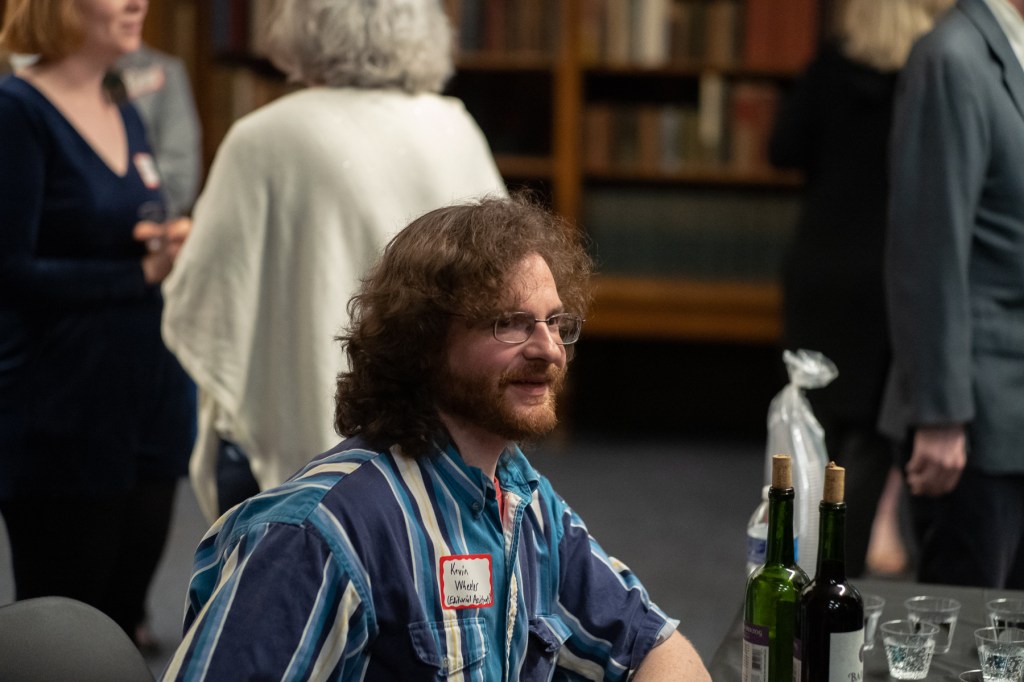
Dell Magazines Editorial Assistant Kevin Wheeler. Photo by Ché Ryback.
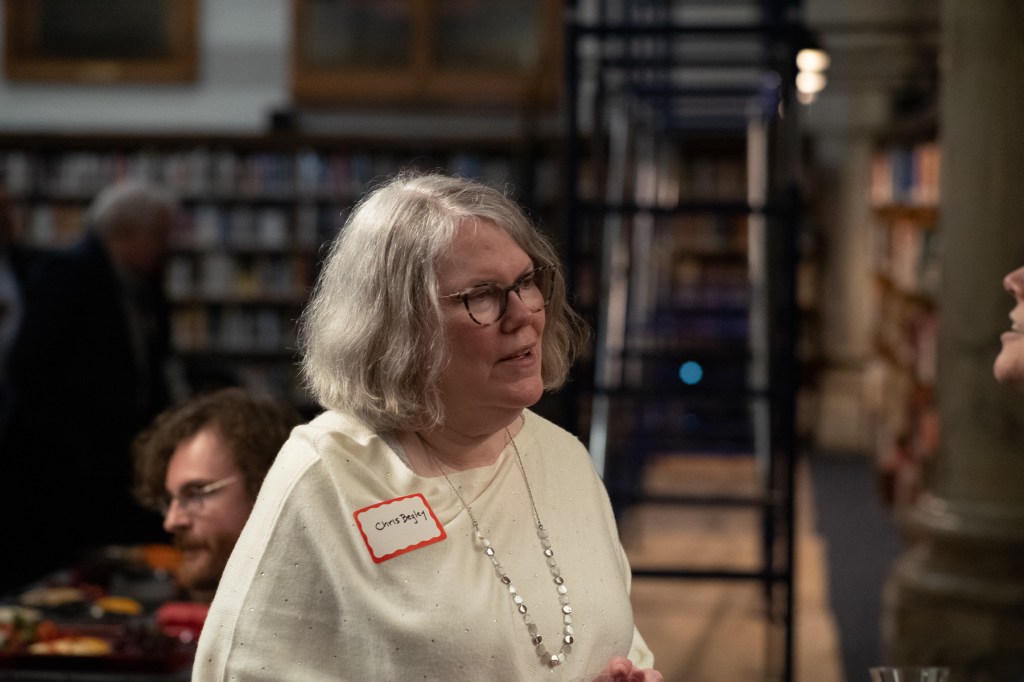
Dell Vice President of Editorial Chris Begley. Photo by Ché Ryback.
Jonathan Santlofer. Photo by Ché Ryback.
Jacqueline Freimor, Gary Cahill. Photo by Ché Ryback.
Michael Bracken and Rob Osler. Photo by Ché Ryback.
Richard Dannay. Photo by Ché Ryback.
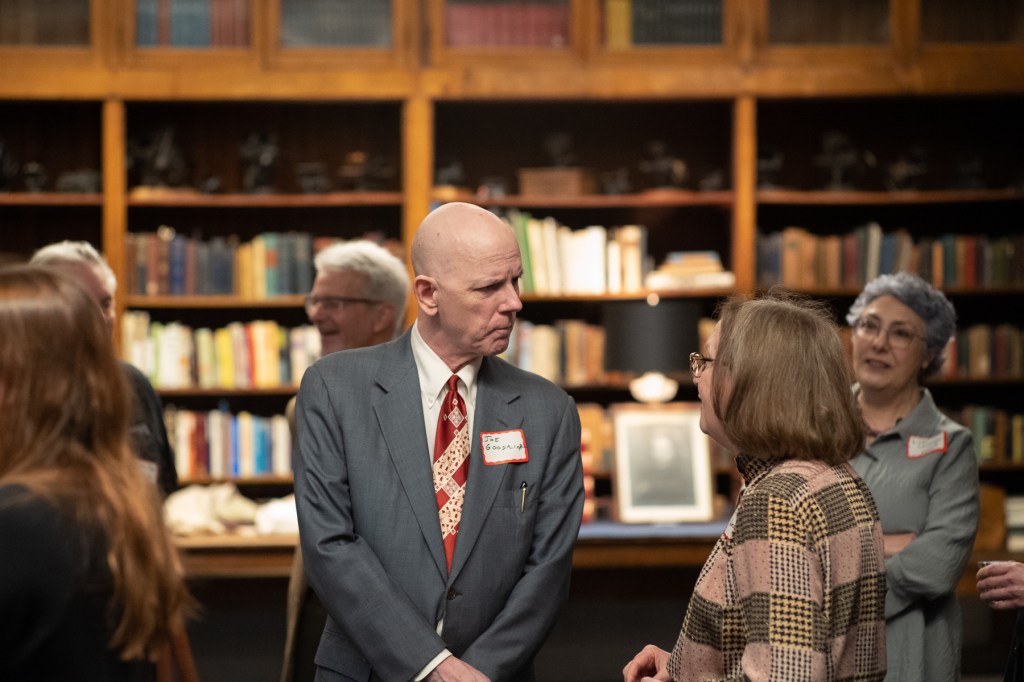
Joseph Goodrich, Janet Hutchings. Photo by Ché Ryback.
Dorothy Cummings and Daniel Popowich. Photo by Ché Ryback.
Kevin Wheeler, Jackie Sherbow, Janet Hutchings, and Linda Landrigan. Photo by Emily Hockaday.
Robin Dean. Photo by Ché Ryback.
William Burton McCormick, Jeff Soloway, Kevin Egan. Photo by Ché Ryback.
Emily Hockaday and Jackie Sherbow. Photo by Irene Bruce.
Sheila Kohler, Carol Goodman. Photo by Ché Ryback.
Kevin Egan, Albert Tucher. Photo by Ché Ryback.
Brendan DuBois, Eric Rutter, Meredith Anthony, Charles Ardai, Photo by Ché Ryback.
Linda Landrigan. Photo by Ché Ryback.
Photo by Ché Ryback.
Doug Allyn. Photo by Ché Ryback.
Ted Hertel, Rob Osler. Photo by Ché Ryback.
Ché Ryback, photograph at the Dell pre-Edgars party and Dell Magazines IT Manager
John Landrigan, Jackie Sherbow, Linda Landrigan, Doug Allyn, Eve Allyn (photo courtesy of Janet Hutchings)
Linda Landrigan, Joseph Goodrich, Jackie Sherbow at the Edgar Awards banquet. Photo courtesy of Janet Hutchings.
Gigi Pandian, Steve Steinbock, Shelly Dickson Carr at Malice Domestic
On the short-story panel at Malice Domestic: Deborah Lacy, Michael Bracken, Carla Coupe, Linda Landrigan, Josh Pachter (photo courtesy of Josh Pachter)
Breakfast at Malice Domestic: Steve Steinbock, Shelly Dickson Carr, Michael Bracken, Janet Hutchings, Gigi Pandian, James Lincoln Warren, Laurie Pachter (photo courtesy of Josh Pachter)
Josh Pachter and Alan Orloff at Malice Domestic (photo courtesy of Josh Pachter)
Posted in Uncategorized | 2 Comments

They Wrote Because EQMM Asked: C. Daly King (by Arthur Vidro)

Arthur Vidro publishes the thrice-yearly journal Old-Time Detection, which explores mystery fiction of the past. He has special expertise in the works of Ellery Queen, and was one of the winners of EQMM’s 80th Anniversary Trivia Contest. Old-Time Detection will be reprinting a series of early author and editor interviews from EQMM beginning this summer. Be sure not to miss them if you have an interest in the history of our genre. For this post, Arthur discusses the work of a great but underappreciated author from mystery’s golden age: C. Daly King.—Janet Hutchings

If not for Ellery Queen’s Mystery Magazine, some wonderful detective fiction would never have been written.

Every story in the first issue of EQMM  (Fall 1941) was a reprint. Great stories, but in the long run the magazine would need new stories from skilled practitioners.

Part of the solution was to bring lapsed mystery writers back into the field. One such writer was C. Daly King (1895-1963).

By the way, the “C” stood for Charles, which never appeared in his byline. To scholars, he is King or Daly King. 

Fred Dannay (the half of the Ellery Queen team leading the then-new EQMM project) was a big fan of Daly King’s sole short-story volume, The Curious Mr. Tarrant. The original edition was then, and remains today, a very scarce book. It was published in 1935 by Collins in London.

Though Daly King was an American, the book was not published in America until a Dover trade paperback edition in 1977.

Simply to have Daly King’s book in the 1940s was an achievement.

Daly King’s short story collection—especially in dust jacket—simply couldn’t be found during the author’s lifetime.  Even now, only one copy of the 1935 edition in dust jacket is known.  It was inscribed in 1940 by the author: “For the ‘Queens’—may they continue to rescue us from the ever-recurring menaces of crime. C. Daly King” and resides in the Ellery Queen collection at the Humanities Research Center in the Austin branch of the University of Texas.

Eventually Queen would compile Queen’s Quorum, which lists and describes the greatest, or most important, short mystery fiction books of all time. The list spans 1845 to 1967 (from Edgar Allan Poe to Harry Kemelman) and lists 125 books.  One of those books is The Curious Mr. Tarrant—which still had not been published in the USA.

Queen’s Quorum says the eight tales in The Curious Mr. Tarrant “are in many ways the most imaginative detective short stories of our time.”

The outstanding critic Anthony Boucher called Daly King “one of the most original, inventive, and underrated detective writers of the golden thirties. His novels of detection are elaborate and extraordinary.”

In the words of scholar Charles Shibuk, “King’s major strength is his ability to create plots. At his best, he can concoct puzzles that are as baffling and bizarre as those created by Queen and Carr, with all the deviousness of Christie.”

But by the time EQMM launched in 1941, Daly King had stopped writing fiction.  His six detective novels were published from 1932 through 1940—and, agonizingly, two of those six novels (Obelists en Route and Careless Corpse) still have not been published in the United States.

EQMM got into the Daly King act in 1944, reprinting “The Episode of the Nail and the Requiem” in its May issue. This was not the story’s first reprinting.  It had appeared in the 1936 anthology Tales of Detection, edited by Dorothy L. Sayers.

In its September 1944 issue, EQMM published a new Daly King mystery.  The story’s introduction by Fred Dannay tells us, “We asked C. Daly King to write a brand-new Trevis Tarrant adventure-in-deduction especially for Ellery Queen’s Mystery Magazine.”

At the time, Daly King was conducting research at Yale University, where he was working toward his Ph.D in psychology (awarded to him in 1946) with an electromagnetic study of sleep.  Despite his workload, King answered Queen’s call.

Daly King wrote “The Episode of the Little Girl Who Wasn’t There,” which Dannay retitled “Lost Star.” In the story, Tarrant solves a “sealed room” puzzle from 3,000 miles away—the only time Tarrant acted in the role of pure armchair detective.

Dannay ended his introduction to “Lost Star” by calling it “something of a tour de force—the kind of story that demands careful reading.  So don’t bolt it; chew on it slowly.  In many ways it’s an object lesson in point-counter-point ingenuity.”

The December 1946 EQMM gave us another new Tarrant story, “The Episode of the Sinister Inventor.” Its introduction mentions a John Dickson Carr project in progress, an anthology (which never got published) called The Ten Best Detective Novels, in which, in the words of Dannay, Carr “nominated a select circle of modern American murdermongers; he included S.S. Van Dine, Ellery Queen, Rex Stout, and Anthony Abbot, and went on to say that ‘in the front rank, or very close to it, [are] Clayton Rawson and C. Daly King.’”

The November 1947 issue of EQMM reprinted a second tale from The Curious Mr. Tarrant, “The Episode of the Tangible Illusion.”

The next new Tarrant tale—though I don’t know when it was written—appeared in the February 1951 issue of The Magazine of Fantasy & Science Fiction, which was co-edited by Anthony Boucher.

King’s fourth and final new Tarrant tale appeared in the April 1979 EQMM. Fred Dannay was still editing the magazine but he no longer routinely wrote lengthy introductions. But for this story, Dannay made an exception and gave us a full-page introduction, which concluded with:

“We think you will find a pleasant nostalgia in this authentic reminder of ‘the good old days’ —the days when private detectives were brilliant, if not omniscient, when cases were complex and ingenious, when the creators strove for originality of concept, when clues were subtle and legitimate but always fair to the reader, when the author and reader played a game of wits, the author trying to win by achieving a surprise solution—when ‘The Great Detectives’ of The Golden Age ‘solved the unsolvable’” . . .

That outstanding description by Dannay of Golden Age fiction has always thrilled me. Wish I could have lived through those days.

It took until 2003, but finally all twelve Trevis Tarrant stories were collected  (by Crippen & Landru) and published as The Complete Curious Mr. Tarrant. Remember, the final four tales would never have been written but for the existence and encouragement of EQMM.

The book’s introduction, penned by Edward D. Hoch, began with Ed’s fantasy of publishing a series of mystery reprints devoted to locked rooms and impossible crimes.  The three short story collections Ed Hoch would select: The Department of Queer Complaints by Carter Dickson (John Dickson Carr), The Incredulity of Father Brown by G.K. Chesterton, and The Curious Mr. Tarrant by C. Daly King.

Which Tarrant story is the best?  Well, that’s a  matter of opinion. Hoch wrote that “The Episode of the Nail and the Requiem” is considered by many critics as the best of the tales but added: “My own favorite from the original collection of bizarre wonders, by a narrow margin, is probably ‘The Episode of Torment IV,’ a baffling tale that parallels the mystery of the Mary Celeste on a smaller scale.”
Beyond his one story collection, Daly King wrote six mystery novels, all  starring Michael Lord, affiliated with the New York City police. They are:

Obelists at Sea (1932)

Obelists en Route (1934)

Obelists Fly High (1935)

Careless Corpse (1937)

Arrogant Alibi (1939)

Bermuda Burial (1940)

In his novels, Daly King freely drew upon his wealth of knowledge in psychology, and probably had a ton of fun naming his characters. In Obelists at Sea, he gives us four psychologists, each with his own specialty in the field: Dr. Frank B. Hayvier (conditioning), Dr. Malcolm Plechs (inferiorities), Professor Knott Coe Mittle (middle grounding), and Dr. Love Rees Pons (dominance).  Read those names aloud, slowly.

Obelists Fly High (his most acclaimed and most reprinted novel) gives us Dr. Cutter, a surgeon; Cutter’s seductive niece, Fonda Mann; her unfeminine sister Isa Mann; a pilot named “Happy” Lannings; and a clergyman named Reverend Manly Bellowes. Other Daly King stories brought us film star Gloria Glammeris and a psychiatrist named Usall Backenforth (sounds like a Marx Brothers movie character who should be played by Groucho).

Obelists en Route gives us a very efficient secretary called Entwerk. His full name is Xavier Lewis Entwerk. Which can be reduced to X.L. Entwerk. (Excellent work, get it?)

Each of Daly King’s three Obelists novels contains in the back of the book a Clue Finder, which indexes all the clues that could have pointed an alert reader to the correct solution.  Now that’s fair play. His final three novels do not contain a Clue Finder.

Plus, Daly King wrote five books on psychology:

Beyond Behaviorism (1927)

Integrative Psychology (1931)

The Psychology Of Consciousness (1932)

The Oregean Vision (1951)

The States of Human Consciousness (1964)

To be precise, Daly King was one of three co-authors on Integrative Psychology.  The other two were W.M. Marston and Elizabeth H. Marston. Mr. and Mrs. Marston are credited as having invented an early prototype of the lie detector.

Daly King’s friendship with the Marstons was such that he dedicated Obelists en Route to William Moulton Marston.

Anyone recognize that name? Yes, Daly King was a friend and colleague of the man who would go on to create perhaps the most famous female fictional character ever: Wonder Woman.
Posted in Uncategorized | Leave a comment

Rumpole and Columbo: Two Icons of the 1970s TV Mystery Scene (by Kevin Mims)

Tomorrow, April 21, 2023, is the centenary of the birth of John Mortimer, the British barrister, novelist, dramatist, and short story writer who created the beloved fictional character Horace Rumpole, a London barrister who defends underdogs against criminal charges and solves crimes along the way. Sixteen of the Rumpole stories appeared in EQMM in first U.S. publication, and, of course, most mystery fans will have seen the TV series Rumpole of the Bailey. In celebration of the John Mortimer centenary, the following post by essayist and short story writer Kevin Mims explores some similarities between Rumpole and another iconic mystery character, Richard Levinson and William Link’s Columbo. In the latter we find another connection to EQMM, for Levinson and Link got their start in EQMM’s Department of First Stories while still teenagers.   —Janet Hutchings

John Mortimer, creator of the immortal fictional barrister Horace Rumpole (a.k.a. Rumpole of the Bailey), was born one hundred years ago this month. I don’t know if he ever acknowledged it, but Mortimer, when he created Rumpole, almost certainly must have been inspired, in part, by Columbo, the American TV series starring Peter Falk. The two programs—and their main characters—have a lot in common, even though Columbo was committed to putting people in jail and Rumpole to keeping them out. Both series debuted in the 1970s, but have roots that go back even farther. In the 1950s and 1960s, Mortimer wrote a variety of plays—for the stage and for British television—that featured barristers who could be considered prototypes for the Rumpole character. Likewise, Richard Levinson and Willam Link, the two high school best friends who created Columbo, wrote several stage and television plays in the 1950s and 1960s featuring detectives who were embryonic versions of Columbo.

Rumpole himself first appeared in a standalone television play on a BBC anthology series called Play For Today. Columbo first appeared in a standalone TV drama written for an American anthology series called The Chevy Mystery Show. That first Columbo mystery starred Bert Freed and was titled “Enough Rope.” It was adapted from a story that Levinson and Link had previously published in Alfred Hitchcock’s Mystery Magazine under the title “Dear Corpus Delecti.” (Their first published short story, “Whistle While You Work,” appeared in the November 1954 issue of Ellery Queen’s Mystery Magazine.)

The creators of both Rumpole and Columbo acknowledged G.K. Chesterton’s fictional cleric Father Brown as a partial inspiration. Both Columbo and Rumpole are cigar-smoking slobs. Both characters have working-class origins and are often underestimated by their social superiors. The wives of both men play an important part in their lives (although Columbo’s is never seen). Though Rumpole pretends to be terrified of Hilda, their marriage, like the marriage of Mr. and Mrs. Columbo, seems to be rock solid and longstanding. Rumpole of the Bailey ran for seven seasons and comprised a total of 44 episodes. The original Columbo series, which ran as part of a wheel program called The NBC Mystery Movie, ran for seven seasons and 45 episodes. After a twelve-year absence from the airwaves, the series was rebooted on ABC Television in 1989, but the episodes produced for ABC are not considered canonical, or “classic,” episodes by most diehard fans.

The last canonical episode of Columbo was first broadcast on May 13, 1978, just about a month after the Rumpole of the Bailey TV series debuted on April 3, 1978. Peter Falk, who played Columbo, lost his right eye as a child and wore a glass eye as a replacement. Leo McKern, who played Rumpole, lost his left eye as a teenager, and wore a glass eye as a replacement. When NBC ordered a pilot episode for the series, Columbo’s creators wanted Bing Crosby to play the role, but he turned it down. Falk was a second choice. Likewise, John Mortimer was at first disappointed by the selection of McKern to play Rumpole. He would have preferred either Michael Holdern or Alastair Sim. As noted, Richard Levinson and William Link got their start as mystery writers by selling stories to Ellery Queen’s Mystery Magazine in the 1950s. John Mortimer’s Rumpole short stories first appeared in print in America in the pages of Ellery Queen’s Mystery Magazine. The August, 1989, issue of EQMM features Peter Falk as Columbo on the cover and a Rumpole story by John Mortimer inside. Just as Columbo was reincarnated by ABC TV years after the demise of the original series, BBC Radio revived Rumpole in 2003 and has since produced dozens of episodes featuring a variety of actors in the lead role, including Benedict Cumberbatch.

The big difference between the two franchises is that Columbo was almost entirely a television phenomenon. In the 1970s, some Columbo episodes were novelized by an assortment of hired hands, but those books are of negligible literary value. In the 1990s, author William Harrington wrote a series of original Columbo novels for Forge Books. These aren’t bad, but Harrington’s writing has nothing like Mortimer’s wit and style. And in 2010, William Link (Levinson died in 1987) produced a slim volume of Columbo short stories. These deftly capture Columbo’s voice and personality, but the stories lack the complexity and polish of the classic TV episodes. If somehow every TV episode of Columbo were to vanish tomorrow, Columbo would essentially cease to exist. None of the books are of any lasting value.

But the same is not true of Rumpole. In fact, if forced to choose, most Rumpole fans would probably opt to preserve the written record rather than the TV episodes. This makes perfect sense for a number of reasons. All of the TV episodes have been converted into prose works, but not all of the written adventures of Rumpole have been adapted for television. Forty-four of Rumpole’s cases were produced for television. The written record is much richer. Thirty of Mortimer’s Rumpole adventures, adding up to more than 1,400 pages of material, were never adapted for TV (though some were adapted for radio). Fully forty percent of Rumpole’s adventures would be lost if all that remained were the TV episodes.

What’s more, Rumpole belongs to Mortimer in a way that Columbo never really belonged to Levinson and Link. After writing the pilot episode for Columbo (“Prescription: Murder”) and the series’ fourth episode (“Death Lends a Hand”), Levinson and Link never wrote another script for Columbo’s classic era (although they shared a story credit on five other episodes). What’s more, much of what made Columbo Columbo was contributed by other people. It was Peter Falk himself who came up with the idea that Columbo should wear a raincoat every day despite living in sunny Los Angeles (he even supplied the coat from his own wardrobe). It was Falk who chose Columbo’s iconic (and wretchedly maintained) automobile, a Peugeot 403 Cabriolet, and he also provided Columbo with his unofficial theme song, the children’s tune “This Old Man,”which he would occasionally hum while looking through his notes or waiting for someone to answer their phone. It was writer Steven Bochco who gave Columbo his canine sidekick, a basset hound referred to only as “Dog,” who made more appearances on Columbo than any human guest star.

But virtually everything that made Rumpole Rumpole came from the mind of John Mortimer. Levinson and Link had never been Los Angeles homicide detectives, but Mortimer had been a barrister who had tried numerous criminal cases in court, and he knew that milieu inside and out. Had Mortimer given up his daily involvement with the Rumpole series after one season, which Levinson and Link did with Columbo, it is difficult to imagine the program even surviving. But even if it had survived, it would certainly have been a much poorer program. Columbo, on the other hand, continued to improve even after Levinson and Link stepped back from active involvement (most fans consider seasons three and four to be the program’s high points). Mortimer never gave up his duties on Rumpole. He wrote every single episode of the TV series, alone and without a leader (inside joke). All of the stories and all of the scripts were his. All of the subsequent story collections and novels were written by Mortimer. In a way, his achievement is even more impressive than what Arthur Conan Doyle achieved with his Sherlock Holmes character. Doyle wrote fifty-six Sherlock Holmes stories and four novels, for a total of sixty adventures. It took him forty years to produce them all. Mortimer wrote seventy Rumpole stories and four novels, for a total of seventy-four adventures. Forty-four of those adventures he also wrote TV scripts for. It took him thirty-two years to produce all that work. Later, when the TV show was made available on DVD, he also provided brief on-screen introductions to each of the episodes (he also occasionally appeared as a background character in the episodes). Few writers have ever been as committed to a fictional character as Mortimer was to Rumpole. He had just begun a fifth Rumpole novel, Rumpole and the Brave New World, when he died in January of 2009.

As the one hundredth anniversary of his birth approaches, we should give thanks to John Mortimer for creating one of the greatest characters in all of crime fiction. But we should probably also reserve a tiny bit of gratitude for Levinson and Link as well. Columbo showed television producers of the 1970s that a married, cigar-chomping slob could carry a mystery series just so long as he was witty, likable, and had an uncanny knack for ferreting out the truth.

Posted in Uncategorized | Leave a comment