
In this exciting essay, author Anna Scotti provides an in-depth analysis of her work in EQMM and discusses why she finds child characters so compelling. Be sure to read her latest story “Season of Giving” in our Jan/Feb issue
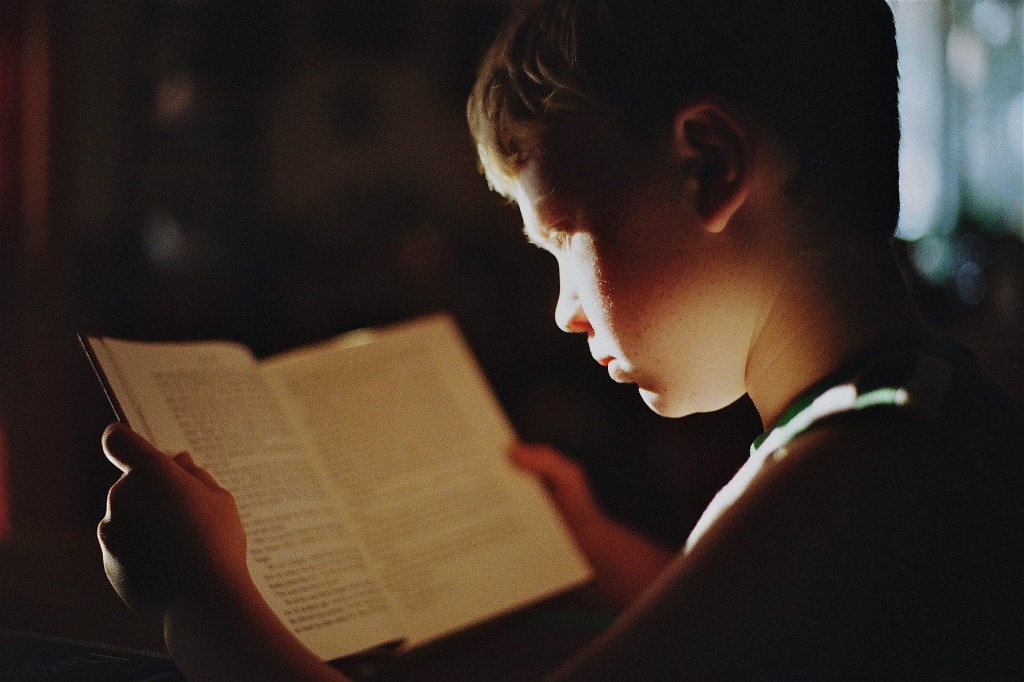
When you’re not a child, children seem pretty simple. They go to school, they play with toys, they long for pets, and they like candy, pretty clothes, and shiny race cars. Sometimes they’re whiny, sometimes they’re adorable, sometimes they say cute stuff that blows us away. Right?
Well, sure.
And no.
Kids are also complicated. They throw tantrums, they tell lies, they forget, they change their minds, they confuse dreams and reality. They want help with homework that’s too hard for Dad and they need dinner and a story when Mom really craves a night out with the girls. They forget to feed the parakeet, won’t wear their new jacket, and refuse to give sweet Aunt Beatrice just a little hug.
Because kids are people, not tropes—something even the best writers sometimes forget.
I like to include kids in my stories. Sometimes, as in my novel Big and Bad and my not-yet-published novella Blood Brothers, Spit Sisters, a child is the main character. Sometimes children play a supporting role, as in a few of my “librarian on the run” stories published in EQMM. “It’s Not Even Past” is a good example. In that story (which inspired the eponymous title of my collection), Cam barely escapes the home of her best friends, Tony and Marta Morales, when a killer comes after her, murdering her dog and putting the Morales children in terrible danger. Cam is the star of the show, but the kids are integral; their vulnerability (and Marta’s pregnancy) ups the stakes and magnifies the drama. But for children to be appealing, not annoying, they must behave realistically, and that can mean idiosyncratically. When Cam bursts into little Diego’s room, a killer has a gun trained on the toddler. Cam is yelling, Marta is shrieking, and Vindi is barking furiously, her paws streaming blood from trying to break down the door. But Diego doesn’t add to the chaos; instead he provides a counterpoint, lying on his side silently staring at Cam, desperately sucking his thumb. He’s terrified and traumatized, but he’s not a cliché.
My first Ellery Queen story, “Krikon the Ghoul Hunter,” published back in 2018, is written in the third person, from the point of view of a small boy who believes—or sort of believes—himself to be a hero. As the story opens, the reader is uncertain about the tone and genre of the story. Maybe this tale really is about a bona-fide ghoul hunter.
Krikon the Ghoul Hunter’s eyes adjust very slowly to the darkened room. His lids are slits to allow just a small amount of light, just enough to detect movement. If he opens his eyes wide, the hunted might catch a glint of moisture or might sense his gaze. Ghouls have hyper-senses; they feel and see as we do, but better. Their sense of smell is sharper. They can detect motion as a cat does. They can feel movement in still air if a cricket grinds his legs together, if a spider drops from the ceiling to the floor.
But when Krikon’s babysitter—”the companion”—enters the scene, the situation becomes clear.
“Daniel! There you are. You scared me.” Krikon turns to her, softly, softly, fingers to his lips. There may well be a ghoul in the male provider’s closet; he senses a fullness, a waiting, beyond the shut door. But the companion grips Krikon’s bicep in her slender hand. “Come on, Daniel. Lunch. Then you can look for zombies after. I’ll help you.”
As the story progresses, it becomes clear that Daniel is just a small boy with a big imagination. His well-to-do parents—never seen but only alluded to—seem to neglect him, though his babysitter is kind and affectionate. This balance provides a realistic framework from which the reader can identify with Daniel. Were his circumstances to be too sad – no one loves Daniel, his parents don’t just neglect him but actively abuse him, his babysitter is cruel and uncaring – that would become the focus of the story, and it would not be as satisfying when, as Krikon, Daniel rescues fair lady and proves his heroism genuine. Real people – including kids – have real lives that include joy and sorrow, love and loneliness, highs and lows. Too much drama becomes melodrama, or parody.
In “From Deep Within the Earth, She Smiled” (EQMM, May/June 2019),I wrote about two children. One, a seven-year-old who is never named and is seen only in retrospect, is the actual heroine of the story, and the reader’s sympathy is entirely with her as the protagonist, a fourteen-year-old, carelessly kills her, then hides her body for a decade or so. Using the “third person omniscient” perspective, the girl is portrayed through the killer’s eyes, yet the reader is able to see beyond his descriptions to the bright, lonely child she must have been.
She had been a particularly annoying little girl, always hanging around, always trying to get him to play catch, or tag, or dolls, or something else stupid that he was too old to play. He’d have been happy to just leave her alone; he bore her no particular ill-will, although she made herself so obnoxious that he had had to slap her a couple of times, and once when she’d been trying to keep up with him, him on a skateboard and her on a stupid two-wheel scooter with purple streamers hanging limply from the handlebars, he’d made a sharp turn right in front of her so she’d fall off her scooter. It had made her mad, for sure, but not enough that she stopped hanging around. There weren’t many kids on their block; it was mostly old people and a couple of the houses were empty.
The boy is sitting on a tree branch, enjoying a pilfered cigarette, when the girl discovers him.
The first cigarette had made him woozy even though he’d tried them before. It was okay if he held the smoke in his mouth, but when he inhaled it into his lungs it made him feel vomity and light-headed at the same time. After he stubbed out the first cigarette on the trunk of the tree, crushing a few ants with the ember while he was at it, first accidentally and then purposefully, enjoying the tiny sizzle and pop sound, he‘d lit the second, taken a deep drag, looked down, and there she was. She was staring up at him – now, remembering, he realized her eyes had been brown and somehow crafty, stupid and sneaky-looking at the same time. She was staring up at him and she’d smiled when he saw her and said, “Let me try or I’ll tell.”
In this scene, the boy’s very casual cruelty is illustrated by his treatment of the ants. If he were seen catching and decapitating neighborhood cats, that would be a different kind of tale, and I try to avoid that kind of heavy-handed approach. The point of this scene is to underscore the boy’s nonchalant sadism. He backhands the girl and she falls from the tree, but the reader understands that under different circumstances, he might never have killed. This would probably not be the case with our hypothetical cat-killer. Rather than create sympathy for the boy, his dispassionate cruelty underscores the reader’s uneasy feeling that potential killers might be more common than we realize.
Allie, the little girl from “Season of Giving” in the current issue of Ellery Queen Mystery Magazine, was a pleasure to write because she had been knocking around in my imagination for months, in various forms. Allie’s age had to be just right for this story. Any younger, and she would not be able to slip around the house, unlock the front door, and conspire with a faux-Santa she believes to be a friend. Any older, and she’d realize “Santa” is exactly the bad man her mother changed the locks against. At six, just a few months short of the proverbial “age of reason,” Allie understands the difference between reality and magic, but still confuses them.
“Oh, yes, the bad man,” Santa said, but he said it like it was a joke. “Say, Allie, if Mommy changed the locks, how can I get in tonight, to leave your presents? I don’t know if my magic key will work on new locks.”
Allie looked confused. “But, Santa— mean, Mike—”
It was true. Their house didn’t have a fireplace or a chimney. Allie had never considered how Santa got in; he just always had.
“Ho ho ho,” Santa said. Then he lowered his voice. “Allie, after you and Mommy go to bed tonight, sneak down and turn the lock so Santa can get in. Then I’ll – he’ll come in and leave your presents. Don’t tell anybody! If you tell, the magic might go away!”
Allie nodded happily. “I know.” she said. “It’s like a white lie.”
Allie’s mother is a weak character, benign but ineffectual, seemingly overcome by depression and barely able to care for her child. It’s Christmas, and there’s no tree and not likely to be any gifts, but Allie is housed and fed and more or less looked after. Mom gets Allie to school most days, and orders in food for supper or serves bowls of cereal – with raisins for vitamins! – before she guzzles a few glasses of wine and cries herself to sleep. The neighbors who take Allie to the mall do so out of kindness, but they aren’t perfect. Neither is Allie’s teacher, who spends her lunch hour working tangles from the little girl’s hair, but can’t resist a snarky comment about her absentee father. These people are written sympathetically but realistically, because real people aren’t perfect. Even Mike, the villain of the tale, once purchased a booster seat so he could give Allie rides home from school, and sometimes snitched bags of gummy bears and cookies from work to bring home to her. Would it be a better story if Mike had abused Allie instead of showing her enough affection to make her miss him, and trust him? Probably not. It’s more interesting when good people do bad things, and bad people do good things, than when characters are portrayed one-dimensionally.
In addition to writing fiction and poetry, I also teach poetry, and writing poems about children can bring out the maudlin sentimentalist in the best of us. Even more than in fiction, the aim in poetry is to avoid chubby cheeks, streaming tears, delighted giggles and the like when writing about kids. Not because kids don’t have chubby cheeks, etc., but because those descriptions have been used and overused to the point that they have become meaningless clichés. Reading that a little one has “tears streaming down his chubby cheeks” doesn’t move us to sympathy. We don’t shake our heads and mutter “poor little mite.” Instead, we roll our eyes and take a long swig of beer to get the taste of saccharine out of our mouths. In fiction, as in poetry, if you want to show a child’s sorrow, show him struggling valiantly to contain the (unmentioned) tears, with a dirty fist swiping at his eyes, or a little hiccup in his voice. Show loneliness, not by saying “the poor lonely child,” but by describing the boy’s gentle words to a potato bug crawling under a branch as the voices of other children rise and fall on the playground. In Krikon, Daniel did not invent an alter-ego for himself because he has plenty of playmates and a dad who loves to roughhouse and a mom who snuggles him up on her lap the minute she gets home from work. But we are never explicitly told he is lonely, only that his babysitter “drives the car, prepares food, and tends to Krikon’s wounds, which are not infrequent. She provides companionship.” In fact, the sitter seems to care more for Daniel than his parents, as seen regarding the holstered paring knife he carries everywhere.
…the companion might use the scratch as evidence in her endless campaign to have his dagger taken away. So far the providers have stood with him, the male provider seeming to take a grim satisfaction in Krikon’s insistence on having a weapon, the female taking little notice either way.
In “Season of Giving,” Allie’s loneliness is also seen indirectly.
In the evenings, after they’d finished their GrubHub or cereal, Allie would tuck herself under Mom’s arm to watch Netflix, sitting so that she could see the sparkle of the Taylors’ decorated tree through the parted curtains. That wasn’t the same as having a tree of your own, but it still looked really nice.
Allie’s mom doesn’t tuck her child under her arm—Allie does that herself, almost like one of Harry Harlow’s sad monkeys comforting itself with a mom made of fabric and wire. Allie doesn’t feel sorry for herself, gazing at the neighbors’ tree—she enjoys its beauty. Allie never lisps adorably. No tears stream down these chubby cheeks. Yet the reader should feel at least a twinge of sympathy for a little girl doing her best in a tough situation.
For most writers, one of the hardest aspects of creating child characters is the element of precociousness. How often have you read a story or novel and suspected the author has never known or parented, let alone been, a child? I won’t name names, but I’ve read fictional four-year-olds accusing parents of being “emotionally unavailable” and nine-year-olds outsmarting police detectives using an advanced understanding of linguistics and anthropology. These things are possible, sure! I have a character in my unpublished YA novel, Ducks Like Me, who is profoundly gifted. She alludes to Maslow, Aristotle, and Descartes, studies trigonometry, and, at age eleven, is weighing whether to advance to ninth grade or skip to university. But Hester’s precociousness is the point of the story, not incidental to it. And there are plenty of kid moments to balance her intellectualism—an embarrassing crush on an older boy, fear of a strict teacher, frustration at her adoptive mother’s “slowness” to grasp concepts, and so on. When a child in a story says something preternaturally wise, it should be either a plot point (figuring out who taught little Weston to say “curmudgeon” solves the mystery!) or integral to building a character whose precociousness is essential to the plot. Don’t make your kids wise beyond their years for no reason at all—or, worse, because your own flesh-and-blood child said something endearing you want to immortalize in print.
Realistic juvenile characters cannot just be not adorable, vulnerable, or precocious if they are to seem real. Real children are grubby, complicated, and flawed. They have dirty fingernails, smelly feet, illogical preferences and baffling emotions. Because real children aren’t angels. They aren’t even devils! They’re human, just like the rest of us.

 SOMETHING IS GOING TO HAPPEN
This post has been insightful. I’ve been disabled children “who aren’t perfect” in a series unpublished novelettes/novellas and hope we both find success.
I wish you all the best in your pursuit,
Justin L. Murphy
Thank you very much, Justin. Representation is important!