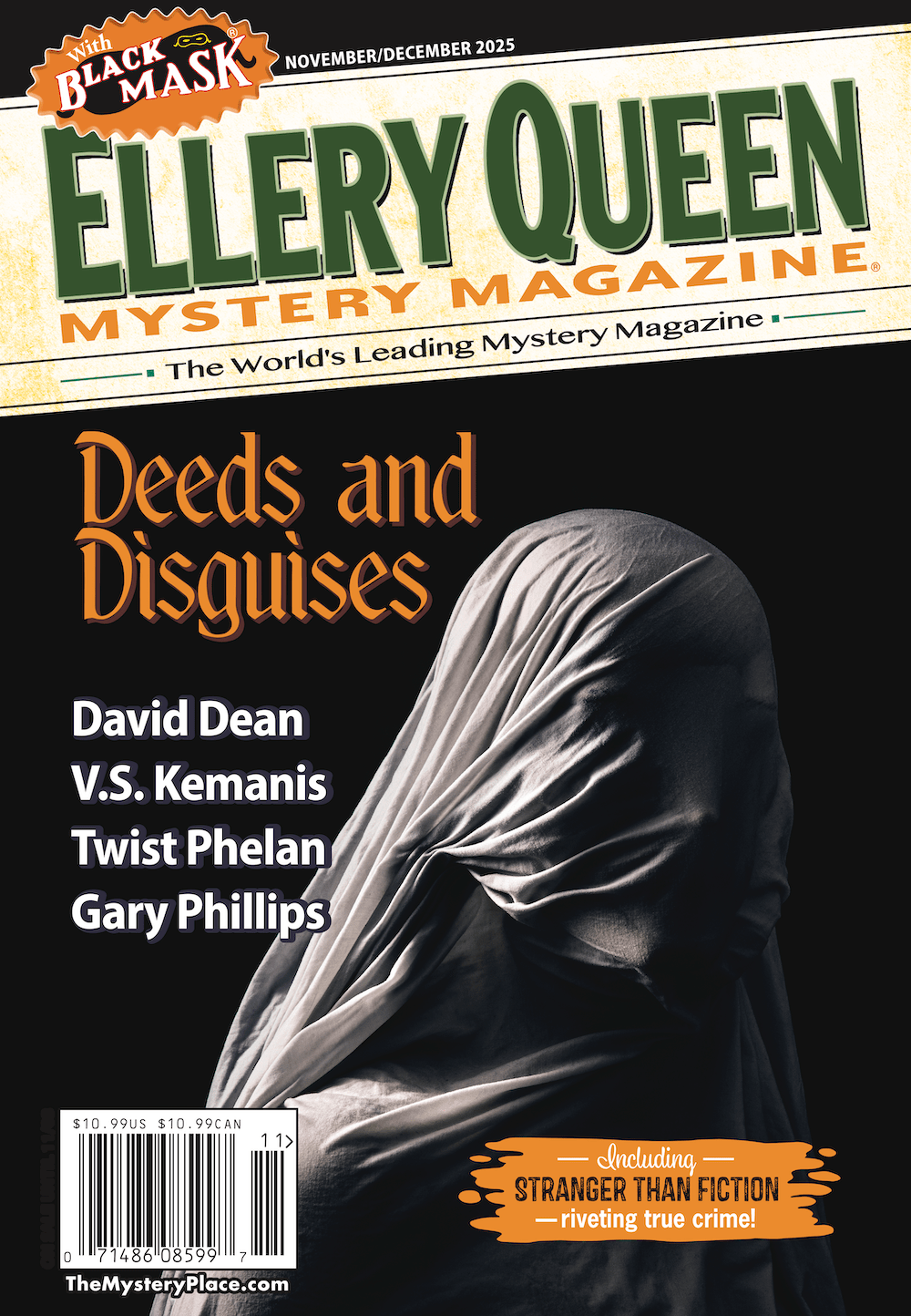
Anthropologist Sue Parman returns to our blog with a fascinating essay exploring the peculiar relationship between cats in mystery fiction human psychology. Don’t miss Sue’s latest story “The Book of Dead Cats” in our September/October issue, on sale now!
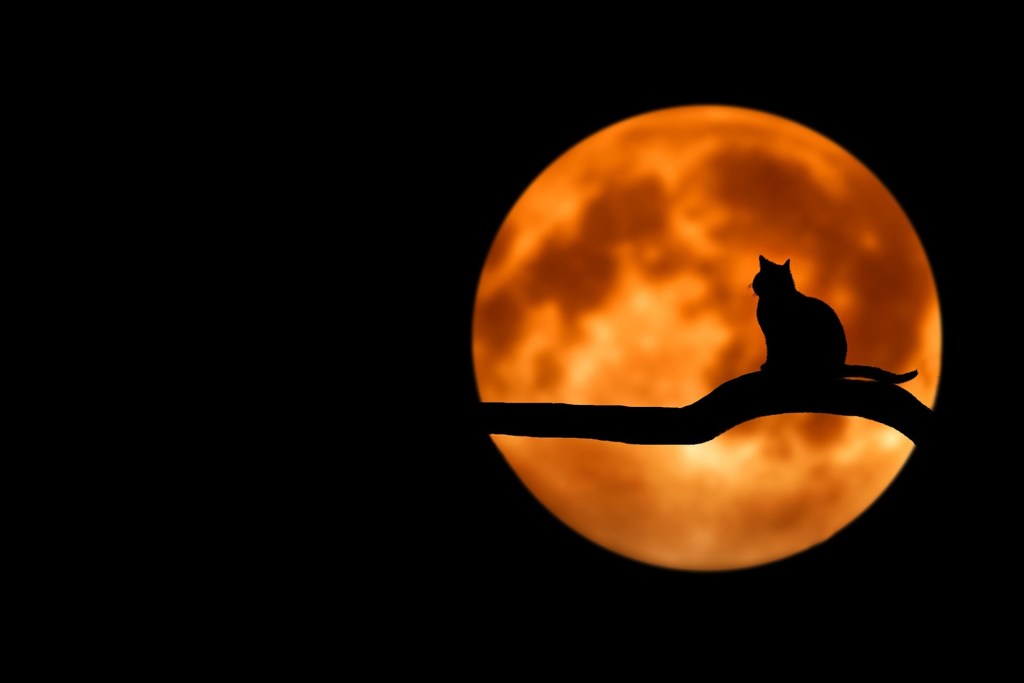
Many years ago, I attended Book Passage’s Mystery Writers Conference in California. My main purpose was to spend time with my daughter, Gigi Pandian, who writes mysteries. As I wandered from one speaker to another, I noticed that cats got a lot of attention. “Save the cat” was shorthand for “make the protagonist do something that makes him/her sympathetic,” such as save a cat. And more than one speaker emphasized that whatever other mistakes the protagonist makes, he/she should NEVER kill a cat.
Which of course made me start thinking of ways in which I (as a writer) might kill a cat. After the conference I wrote three stories about a serial cat killer but was so worried about the American rule, Thou Shallt Not Kill a Cat, that I submitted them to a Swedish journal where they were warmly received and translated into Swedish. It took me another fifteen years to write the short story “The Book of Dead Cats” that was accepted by EQMM.
Writers are contrarian. Tell them not to do something and they immediately start thinking about how to do it. It’s not that writers are particularly antisocial or murderous; it’s that they find satisfaction in reversing expectations, i.e., generating surprise.
Surprise (The Random House Dictionary): “to strike with a sudden feeling of wonder that arrests the thoughts, as through unexpectedness or extraordinariness.” Surprise lies behind every creative spark, whether in poetry (e.g., Kay Ryan’s “Bestiary” about being “best” vs. “good”) or mysteries (who killed Roger Ackroyd?).
Perhaps killing a cat goes to the extremes of surprise. You would never find a dead cat in the cozy cat mysteries of Lilian Jackson Braun and Rita Mae Brown. Only a few American authors have had the courage to kill a cat. In 1843 Edgar Allan Poe wrote a short story, “The Black Cat,” thought to be the first to introduce cats to the mystery genre. His protagonist kills his pet cat, Pluto, in an alcoholic rage. Pluto is avenged when the police discover a second cat accidentally walled up with the protagonist’s murdered wife. Stephen King killed a cat in Pet Sematary but brought it back to life (a more surprising and creepier move than letting it stay dead).
Anthropologists have long been interested in the cultural organization of surprise, as when they study holidays that allow people to break rules and reverse normal expectations (commoners insulting kings, women dominating men, children dressed as nightmares demanding treats). As big-brained mammals we not only love surprise, we need it. Despite monetary incentives, subjects in sensory deprivation experiments (in which subjects are suspended in a tank of water or placed in isolation rooms in which sensory input is reduced) experience spatial and temporal disorientation, intensification of visual imagery, hallucinations, and deterioration in intellectual and emotional behavior.
Sensory deprivation derives its effects from a compromise that nervous systems in complex, learning-based organisms have made between the need to respond to information and the need to make the most efficient use of their information-processing capabilities. Neurons fire when appropriately stimulated, but continued response to the same information is inefficient. The process by which sensory receptors cease to respond to old stimulation is called psychological adaptation and is a necessary feature of irritable tissue. It is adaptive to ignore the touch of the bed on which one is lying so as to be able to respond quickly to the spider that lands on one’s face. But in the process of adapting, we set the stage for neurons firing together in increasing synchrony, a condition that if uncontrolled results in epilepsy.
During an epileptic seizure, bursts of synchronous neuronal firing disrupt normal functioning. So varied are the causes of epilepsy (fevers, tumors, blows to the head, hormonal changes at puberty, menopause) that it is reasonable to suggest that we are all susceptible to the pathological state of synchrony, but that some inhibitory process prevents normal neural activity from escalating into cerebral explosions. The extreme discomfort felt by people subjected to conditions of sensory deprivation reveals how seriously the mind takes this reduced stimulation. It appears that our brains require continuously varied activity. As I argue in my book, The Dream in Western Culture, during the night we deal with sensory deprivation (the soft bed, the reduced sounds, the banned input from cell phones and iPads) by dreaming. During the day, when faced with boredom (a symptom of sensory deprivation), we break up synchronous neural firing by orchestrating surprise. In other words, humans play.
The more advanced the species, the more frequent and diverse its activities of play. Whereas play seems to be confined primarily to early years among nonprimates, it extends into adulthood among the primates. Only humans play so frequently and diversely from birth to death, thus leading the Dutch historian and anthropologist Johan Huizinga to label humans not Homo sapiens but Homo ludens, Man the Player.
Play occurs as a form of disjunction with some ongoing activity, as when children are released from some monotonous task or students celebrate the end of university semesters with dances and mind-altering celebrations. Anthropologists have studied cyclical and noncyclical rituals, such as Ramadan and Mardi Gras, as institutionalized forms of play that often occur at junctures in the economic activities of the year. At the psychological level, individuals vary in their experience of monotony and change. The writer Isaac Asimov was able to write prolifically, he said, because when he got bored with one manuscript, he switched to another (one man’s work is another man’s play). Children put away childish games and move on to more challenging forms of altered consciousness. They put away “The Little Engine that Could” and pick up Nancy Drew mysteries.
For adult readers, like John Leonard who writes in his book Reading for My life, it is not baseball, video games, or horror films but reading that provides “transcendence, a zap to the synaptic cleft.”
Consider mysteries to be the perfect medication for your nervous system. Take two surprise endings at night (with or without cats) and call me in the morning.
 SOMETHING IS GOING TO HAPPEN