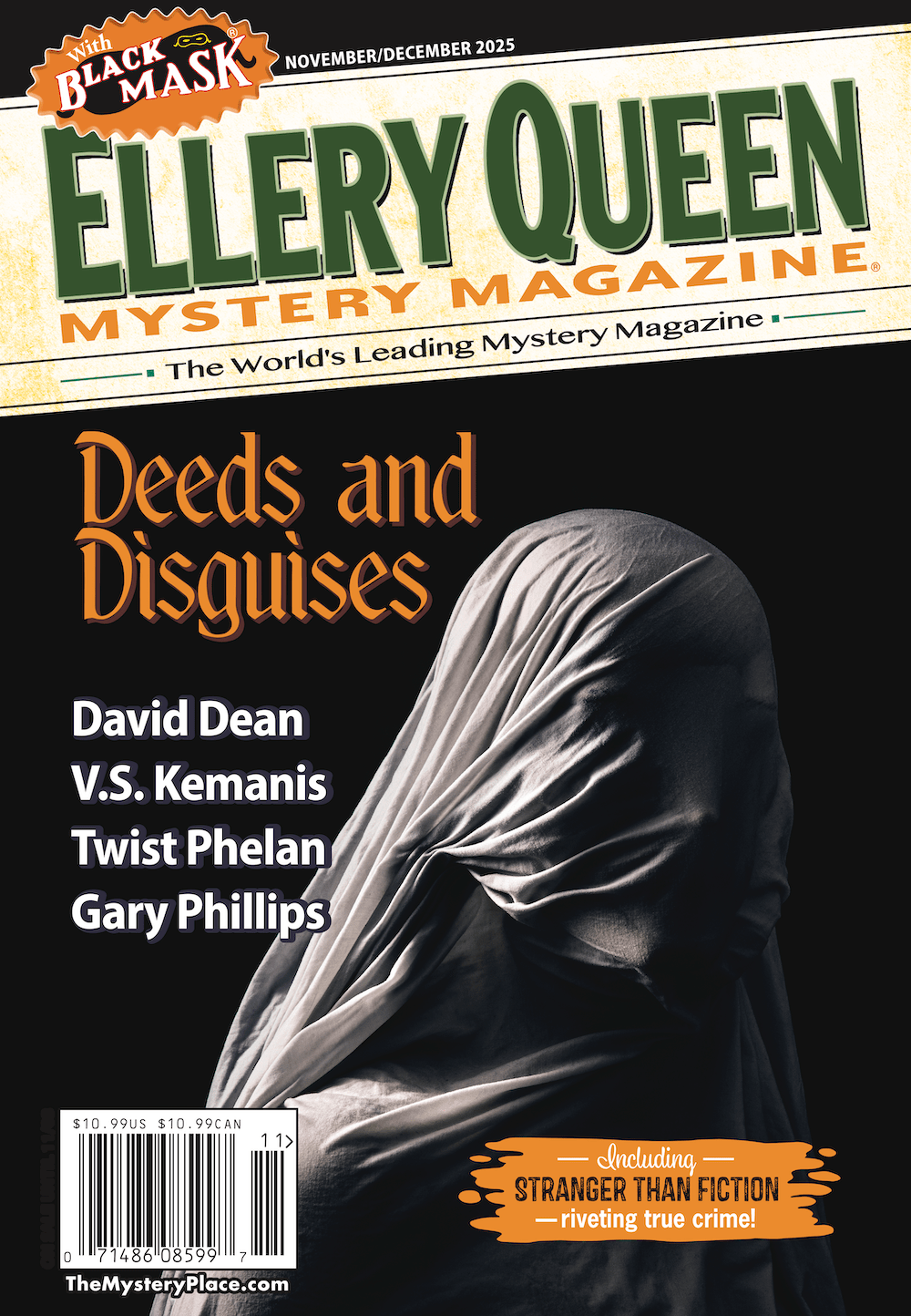
Sue Parman is an anthropologist by profession and her studies include a Gaelic-speaking community in the Scottish Outer Hebrides. She’s also an award-winning poet, short story writer, memoirist, and artist. Recently, she won the Travelers Tales’ Grand Prize for Best Travel Tale of 2024. She makes her EQMM debut in our current issue, September/October 2024, with the story “Gannets and Ghouls,” an eerie tale just right for the fall season. Readers may be surprised to learn that the story is Sue’s first real venture into the mystery genre; it was her daughter, mystery writer Gigi Pandian, an award-winning contributor to EQMM, who suggested she send the story our way. In this fascinating post we get a glimpse of the tale’s underpinnings. —Janet Hutchings
The anthropologist, like the detective, specializes in the decoding of secrets.
A secret is defined by the boundary system that it protects. In Diane Setterfield’s The Thirteenth Tale, the mystery hinges on the boundaries of family, whereas in Alan Furst’s Night Soldiers spy stories, the boundary systems are nation-states in which secrets are those that enable one nation to win a war against another.
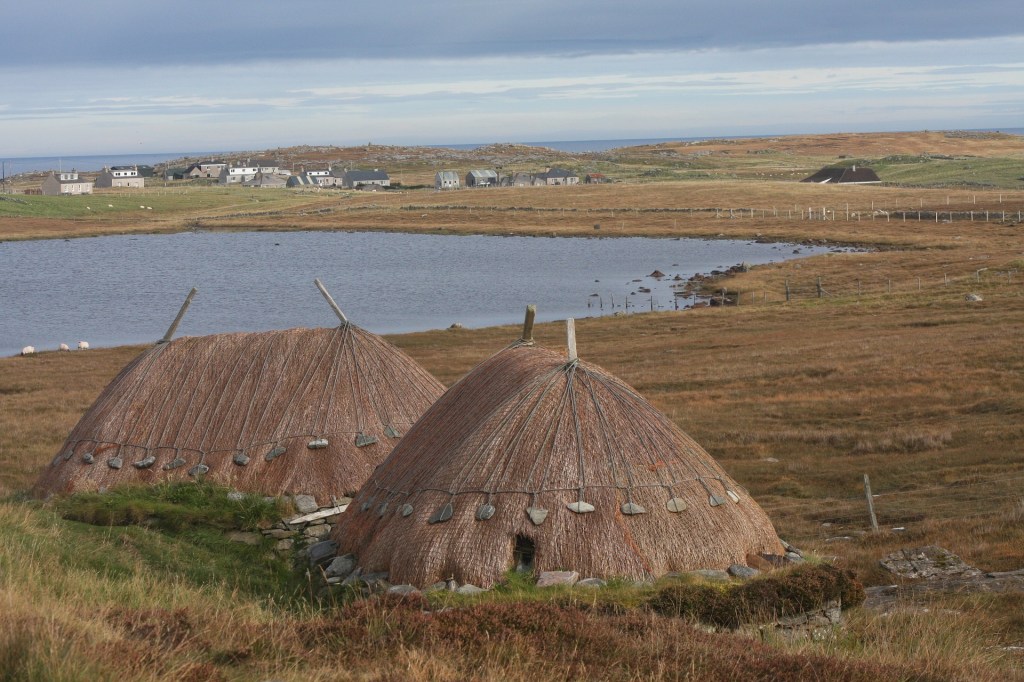
The boundary system whose secrets I’ve spent a lifetime trying to decode is that of a tightly knit village community. In the 1970s I spent a year and a half in a Gaelic-speaking crofting community on the island of Lewis in the Scottish Outer Hebrides. Crofting was created in the nineteenth century to preserve and invigorate rural communities in the Highlands and Islands by ensuring low rent and security of tenure for small plots of land. Crofters don’t own their crofts so they can’t sell them, and the crofts are too small to provide a living through agriculture alone. They supplement their income through various means, particularly the weaving of Harris Tweed, which itself is confined to the boundaries of the Hebrides, defined as cloth made from wool that has been dyed, spun, and woven by crofters in their own homes in the Outer Hebrides. All of these factors create a tightly bounded village community crawling with secrets hidden from outsiders, including the anthropological detective.
Two mystery writers who have been especially good at spinning the secrets of a tightly bounded village community similar to mine are Peter May and Tana French. In Peter May’s Blackhouse trilogy, Edinburgh detective Fin MacLeod returns to his childhood home on the island of Lewis in the Scottish Outer Hebrides. To whom does he owe loyalty, the state in which he functions as a detective, or the community that forged his early friendships and loves? Tana French does the same thing for the Irish countryside in her books The Searcher and The Hunter. When an American detective, Cal Hooper, settles in a small rural village in Ireland, his love for Trey, a half-wild child, draws him past the community’s boundaries and into its secret heart.
A murder case introduced me to the structure of secrets in Hebridean communities. After I’d chosen the village I wished to study, I was informed by outsiders that it was home to the first murder to have occurred in the Outer Hebrides in a hundred years. It took months before the villagers themselves would tell me about it, and any discussion was prefaced with the insistence that the local man accused of the murder had been found innocent. As time passed, I learned the bare bones of the story. An old woman was killed. A neighbor was put on trial and acquitted, not by the verdict “Innocent” but by the third verdict peculiar to Scotland, “Not Proven,” a verdict that essentially means “we think you’re guilty, but we can’t prove it.” Gradually I heard more rumors. The murdered woman came from family considered “gentry” because they had a shop, and although she was old and blind, it was rumored that she kept money hidden in her house. And then, in late-night ceilidhs when grievances were aired and stories told, I began to hear damning details. Although the accused lived only a few houses away from the murdered woman and sometimes did chores for her, he claimed he never saw her much. He who never had much money was now spending a lot, and a one-pound note in his possession had a corner ripped off that matched a piece found in the bureau of the murdered woman. There were other rumors—a blood-stained shirt, a claim that he had confessed the crime to his drinking mates—rumors that were torn apart and debated, denied or confirmed. It became clear that everyone in the village knew about the murder (even the children gave me their version of it); and although they might argue about the details, they were convinced he was guilty. And yet, at the trial, not a single person in the village ratted him out.
The community kept its boundary tight, its secrets intact to outsiders, but they meted out their own form of punishment. After the trial, the accused was shunned by his neighbors, and when he tried to buy a house in another part of the island, the owners refused to sell it to him. He eventually emigrated to Australia.
Toward the end of my stay in the Hebrides, I attended a County Council meeting in Inverness, and a social scientist based on the mainland asked if I’d heard about the murder. I mumbled a few platitudes about Scotland’s “Not Proven” verdict and then changed the subject. Like Cal Hooper in Tana French’s books, I’d been sucked into the network of secrets inside the community’s boundaries and was trusted to keep them. Sometimes you solve mysteries only by agreeing to keep your mouth shut.
My new story in EQMM, “Gannets and Ghouls,” is set in the Faroe Islands in a community similar to the one I studied. Both communities keep their secrets, handling them in their own way, administering their own justice.
There are secrets that I haven’t managed to decode, such as a young man whispering to his sweetheart the Gaelic term of endearment, “Mo run.”
My secret.
What does it mean? That their bond is stronger than the bond with their respective families or the village community? That the love between them is more important than any other tie? Or is it the universal expression of lovers everywhere, an attempt to give voice to the unfathomable inexpressibility of love?
It’s a mystery.
 SOMETHING IS GOING TO HAPPEN
Pingback: The Anthropologist and the Mystery Writer: The Theory of Limited Good (by Sue Parman) | SOMETHING IS GOING TO HAPPEN