
James D.F. Hannah makes his EQMM debut in the Black Mask department of our January/February 2024 issue, which goes on sale this coming Monday. He is the Shamus Award-winning author of the Henry Malone P.I. series, which includes the novels Behind the Wall of Sleep and She Talks to Angels. His short fiction has previously been published in anthologies edited by Lawrence Block and S.A. Cosby, and in The Anthology of Appalachian Writers. From this post we can tell that he is a longtime, dedicated reader of EQMM, for his topic is the work of Clark Howard, one of our most prolific and popular contributors until shortly before his death in 2016. Nearly all of Clark’s short stories first appeared in EQMM, and he was primarily a short story writer. He was also a valued friend to me and others at EQMM—including a number of our other contributors. It’s great to see his work brought back into the conversation! —Janet Hutchings
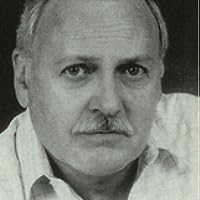
I first read Clark Howard in an Ellery Queen or Alfred Hitchcock anthology from my local library. This was before I had money to buy the magazines, but precocious thirteen-year-old me knew already he planned to become a rich and famous writer someday, so he wanted to learn from the best, right?
And while I read these volumes cover to cover, discovering an endless variety of writers, the one who caught my attention the most was Clark Howard. He wasn’t focused on the literary hocus-pocus of puzzles with neat solutions, of being cleverer than the reader. He just had a story to tell. Stories about working-class individuals trying to find a way through the world, and the terrible choices they sometimes made, and the terrible outcomes they often faced.
Thirteen-year-old me didn’t know he was reading hard-boiled or noir fiction. He didn’t know he was studying foundational text that would influence his writing more than thirty years later.
What I did know was, when I started buying monthly issues of EQMM, and Howard had a story in it, I read it first.
I always read his stories first.
Clark Howard’s early life was more befitting one of his protagonists than it did the author of eighteen novels and roughly 200 short stories.
You hear that about writers—the lives they lived before they put pen to paper, how they shaped their careers. But Howard’s was one where you could put pins on a map and chart how it would steer him eventually.
He was born in Ripley Tennessee in 1932 and grew up on the lower west side of Chicago. A ward of Cook County by the time he was twelve, he was frequently homeless as a teenager and fell into juvenile delinquency and a brief stint at a reformatory before going to live with his maternal grandmother near Memphis, Tennessee. These early years infused Howard with passions that later became hallmarks of his work: jazz, boxing, shooting craps.
He enlisted in the Marine Corps at seventeen and served in the Korean War. He was discharged at twenty and awarded the Korean Service Medal and two combat stars.
His writing career would have ended before it began if he’d listened to the professor at Northwestern University who said his work was “undisciplined and of no commercial value.” (Howard later told his friend and fellow writer Jan Grape that he walked out of the professor’s class without letting him know he’d already sold two stories for five hundred dollars. He never returned to the class. “I decided it wouldn’t do me any good and it wasn’t going to get me a good grade in that class. That maybe I knew as much about story writing as he did.”)
Howard earned his start in the waning day of pulps, and his work carries the weight of the legends in the field, except he lacked the fever-dream intensity of a Jim Thompson (The Killer, Pop. 1280) or the aggressive weirdness of a Charles Willeford (Miami Blues, The Burnt Orange Heresy). Rather, Howard wrote with the soaked-to-the-skin humanity of David Goodis, author of classics such as Dark Passage and The Blonde on the Street Corner. Howard himself wrote David Goodis “had an enormous impact on my life as a writer.”
About Goodis, the editor and writer Molly Odintz said, “His characters are broken down shadows of their former selves, worried more about damaging those they love than worrying about damage to themselves.” You feel this influence in how Howard crafted characters reflective of his hard-scrabble roots. Characters extraordinary for their ordinariness, their willingness to fight to survive by working twice as hard to keep hold of half as much as anyone else. Howard understood life was hard and sloppy and unfair, and sometimes it takes so little to change everything. The lives of his characters could be altered by a few hundred dollars, and they’ll risk everything for a small-time second chance.
He talked about the common characteristic connecting his work in the introduction to the collection Challenge the Widow-Maker: And Other Stories of People in Peril:
That characteristic is the quality of pride that often surfaces in the people who populate these stories—be those people ex-convicts, professional boxers, gang members, prostitutes, waitresses, bootleggers, oil field workers, the very old and the very young, the good, the evil, and the ordinary.
Roy Britt, in Howard’s story “Split Decisions,” is a professional boxer catching odd jobs and still dreaming of a shot at the title. New Orleans crime boss Jack Kono offers Roy the break he’s looking for, and all he has to do is tune up the boss’s sister’s boyfriend and convince him to leave the sister alone.
“I want his jaw broken. And his nose,” Kono specified. “Work on his kidneys, too, so’s he’ll pass blood for a while. That’ll give him something to think about.”
Five hundred bucks and a shot to fight again—that’s all Roy wants. It’s more than that, though, because then maybe Roy and his girlfriend and her daughter can get out of the French Quarter and buy a little tract house at the airport and start over. What, then, is the price of a second chance?
But like every good noir writer and French existentialist, Howard understood there oftentimes is no escape—that we may be trapped by our circumstances, and our best intentions rarely offer hope. Our only option might be the faintest form of redemption before a violent end.
When Roy discovers dark secrets about Kono, he can’t let Kono get away. This decision leaves Roy at the same ends as many a classic noir protagonist: White knuckling the edge of the world, knowing he doesn’t have many sunrises left.
Sometimes the characters didn’t know what to do with their second chance. Consider Dix, in the Edgar Award-winning “Horn Man,” fresh from a sixteen-year prison stint and looking for the ex-lover he took the fall for. Set again against a New Orleans backdrop, “Horn Man” takes what could have been a standard tale of revenge and instead transforms into a journey through New Orleans and jazz history and the machinations of those behind the scenes who refuse to let Dix—a brilliant jazz trumpet player—throw away his talent. By the last page you see Dix is essentially a secondary character to his own story, manipulated by an array of colorful characters to find a new home playing jazz.
While Howard’s work always remained well-crafted and effective, it could suffer from sentimentality, sometimes exotifying characters, such as the Native American George Wolf Tooth in “Scalplock,” or situations, like the fictional Lasher County of “All the Heroes Are Dead,” run by benevolent moonshiner Billy Roy Latham. Non-white characters are unmistakably written by a white writer, and even though they are treated with the respect and understanding he offered all of his characters, Howard leaned upon cliches that would never pass muster today, and his happy endings could feel simplistic and forced.
Howard’s best work steered toward a fatalism that emphasized both the tenacity and the hopelessness of his characters. This is embodied by one of his final stories, “The Street Ends at the Cemetery”—which is also one of the greatest titles ever.
As Cory Evans walked toward his car in the staff parking lot of the state prison, he had to pass the visitors’ parking lot, and that was where the woman was sitting, on a cast-iron bench bolted to the ground, under a punch-press metal sign from the prison machine shop that read BUS STOP. It was cloudy and overcast, the first threatening sprinkles of rain beginning.
About a prison guard—Cory—and a convict’s girlfriend—Billie Sue—and multiple characters looking for the stash from a bank heist, “Cemetery” packs a novel’s worth of twists and turns into its pages, as well as a tragic romance with an ending as heartbreaking and inevitable as you’ll find anywhere. It was included in Best American Mystery Stories 2013, edited by Lisa Scottoline and Otto Penzler.
Clark Howard died in 2016. In the course of his nearly sixty-year career, he won an Edgar, a Derringer, and five Ellery Queen Readers Awards, and was further nominated for Anthony, Barry, Shamus, and Spur awards. His books and many of his short stories remain in print, and if you’ve read this far, I hope you’ll explore his work.
Unfortunately, he has fallen out of conversation with both writers and many fans. If you Google him, you’ll mostly get results for the financial advice guy of the same name. He’s a writer who I hope is not forgotten.
And yet, I suppose this is the way the world spins. It’s the ephemeral nature of everything. Nothing’s ever truly made to last. Howard’s work reflects this, and his characters know it. They make their choices and stand their ground and accept their fates even as the world swallows them whole. Pride demands they hold their heads high and embrace the ultimate darkness, as the racer Sheffield does in the conclusion of “The Dakar Run,” facing the gangsters he has betrayed. Sheffield’s final words echo Body and Soul, the film noir classic he watched at the story’s opening.
Sheffield merely shrugged. “What are you going to do, Marcel, kill me?” He cocked his head in the best John Garfield tradition. “Everybody dies,” he said arrogantly.
Pushing through the doors, he walked painfully out into the Senegalese night.

 SOMETHING IS GOING TO HAPPEN
Great piece on an excellent writer. His name was invoked just today in a conversation I had with Doug Allyn and John Floyd (two other extraordinary talents). Thanks for keeping Howard’s legacy alive.
Great piece! Certainly makes me want to dig out the BAMS with his story in it.