A recipient of a New Mexico fiction-writing award, Jennifer Black makes her debut as a professional fiction writer in the Department of First Stories of EQMM’s current issue (July/August 2023) with the story “Heatstroke.” Her day job, she tells EQMM, is creating videos that focus on land, water, and wildlife issues; she also films and edits training videos for a national manufacturing company. In this post she looks at fiction writing from a fresh perspective, one she gained partly through her husband’s Navajo heritage. Her own ethnic background is diverse, including Korean, European, and Mexican ancestry—all of which contribute to the points of view she brings to her fiction. —Janet Hutchings
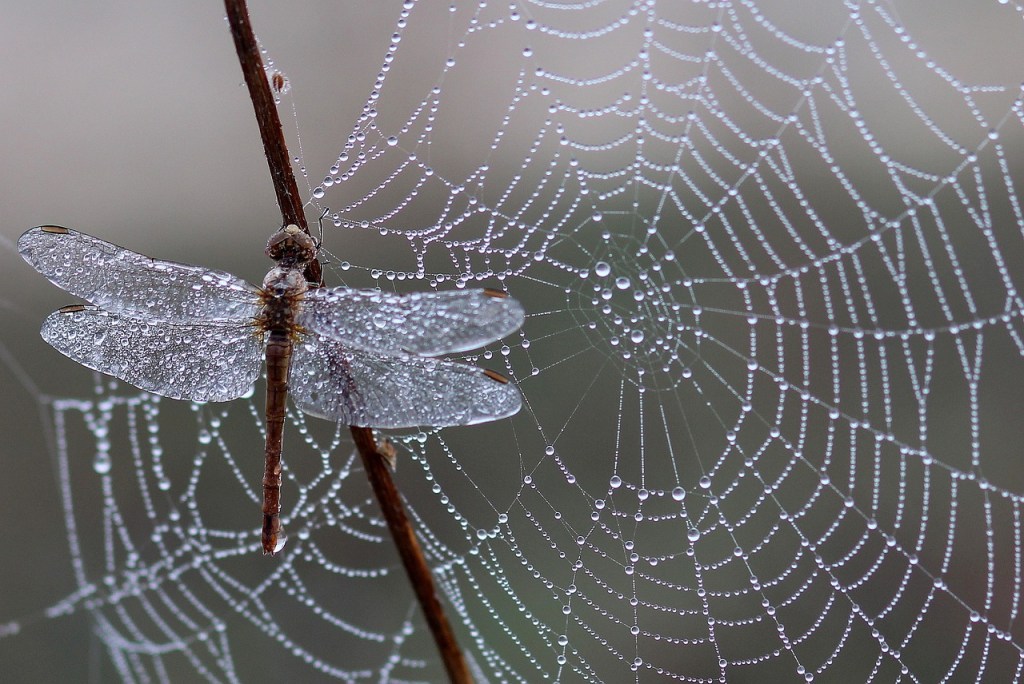
I reached into a black widow nest today. Its host was crouched at the bottom of the biggest spider tunnel I’d ever seen, a couple feet from the irregular web stretched between a fence and stack of wood. I plunged my hand into sticky silk until it covered half my forearm, then swirled my whole appendage, gathering white webbing to my skin like cotton candy. When I was satisfied with the bounty, I moved away unbitten, rubbing what remained of the spider’s creation between and over both hands.
Why?
The internet said Navajo women are known to rub spider webs over their hands before weaving. If it worked for them as weavers, maybe it’d work for me as a writer. What I didn’t account for is how proper research often leads to better outcomes.
All this started because I’d finished reading Murder on the Orient Express. I was—and still am—fascinated by the way Agatha Christie wove the story together, eventually making it okay for me to accept the murder of a man. Within the story, she tells us what it takes for authors to craft mystery fiction: “Every minute detail of their evidence was worked out beforehand. The whole thing was a cleverly-planned jigsaw puzzle . . .”
Weavers also have details to work out before starting a project. Yarn choice, which loom to use, dimensions, spacing, shrinkage after washing, slack versus tension, the necessary math needed to produce the desired pattern, and the list goes on. Perhaps weaving and storytelling are more alike than different.
In an interview with Agatha Christie on February 13, 1955, she said, “I think the real work is thinking out the development of your story and worrying about it until it comes right.”
But what makes it right?
Elements like a great hook, the power of characters, plot, setting, the crime, clues, and red herrings all lead to a satisfying ending. Each element has its own thread, its own color, and its own purpose that an author uses to pattern the whole story with quality and appeal. That’s how I think about mystery fiction. That’s what it takes to write a good story.
All these thoughts about weaving reminded me of Spider Woman. Not the Marvel Comic character but the woman in Navajo creation stories. The remembrance set me wanting to ask my Navajo husband about his cultural teachings. But I hesitated because creation stories are to be told in winter, and it’s already summer. So, what to do?
I tried to remember what I’d been told about Spider Woman, but all that came to mind was a fogginess about weaving . . . and maybe storytelling, but I might have made that part up. Instead of asking my husband, I went to the internet. What I found is that one of Spider Woman’s roles is being the vigilant helper of humans who also taught Navajo women how to weave. And bam! Via encyclipedia.com, Google told me that some Navajo women rub their hands in webs to absorb the teachings of Spider Woman.
Now, I’m not Navajo and clearly don’t know the teachings of Spider Woman, but maybe I’ll learn how to weave. Near my writing desk, a Navajo loom rests on the floor. It was gifted to me and holds a mostly finished rug that contains a design of an eagle. The top quarter of the rug still shows the long lines of the warp, the yarn attached to the loom that runs up and down. But below that, the warp is covered by the tight weave of the brown, cream, blue, and tan yarns making up the design.
The warp reminds me of how authors drape a story over portions of their life experiences, or how research makes stories credible. I wonder if Murder on the Orient Express would’ve ever come to fruition if Agatha Christie hadn’t heard about or experienced certain events: her first train ride on the Orient Express, a subsequent ride she took on the same-named train whose travel was paused for twenty-four hours, a blizzard that halted the train for six days, or the tragic kidnapping and murder of a two-year old boy. Agatha Christie based her novel on these real events. It shows how she brought her experiences—either direct or indirect—into her writing.
When she was uncertain about something, she did proper research . . . which isn’t what I did before sticking my hand in the black widow nest. Thankfully, some things are easily corrected.
My husband’s late mom was a master weaver. She raised and sheered sheep, dyed wool with plants, hand-spun the wool, and wove rugs that cost thousands of dollars. Her mom taught her, whose mom taught her, and so on up the lineage, all the way back to the teachings of Spider Woman. Perhaps my husband is a credible source. Instead of asking him to tell me creation stories, I asked if he knew whether his mom had ever rubbed a spider web onto her hands before weaving.
“Yes,” he said. “I saw my mom and grandma do that lots of times.”
I’m not sure why his answer surprised me, but it did. When I finally gathered enough sense to form a follow-up question, the only thing I came up with was asking him to tell me more about it. His explanation included nothing of black widow nests, but of beautifully designed webs with hosts out of sight. Many thanks to him and the women in his family, to their teachings, and to Spider Woman for affording me the opportunity to begin a journey of learning something new.
The experience of reading Murder on the Orient Express and about Agatha Christie has raised my curiosity about the history and importance of weaving in my own Korean, Anglo, and Mexican cultures. It piqued my interest in reading mystery fiction written by Korean, Mexican, and Navajo authors. It has also taken me on outdoor searches for intricately designed spider webs that catch the sun’s morning rays as it rises over Sandia Mountain, near Albuquerque, New Mexico. On one such occasion, I found a beautiful, tiny web on the fencing of my sheep corral. When I was sure the web was abandoned, I swirled a finger in it, then rubbed it between my palms in honor of my mother-in-law, Spider Woman, and the art of weaving.

 SOMETHING IS GOING TO HAPPEN
This is a great teaching Jennifer Black
Wow, Beautifully written! I did not know this about Allen’s mother. Thank you so much for sharing. We hope you both are doing well.
From: Yolanda, Wayne, Daisy and Santiago 😊